When new content goes live, the clock starts ticking. Search engines and AI models don't always discover it quickly, and every hour of delay is an hour your competitors could be capturing the traffic, citations, and brand mentions you're missing. Content indexing software bridges that gap by accelerating discovery, tracking visibility, and ensuring your pages actually get seen.
In 2026, the category has expanded well beyond basic sitemap submission. The best platforms now address three overlapping needs: getting pages indexed faster, monitoring how AI answer engines reference your brand, and generating optimized content that's built for both traditional search and AI retrieval. Whether you're frustrated with slow crawl rates, want to understand how ChatGPT and Claude talk about your brand, or need to automate the entire publish-to-index pipeline, the right tool makes a real difference.
This guide covers the top content indexing software alternatives available right now, evaluated for indexing speed, AI visibility features, content generation capabilities, and overall workflow fit. If you're also looking to improve your website ranking or increase organic traffic, these tools address the full content discovery lifecycle.
1. Sight AI
Best for: Teams needing an all-in-one platform covering content creation, indexing, and AI visibility monitoring.
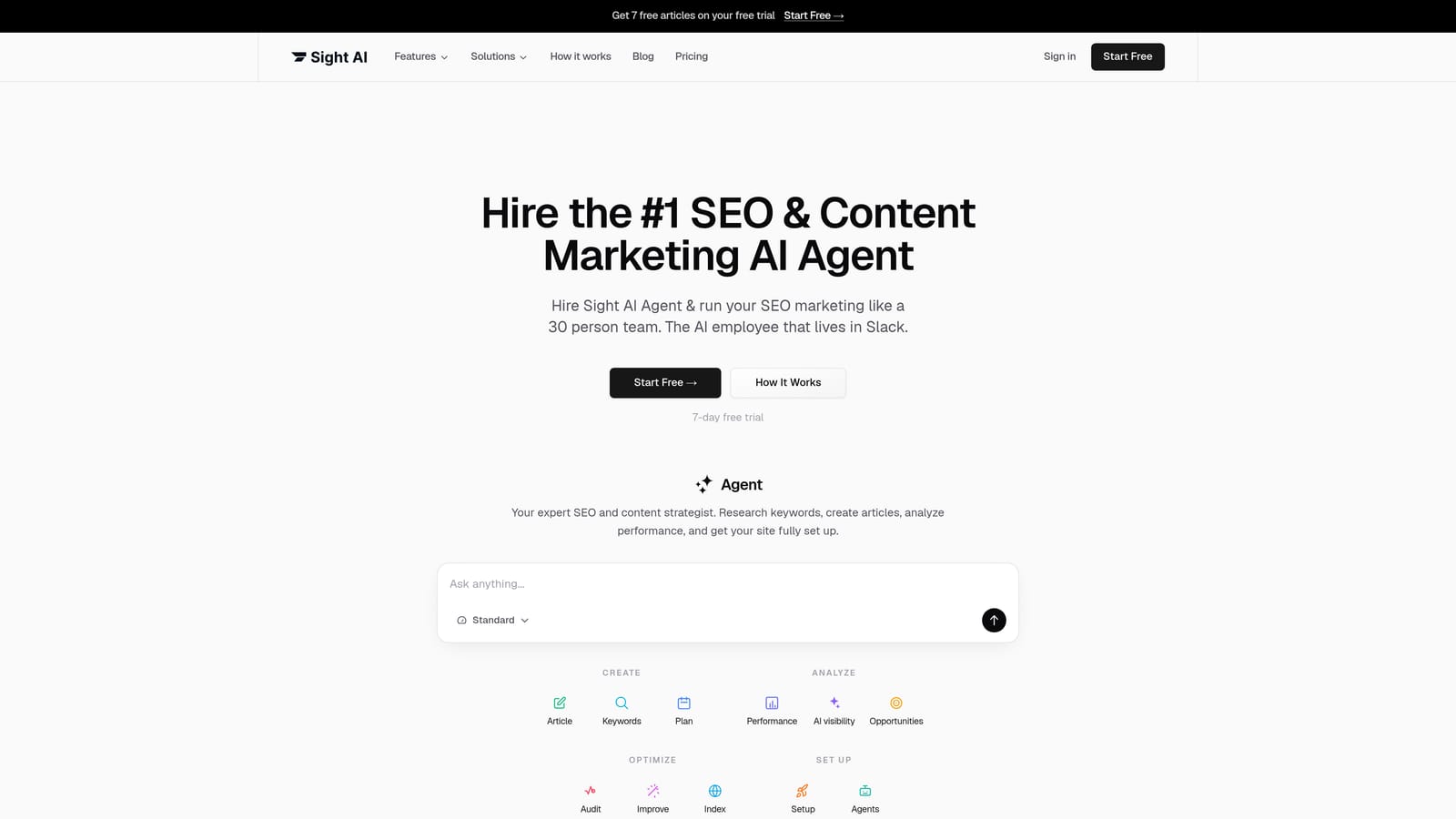
Sight AI is an end-to-end platform that combines AI content generation, IndexNow-powered indexing, and cross-platform AI brand monitoring in a single unified workflow.
Where This Tool Shines
Most tools in this category solve one piece of the puzzle. Sight AI is notable for addressing all three stages natively: create optimized content using 13+ specialized AI agents, push it live with automated indexing and sitemap updates, then monitor how AI models like ChatGPT, Claude, and Perplexity pick it up. That end-to-end coverage eliminates the operational friction of stitching together multiple point solutions.
The AI Visibility Score is a particularly useful differentiator. Rather than leaving you to guess how AI answer engines perceive your brand, Sight AI surfaces sentiment analysis, prompt tracking, and mention data across 6+ AI platforms. For marketers and agencies investing in Generative Engine Optimization, that kind of feedback loop is genuinely hard to replicate elsewhere.
Key Features
AI Visibility Score: Tracks brand mentions, sentiment, and citations across ChatGPT, Claude, Perplexity, and additional AI platforms in real time.
13+ Specialized AI Agents: Generates SEO and GEO-optimized content formats including listicles, guides, and explainers, each agent tuned for a specific content type.
IndexNow Integration: Pushes newly published pages to search engines near-instantly, reducing the crawl delay that typically slows content discovery.
Automated Sitemap Updates: Keeps sitemaps current automatically so search engines always have an accurate map of your content.
CMS Auto-Publishing: Connects content generation directly to publishing, enabling a fully automated workflow from creation through indexing.
Best For
Sight AI is best suited for marketers, founders, and agencies that want a single platform covering the full content lifecycle. It's especially valuable for teams running active GEO strategies who need to track how AI models reference their brand alongside traditional SEO metrics.
Pricing
Visit trysight.ai for current pricing plans. Multiple tiers are available to suit different team sizes and usage levels.
2. Writesonic
Best for: Content teams prioritizing high-volume AI writing with built-in SEO optimization suggestions.
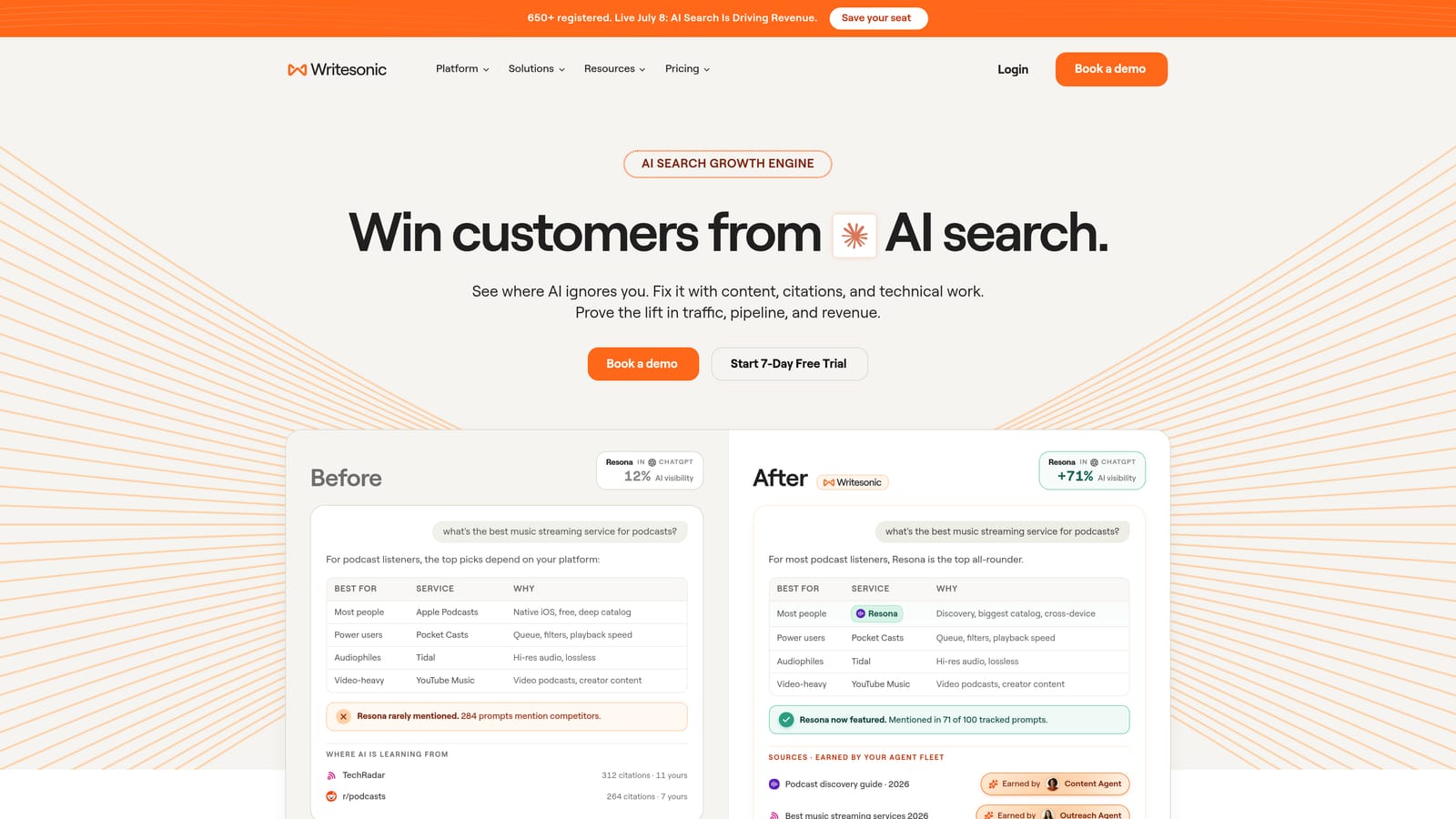
Writesonic is an AI content generation platform with a broad template library, SEO-focused writing tools, and integrations designed for scalable content production.
Where This Tool Shines
Writesonic has built a strong reputation for producing long-form content at scale. Its blog generation, landing page copy, and ad creative tools are well-regarded for speed and output quality. The built-in SEO optimization suggestions help writers align content with search intent without switching between tools.
The Chatsonic assistant adds a research and ideation layer that's useful for teams working through content briefs or exploring new topic angles. For pure content production workflows, Writesonic covers a lot of ground efficiently.
Key Features
AI Long-Form Content Generation: Produces blog posts, articles, and guides with minimal prompting, suitable for high-volume publishing schedules.
Built-In SEO Suggestions: Offers on-page optimization guidance during the writing process to improve search alignment.
Chatsonic AI Assistant: Supports research, ideation, and conversational content drafting beyond standard template-based generation.
Multi-Format Output: Generates ads, landing pages, social posts, and product descriptions alongside long-form content.
CMS Integrations: Connects with popular publishing platforms to streamline the content-to-publish handoff.
Best For
Writesonic suits content teams and agencies that need to produce large volumes of SEO-oriented content quickly. It's a strong fit when content generation is the primary need and teams have separate solutions handling indexing and AI visibility monitoring.
Pricing
Writesonic offers a freemium entry point with paid tiers for higher usage and advanced features. Verify current pricing at writesonic.com.
3. AirOps
Best for: Operations-focused teams building custom AI content workflows connected to internal data sources and CMSs.
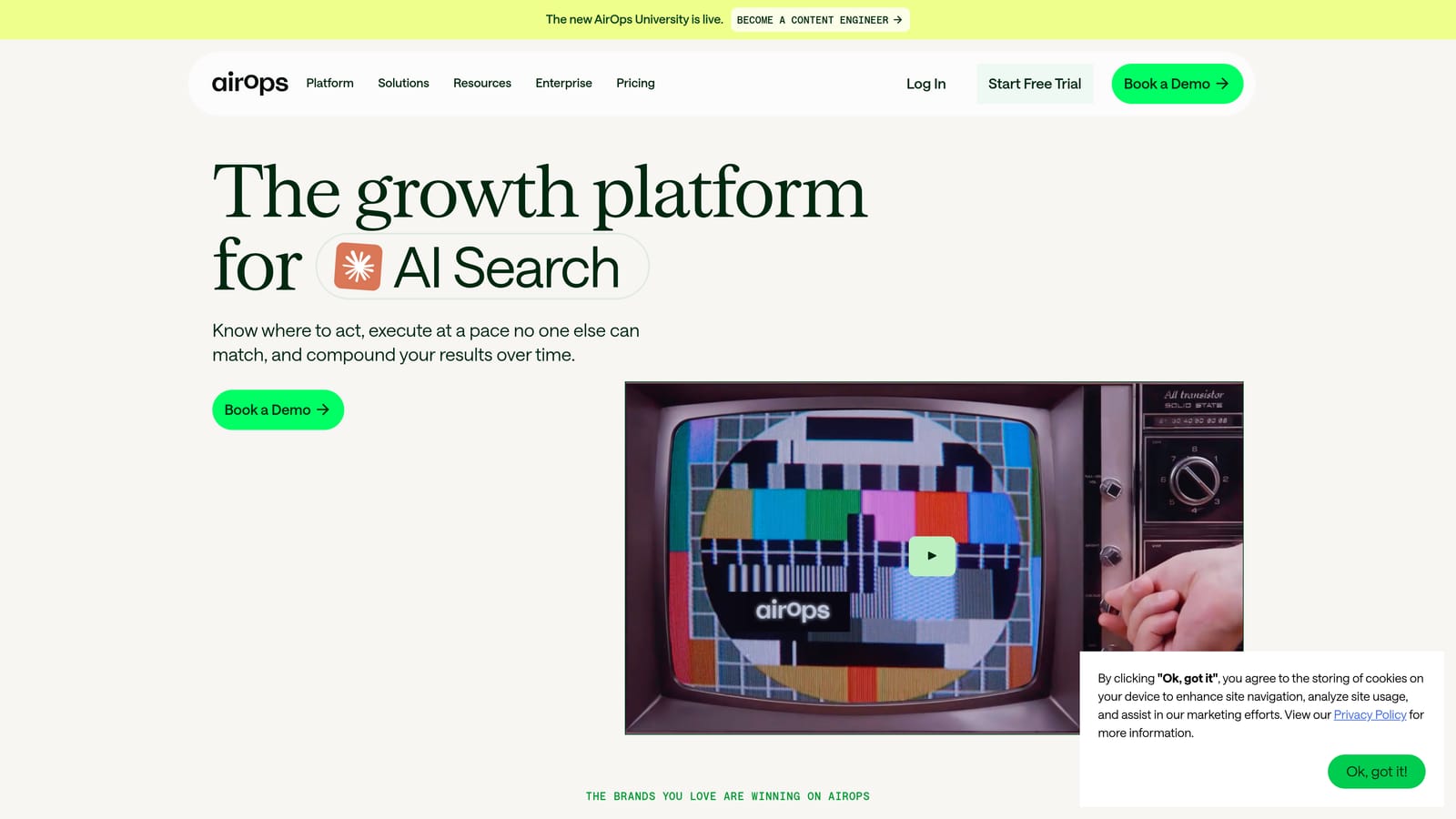
AirOps is an AI workflow automation platform that connects large language models to data sources, content management systems, and publishing pipelines for scalable content operations.
Where This Tool Shines
AirOps takes a workflow-first approach rather than a content-first one. Its visual builder lets teams design custom AI pipelines, connecting LLMs to internal data, product feeds, or external APIs to produce content that's grounded in real business context. This makes it particularly powerful for teams with complex or highly customized content operations that off-the-shelf tools can't easily accommodate.
Batch processing is another genuine strength. For teams that need to generate or update content at scale, the ability to run bulk jobs through a defined workflow can significantly reduce manual effort.
Key Features
Visual AI Workflow Builder: Drag-and-drop interface for designing multi-step content automation pipelines without heavy engineering involvement.
LLM-to-Data Connections: Links AI models directly to internal databases, CMSs, and external data sources for context-aware content generation.
Bulk Content Generation: Supports batch processing for producing large volumes of content through a single workflow run.
Custom Workflow Templates: Pre-built templates for common SEO content pipelines that teams can adapt to their specific needs.
API Integrations: Connects to publishing systems and third-party tools to automate the end-to-end content delivery process.
Best For
AirOps is best for content operations teams and technical marketers who need flexible, customizable AI workflows. It's a strong choice when the priority is automating complex, data-driven content processes rather than out-of-the-box content generation or indexing.
Pricing
Verify current pricing and plan details at airops.com.
4. Profound
Best for: Enterprise teams that need structured analytics on brand citations across AI answer engines.
Profound is an AI search visibility platform focused on tracking brand citations and mentions within AI-generated responses, with analytics dashboards built for enterprise brand monitoring.

Where This Tool Shines
Profound is purpose-built for understanding how AI answer engines surface your brand. Its analytics dashboard gives teams a structured view of AI search presence, including where citations appear, how frequently, and how competitors are being referenced in the same responses. For enterprise marketing and communications teams, that level of visibility into AI-generated answers is increasingly essential.
The competitive benchmarking capability adds meaningful context. Knowing that your brand appears in AI responses is useful; knowing how that compares to competitors in the same category is actionable.
Key Features
Brand Citation Tracking: Monitors how and when your brand is referenced across major AI answer engines in response to relevant queries.
AI Search Analytics Dashboard: Provides a structured overview of AI search presence with trend data and visibility metrics.
Competitive Benchmarking: Compares your brand's AI citation frequency and context against named competitors.
Enterprise Reporting: Delivers structured reports suited to brand and marketing teams that need to present AI visibility data to stakeholders.
Multi-Platform Monitoring: Tracks brand mentions across multiple AI platforms rather than focusing on a single model.
Best For
Profound is well-suited for enterprise brands and larger agencies that need rigorous, dashboard-driven reporting on AI search presence. It's a specialist tool: strong on AI visibility analytics, but does not offer content generation or technical indexing features.
Pricing
Verify current pricing and plan details at profound.co.
5. Peec
Best for: Marketers and agencies focused on competitive positioning within AI-generated search results.
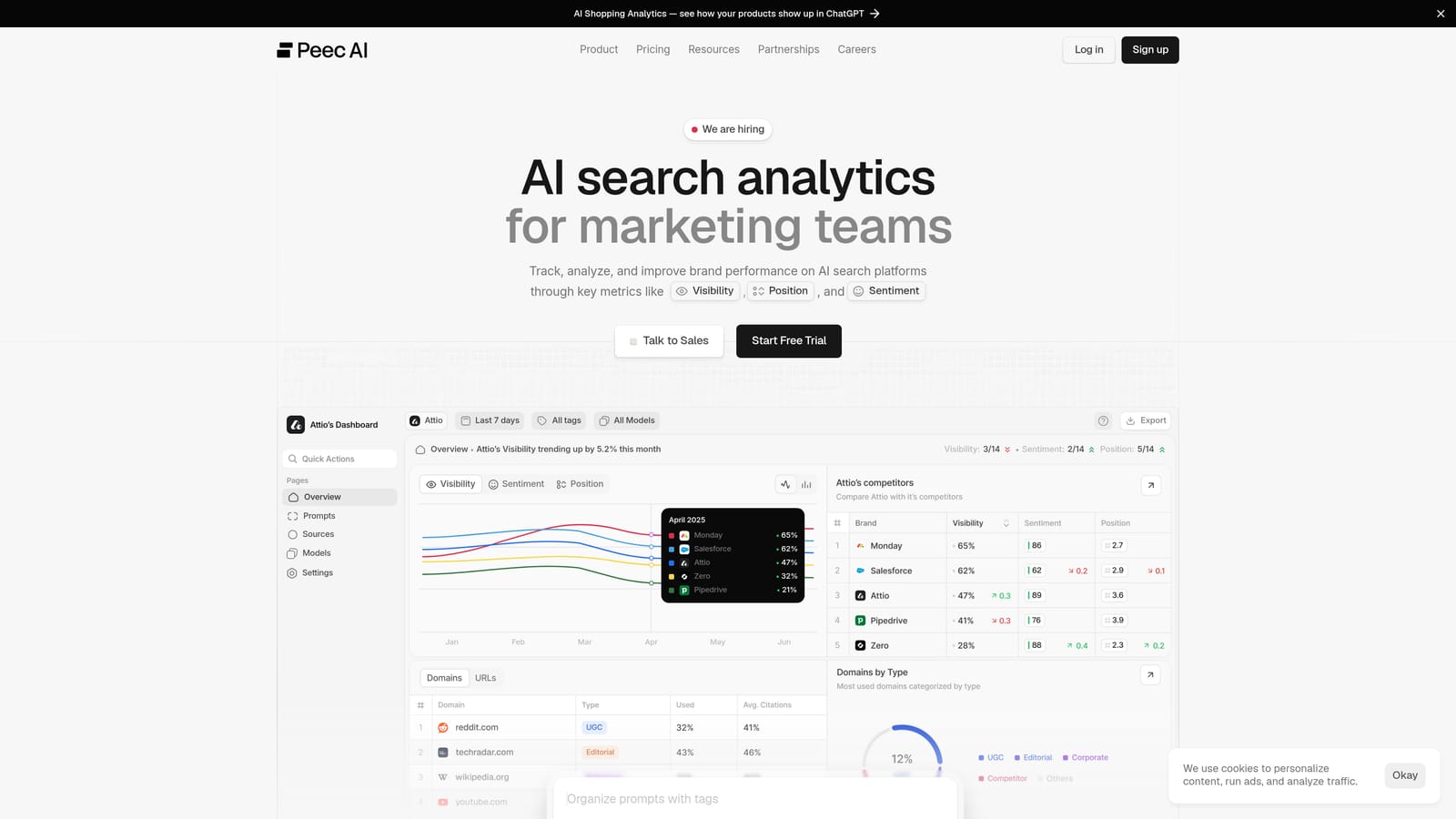
Peec is an AI visibility monitoring tool that tracks how brands appear in AI-generated answers and benchmarks competitive positioning across AI search platforms.
Where This Tool Shines
Peec approaches AI visibility with a competitive lens. Its tracking and scoring system is designed to show not just whether your brand appears in AI responses, but how that presence evolves over time relative to other players in your space. For teams actively working on GEO strategy, trend data is as important as point-in-time snapshots.
The actionable insights layer is worth noting. Rather than simply reporting mentions, Peec surfaces signals that can inform GEO strategy decisions, helping teams understand which content approaches are influencing AI citation behavior.
Key Features
AI Search Visibility Scoring: Assigns a visibility score based on how consistently and prominently your brand appears in AI-generated responses.
Competitive Benchmarking: Tracks competitor AI visibility alongside your own, providing a relative performance view across the category.
Brand Mention Monitoring: Identifies where and how your brand surfaces in AI-generated content across multiple platforms.
Trend Analysis: Tracks AI search presence over time to reveal whether visibility is improving, declining, or holding steady.
GEO Strategy Insights: Translates monitoring data into actionable guidance for improving AI search presence.
Best For
Peec is a good fit for marketing teams and agencies that are actively investing in GEO and want ongoing competitive intelligence on AI search positioning. Like Profound, it focuses on monitoring rather than content creation or indexing.
Pricing
Verify current pricing and plan details at peec.ai.
6. Promptwatch
Best for: GEO-focused teams that need granular, prompt-level insight into AI brand citation behavior.
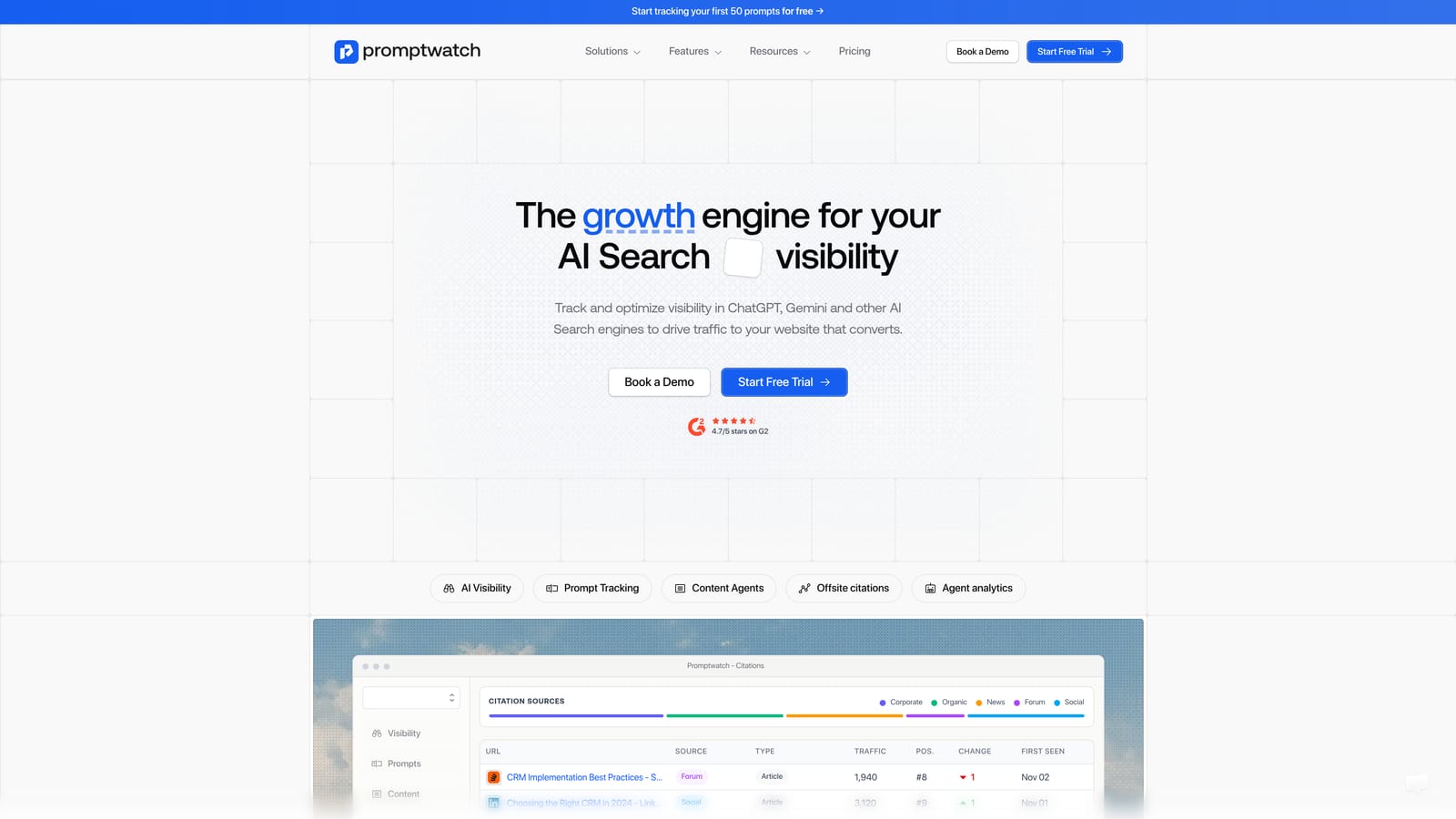
Promptwatch is a prompt-level AI monitoring tool that tracks how specific queries and prompts surface brand mentions in AI models, designed for teams running active Generative Engine Optimization campaigns.
Where This Tool Shines
Promptwatch operates at a more granular level than most AI visibility tools. Rather than tracking general brand presence, it focuses on which specific prompts and queries are driving AI citations. That distinction matters: understanding that your brand appears in AI responses is one thing; understanding exactly which questions trigger those appearances is what allows you to systematically optimize for more.
For teams running structured GEO campaigns, the competitive prompt analysis feature adds a useful dimension. Knowing which queries surface competitors and not your brand points directly to content and positioning gaps worth addressing.
Key Features
Prompt-Level Tracking: Monitors brand citations at the individual query level, revealing which specific prompts drive AI-generated mentions.
Query Performance Analysis: Identifies high-value queries where your brand is and isn't being cited by AI models.
Multi-Model Monitoring: Tracks prompt performance across major AI language models to give a cross-platform view of citation behavior.
GEO Strategy Insights: Converts prompt tracking data into actionable recommendations for improving AI citation frequency.
Competitive Prompt Analysis: Reveals which prompts surface competitors, highlighting gaps in your current AI visibility footprint.
Best For
Promptwatch is the right tool for GEO specialists and content strategists who want the most granular available view of AI citation behavior. It's a focused monitoring tool without content generation or indexing capabilities, so it works best as part of a broader stack.
Pricing
Verify current pricing and plan details at promptwatch.io.
Which Tool Is Right for Your Workflow?
The right choice here depends heavily on where your biggest gap sits right now. These tools address overlapping but distinct needs, and the most common mistake is choosing a point solution when your workflow actually requires coverage across multiple stages.
If you need a single platform that handles content creation, immediate indexing, and AI visibility monitoring, Sight AI is the only tool in this list that covers all three natively. That end-to-end integration is a meaningful operational advantage for teams that don't want to manage separate tools for each stage of the content lifecycle.
For content generation at scale: Writesonic is a strong choice for teams whose primary need is producing high volumes of SEO-oriented content efficiently.
For complex workflow automation: AirOps suits operations teams that need customizable AI pipelines connecting LLMs to internal data sources and publishing systems.
For AI brand monitoring and analytics: Profound, Peec, and Promptwatch each offer specialized visibility into how AI models reference your brand. Profound and Peec focus on broader brand presence and competitive benchmarking; Promptwatch goes deeper at the prompt level, making it the best fit for active GEO campaign management.
The broader trend worth noting is that content indexing and AI visibility are converging. Teams that treat them as separate problems are increasingly at a disadvantage compared to those running a unified create-index-monitor workflow.
Start tracking your AI visibility today and see exactly where your brand appears across top AI platforms, what content opportunities you're missing, and how to automate your path to faster organic traffic growth.