Content marketing has entered a new era. The old model of manually briefing writers, editing drafts, and scheduling posts one by one simply doesn't scale for teams that need to publish consistently across multiple channels while also tracking how AI models are surfacing their brand. What marketers and founders need now are platforms that handle the full pipeline: topic research, writing, SEO optimization, formatting, and publishing on a recurring schedule, with minimal daily intervention.
That's what "content creation autopilot" actually means. Not just an AI that writes when you prompt it, but a system that runs end-to-end workflows on your behalf, often on a set schedule, so your content engine keeps moving even when your attention is elsewhere.
To build this list, we evaluated tools on six criteria: degree of true automation, content quality, SEO and GEO optimization capabilities, CMS integrations, scalability for bulk needs, and pricing transparency. Whether you're a solo founder trying to grow organic traffic or an agency managing dozens of client blogs, there's a tool here built for your situation.
1. Sight AI
Best for: All-in-one content autopilot with AI visibility tracking across ChatGPT, Claude, and Perplexity.
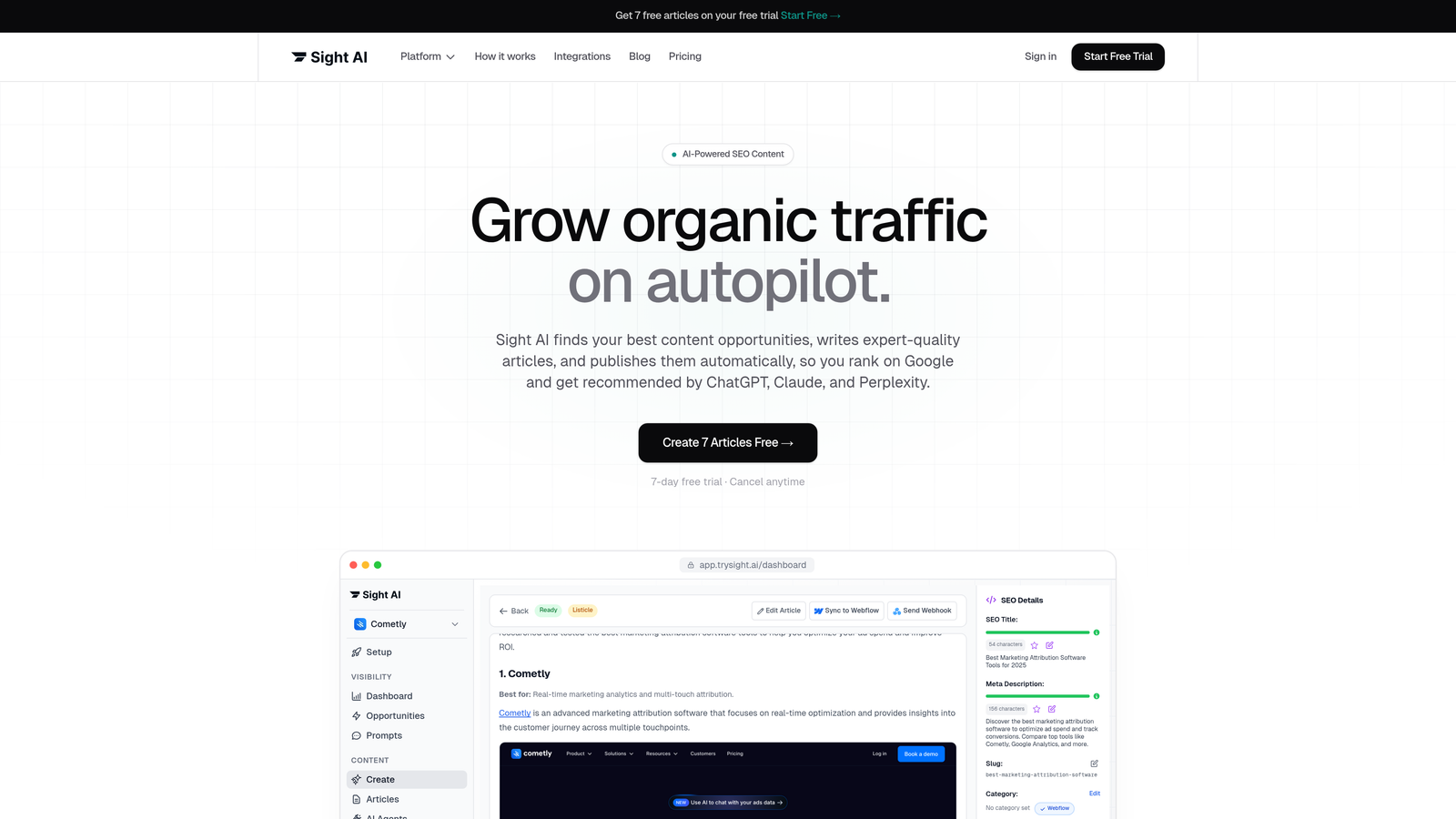
Sight AI is a comprehensive content autopilot platform that combines 13+ specialized AI agents, hands-off content generation, and AI brand visibility tracking in a single workspace.
Where This Tool Shines
Most content tools solve one piece of the puzzle. Sight AI is built around the idea that modern SEO has two audiences: search engine crawlers and AI models. Its Autopilot Mode handles the content creation side, running end-to-end from topic ideation through SEO/GEO-optimized drafting to CMS publishing, without requiring a manual trigger for each piece.
What genuinely sets it apart is the AI Visibility layer. While your content is being created and published, Sight AI simultaneously tracks how AI platforms like ChatGPT, Claude, and Perplexity are mentioning your brand, giving you an AI Visibility Score with sentiment analysis and prompt tracking. This pairing of content production with AI search monitoring is rare in the market and increasingly relevant as AI-generated answers become a primary discovery channel.
Key Features
Autopilot Mode with 13+ AI Agents: Specialized agents handle each stage of content creation, from keyword research and outlining to drafting, optimization, and formatting, running as a coordinated pipeline rather than isolated steps.
AI Visibility Score: Tracks brand mentions across ChatGPT, Claude, Perplexity, and six or more AI platforms, with sentiment analysis and prompt-level tracking so you know exactly how AI models are describing you.
SEO and GEO Optimization: Every generated article is optimized for both traditional search engines and generative engine optimization, ensuring content is structured to appear in AI-generated answers.
IndexNow Integration: Instantly notifies search engines after publishing, accelerating content discovery without manual submission or waiting for crawl cycles.
CMS Auto-Publishing with Sitemap Updates: Connects directly to your CMS and automatically updates your sitemap with each new piece, keeping your site architecture clean and crawlable.
Best For
Marketers, founders, and agencies who want to grow organic traffic through both traditional SEO and AI search visibility. Particularly well-suited for resource-constrained teams that need a single platform to replace a stack of separate tools for writing, optimization, indexing, and brand monitoring.
Pricing
Free tier available. Paid plans scale with usage. Visit trysight.ai/pricing for current plan details and credit structures.
2. Jasper
Best for: Enterprise marketing teams that need brand voice consistency across large content volumes.
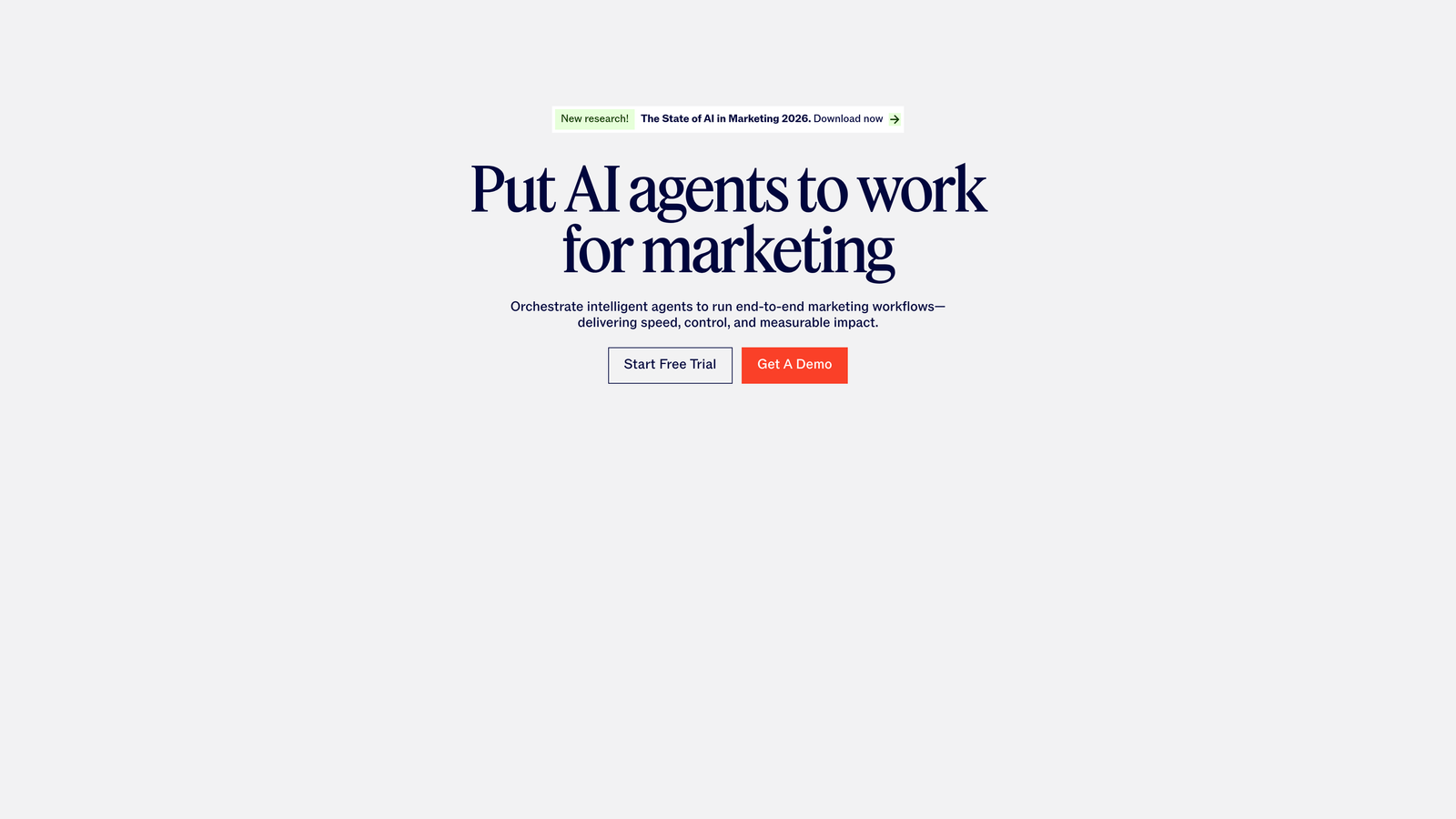
Jasper is an enterprise-grade AI content platform built around Brand Voice enforcement, team collaboration workflows, and campaign-level content automation.
Where This Tool Shines
Jasper's core strength is consistency at scale. For larger marketing teams where multiple writers and AI outputs need to sound like the same brand, its Brand Voice and Knowledge Base features do the heavy lifting. You train the system on your company's tone, terminology, and style guide, and it applies that context across every asset generated.
The campaign workflow feature is particularly useful for teams producing multi-asset launches: blog posts, social copy, email sequences, and ad creative all tied to a single campaign brief. It's less focused on fully hands-off autopilot and more on structured, brand-safe content at volume.
Key Features
Brand Voice and Style Guide: Enforces consistent tone, vocabulary, and messaging across all generated content, reducing the need for heavy editorial review.
Knowledge Base: Train the AI on proprietary company information, product details, and positioning so outputs are contextually accurate.
Campaign Workflows: Create multi-asset content packages from a single brief, covering blog, social, email, and ad formats simultaneously.
Team Collaboration with Approvals: Built-in review and approval workflows for marketing teams with multiple stakeholders.
Integrations: Connects with major marketing tools, browsers, and platforms for in-context content generation.
Best For
Mid-market and enterprise marketing teams with established brand guidelines who need AI-generated content to stay on-brand across large volumes and multiple contributors. Less suited for solo operators or teams prioritizing fully automated publishing.
Pricing
Creator plan starts at $49/month; Pro plan at $69/month; Business plan with custom pricing for larger teams.
3. Surfer SEO + Surfer AI
Best for: SEO-focused content teams that want AI writing paired directly with real-time SERP data.
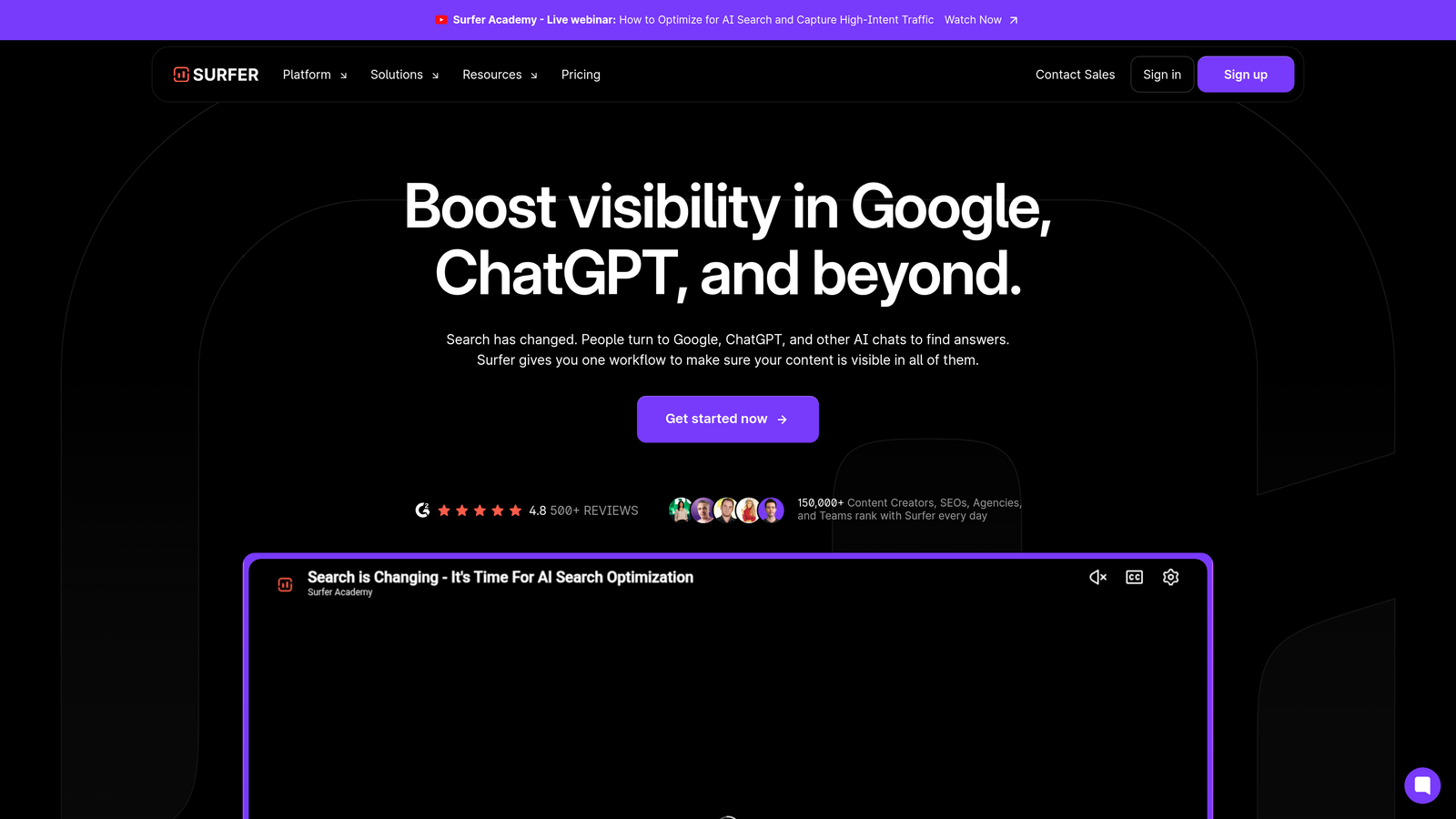
Surfer SEO is an SEO content platform that combines live SERP analysis with AI article generation to produce on-page optimized content built around what's actually ranking.
Where This Tool Shines
Surfer's differentiation is the depth of its SEO data layer. Rather than generating content and then checking it against SEO guidelines, Surfer AI builds the optimization into the generation process, using real-time SERP analysis to inform structure, NLP term coverage, and content depth before a single word is written.
The Content Score feature gives writers and editors a live signal as they work, showing exactly which terms are under-covered and where the document stands relative to top-ranking competitors. For teams whose primary goal is ranking on Google, this is one of the most direct feedback loops available.
Key Features
Auto Article with SERP Optimization: Generates full articles using live competitor data as the structural foundation, not just general AI training.
Content Score with NLP Suggestions: Real-time scoring system that flags missing terms and semantic gaps as you write or review.
Content Audit and Refresh: Identifies existing pages that have lost ranking and recommends specific updates to recover performance.
Keyword Clustering and Planning: Groups related keywords into content clusters for strategic topic coverage.
WordPress and Google Docs Integrations: Brings the Content Score directly into the tools your writers already use.
Best For
SEO managers and content strategists at companies where Google search ranking is the primary traffic driver. Works best when paired with a human editorial layer rather than as a fully hands-off autopilot.
Pricing
Essential plan starts at $89/month. Surfer AI articles are available as add-on credits, priced separately from the base subscription.
4. Copy.ai
Best for: GTM teams that need content automation connected to sales research, outreach, and marketing workflows.
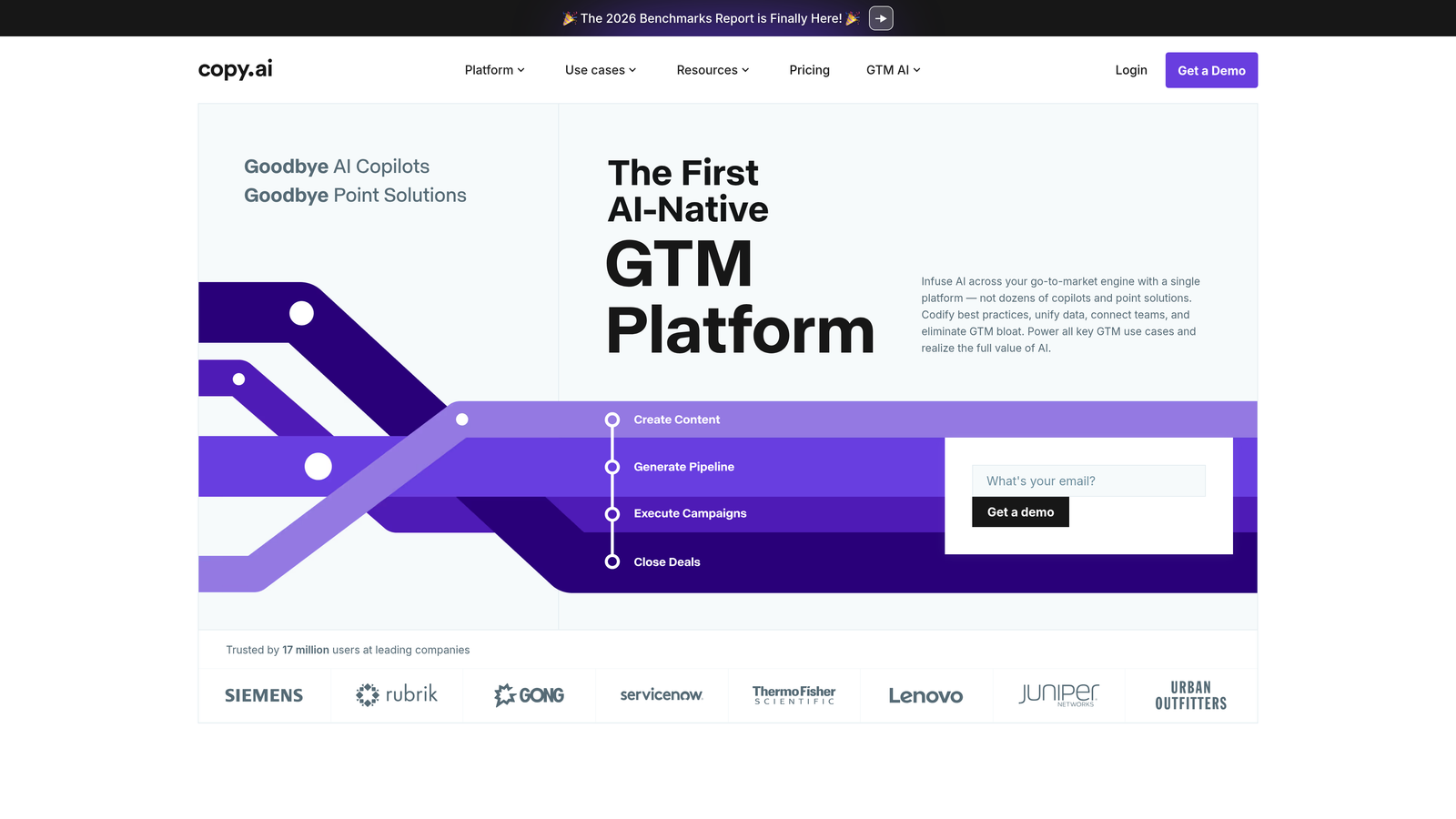
Copy.ai is a GTM AI platform that goes beyond content creation to automate connected workflows across marketing, sales, and operations using pre-built and custom workflow templates.
Where This Tool Shines
Copy.ai has evolved from a simple AI writing tool into something closer to a workflow automation platform for go-to-market teams. Its workflow chaining capability is the key differentiator: you can connect research steps, content drafting, and distribution actions into a single automated sequence that runs without manual handoffs between stages.
For teams that think about content as part of a broader GTM motion rather than a standalone publishing exercise, this integration of research, writing, and outreach in one workflow layer is genuinely useful. It's less about scheduling blog posts and more about automating content-dependent processes end to end.
Key Features
Pre-Built GTM Workflow Templates: Ready-to-run workflows for common marketing, sales, and ops tasks, reducing setup time significantly.
Workflow Chaining: Connect research, writing, and distribution steps into a single automated sequence with conditional logic.
Brand Voice Settings: Apply consistent tone and messaging across all workflow outputs without manual editing.
API Access: Build custom automation integrations with your existing tech stack for advanced use cases.
Free Tier: Individual users can access core features without a paid plan, making it accessible for early-stage experimentation.
Best For
Growth teams and RevOps professionals who need content automation connected to sales and marketing workflows, not just standalone blog publishing. Also useful for teams experimenting with AI automation before committing to an enterprise platform.
Pricing
Free plan available. Pro plan starts at $49/month. Enterprise pricing is custom and available on request.
5. Writesonic
Best for: Content teams needing real-time web-connected research combined with bulk article generation and direct WordPress publishing.
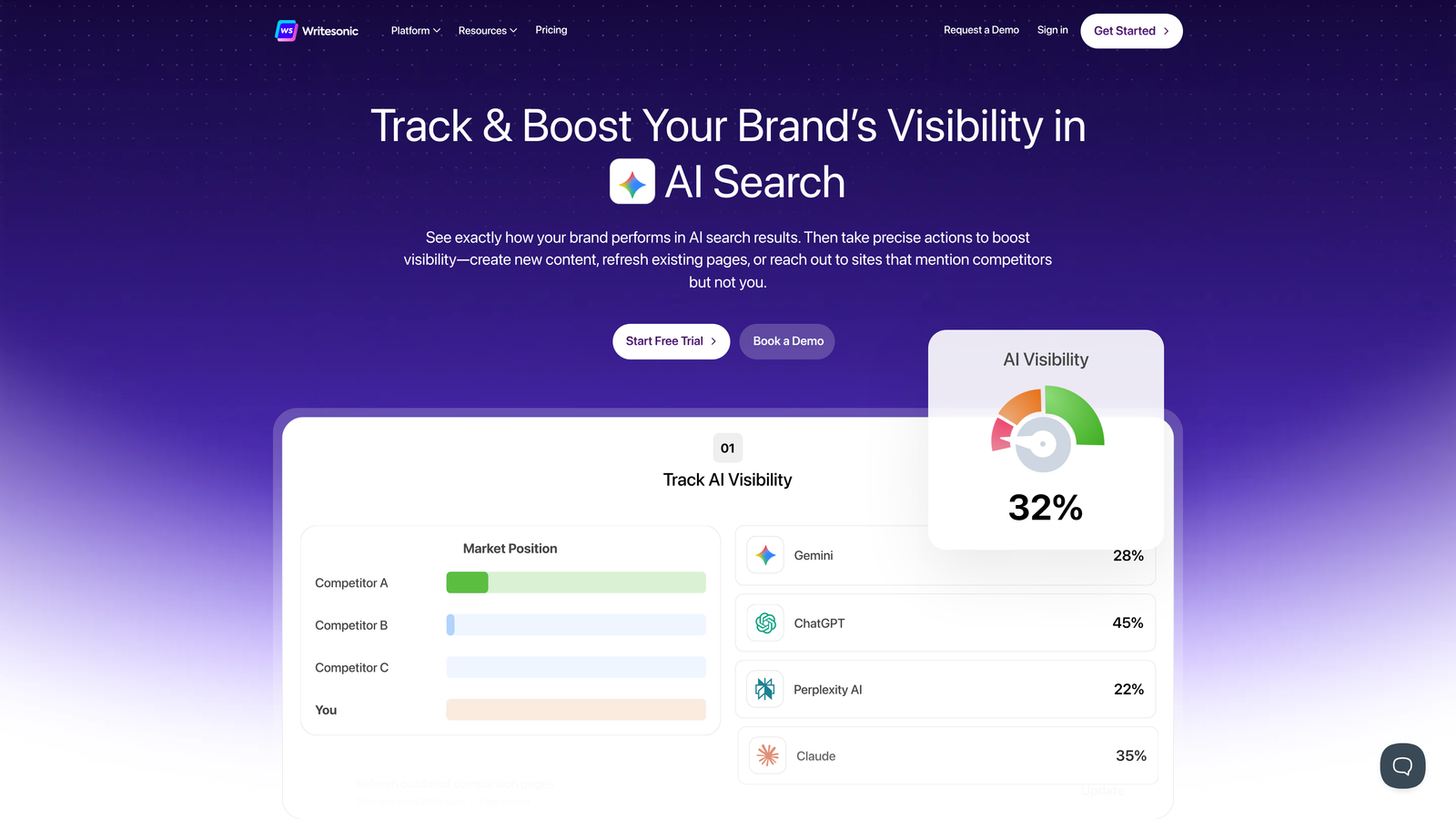
Writesonic is an AI content platform with real-time internet access via its Chatsonic feature, enabling research-grounded article generation at scale with direct CMS publishing.
Where This Tool Shines
Writesonic's Chatsonic integration solves a common frustration with AI writing tools: content based on outdated training data. By connecting to the live web during the research and drafting process, Chatsonic can reference current events, recent studies, and up-to-date information, which matters significantly for industries where timeliness affects credibility.
The bulk generation capability adds another layer of utility for teams managing high-volume content calendars. Upload a keyword list and generate multiple optimized articles in a single session, then push them directly to WordPress without leaving the platform.
Key Features
Chatsonic with Real-Time Web Access: Conducts live research during content generation, grounding outputs in current information rather than static training data.
Bulk Article Generation: Generate multiple articles from a keyword list in a single workflow, suitable for programmatic or high-volume content strategies.
Built-In SEO Optimization: Scoring and optimization suggestions integrated into the writing interface, similar to dedicated SEO tools.
Direct WordPress Publishing: Push finished articles to WordPress without manual copy-paste, reducing production friction.
Multi-Language Support: Generate content across multiple languages for global content teams or international SEO strategies.
Best For
Content managers and digital marketing teams that need high-volume output with real-time research grounding, especially in fast-moving industries where content freshness is a ranking and credibility factor.
Pricing
Free tier available with limited word credits. Paid plans start around $20/month for individual users, with higher tiers for teams and agencies.
6. Byword
Best for: Programmatic SEO strategies requiring bulk article generation from keyword lists with automated CMS publishing.
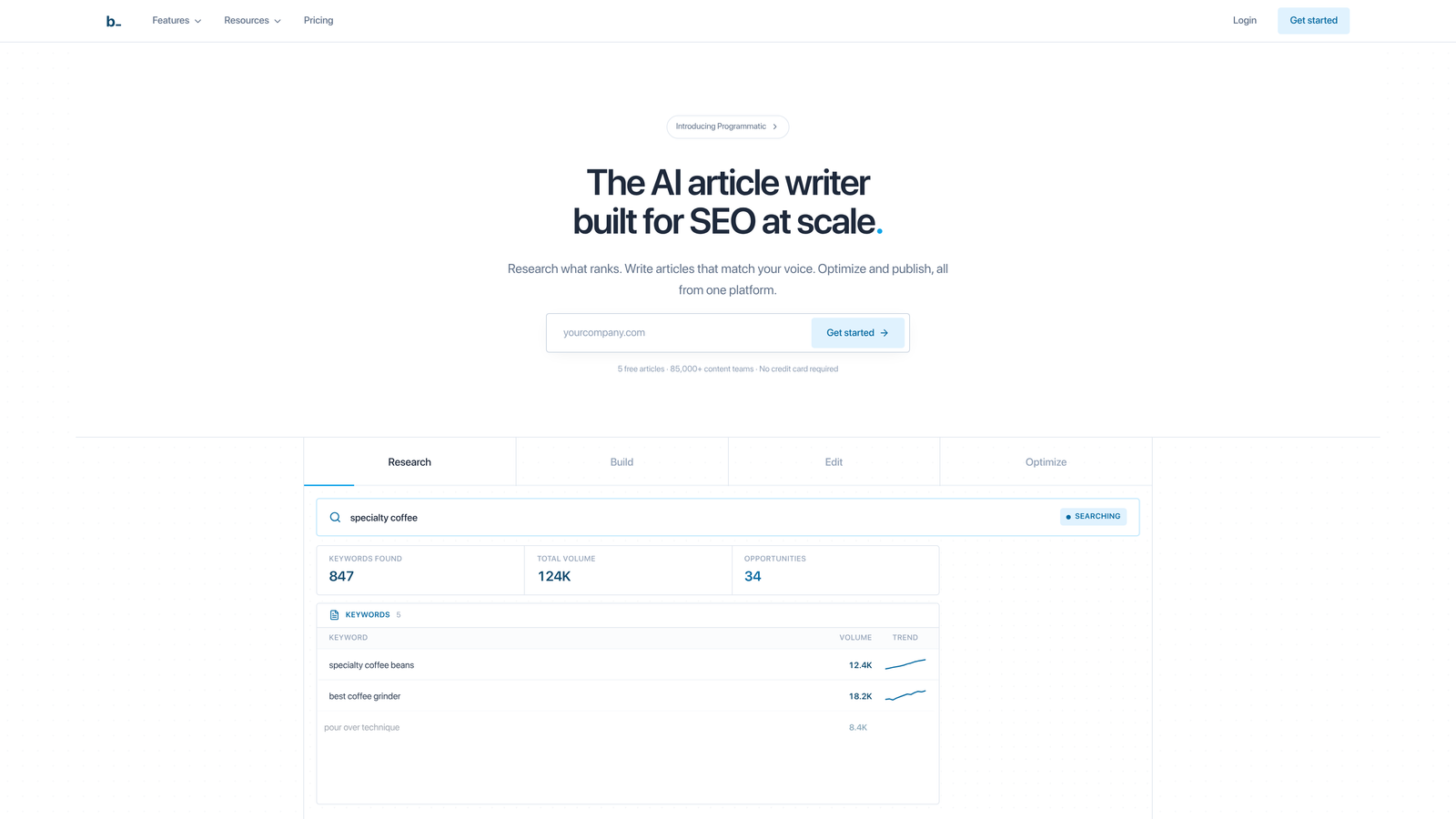
Byword is a programmatic SEO content tool that generates fully formatted, publication-ready articles at scale from CSV keyword uploads and publishes them directly to your CMS.
Where This Tool Shines
Byword is built for one specific use case and executes it well: you have a large list of target keywords, you want fully formatted articles for each one, and you want them published without manual intervention. The CSV upload workflow removes the friction of entering keywords one at a time, and the auto-publishing connections to WordPress, Webflow, Ghost, and other platforms complete the pipeline.
The pay-per-article pricing model is worth noting because it aligns costs directly with output. Teams running programmatic SEO campaigns with variable monthly volumes often find this more predictable than subscription models with credit caps.
Key Features
CSV Keyword Upload: Import hundreds of keywords at once and generate corresponding articles in bulk without manual input for each one.
Multi-CMS Auto-Publishing: Connects to WordPress, Webflow, Ghost, and other platforms for direct article delivery without copy-paste workflows.
Custom Instructions and Tone Settings: Apply per-batch instructions to control article structure, tone, and formatting for different content types or client accounts.
Internal Linking Suggestions: Generates internal link recommendations within articles to support site architecture and SEO.
Pay-Per-Article Model: Costs scale directly with output volume rather than a fixed monthly subscription, useful for variable publishing schedules.
Best For
SEO agencies and in-house teams running programmatic content strategies where the goal is high-volume, keyword-targeted article production with minimal per-article manual effort.
Pricing
Pay-per-article model. Starter pack is approximately $99 for 25 articles. Volume discounts available for larger batches.
7. Koala AI (KoalaWriter)
Best for: Bloggers and affiliate marketers who need one-click SEO article generation with Amazon product integration.
Koala AI is a one-click SEO article generator that combines real-time SERP analysis with Amazon affiliate product roundup integration and automated outline-to-publish workflows.
Where This Tool Shines
KoalaWriter is particularly well-positioned for affiliate content creators and niche site operators. The Amazon product roundup integration is a standout feature that pulls live product data directly into review-style articles, which is a significant time saver for anyone running comparison or "best of" content at scale.
The real-time SERP analysis ensures that generated articles are structured to match the search intent behind each keyword rather than producing generic content. For solo operators and small teams working with tight budgets, the pricing is also notably accessible compared to enterprise-focused alternatives.
Key Features
One-Click Article Generation: Enter a keyword and receive a fully structured, SEO-optimized article without manual outline creation or prompting.
Real-Time SERP Analysis: Analyzes current top-ranking pages to align article structure and content depth with actual search intent.
Amazon Affiliate Integration: Pulls live Amazon product data into roundup and review articles automatically, including pricing and product details.
Auto-Generated Outlines with Customization: Produces a structured outline before drafting, with options to adjust headings and sections before generation runs.
Bulk Generation via Keyword Lists: Scale output by uploading multiple keywords for batch article creation.
Best For
Bloggers, affiliate marketers, and niche site operators who need fast, SEO-aligned article production with minimal setup. Also useful for small content teams that want a low-cost entry point into AI-assisted content at scale.
Pricing
Essentials plan starts at $9/month. Professional plan at $25/month with higher credit allocations for larger publishing volumes.
8. Journalist AI
Best for: Fully hands-off blog management with scheduled auto-publishing across multiple CMS platforms.
Journalist AI is a fully automated blog management platform that generates and publishes articles on a set schedule across WordPress, Shopify, Wix, Webflow, and other CMS platforms without requiring manual triggers for each post.
Where This Tool Shines
If "autopilot" means anything in this category, Journalist AI takes the concept most literally. You configure the publishing frequency, topic parameters, tone, and article length, and the platform runs independently from there, generating and publishing on schedule without you needing to log in and approve each piece. For founders or small teams who want a blog that grows consistently in the background, this is one of the closest things to a set-it-and-forget-it solution available.
The agency mode is worth calling out specifically. Managing multiple client blogs from a single dashboard, each with its own settings and publishing schedule, addresses a real operational pain point for content agencies handling several accounts simultaneously.
Key Features
True Autopilot Scheduling: Set publishing frequency and topic parameters once, and the platform generates and publishes on schedule without manual intervention for each article.
Multi-CMS Support: Connects to WordPress, Shopify, Wix, Webflow, and other platforms, making it flexible for clients on different tech stacks.
Auto-Linking and Internal Link Management: Handles internal linking automatically within and across published articles to support site structure.
Customizable Article Parameters: Control length, tone, structure, and topic focus per site or per client account.
Agency Mode: Manage multiple client blogs from a single dashboard with separate settings and schedules for each.
Best For
Content agencies managing multiple client blogs and founders who want consistent blog publishing without dedicating ongoing time to content operations. Best suited when publishing volume and consistency matter more than highly customized, brand-specific content.
Pricing
Plans start around $29/month for a single site. Agency pricing is available for managing multiple sites simultaneously.
9. ContentBot
Best for: Solopreneurs and small teams that need affordable, customizable content automation with a visual workflow builder.
ContentBot is an affordable content automation platform with a visual Flows builder for creating custom multi-step content generation sequences, combined with auto-blog scheduling and WordPress publishing.
Where This Tool Shines
ContentBot's Flows feature is what distinguishes it from simpler AI writing tools. Rather than a fixed content pipeline, you build your own multi-step workflow visually, connecting research steps, drafting actions, repurposing tasks, and publishing triggers in whatever sequence fits your process. This flexibility makes it adaptable for teams with non-standard content workflows.
The pricing structure is also genuinely accessible. The prepaid word-credit option is particularly useful for teams with inconsistent monthly volumes who don't want to pay for unused capacity on a fixed subscription. For solopreneurs and early-stage teams testing content automation, the barrier to entry here is low.
Key Features
Visual Flows Builder: Create custom multi-step content automation sequences with a drag-and-drop interface, connecting research, writing, repurposing, and publishing actions.
Auto-Blog with Scheduling: Set up a topic queue and publishing schedule so new content goes live automatically without manual approval for each post.
Content Repurposing Tools: Built-in paraphrasing, summarizing, and reformatting features for turning existing content into new formats.
WordPress Integration: Direct publishing to WordPress without leaving the platform.
Flexible Pricing Tiers: Prepaid word credits, monthly starter plans, and premium tiers accommodate different usage patterns and budget constraints.
Best For
Solopreneurs, small business owners, and early-stage teams who want customizable content automation without enterprise-level pricing. Also a good fit for teams that need to repurpose existing content alongside creating new articles.
Pricing
Prepaid plan from $1 per 1,000 words. Starter plan at $19/month. Premium plan at $49/month with higher output limits.
Which Tool Fits Your Situation
The right content autopilot platform depends entirely on what "automated" means for your specific workflow. Here's a quick-pick guide based on primary use case.
For all-in-one autopilot with AI visibility tracking: Sight AI is the clear choice. It's the only platform on this list that combines end-to-end content generation with tracking how AI models like ChatGPT and Claude are mentioning your brand, addressing both traditional SEO and the emerging AI search channel in a single workspace.
For enterprise brand consistency: Jasper is built for teams where every piece of content needs to sound like the same brand, with approval workflows and Knowledge Base features that make it manageable at scale.
For SEO-first content teams: Surfer AI's real-time SERP integration makes it the strongest option when Google ranking is the primary objective and you want optimization baked into generation rather than applied after the fact.
For programmatic SEO at volume: Byword's CSV-to-CMS pipeline and pay-per-article model are purpose-built for this use case, with less overhead than full-featured platforms you'd only partially use.
For fully hands-off publishing: Journalist AI's scheduled autopilot is the most literal interpretation of set-it-and-forget-it content management, particularly for agencies running multiple client blogs.
One broader observation: many teams are discovering that tool sprawl, separate platforms for writing, SEO, indexing, and brand monitoring, creates its own overhead. All-in-one platforms that reduce the number of dashboards you manage are increasingly preferred, especially for leaner teams.
If you're ready to move beyond guessing how AI models talk about your brand and want a platform that handles content creation and AI visibility in one place, start tracking your AI visibility today and see exactly where your brand appears across the top AI platforms, while your content pipeline runs on autopilot.