AI-powered search has fundamentally changed how brands get discovered. When someone asks ChatGPT, Claude, or Perplexity for a product recommendation, the brands that appear in those responses win mindshare and, eventually, revenue. But most marketing teams are still flying blind, with no visibility into whether their brand is being mentioned, how it's being described, or which competitors are dominating AI-generated answers.
This list covers the best tools for tracking and improving brand recognition in AI platforms. We're talking about monitoring how AI models currently talk about your brand, understanding your competitive position in AI-generated responses, and creating the optimized content that earns those mentions in the first place. Whether you're a founder trying to establish category presence or an agency managing AI visibility for multiple clients, these tools give you the data and execution capabilities to compete in the AI search era.
Selection criteria: cross-platform AI coverage, actionable insights rather than just raw data, content creation capabilities, and overall value for teams focused on organic and AI-driven growth.
1. Sight AI
Best for: Teams that want monitoring and content creation in a single AI visibility workflow.
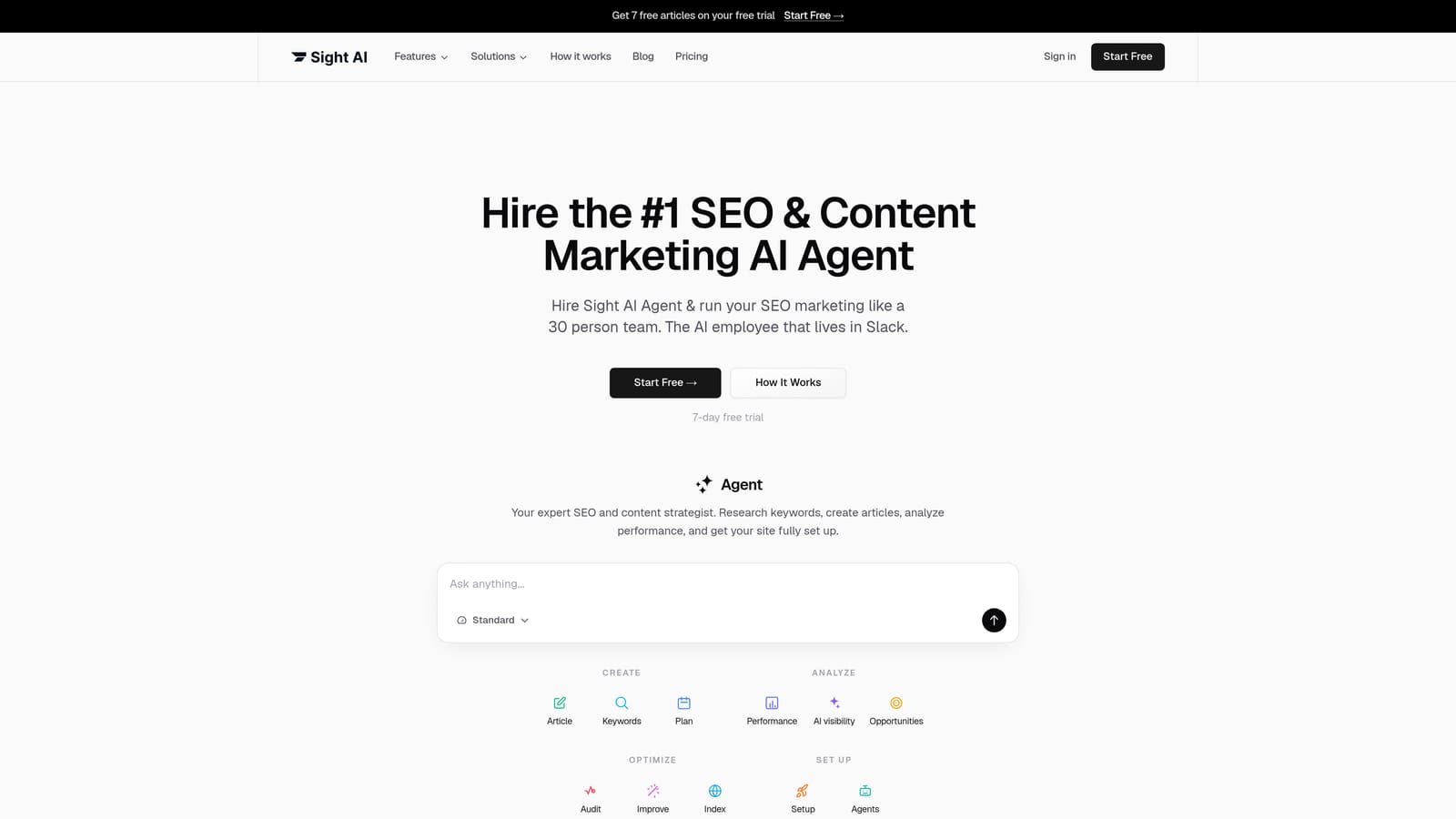
Sight AI is an all-in-one platform that tracks how your brand is mentioned across 6+ AI models and provides the content creation tools to improve those mentions, combining monitoring, sentiment analysis, and SEO/GEO content generation in a single workflow.
Where This Tool Shines
Most AI visibility tools answer the question "what is AI saying about us?" Sight AI goes a step further by connecting that answer directly to "what content should we create to change it?" That closed loop between monitoring and execution is what sets it apart from the other tools on this list.
The platform covers ChatGPT, Claude, Perplexity, and several other major AI platforms simultaneously, giving you a consolidated view of your brand's presence rather than forcing you to check each model separately. The AI Visibility Score adds a layer of qualitative context, so you're not just counting mentions but understanding the sentiment and framing behind them.
Key Features
Brand Mention Monitoring: Tracks how your brand appears across 6+ AI platforms including ChatGPT, Claude, and Perplexity, with prompt-level tracking to identify which queries trigger your mentions.
AI Visibility Score: A composite metric combining mention frequency, sentiment analysis, and competitive context, giving you a single benchmark to track progress over time.
13+ Specialized AI Content Agents: Purpose-built agents for listicles, guides, explainers, and other formats that are structured to earn AI citations, not just rank in traditional search.
Autopilot Mode: Automates content workflows so your team can maintain consistent publishing cadence without manual intervention at every step.
IndexNow Integration and CMS Auto-Publishing: Pushes new content to search engines faster and publishes directly to your CMS, reducing the gap between content creation and content discovery.
Best For
Marketers, founders, and agencies who want a complete solution rather than a point tool. Particularly well-suited to teams that recognize the monitoring-to-content gap and want a single platform to bridge it, rather than stitching together separate tools for tracking and creation.
Pricing
Check trysight.ai for current plans and free trial options. Pricing tiers are designed to scale with team size and content volume.
2. Promptwatch
Best for: Teams focused on prompt-level monitoring to understand which queries trigger AI brand mentions.
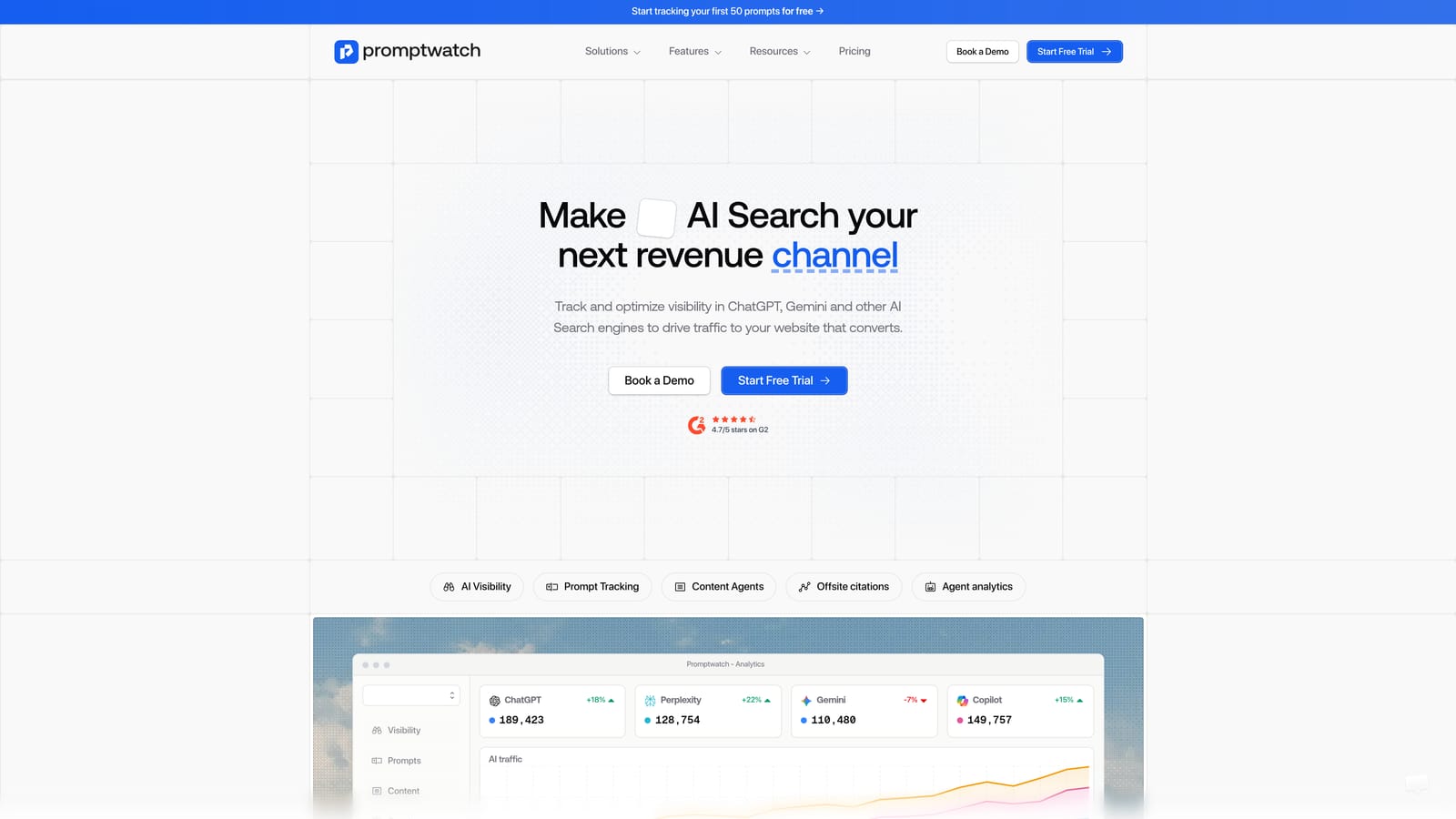
Promptwatch is a prompt-specific AI monitoring tool that tracks which brands appear in AI model responses for targeted queries, with historical data to surface trends over time.
Where This Tool Shines
Promptwatch's strength is granularity. Rather than giving you a broad overview of AI brand presence, it lets you drill into specific prompts and see exactly which brands appear in responses to those queries. This is particularly useful for competitive research: if you want to know why a competitor keeps appearing in responses to "best [category] tools," Promptwatch gives you the visibility to investigate.
The historical data layer adds meaningful context. AI model behavior shifts over time as models are updated and retrained, and Promptwatch's trend tracking lets you see when your brand's presence in specific response types improves or declines.
Key Features
Prompt-Specific Tracking: Monitor brand appearances for individual queries across major AI models, not just aggregate mention counts.
Historical Response Data: Track how AI brand mentions change over time to identify the impact of content and SEO efforts.
Competitive Comparison: See which competitors appear alongside or instead of your brand for key prompts.
Change Alerts: Get notified when brand mention patterns shift significantly, so you can respond quickly.
Best For
Marketing teams and SEO professionals who want detailed prompt-level intelligence and competitive monitoring. Works well as a dedicated monitoring layer for teams that handle content creation through separate tools.
Pricing
Check promptwatch.io for current pricing plans and available tiers.
3. Profound
Best for: Enterprise marketing teams that need structured analytics and competitive benchmarking at scale.
Profound is an enterprise-oriented AI answer engine monitoring platform that delivers structured analytics and competitive benchmarking for how brands appear in AI-generated responses.

Where This Tool Shines
Profound is built for teams that need to report upward. Its structured reporting and competitive benchmarking features make it easier to communicate AI visibility performance to stakeholders who want clear metrics and trend lines, not raw data exports. For enterprise marketing teams managing multiple product lines or brands, that reporting infrastructure is genuinely valuable.
The platform covers major AI answer engines and provides analytics on brand appearance patterns over time. If your team operates at a scale where you need formalized tracking across a portfolio of brands or a large set of target queries, Profound's enterprise orientation makes it a natural fit.
Key Features
Multi-Platform AI Answer Engine Monitoring: Tracks brand appearances across the major AI platforms that are reshaping search behavior.
Competitive Benchmarking: Share-of-voice analytics that contextualize your brand's AI presence relative to key competitors.
Structured Reporting: Formatted reporting outputs designed for enterprise marketing workflows and stakeholder communication.
Brand Appearance Trend Tracking: Longitudinal data to show how AI visibility evolves in response to content and strategy changes.
Best For
Enterprise marketing teams and larger agencies that need formalized reporting and competitive benchmarking across multiple brands or product categories. Less suited to smaller teams looking for a lightweight, self-serve option.
Pricing
Enterprise-oriented pricing model. Check profound.co for current details and to request a demo.
4. Peec
Best for: Brands prioritizing share-of-voice metrics in AI search relative to direct competitors.
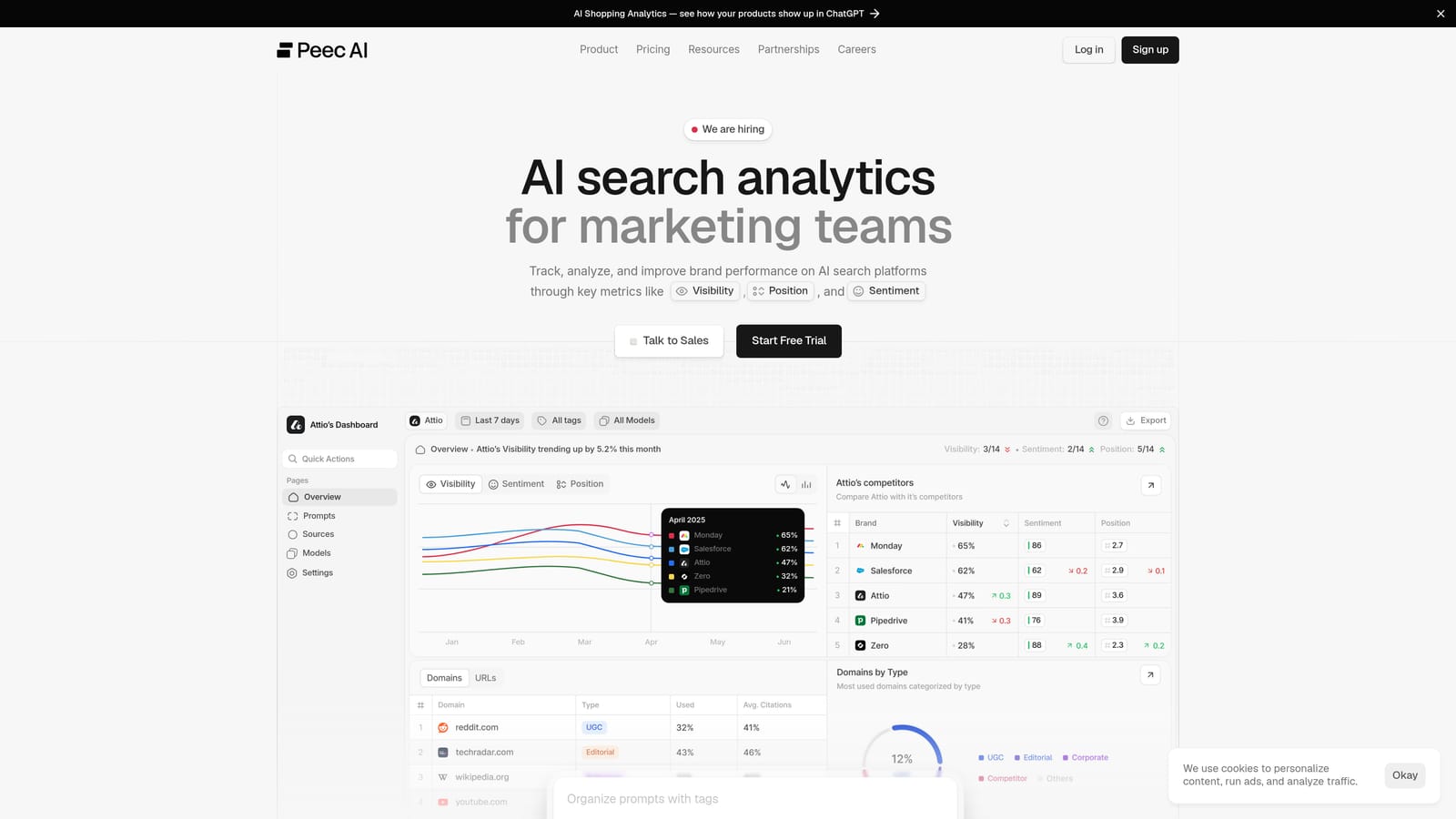
Peec is an AI search visibility tool that specializes in share-of-voice metrics, helping brands understand their relative presence in AI-generated responses compared to competitors.
Where This Tool Shines
Share of voice in AI responses is becoming as important as share of voice in traditional search, and Peec is built around that specific metric. If your primary question is "how often does AI recommend us versus our top three competitors," Peec gives you a clear, focused answer to that question.
The competitive visibility comparison features are particularly useful for category-level analysis. You can track not just whether you appear in AI responses but how your presence stacks up against the broader competitive set, which helps prioritize where to focus content and optimization efforts.
Key Features
Share-of-Voice Tracking: Measures your brand's relative presence in AI search responses compared to competitors, not just raw mention counts.
Competitive Visibility Comparisons: Side-by-side analysis of how your brand appears versus key competitors across AI platforms.
Brand Mention Frequency and Context: Tracks how often your brand appears and in what context within AI-generated responses.
Progress Monitoring: Longitudinal tracking to measure whether your AI visibility is improving over time.
Best For
Marketing teams and strategists who are primarily focused on competitive positioning in AI search. A good fit for brands in competitive categories where understanding relative AI visibility is more actionable than absolute mention counts.
Pricing
Check peec.ai for current plans and pricing tiers.
5. AirOps
Best for: Content teams and agencies that need to scale LLM-powered content production workflows.
AirOps is an AI workflow automation platform that helps content teams build scalable, LLM-powered content production pipelines, particularly useful for creating content structured to earn AI citations.
Where This Tool Shines
AirOps approaches the AI brand recognition challenge from the content operations side rather than the monitoring side. Instead of tracking what AI models say about you, it helps you build the content infrastructure that influences what they'll say in the future. For teams managing high content volumes, the ability to build customizable, repeatable LLM-powered workflows is a meaningful efficiency gain.
It's worth noting that AirOps works best as a complement to monitoring tools rather than a replacement. You still need visibility into how AI models currently perceive your brand; AirOps helps you act on that data at scale through structured content production.
Key Features
LLM-Powered Workflow Automation: Build custom content production pipelines powered by large language models, without requiring engineering resources to maintain them.
Customizable AI Agents: Configure agents for different content types and use cases, adapting workflows to your specific content strategy.
Scalable Content Operations: Designed for teams and agencies that need to produce large content volumes without proportionally scaling headcount.
Integration Capabilities: Connects with existing content and marketing technology stacks to fit into established workflows.
Best For
Content teams and agencies that have already identified their AI visibility gaps and need scalable production infrastructure to close them. Less useful as a standalone solution for teams that haven't yet established a monitoring baseline.
Pricing
Check airops.com for current pricing tiers and available plans.
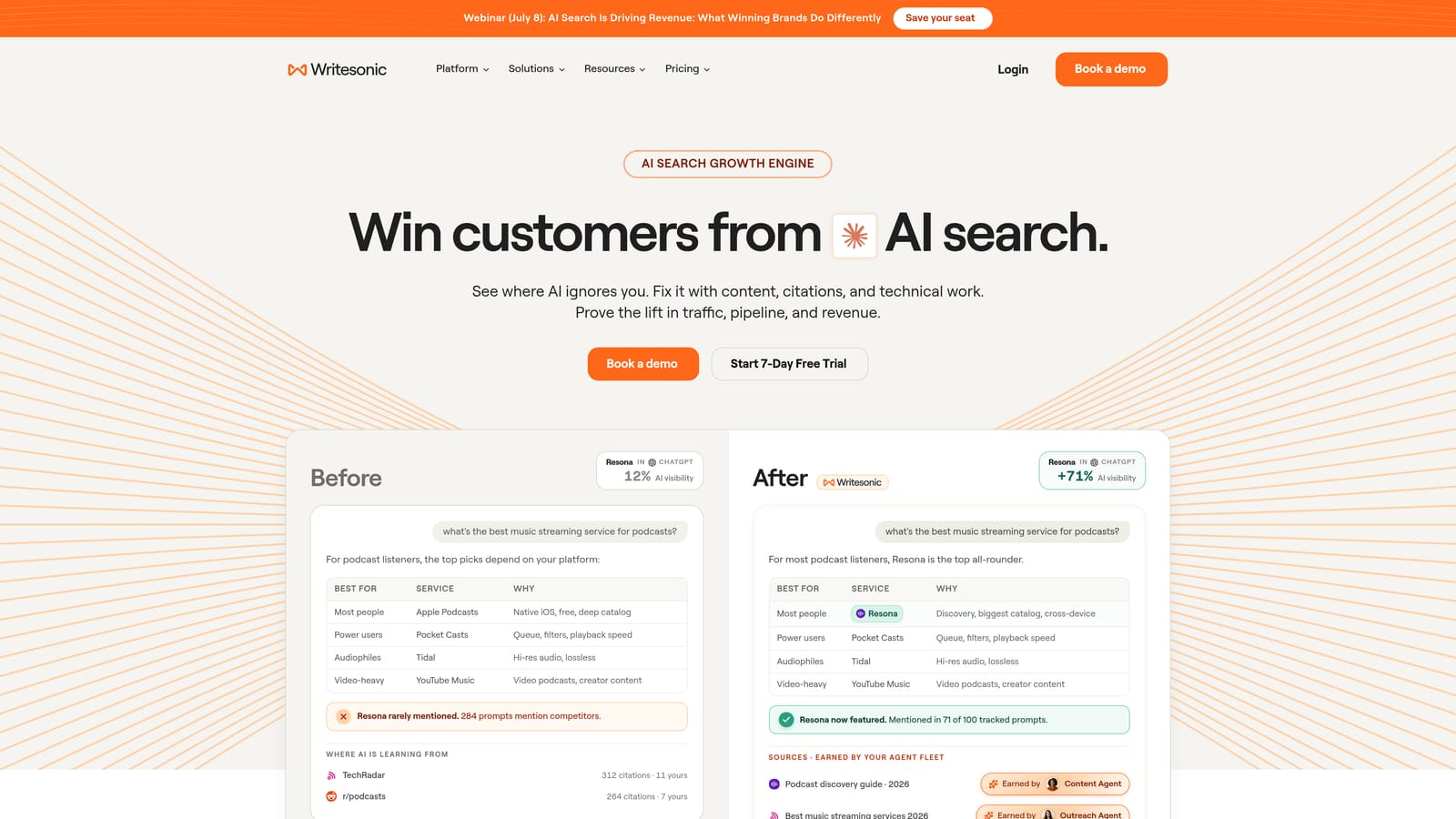
6. Writesonic
Best for: Teams that need high-volume AI content generation with built-in SEO optimization guardrails.
Writesonic is a broad AI content generation platform with SEO optimization features, useful for teams that need to produce high volumes of content with built-in search optimization built in.
Where This Tool Shines
Writesonic covers a wide range of content formats, from long-form articles and blog posts to ad copy and social content, making it a flexible option for teams with diverse content needs. The SEO optimization features and web grounding for factual accuracy add a layer of quality control that's useful when producing content at scale.
It's worth being clear about what Writesonic is and isn't in this context. It's not purpose-built for AI brand recognition or GEO optimization, but it can serve as a capable content production tool for teams that are managing their AI visibility strategy through a separate monitoring platform and need execution capacity.
Key Features
Multi-Format Content Generation: Produces articles, ads, social content, and other formats from a single platform, reducing the need for multiple specialized tools.
Built-In SEO Optimization: Includes SEO-focused features to help content align with search intent alongside AI visibility goals.
Factual Accuracy Controls: Web grounding features that help reduce hallucinations and improve content accuracy, which matters for content intended to earn AI citations.
Team Collaboration and Brand Voice Settings: Shared workspaces and brand voice configuration to maintain consistency across teams and content types.
Best For
Marketing teams that need a general-purpose AI writing tool with SEO guardrails and can manage AI visibility tracking through a dedicated monitoring platform. A practical option for teams prioritizing content volume alongside quality controls.
Pricing
Freemium model available. Paid plans start at accessible price points. Check writesonic.com for current rates and plan details.
Which Tool Is Right for Your AI Visibility Strategy
The right tool depends on where your team currently sits in the AI visibility journey. Are you still trying to understand your baseline, or do you already have monitoring in place and need to scale content production? That distinction matters more than any single feature comparison.
Here's a quick breakdown by use case:
For the complete solution: Sight AI is the only platform on this list that connects monitoring directly to content execution. If you want to understand what AI models say about your brand and act on that data without switching between tools, it's the most efficient starting point.
For prompt-level monitoring depth: Promptwatch is worth evaluating if your team needs granular visibility into which specific queries trigger brand mentions and how that changes over time.
For enterprise reporting and benchmarking: Profound suits larger teams that need structured analytics and stakeholder-ready reporting across multiple brands or product lines.
For competitive share-of-voice focus: Peec is purpose-built for teams whose primary question is "how do we compare to competitors in AI responses," making it a clean, focused option for competitive analysis.
For scalable content operations: AirOps and Writesonic both address the content production side, with AirOps offering more workflow customization and Writesonic providing a broader, more accessible feature set for general content needs.
The broader point is this: monitoring alone is not a strategy. Understanding that AI models rarely mention your brand is useful information, but it only creates value when it drives content decisions that close that gap. The tools that combine tracking with execution, or that integrate cleanly with each other, give you the fastest path from insight to impact.
Stop guessing how AI models like ChatGPT and Claude talk about your brand. Get visibility into every mention, track content opportunities, and automate your path to organic traffic growth. Start tracking your AI visibility today and see exactly where your brand appears across top AI platforms.