Small businesses face a unique challenge: delivering responsive, high-quality customer support without the headcount or budget of an enterprise team. The right software can be the difference between a loyal repeat customer and a one-star review. But with dozens of platforms on the market, ranging from simple shared inboxes to AI-powered omnichannel suites, choosing the right fit is harder than it looks.
This guide cuts through the noise. We evaluated tools based on ease of setup, pricing transparency, scalability, automation capabilities, and how well they serve teams of 1 to 50 people. Whether you're a solo founder handling support yourself or a growing team ready to formalize your process, there's a tool on this list for you.
1. Freshdesk
Best for: Small teams that want a full-featured helpdesk without paying from day one.
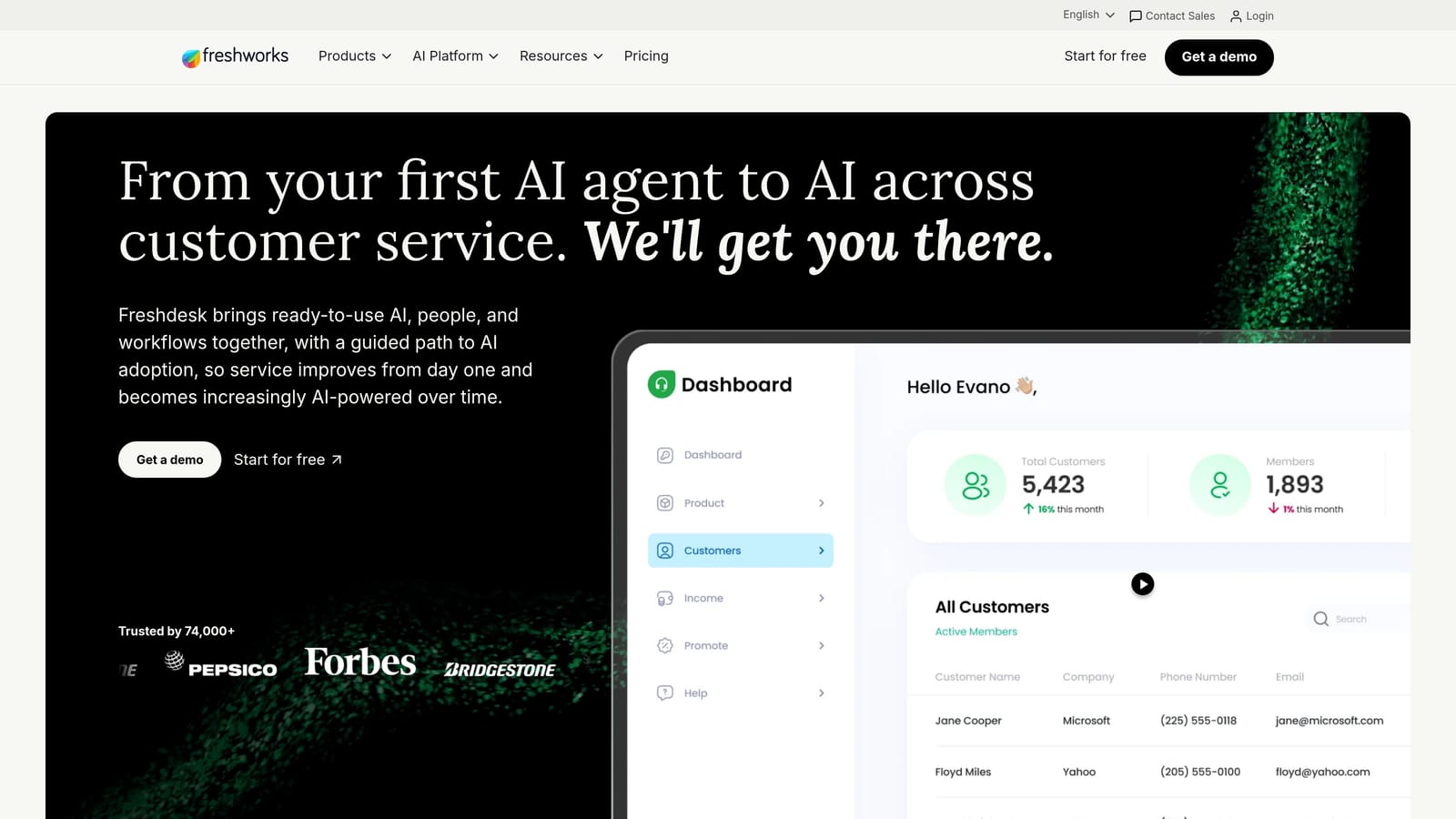
Freshdesk is a full-featured helpdesk platform with one of the most accessible free tiers in the market, covering ticketing, automation, and multi-channel support from the start.
Where This Tool Shines
Freshdesk earns its reputation by packing enterprise-grade helpdesk features into a package that non-technical teams can actually set up and use without a dedicated IT resource. The onboarding experience is clean, and most small teams report being operational within a day.
The free plan is genuinely useful, not a stripped-down teaser. It supports unlimited agents with basic ticketing and email support, making it a rare offering in a market where competitors often cap free plans at two or three seats. When you're ready to scale, paid tiers unlock automation rules, SLA management, and CSAT surveys without requiring a dramatic pricing jump.
Key Features
Omnichannel Ticketing: Consolidates email, phone, chat, and social media inquiries into a single unified inbox.
Automation Rules and Canned Responses: Automatically route, assign, and respond to common ticket types without manual intervention.
Self-Service Knowledge Base: Build a searchable help center so customers can find answers before submitting a ticket.
Team Collaboration: Shared ticket ownership and internal notes keep agents aligned on complex issues.
Reporting and CSAT Surveys: Available on paid plans, giving you visibility into team performance and customer satisfaction trends.
Best For
Freshdesk is an excellent starting point for small businesses that want to cover all the basics without committing to a paid plan immediately. It's particularly well-suited for teams handling mixed-channel support across email and social, and for founders who need a structured system but aren't ready to invest heavily in tooling yet.
Pricing
Free plan available for unlimited agents with limited features. The paid Growth plan starts around $15 per agent per month, with more advanced tiers available as teams scale.
2. Zoho Desk
Best for: Businesses already using Zoho CRM who want customer context built into every ticket.
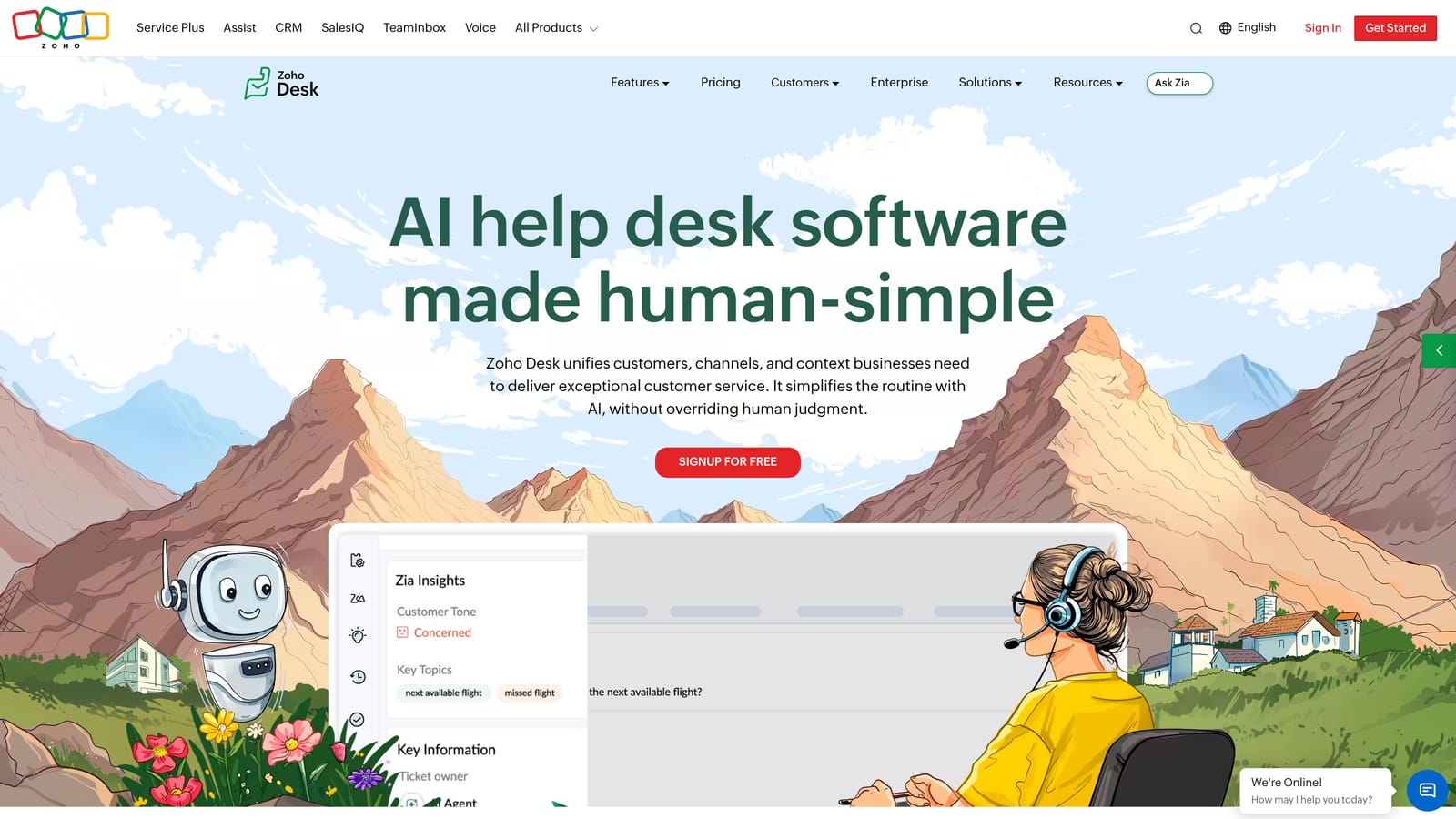
Zoho Desk is a context-aware helpdesk that integrates tightly with the Zoho ecosystem, pulling in CRM data to give agents full customer history on every interaction.
Where This Tool Shines
If your business already runs on Zoho products, Zoho Desk is a natural extension. The native CRM integration means agents see a customer's purchase history, open deals, and previous interactions the moment a ticket arrives. That context changes how support conversations go: agents spend less time asking for background information and more time solving problems.
Zoho Desk also includes Zia, an AI assistant available on higher tiers that can analyze ticket sentiment, auto-tag issues, and suggest relevant knowledge base articles. For a small team managing high ticket volume, these automations can meaningfully reduce the cognitive load on agents.
Key Features
Native Zoho CRM Integration: Automatically surfaces customer data, deal history, and account details alongside every ticket.
Zia AI Assistant: Provides sentiment analysis, ticket tagging, and response suggestions on higher-tier plans.
Multi-Channel Support: Handles email, live chat, phone, and social media from one interface.
Workflow Automation and SLA Management: Set escalation rules, response deadlines, and automated assignments to keep tickets moving.
Free Plan for Up to 3 Agents: One of the few platforms offering a genuinely usable free tier for very small teams.
Best For
Zoho Desk is the obvious choice for teams already invested in the Zoho ecosystem. It's also a strong option for small businesses that want CRM-style context in their support workflow without paying for a separate CRM integration layer.
Pricing
Free for up to 3 agents. Paid plans start around $14 per agent per month, making it one of the more affordable paid options on this list.
3. Help Scout
Best for: Teams that want customer support to feel like a genuine human conversation, not a ticket queue.
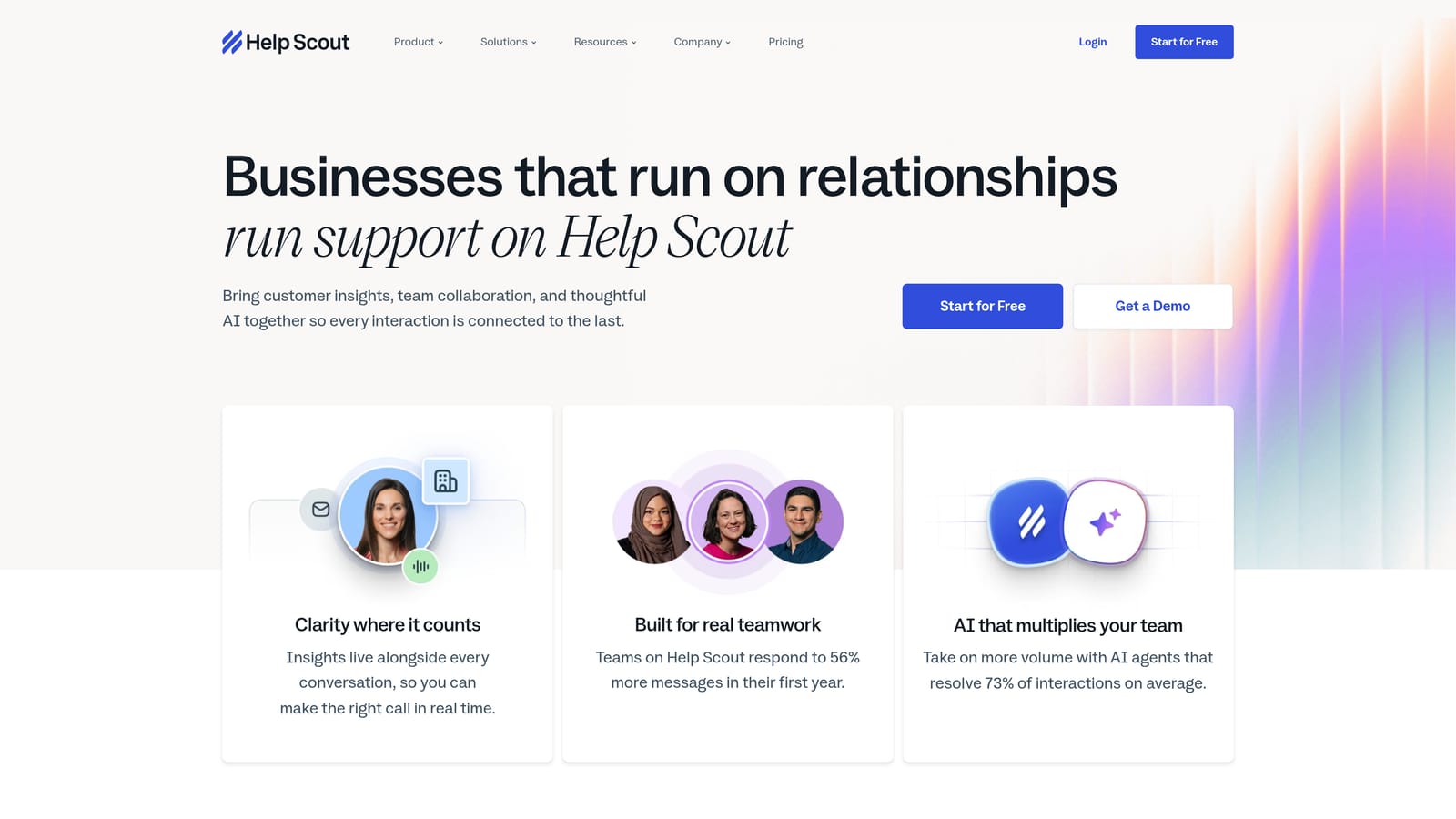
Help Scout is a shared inbox platform designed to make customer support feel like personal email, with no ticket numbers and no robotic formatting.
Where This Tool Shines
Help Scout's core philosophy is that support should feel human. There are no ticket numbers visible to customers, no "Your request has been received" auto-replies by default, and no interface that makes customers feel like they're submitting a form. The result is a support experience that tends to generate warmer responses from customers who feel they're being heard rather than processed.
The collision detection feature is a quiet but powerful differentiator: it prevents two agents from responding to the same conversation simultaneously, eliminating the embarrassing double-reply problem that plagues teams sharing a generic support inbox.
Key Features
Shared Inbox with Collision Detection: Prevents duplicate replies by showing when another agent is already viewing or drafting a response.
Beacon Live Chat Widget: Embeds a chat widget on your site with proactive messaging and knowledge base suggestions before customers even ask.
Docs Knowledge Base Builder: Create a clean, searchable self-service portal without needing a developer.
Customer Profiles and Conversation History: Every contact includes a full timeline of past interactions for immediate context.
Satisfaction Ratings and Reporting: Collect customer feedback and monitor team performance metrics over time.
Best For
Help Scout is a strong fit for e-commerce brands and SaaS companies that place a high value on customer relationship quality. It's particularly well-suited for teams where tone and personalization matter as much as response speed.
Pricing
Starts around $22 per user per month on the Standard plan. There is no free tier, so it requires a paid commitment from day one.
4. Tidio
Best for: Small e-commerce businesses that want live chat and AI automation running together from a single platform.
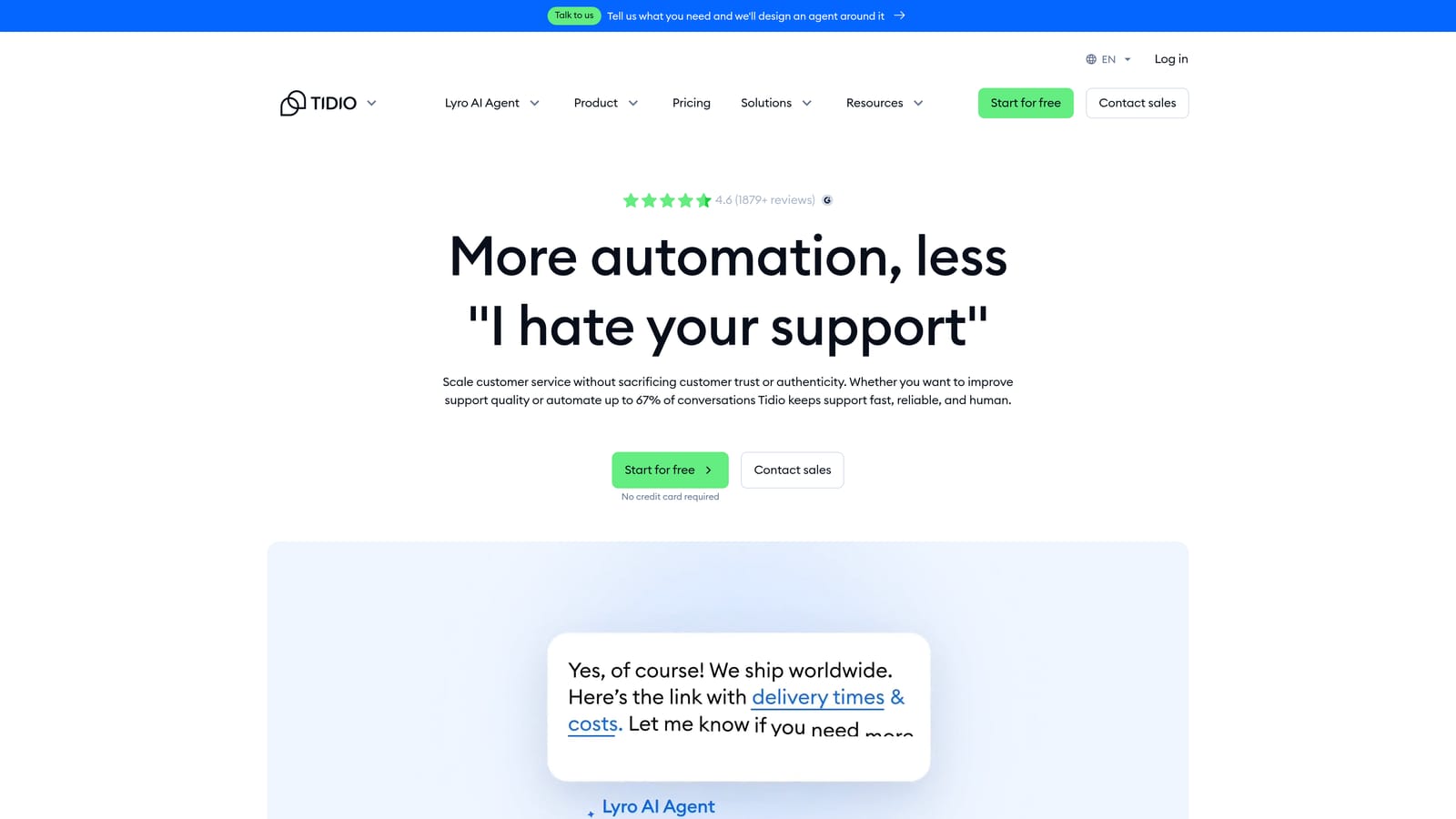
Tidio is a live chat and AI chatbot platform that lets small businesses automate repetitive queries while keeping human agents available for issues that need a personal touch.
Where This Tool Shines
Tidio's Lyro AI chatbot is the standout feature. Unlike generic chatbots that follow rigid decision trees, Lyro is trained on your own help content and can handle nuanced questions about your products, policies, and processes. For a small team fielding the same questions repeatedly, this kind of automation can reclaim significant time.
The platform also has strong roots in e-commerce. Its integrations with Shopify and WooCommerce are well-developed, and the visitor tracking feature lets you see what customers are browsing before they start a chat, giving agents useful context for proactive outreach.
Key Features
Lyro AI Chatbot: An AI agent trained on your help content to resolve repetitive queries automatically without human intervention.
Unified Inbox: Combines live chat, email, and Facebook Messenger into one place for agents.
Shopify and WooCommerce Integrations: Syncs order data directly into conversations for faster e-commerce support.
Visual Chatbot Builder: Build automated conversation flows with no coding required.
Visitor Tracking and Triggered Messages: See what pages customers are on and send proactive messages based on behavior.
Best For
Tidio is an excellent fit for small e-commerce stores that want to automate first-line support without hiring additional agents. It's also well-suited for businesses that rely heavily on live chat as their primary support channel.
Pricing
Free plan available. Paid plans start around $29 per month. The Lyro AI chatbot is priced as a separate add-on, so factor that in when evaluating total cost.
5. Intercom
Best for: SaaS products and digital businesses that need support, onboarding, and in-app messaging in one platform.
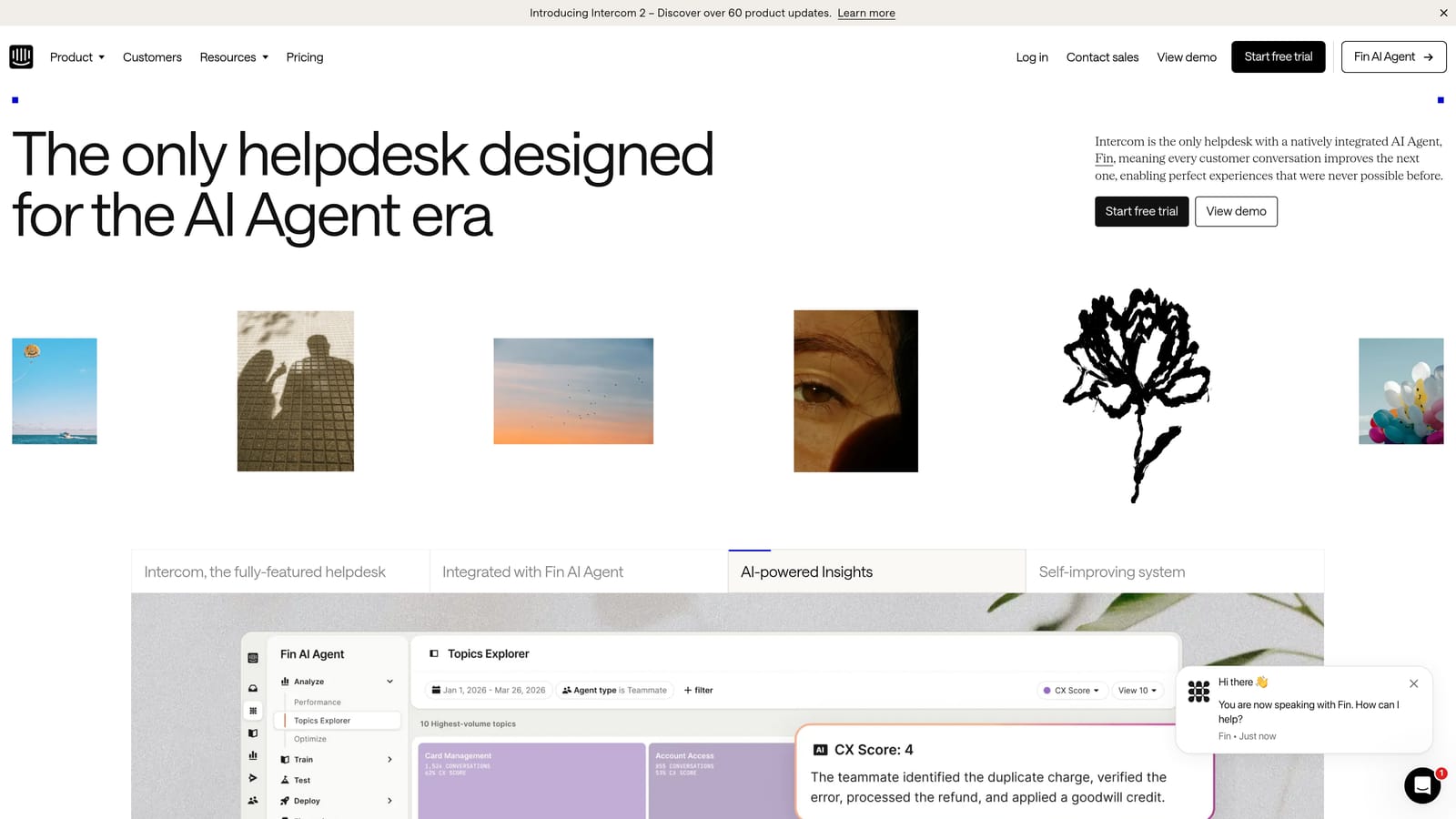
Intercom is a customer communications platform combining support, in-app messaging, and AI-powered resolution, built specifically for software products and digital services.
Where This Tool Shines
Intercom's Fin AI agent is one of the more capable AI support tools available. It reads your help center content and resolves customer queries directly, without routing them to a human agent unless necessary. For SaaS businesses with a well-maintained knowledge base, Fin can handle a meaningful portion of incoming support volume automatically.
Beyond support, Intercom doubles as a product engagement tool. You can send targeted in-app messages, trigger onboarding flows based on user behavior, and run proactive outbound campaigns. For small SaaS teams that want one platform covering support and customer success, that breadth is genuinely valuable.
Key Features
Fin AI Agent: Resolves customer queries using your help center content before escalating to a human agent.
In-App Messaging and Product Tours: Guide users through features and onboarding flows directly inside your product.
Shared Inbox with Routing Rules: Assign and route conversations based on topic, customer tier, or custom logic.
Multilingual Help Center: Build a self-service knowledge base that serves customers in multiple languages.
Proactive Outbound Messaging: Reach customers with targeted messages based on behavior, plan type, or lifecycle stage.
Best For
Intercom is best suited for SaaS companies and digital product teams where support lives inside the product itself. It's less ideal for retail or service businesses that primarily handle support via email.
Pricing
Starts around $39 per seat per month on the Essential plan. Costs can increase at scale, so it's worth modeling out your expected seat count before committing.
6. Gorgias
Best for: Shopify merchants and direct-to-consumer brands that want to manage orders and support in one place.
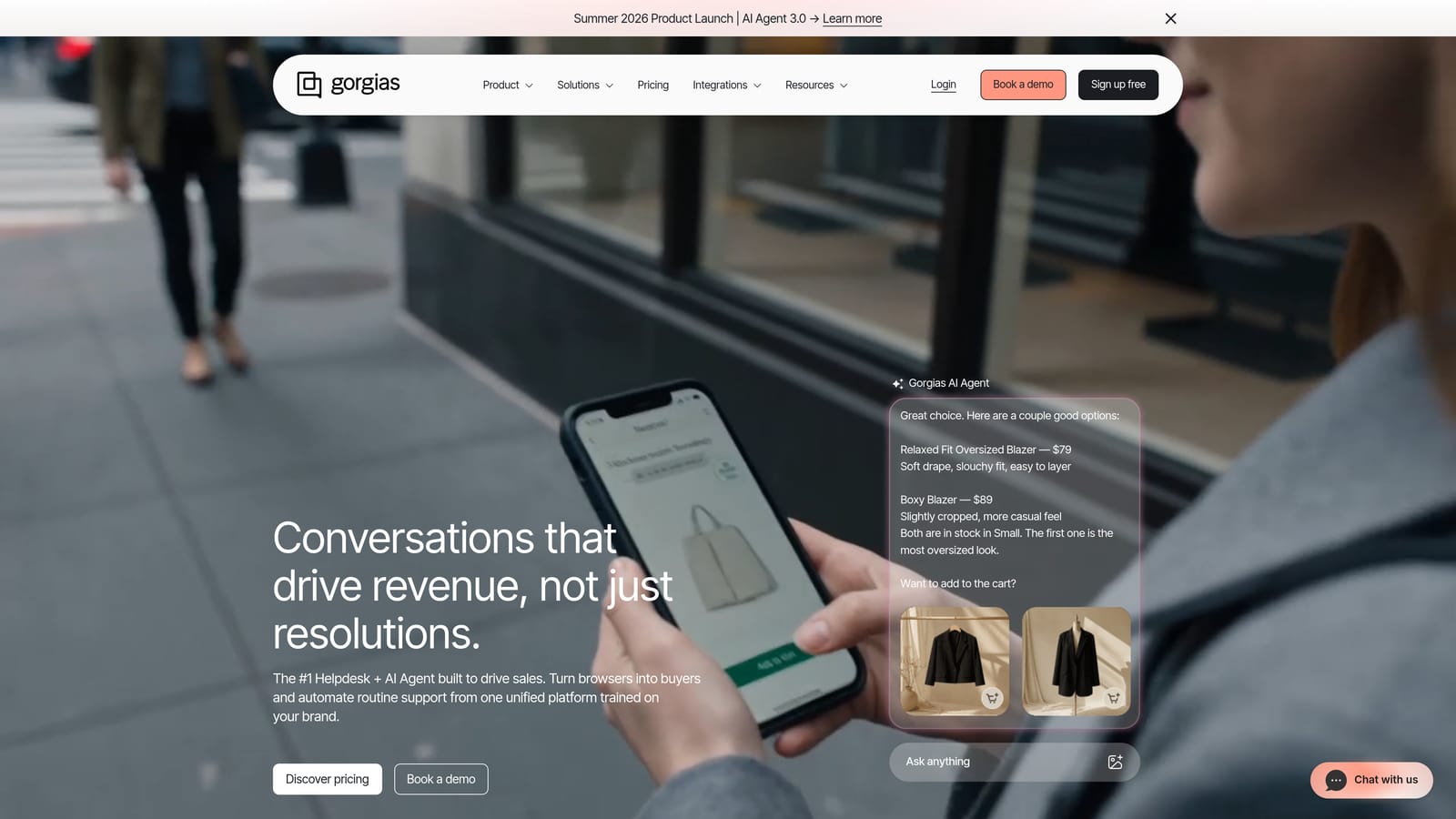
Gorgias is the go-to helpdesk for e-commerce merchants, with deep integrations that let agents manage orders, refunds, and subscriptions without ever leaving the ticket.
Where This Tool Shines
Gorgias was built specifically for e-commerce, and it shows. When a customer asks "Where is my order?", an agent using Gorgias can see the order status, tracking number, and fulfillment details pulled directly from Shopify without switching tabs. They can also issue refunds, edit orders, and cancel subscriptions from within the ticket interface. That workflow efficiency adds up quickly for teams handling high volumes of order-related inquiries.
The pricing model is also worth noting. Gorgias charges by ticket volume rather than by seat, which means small teams don't pay more just because they have a few agents. For businesses with predictable ticket volumes, this can be more cost-effective than per-seat pricing.
Key Features
Native Shopify, WooCommerce, and BigCommerce Integrations: Pulls order data directly into tickets so agents have full e-commerce context instantly.
Order Management Inside Tickets: Issue refunds, edit orders, and manage subscriptions without leaving the support interface.
Automated Responses for Common Queries: Automatically handle order status, return policy, and tracking questions without agent involvement.
Multi-Channel Support: Covers email, live chat, social media, and SMS from one inbox.
Ticket-Volume-Based Pricing: Charges scale with ticket volume rather than headcount, which benefits lean teams.
Best For
Gorgias is purpose-built for direct-to-consumer brands and Shopify merchants. If your support queue is dominated by order-related questions, it's difficult to find a more efficient solution for that specific use case.
Pricing
Starter plan from around $10 per month for 50 tickets. Pricing scales by ticket volume, with higher tiers unlocking more automation and integrations.
7. Zendesk
Best for: Growing small businesses that expect to scale significantly and want infrastructure that won't need replacing.
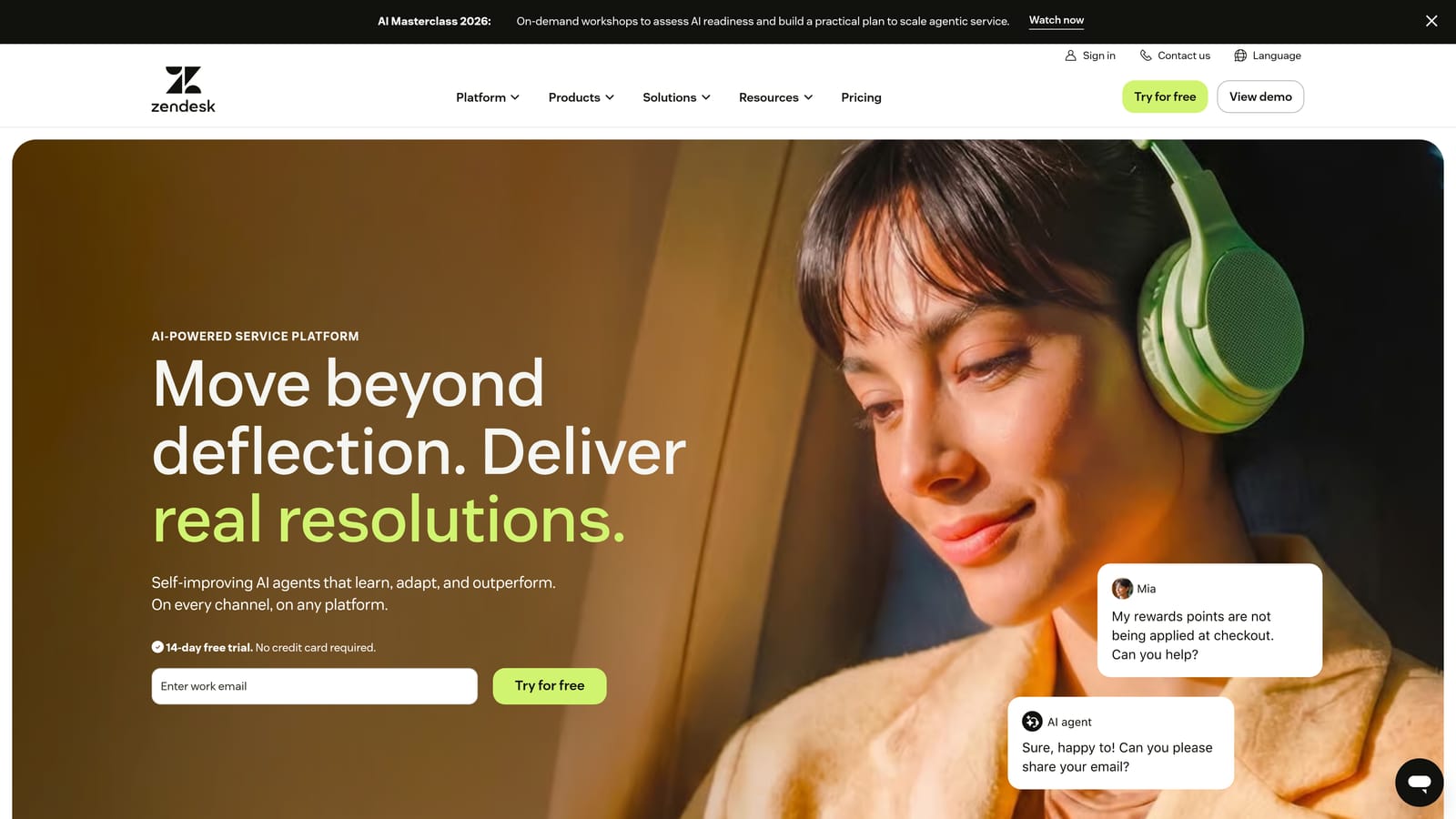
Zendesk is the enterprise-grade helpdesk that scales from small teams to global operations, offering deep analytics, AI routing, and an extensive integration marketplace.
Where This Tool Shines
Zendesk is the industry benchmark for a reason. Its feature depth is unmatched at this price range: AI-powered ticket routing, custom dashboards, a marketplace of over 1,000 integrations, and a self-service help center that can handle serious traffic. For a team that's currently small but planning aggressive growth, Zendesk eliminates the need to migrate platforms later.
That said, it's the most complex tool on this list to configure. Small teams without a dedicated ops person may find the initial setup time-consuming. The payoff is a system that can grow with you without hitting capability ceilings, but you need to weigh that against the higher starting price and steeper learning curve.
Key Features
AI-Powered Ticket Routing and Triage: Automatically categorizes and assigns tickets based on content, urgency, and agent availability.
Advanced Analytics and Custom Dashboards: Build detailed reports on team performance, ticket trends, and customer satisfaction.
Omnichannel Coverage: Handles email, chat, voice, social media, and messaging apps from one platform.
Large App Marketplace: Over 1,000 integrations with CRMs, e-commerce platforms, and productivity tools.
Self-Service Help Center and Community Forums: Build a robust knowledge base and customer community to deflect tickets at scale.
Best For
Zendesk is best for small businesses with growth ambitions that want to invest in infrastructure once rather than migrate platforms as they scale. It's less ideal for teams that need to be up and running quickly with minimal configuration.
Pricing
Suite Team starts around $55 per agent per month. This is higher than most other tools on this list, but the capability ceiling is also significantly higher.
8. Crisp
Best for: Bootstrapped founders and very small teams that need multi-channel support on a tight budget.
Crisp is a budget-friendly multi-channel support platform with a strong free tier, ideal for early-stage businesses managing their own customer communications.
Where This Tool Shines
Crisp punches above its weight for the price. The free plan includes live chat, a shared inbox, and basic contact profiles for two agents, which is enough to get a small operation running without spending anything. The interface is clean and modern, and the channel coverage on paid plans is broad: website chat, email, WhatsApp, Messenger, and Instagram.
For bootstrapped founders who are handling support themselves or with one other person, Crisp removes the excuse of "we can't afford proper support tooling." The free plan is a genuine working environment, not a trial with artificial limitations designed to push you toward paying quickly.
Key Features
Free Plan for 2 Agents: Includes live chat, shared inbox, and contact profiles at no cost, with no trial expiry.
Multi-Channel Coverage: Website chat, email, WhatsApp, Messenger, and Instagram available on paid plans.
Chatbot Builder: Visual no-code chatbot automation available on the Pro plan and above.
CRM-Style Contact Profiles: View conversation history and customer data alongside every interaction.
Knowledge Base and Status Page: Built-in tools for self-service content and service status updates, included on paid plans.
Best For
Crisp is the right choice for bootstrapped founders, freelancers, or very small teams that need functional multi-channel support without a significant monthly commitment. It's also a solid option for businesses testing support tooling before committing to a more robust platform.
Pricing
Free plan for 2 agents. Pro plan around $25 per month for 4 agents. Unlimited plan around $95 per month with full feature access.
9. Sight AI
Best for: Small businesses that want to reduce inbound support volume by helping customers find answers through organic search and AI-generated results before contacting support.
Sight AI is an AI-powered SEO and content platform that helps small businesses get found by customers across both traditional search and AI platforms like ChatGPT, Claude, and Perplexity.
Where This Tool Shines
Sight AI isn't a traditional helpdesk, and it's worth being direct about that distinction. It belongs on this list because the most effective way to reduce support volume isn't to handle tickets faster. It's to ensure customers find answers before they ever need to reach out. When your FAQs, product guides, and help content rank well on Google and get cited by AI models, fewer customers end up in your support queue.
The AI Visibility tracking feature is particularly relevant here. Many small businesses have no idea whether AI models like ChatGPT or Claude are accurately describing their products, policies, or pricing. If a customer asks an AI assistant about your return policy and gets an outdated or incorrect answer, that's a support ticket waiting to happen. Sight AI gives you visibility into those conversations and the content tools to shape them.
Key Features
AI Visibility Tracking: Monitors how your brand is mentioned across ChatGPT, Claude, Perplexity, and 3+ other AI platforms, with sentiment analysis and prompt tracking.
AI Content Writer with 13+ Specialized Agents: Generates SEO and GEO-optimized articles, FAQs, guides, and listicles designed to rank in both search engines and AI-generated results.
IndexNow Integration: Ensures new content is discovered and indexed by search engines faster, reducing the lag between publishing and ranking.
CMS Auto-Publishing: Streamlines content operations by publishing directly to your CMS without manual steps.
Autopilot Mode: Hands-off content generation and publishing for teams that want consistent output without dedicating staff time to content operations.
Best For
Sight AI is a strong fit for small business owners and marketing teams who want to reduce repetitive support inquiries by investing in high-quality, discoverable help content. It's especially valuable for businesses where customers regularly search for answers before contacting support, which describes most product and service businesses today.
Pricing
Visit trysight.ai for current pricing tiers and plan details.
Which Tool Is Right for Your Business?
The right customer support software depends less on feature lists and more on where your business is right now and where it's heading. Here's a quick guide to cut through the decision fatigue.
If you need a full-featured helpdesk on a free plan, Freshdesk is the obvious starting point. It offers the most generous free tier in this category and covers all the basics without requiring a credit card. If you're already running on Zoho products, Zoho Desk is the natural extension, with CRM context built directly into every ticket.
For teams that care deeply about the quality and tone of customer interactions, Help Scout delivers a support experience that feels personal rather than transactional. If live chat and AI automation are your priorities, Tidio handles both well, particularly for e-commerce stores on Shopify or WooCommerce.
E-commerce merchants who live and breathe order management should look closely at Gorgias. The ability to handle refunds and order edits directly inside a ticket is a genuine time-saver for high-volume DTC brands. SaaS founders who need support, onboarding, and in-app messaging in one place will find Intercom hard to beat, while teams planning significant growth should consider Zendesk as a long-term infrastructure investment. And if budget is the primary constraint, Crisp's free plan gives bootstrapped founders a real working environment at no cost.
Finally, consider the upstream opportunity. Every support ticket represents a customer who couldn't find an answer on their own. Small businesses that invest in high-quality, AI-optimized help content reduce that volume over time. When your FAQs and guides appear in Google results and get cited by AI assistants, customers get answers without ever opening a ticket. That's where Sight AI fits into this picture.
Stop guessing how AI models like ChatGPT and Claude talk about your brand. Get visibility into every mention, track content opportunities, and automate your path to organic traffic growth. Start tracking your AI visibility today and see exactly where your brand appears across top AI platforms.