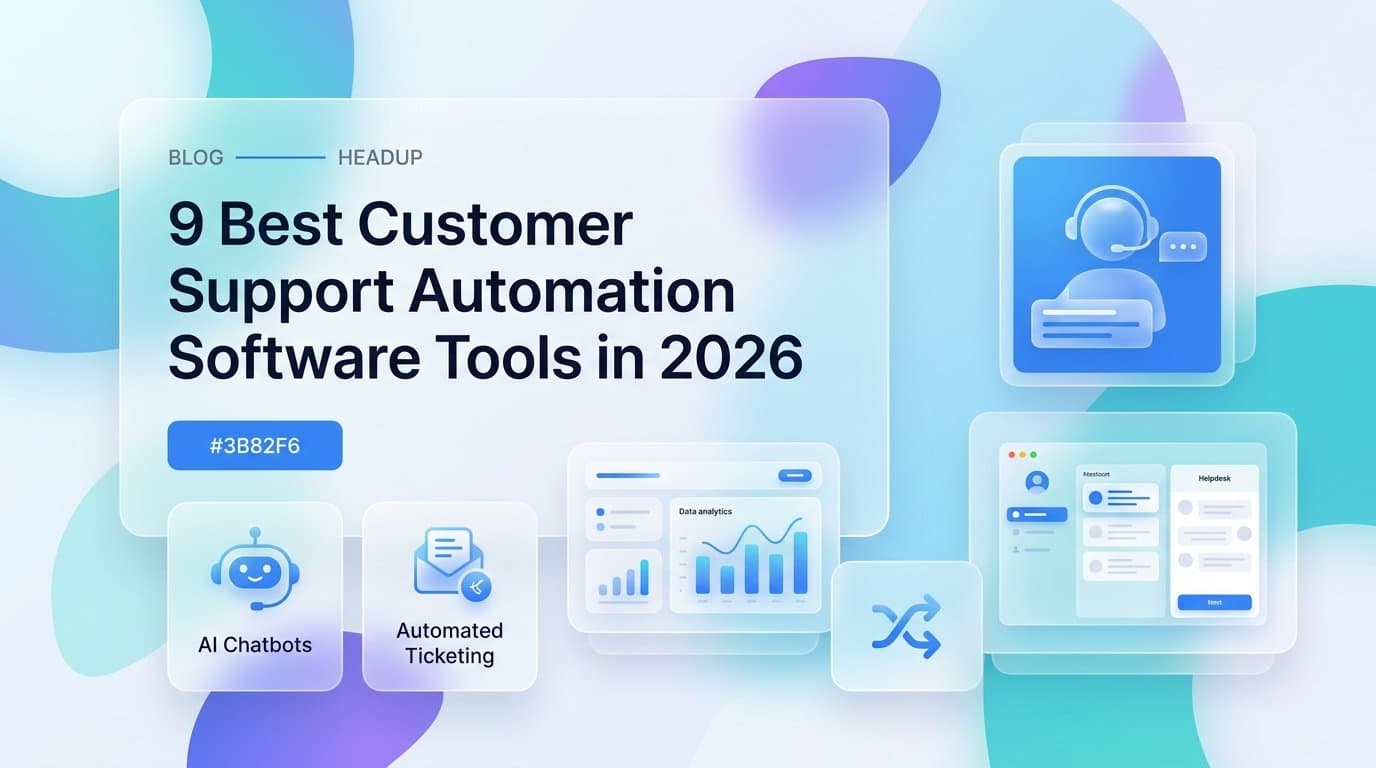
Customer support teams are under more pressure than ever. Ticket volumes are climbing, customer expectations keep rising, and most teams aren't getting bigger budgets to match. Customer support automation software helps you resolve issues faster, cut repetitive workload, and deliver consistent experiences at scale without burning out your agents.
The challenge is that the market is crowded. Some platforms are built for e-commerce, others for SaaS, and others for enterprise operations with complex routing needs. The right tool depends on your team size, your existing tech stack, and how deeply you want automation to run through your support workflow.
This list covers the top customer support automation platforms available in 2026, evaluated on AI capabilities, ease of setup, integration depth, and overall value. Whether you're setting up your first helpdesk or scaling an omnichannel operation, there's a strong fit here for you.
1. Zendesk
Best for: Mid-market and enterprise teams needing a full-featured, highly scalable support suite.
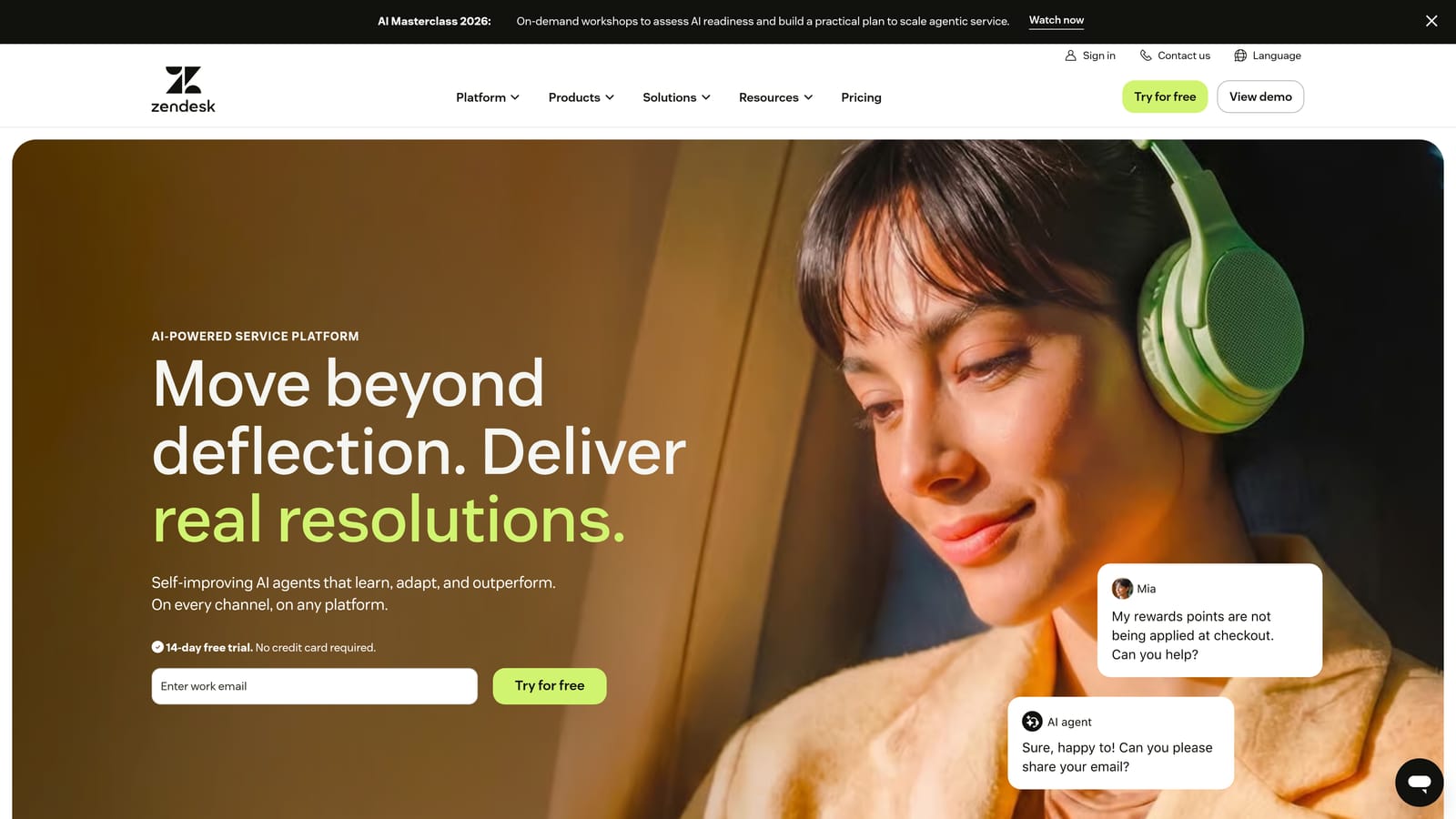
Zendesk is one of the most established platforms in customer support automation, offering AI-powered ticket management, omnichannel coverage, and one of the deepest integration ecosystems in the category.
Where This Tool Shines
Zendesk's AI layer handles intelligent ticket triage, suggested replies, and automated routing before a human agent ever touches a conversation. This is particularly valuable for high-volume teams where manual sorting creates bottlenecks.
The reporting capabilities are genuinely enterprise-grade. You can build custom dashboards, track SLA compliance, monitor agent performance, and surface trends across channels, all from a single interface. For teams that need to justify support investments with data, this depth matters.
Key Features
AI-Powered Ticket Triage: Automatically categorizes, prioritizes, and routes incoming tickets based on content and intent.
Omnichannel Inbox: Unified view across email, live chat, voice, social media, and messaging apps.
Zendesk Marketplace: Over 1,000 app integrations covering CRMs, billing tools, analytics platforms, and more.
Advanced Analytics: Customizable reporting dashboards with SLA tracking and team performance metrics.
AI-Assisted Knowledge Base: Suggests content gaps and helps agents create self-service articles based on common ticket topics.
Best For
Zendesk is best suited for mid-market and enterprise support teams that need a scalable, deeply configurable platform. It's particularly strong for organizations managing multiple support channels and needing granular reporting. Smaller teams may find the pricing and complexity difficult to justify.
Pricing
Suite plans start at approximately $55/agent/month billed annually. Enterprise pricing is available on request and scales with team size and feature requirements.
2. Intercom
Best for: SaaS companies that want support built directly into the product experience.
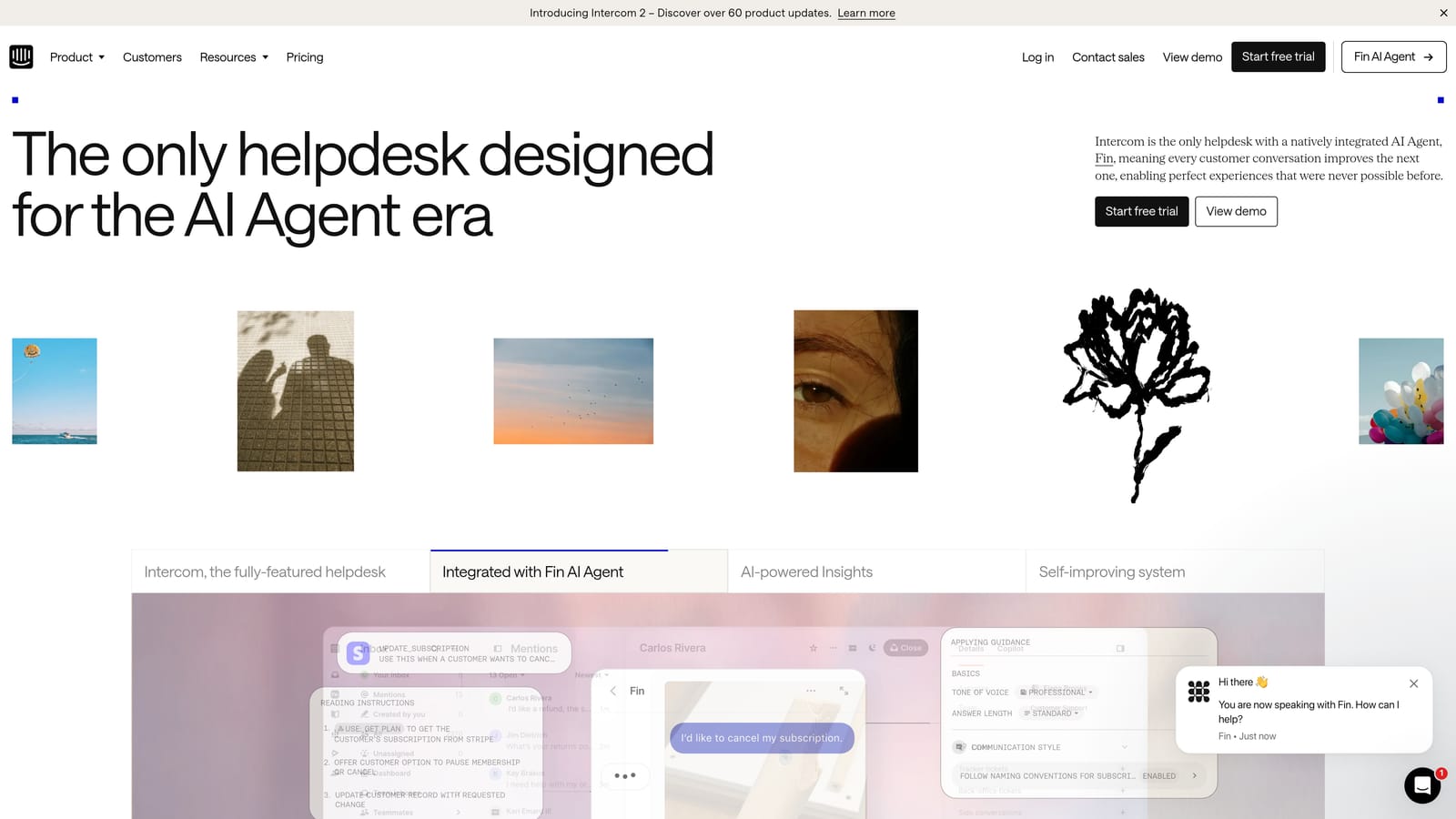
Intercom is a conversational support platform that combines AI chatbots, live chat, and proactive messaging into a single product designed around the in-app experience.
Where This Tool Shines
Intercom's Fin AI Agent is the standout feature here. It's trained on your help center content and handles common queries without any manual scripting. For SaaS teams dealing with repetitive onboarding or billing questions, Fin can deflect a meaningful portion of incoming volume automatically.
The proactive messaging capability sets Intercom apart from traditional helpdesks. You can trigger messages based on user behavior inside your product, reaching customers before they even submit a ticket. This shifts support from reactive to proactive in a way most platforms can't replicate.
Key Features
Fin AI Agent: Resolves common queries using your existing help center content, with no manual training required.
In-App Proactive Messaging: Triggers outreach based on user behavior, product usage, or lifecycle stage.
Shared Inbox: Conversation routing and assignment rules for team-based support workflows.
CRM Integrations: Native connections to Salesforce, Slack, HubSpot, and Stripe.
Customer Data Platform: Centralizes user attributes for personalized, context-aware support conversations.
Best For
Intercom is the go-to choice for SaaS companies that want support woven into the product itself. It works especially well for teams where customer success and support overlap, and where proactive engagement is as important as reactive ticket resolution.
Pricing
Starts at approximately $39/seat/month. Fin AI usage is billed per resolution, which means costs scale with how much work the AI handles on your behalf.
3. Freshdesk
Best for: Small to mid-sized teams wanting enterprise-level automation at an accessible price point.
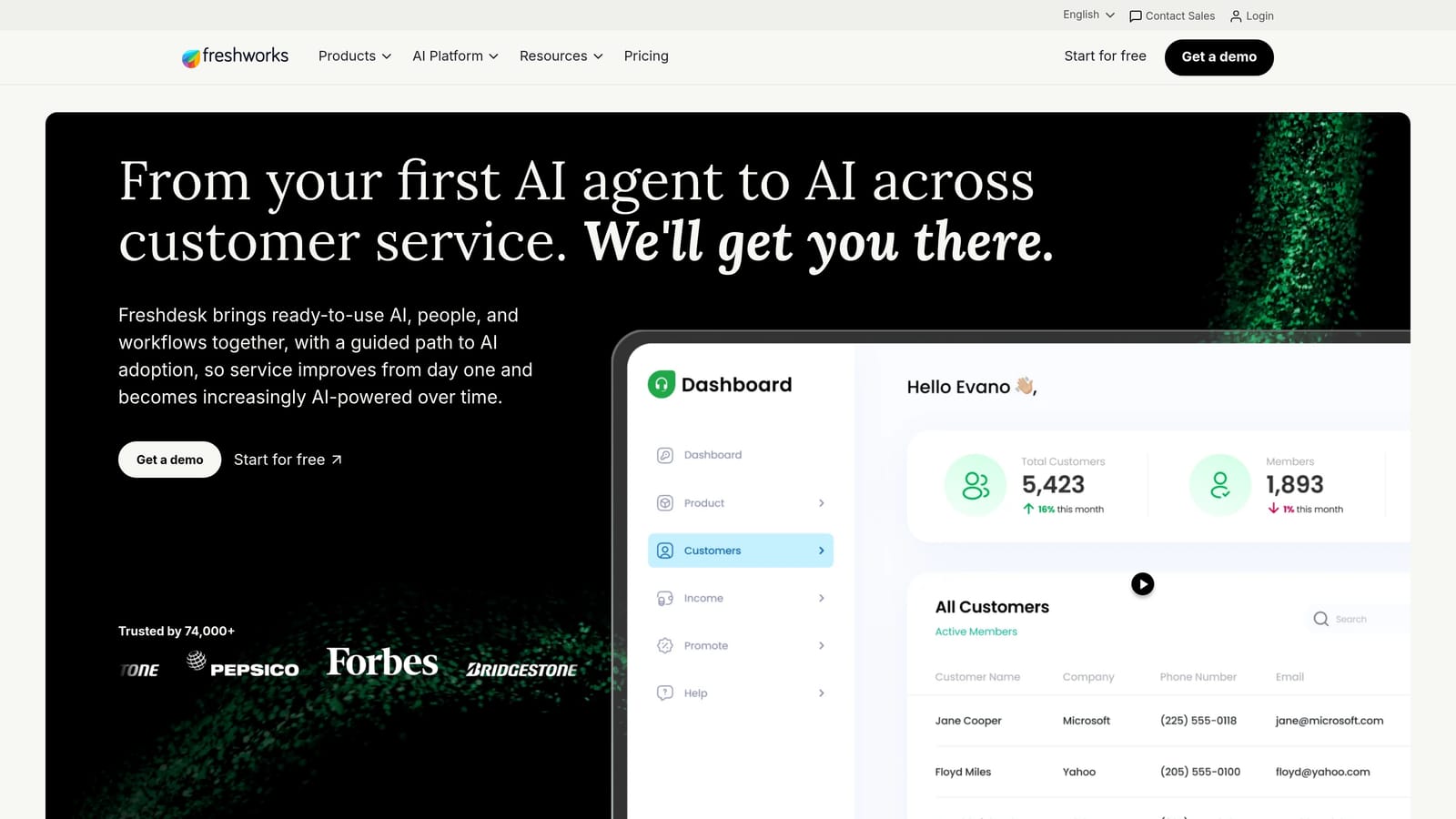
Freshdesk is a multi-channel helpdesk platform from Freshworks, known for competitive pricing, a solid free tier, and AI automation that punches above its weight class.
Where This Tool Shines
Freddy AI, Freshdesk's built-in AI layer, covers ticket summarization, suggested replies, and automated chatbot responses without requiring a separate AI add-on. For teams transitioning from manual email-based support, this makes the upgrade path feel manageable rather than overwhelming.
The free plan is genuinely useful for small teams, not a stripped-down demo. It includes ticketing, knowledge base, and basic automation, which means you can start automating before committing to a paid tier.
Key Features
Freddy AI: Handles ticket summarization, reply suggestions, and chatbot conversations out of the box.
Automation Rules: Route, tag, and prioritize tickets automatically based on keywords, sender, or ticket properties.
Multi-Channel Inbox: Consolidates email, phone, chat, and social media into a single agent view.
Collision Detection: Alerts agents when multiple team members are viewing or responding to the same ticket.
Free Tier: A functional starting point for small teams that want to automate without upfront cost.
Best For
Freshdesk is ideal for growing teams that need solid automation capabilities without the enterprise price tag. It's a natural fit for businesses moving off email-only support and wanting a structured helpdesk for the first time.
Pricing
Free plan available for unlimited agents with core features. Paid plans start at approximately $15/agent/month, with higher tiers unlocking advanced AI and reporting features.
4. HubSpot Service Hub
Best for: Teams already in the HubSpot ecosystem who want support connected to their CRM data.
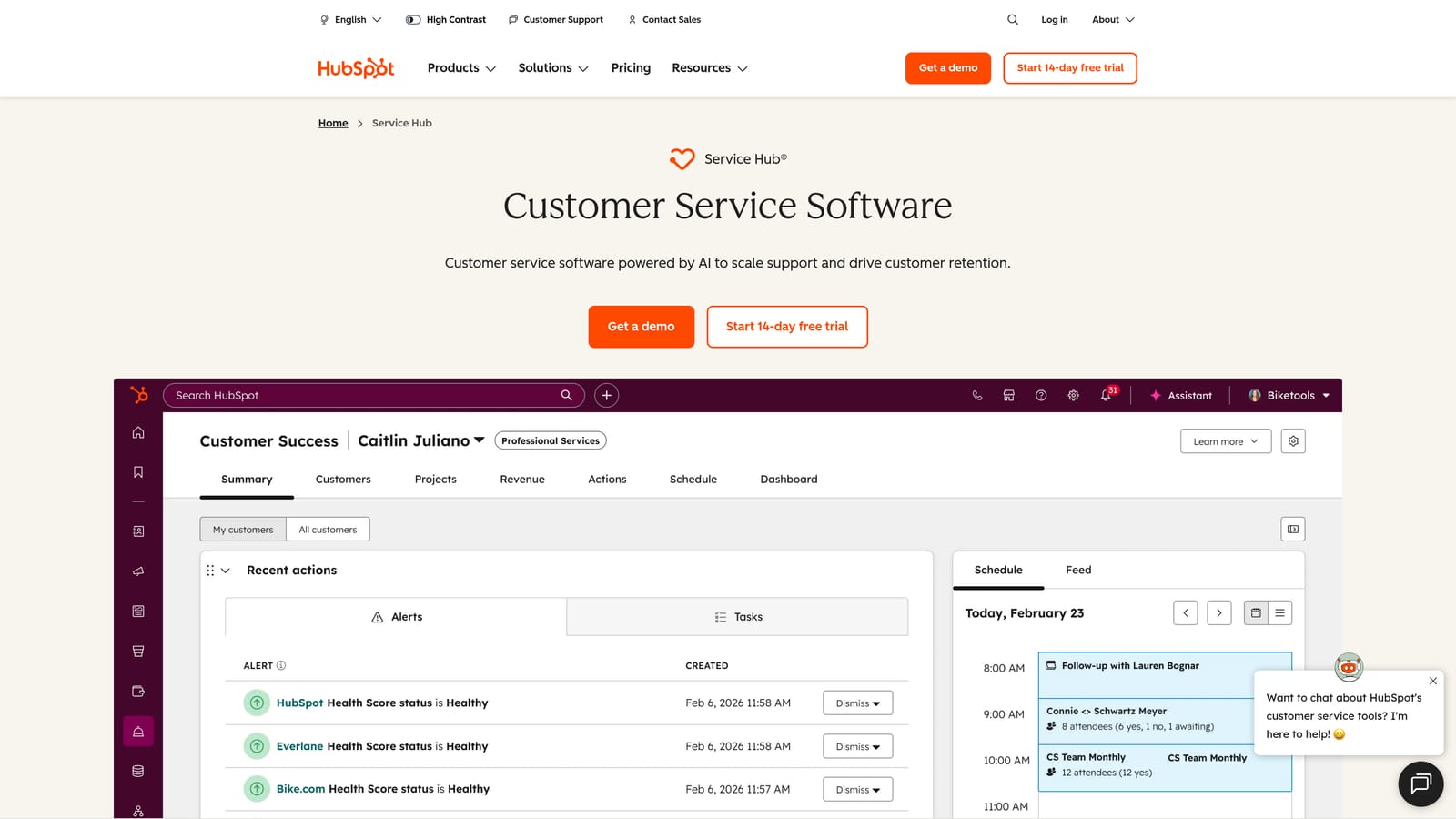
HubSpot Service Hub is a CRM-native support platform that gives agents full visibility into a customer's marketing and sales history, making it uniquely powerful for HubSpot-first organizations.
Where This Tool Shines
The core advantage here is context. When a support ticket comes in, the agent already sees what the customer purchased, what emails they've received, and what their sales conversations looked like. That level of context eliminates the "can you tell me your account details?" friction that frustrates customers and slows resolution.
The built-in customer feedback tools, including NPS, CSAT, and CES surveys tied directly to ticket data, make it easy to measure support quality without bolting on a separate survey platform.
Key Features
Unified CRM View: Combines support history with marketing and sales data for full customer context.
AI Ticket Summarization: Condenses long conversation threads so agents can get up to speed instantly.
SEO-Enabled Knowledge Base: Built-in SEO tools help your self-service content rank in search results.
Integrated Feedback Surveys: NPS, CSAT, and CES surveys linked to ticket outcomes automatically.
No-Code Chatbot Builder: Build and deploy live chat and chatbot flows without technical resources.
Best For
Service Hub is the strongest option for teams already running HubSpot for marketing and sales. As a standalone support tool, it's less powerful than Zendesk, but within the HubSpot ecosystem it offers unmatched data continuity across the full customer lifecycle.
Pricing
Free tier available with core features. Starter plans begin at approximately $15/month. Professional and Enterprise tiers unlock advanced automation, reporting, and AI features.
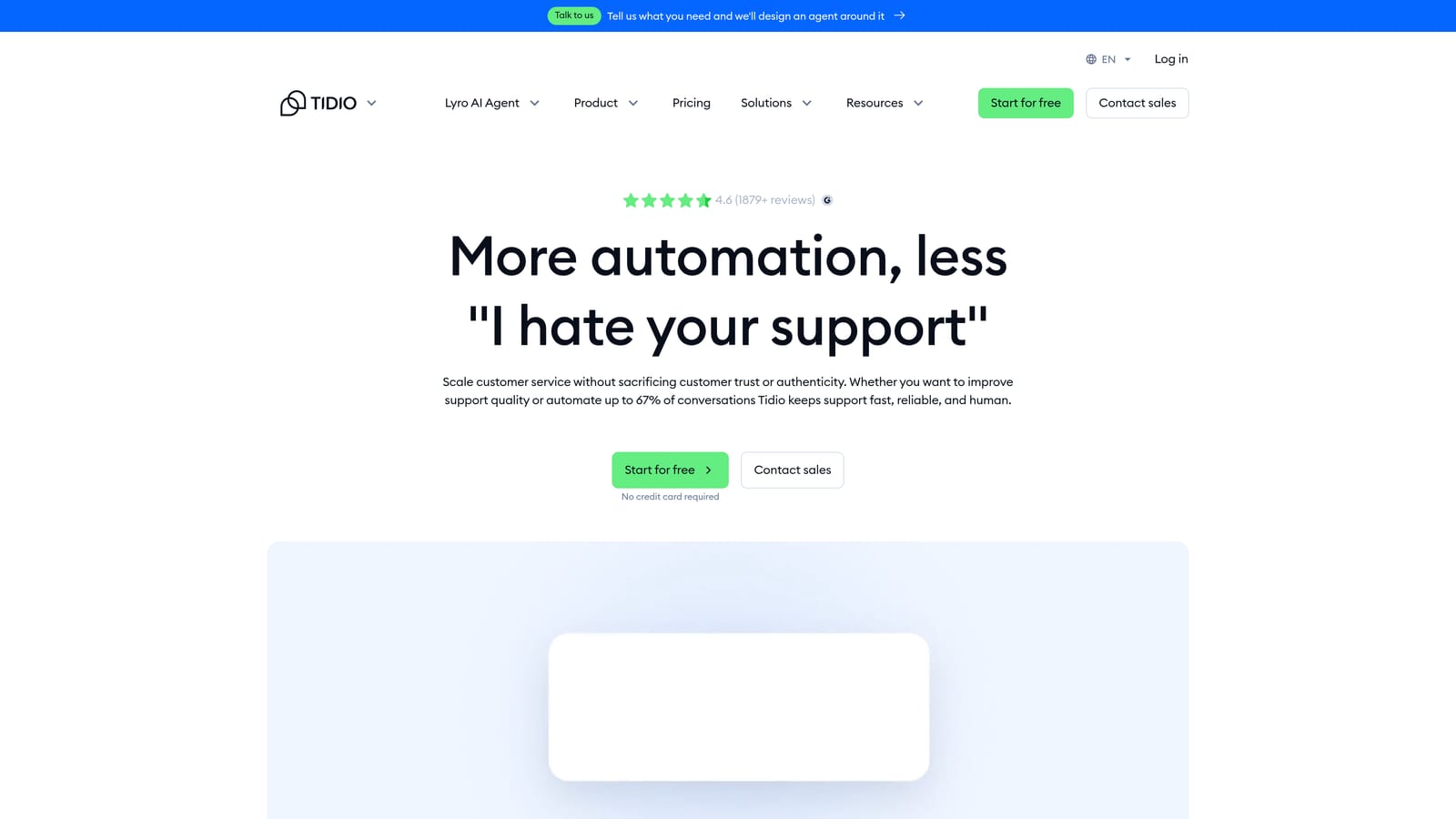
5. Tidio
Best for: E-commerce small businesses wanting fast deployment and an accessible AI chatbot.
Tidio is a beginner-friendly customer support automation platform with a powerful AI chatbot designed specifically for e-commerce use cases.
Where This Tool Shines
Tidio's Lyro AI chatbot is the headline feature: it handles common customer queries automatically without requiring manual training or scripted flows. For small e-commerce teams fielding the same questions about shipping times and return policies all day, this alone justifies the tool.
Setup speed is a genuine differentiator. The live chat widget deploys in minutes, and the visual chatbot builder uses a drag-and-drop interface that doesn't require technical knowledge. For founders or small teams without a dedicated support engineer, this matters enormously.
Key Features
Lyro AI Chatbot: Automatically resolves common queries without manual training, using your existing content.
Pre-Built E-Commerce Flows: Ready-made automation templates for order tracking, returns, and product questions.
Native E-Commerce Integrations: Direct connections to Shopify, WooCommerce, and Wix.
Drag-and-Drop Chatbot Builder: Visual interface for building and customizing conversation flows.
Live Chat Widget: Deployable in minutes with no developer involvement required.
Best For
Tidio is purpose-built for small e-commerce businesses that want automation up and running quickly without a complex setup process. It's less suited for enterprise teams or businesses with complex, multi-step support workflows.
Pricing
Free plan available with core features. Paid plans start at approximately $29/month, with higher tiers unlocking more Lyro AI conversations and advanced automation capabilities.
6. Gorgias
Best for: High-volume direct-to-consumer e-commerce brands, especially those on Shopify.
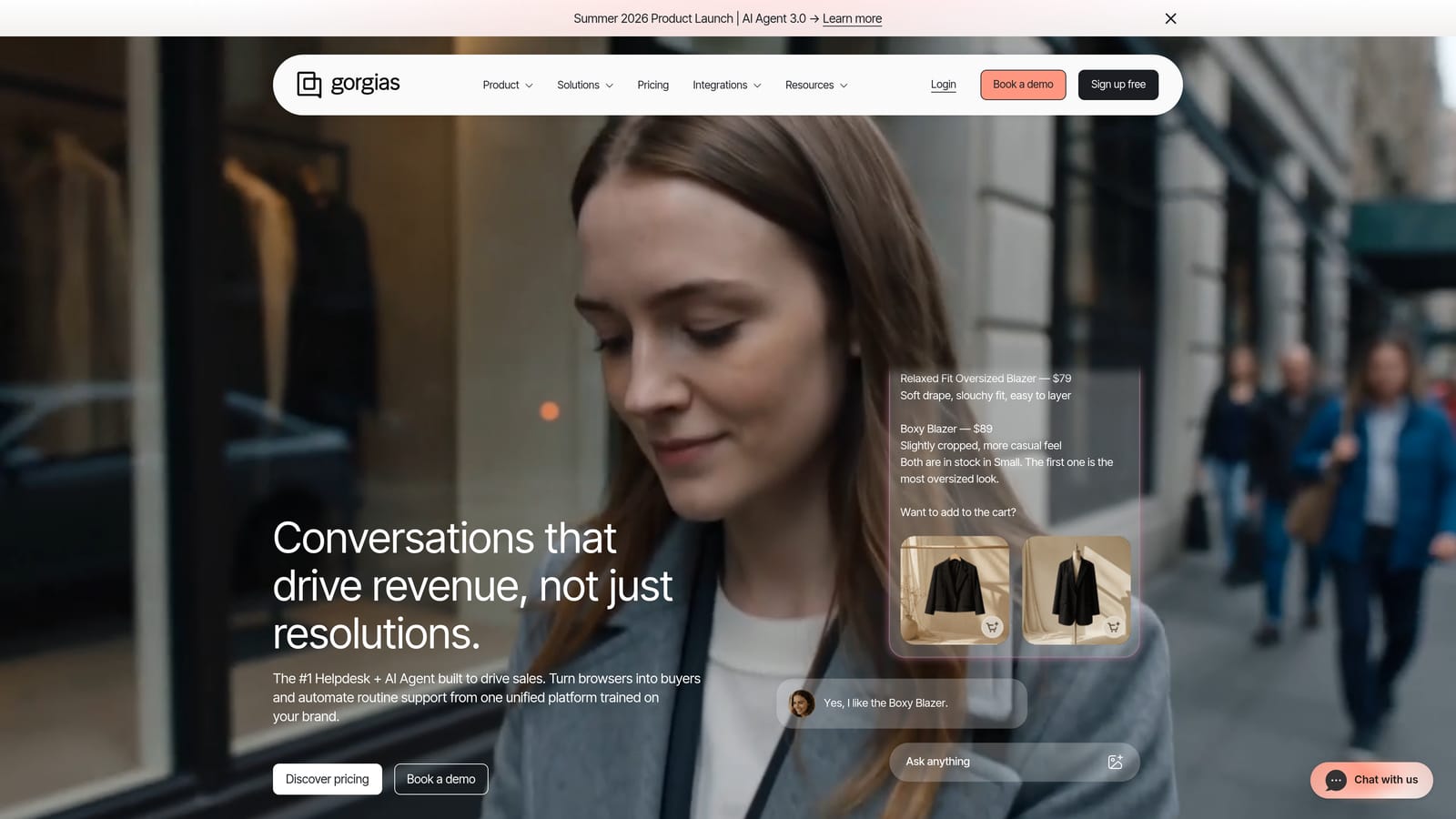
Gorgias is the only helpdesk on this list built exclusively for e-commerce, with deep Shopify integration that puts live order data directly inside every support conversation.
Where This Tool Shines
The Shopify integration goes far beyond just displaying order information. Agents can process refunds, cancel orders, and edit subscriptions directly from the support ticket without switching tabs or logging into a separate system. For DTC brands handling hundreds of order-related tickets daily, this operational efficiency is substantial.
Gorgias also attributes revenue to support interactions, showing you which conversations led to purchases. This reframes support from a cost center to a revenue driver, which is a powerful narrative for teams trying to justify headcount or tooling investment.
Key Features
Live Order Data in Tickets: Pulls order status, shipping info, and purchase history into every conversation automatically.
One-Click Actions: Process refunds, cancel orders, and edit subscriptions without leaving the support view.
Order-Based Automation Rules: Automatically close, tag, or respond to tickets based on order status triggers.
Omnichannel Coverage: Manages email, live chat, social DMs, SMS, and voice from a unified inbox.
Revenue Attribution: Tracks which support interactions contributed to sales conversions.
Best For
Gorgias is the clear choice for DTC and e-commerce brands running on Shopify. It's less relevant for SaaS, B2B, or service businesses where order management isn't central to the support workflow.
Pricing
Starter plans from approximately $10/month. Unlike most platforms, pricing scales with ticket volume rather than agent seats, which is an important consideration as your brand grows.
7. Drift
Best for: B2B companies where sales qualification and customer support conversations overlap.
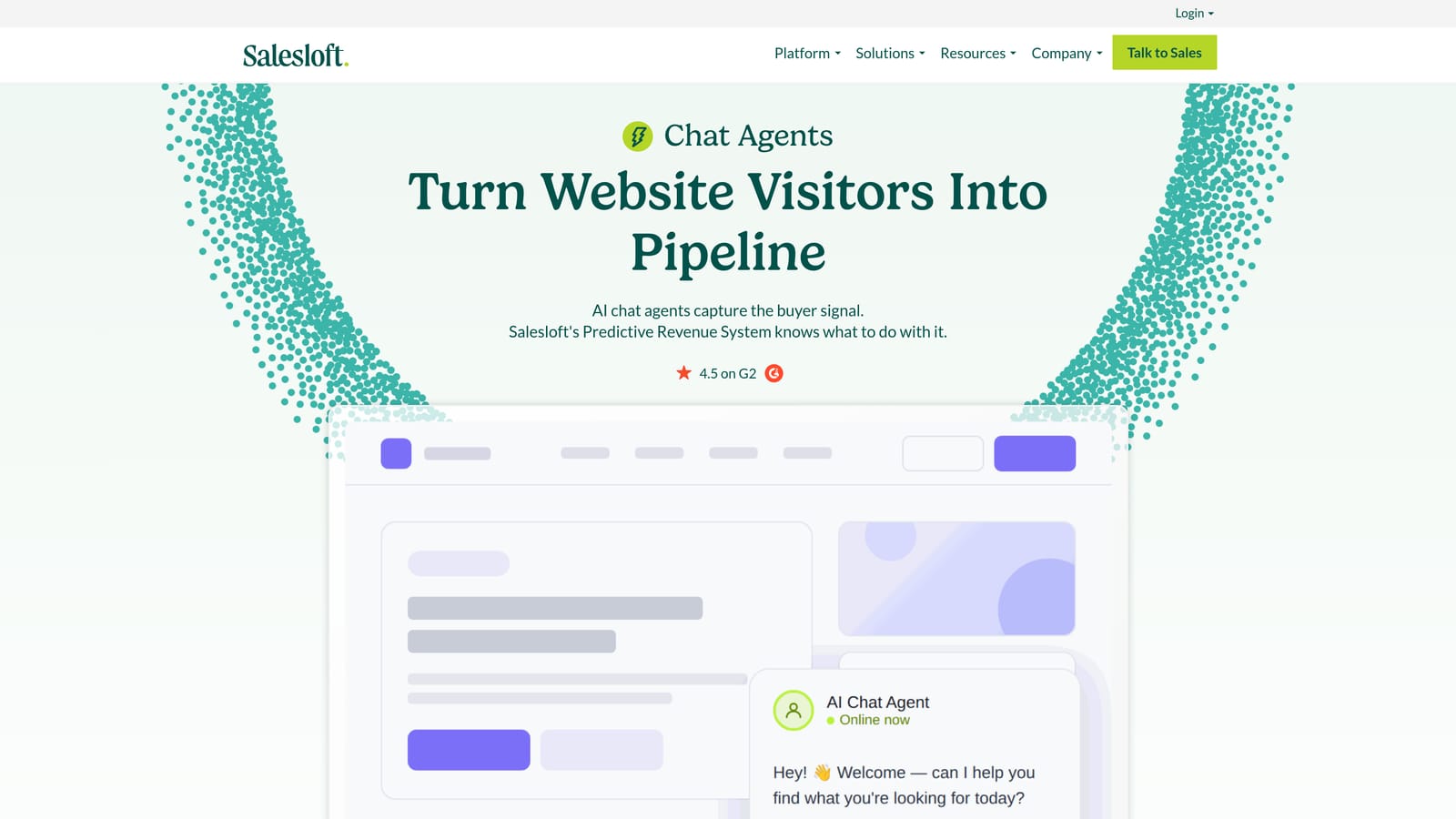
Drift is a conversational platform that blends sales qualification and customer support through AI-powered chat, sitting at the intersection of two functions that often blur together in B2B organizations.
Where This Tool Shines
Drift's strength is handling the ambiguity of B2B website conversations. When a visitor lands on your site, they might be a prospect, an existing customer with a support question, or a partner inquiry. Drift's AI routes them appropriately without forcing them through a rigid form or queue.
The Playbooks feature enables sophisticated multi-step conversation branching, so you can build flows that qualify intent, gather context, and route to the right team, all before a human gets involved. For companies where support and sales share a pipeline, this eliminates dropped handoffs.
Key Features
AI Visitor Qualification: Identifies and routes website visitors to sales or support based on their behavior and intent.
Conversation Playbooks: Multi-step branching flows that handle complex routing and qualification scenarios.
Target Account Alerts: Real-time notifications when high-value accounts engage on your website.
CRM and Sales Tool Integrations: Native connections to Salesloft, Salesforce, and HubSpot.
In-Chat Meeting Scheduling: Lets visitors book meetings directly within the chat flow.
Best For
Drift is best for mid-market and enterprise B2B companies where the line between sales and support is intentionally blurred. Teams looking for a traditional helpdesk with ticket management will find it less suited to that workflow.
Pricing
Contact Drift for pricing. The platform is positioned for mid-market and enterprise B2B teams, and pricing reflects that positioning.
8. Help Scout
Best for: Customer-obsessed teams that want automation without sacrificing the human feel of support.
Help Scout is a shared inbox platform that prioritizes personal, human-feeling support interactions, with light automation and AI tools that assist agents rather than replace them.
Where This Tool Shines
Help Scout occupies a specific and valuable niche: teams that genuinely believe support quality is a brand differentiator and don't want to feel like they're running customers through a bot gauntlet. The interface is clean, the experience feels like email, and customers never see ticket numbers or case IDs.
The AI features, including AI Drafts, AI Summarize, and AI Assist, are designed to make agents faster without changing the tone of the conversation. AI Drafts suggests a reply the agent can edit and send, rather than auto-sending responses. This keeps the human in the loop where it matters.
Key Features
AI Drafts and AI Assist: Generates draft replies and writing suggestions that agents review before sending.
AI Summarize: Condenses long conversation threads into a brief summary for fast context.
Shared Inbox with Collision Detection: Prevents two agents from responding to the same conversation simultaneously.
Beacon Help Widget: Embeddable widget with knowledge base search that deflects tickets before they're submitted.
Automatic CSAT Ratings: Collects customer satisfaction feedback after every conversation without manual setup.
Best For
Help Scout is ideal for small to mid-sized teams, particularly in SaaS, services, or any business where support tone and relationship quality matter as much as resolution speed. It's not designed for high-volume enterprise complexity or deeply customized automation logic.
Pricing
Plans start at approximately $22/user/month billed annually, with straightforward pricing tiers and no per-resolution AI fees.
9. Kustomer
Best for: Enterprise retail, subscription, and e-commerce brands needing a CRM-first support platform.
Kustomer is a CRM-first support platform that organizes every customer interaction into a unified timeline, giving agents complete context for high-volume, relationship-intensive support operations.
Where This Tool Shines
The unified customer timeline is Kustomer's defining feature. Rather than organizing work around tickets, Kustomer organizes it around people. Every email, chat, purchase, return, and previous support conversation appears in a single chronological view. For agents handling complex, multi-touch customer relationships, this eliminates the "let me look up your history" delay entirely.
The workflow automation engine is highly configurable, supporting branching logic that can handle nuanced escalation paths. Teams can build automation that handles straightforward queries automatically while routing edge cases to specialized agents based on topic, customer tier, or sentiment.
Key Features
Unified Customer Timeline: Every interaction across all channels displayed in a single chronological view per customer.
AI-Powered Automation: Handles repetitive queries automatically and escalates complex ones based on configurable rules.
Branching Workflow Logic: Highly configurable automation that supports complex routing and escalation scenarios.
Omnichannel Coverage: Email, chat, voice, social, SMS, and WhatsApp managed from one platform.
SLA Management and Reporting: Enterprise-grade compliance tracking and performance reporting built in.
Best For
Kustomer is well-suited for enterprise retail, subscription, and e-commerce businesses with high ticket volumes and complex customer relationships. It competes directly with Zendesk at the enterprise level and is particularly strong where CRM context is as important as ticket resolution speed.
Pricing
Enterprise pricing; contact Kustomer directly for a quote. Positioned for larger organizations with substantial support operations.
Which Tool Is Right for Your Team
The best customer support automation software depends entirely on your context. Here's a quick way to cut through the options.
For e-commerce brands on Shopify: Gorgias is the clear winner. No other platform matches its depth of order management integration. Tidio is the better choice if you're a smaller store just starting to automate.
For SaaS companies: Intercom leads for product-led teams that want proactive, in-app support. Help Scout is the better fit if you prioritize relationship quality over automation volume. Freshdesk offers a strong middle ground at a more accessible price point.
For enterprise operations: Zendesk and Kustomer are the serious contenders. Zendesk wins on integration breadth and marketplace depth. Kustomer wins when CRM-first context and unified customer timelines are the priority.
For HubSpot-native teams: HubSpot Service Hub is the obvious choice. The CRM continuity across marketing, sales, and support is a genuine advantage that standalone tools can't replicate for teams already in that ecosystem.
For B2B teams where sales and support overlap: Drift handles the ambiguity of mixed-intent website conversations better than any traditional helpdesk.
Most of these platforms offer free trials or free tiers. Shortlist two or three based on your use case and run them in parallel for a week before committing. The right tool should reduce friction for your agents immediately, not require months of configuration before it delivers value.
One more thing worth considering: as AI models like ChatGPT, Claude, and Perplexity increasingly answer questions like "what's the best customer support software," how your brand appears in those AI-generated responses matters as much as how you rank in traditional search. If you're a vendor in this space, or a marketer building a brand in any competitive SaaS category, tracking your AI visibility is becoming a non-negotiable part of the growth playbook. Start tracking your AI visibility today and see exactly where your brand appears across top AI platforms before your competitors figure out they should be doing the same.