Content automation has moved well beyond spell-checking and template filling. Today's marketers face a two-front challenge: producing high-quality, search-optimized content at scale while simultaneously ensuring their brand surfaces in AI-generated answers from ChatGPT, Claude, Perplexity, and similar platforms. Tools that only handle one side of that equation are leaving gaps in your strategy.
The tools in this list were selected based on four criteria: content generation quality, AI brand visibility capabilities, indexing and publishing speed, and workflow automation depth. Whether you're building a full content engine or plugging a specific gap in your stack, this list covers the spectrum from all-in-one platforms to specialized AI monitoring tools.
You'll find options here for content generation, AI brand monitoring, and publishing automation — the three pillars of a modern content marketing operation. If you're new to the concept of optimizing for AI search, it's worth understanding how AI visibility tracking works before diving in. And if you're already thinking about content workflows, exploring GEO-optimized content strategies will give you useful context for evaluating these tools.
1. Sight AI
Best for: Marketers who need content generation, AI brand visibility, and indexing in one platform.
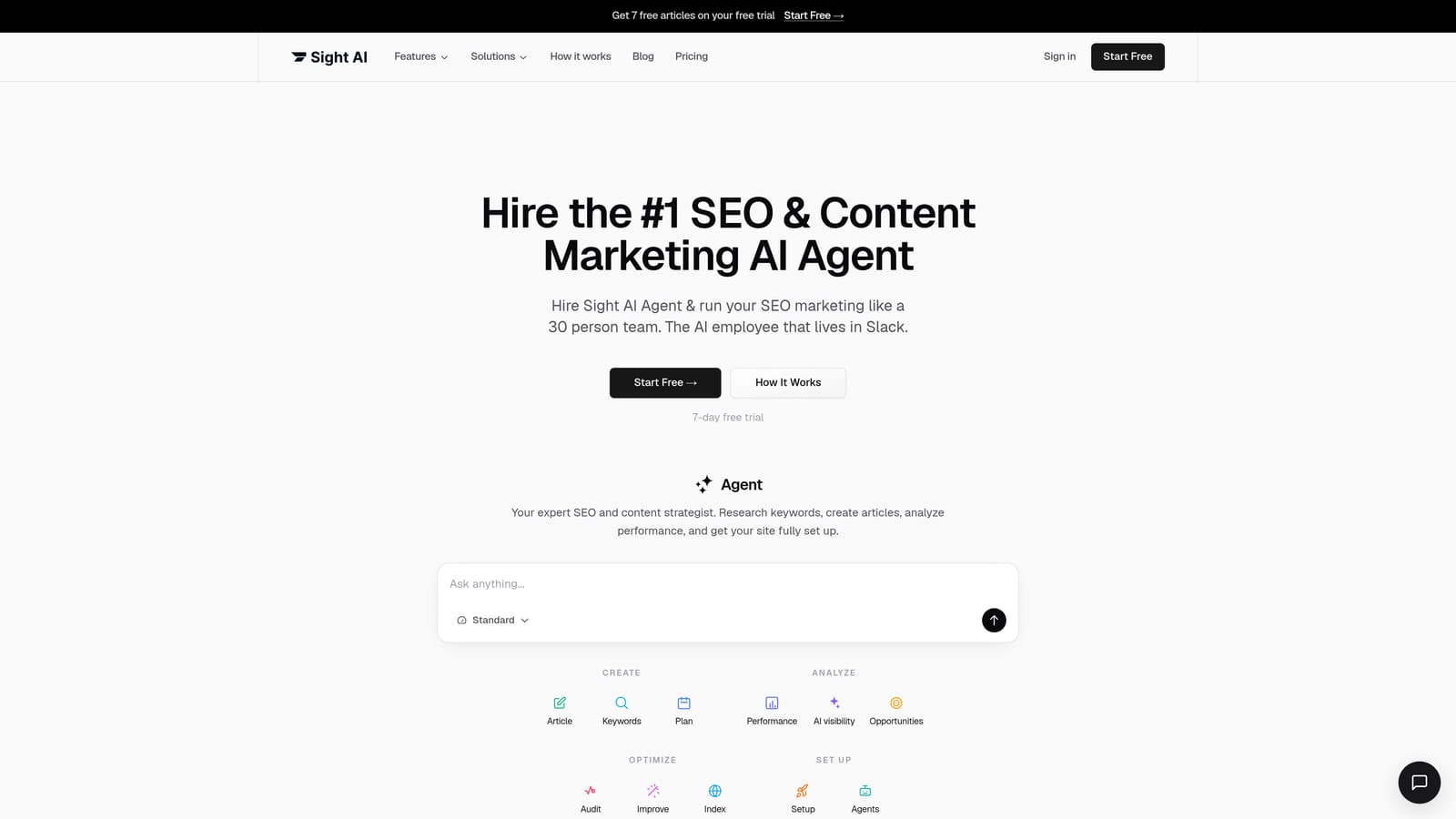
Sight AI is an all-in-one platform combining AI-powered content creation, AI brand visibility tracking, and automated website indexing for marketers targeting both traditional SEO and AI search.
Where This Tool Shines
What separates Sight AI from most content tools on this list is the scope of what it handles in a single workflow. You're not just generating articles and hoping they rank. You're also tracking whether your brand is appearing in AI-generated answers, identifying content gaps based on real prompt-level data, and automatically pushing new content through indexing so it gets discovered faster.
For marketers who've been stitching together separate tools for writing, monitoring, and publishing, the consolidated workflow is a meaningful efficiency gain. The Autopilot Mode in particular is worth noting: it handles content creation and publishing without requiring manual intervention at each step, which is genuinely useful for teams running lean.
Key Features
13+ Specialized AI Agents: Purpose-built agents handle different content formats including listicles, guides, and explainers, each optimized for SEO and GEO requirements rather than generic output.
Autopilot Mode: Hands-off content creation and publishing workflows that reduce the manual steps between ideation and live content.
AI Visibility Score: Tracks brand mentions, sentiment, and representation across ChatGPT, Claude, Perplexity, and three or more additional AI platforms, giving you a measurable view of your AI search presence.
IndexNow Integration: Automated sitemap updates and IndexNow support push new content to search engines faster, reducing the lag between publishing and discovery.
CMS Auto-Publishing: Removes manual deployment steps by connecting content generation directly to your CMS publishing workflow.
Best For
Sight AI is the strongest fit for marketers, founders, and agencies who want a unified platform rather than a patchwork of tools. It's particularly well-suited for teams investing in both traditional SEO and generative engine optimization (GEO), where content creation and AI brand visibility need to work in tandem.
Pricing
Tiered plans are available based on usage and feature access. Verify current pricing directly at trysight.ai as plans may have been updated.
2. Writesonic
Best for: Marketing teams producing high volumes of blog posts, ads, and landing pages.
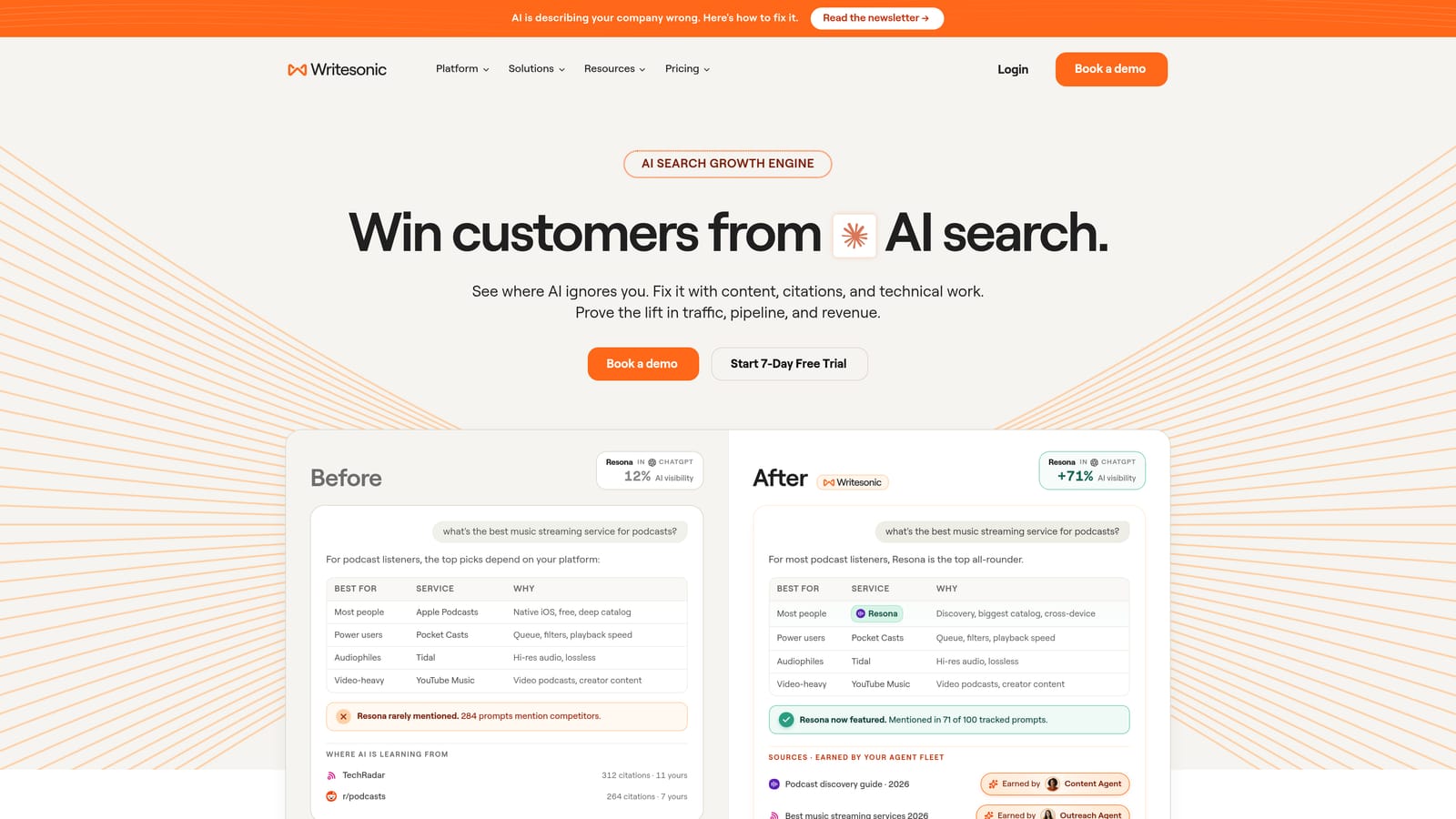
Writesonic is an AI writing platform with a broad template library designed for marketers who need to generate diverse content types quickly and consistently.
Where This Tool Shines
Writesonic's strength is volume and variety. If your team regularly produces blog posts, social copy, product descriptions, and ad creative, the template library covers the range without requiring you to build custom prompts for each format. The SEO-focused writing modes are a practical addition for teams that need content aligned to search intent rather than just readable text.
It's worth being clear about what Writesonic doesn't do: there's no AI brand visibility tracking and no indexing automation. It's a content generation tool, and a capable one, but it sits at one end of the workflow rather than spanning the full pipeline.
Key Features
Template Library: Covers a wide range of content types including blog posts, social copy, ad creative, and product pages, reducing setup time for common formats.
SEO Writing Modes: Aligns content generation with search intent, helping writers produce content with ranking potential built in from the start.
Long-Form Article Writer: Handles extended content pieces beyond short-form templates, useful for teams producing in-depth guides and pillar content.
CMS Integrations: Connects to popular content management systems to streamline the move from draft to published without extra copy-paste steps.
Best For
Writesonic suits content-heavy marketing teams focused on output volume across multiple formats. It's a practical choice for teams that have separate tools handling distribution and monitoring, and simply need a reliable AI writing layer in their stack.
Pricing
Freemium tier available with paid plans based on usage volume. Verify current pricing at writesonic.com before committing.
3. AirOps
Best for: Marketing teams building repeatable, multi-step AI content pipelines at scale.
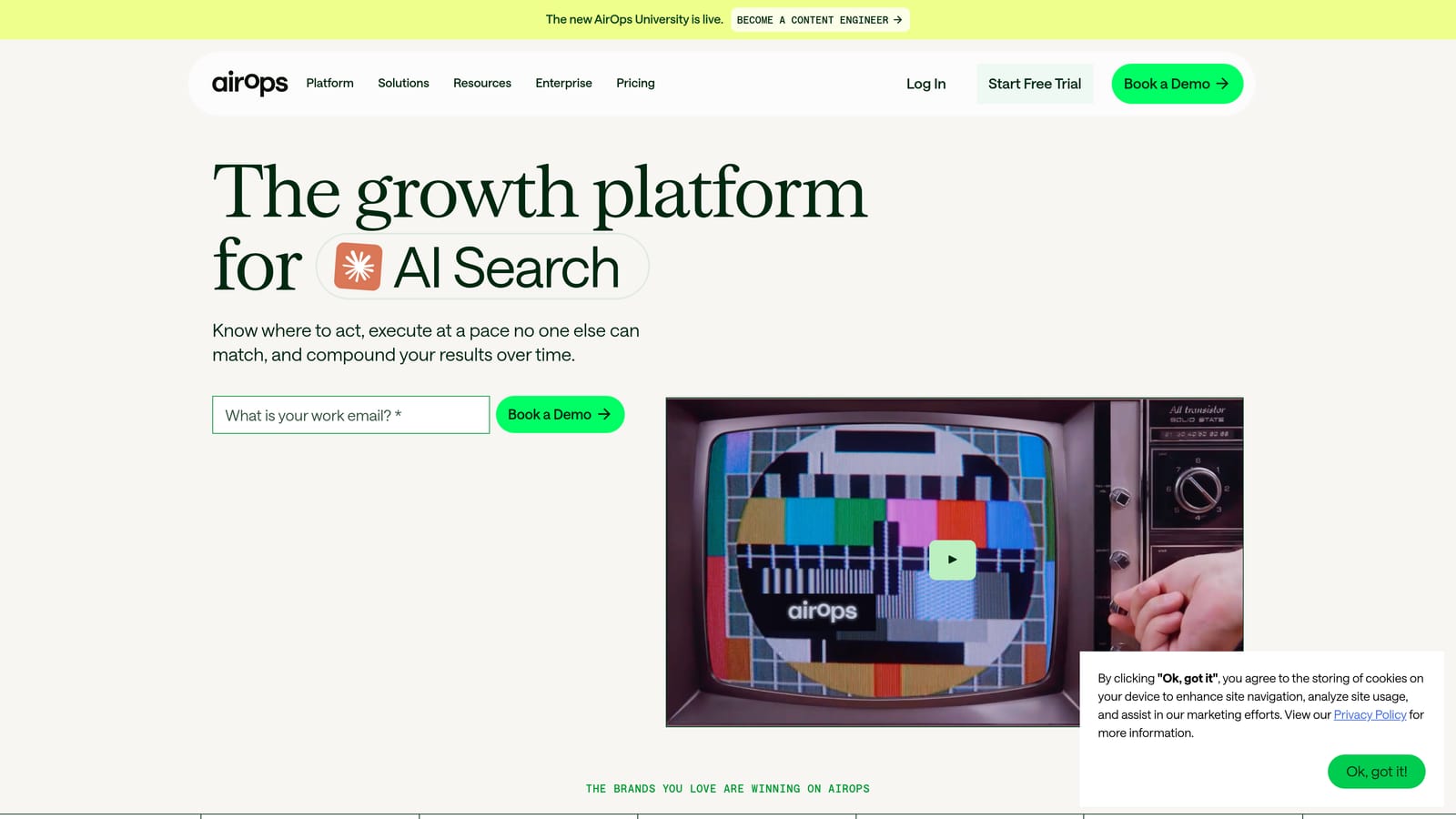
AirOps is a workflow automation platform that lets marketing and content operations teams build structured AI pipelines without requiring engineering resources to set them up or maintain them.
Where This Tool Shines
AirOps is built for the ops-minded marketer who thinks in systems. Rather than using AI to generate a single piece of content, you're building a repeatable process: research flows into drafting, drafting flows into editing, editing flows into formatting, and so on. The visual workflow builder makes that kind of multi-step pipeline accessible without writing a line of code.
For agencies managing content production across multiple clients, or in-house teams running content at a scale where consistency matters as much as quality, AirOps provides the structural layer that most AI writing tools skip entirely.
Key Features
Visual Workflow Builder: Drag-and-drop interface for chaining AI tasks in sequence, covering research, drafting, editing, and publishing steps without custom development.
Multi-Model Support: Allows different AI models to handle different steps within a single pipeline, so you can match model strengths to specific tasks.
Pre-Built Templates: Ready-made workflow templates for common marketing content operations reduce setup time for standard use cases.
Team Collaboration Features: Built for shared workflows across content teams, with collaboration capabilities suited to both agency environments and larger in-house operations.
Best For
AirOps is the right fit for content operations teams and agencies that need structured, repeatable workflows rather than one-off content generation. It's particularly strong for teams where multiple people are involved in the content process and consistency across outputs matters.
Pricing
Verify current plan details and pricing at airops.com as tiers and features are updated regularly.
4. Profound
Best for: Marketers who need analytics on how AI models represent their brand and category.
Profound is an AI answer engine analytics platform focused on tracking how brands, products, and categories appear in responses generated by major AI models.

Where This Tool Shines
Profound operates at the analytics layer of AI search strategy. Rather than generating content, it tells you what's already happening: how AI models are describing your brand, where your competitors are appearing in AI-generated answers, and which content gaps are leaving your brand underrepresented in AI responses.
That intelligence is genuinely useful for informing content strategy. If you know that AI models consistently describe a competitor as the go-to solution in your category, that's a signal about what content you need to create and optimize. Profound surfaces those signals in a structured way.
Key Features
Brand Visibility Tracking: Monitors how your brand appears in responses from AI models including ChatGPT and Perplexity, with visibility data over time.
Competitive Intelligence: Shows how AI models describe your brand relative to competitors, identifying positioning gaps and opportunities.
Category-Level Analysis: Goes beyond brand mentions to analyze how your product category is represented in AI answers, helping identify broader content gaps.
Trend Monitoring: Tracks shifts in AI brand representation over time so you can measure the impact of content and optimization efforts.
Best For
Profound suits marketers with an active AI search strategy who need data to guide content decisions. It works well as a complement to content generation tools rather than a standalone solution, particularly for teams where competitive positioning in AI answers is a priority.
Pricing
Verify current pricing and plan details at profound.co.
5. Peec
Best for: Marketers optimizing their brand's presence in AI-generated search results.
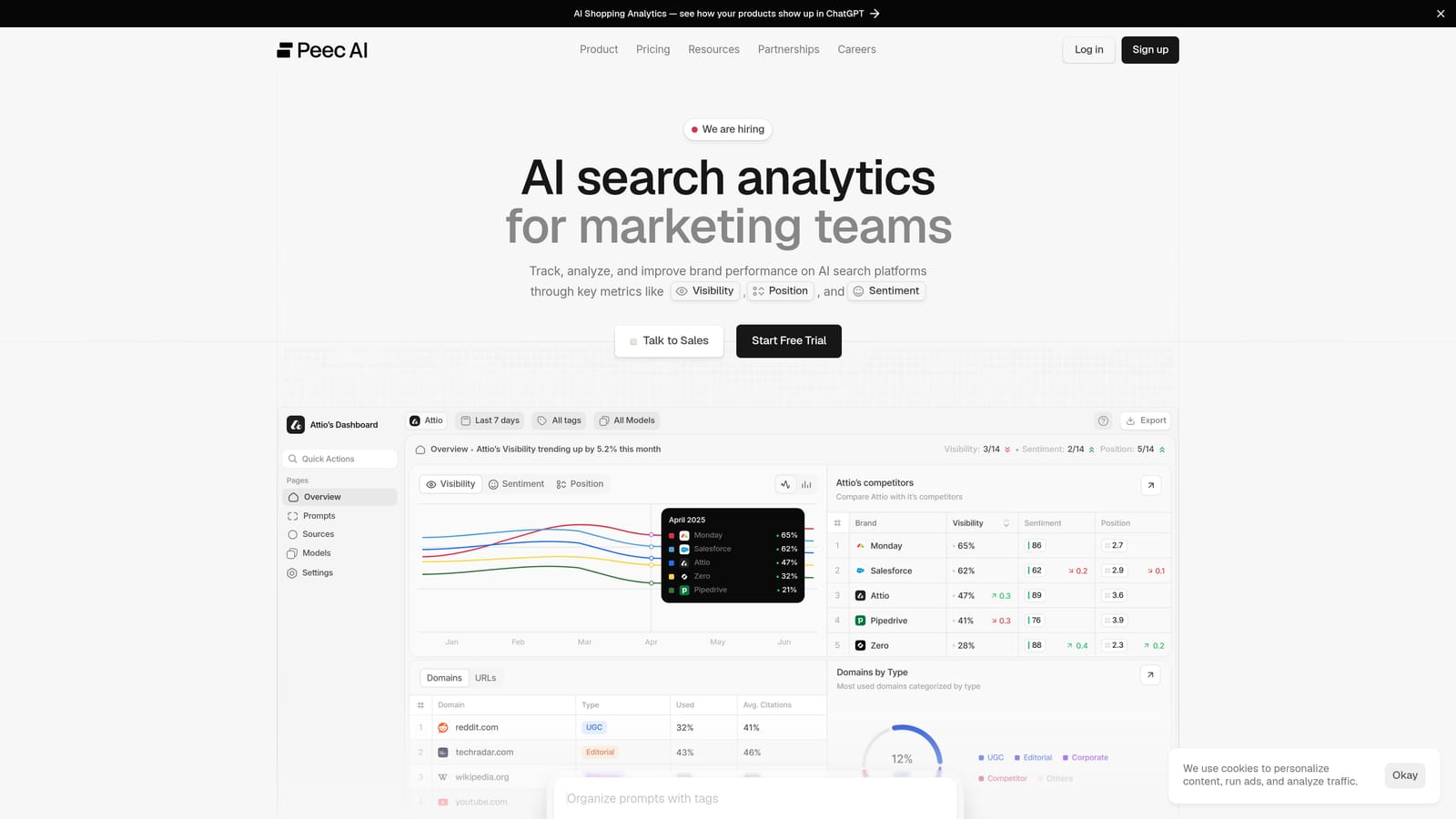
Peec is an AI search optimization and brand monitoring tool built for marketers who need to understand and actively improve how their brand surfaces in AI-generated search responses.
Where This Tool Shines
Peec sits at the intersection of traditional SEO monitoring and AI answer engine optimization. If you're familiar with rank tracking in traditional search, Peec applies a similar logic to AI search: tracking where your brand appears, how visible it is relative to benchmarks, and what changes might improve your position.
The actionable recommendations feature is worth highlighting. Rather than just reporting what's happening, Peec points toward what you can do about it, which makes it more useful as an operational tool than a pure analytics dashboard.
Key Features
Brand Mention Tracking: Monitors brand appearances across AI answer engines, providing a structured view of where and how often your brand is referenced.
AI Search Visibility Scoring: Benchmarks your brand's AI search visibility against reference points so you can measure progress over time.
Prompt and Keyword Monitoring: Tracks how AI models respond to specific prompts and keywords relevant to your brand and category.
Optimization Recommendations: Surfaces actionable suggestions for improving AI search presence based on monitoring data.
Best For
Peec is well-suited for marketers who are already investing in AI search optimization and need structured monitoring with clear improvement guidance. It's a practical fit for SEO-oriented teams extending their strategy into AI search territory.
Pricing
Verify current pricing at peec.ai.
6. Promptwatch
Best for: Marketers tracking how specific prompt categories affect brand visibility in AI outputs over time.
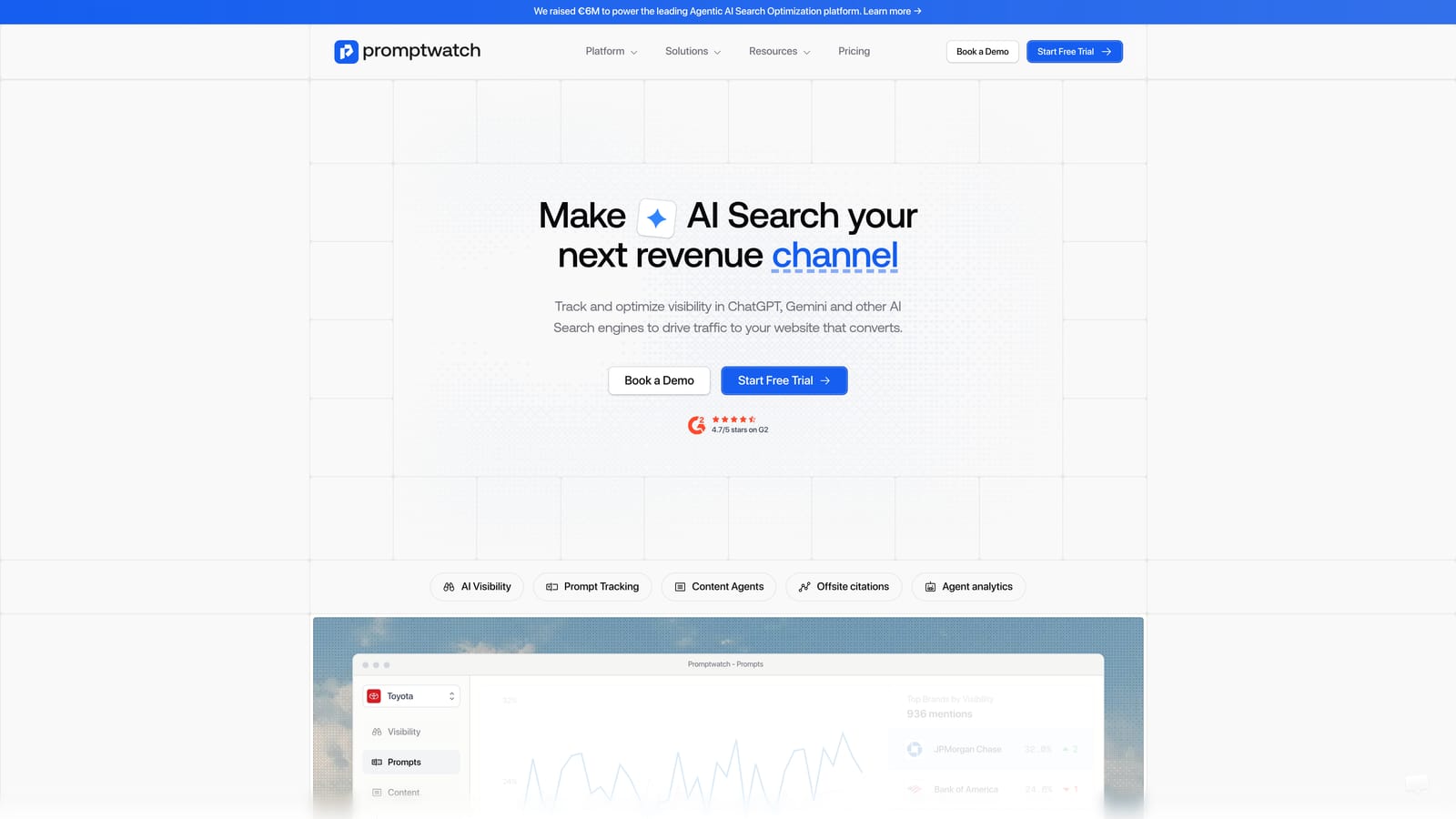
Promptwatch is a prompt monitoring and AI response tracking tool that helps marketers understand how prompt phrasing and category shifts affect their brand's representation across AI platforms.
Where This Tool Shines
Promptwatch operates at a more granular level than most AI monitoring tools. Instead of tracking brand mentions broadly, it focuses on the prompt layer: which types of queries lead to your brand being mentioned, how that changes over time, and when significant shifts in AI-generated responses occur.
For marketers who want to understand the mechanics of why their brand does or doesn't appear in AI answers, that prompt-level visibility is genuinely useful data. It's a more specialized tool, but for teams with a sophisticated AI search strategy, that specificity is an asset.
Key Features
Prompt-Level Tracking: Monitors how AI models respond to brand-relevant queries at the individual prompt level, revealing which query types drive brand visibility.
Historical Trend Analysis: Tracks brand mention frequency in AI outputs over time, making it possible to identify patterns and measure the impact of content changes.
Multi-Platform Monitoring: Covers major AI models in a single view rather than requiring separate tracking per platform.
Representation Alerts: Notifies you when significant changes in brand representation occur in AI-generated answers, so you can respond quickly.
Best For
Promptwatch is best suited for marketers with an established AI visibility strategy who want deeper insight into the prompt dynamics driving their brand's AI search presence. It's a specialized tool that complements broader content and monitoring platforms rather than replacing them.
Pricing
Verify current pricing at promptwatch.io.
Which Tool Belongs in Your Stack
The right choice depends on where your current content operation has gaps. Here's a practical way to think through it.
If you need a single platform that handles content creation, AI brand monitoring, and publishing automation without stitching together multiple tools, Sight AI is the most complete option. It's the only tool in this list that addresses all three workflow stages in one place, which matters if you're building from scratch or consolidating a fragmented stack.
If your primary need is high-volume content generation across diverse formats, Writesonic covers that ground efficiently with its template library and SEO writing modes. It's a strong fit for teams that have monitoring and distribution handled elsewhere.
For teams that think in systems and need repeatable, multi-step pipelines rather than one-off content generation, AirOps provides the workflow infrastructure that most AI writing tools don't offer.
On the AI brand monitoring side, Profound, Peec, and Promptwatch each approach the problem from a slightly different angle. Profound is strongest for competitive intelligence and category-level analysis. Peec adds actionable optimization recommendations alongside monitoring. Promptwatch goes deeper on prompt-level dynamics for teams that want to understand the mechanics behind their AI search visibility.
The practical next step is to audit your current stack against those three pillars: content generation, AI brand visibility, and publishing automation. Most teams have one covered and two underserved.
Stop guessing how AI models like ChatGPT and Claude talk about your brand. Start tracking your AI visibility today and see exactly where your brand appears across top AI platforms, what content gaps are costing you mentions, and how to automate your path to consistent organic traffic growth.