As AI reshapes how people discover content, through ChatGPT, Perplexity, and Claude as much as Google, the definition of a top SEO platform has expanded considerably. Today's best tools don't just track rankings; they help you create content that earns citations from AI models, gets indexed fast, and drives compounding organic traffic over time.
Whether you're a founder building topical authority, a marketer scaling content output, or an agency managing multiple clients, the platform you choose will determine how visible your brand is across both traditional search and AI-generated answers. This list covers nine platforms that stand out in 2026 for their ability to support the full content SEO lifecycle, from keyword research and content creation to indexing, ranking, and AI visibility tracking.
Selection criteria: AI-era relevance, content workflow integration, indexing capabilities, and value for teams focused on organic growth.
1. Sight AI
Best for: Teams that need AI visibility tracking, content generation, and automated indexing in one platform
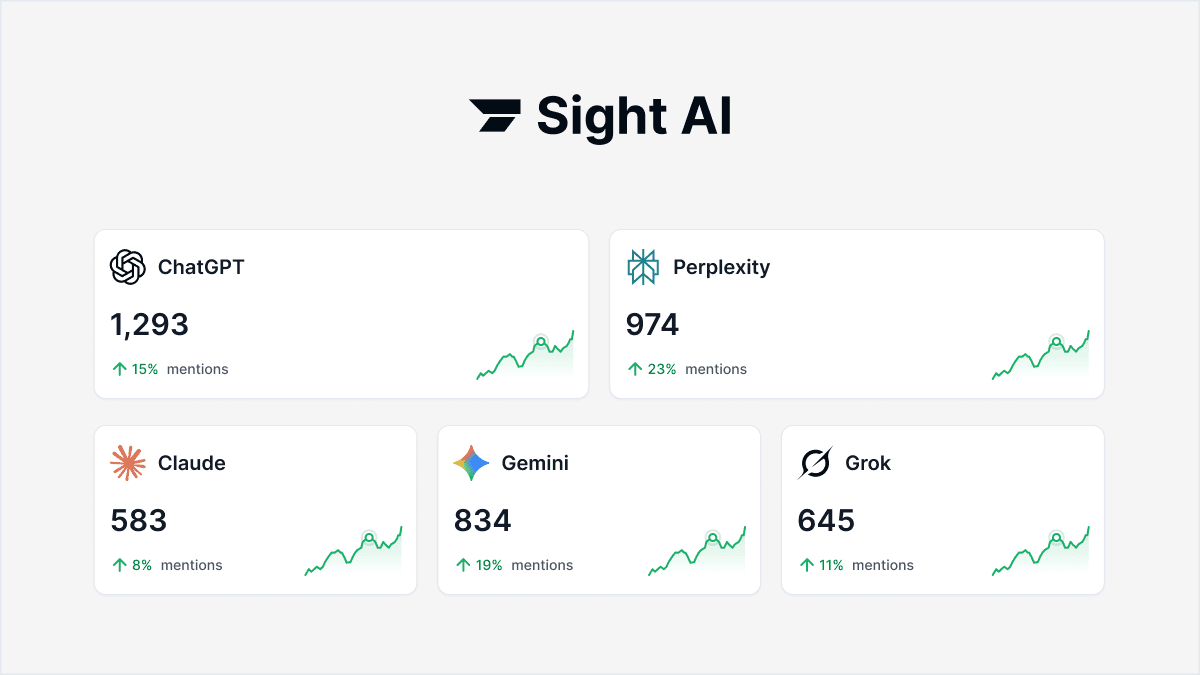
Sight AI is an all-in-one AI-powered SEO and content platform that tracks brand mentions across AI models, generates SEO and GEO-optimized content with 13+ specialized agents, and automates website indexing via IndexNow.
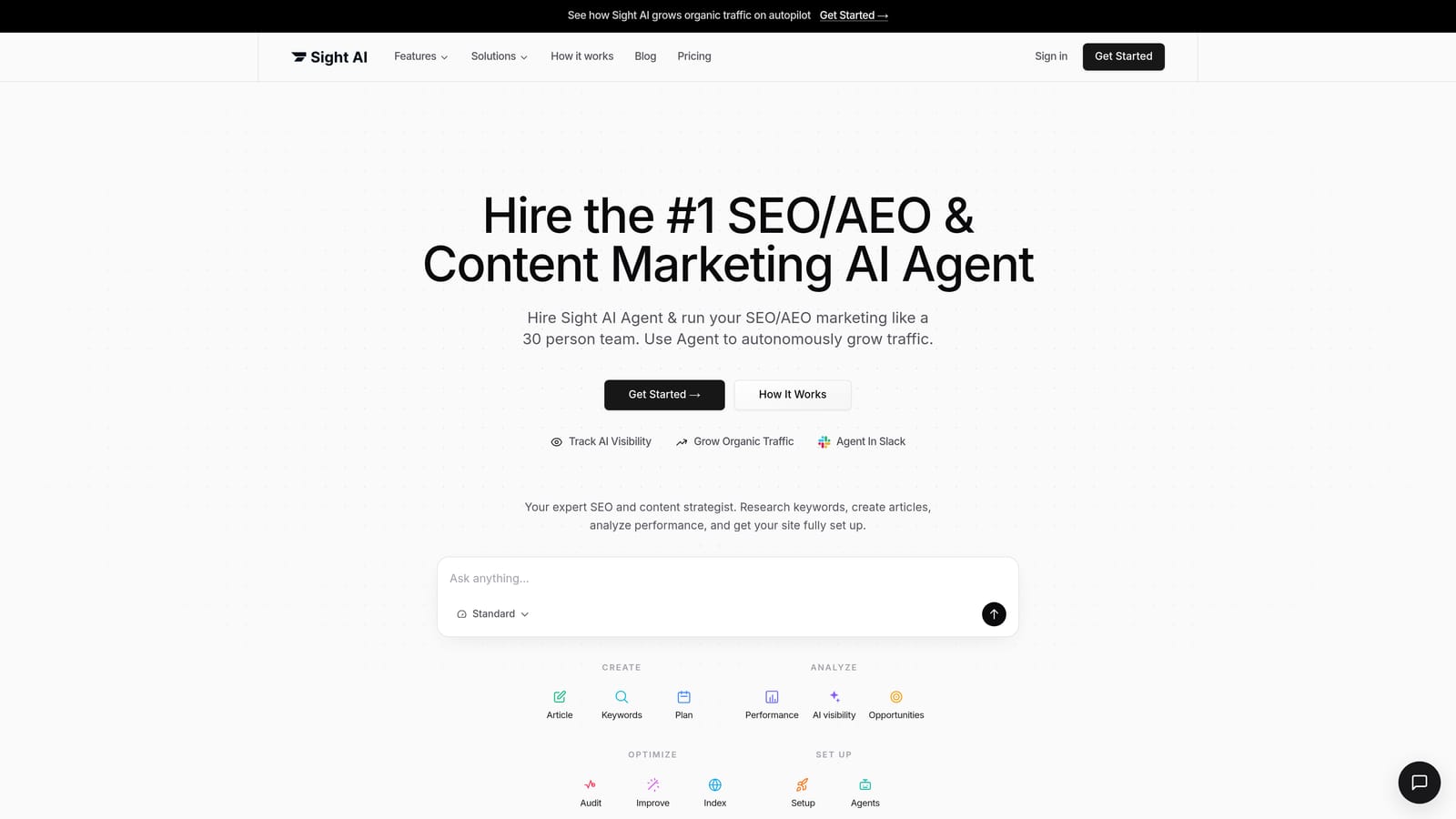
Where This Tool Shines
What genuinely sets Sight AI apart is the combination of capabilities no other platform in this list offers together. While traditional SEO tools focus on Google rankings and backlinks, Sight AI addresses the newer, increasingly important question: how does your brand appear when someone asks ChatGPT, Claude, or Perplexity a question in your space? The AI Visibility Score with sentiment analysis answers that directly.
Beyond visibility tracking, the platform handles content creation through 13+ specialized AI agents capable of producing listicles, guides, and explainers optimized for both traditional SEO and generative engine optimization (GEO). Autopilot Mode and CMS auto-publishing mean the pipeline from content idea to published page can run with minimal manual intervention, which matters enormously for teams trying to compound organic traffic at scale.
Key Features
AI Visibility Score: Tracks brand mentions across ChatGPT, Claude, Perplexity, and 3+ other AI platforms, giving you a clear picture of your presence in AI-generated search results.
Sentiment Analysis and Prompt Tracking: Goes beyond mention counting to show how AI models frame your brand and which prompts surface your name.
13+ Specialized AI Agents: Purpose-built agents for generating listicles, guides, explainers, and other content formats optimized for SEO and GEO simultaneously.
Autopilot Mode: Manages the content pipeline hands-off, from ideation through publishing, reducing the operational overhead of content at scale.
IndexNow Integration: Automated sitemap updates and IndexNow submissions ensure fresh content gets discovered by search engines faster than manual submission workflows allow.
CMS Auto-Publishing: Removes the final friction point in content deployment by pushing finished content directly to your CMS.
Best For
Founders building topical authority who need to move fast, marketing teams that want to monitor and improve AI citation presence alongside traditional rankings, and agencies that need a scalable content pipeline without adding headcount. Particularly valuable for anyone whose audience increasingly discovers content through AI-powered search tools.
Pricing
Paid plans available. Visit trysight.ai for current pricing details, as plans are updated regularly.
2. Ahrefs
Best for: Backlink analysis, competitive keyword research, and comprehensive site auditing
Ahrefs is a comprehensive SEO toolset renowned for its backlink index, keyword research capabilities, and site audit features.
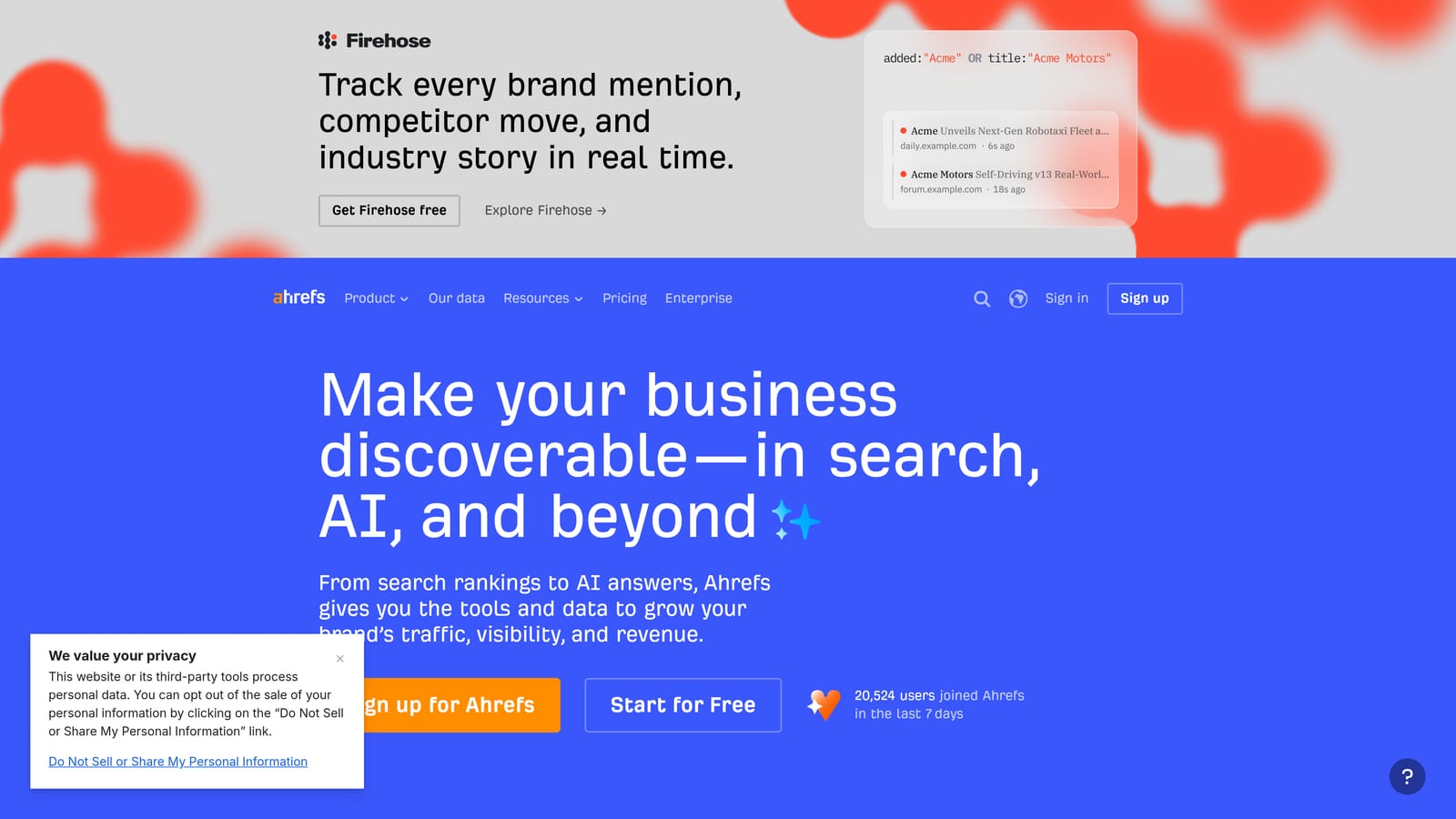
Where This Tool Shines
Ahrefs has earned its reputation as the go-to tool for competitive research, and that reputation holds in 2026. The depth of its backlink index is consistently cited as best-in-class, making it invaluable when you need to understand why a competitor ranks where they do and what it would take to surpass them. Content Explorer is particularly useful for identifying what content in your niche earns the most links and organic traffic.
For keyword research, the Keywords Explorer database is extensive, and the data quality is generally reliable. Site Audit gives technical SEOs a solid foundation for diagnosing crawlability and on-page issues. The trade-off is that Ahrefs doesn't offer AI visibility tracking or native AI-assisted content generation, so it covers the research and analysis layer well but leaves the creation and AI-era visibility layers to other tools.
Key Features
Site Explorer: Deep backlink analysis and organic traffic research for any domain or URL, including competitor gap analysis.
Keywords Explorer: Extensive keyword database with difficulty scores, traffic potential estimates, and SERP overview data.
Content Explorer: Finds high-performing content in any niche based on backlinks, traffic, and social engagement signals.
Site Audit: Crawls your site and surfaces technical SEO issues affecting indexability and performance.
Rank Tracker: Monitors keyword position changes over time across desktop and mobile.
Best For
SEO professionals and agencies that prioritize competitive research, link building strategy, and technical site health. Best suited for teams that already have a content creation workflow and need strong data to inform it.
Pricing
Starts at $129/month (Lite plan); higher tiers available for agencies and enterprise teams with larger data needs.
3. Semrush
Best for: Broad digital marketing teams needing SEO, content, PPC, and competitive intelligence in one place
Semrush is a broad digital marketing platform covering SEO, content marketing, PPC research, and competitive intelligence across multiple channels.
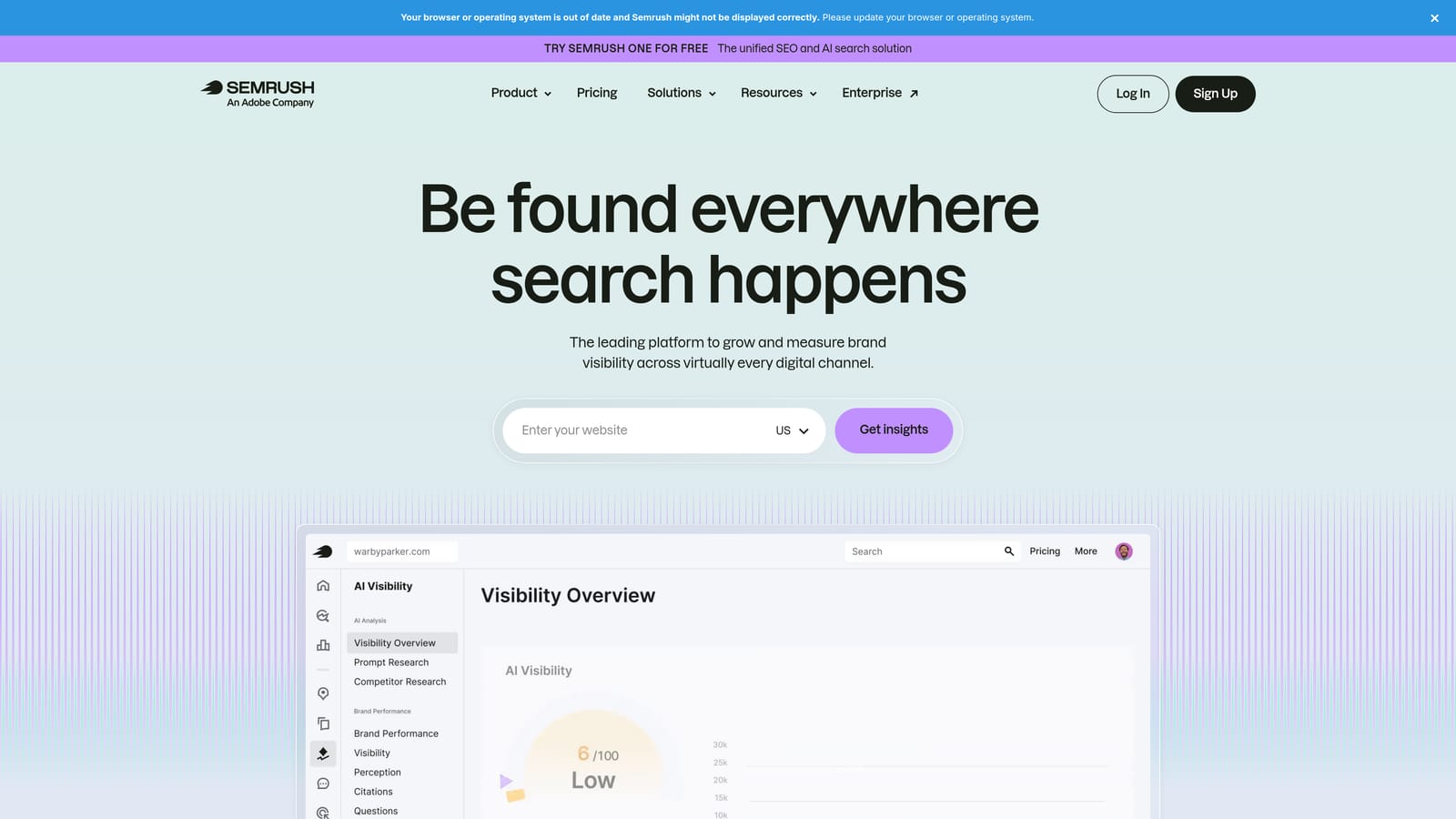
Where This Tool Shines
Semrush's strength is breadth. If your team needs to coordinate SEO with paid search research, social monitoring, and content marketing under a single subscription, Semrush delivers more coverage than most competitors. The Content Marketing Toolkit, which includes the SEO Writing Assistant, Topic Research tool, and Content Audit, gives content teams a structured workflow from ideation through optimization.
The SEO Writing Assistant is particularly practical: it provides real-time on-page guidance as writers work, scoring content against top-ranking SERP pages. For teams managing multiple marketing channels, the consolidation value is real. The flip side is that Semrush can feel overwhelming for teams that only need SEO and content capabilities, and the pricing reflects the platform's breadth rather than depth in any single area.
Key Features
Keyword Magic Tool: Large-scale keyword research with filtering, grouping, and intent classification across an extensive database.
SEO Writing Assistant: Real-time on-page optimization guidance integrated into the writing process, scoring against live SERP data.
Topic Research: Surfaces content ideas and cluster opportunities based on what's performing in your niche.
Content Audit: Evaluates existing page performance to identify what needs updating, consolidating, or removing.
Position Tracking and Backlink Analytics: Monitors ranking changes and link profile growth over time.
Best For
Marketing teams and agencies that need one platform across SEO, content, and paid search. Particularly useful for teams where the SEO practitioner also manages PPC or social campaigns.
Pricing
Starts at $139.95/month (Pro plan); Business plans available for larger teams with greater data volume needs.
4. Surfer SEO
Best for: On-page content optimization scored in real time against SERP competitors
Surfer SEO is an on-page content optimization tool that scores your content in real time against top-ranking SERP competitors using NLP-based analysis.
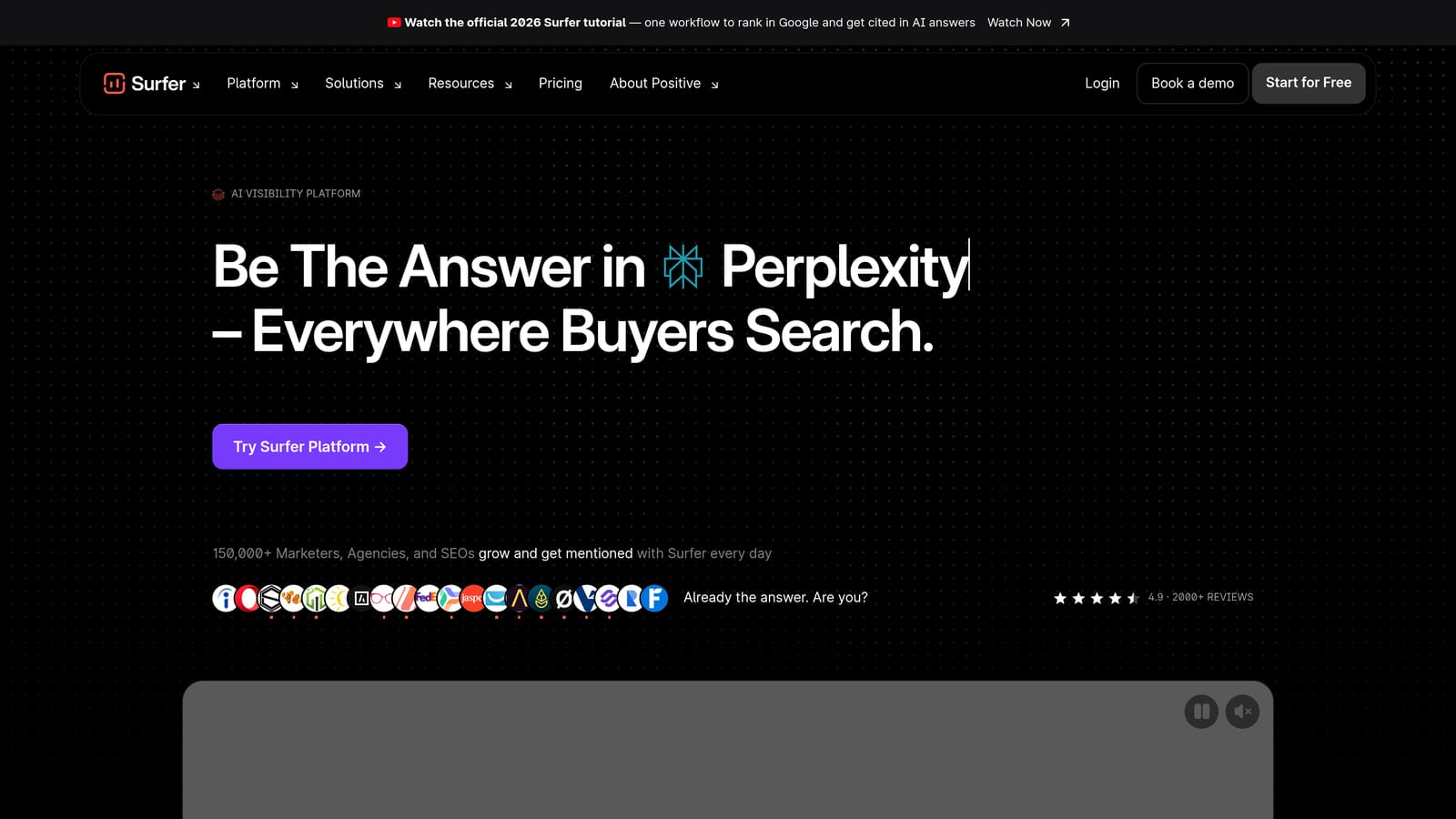
Where This Tool Shines
Surfer's Content Editor is where the platform earns its following. As you write, it surfaces term recommendations derived from analyzing top-ranking pages for your target keyword, helping writers cover semantic relevance without guesswork. The real-time scoring makes it easy for writers who aren't deep SEO practitioners to produce content that's structurally competitive from the start.
The Google Docs and WordPress integrations are genuinely useful, letting writers stay in their preferred environment while still getting Surfer's optimization guidance. Where Surfer is less suited is technical SEO and backlink analysis. Think of it as a specialized tool for the content creation and on-page optimization layer, not a full-stack SEO platform.
Key Features
Content Editor: Real-time NLP-based content scoring against top-ranking SERP competitors as you write.
SERP Analyzer: Breaks down ranking factors and content patterns of top pages for any target keyword.
Keyword Research with Clustering: Groups related keywords into topic clusters to inform content architecture.
Google Docs and WordPress Integrations: Brings optimization guidance directly into the tools writers already use.
Audit Tool: Scores and provides recommendations for optimizing already-published content.
Best For
Content teams and freelance writers focused on producing SEO-optimized articles efficiently. Works well alongside a separate tool for keyword research and technical auditing.
Pricing
Starts at $99/month (Essential plan).
5. Clearscope
Best for: Enterprise editorial teams prioritizing content quality and semantic term coverage
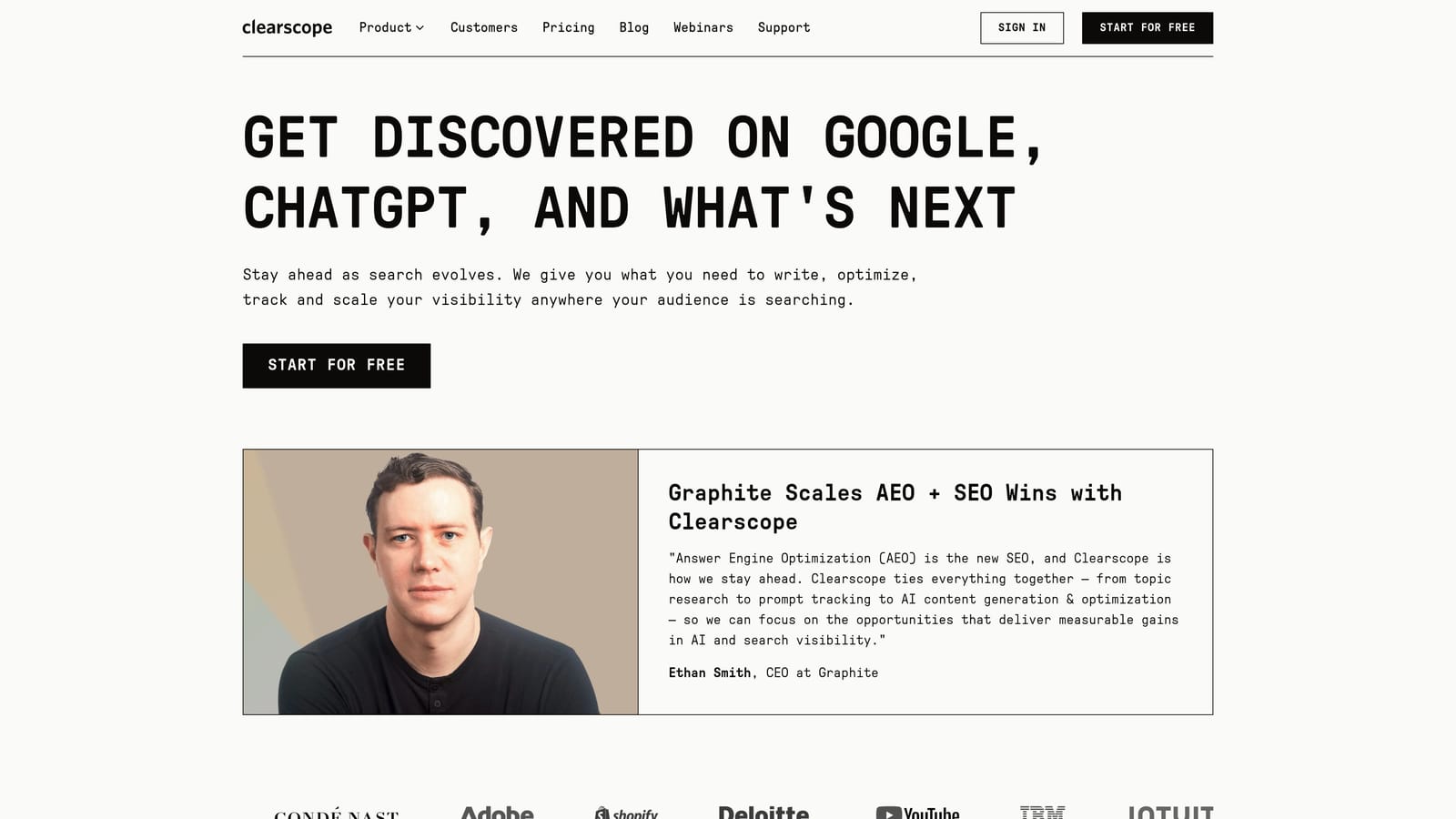
Clearscope is a premium content optimization platform built for enterprise editorial teams that prioritizes clean UX and high-quality semantic term recommendations.
Where This Tool Shines
Clearscope's reputation is built on the quality of its term recommendations and the cleanliness of its editor experience. Where some optimization tools surface dozens of marginally relevant terms, Clearscope tends to surface fewer, higher-signal recommendations that genuinely reflect what top-ranking content covers. For editorial teams producing high-stakes content at volume, that signal quality matters.
The Content Inventory feature is a practical addition for larger sites: it tracks optimization grades across your published pages, making it easier to identify which existing content needs attention. The higher price point reflects the enterprise positioning, so it's best evaluated by teams with established content workflows that can extract full value from its capabilities.
Key Features
Content Reports: Graded term recommendations derived from top SERP results, with clear scoring for writers to target.
Distraction-Free Content Editor: Clean writing environment that keeps optimization guidance accessible without overwhelming the writing process.
Google Docs and WordPress Integrations: Allows writers to access Clearscope's recommendations inside familiar tools.
Content Inventory: Tracks optimization grades across published pages to surface improvement opportunities at scale.
Team Collaboration Features: Supports editorial workflow management across larger content teams.
Best For
Enterprise content teams and larger agencies with high content volume and established editorial workflows. Less suited for solo writers or small teams where the pricing is harder to justify.
Pricing
Starts at $199/month (Essentials plan); Enterprise pricing available for larger teams and custom needs.
6. Google Search Console
Best for: Monitoring Google indexing status, search performance, and Core Web Vitals at no cost
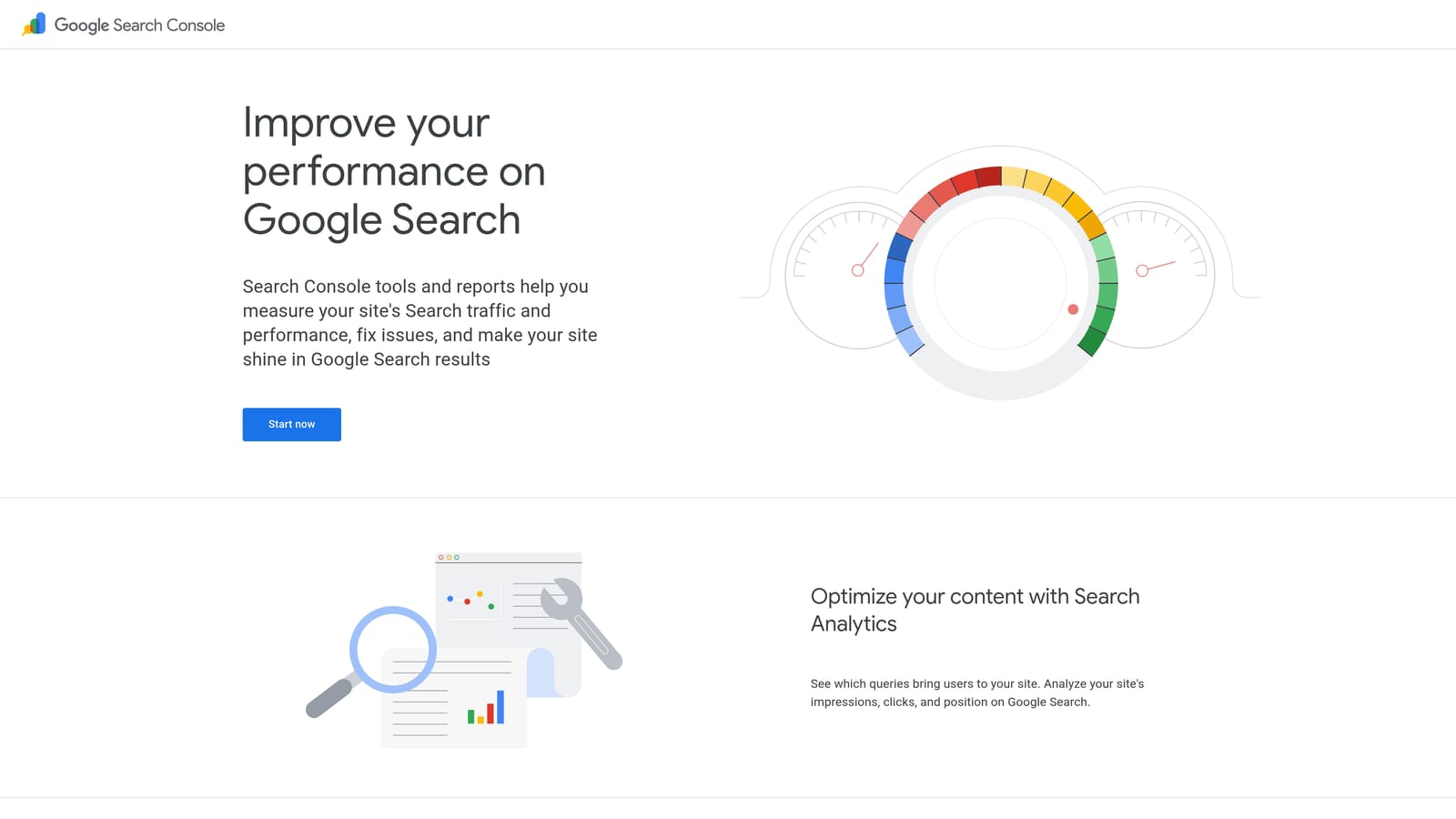
Google Search Console is Google's free first-party tool for monitoring how your site is indexed, crawled, and performing in Google Search.
Where This Tool Shines
There's no substitute for first-party data, and that's exactly what Search Console provides. When you need to understand whether Google has indexed a page, why a URL is excluded from the index, or how your content is actually performing in terms of impressions and clicks, Search Console gives you the most authoritative answer available. No third-party tool can replicate this.
The Performance report is particularly valuable for identifying content that ranks but doesn't convert clicks, signaling potential title and meta description improvements. Core Web Vitals monitoring ties technical performance directly to the user experience signals Google factors into rankings. The honest caveat: Search Console is diagnostic and performance-tracking by nature. It doesn't help you create or optimize content; it tells you how existing content is doing in Google's eyes.
Key Features
Index Coverage Reports: Shows which pages are indexed, excluded, or encountering errors, with reasons for each status.
Performance Report: Provides impressions, clicks, CTR, and average position data by query, page, country, and device.
Core Web Vitals Monitoring: Tracks LCP, CLS, and INP scores across your site's URLs.
Manual Actions and Security Alerts: Notifies you of any penalties or security issues affecting your site's visibility.
URL Inspection Tool: Checks individual page indexing status and allows manual indexing requests.
Best For
Every website, without exception. Search Console should be in every SEO stack regardless of what else you use. It's the foundation for understanding your Google presence.
Pricing
Free, with no usage limits or paid tiers.
7. Screaming Frog SEO Spider
Best for: Technical SEO audits, crawl error diagnosis, and site structure analysis
Screaming Frog SEO Spider is a desktop-based website crawler used by technical SEOs to audit site structure, metadata, redirects, and crawlability.
Where This Tool Shines
When you need a complete picture of your site's technical health, Screaming Frog delivers depth that cloud-based tools often miss. It crawls your site the way search engine bots do, surfacing broken links, redirect chains, duplicate content, missing metadata, and structural issues that can silently suppress rankings. The configurability is a genuine strength: you can set crawl depth, exclude parameters, and tailor the audit to your specific diagnostic needs.
The integrations with Google Analytics, Search Console, and PageSpeed Insights allow you to layer performance data on top of crawl data, giving a more complete picture than crawl data alone. The desktop-based nature means it runs on your machine rather than in the cloud, which is a consideration for teams with distributed workflows but not a significant limitation for most technical SEO use cases.
Key Features
Full Site Crawl: Configurable crawl with adjustable depth, scope, and user-agent settings to mirror how bots see your site.
Error and Redirect Identification: Surfaces broken links, redirect chains, and duplicate content systematically across your entire site.
Metadata Analysis: Flags missing titles, duplicate H1s, meta description issues, and other on-page metadata problems at scale.
XML Sitemap Generation: Creates and validates XML sitemaps directly from crawl data.
Third-Party Integrations: Connects with Google Analytics, Search Console, and PageSpeed Insights for enriched reporting.
Best For
Technical SEOs, developers, and agencies conducting site audits, migration work, or ongoing crawl health monitoring. Excellent value given the price point relative to capabilities.
Pricing
Free up to 500 URLs; paid license at £259/year (approximately $330/year), making it one of the most cost-effective technical SEO tools available.
8. MarketMuse
Best for: Topical authority planning and content gap analysis across large, established sites
MarketMuse is an AI-driven content intelligence platform focused on topical authority planning and content gap analysis across large sites.
Where This Tool Shines
MarketMuse is built for content strategists who need to think at the site level, not just the individual article level. Its Content Inventory feature analyzes your existing published content and surfaces gaps, prioritization opportunities, and areas where your site lacks the depth needed to compete for topical authority. For sites with hundreds or thousands of pages, this kind of systematic analysis is difficult to replicate manually.
The personalized difficulty scoring is a differentiator worth noting: rather than showing generic keyword difficulty, MarketMuse calibrates difficulty based on your site's existing authority in a given topic area. This makes prioritization decisions more actionable. The trade-off is that MarketMuse is primarily a planning and strategy layer; it doesn't handle content creation execution with the depth of a dedicated writing tool.
Key Features
Content Inventory Analysis: Evaluates your existing published content to surface gaps, thin coverage, and prioritization opportunities across topic areas.
Topic Modeling: Identifies subtopics and related questions needed for comprehensive coverage of any subject area.
Content Briefs: Generates structured briefs with recommended questions, topics, and target metrics for writers to execute against.
Competitive Content Analysis: Benchmarks your content coverage against competitors in any given topic area.
Personalized Difficulty Scoring: Calibrates keyword and topic difficulty based on your specific site's existing authority, not generic averages.
Best For
Content strategists and SEO directors managing large sites with significant existing content. Particularly valuable for teams executing topical authority strategies across broad subject areas.
Pricing
Free plan available; paid plans start at $149/month.
9. Frase
Best for: Freelancers and small content teams needing research-to-draft workflow in one accessible tool
Frase is an accessible research-to-draft content platform combining SERP analysis, AI-assisted outlining, and content writing in one lightweight, affordable interface.
Where This Tool Shines
Frase earns its place on this list through accessibility and workflow integration. It pulls together the research phase, outlining, and drafting into a single interface, reducing the context-switching that slows down content teams working across multiple tools. The SERP research feature aggregates what top-ranking pages cover for any query, giving writers a solid foundation before they start drafting.
At its price point, Frase offers strong value for freelancers and small teams who need a capable content tool without the enterprise price tags of Clearscope or MarketMuse. The content scoring against SERP competitors helps writers ensure topical coverage without requiring deep SEO expertise. The honest limitation is that Frase doesn't extend into technical SEO, backlink analysis, or AI visibility tracking, so it's best positioned as a content creation layer within a broader stack.
Key Features
SERP Research Aggregation: Pulls and organizes content from top-ranking pages for any query, giving writers immediate context for what comprehensive coverage looks like.
AI-Assisted Outline and Brief Generation: Generates structured outlines and content briefs from SERP research with minimal manual effort.
Content Editor with Topic Scoring: Scores draft content against SERP competitors to identify gaps in topical coverage.
Answer Engine: Quickly surfaces relevant facts and data points during the research phase to support accurate writing.
Team Collaboration and Document Sharing: Supports shared workflows for small content teams working across multiple documents.
Best For
Freelance writers, solo content marketers, and small content teams that need an affordable, streamlined research-to-draft workflow. A strong entry point for teams not yet ready for enterprise-tier optimization tools.
Pricing
Starts at $45/month (Solo plan); Team plan at $115/month.
Which Tool Is Right for Your Stack?
The nine platforms above cover distinct layers of the content SEO lifecycle, and the right choice depends on where your biggest gap currently sits.
If you're building in 2026 and AI search visibility is a priority alongside traditional SEO, Sight AI is the only platform here that addresses all three layers: tracking how AI models mention your brand, generating optimized content at scale, and automating the indexing process. That combination is genuinely difficult to replicate by stitching together separate tools.
For competitive research and backlink analysis, Ahrefs remains the benchmark. If you need one platform across SEO, content, and paid search, Semrush's breadth is hard to match. For on-page content optimization during the writing process, Surfer SEO and Clearscope are both strong choices, with Clearscope skewing toward enterprise teams and Surfer toward a wider range of team sizes. Frase is the practical choice for freelancers and small teams who need an affordable research-to-draft workflow.
On the technical side, Google Search Console is non-negotiable regardless of what else you use, and Screaming Frog is the most cost-effective way to run deep technical audits. MarketMuse fills a specific gap for content strategists managing large sites who need systematic topical authority planning.
Most mature content teams end up combining two or three of these tools rather than relying on any single platform. The question is which combination covers your specific workflow gaps without unnecessary overlap.
Stop guessing how AI models like ChatGPT and Claude talk about your brand. Start tracking your AI visibility today and see exactly where your brand appears across top AI platforms, while generating the content that helps you show up more often.