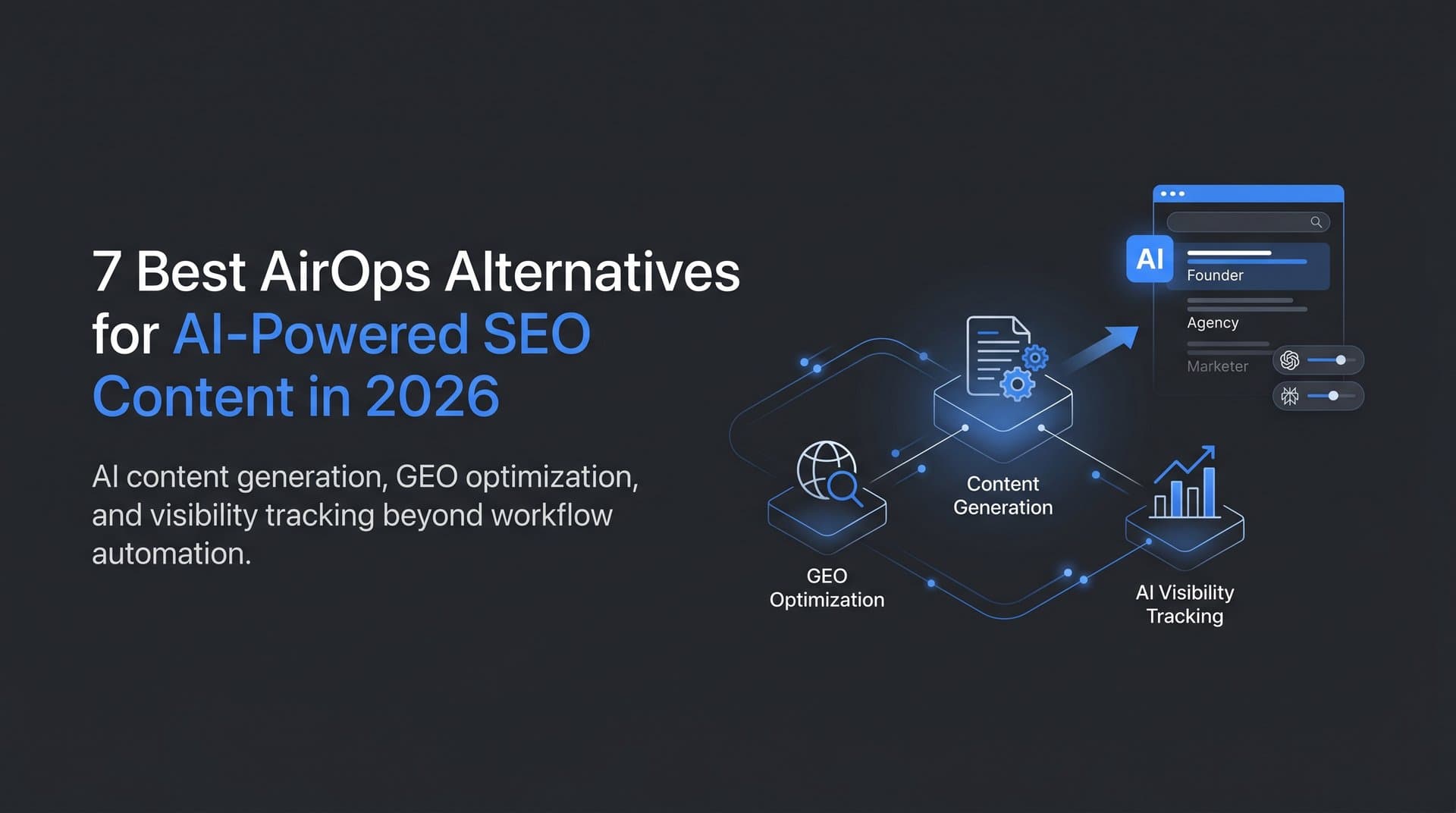
AirOps built its reputation as a workflow automation platform for content teams, and for good reason. Its LLM orchestration and prompt management capabilities are genuinely useful for content operations at scale. But for marketers and agencies focused on organic growth and AI visibility, it often leaves a gap. You need content that ranks in traditional search AND gets cited by AI models like ChatGPT, Claude, and Perplexity. That's a different problem, and it requires different tools.
This list covers the best AirOps alternatives for content in 2026. Each tool is evaluated on content quality, SEO and GEO capabilities, workflow automation, and overall value for marketers, founders, and agencies. Whether you're looking for an all-in-one platform or a specialized solution for a specific part of your content stack, you'll find a clear recommendation below.
1. Sight AI
Best for: Marketers and agencies who want content generation, AI visibility tracking, and indexing in one platform.
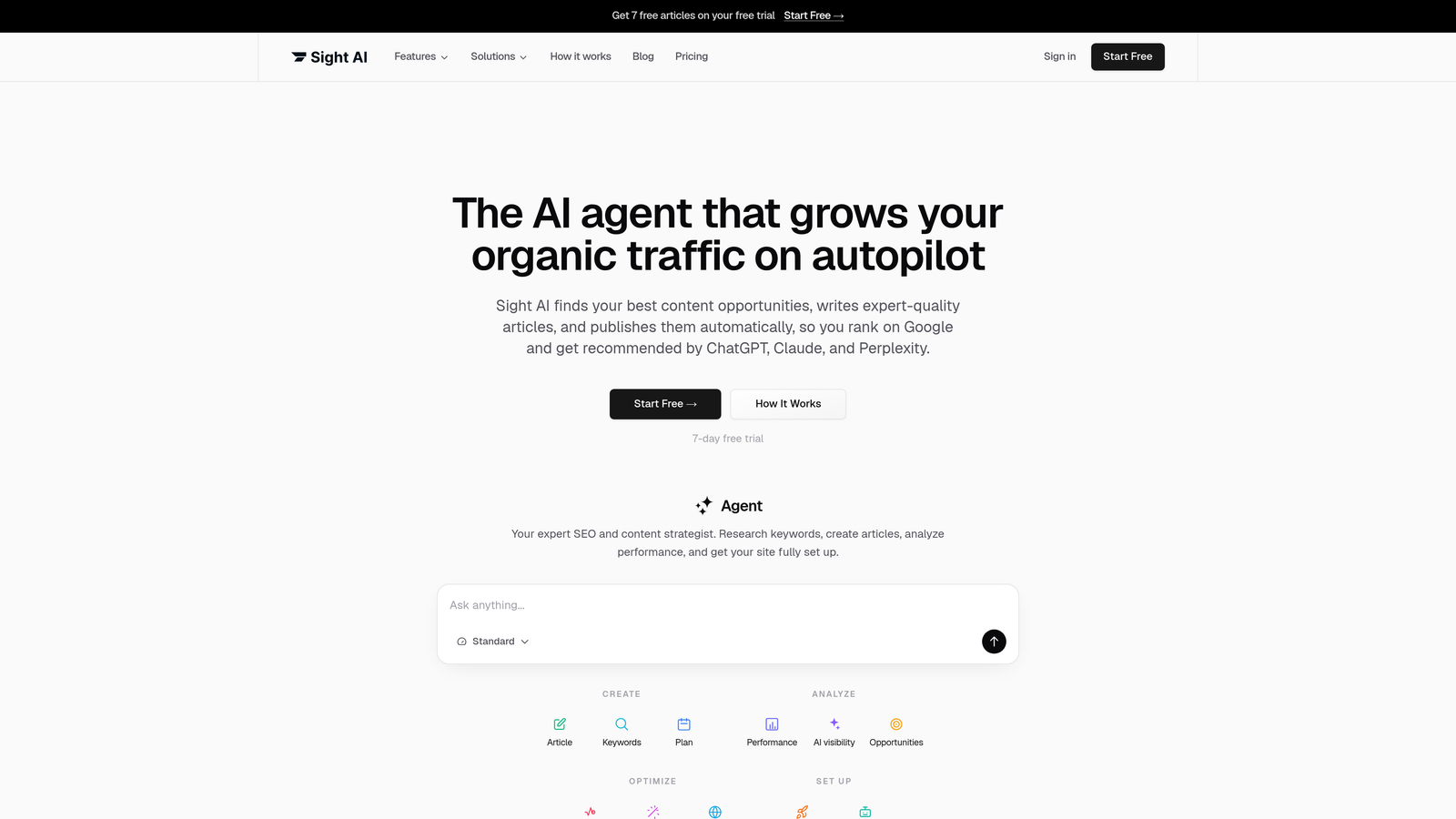
Sight AI is an all-in-one AI content and visibility platform that generates SEO and GEO-optimized articles using 13+ specialized AI agents while simultaneously tracking how your brand is mentioned across AI models like ChatGPT, Claude, and Perplexity.
Where This Tool Shines
Most content tools focus on one thing: writing. Sight AI is built around a different premise. It combines content generation with AI visibility monitoring, so you're not just publishing articles into the void. You can see whether those articles are actually influencing how AI models talk about your brand.
The Autopilot Mode is particularly useful for agencies and lean marketing teams. Once configured, it handles content generation and publishing with minimal manual intervention. Combined with IndexNow integration, new content gets indexed and discovered faster than the traditional crawl-and-wait cycle most teams are stuck with.
Key Features
13+ Specialized AI Agents: Purpose-built agents for generating listicles, guides, and explainers optimized for both traditional search and AI citation patterns.
AI Visibility Score: Tracks brand mentions across 6+ AI platforms with sentiment analysis, so you know not just whether you're mentioned but how you're being framed.
Autopilot Mode: Hands-off content generation and publishing for teams that need consistent output without constant oversight.
IndexNow Integration: Automatic content indexing and sitemap updates that accelerate search discovery after publishing.
CMS Auto-Publishing: Direct publishing to your CMS with automated sitemap management, reducing the manual steps between content creation and going live.
Best For
Sight AI is the strongest fit for marketers, founders, and agencies who want a single platform that handles content creation, AI visibility tracking, and indexing without stitching together multiple point solutions. If AI search presence is a priority alongside traditional SEO, this is the most complete option on this list.
Pricing
Tiered pricing is available across multiple plans. Visit trysight.ai for current pricing details, as plans are updated regularly.
2. Writesonic
Best for: Content teams that need high-volume AI writing with built-in SEO features and brand voice controls.
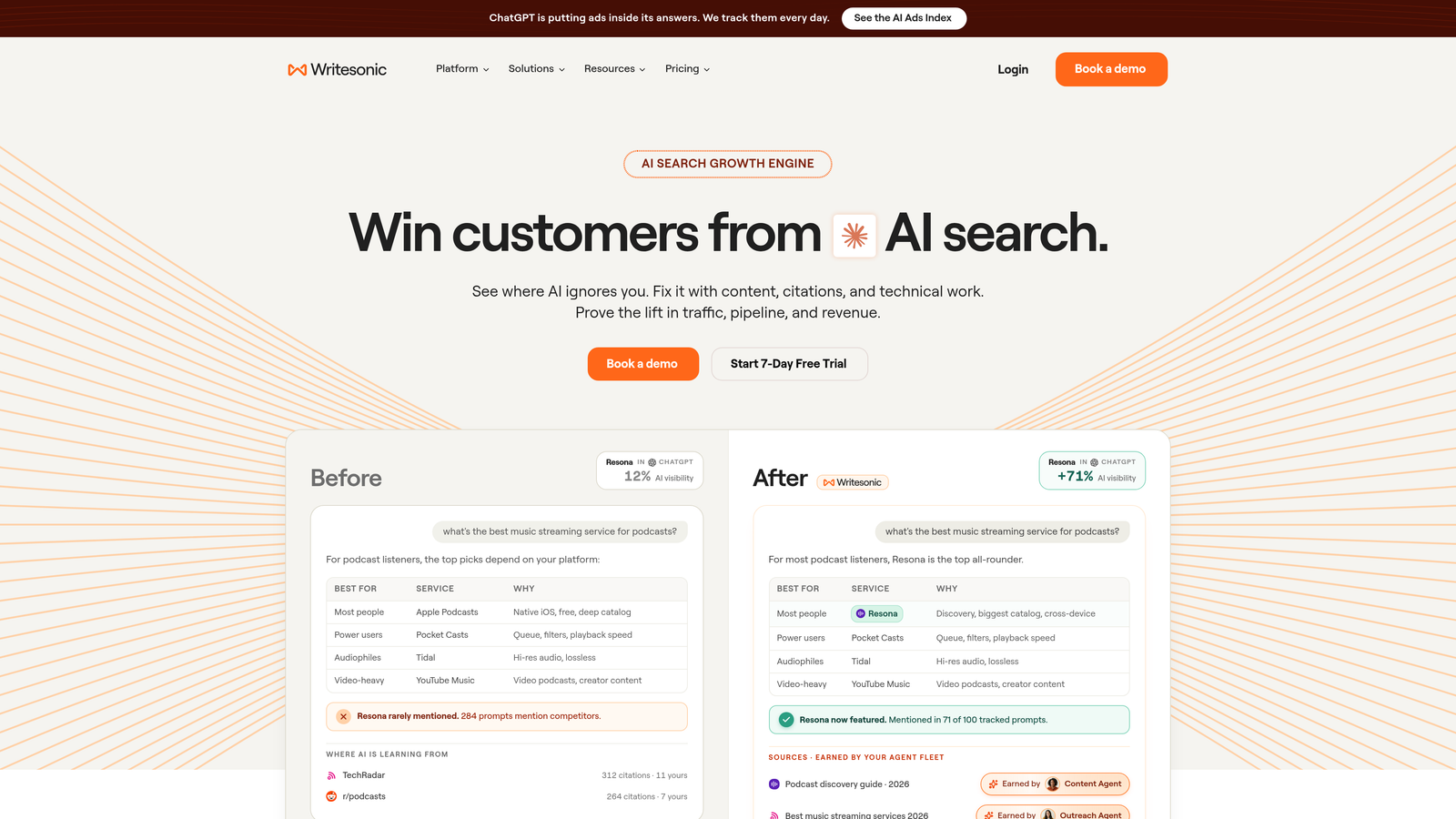
Writesonic is a widely-used AI writing platform offering long-form content generation, SEO-focused templates, and an AI chatbot called Chatsonic, built for teams that need to scale output without sacrificing quality consistency.
Where This Tool Shines
Writesonic has matured significantly as a platform. Its long-form article generation is well-suited for content marketing teams running high-volume operations, and the brand voice customization features make it easier to maintain consistency across writers and campaigns.
Chatsonic, its real-time AI assistant with web access, is a useful addition for teams that need up-to-date content. Rather than relying on a static training cutoff, it can pull in current information, which matters for topics that move quickly.
Key Features
Long-Form Article Generation: SEO-focused templates designed for blog posts, guides, and marketing copy at scale.
Chatsonic: A real-time AI assistant with web access for generating content that reflects current information rather than outdated training data.
Brand Voice Customization: Define your tone and style once; Writesonic applies it consistently across content types.
Bulk Content Generation: Produce multiple pieces simultaneously, useful for agencies managing large content calendars.
CMS and Marketing Integrations: Connects with popular platforms to reduce the manual steps between drafting and publishing.
Best For
Writesonic works well for content marketing teams and agencies that prioritize volume and consistency. It's particularly useful if your primary need is writing assistance rather than AI visibility tracking or workflow orchestration. The accessible pricing also makes it a practical choice for SMBs and growing teams.
Pricing
A free plan is available. Paid plans start at approximately $16 per month, though pricing changes periodically. Verify current tiers at writesonic.com.
3. AirOps
Best for: Content operations teams that need flexible LLM workflow automation and prompt management at scale.
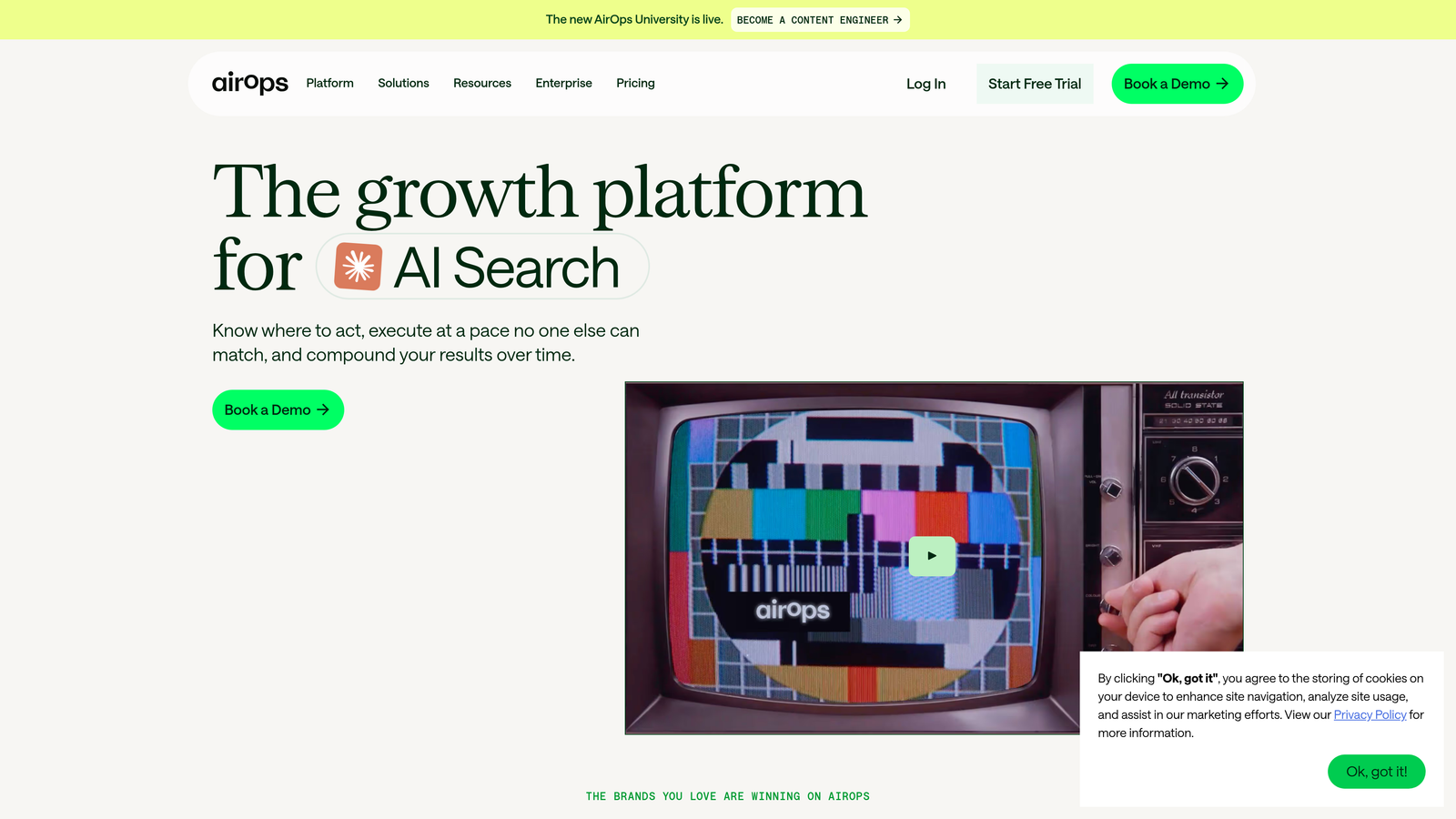
AirOps is a workflow automation and LLM orchestration platform that helps content operations teams build, manage, and scale multi-step AI-powered content pipelines.
Where This Tool Shines
AirOps earns its place in content stacks where the challenge is orchestration rather than writing. If your team runs complex, multi-step content processes that require consistent prompt management across multiple AI models, AirOps provides the infrastructure to build and maintain those workflows reliably.
Its prompt versioning system is genuinely useful for teams that iterate frequently. You can test different prompt configurations, track what's working, and roll back when needed. For content ops teams managing large-scale pipelines, this kind of control matters. The tradeoff is that AirOps doesn't offer native SEO or GEO optimization, so it typically needs to be paired with other tools for teams focused on organic growth.
Key Features
Flexible LLM Workflow Builder: Build multi-step content pipelines with support for multiple AI models in a single workflow.
Prompt Versioning and Management: Track, test, and iterate on prompts systematically to maintain consistent output quality over time.
Pre-Built Workflow Templates: Ready-made templates for common content operations tasks that reduce setup time.
Team Collaboration Features: Shared workflows and access controls suited for content ops teams working at scale.
API and Integration Support: Connects to existing tech stacks, making it easier to embed AirOps into broader content infrastructure.
Best For
AirOps is best suited for content operations teams with complex, repeatable workflows and a need for robust prompt management. It's less suited for teams whose primary goal is SEO content creation or AI visibility optimization without additional tooling.
Pricing
Contact AirOps directly for current pricing. Plans vary based on usage volume and team size. Visit airops.com for details.
4. Profound
Best for: Enterprise marketing teams focused on improving brand visibility in AI-generated search responses.
Profound is an AI answer engine optimization platform that tracks and improves how brands appear in AI-generated search responses, helping enterprise teams build presence in the AI-first search landscape.

Where This Tool Shines
Profound sits at the intersection of brand monitoring and AI search optimization. Rather than focusing on content creation, it focuses on what happens after content is published: specifically, whether AI models are picking it up and how your brand is being represented in AI-generated answers.
The competitive analysis layer is where Profound differentiates itself. You can benchmark your AI search presence against named competitors, identify where rivals are appearing in AI responses that you're not, and prioritize content efforts accordingly. For enterprise teams managing brand reputation across AI platforms, this kind of structured visibility is difficult to replicate with general-purpose tools.
Key Features
AI Answer Tracking: Monitors brand presence across major AI platforms to show where and how your brand appears in AI-generated responses.
Actionable Optimization Recommendations: Provides specific guidance for improving AI search visibility based on current answer patterns.
Competitive Analysis: Compares your brand's AI search presence against specific competitors across topics and categories.
Content Gap Identification: Surfaces topics where AI models are generating answers that don't include your brand, pointing to content opportunities.
Enterprise Reporting Dashboards: Team-level reporting built for enterprise workflows and stakeholder communication.
Best For
Profound is built for enterprise marketing teams with dedicated resources for AI search strategy. If your organization is serious about understanding and improving its presence in AI-generated answers, and you need competitive benchmarking to support that work, Profound is purpose-built for that use case.
Pricing
Enterprise pricing applies. Contact Profound directly through profound.co for plan details and availability.
5. Peec
Best for: Agencies tracking AI visibility and share-of-voice across multiple client brands simultaneously.
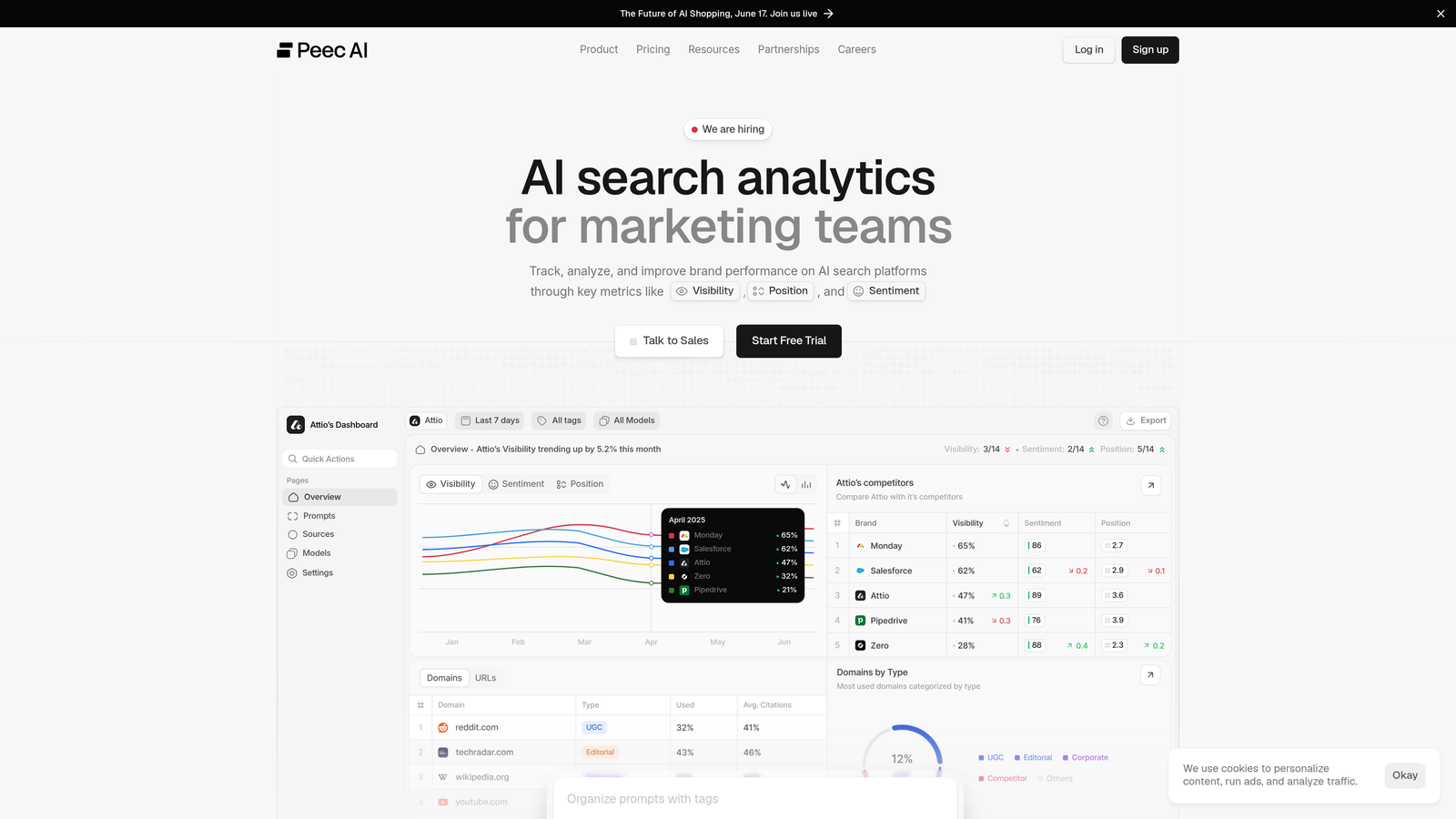
Peec is an AI visibility benchmarking tool that measures how frequently and favorably your brand appears in AI model responses, with competitive share-of-voice tracking built for agencies managing multiple clients.
Where This Tool Shines
Peec is designed with agency workflows in mind. The multi-client dashboard allows teams to monitor AI visibility across different brands from a single interface, which is a practical advantage over tools that require separate logins or accounts for each client.
The share-of-voice reporting is particularly useful for client reporting. Rather than presenting raw mention counts, Peec frames AI visibility in terms that map naturally to how agencies already communicate performance to clients. Trend tracking over time also makes it easier to demonstrate progress and identify when visibility shifts require a content response.
Key Features
Brand Mention Tracking: Monitors how frequently your brand appears across multiple AI models and platforms.
Competitive Benchmarking: Compares your AI visibility against named competitors to surface relative positioning.
Share-of-Voice Reporting: Frames AI mention data in share-of-voice terms, making it easier to communicate performance to clients and stakeholders.
Multi-Client Dashboard: Manage visibility tracking for multiple brands from a single interface, reducing operational overhead for agencies.
Trend Tracking: Monitors visibility changes over time to help teams identify patterns and respond to shifts proactively.
Best For
Peec is the strongest fit for digital agencies managing AI visibility across multiple client accounts. It's also useful for brand teams that need competitive benchmarking as part of their AI search strategy, particularly when share-of-voice framing is important for internal or client reporting.
Pricing
Pricing tiers are available on the Peec website. Visit peec.ai for current plan details.
Choosing the Right Tool for Your Content Stack
The right choice here depends on what's actually missing from your current setup. These tools solve meaningfully different problems, and the best one is the one that fills your specific gap.
If you want one platform for content creation, AI visibility, and indexing: Sight AI is the most complete option. It's the only tool on this list that combines content generation with AI mention tracking and automatic indexing, which matters if you're trying to build organic visibility in both traditional and AI-driven search without managing multiple tools.
If your primary need is high-volume writing with SEO guardrails: Writesonic is a solid, accessible choice. Its brand voice controls and bulk generation features make it practical for content teams running large content calendars on a budget.
If you need workflow automation and prompt management for complex content pipelines: AirOps remains a strong reference point for content ops teams. Just be aware that you'll likely need additional tooling if SEO or GEO optimization is a priority.
If you're an enterprise team focused on AI answer engine optimization: Profound's competitive analysis and structured reporting make it the most purpose-built option for that use case.
If you're an agency tracking AI visibility across multiple clients: Peec's multi-client dashboard and share-of-voice reporting are built specifically for that workflow.
AI-generated search results are increasingly shaping how buyers discover brands, and content teams that ignore GEO alongside traditional SEO are leaving visibility on the table. Stop guessing how AI models like ChatGPT and Claude talk about your brand. Start tracking your AI visibility today and see exactly where your brand appears across top AI platforms.