As AI-powered search engines like ChatGPT, Claude, and Perplexity become primary discovery channels, brands can no longer afford to optimize only for traditional search rankings. AI visibility — how your brand appears, is described, and recommended across large language models — is now a critical growth lever for marketers, founders, and agencies.
The platforms built to help you track, improve, and scale AI visibility vary significantly in scope, features, and pricing. Some focus purely on monitoring brand mentions in LLM outputs. Others prioritize content generation optimized for AI citation. A few attempt to do both. This guide breaks down the best AI visibility optimization platforms available in 2026, covering what each tool does, who it's built for, and what you can expect to pay.
Whether you're a solo founder monitoring brand mentions or an agency managing AI visibility for multiple clients, this comparison will help you find the right fit without overspending.
1. Sight AI
Best for: Teams that want to track, create, and publish AI-optimized content from one platform
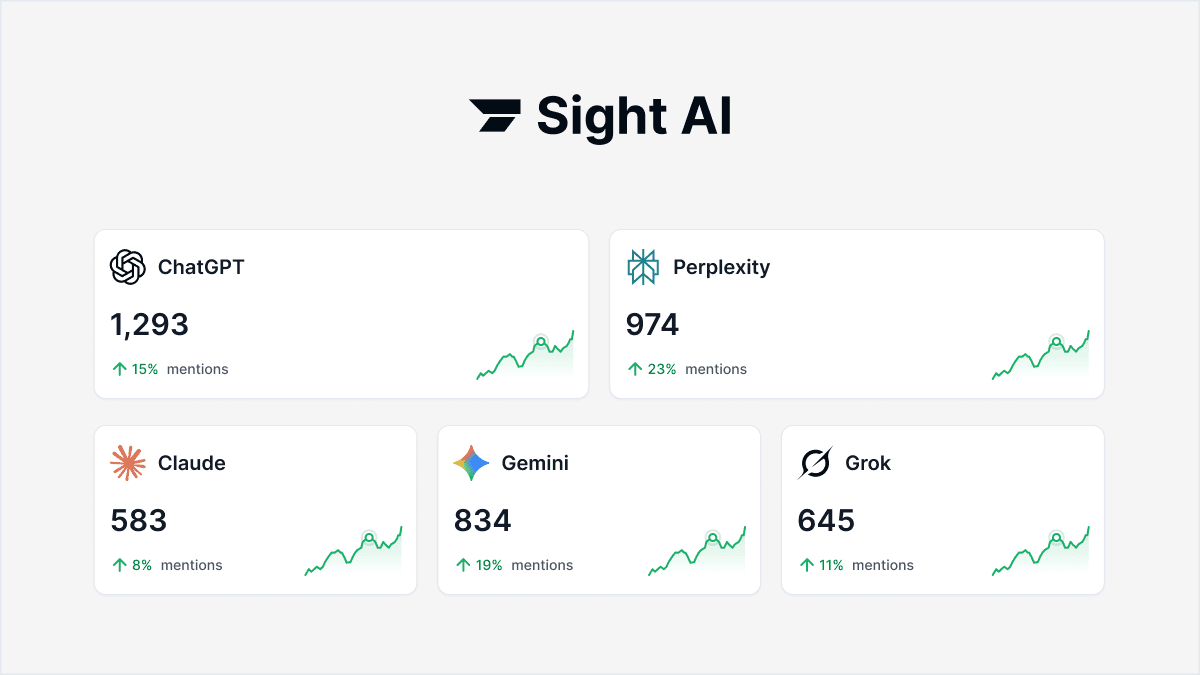
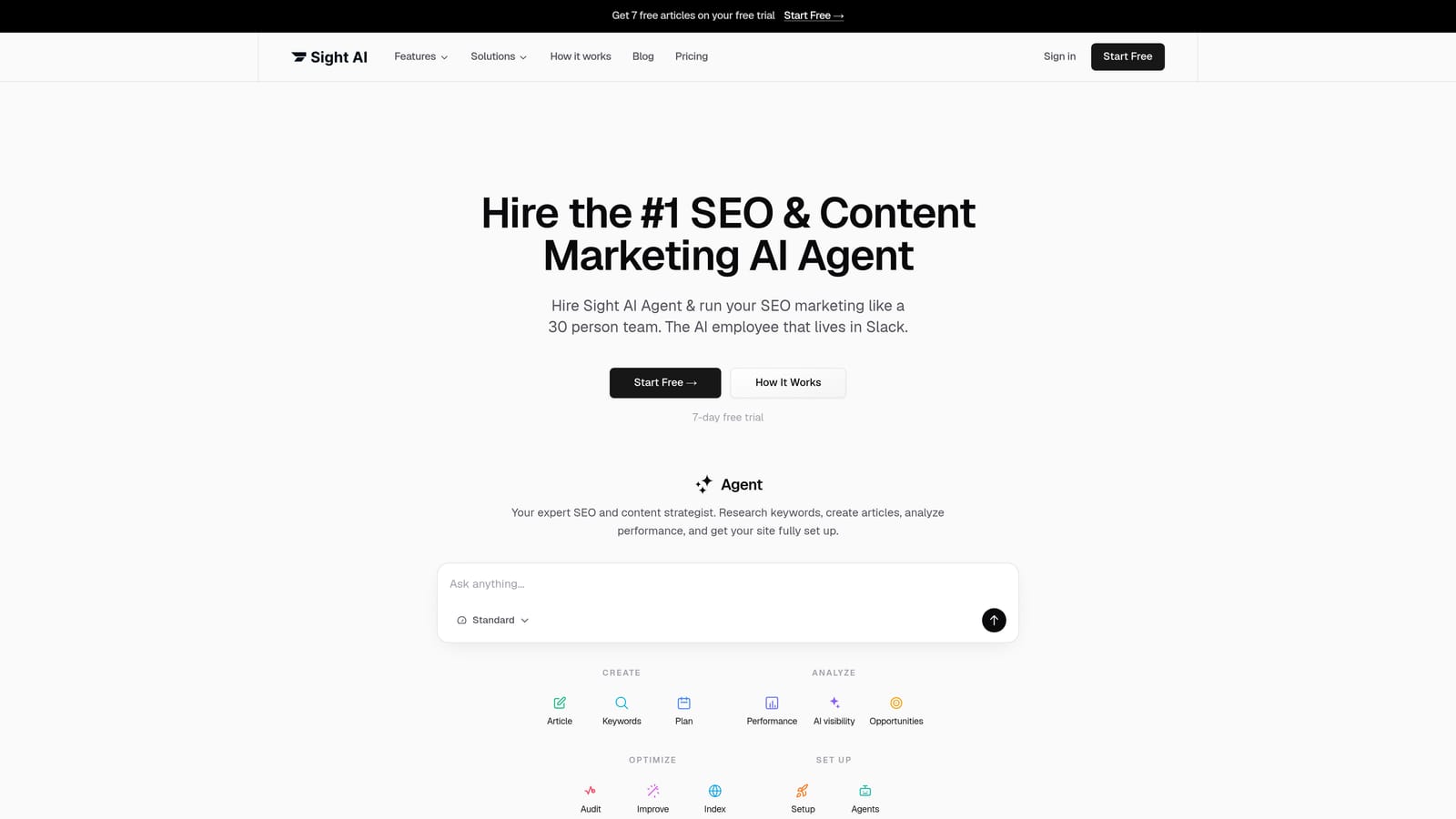
Sight AI is an all-in-one AI visibility platform that combines brand monitoring across 6+ AI models, SEO/GEO-optimized content generation with 13+ specialized AI agents, and automated website indexing via IndexNow — all from a single dashboard.
Where This Tool Shines
Most AI visibility tools make you choose between monitoring and content creation. Sight AI removes that trade-off. You can track exactly how AI models describe your brand, identify the content gaps that explain why competitors get mentioned more often, and then produce and publish content to close those gaps — without switching platforms.
The Autopilot Mode is particularly useful for lean teams. It handles content production and publishing hands-off, so you're not manually managing every step of the workflow. For agencies running AI visibility programs for multiple clients, this kind of automation is a genuine time-saver.
Key Features
AI Visibility Score: Tracks how your brand appears across ChatGPT, Claude, Perplexity, and other major AI platforms, with sentiment analysis to show not just whether you're mentioned but how.
Prompt Tracking: Monitors how AI models respond to queries relevant to your brand, so you know exactly which prompts surface your competitors instead of you.
13+ Specialized AI Agents: Generate listicles, guides, explainers, and other content formats optimized for both traditional SEO and generative engine optimization (GEO).
Autopilot Mode: Automates content production and publishing workflows, reducing manual steps for content-heavy teams and agencies.
IndexNow Integration: Automatically updates sitemaps and submits new content for faster discovery, so your published content gets indexed and considered by AI models sooner.
Best For
Sight AI is the strongest fit for marketers, founders, and agencies who want a unified platform rather than a stack of disconnected tools. If you need both monitoring and content production under one subscription, this is the most complete option in the category. It's particularly well-suited for growth-focused teams where speed to publish and visibility into AI mentions both matter.
Pricing
Sight AI uses tiered SaaS pricing covering all three functional areas: tracking, content generation, and indexing. Visit trysight.ai for current plan details and pricing tiers.
2. Profound
Best for: Enterprise marketing teams tracking share of voice in AI-generated search results
Profound is an enterprise-grade AI search analytics platform that measures how brands appear in AI-generated answers and tracks share of voice across major large language models.

Where This Tool Shines
Profound is built for scale. Where many AI visibility tools give you a snapshot of brand mentions, Profound focuses on competitive share-of-voice analytics — helping enterprise teams understand not just whether they appear in AI answers, but how often they appear relative to competitors across a broad set of queries.
The platform's reporting and team collaboration features are designed for marketing organizations that need to present AI visibility data to stakeholders, align across departments, and benchmark performance over time. If you're managing brand visibility at an enterprise level, the depth of analytics here is hard to match.
Key Features
AI Search Analytics: Measures brand visibility and share of voice across AI-generated answers from major LLMs.
Brand Visibility Monitoring: Tracks how your brand is represented in AI model responses across different query types and categories.
Competitive Benchmarking: Compares your AI visibility against named competitors in AI-generated answer contexts.
Enterprise Reporting: Provides structured reporting and team collaboration features suited for larger marketing organizations.
Best For
Profound is best suited for enterprise brands and large marketing teams with dedicated resources for AI search strategy. If your primary need is competitive intelligence and share-of-voice analytics at scale, rather than content production, Profound is worth evaluating seriously.
Pricing
Profound uses enterprise-focused pricing with custom quotes. Contact their team directly at profound.co for pricing details specific to your organization's needs.
3. Peec
Best for: Growth marketers who want competitive AI visibility intelligence with prompt-based tracking
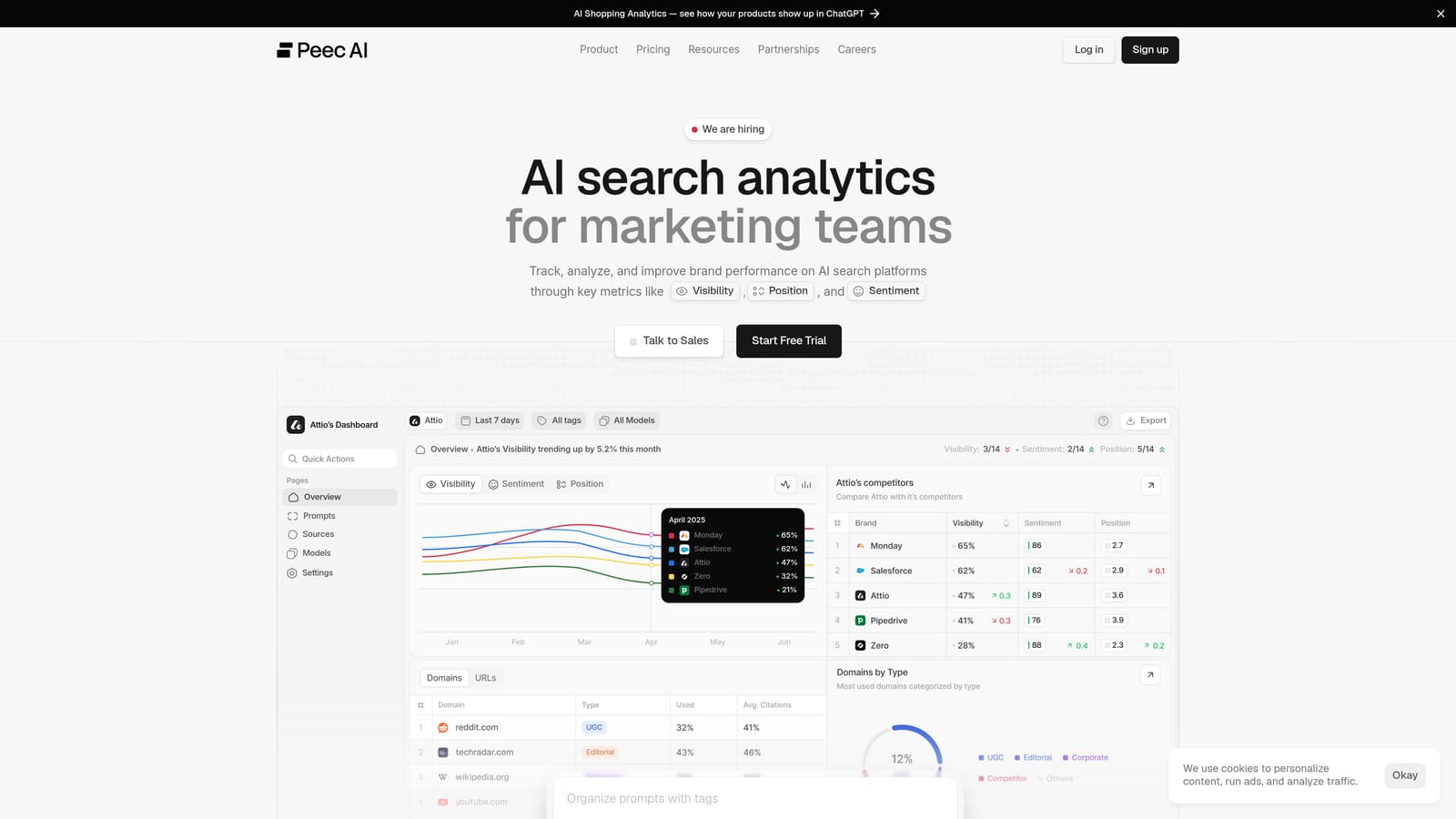
Peec is a brand monitoring tool focused on tracking how your brand and competitors appear in AI model responses, using prompt-based category and keyword tracking to surface actionable competitive insights.
Where This Tool Shines
Peec's core strength is competitive benchmarking in AI answer contexts. Rather than just telling you whether you appear in AI responses, it shows you how you stack up against specific competitors across the categories and keywords that matter to your business. This makes it particularly useful for teams running competitive analysis as part of their AI visibility strategy.
The trend tracking functionality adds another layer of value: you can identify shifts in how AI models recommend brands over time, which helps you understand whether your content efforts are moving the needle or whether a competitor is gaining ground in AI-generated answers.
Key Features
Prompt-Based Monitoring: Tracks AI model responses by category and keyword, giving you visibility into the specific queries where your brand does or doesn't appear.
Competitive Benchmarking: Compares your AI visibility directly against named competitors in AI answer engine results.
Brand Mention Tracking: Monitors how your brand is referenced across AI answer engines over time.
Trend Tracking: Identifies shifts in AI model recommendations so you can respond to changes in how models describe your category.
Best For
Peec is a strong choice for growth marketers and SEO professionals who prioritize competitive intelligence in AI search. If understanding how your brand compares to specific competitors in AI-generated answers is your primary goal, Peec's prompt-based tracking approach is well-designed for that use case.
Pricing
Peec offers tiered plans with different levels of monitoring and tracking capacity. Visit peec.ai for current pricing and plan details.
4. Promptwatch
Best for: SEO professionals who need prompt-level granularity in AI model response monitoring
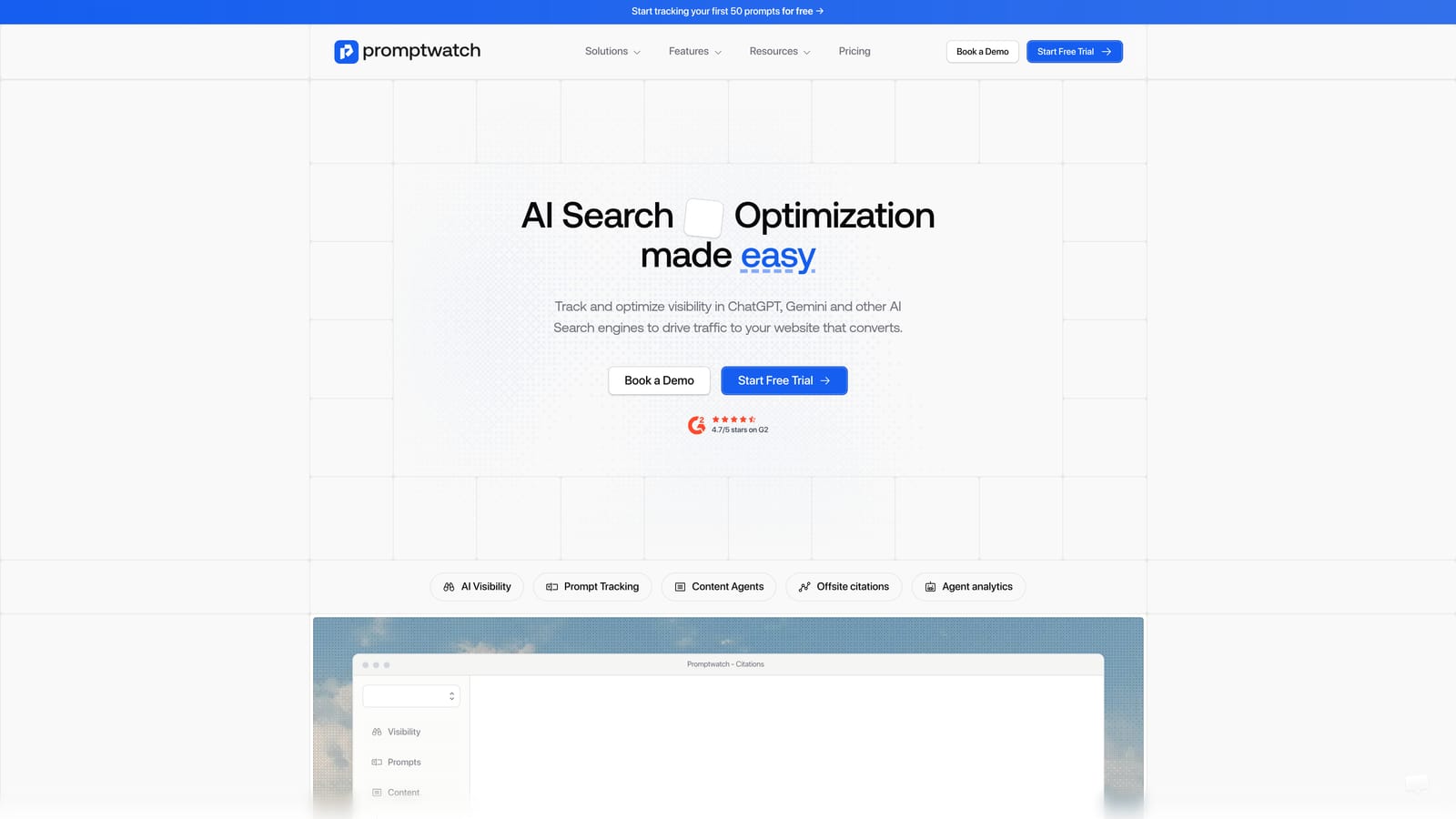
Promptwatch is a specialized tool for monitoring how AI models respond to specific prompts, enabling brands to track the consistency and accuracy of their representation in LLM outputs over time.
Where This Tool Shines
Promptwatch takes a more granular approach than most AI visibility tools. Instead of broad brand mention tracking, it focuses on how AI models respond to specific, defined prompts — and whether those responses stay consistent as models are updated. This is particularly valuable for brands that have invested in shaping their AI representation and want to verify that investment is holding.
For SEO professionals who think in terms of specific query intent, the prompt-level focus feels natural. You define the prompts that matter to your brand, and Promptwatch tells you exactly what AI models are saying in response to each one.
Key Features
Prompt-Level Monitoring: Tracks AI model responses to specific prompts you define, rather than broad keyword or category monitoring.
Response Consistency Tracking: Monitors whether AI model responses about your brand change over time, alerting you to shifts in how you're represented.
Brand Representation Analysis: Analyzes the content and sentiment of AI-generated answers that include your brand.
Change Alerts: Notifies you when AI models change how they describe or recommend your brand in response to tracked prompts.
Best For
Promptwatch is best suited for SEO professionals and brand managers who want detailed, prompt-specific monitoring rather than broad visibility analytics. It's more narrowly scoped than all-in-one platforms, which makes it a better fit as a complementary tool than a standalone solution for most teams.
Pricing
Promptwatch uses subscription-based pricing. Visit promptwatch.io for current plan options and pricing tiers.
5. AirOps
Best for: Content teams and agencies building scalable, LLM-powered content production workflows
AirOps is an AI workflow automation platform that enables content teams and agencies to build scalable, multi-LLM content operations — including content workflows designed to improve AI search visibility.
Where This Tool Shines
AirOps approaches AI visibility from the content production angle. Rather than monitoring where you appear in AI answers, it helps you build the workflows that produce the content designed to get you there. The platform's multi-LLM integration and custom workflow builder make it flexible enough to support complex, high-volume content operations.
For agencies managing content production at scale, AirOps offers the kind of workflow customization that more opinionated tools don't. You're not locked into a predefined process; you build the pipeline that fits your team's specific needs and client requirements.
Key Features
Workflow Automation: Builds automated content production pipelines with integrations across multiple LLMs.
Scalable Content Production: Supports high-volume content operations for teams and agencies managing large content programs.
Custom Workflow Building: Lets teams design and deploy custom AI workflows tailored to specific content operations needs.
Team Collaboration: Includes workflow management and collaboration features for content teams working across multiple projects or clients.
Best For
AirOps is best suited for content-heavy agencies and enterprise content teams that need flexible, scalable AI workflow automation. If your primary challenge is content production volume and workflow efficiency rather than brand monitoring in AI answers, AirOps is worth a close look. Note that it's broader in scope than a dedicated AI visibility tracker.
Pricing
AirOps offers tiered and enterprise plans. Visit airops.com for current pricing and to explore plan options suited to your team size and workflow needs.
6. Writesonic
Best for: Marketers and small businesses scaling content production with accessible AI writing tools
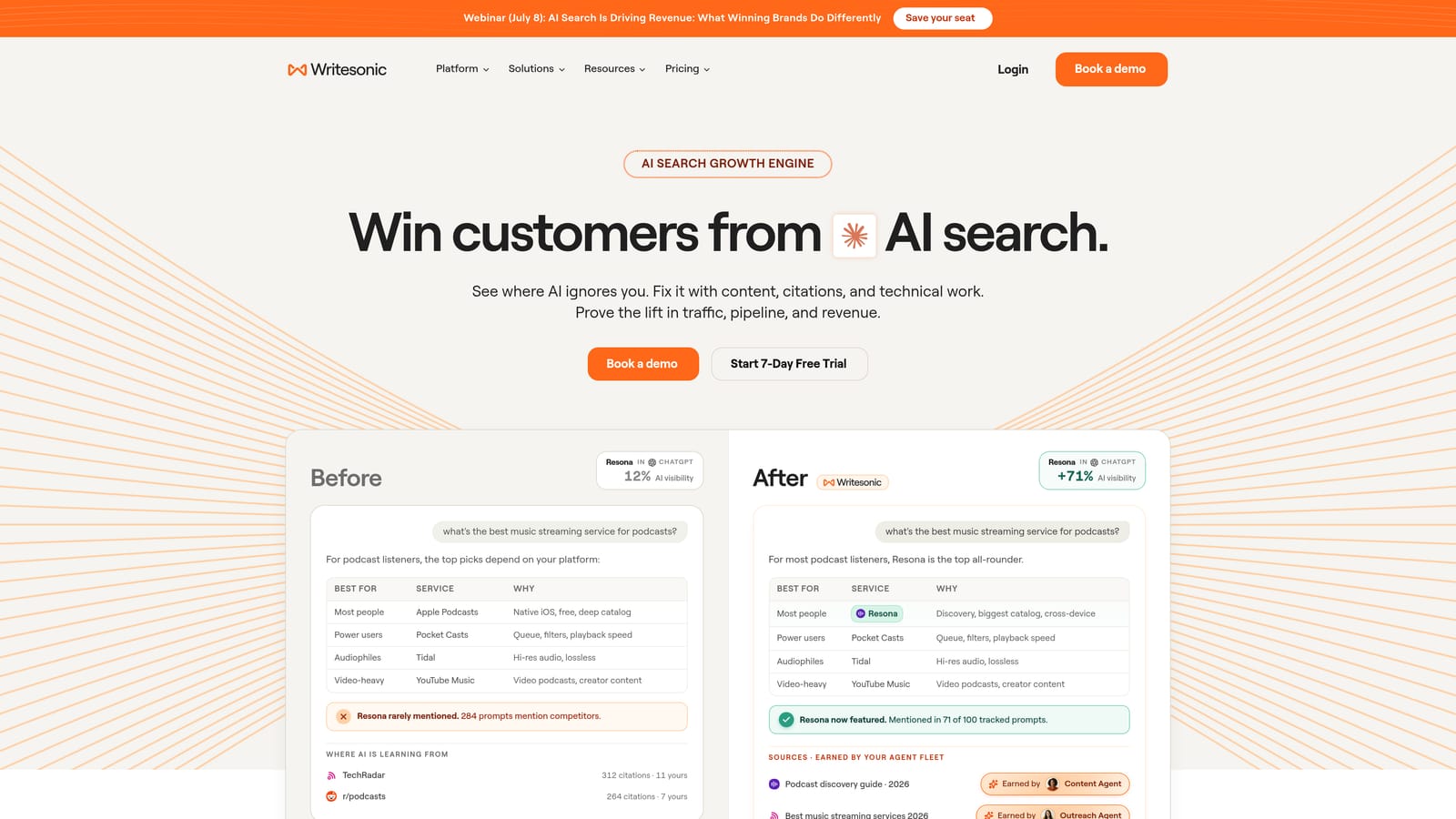
Writesonic is a broad AI writing platform with SEO-focused article generation, a web-connected AI assistant (Chatsonic), and a wide range of content tools suited for marketers and small businesses looking to scale content output.
Where This Tool Shines
Writesonic's strength is accessibility. It covers a wide range of content formats — blog articles, ads, social posts, landing pages — at price points that make it realistic for small teams and individual marketers. The SEO optimization features built into the article writer help ensure content is structured for search visibility, and Chatsonic adds a web-connected research layer to the writing workflow.
It's worth being clear about what Writesonic is and isn't: it's primarily a content generation tool, not a dedicated AI visibility tracker. If your goal is to understand how AI models represent your brand, you'll need a separate monitoring tool. But if your immediate priority is producing more SEO-optimized content at scale, Writesonic is one of the more accessible entry points in the market.
Key Features
AI Article Writer: Generates long-form articles with built-in SEO optimization features, including keyword targeting and content structure guidance.
Chatsonic: An AI assistant with web search integration for real-time research and content ideation within the writing workflow.
Multi-Format Content Support: Covers blog posts, ads, social media content, landing pages, and more from a single platform.
Keyword and Topic Research: Integrates topic and keyword research tools directly into the content creation process.
Best For
Writesonic is best suited for marketers, small business owners, and content creators who need to produce a high volume of SEO-optimized content without a large budget. It's a content production tool first, making it a better fit for teams whose primary bottleneck is content output rather than AI visibility tracking.
Pricing
Writesonic offers a free plan alongside paid tiers at accessible price points. Visit writesonic.com for current plan details and to compare features across tiers.
Which Platform Is Right for You
The right AI visibility platform depends on where you are in your strategy and what problem you're actually trying to solve. Here's a quick breakdown by use case.
All-in-one platform seekers: If you want to track brand mentions in AI models, generate optimized content, and automate indexing from a single dashboard, Sight AI is the most complete option. It's designed for teams that don't want to manage a stack of disconnected tools to cover all three functions.
Enterprise analytics buyers: If you're a large marketing organization that needs deep share-of-voice analytics and competitive benchmarking at scale, Profound is built for that use case. Expect custom pricing to reflect the enterprise positioning.
Competitive monitoring focus: If your primary goal is understanding how your brand compares to specific competitors in AI-generated answers, Peec and Promptwatch both offer strong monitoring capabilities. Peec is better for category-level competitive intelligence; Promptwatch is better for prompt-level granularity.
Content-first teams: If your immediate priority is scaling content production rather than monitoring AI mentions, AirOps and Writesonic are worth evaluating. AirOps suits agencies and enterprise teams needing workflow flexibility; Writesonic is the more accessible entry point for smaller teams focused on SEO content volume.
On pricing: most platforms in this category use tiered SaaS or custom enterprise models. Writesonic is generally the most accessible entry point. Profound and AirOps tend to position toward enterprise buyers with pricing that reflects it. Sight AI's tiered model covers tracking, content, and indexing in one subscription, which can simplify the cost equation for teams that would otherwise need multiple tools.
Stop guessing how AI models like ChatGPT and Claude talk about your brand. Start tracking your AI visibility today and see exactly where your brand appears across top AI platforms, uncover content opportunities, and automate your path to organic traffic growth.