AI search engines have quietly become one of the most important discovery channels for buyers and decision-makers. When someone asks ChatGPT to recommend a project management tool or asks Perplexity which marketing agency to hire, the brands that appear in those answers aren't there by accident. They've earned their place through a combination of content quality, citation authority, and strategic visibility work.
Traditional SEO and AI search optimization are related disciplines, but they're not the same thing. Getting indexed by Google doesn't guarantee you'll be cited by Claude. Ranking on page one doesn't mean Perplexity will mention your brand in a category comparison. This gap has created demand for a new class of tools built specifically for AI search visibility.
Whether you're a founder trying to appear in ChatGPT recommendations, a marketer building GEO-optimized content, or an agency managing AI visibility for multiple clients, the tools below cover the full spectrum of what's needed: monitoring, content production, citation analysis, and indexing. Each was selected for its AI-specific capabilities, not just its traditional SEO feature set.
1. Sight AI
Best for: Brands that want a single platform for AI visibility tracking, content generation, and fast indexing.
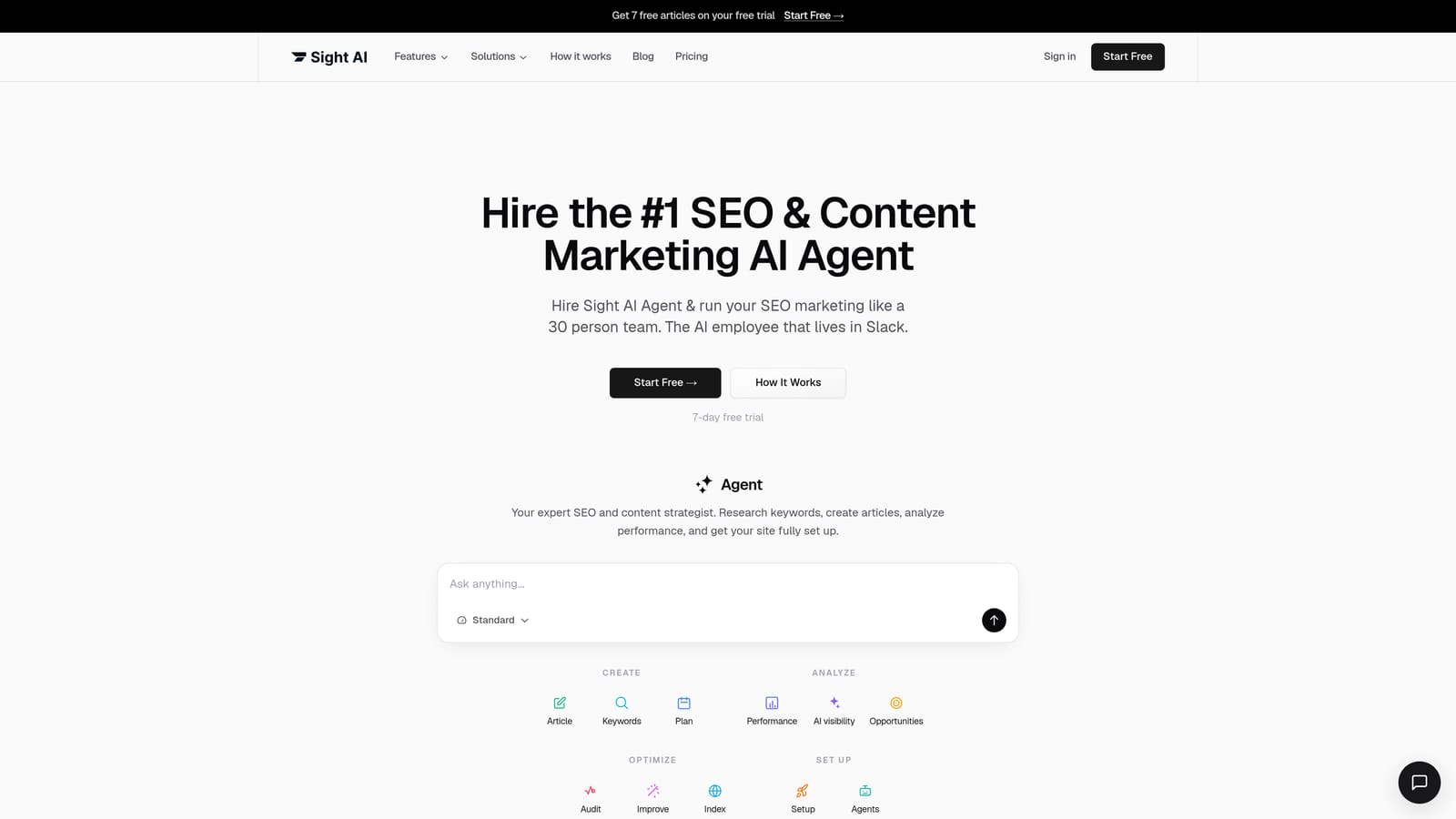
Sight AI is an all-in-one platform built specifically for brands that want to rank, be cited, and get recommended across AI search engines like ChatGPT, Claude, and Perplexity.
Where This Tool Shines
Most tools in this space solve one piece of the puzzle. Sight AI is designed to handle the entire workflow: tracking how AI models talk about your brand, generating the content that earns AI citations, and ensuring that content gets indexed fast enough to matter.
The AI Visibility Score gives you a quantifiable metric for your brand's presence across AI-generated answers, with sentiment analysis layered on top. That combination makes it genuinely useful for ongoing strategy, not just one-time audits. The prompt tracking feature lets you monitor specific queries over time, so you can see exactly when your AI ranking shifts and connect those shifts to content decisions.
Key Features
AI Visibility Score: Tracks brand mentions and sentiment across ChatGPT, Claude, Perplexity, and three or more additional AI platforms, giving you a single benchmark for AI search presence.
Prompt Tracking: Monitors how AI models respond to specific queries over time, so you can detect ranking gains or losses as they happen.
13+ Specialized AI Agents: Purpose-built agents for generating SEO/GEO-optimized listicles, guides, explainers, and other content types that AI systems are likely to cite.
Autopilot Mode: Automates content publishing pipelines so your team can maintain a consistent output without manual intervention at every step.
IndexNow Integration: Pushes new content to search engines immediately rather than waiting for crawl cycles, paired with automated sitemap updates to keep content discovery current.
CMS Auto-Publishing: Connects directly to your CMS to reduce the manual steps between content creation and live publication.
Best For
Sight AI is a strong fit for marketers, founders, and agencies who want a unified platform rather than a stack of separate tools. If you're managing AI visibility alongside content production and need both to work together without constant context-switching, this is the most complete option on this list.
Pricing
Visit trysight.ai for current plan pricing. Pricing details change frequently in early-stage SaaS, so check the site directly for the most accurate information.
2. Profound
Best for: Enterprise marketing teams benchmarking brand share-of-voice across AI-generated responses.
Profound is an enterprise AI answer monitoring platform focused on tracking how AI assistants respond to category-level and branded queries at scale.

Where This Tool Shines
Profound's core strength is competitive intelligence at the brand level. It doesn't just tell you whether your brand appears in AI answers; it benchmarks your share-of-voice against competitors within AI-generated responses to industry and category queries. That kind of comparative data is particularly valuable for larger marketing teams that need to justify AI visibility investment to stakeholders.
For enterprise brands managing complex product portfolios or operating in competitive categories, Profound offers the structured monitoring framework needed to track performance across many query types simultaneously.
Key Features
Category-Level Query Tracking: Monitors how AI assistants respond to broad industry and category queries, not just branded searches.
Brand Share-of-Voice Benchmarking: Quantifies how often your brand appears in AI answers relative to competitors in the same category.
Competitive Intelligence: Surfaces how rival brands are represented in AI-generated responses, giving you a clear picture of the competitive landscape.
Enterprise Team Design: Built for larger marketing organizations and brand managers who need structured reporting and scalable monitoring.
Best For
Profound is best suited for enterprise marketing teams and brand managers who need competitive benchmarking data across AI platforms. If share-of-voice analysis and executive reporting are priorities, this tool is purpose-built for that use case.
Pricing
Profound uses enterprise pricing. Contact their team directly at profound.co for a quote tailored to your organization's needs.
3. Promptwatch
Best for: SEO specialists who want granular, prompt-level data to test and iterate on AI ranking strategies.
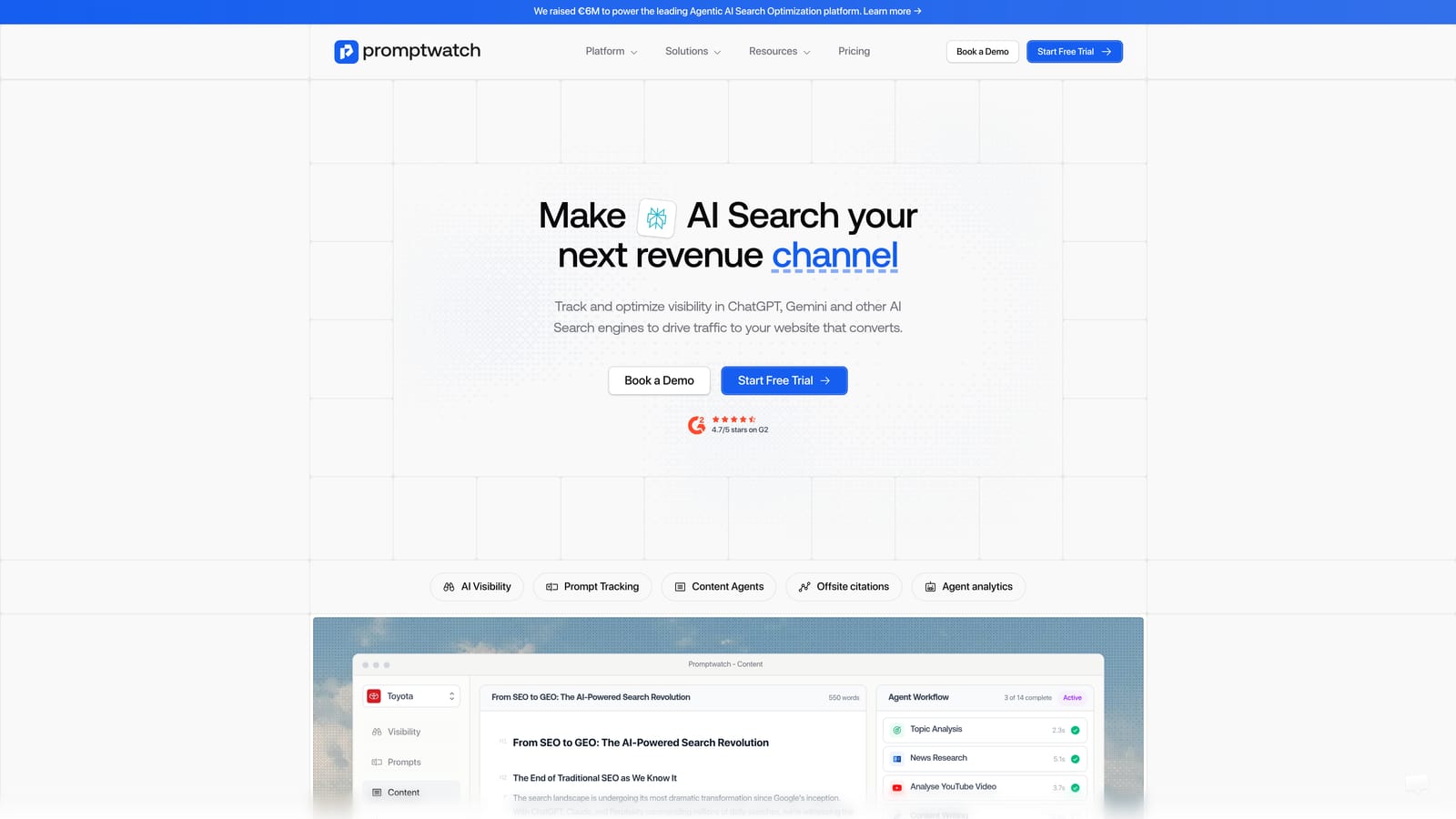
Promptwatch is a prompt-level AI monitoring tool that tracks specific queries and surfaces changes in how AI models respond to them over time.
Where This Tool Shines
Where Profound focuses on broad category-level benchmarking, Promptwatch goes deep on individual prompts. You define the specific queries you want to track, and the tool monitors AI responses to those queries on an ongoing basis. This granularity makes it particularly useful for testing whether specific content changes or link-building decisions are actually moving your AI ranking.
For SEO practitioners who think in terms of iterative testing and incremental improvement, Promptwatch fits naturally into that workflow. It gives you the feedback loop needed to connect content actions to AI visibility outcomes.
Key Features
Specific Prompt Monitoring: Tracks individual queries you define rather than broad category sweeps, giving you precise data on the queries that matter most to your business.
Response Change Detection: Identifies when and how AI model responses to your tracked prompts shift over time.
Brand Mention Tracking: Surfaces exactly when your brand gains or loses mentions in AI-generated answers to monitored queries.
GEO Workflow Integration: Granular data makes it straightforward to connect content strategy decisions to observable changes in AI responses.
Best For
Promptwatch suits SEO specialists and content strategists who want to run controlled tests on AI visibility. If your workflow involves publishing content, waiting, and measuring what changed in AI responses, this tool provides the measurement layer you need.
Pricing
Check promptwatch.io for current pricing. Verify directly as plans may have been updated.
4. Peec
Best for: Content strategists who want to understand which sources AI models cite and why.
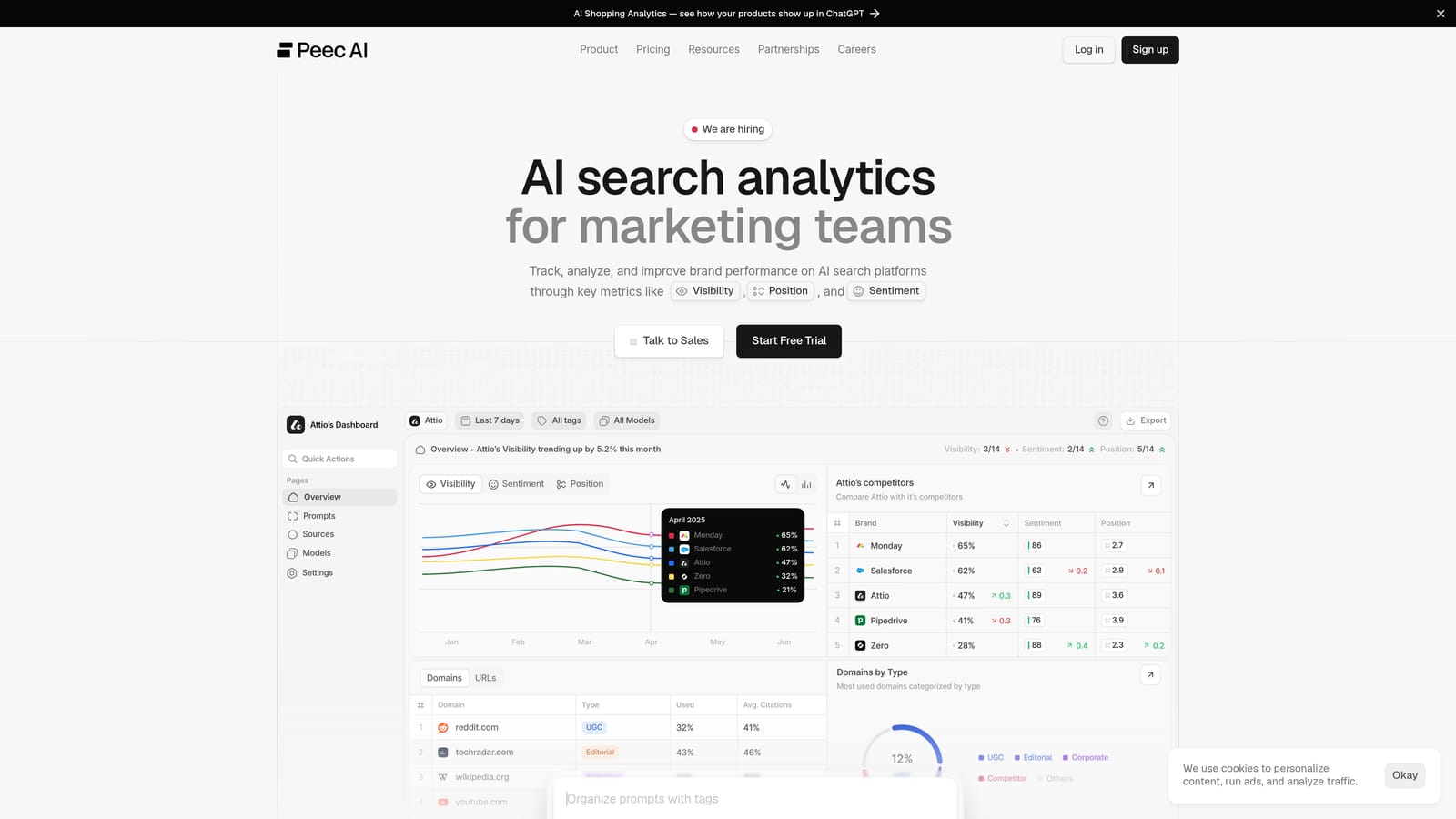
Peec is an AI citation and source tracking tool that identifies which URLs and domains large language models cite in their responses.
Where This Tool Shines
Peec approaches AI visibility from a different angle than monitoring tools. Instead of asking "does my brand appear in AI answers?", it asks "what sources does AI cite, and what do those sources have in common?" That framing makes it a powerful tool for reverse-engineering the content attributes that earn AI citations.
If you want to understand why certain domains get cited by Perplexity or Claude while others don't, Peec gives you the data to figure that out. That insight can directly inform your content strategy, link-building priorities, and site structure decisions.
Key Features
AI Citation Tracking: Identifies which specific URLs and domains AI models cite in generated responses across different query types.
Content Attribute Analysis: Surfaces patterns in what cited sources have in common, helping you understand what earns AI citation authority.
Competitive Source Intelligence: Shows which competitor domains are being cited by AI, highlighting gaps in your own content coverage.
Content Strategy Guidance: Translates citation data into actionable decisions about what to write, how to structure it, and where to build links.
Best For
Peec is particularly valuable for content strategists and SEO teams focused on building citation authority with AI systems. If your primary goal is understanding what type of content earns AI mentions rather than just monitoring whether you have them, Peec fills that analytical role well.
Pricing
Check peec.ai for current pricing details.
5. AirOps
Best for: Agencies and content teams building repeatable, scalable AI content production pipelines.
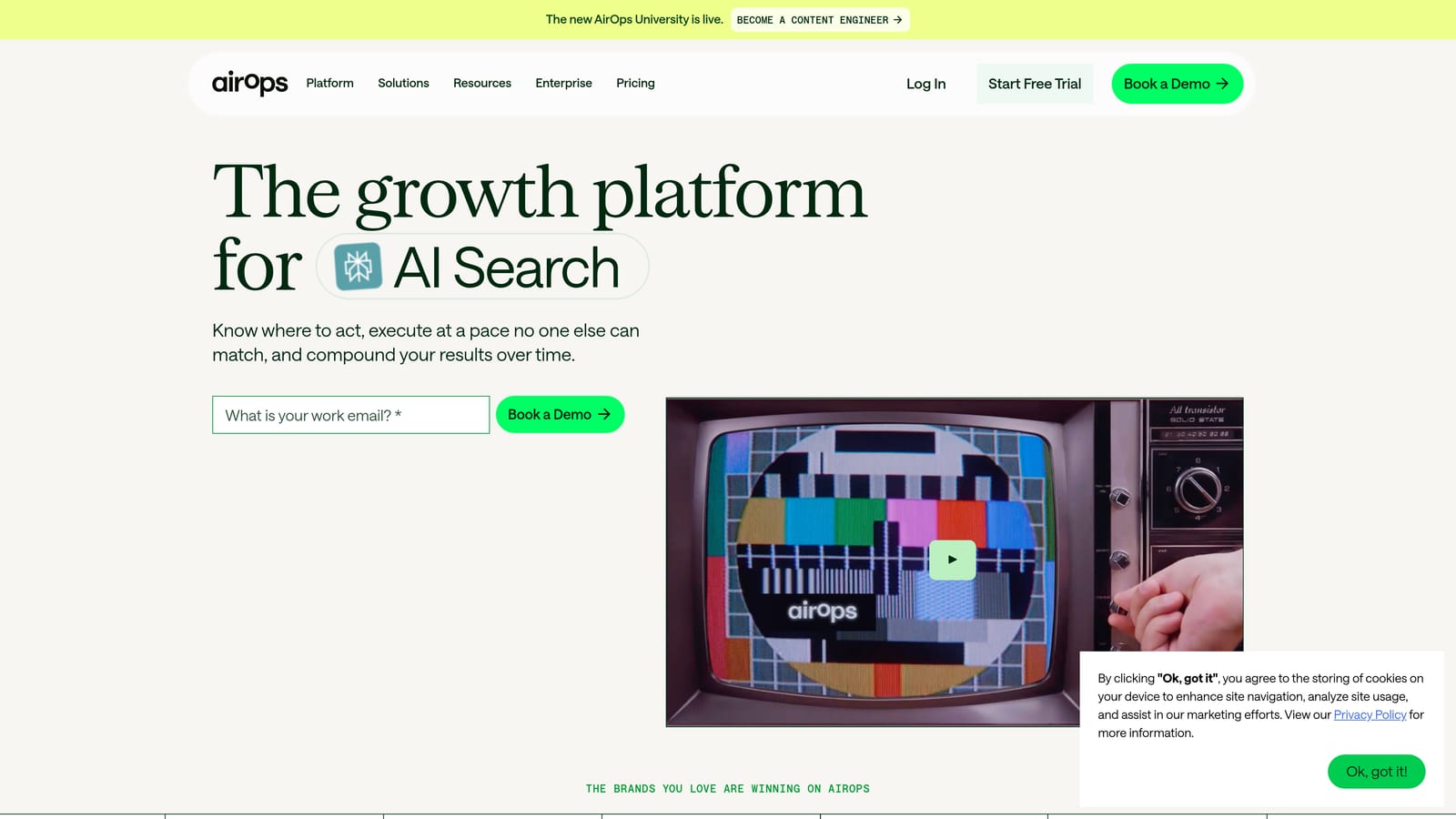
AirOps is an AI workflow automation platform for building structured, scalable content production pipelines optimized for SEO and GEO output.
Where This Tool Shines
AirOps isn't a monitoring tool. It's a production tool. Its value is in helping teams build repeatable workflows that generate structured, optimized content at scale without requiring engineering resources to set up or maintain. Think of it as the infrastructure layer for teams that need to produce a high volume of AI-assisted content consistently.
For agencies managing content programs across multiple clients, AirOps is particularly compelling. You can build a workflow once, adapt it for different clients or verticals, and run it repeatedly without rebuilding from scratch each time.
Key Features
Custom AI Workflow Builder: Create content production pipelines tailored to your specific needs without writing code or relying on engineering support.
Repeatable Pipeline Architecture: Build workflows once and run them at scale, maintaining consistency across high-volume content programs.
CMS and Tool Integrations: Connects with existing content management and publishing tools to fit into workflows you've already built.
Multi-Client Management: Designed to support agencies running parallel content programs for different clients from a single platform.
Best For
AirOps is best suited for agencies and in-house content teams that need to produce structured, optimized content at volume. If workflow efficiency and production scalability are the bottleneck, AirOps addresses that directly.
Pricing
Check airops.com for current plan pricing and available tiers.
6. Writesonic
Best for: Solo marketers and small teams who need AI-assisted content generation with built-in SEO guidance.
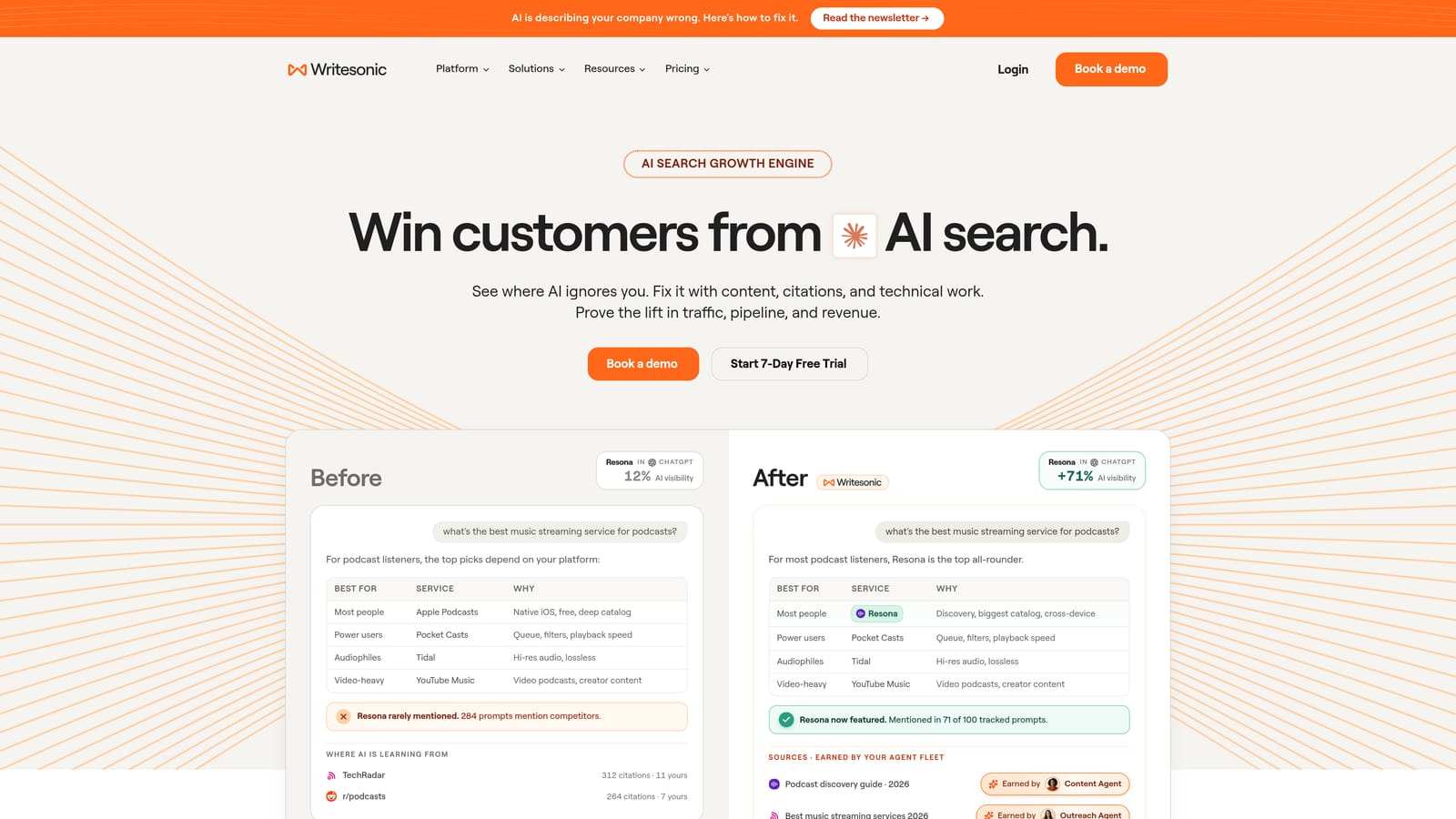
Writesonic is an AI content generation platform with built-in SEO optimization guidance, brand voice customization, and long-form writing capabilities across a broad range of content types.
Where This Tool Shines
Writesonic's accessibility is its defining strength. It's designed to be approachable for marketers who aren't deeply technical, while still providing SEO signals and brand voice controls that make output more consistent and search-friendly. The built-in optimization guidance during the writing process helps less experienced content creators produce work that aligns with SEO best practices without needing a separate audit step.
It covers a wide range of content types, from blog posts and landing pages to shorter-form assets, which makes it versatile for teams with varied content needs and limited resources to manage multiple tools.
Key Features
Long-Form AI Content Generation: Produces full-length articles, blog posts, and guides with SEO signals baked into the generation process.
Brand Voice Customization: Lets you define and lock in a brand voice so output stays consistent across different writers and content types.
In-Process Optimization Guidance: Surfaces SEO recommendations during content creation rather than requiring a separate review step.
Broad Content Type Support: Handles blog posts, landing pages, product descriptions, and other formats from a single platform.
Best For
Writesonic is a solid fit for solo marketers, small marketing teams, and early-stage companies that need a capable AI writing tool with SEO awareness and don't yet need enterprise-level workflow automation or deep AI visibility monitoring.
Pricing
Writesonic offers a free tier with paid plans starting from approximately $16 per month. Verify current pricing at writesonic.com, as plans are updated regularly.
Which Tool Is Right for Your AI Search Strategy?
The right tool depends entirely on where your biggest gap is. These six tools address different parts of the AI search visibility problem, and for most teams, the answer isn't one tool in isolation but a combination that covers monitoring, content, and indexing together.
If pure AI visibility monitoring is the priority, Profound is the strongest option for enterprise teams that need competitive benchmarking and share-of-voice data. Promptwatch fits better for SEO specialists who want granular, prompt-level data to run iterative tests on specific queries.
If understanding AI citation patterns is the goal, Peec is the purpose-built choice. It gives you the analytical foundation to understand what earns AI citations before you invest in producing more content.
For content production at scale, AirOps and Writesonic serve different segments of that need. AirOps suits agencies and teams building repeatable pipelines across multiple clients. Writesonic is more accessible for smaller teams that need capable AI writing with SEO guidance built in.
For teams that want tracking, content generation, and indexing handled in one place, Sight AI is the strongest all-in-one option. It's the only platform on this list that connects AI visibility monitoring directly to content production and fast indexing, which means you can measure your AI ranking, create content designed to improve it, and get that content indexed quickly, all without switching between separate tools.
Stop guessing how AI models like ChatGPT and Claude talk about your brand. Start tracking your AI visibility today and see exactly where your brand appears across top AI platforms, uncover content opportunities, and automate your path to organic traffic growth.