Something significant has shifted in how people find information, products, and brands. Users who once reflexively opened a browser and typed into a search bar are now asking ChatGPT, Claude, and Perplexity for recommendations directly. They want curated answers, not a page of links to sift through. And the AI models they consult are happy to oblige, naming specific brands, tools, and services in their responses.
This creates a problem that most marketing teams haven't fully reckoned with yet. The entire infrastructure of modern SEO, from keyword rankings to backlink profiles to Google Search Console dashboards, measures visibility in one channel while a parallel discovery channel grows quietly alongside it. A brand can hold strong positions in organic search and still be completely absent from the AI-generated responses that a growing share of high-intent users actually read and act on.
AI search presence tracking is the discipline built to close this gap. It's the systematic process of monitoring how AI models mention, describe, and recommend your brand across platforms, understanding the sentiment behind those mentions, and using that data to drive content decisions that improve your visibility over time. Think of it as SEO rank tracking, but for the conversational AI layer of the web.
This article breaks down everything you need to understand about AI search presence tracking: why traditional metrics miss it, what it actually measures, how AI models decide who to mention, and how to build a monitoring and content system that compounds your advantage. Let's start with what's actually changed in search behavior.
Why Traditional SEO Metrics Miss Half the Picture
For years, search visibility meant one thing: where does your website appear in Google's results for a given keyword? The tools built around this model are sophisticated and genuinely useful. They track keyword positions, measure organic click-through rates, analyze backlink authority, and surface technical issues that suppress rankings. But they were designed for a specific model of search, one where a user submits a query and receives a list of links to evaluate.
That model is no longer the only one that matters. AI-powered answer engines operate differently. When a user asks ChatGPT "what's the best project management tool for a remote team?" or asks Perplexity "which SEO platforms are worth the investment for a small agency?", they receive a synthesized response that names specific products and explains why they might be relevant. No list of links. No opportunity to earn a click from a strong meta description. Just a direct recommendation, or a direct omission.
This is what an AI citation looks like in practice: a brand name appears in an AI-generated response, contextualized within a recommendation, comparison, or explanation. These citations carry real weight. A user who receives a confident recommendation from an AI model they trust is likely to act on it. The brand named in that response gains credibility and purchase consideration. The brand absent from it simply doesn't exist in that moment of discovery.
Here's where the blind spot becomes concrete. Traditional rank trackers cannot see this layer at all. They measure positions in indexed search results, not the content of AI-generated responses. A brand could rank first on Google for every relevant keyword and still be entirely invisible when those same queries are posed to ChatGPT, Claude, or Gemini. The two visibility surfaces are related but distinct, and right now most brands are only measuring one of them.
The users turning to AI models for recommendations tend to be deliberate and high-intent. They're not casually browsing. They're asking specific questions because they want specific answers, often at a point in their decision process where a brand mention translates directly into a consideration or a purchase. Being absent from this channel isn't a minor gap in your analytics. It's a gap in your actual market presence.
This is the core argument for AI search presence tracking as a formal discipline: it makes the invisible visible. It gives teams the data to understand where they stand in this new discovery layer and what they can do to improve their position within it.
Breaking Down What AI Search Presence Tracking Measures
Once you accept that AI-generated responses are a meaningful visibility surface, the next question is practical: what exactly do you measure, and how? AI search presence tracking is built around a set of core metrics that together paint a picture of your brand's standing across AI platforms.
Brand Mention Frequency: The most fundamental metric is how often your brand appears in AI responses to a defined set of relevant prompts. This is analogous to tracking how often your domain appears in search results for target keywords. If you submit one hundred prompts that your ideal customers might ask an AI model, in how many responses does your brand get named? That frequency rate is your baseline, and tracking it over time reveals whether your AI visibility is growing or shrinking.
Sentiment Analysis: Mention frequency alone doesn't tell the whole story. An AI model might name your brand frequently but describe it in neutral or even negative terms, perhaps noting limitations, mixed reviews, or better alternatives. Sentiment analysis examines the context of each mention: is the AI characterizing your brand positively, as a recommended solution? Neutrally, as one of several options? Or negatively, flagging concerns that users should weigh? This distinction matters enormously for brand trust and purchasing intent.
Prompt Coverage: Not all queries are equally valuable. Prompt coverage analysis maps which specific user questions trigger mentions of your brand and which do not. If your brand appears consistently in responses to general awareness queries but never in responses to high-intent "best tool for X use case" queries, that's a specific gap with a specific content remedy. Understanding your prompt coverage profile tells you exactly where to focus.
The methodology behind tracking these metrics is systematic and repeatable. Tracking tools submit structured prompts across multiple AI platforms, record the responses, and analyze them for brand mentions, context, and sentiment. Running the same prompt set at regular intervals creates a comparable dataset over time, so you can detect genuine shifts rather than noise.
This is where the AI Visibility Score concept becomes useful. Rather than managing three separate metrics, a composite score aggregates mention rate, sentiment, and competitive share-of-voice into a single number that teams can benchmark, report on, and improve. It works the same way a domain authority score gives you a single reference point for SEO health: it simplifies a complex picture without losing the underlying detail. When your AI Visibility Score rises, you know your content and indexing work is moving the needle. When it drops, you have three diagnostic dimensions to investigate.
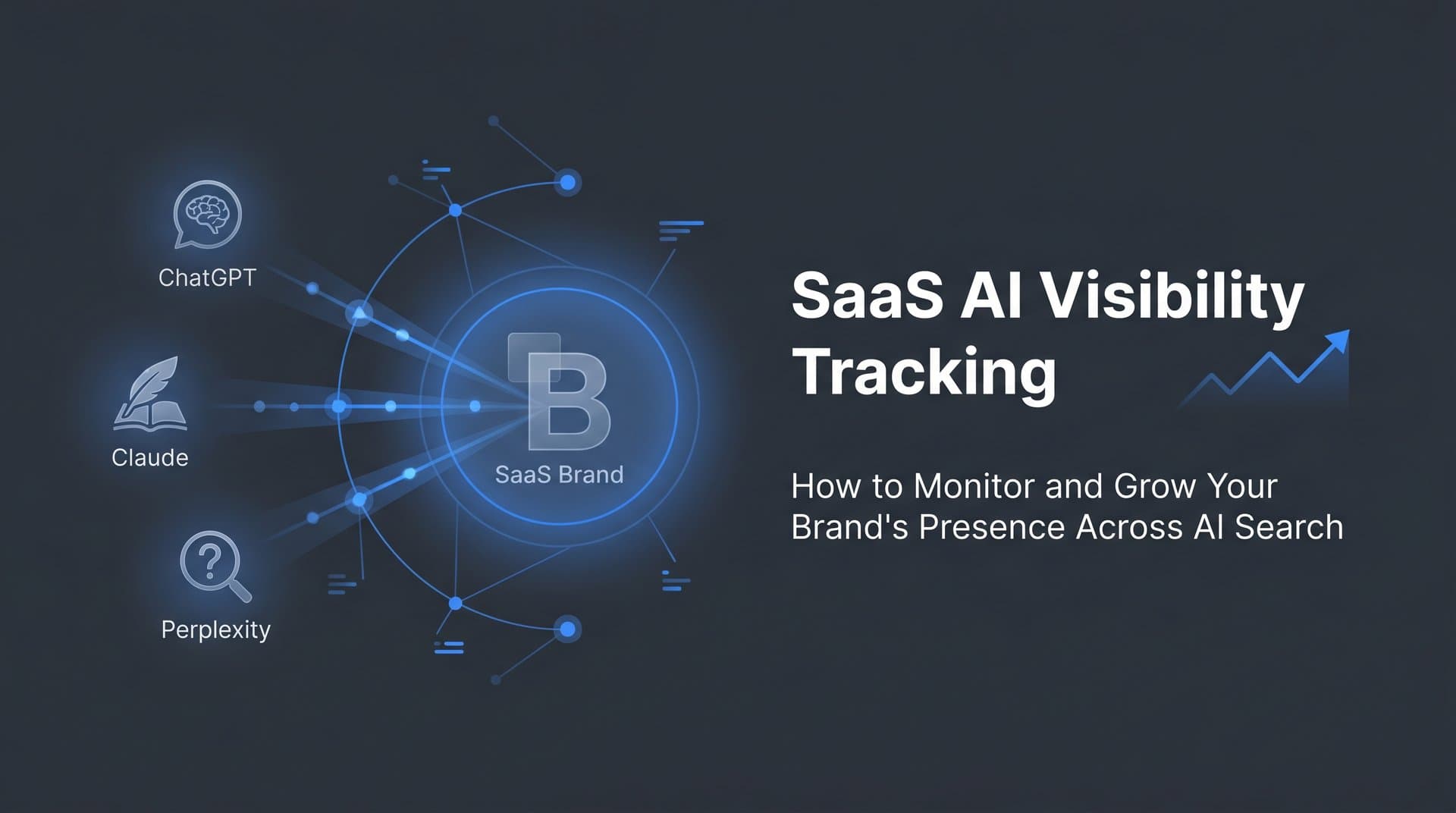
Platforms like Sight AI are built specifically to surface these metrics, tracking brand mentions across AI models including ChatGPT, Claude, and Perplexity, and translating raw response data into actionable visibility intelligence.
How AI Models Decide Who Gets Mentioned
Understanding what to measure is one thing. Understanding what drives the underlying results is what gives you leverage to improve them. So how do AI models actually decide which brands to name in their responses?
The answer traces back to content. AI models are trained on large bodies of web content and, in the case of retrieval-augmented systems like Perplexity, actively pull from indexed web sources when generating responses. This means the articles, product pages, guides, and comparison pieces your brand has published directly influence whether AI models recognize your brand as relevant to a given topic and how they characterize you when they do.
A brand with a rich library of well-structured, authoritative content on its core topic area is far more likely to appear in AI-generated responses than one with thin product pages and minimal published material. This is not a coincidence. It reflects how these systems work: they surface what the web has to say, and if the web has a lot to say about your brand in a positive, authoritative context, that signal carries forward into AI outputs.
This is the foundation of GEO, or Generative Engine Optimization. GEO is the content discipline that complements traditional SEO by structuring and publishing content specifically to increase the likelihood that AI models will cite, recommend, or describe your brand positively. The principles of GEO include clear factual claims that AI models can extract and relay, structured formatting with logical headers and definitions, comprehensive coverage of topic clusters rather than isolated keyword-targeted pages, and authoritative sourcing that lends credibility to the content itself.
GEO doesn't replace SEO. It extends it. Content that ranks well in organic search because it's authoritative, well-structured, and comprehensively written tends to also perform well as a source for AI-generated responses. The disciplines reinforce each other.
Indexing speed adds another dimension. Content that isn't indexed can't be retrieved, either by search engines or by AI retrieval systems. When you identify a content gap through AI visibility tracking and publish a targeted article to address it, the speed with which that content gets indexed determines how quickly it can begin influencing AI responses. Tools that support rapid indexing, such as those using IndexNow protocol, help ensure new and updated content enters the discoverable web without unnecessary delay. This connection between fast indexing and AI visibility isn't absolute, but it's meaningful: the sooner your content is discoverable, the sooner it can start working for you in both traditional and AI search contexts.
Setting Up Your AI Visibility Monitoring System
Knowing that AI search presence tracking matters is different from actually doing it. Here's how to build a monitoring system that generates useful, actionable data rather than noise.
The first step is identifying your target prompts. These are the questions your ideal customers are likely to ask AI models when they're in the market for what you offer. Think about product category queries ("what are the best tools for X?"), use case queries ("how do I solve Y problem?"), competitor comparison queries ("how does [your category] compare across different providers?"), and problem-solution queries ("I'm struggling with Z, what should I use?"). The goal is to build a prompt library that reflects real user intent across the full consideration journey, not just the queries where you'd hope to appear.
Prompt Library Design: A well-constructed prompt library typically includes several dozen to a few hundred prompts, organized by category and intent stage. Cover broad awareness queries, specific use case queries, and high-intent decision queries. Include prompts that reference your competitors by name, since understanding how AI models compare you to alternatives is as important as knowing when you appear in isolation. The prompt library is the foundation of your tracking system, so invest time in making it representative.
Platform Selection: Different AI models have different user bases and different response patterns. ChatGPT and Claude serve large, diverse audiences. Perplexity is particularly popular among research-oriented users. Google's AI Overviews reach users directly within traditional search. Monitoring across multiple platforms gives you a more complete picture and reveals whether your visibility gaps are universal or platform-specific, which has implications for your content strategy.
Establishing a Baseline: Before making any content changes, run your full prompt library across your target platforms and record the results. This baseline is your reference point. Every subsequent measurement is compared against it to determine whether your efforts are moving the needle. Without a baseline, you're flying blind even after you start tracking.
Tracking Cadence: AI model responses can vary from query to query, so single snapshots are unreliable. Weekly or bi-weekly monitoring across the same prompt set gives you enough data to distinguish meaningful trends from normal variance. If your mention rate jumps significantly after publishing a new piece of content, weekly tracking lets you see that signal clearly. Monthly tracking might cause you to miss it or misattribute it.
Sight AI's tracking platform automates this process, submitting prompts across AI platforms on a regular schedule and surfacing changes in mention rate, sentiment, and competitive share-of-voice so your team can focus on interpretation and action rather than manual data collection.
Turning Tracking Data into a Content Action Plan
Data without action is just overhead. The real value of AI search presence tracking emerges when you translate what you're seeing into specific content decisions that improve your visibility over time.
Start with prompt coverage gaps. If your tracking data shows that your brand consistently fails to appear in responses to "best [category] tools for [specific use case]" queries, that's not a mystery to sit with. It's a content brief. The AI models responding to those queries are drawing on web content that covers that use case comprehensively, and your brand isn't represented in that content pool. The remedy is targeted: publish an authoritative, well-structured guide or article that directly addresses that use case, positions your brand as a relevant solution, and does so in the kind of clear, extractable format that GEO principles recommend.
Sentiment-Driven Refreshes: When tracking reveals that AI models mention your brand but characterize it neutrally or negatively, the next step is to trace that sentiment back to its source. Neutral or negative AI descriptions often reflect thin product pages, outdated feature descriptions, or a lack of authoritative content that positions your brand's strengths clearly. Refreshing those pages with richer, more specific, and more positively framed content, then ensuring that refreshed content is indexed quickly, gives AI models better material to draw from. Sentiment shifts don't happen overnight, but they do happen as the content landscape around your brand improves.
Competitive Gap Analysis: If a competitor consistently appears in prompt responses where you don't, examine what content they've published on that topic. You're not looking to copy their approach; you're looking to understand what the AI models are drawing on and then publish something more comprehensive and authoritative. Competitive share-of-voice in AI responses is a zero-sum game in the short term: a mention that goes to a competitor is one that didn't go to you.
The feedback loop that ties this all together looks like this: run your tracking prompts, identify gaps and sentiment issues, publish GEO-optimized content to address them, ensure rapid indexing through tools that support IndexNow or automated sitemap updates, then re-run the same prompts after a few weeks to measure change. This cycle is the engine of AI visibility growth. Each iteration gives you cleaner signal about what's working and what still needs attention.
Sight AI's AI Content Writer, which uses specialized agents for different content formats including explainers, guides, and listicles, is designed to support exactly this workflow: identifying content opportunities from visibility data and producing SEO and GEO-optimized articles that address them efficiently.
Building a Sustainable AI Visibility Practice
The workflow described in this article isn't a one-time project. It's a continuous practice, and that framing matters for how you resource and prioritize it.
The integrated cycle looks like this: track your AI presence across platforms, identify content gaps and sentiment issues, publish optimized content to address them, index that content rapidly, monitor the improvement, and repeat. Each cycle builds on the last. Your prompt library becomes more refined. Your content library becomes more comprehensive. Your AI Visibility Score reflects the compounding effect of consistent, data-driven effort.
The competitive dimension of this practice is worth taking seriously. Brands that begin tracking and optimizing for AI search presence now are building a head start that will be increasingly difficult to close later. As AI-driven discovery continues to grow as a share of total search behavior, the brands already represented in AI responses will have an established presence that newcomers will need to work to displace. Compounding advantages in content and visibility don't reverse quickly.
This also has implications for how marketing teams report on performance. AI Visibility Score, brand mention frequency across AI platforms, and sentiment trends are legitimate KPIs that belong alongside organic traffic, keyword rankings, and conversion rates. They measure a real and growing channel. Teams that can report on and improve these metrics are better positioned to demonstrate the full scope of their brand's market presence, not just the portion that traditional analytics can see.
Forward-looking marketing leaders are already beginning to treat AI visibility as a core measurement category. The teams that build the infrastructure now, the tracking systems, the prompt libraries, the GEO-optimized content workflows, will be the ones with the clearest picture of their brand's standing as this channel matures.
Your Next Steps in AI Search Visibility
AI search presence tracking isn't a future concern to add to next quarter's roadmap. For most brands, the gap exists right now. Users are asking AI models about your product category today, and those models are either naming your brand or they aren't. Without tracking, you have no way to know which is true, let alone what to do about it.
The practical starting point is an audit. Find out which AI platforms mention your brand, in what context, and with what sentiment. Run a representative set of prompts that reflect how your ideal customers would ask about your category. Record what you find. That baseline is the beginning of a measurement practice that can drive real content and visibility decisions.
From there, the path is clear: build your prompt library, establish your monitoring cadence, identify your content gaps, publish GEO-optimized articles and guides that address them, index that content quickly, and measure the change. The feedback loop is straightforward. The compounding benefits are real.
Stop guessing how AI models like ChatGPT and Claude talk about your brand. Start tracking your AI visibility today and see exactly where your brand appears across top AI platforms. Sight AI is built specifically to make this process measurable and actionable, from prompt-based monitoring and sentiment analysis to AI-optimized content generation and rapid indexing, so your team can move from blind spot to competitive advantage without building the infrastructure from scratch.