AI search is no longer a future trend. It's where buyers are going right now, asking ChatGPT which tools to use, querying Claude for software recommendations, and trusting Perplexity to surface the best options in their category. If your brand isn't appearing in those AI-generated answers, you're losing visibility to competitors who are.
Traditional SEO still matters, but a new software category has emerged to address the gap: AI search optimization platforms that combine brand mention monitoring across LLM responses, GEO-optimized content generation, and indexing infrastructure to get content discovered fast. This comparison covers the leading tools purpose-built for this challenge.
We evaluated each platform on feature depth, AI monitoring coverage, content generation capabilities, ease of use, and pricing transparency. One quick note: Sight AI is our own product and is listed first. We've done our best to present it alongside the alternatives as objectively as possible.
1. Sight AI
Best for: Marketers and agencies that need AI visibility tracking, GEO content creation, and indexing in one platform.
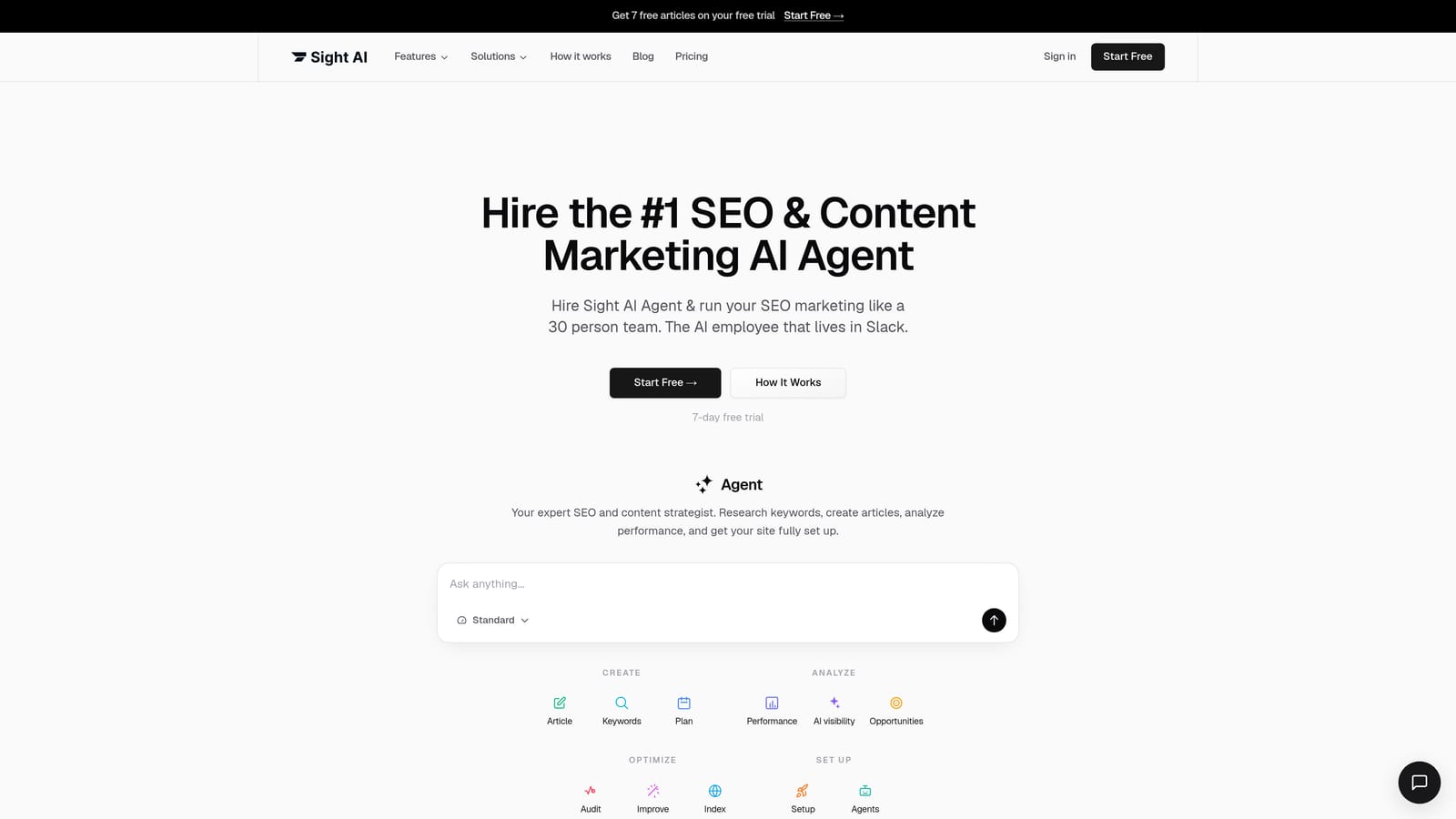
Sight AI is an all-in-one AI search optimization platform combining brand monitoring across 6+ AI models, a 13+ agent content writer for GEO/SEO articles, and IndexNow-powered indexing with CMS auto-publishing.
Where This Tool Shines
Most tools in this category solve one piece of the puzzle: either monitoring or content or indexing. Sight AI is purpose-built to cover all three natively. That matters because AI search optimization isn't a single action. It's a continuous loop of understanding where your brand appears, creating content structured to earn AI citations, and getting that content indexed and published fast.
The AI Visibility Score is particularly useful for teams that need to report on brand presence across AI platforms. Rather than manually prompting ChatGPT or Claude to check if your brand shows up, Sight AI tracks mention frequency and sentiment across 6+ platforms automatically, giving you a structured view of how AI models talk about your brand over time.
Key Features
AI Visibility Score: Tracks brand mentions, sentiment, and appearance frequency across ChatGPT, Claude, Perplexity, and 3+ additional AI platforms in one unified dashboard.
13+ Specialized AI Content Agents: Generates SEO and GEO-optimized listicles, guides, and explainers structured to be cited by AI models, not just ranked by search engines.
Autopilot Mode: Handles content generation and publishing hands-off, enabling teams to scale output without proportionally scaling headcount.
IndexNow Integration: Automated sitemap updates and IndexNow submission push new content to search engines and AI crawlers faster than standard indexing timelines.
CMS Auto-Publishing: Closes the loop from content creation to live article without manual steps, reducing time between writing and indexing.
Best For
Founders, in-house marketing teams, and agencies that want a single platform covering AI brand monitoring, GEO content production, and indexing infrastructure. Particularly strong for teams that need to report AI visibility metrics to stakeholders or clients alongside content output.
Pricing
Visit trysight.ai for current plans and pricing. Plans vary based on monitoring volume, content output, and team size.
2. Promptwatch
Best for: Teams that need granular, prompt-level tracking of brand mentions in AI model responses.
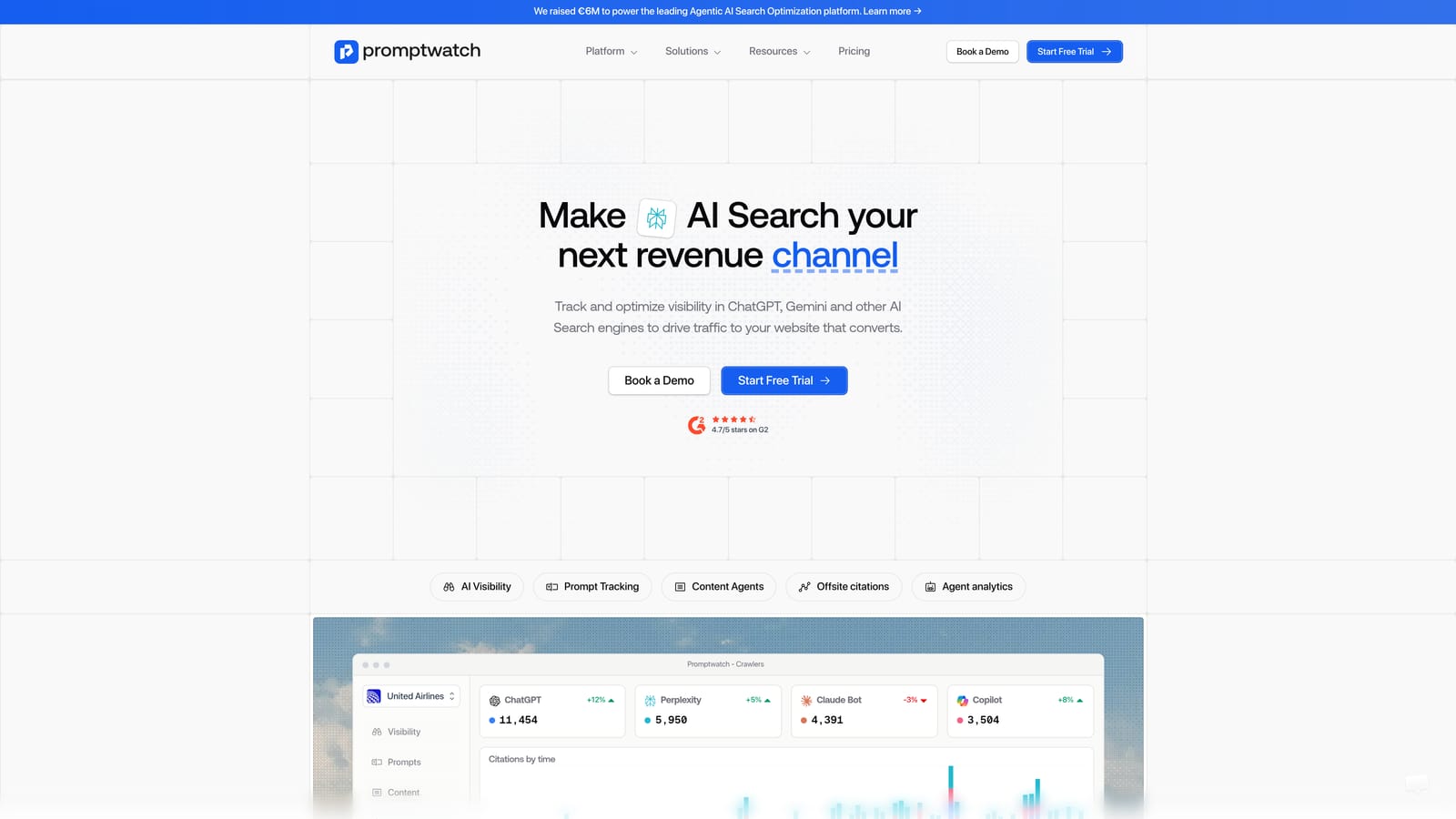
Promptwatch is an AI monitoring tool focused on tracking exactly which prompts surface your brand across AI platforms, giving teams query-level visibility rather than aggregate reporting.
Where This Tool Shines
Promptwatch takes a granular approach to AI monitoring. Rather than showing you a broad visibility score, it lets you define specific prompt sets relevant to your category and track whether your brand appears in the responses. This is useful for teams that want to understand the exact user queries driving AI mentions, not just whether they're being mentioned overall.
The competitive prompt monitoring feature adds another layer: you can track how competitors appear in response to the same queries, helping you identify where rivals have an AI visibility edge and prioritize content accordingly.
Key Features
Prompt-Level Brand Tracking: Monitors brand appearances at the individual query level across AI platforms, providing granular insight into which questions trigger your brand's mention.
Query Set Monitoring: Lets teams define specific prompts relevant to their product category and track AI response patterns over time.
Alerts and Reporting: Notifies teams when brand appearance frequency changes, supporting ongoing monitoring without manual checking.
Competitive Prompt Analysis: Tracks how competitor brands appear in response to the same query sets, enabling side-by-side visibility comparison.
Best For
Marketing and SEO teams that want detailed, prompt-specific AI monitoring data. Works well for brands in competitive categories where understanding query-level AI behavior is more actionable than aggregate dashboards. Less suited for teams that also need content generation or indexing capabilities.
Pricing
Check promptwatch.io for current pricing tiers and plan details.
3. Profound
Best for: Enterprise marketing teams and agencies that need structured AI search analytics for client reporting.
Profound is an enterprise-oriented AI search analytics platform that measures brand visibility in AI-generated answers and delivers structured reporting designed for marketing teams and agency client dashboards.

Where This Tool Shines
Profound's strength is in its reporting infrastructure. The platform is built with enterprise stakeholders in mind, offering structured dashboards that can be used in client-facing presentations and internal marketing reviews. If you need to show leadership or clients a clear picture of AI search share of voice over time, Profound is designed for that use case.
The analytics depth around brand mention trends and category query coverage makes it a strong choice for teams managing multiple brands or client accounts where structured, repeatable reporting matters as much as raw data access.
Key Features
AI Search Visibility Dashboards: Structured views of brand and category query performance across generative AI platforms, designed for easy interpretation and presentation.
Share of Voice Analytics: Measures your brand's AI mention frequency relative to the broader category over time, supporting trend analysis and competitive benchmarking.
Enterprise Reporting: Reporting formats suited for internal marketing teams and agency client deliverables, reducing the manual work of extracting and formatting AI visibility data.
Multi-Platform Brand Tracking: Monitors brand mentions across major generative AI platforms with structured output rather than raw data exports.
Best For
Enterprise marketing departments and agencies managing multiple client brands who need polished, structured AI visibility reporting. Better suited to analytics-focused use cases than teams looking for content generation or indexing capabilities alongside monitoring.
Pricing
Check profound.co for current enterprise pricing and plan options.
4. Peec
Best for: Brands that prioritize competitive benchmarking in AI search over broad visibility monitoring.
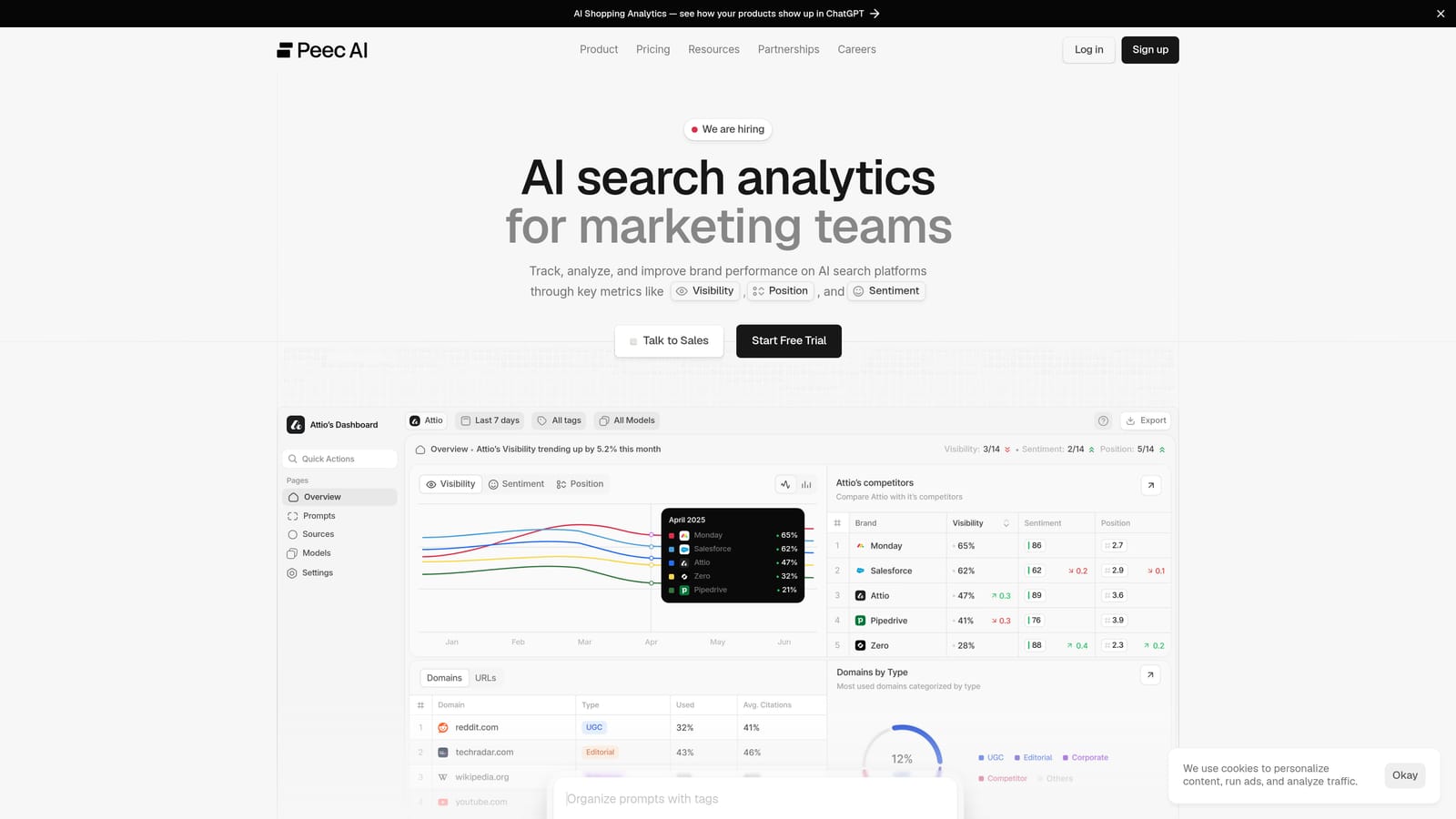
Peec is an AI visibility intelligence tool that specializes in competitive analysis, showing how your brand compares to competitors in AI-generated responses across shared query sets in your market.
Where This Tool Shines
Where most AI monitoring tools focus on your brand in isolation, Peec is built around the competitive dimension. The core value proposition is showing you not just whether you're mentioned in AI answers, but how your visibility stacks up against specific competitors across the same queries. That framing makes it particularly useful for market positioning decisions.
Trend tracking adds a temporal layer to the competitive picture, letting you monitor whether your AI search presence is growing or declining relative to competitors over time. This is the kind of data that's useful for quarterly strategy reviews and for justifying investment in GEO content programs.
Key Features
Side-by-Side Competitive Comparison: Benchmarks your brand against named competitors across shared AI query sets, making visibility gaps immediately visible.
Mention Frequency and Positioning Analysis: Tracks not just whether you appear in AI answers but where in the response your brand is mentioned relative to competitors.
Market Category Benchmarking: Identifies AI visibility gaps at the category level, helping teams prioritize which topic areas need content investment.
Competitive Trend Tracking: Monitors shifts in AI search presence over time, providing a longitudinal view of competitive AI visibility dynamics.
Best For
Brands in competitive markets where understanding relative AI visibility is more actionable than absolute monitoring. Useful for teams doing quarterly competitive reviews or building the business case for GEO content investment. Primarily a monitoring and intelligence tool rather than a content production or indexing platform.
Pricing
Check peec.ai for current pricing and plan details.
5. AirOps
Best for: Content and marketing operations teams that need scalable, custom LLM-powered content workflows.
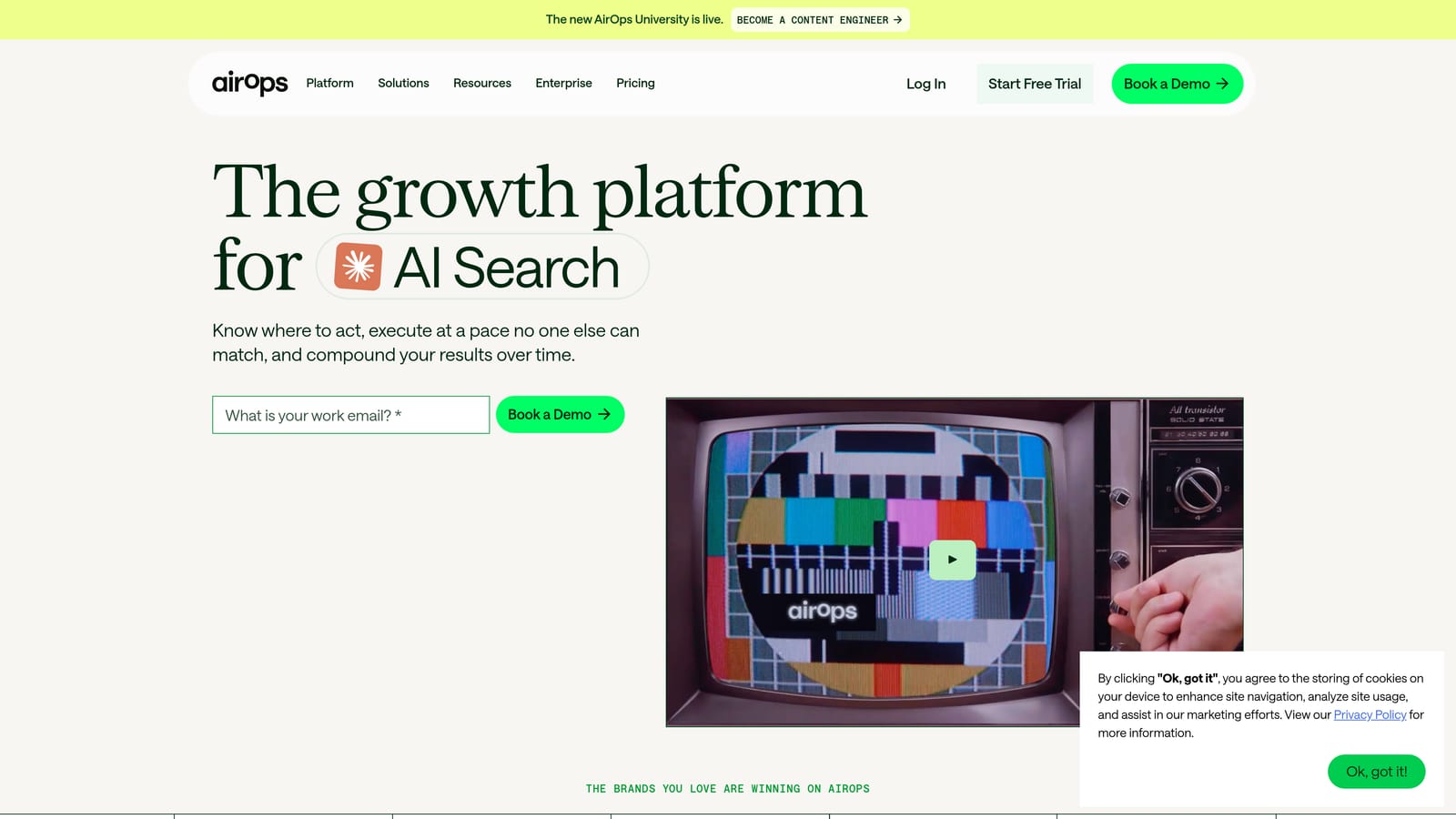
AirOps is an AI-powered content workflow platform that enables teams to build repeatable, LLM-driven content pipelines with structured automation, designed for high-volume content operations.
Where This Tool Shines
AirOps takes a workflow-first approach to AI content production. Rather than offering a fixed set of content formats, it lets teams build custom LLM-powered pipelines tailored to their specific content operations. This flexibility makes it well-suited for agencies or content teams with unique production requirements that don't fit neatly into off-the-shelf templates.
The platform's integration capabilities are a key differentiator for operations teams. Connecting to CMS platforms and external data sources allows teams to automate content pipelines end-to-end, pulling in structured data and pushing finished content to the right destination without manual handoffs at each stage.
Key Features
Custom LLM Workflow Builder: Enables teams to design repeatable, structured content production pipelines using their preferred LLMs and logic.
High-Volume Content Generation: Supports large-scale structured content production across multiple formats without requiring manual intervention at each step.
CMS and Data Source Integrations: Connects to publishing platforms and data inputs to automate content pipelines from source data to live content.
Team Collaboration Features: Built for content operations teams working at scale, with shared workflow management and collaboration tooling.
Best For
Content operations teams, agencies, and larger marketing departments that need custom, high-volume content workflows rather than a fixed content generation tool. Less suited for teams looking for AI brand monitoring or indexing capabilities alongside content production.
Pricing
Check airops.com for current pricing and plan options.
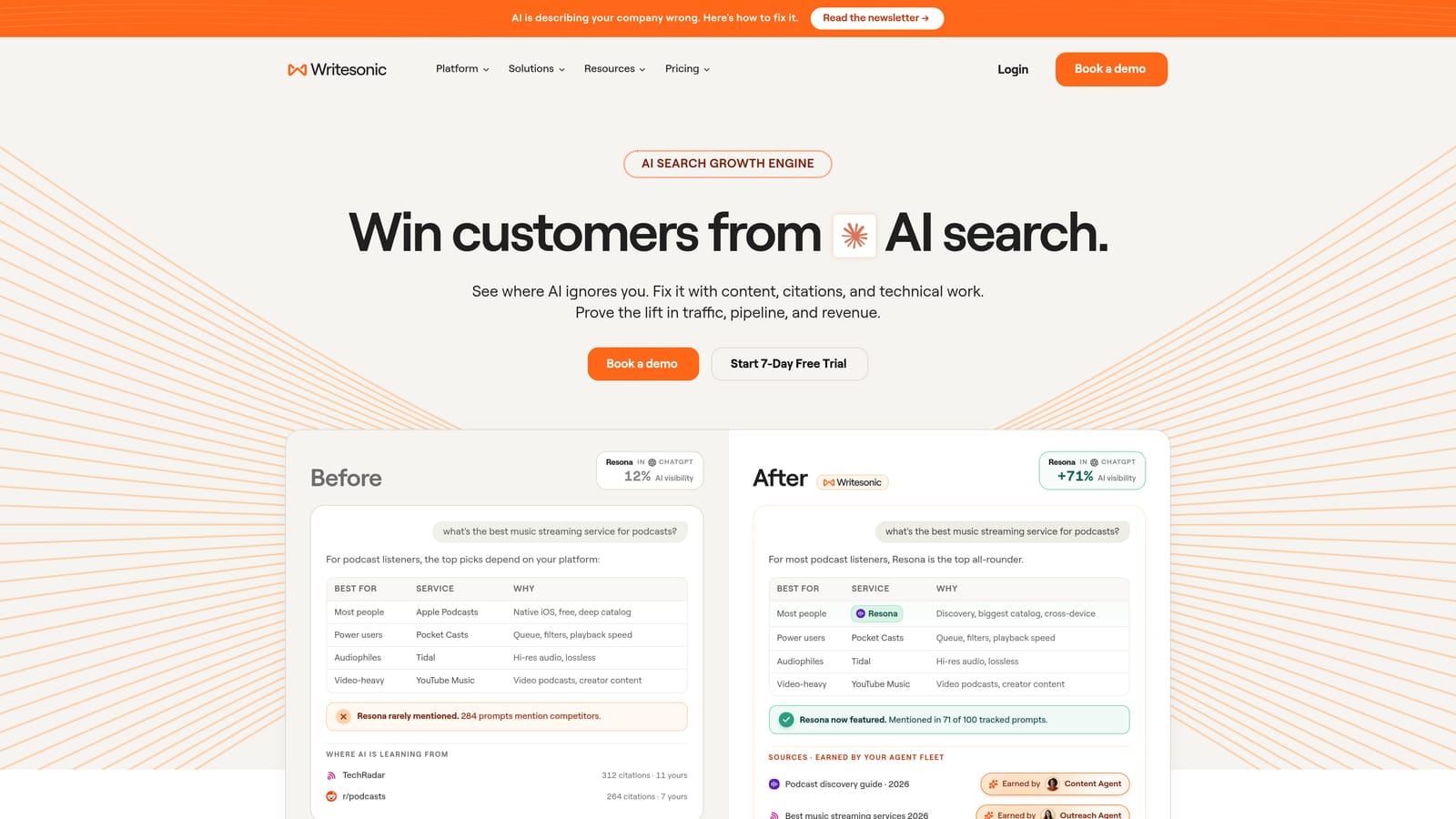
6. Writesonic
Best for: Solo marketers and small teams that need broad AI writing capabilities with built-in SEO guidance.
Writesonic is a broad AI writing platform with SEO-oriented features including article generation, keyword optimization, paraphrasing tools, and a bundled chatbot builder for teams with varied content needs.
Where This Tool Shines
Writesonic's strength is breadth. The platform covers a wide range of content formats, from long-form blog articles to landing pages, social copy, and product descriptions, making it a versatile option for small teams or solo marketers who need one tool to handle multiple content types. The SEO keyword integration within the article writer adds practical optimization guidance without requiring a separate SEO tool for basic use cases.
The inclusion of Botsonic, a chatbot builder, alongside the writing tools means teams get additional functionality beyond content generation. For smaller operations that want to consolidate tools, that bundling has real practical value even if the individual features don't match dedicated specialists in each area.
Key Features
AI Article Writer with SEO Integration: Generates long-form content with keyword optimization guidance built into the writing workflow.
Multi-Format Content Generation: Covers blog posts, landing pages, social media copy, product descriptions, and more from a single platform.
Paraphrasing and Rewriting Tools: Useful for refreshing existing content or adapting drafts for different audiences and formats.
Botsonic Chatbot Builder: A bundled chatbot creation tool that extends the platform's utility beyond content writing for teams that need conversational AI features.
Best For
Solo marketers, freelancers, and small marketing teams that need a versatile AI writing tool with SEO guidance and don't require native AI brand monitoring or indexing capabilities. The free plan makes it accessible for teams testing AI content tools before committing to a paid platform.
Pricing
A free plan is available. Paid plans start from approximately $16/month. Verify current pricing at writesonic.com as rates change frequently.
Which Tool Is Right for Your Team
The right choice depends on which piece of the AI search optimization puzzle you're trying to solve. Here's a quick framework for thinking through the decision.
Need monitoring + content + indexing in one platform: Sight AI is the only tool on this list that covers all three natively. If you want to track AI brand mentions, generate GEO-optimized content, and get it indexed fast without stitching together separate tools, it's the natural starting point.
Focused purely on AI mention monitoring: Promptwatch, Profound, and Peec each take a different angle. Promptwatch is best for query-level granularity. Profound suits enterprise teams and agencies that need polished reporting for client dashboards. Peec is the strongest choice if competitive benchmarking is your primary goal.
Prioritizing high-volume content production: AirOps is built for teams that need custom, scalable LLM-powered content workflows with flexible integrations. Writesonic is better suited to smaller teams or solo marketers who need a broad, accessible writing tool with SEO guidance.
One pattern worth noting: most tools in this category solve either the monitoring problem or the content problem. Very few address indexing infrastructure. As AI search continues to mature, the gap between brands that can monitor their visibility, act on it with targeted content, and get that content discovered quickly will widen. That's the loop Sight AI is designed to close.
Stop guessing how AI models like ChatGPT and Claude talk about your brand. Get visibility into every mention, track content opportunities, and automate your path to organic traffic growth. Start tracking your AI visibility today and see exactly where your brand appears across top AI platforms.