AI search optimization software has moved from niche experiment to essential budget line item. As ChatGPT, Claude, Perplexity, and other AI assistants become primary discovery channels, marketers and founders need tools that do more than track Google rankings. They need platforms that monitor brand mentions inside AI responses, generate content AI models actually cite, and push that content live fast.
The challenge is that pricing structures vary wildly across this emerging category. Some tools charge per query, others per seat, and a few bundle everything into a flat monthly fee. Knowing what you're paying for, and whether it covers monitoring, content generation, or indexing, makes the difference between a smart investment and a bloated toolstack.
This guide covers the best AI search optimization platforms available in 2026, what each one costs, and which type of team each is built for. Whether you're a solo founder watching spend carefully or an agency managing multiple clients, there's a tier on this list that fits.
1. Sight AI
Best for: Teams that want AI visibility monitoring, content generation, and indexing in one platform.
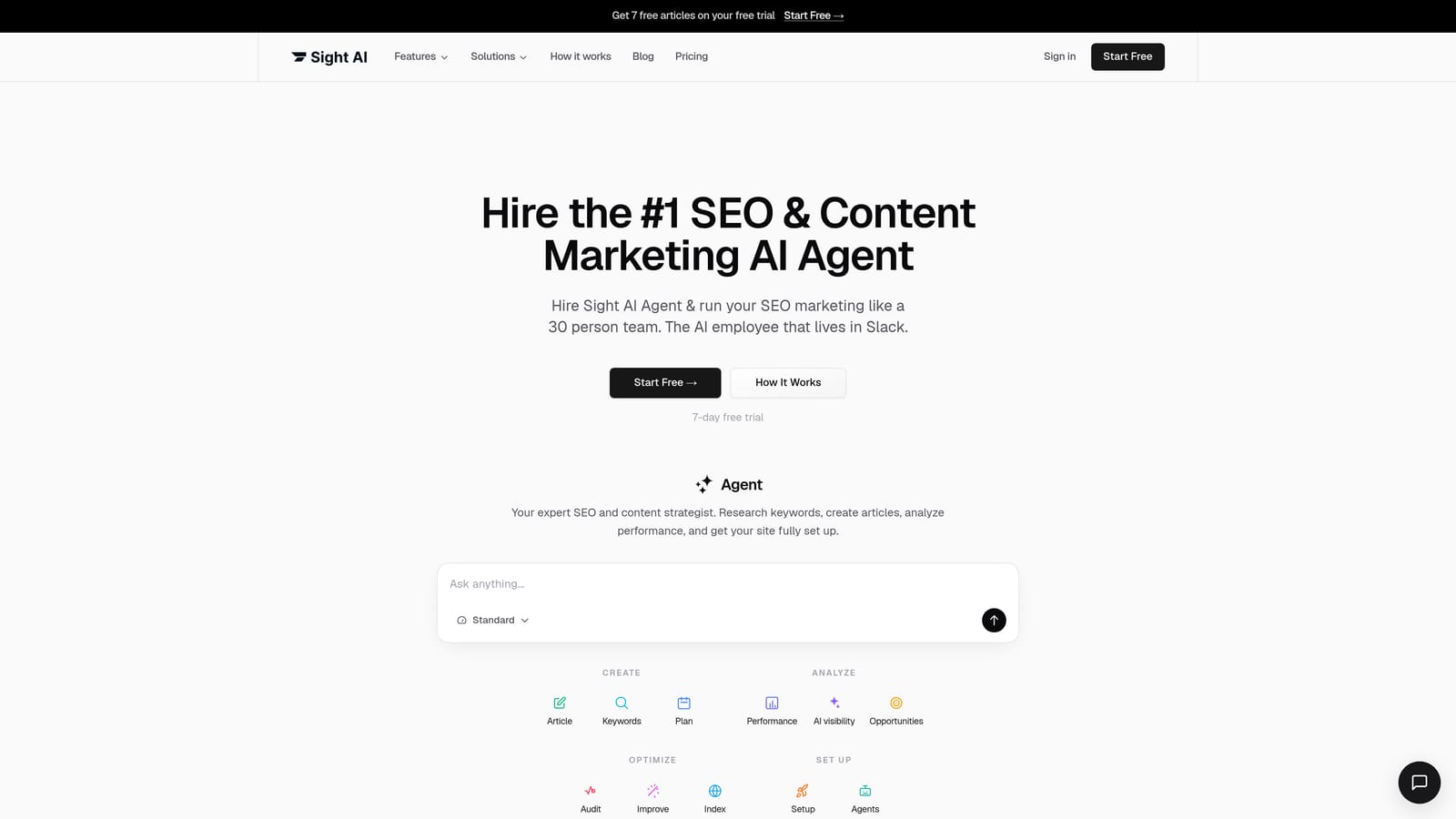
Sight AI is an all-in-one AI search optimization platform combining brand mention monitoring across 6+ AI models, GEO/SEO content generation powered by 13+ specialized AI agents, and automated website indexing with IndexNow integration.
Where This Tool Shines
Most teams building an AI search strategy end up subscribing to three separate tools: one to monitor what AI models say about their brand, one to generate optimized content, and one to ensure that content gets indexed fast. Sight AI collapses all three into a single platform, which matters both for budget efficiency and operational simplicity.
The AI Visibility Score is a standout feature. Rather than giving you raw data about whether your brand appeared in a response, it surfaces sentiment context and prompt-level tracking so you understand not just if AI models mention you, but how they frame your brand relative to competitors.
Key Features
AI Visibility Score: Real-time brand mention tracking with sentiment analysis across ChatGPT, Claude, Perplexity, and 3+ additional AI platforms.
Prompt Tracking: Monitor specific queries to see which prompts surface your brand and which ones don't, giving you a clear content gap map.
13+ Specialized AI Agents: Purpose-built agents for generating SEO/GEO-optimized articles, listicles, guides, and explainers structured for AI citation.
Autopilot Mode: Fully automated content publishing to your CMS, removing the manual handoff between content creation and going live.
IndexNow Integration: Automated sitemap updates and IndexNow submissions so newly published content gets discovered and indexed faster.
Best For
Sight AI is best suited for growth-stage SaaS companies, digital marketing agencies managing multiple client accounts, and founders who want a unified view of their AI search presence without juggling multiple subscriptions. It's particularly valuable for teams that want to both monitor and act on AI visibility data from the same platform.
Pricing
Tiered plans for individuals, growth teams, and agencies. Current pricing is available at trysight.ai. Verify the latest plan details directly on the site, as tiers and limits are updated regularly.
2. Promptwatch
Best for: Teams focused on systematic, prompt-level AI visibility monitoring.
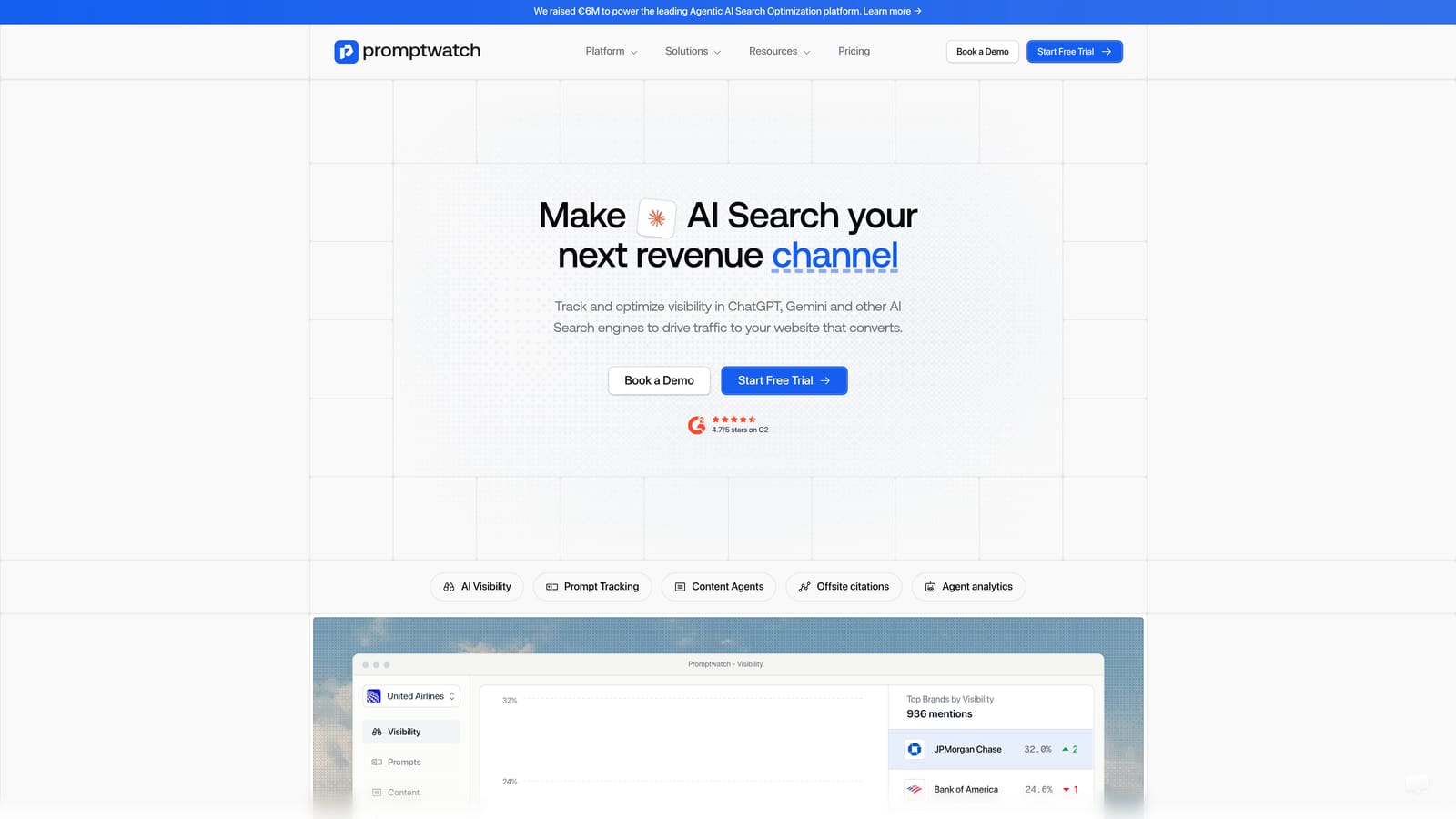
Promptwatch is a prompt-level AI monitoring tool that tracks how AI models respond to specific queries and whether your brand appears in those responses, with historical logging for trend analysis.
Where This Tool Shines
Promptwatch takes a granular approach to AI monitoring. Instead of giving you a high-level brand health score, it lets you define the exact prompts that matter to your business and track how AI model responses to those prompts shift over time. That historical logging capability is particularly useful for understanding whether content changes or new publications are actually moving the needle on AI visibility.
For teams that want to run structured experiments, such as publishing a new guide and then watching whether AI models start citing it in relevant responses, Promptwatch provides the tracking infrastructure to measure that feedback loop systematically.
Key Features
Prompt-Level Tracking: Define specific queries and monitor how AI model responses to those queries evolve over time.
Historical Response Logging: Archive AI responses to identify visibility trends and measure the impact of content or strategy changes.
Brand Mention Detection: Automated identification of brand appearances within AI-generated answers across major platforms.
Competitor Share-of-Voice: Compare your brand's presence in AI responses against competitors for the same set of prompts.
Best For
Promptwatch suits marketing and SEO teams that want disciplined, data-driven AI monitoring and are comfortable pairing it with separate tools for content creation. It's a good fit for teams running ongoing AI visibility experiments who need reliable historical data to evaluate what's working.
Pricing
Tiered subscription model. Verify current plan pricing and query limits directly at promptwatch.io, as specifics change with product updates.
3. Profound
Best for: Enterprise marketing and strategy teams needing deep AI answer analytics and structured reporting.
Profound is an enterprise-grade AI answer intelligence platform that provides structured analytics on how AI models represent your brand and competitors, built for teams that need reporting depth and stakeholder-ready dashboards.
Where This Tool Shines
Profound is built for scale and rigor. Where lighter monitoring tools surface basic brand mention data, Profound goes deeper: structured analytics on how AI models frame your brand across different query categories, competitive intelligence on how your positioning compares to rivals in AI responses, and reporting infrastructure that meets enterprise stakeholder expectations.
For organizations where AI visibility data needs to flow into executive reporting or quarterly strategy reviews, Profound's dashboard structure and export capabilities are meaningful advantages over more lightweight alternatives.
Key Features
Deep AI Answer Analytics: Structured analysis of brand representation across multiple AI platforms, broken down by query type and topic area.
Competitive Intelligence: Side-by-side comparisons of how your brand and competitors appear in AI-generated responses to the same prompts.
Enterprise Reporting Dashboards: Pre-built and customizable dashboards designed for sharing insights with marketing leadership and strategy teams.
Custom Prompt Monitoring at Scale: Run large prompt libraries across AI platforms to get comprehensive coverage of your brand's AI search footprint.
Best For
Profound is designed for enterprise marketing teams, brand strategists at larger organizations, and agencies with clients who require formal reporting on AI search performance. It's less suited for lean teams or early-stage companies where the enterprise pricing model may not match the budget.
Pricing
Enterprise pricing with custom quotes. Contact Profound directly for current package details at profound.com.
4. Peec
Best for: Content strategists who want to understand what makes a page get cited by AI models.
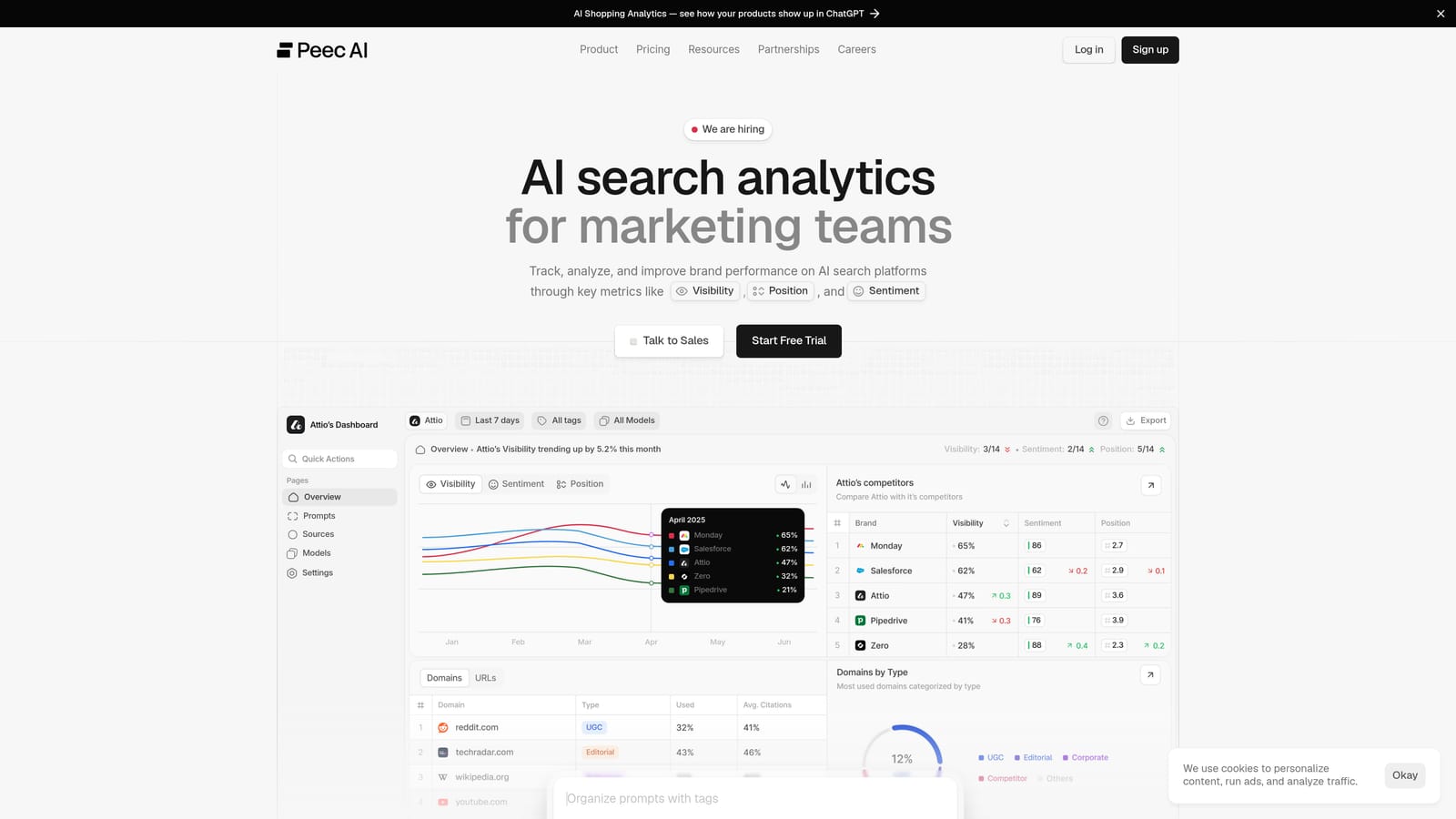
Peec is a citation and source tracking tool focused on identifying which web pages AI models reference when generating responses, helping content teams understand the structural and topical qualities that drive AI citation.
Where This Tool Shines
Peec answers a question that most monitoring tools don't address: not just whether your brand is mentioned in AI responses, but which specific pages are being cited and why. That source-level insight is invaluable for content teams trying to reverse-engineer what makes content AI-citation-worthy, whether that's format, depth, topical authority, or something else entirely.
The content gap analysis is particularly actionable. By showing you what competitors' pages AI models are citing in your category, Peec gives you a clear brief for content that could displace those citations over time.
Key Features
Source-Level Citation Tracking: Identify exactly which URLs AI models reference when generating responses to relevant queries.
Content Gap Analysis: See what AI models are citing versus ignoring in your topic area to find high-priority content opportunities.
Page-Level Optimization Insights: Understand the characteristics of pages that earn AI citations to guide your own content decisions.
Competitor Citation Benchmarking: Compare which of your pages versus competitor pages are earning AI citations across shared topic areas.
Best For
Peec is a strong fit for content strategists, SEO managers, and editorial teams at content-heavy organizations who want to optimize existing pages for AI citation and build a smarter content calendar based on what AI models actually reference.
Pricing
Tiered subscription model. Verify current plan options and feature limits at peec.ai.
5. AirOps
Best for: Content operations teams building scalable, repeatable AI content workflows.
AirOps is an AI workflow automation platform that lets content and marketing operations teams build pipelines connecting LLMs to data sources, CMS platforms, and publishing workflows without heavy engineering involvement.
Where This Tool Shines
AirOps occupies a different part of the AI search optimization stack than the monitoring tools on this list. Its value is operational: if your team needs to produce AI-assisted content at scale and route it through existing tools and approval processes, AirOps provides the workflow infrastructure to make that repeatable and manageable.
The visual workflow builder lowers the barrier for non-technical teams. Marketing operations managers can connect an LLM to a data source, define content templates, and set up CMS publishing rules without writing code, which meaningfully compresses the time between content strategy and content live.
Key Features
Visual Workflow Builder: Drag-and-drop interface for connecting LLMs to data sources, content templates, and publishing destinations.
CMS Integration: Direct connections to major CMS platforms for automated content publishing at scale.
Multi-LLM Support: Use multiple LLM providers within a single workflow, letting teams route different content types to the most appropriate model.
Team Collaboration Features: Shared workflow libraries and role-based access for content operations teams managing multiple projects.
Best For
AirOps is best for content operations teams, marketing engineers, and agencies that need to build and manage high-volume AI content pipelines. It's less suited for teams looking for AI visibility monitoring or out-of-the-box content generation without workflow customization.
Pricing
Usage-based and tiered plans depending on workflow volume and team size. Verify current pricing at airops.com.
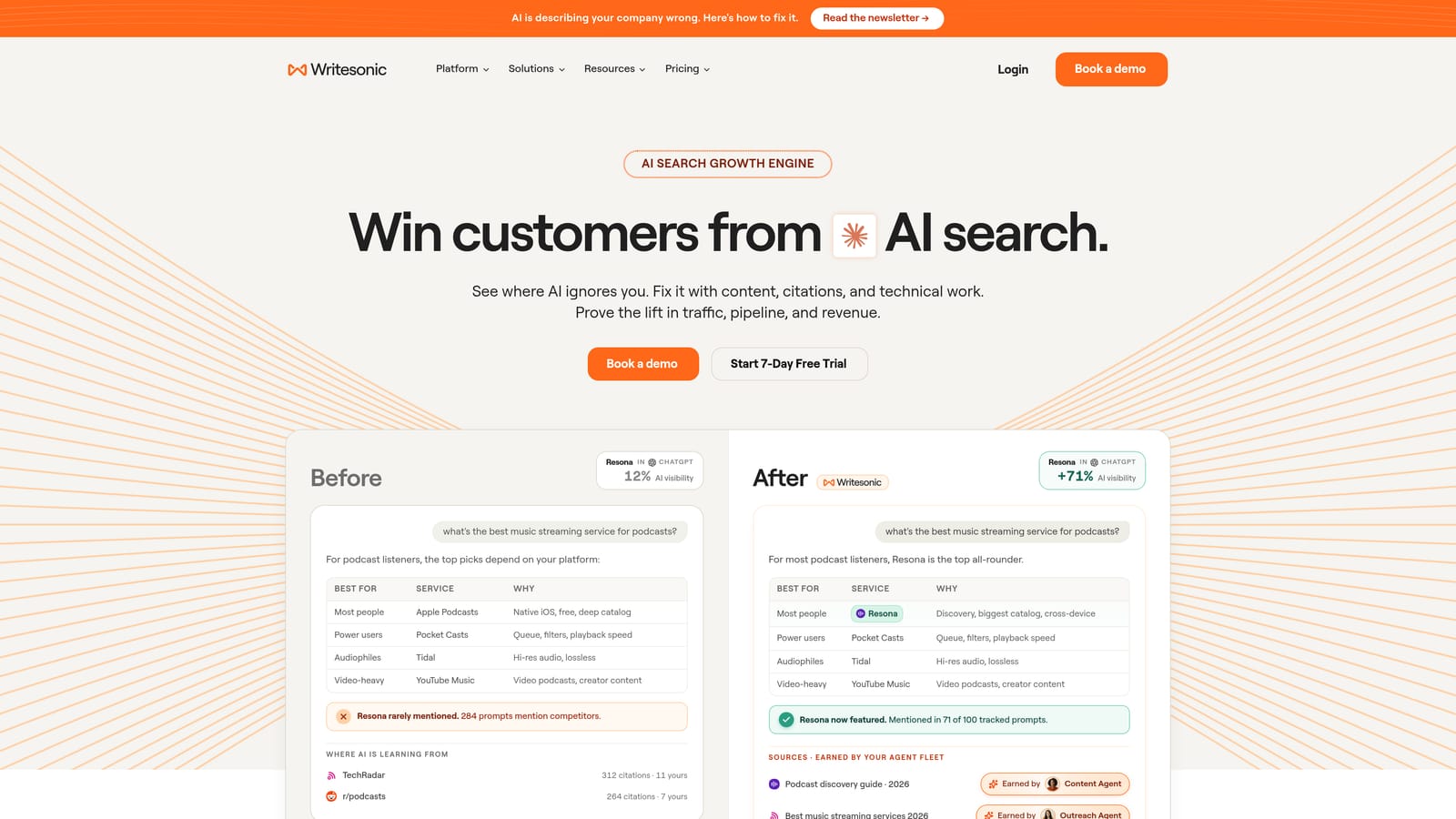
6. Writesonic
Best for: Content marketers and agencies producing high volumes of SEO-optimized articles.
Writesonic is a broad AI content generation platform with built-in SEO features including keyword integration and content scoring, suited for teams focused on the content production side of search optimization.
Where This Tool Shines
Writesonic has built a large user base by covering a wide range of content formats under one roof. From long-form SEO articles to product descriptions, ad copy, and social content, it's a generalist content engine with enough SEO tooling built in to be useful for teams whose primary goal is content volume with keyword coverage.
The brand voice customization feature is worth noting for agencies. Being able to maintain consistent tone across outputs for different clients without manual editing at every step is a real time-saver when you're managing content production at scale.
Key Features
Wide Content Format Support: Generate articles, product descriptions, ad copy, landing pages, and more from a single platform.
Built-In Keyword Integration: Target keywords are woven into content outputs with SEO scoring to guide optimization.
AI Article Writer: Long-form content generation tool designed for producing search-optimized articles at scale.
Brand Voice Customization: Define and apply consistent tone and style guidelines across all content outputs.
Best For
Writesonic suits content marketing teams, SEO agencies, and e-commerce operators who need high content output with basic SEO structure built in. Teams specifically looking for AI visibility monitoring or citation tracking will need to pair it with a dedicated monitoring tool.
Pricing
Tiered plans starting at an accessible monthly rate with generation limits that scale with higher tiers. Verify current pricing and word limits at writesonic.com.
Which Tool Is Right for Your Team
The right choice depends on where your biggest gap is: monitoring what AI models say about you, generating content that earns AI citations, or automating the publishing pipeline that gets content live quickly. Here's a quick way to think through it.
If you need an all-in-one platform: Sight AI covers AI visibility monitoring, GEO/SEO content generation, and automated indexing from a single dashboard. It's the strongest option for teams that want to close the loop between tracking AI mentions and acting on that data without managing multiple subscriptions.
If monitoring is your primary need: Promptwatch is built for systematic, prompt-level tracking with historical data. Profound is the right call for enterprise teams that need structured analytics and stakeholder-ready reporting. Peec adds a layer most tools miss: source-level citation tracking that tells you which pages AI models actually reference.
If content production and workflow automation are the priority: AirOps is the operational backbone for teams building repeatable AI content pipelines. Writesonic handles broad content generation with SEO features for teams focused on volume.
Before committing to any tool, audit your current stack. If you're already paying for separate monitoring, content, and indexing tools, a platform like Sight AI may consolidate costs while expanding capability. If you have a specific gap, such as understanding which pages earn AI citations, a focused tool like Peec may be the right addition.
Stop guessing how AI models like ChatGPT and Claude talk about your brand. Start tracking your AI visibility today and see exactly where your brand appears across top AI platforms, what content is earning citations, and where your biggest opportunities for AI search growth are hiding.