AI-powered content tools have moved from novelty to necessity for marketers who want to stay competitive in organic and AI-driven search. But the landscape has fragmented: some tools help you write faster, others track how AI models talk about your brand, and others handle the technical side of getting content discovered and indexed.
The challenge is knowing which tools actually move the needle on organic growth versus those that just add noise to your workflow. This list covers the best AI-powered content tools for marketers in 2026, evaluated on content quality, AI search visibility, workflow automation, and measurable impact on organic traffic. Whether you're a solo founder, an in-house marketer, or running a content-heavy agency, there's a tool here built for your use case.
1. Sight AI
Best for: Marketers who want one platform for AI visibility tracking, content generation, and automated indexing.
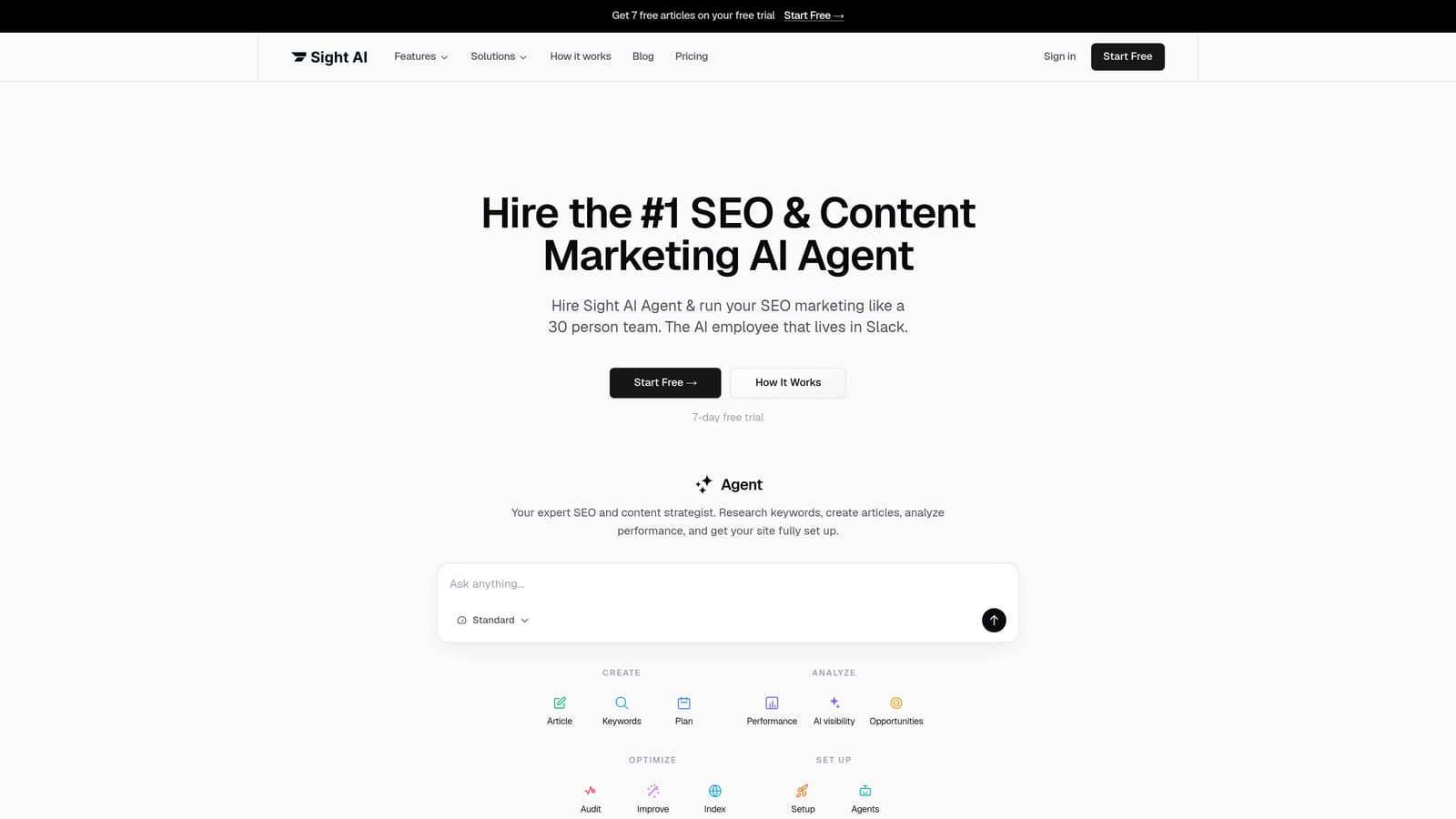
Sight AI is an all-in-one AI content and visibility platform that tracks how your brand is mentioned across AI models like ChatGPT, Claude, and Perplexity, generates SEO/GEO-optimized content using 13+ specialized AI agents, and automates indexing with IndexNow integration.
Where This Tool Shines
Most tools in this space solve one problem: either you get a content writer or you get a monitoring dashboard. Sight AI is built around the idea that these two problems are inseparable. If you don't know how AI models are talking about your brand, you can't write the content that changes it. That closed-loop approach, from visibility insight to published, indexed article, is what separates it from every other tool on this list.
The Autopilot Mode is particularly useful for agencies and founders who are managing content at scale without a large team. You set the brief, the agents handle the drafting, and the platform handles publishing and indexing. It's the kind of workflow automation that used to require stitching together three or four separate tools.
Key Features
AI Visibility Score: Tracks brand mentions, sentiment, and citation frequency across 6+ AI platforms including ChatGPT, Claude, and Perplexity.
13+ Specialized AI Agents: Dedicated agents for generating listicles, guides, explainers, and other content formats optimized for both SEO and generative engine optimization (GEO).
Autopilot Mode: Hands-off content workflow that takes a brief from input to published article without manual intervention at each stage.
IndexNow Integration: Automatically submits new content to search engines and updates sitemaps, reducing the lag between publishing and discovery.
CMS Auto-Publishing: Connects directly to your CMS to streamline the final step of the content pipeline, eliminating the copy-paste bottleneck.
Best For
Sight AI is the strongest fit for marketers, founders, and agencies who are actively thinking about both traditional SEO and AI search visibility. If you're already asking "how does ChatGPT describe my brand?" and you also need to produce consistent content at scale, this platform was built for exactly that combination of needs.
Pricing
Tiered plans are available for solo marketers, teams, and agencies. Verify current pricing directly at trysight.ai, as plans are updated regularly.
2. Writesonic
Best for: High-volume content teams producing SEO-optimized blog posts, ads, and landing pages at scale.
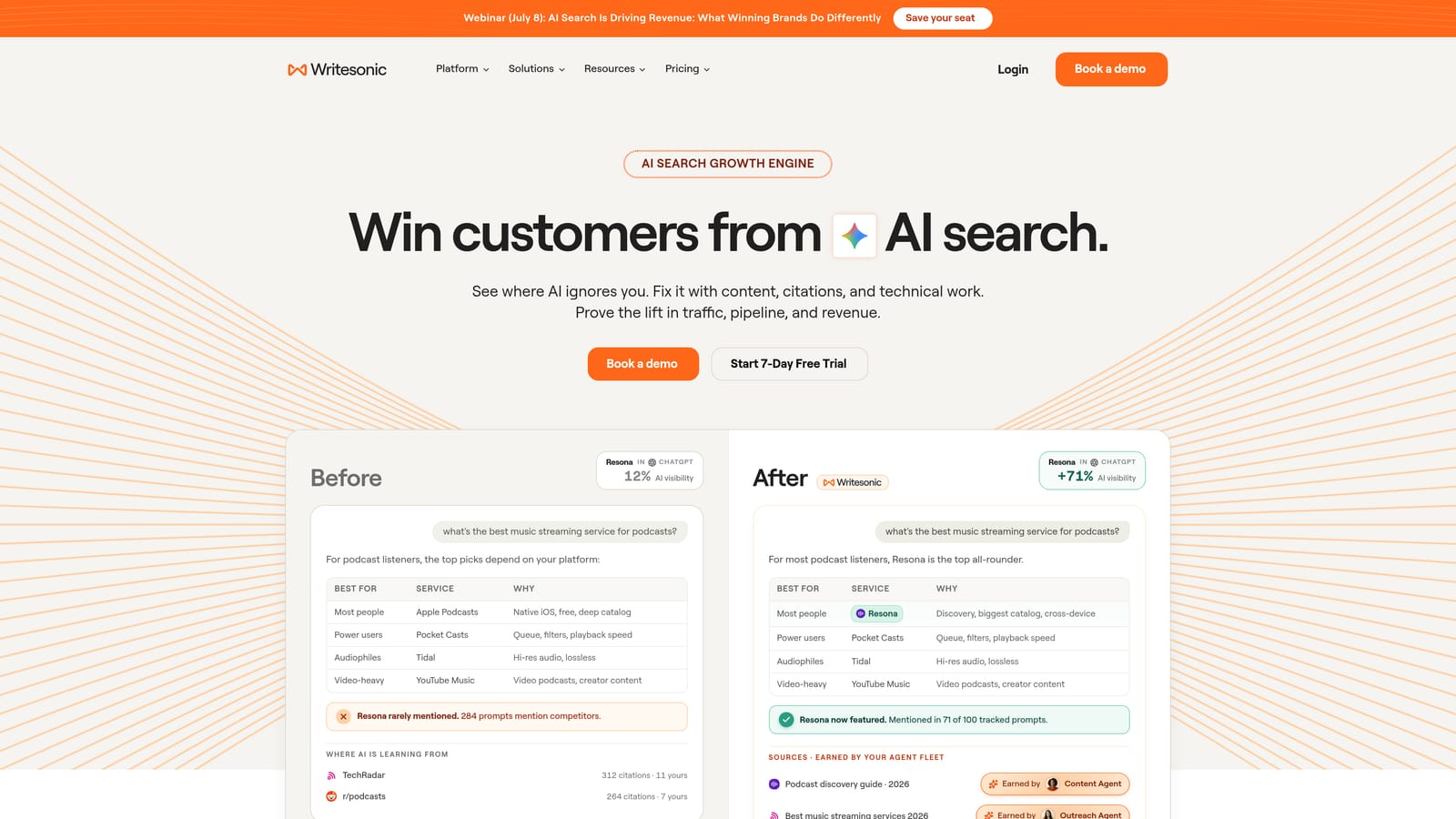
Writesonic is a widely used AI content generation platform built for marketers who need to produce large volumes of content across multiple formats and channels.
Where This Tool Shines
Writesonic's core strength is breadth. The template library covers a wide range of content types, from long-form blog articles to short-form ad copy and product descriptions, which makes it genuinely useful for teams that produce content across multiple channels. You're not locked into a single format or use case.
The Chatsonic interface adds an interactive layer for brainstorming and iterating on ideas, which is useful when you're working through a content calendar or trying to generate angle variations quickly. For teams that need consistent brand voice across a high volume of assets, the brand voice customization feature helps maintain that consistency without manual editing at every step.
Key Features
Broad Template Library: Covers blog posts, product descriptions, ad copy, landing pages, and long-form articles in a single platform.
SEO Tool Integrations: Connects with third-party SEO tools to provide on-page optimization guidance during the writing process.
Multi-Language Support: Generates content in multiple languages, useful for global marketing teams managing localized campaigns.
Chatsonic Interface: An AI chat layer for interactive brainstorming, content iteration, and quick copy generation.
Brand Voice Customization: Lets teams define and apply a consistent brand voice across all generated content.
Best For
Writesonic works best for marketing teams and agencies with high content volume needs across diverse formats. It's a strong fit if your primary challenge is output speed and consistency rather than AI search visibility or workflow automation.
Pricing
Plans are tiered by word count and feature access. Verify current pricing at writesonic.com before committing to a plan.
3. AirOps
Best for: Ops-minded marketing teams building repeatable, scalable AI content pipelines without engineering support.
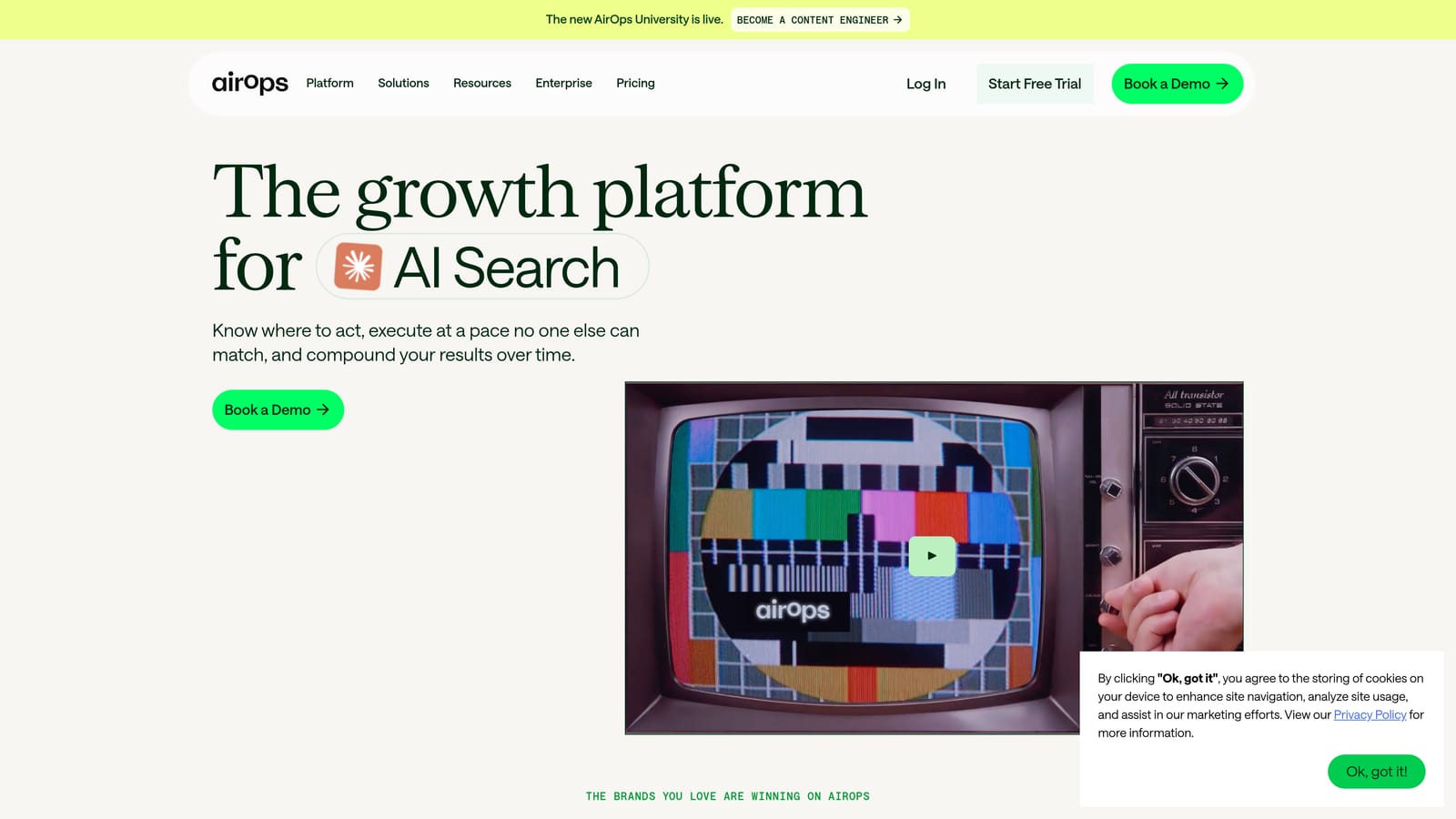
AirOps is an AI workflow automation platform that lets content and growth teams build structured, repeatable content pipelines using leading LLMs, without requiring engineering resources.
Where This Tool Shines
Think of AirOps less as a content writer and more as a content operations layer. The platform lets you design workflows that chain together AI model calls, data inputs, and outputs into a structured process you can run repeatedly. That's a fundamentally different value proposition from a tool that just generates a single article on demand.
Where it particularly stands out is bulk operations. If you're running a programmatic content strategy, enriching large datasets with AI-generated descriptions, or producing templated content at scale, AirOps gives you a no-code environment to build those workflows without pulling in a developer every time you want to make a change.
Key Features
Custom AI Workflow Builder: Build multi-step workflows using GPT-4, Claude, and other leading LLMs through a visual, no-code interface.
Pre-Built Templates: Ready-to-use workflows for SEO content briefs, bulk article generation, and data enrichment tasks.
Platform Integrations: Connects with Google Sheets, Airtable, Notion, and CMS platforms to fit into existing team workflows.
Bulk Content Operations: Designed for scaling programmatic or templated content production across large datasets.
No-Code Interface: Accessible to non-technical marketers who need workflow automation without writing code.
Best For
AirOps is the right choice for content operations teams and growth marketers who think in systems. If your challenge is repeatability and scale rather than one-off content quality, this platform gives you the infrastructure to build it.
Pricing
Plans vary by workflow volume and team size. Verify current pricing at airops.com for the most accurate information.
4. Profound
Best for: Marketers who need detailed analytics on how their brand and content appear inside AI-generated answers.
Profound is an AI search analytics platform that helps marketers understand how their brand and content appear inside AI-generated answers across major generative AI platforms.

Where This Tool Shines
Profound sits firmly on the analytics side of the AI visibility space. Rather than helping you create content, it helps you understand what's happening to your brand inside AI-generated responses, which pages are being cited, which competitors are appearing alongside you, and which queries are surfacing your brand in the first place.
For marketers who are serious about GEO as a discipline, that query-level insight is genuinely valuable. Knowing exactly which prompts trigger citations of your content gives you a feedback loop for refining your content strategy in a way that traditional SEO keyword data doesn't fully capture.
Key Features
Brand Citation Tracking: Monitors how your brand is cited across AI-generated search results and conversational answers.
Content Visibility Analysis: Shows which specific pages and content assets are being referenced by AI models in their responses.
Competitive Benchmarking: Compares your AI search presence against competitors to identify gaps and opportunities.
Query-Level Insights: Reveals which specific prompts and questions surface your brand inside AI-generated answers.
GEO Reporting Dashboards: Structured dashboards for monitoring generative engine optimization performance over time.
Best For
Profound is best suited for in-house SEO teams and digital marketing managers at mid-to-large companies who need structured analytics on AI search performance. It complements content creation tools rather than replacing them.
Pricing
Enterprise and team plans are available. Verify current pricing and plan structure at profound.co before purchasing.
5. Peec
Best for: Marketers focused on competitive intelligence and share-of-voice analysis inside AI model responses.
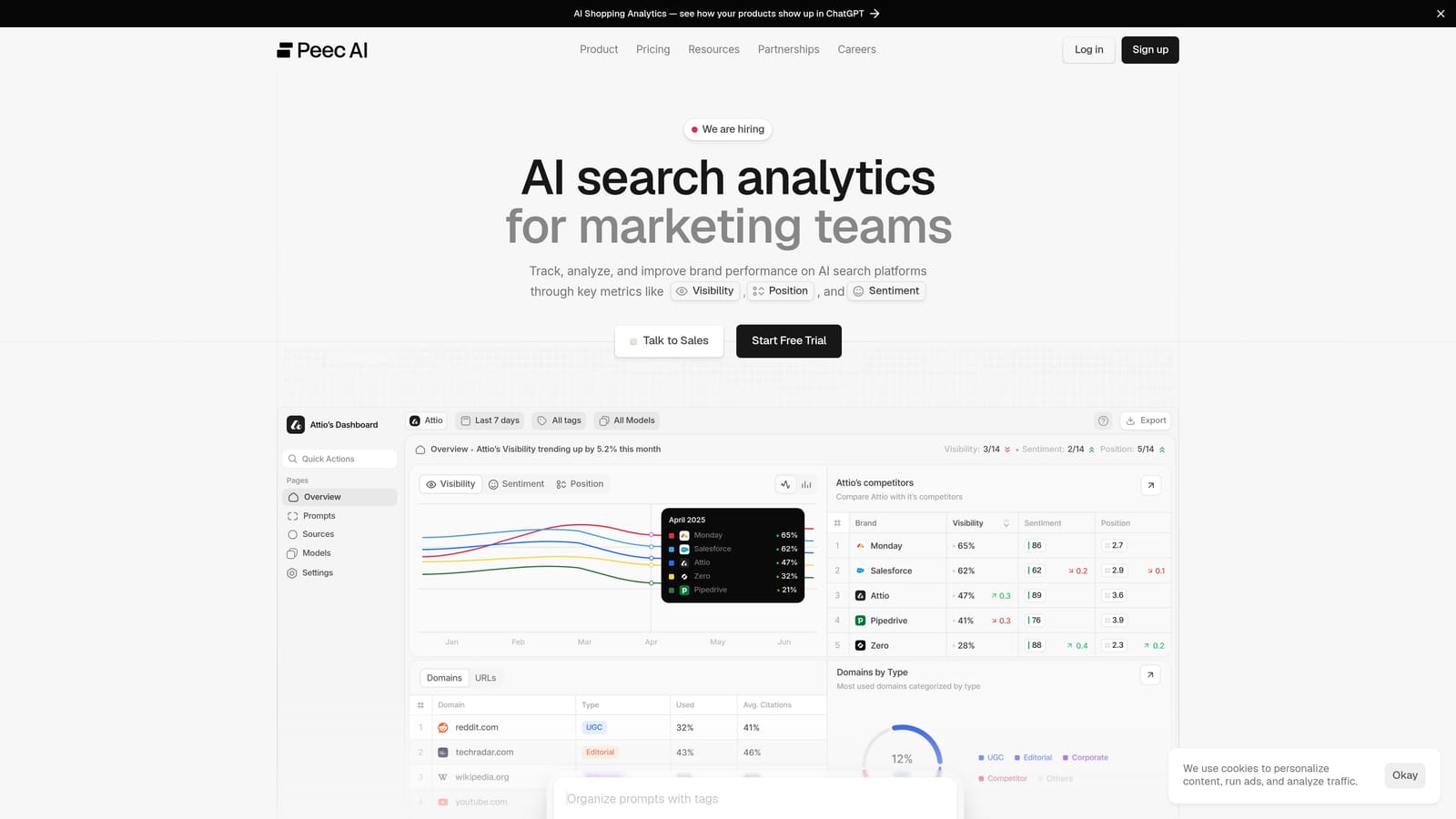
Peec is an AI mention monitoring and competitive intelligence tool focused on tracking how brands and competitors are cited inside AI model responses, with share-of-voice analysis for AI search.
Where This Tool Shines
Peec takes a competitive intelligence angle that makes it useful for brands operating in crowded markets where knowing how rivals appear in AI answers is as important as tracking your own mentions. The share-of-voice framing is familiar to anyone who has run brand tracking in traditional media, and Peec applies that same logic to AI-generated responses.
The prompt testing capability is particularly practical. Rather than waiting to discover that a competitor is dominating AI responses for a key category query, you can proactively test prompts, see who gets cited, and use that data to inform your content and GEO strategy before the gap widens.
Key Features
Brand and Competitor Mention Tracking: Monitors how your brand and named competitors appear inside AI model outputs across platforms.
Share-of-Voice Analysis: Quantifies your brand's presence relative to competitors in AI-generated responses.
Prompt Testing: Lets you test specific queries to identify which prompts trigger brand citations and which favor competitors.
Competitive Intelligence: Surfaces how rival brands are represented in AI answers, revealing positioning opportunities.
Trend Monitoring: Tracks changes in brand visibility over time to detect shifts in AI model behavior.
Best For
Peec is a strong fit for brand managers and competitive intelligence teams who want focused monitoring of AI search presence without needing a full content generation platform attached to it.
Pricing
Plans vary by monitoring volume and the number of tracked brands. Verify current pricing at peec.ai before signing up.
6. Promptwatch
Best for: Technical marketers who need granular, prompt-level monitoring of how AI models represent their brand over time.
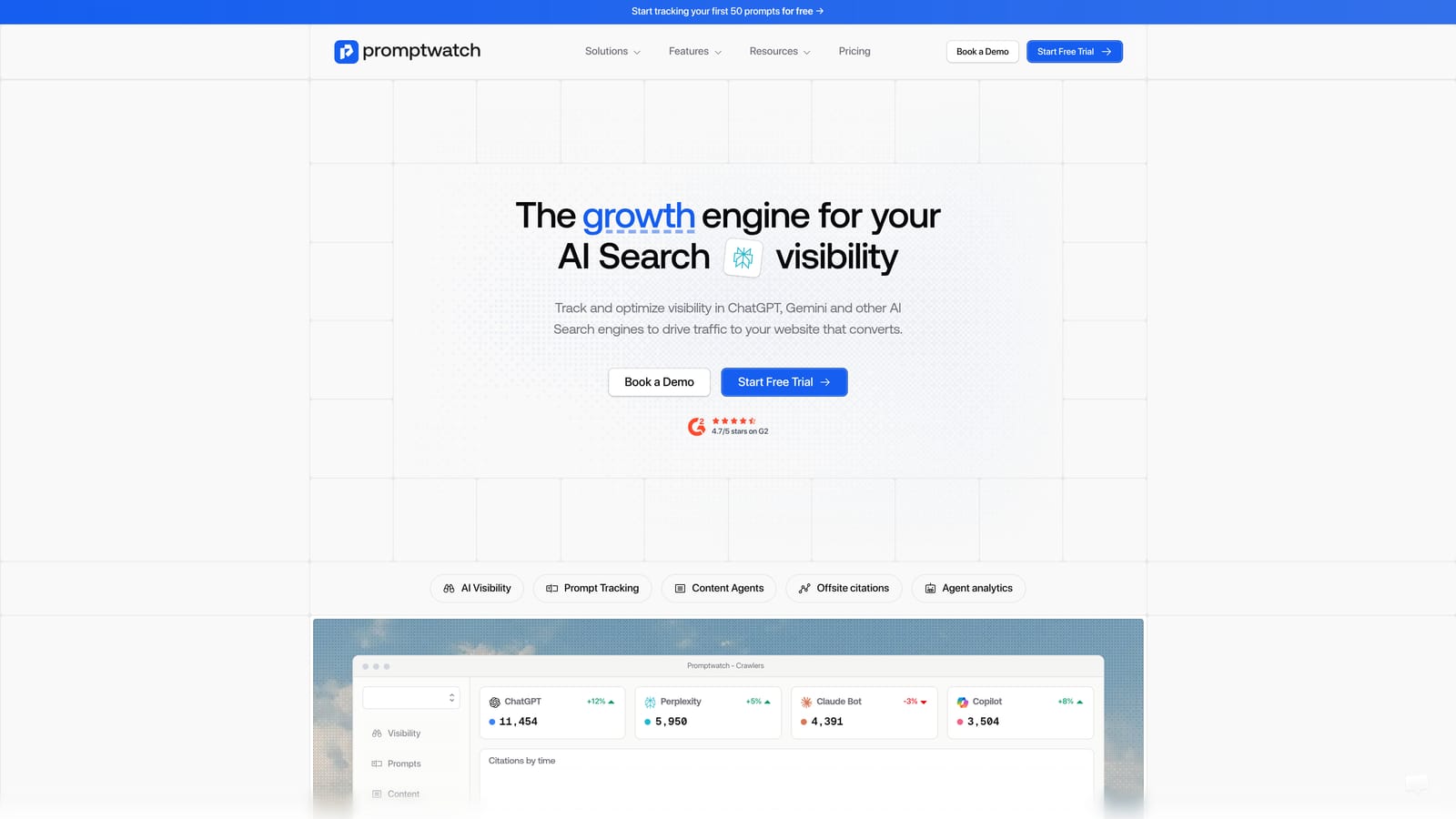
Promptwatch is a prompt monitoring and AI response tracking tool that lets technical marketers track how specific prompts produce AI responses over time, with historical logging to detect changes in brand representation.
Where This Tool Shines
Where most AI visibility tools focus on aggregate brand mentions, Promptwatch goes deeper at the prompt level. The historical logging capability means you can see not just how AI models describe your brand today, but how that description has changed across model versions and updates. For brands that have been actively working on GEO, that longitudinal view is a meaningful differentiator.
The change detection feature addresses a real and often overlooked problem: AI models are updated frequently, and a response that accurately represented your brand last quarter may not do so today. Promptwatch gives you an audit trail to catch those shifts before they compound into a larger visibility problem.
Key Features
Prompt-Level Monitoring: Tracks how specific prompts produce AI responses with detailed historical logging for each query.
Change Detection: Identifies when AI models shift how they describe or represent your brand across model updates.
Multi-Model Response Tracking: Monitors responses across different AI platforms to surface inconsistencies in brand representation.
Structured Prompt Library: Organizes and manages a library of prompts for systematic, repeatable AI response testing.
Audit Trail: Maintains a record of brand mention consistency across AI model versions for accountability and reporting.
Best For
Promptwatch is best suited for technical marketers, SEO specialists, and brand teams who want granular data on prompt-level AI behavior. It's a more specialized tool that works well alongside broader visibility platforms rather than as a standalone solution.
Pricing
Verify current plan structure and pricing at promptwatch.io before publishing, as the product positioning in this space evolves quickly.
Which Tool Is Right for Your Situation
The honest answer is that the right tool depends on which problem is most urgent for your growth right now. Here's how to think through it.
If you need an all-in-one starting point that handles AI visibility tracking, content creation, and automated indexing in a single platform, Sight AI is the most complete option on this list. It's built for the marketer who doesn't want to manage a stack of disconnected tools and needs measurable progress on both traditional SEO and AI search presence.
If your primary challenge is high-volume content production across multiple formats, Writesonic is a proven platform with the template depth and brand voice controls to support that. For teams that need to build repeatable, scalable content pipelines with custom AI workflows, AirOps offers the operational infrastructure to make that happen without engineering support.
On the monitoring and analytics side, Profound and Peec both offer strong AI visibility tracking with different emphases: Profound leans toward content citation analytics and GEO performance dashboards, while Peec focuses on competitive share-of-voice in AI responses. Promptwatch rounds out the list for technical marketers who need prompt-level historical data on how AI models represent their brand over time.
For most marketers just getting started with AI visibility, the biggest leverage comes from understanding where you stand today before building out a full stack. Start tracking your AI visibility today and see exactly where your brand appears across top AI platforms, so every piece of content you publish is working toward a strategy grounded in real data.