Your content team is drowning. The demand for articles, guides, social posts, and landing pages grows exponentially while your production capacity hits the same ceiling week after week. Writers juggle research spreadsheets, editors pass documents back and forth, and someone manually copies finished content into your CMS before remembering to update the sitemap. By the time an article goes live, the opportunity window has already started closing.
This isn't a talent problem or a budget problem. It's an architecture problem.
AI content workflow automation transforms this chaotic relay race into a connected system where research flows seamlessly into writing, optimization happens in parallel with creation, and publishing triggers immediate indexing across search engines. Instead of managing handoffs between disconnected tools, you orchestrate intelligent agents that handle repetitive tasks while your team focuses on strategy, quality control, and the creative decisions that actually differentiate your content.
This guide breaks down how modern content operations teams are rebuilding their production pipelines around AI automation. You'll understand which workflow stages benefit most from automation, how specialized AI agents handle different content formats, and the specific metrics that prove whether your automated system delivers real business value. More importantly, you'll see the practical steps for implementing automation without sacrificing the quality standards that protect your brand.
Breaking Down the Modern Content Production Challenge
Content demand has exploded across every marketing channel. Your audience expects fresh blog posts, detailed product guides, comparison articles, social content, email sequences, and landing pages—all optimized for search engines and increasingly for AI-powered discovery systems. What used to be a weekly blog schedule has evolved into a daily content operation spanning multiple formats and distribution channels.
Traditional workflows crack under this pressure because they're built on sequential handoffs. A strategist identifies topics and creates briefs. A writer researches and drafts content. An editor reviews and revises. Someone handles SEO optimization. Another person formats and publishes. Each handoff introduces delay, and every person in the chain becomes a potential bottleneck.
The research phase alone consumes hours that compound across your content calendar. Writers manually search for keywords, analyze competitor content, identify trending topics, and compile sources before typing the first sentence. When you're producing ten articles per month, this overhead feels manageable. When you're producing fifty, it becomes unsustainable.
Then there's the tool fragmentation problem. Your keyword research happens in one platform, writing in another, optimization in a third, and publishing in your CMS. Each tool transition requires manual data transfer—copying keywords into briefs, pasting content into optimization tools, reformatting for your CMS. These transitions aren't just time sinks; they're error opportunities where information gets lost or formatting breaks.
The editing bottleneck deserves special attention. Human editors provide essential quality control, but when they're reviewing every sentence of every article, they become the constraint that limits your entire production capacity. You can't simply hire more editors proportionally because quality editing requires expertise that doesn't scale linearly with headcount. Understanding the tradeoffs between content automation vs manual writing helps teams find the right balance for their specific needs.
Publishing delays compound all these earlier inefficiencies. Content sits in draft status waiting for manual review, approval workflows, and someone with CMS access to hit publish. Even after publication, search engines may take days or weeks to discover and index new content, delaying any organic traffic benefit.
The hidden cost isn't just time—it's opportunity cost. While your team spends three weeks producing a comprehensive guide, your competitor publishes five articles covering related angles and captures the search visibility you were targeting. In content marketing, speed to publish has become a competitive advantage that traditional workflows simply cannot deliver.
How AI Transforms Each Stage of Content Creation
AI automation doesn't just speed up your existing workflow—it fundamentally restructures how content moves from concept to publication. Instead of sequential handoffs, you create parallel processes where multiple AI agents work simultaneously on different aspects of content production.
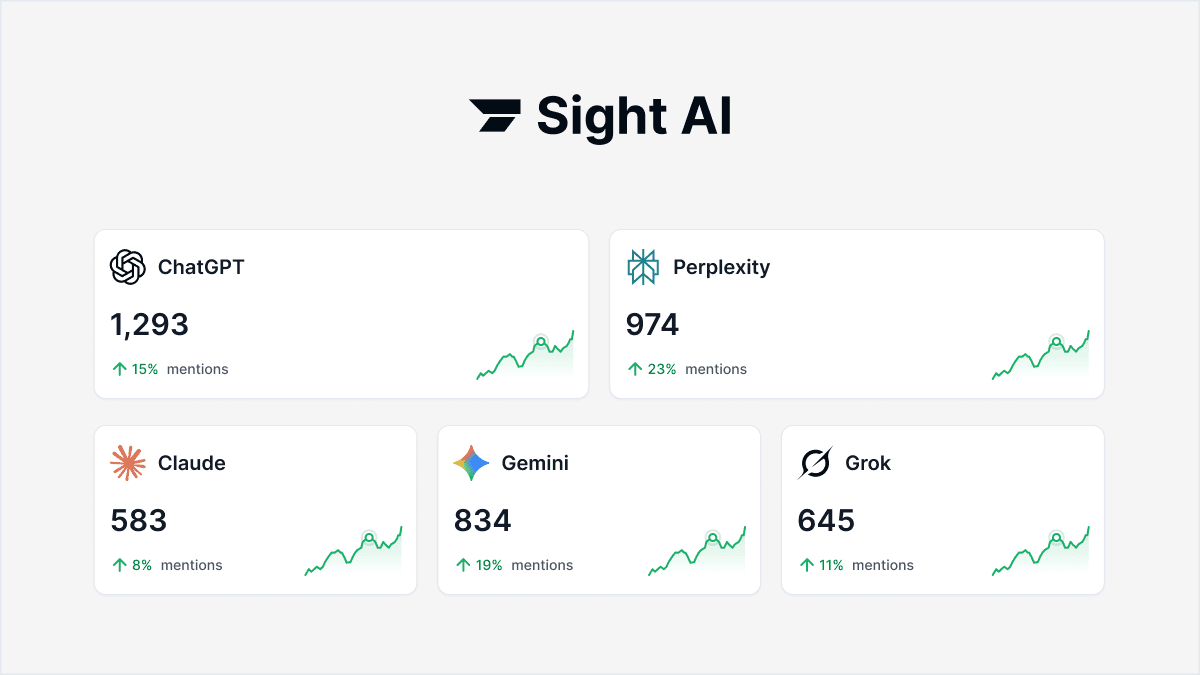
The research and ideation phase transforms from hours of manual work into minutes of intelligent analysis. AI systems can analyze search trends, identify content gaps in your existing library, evaluate competitor coverage, and suggest topics with high-ranking potential. More sophisticated platforms connect this research directly to your brand's visibility in AI models, showing you which topics would increase your mentions in ChatGPT, Claude, and Perplexity responses.
Think of it like having a research assistant who continuously monitors thousands of data points—search volumes, trending queries, competitor publications, and AI model responses—then surfaces the specific opportunities most relevant to your business goals. Instead of starting each content project with a blank slate, you begin with AI-generated insights about what to write and why it matters.
Writing and optimization happen through specialized AI agents rather than general-purpose models. A listicle requires different structure and tone than an explainer guide. A comparison article needs different research depth than a quick how-to post. Multi-agent systems deploy the right AI model for each content type, with agents trained specifically for product descriptions, technical documentation, thought leadership, or educational content.
This specialization produces better results than asking a single AI model to handle every content format. Each agent understands the conventions, structure, and optimization requirements for its specific content type. When you need a comprehensive guide, the explainer agent handles long-form structure and progressive complexity. When you need a comparison article, the comparison agent knows how to structure evaluations and feature breakdowns.
The optimization layer runs in parallel with content creation rather than as a separate post-writing step. As AI agents generate content, optimization systems simultaneously ensure proper keyword integration, meta description quality, header structure, and internal linking opportunities. Some platforms even optimize for Generative Engine Optimization (GEO), structuring content to increase the likelihood of AI model citations. Implementing SEO content writing automation ensures every piece meets search optimization standards from the start.
Publishing automation eliminates the manual steps that create delays between "content ready" and "content live." Modern systems integrate directly with your CMS, automatically formatting content according to your style requirements, adding proper HTML tags, and publishing on schedule. The real breakthrough comes with IndexNow integration—the moment your content publishes, search engines receive immediate notification rather than waiting for their next crawl cycle.
This instant indexing capability matters more than most teams realize. Traditional publishing workflows meant content could sit undiscovered for days or weeks. With IndexNow automation, your articles can start appearing in search results within hours of publication, dramatically accelerating your return on content investment. Teams implementing content indexing automation see significantly faster time-to-ranking for new content.
The feedback loop completes the transformation. Automated systems track how published content performs—rankings, engagement, AI model mentions—and feed this performance data back into the ideation phase. Your workflow learns which topics resonate, which formats drive engagement, and which optimization approaches yield the best results. Over time, the system gets smarter about suggesting content that will actually perform.
Building Your Automated Content Pipeline
Creating an effective automated workflow starts with honest assessment of your current process. Map every step from initial topic idea to published article, noting where bottlenecks occur, where manual handoffs happen, and where information gets lost in translation. Most teams discover that 60-70% of their workflow consists of repetitive, rule-based tasks that automation could handle.
The goal isn't automating everything—it's automating the right things. Focus first on the high-volume, repeatable tasks that consume time without requiring creative judgment. Keyword research, content formatting, meta description creation, internal link identification, and publishing mechanics all fit this category. These tasks follow predictable patterns that AI systems can learn and execute reliably.
Strategic inputs need clear connection points to automated outputs. When your content strategy identifies priority topics, your automation system should translate those priorities into content briefs, keyword targets, and production schedules without manual intervention. This requires defining the triggers that activate your automated workflow—new competitor content, trending search queries, gaps in your AI visibility, or simply scheduled content calendar dates. Robust content pipeline automation software handles these trigger-based workflows seamlessly.
Think about your workflow as a decision tree. At each branch point, determine whether the decision requires human judgment or follows predictable logic. "Should we write about this trending topic?" requires strategic judgment. "What keywords should we target for this topic?" follows research logic that AI can handle. "Does this draft meet our quality standards?" requires human evaluation. "Does this draft have proper header structure and keyword density?" follows rules that automation can verify.
The handoff points between automated and human tasks matter enormously. Your workflow should surface content to human reviewers at the right moments—after AI has handled research and drafting, but before final publication. Design these review points to focus human attention on strategic decisions and quality judgment rather than formatting checks or keyword counting.
Feedback loops transform your pipeline from a one-way production line into a learning system. Track which AI-generated topics lead to high-performing content. Monitor which optimization approaches yield better rankings. Measure which content formats drive more engagement. Feed this performance data back into your automation system so future content benefits from past results.
Some teams implement A/B testing within their automated workflows, having AI agents generate multiple versions of headlines, introductions, or content structures, then using performance data to identify winning patterns. Over time, your automation learns your audience's preferences and your brand's voice, producing content that requires less human revision.
The technical architecture should prioritize integration over isolation. Your automation platform needs to connect with your keyword research tools, your CMS, your analytics systems, and ideally your AI visibility tracking. These connections enable the seamless data flow that makes automation valuable—research insights flowing into content briefs, published content triggering indexing protocols, performance metrics informing future topic selection.
Essential Components of an Effective Automation Stack
Building a content automation system requires assembling the right components into a cohesive stack. The foundation starts with AI writing systems that go beyond single-model approaches. Modern platforms deploy multiple specialized agents, each optimized for different content formats and purposes. When you need a detailed product comparison, you activate comparison-focused agents. When you need an educational explainer, you use agents trained on instructional content patterns.
This multi-agent architecture matters because content quality depends on understanding format-specific conventions. A listicle agent knows how to structure items with compelling hooks and clear value propositions. An explainer agent understands how to build progressive complexity and create effective transitions between concepts. A how-to agent focuses on clear step-by-step instructions and practical implementation details.
Look for systems that offer true autopilot capabilities where agents can operate with minimal human intervention once you've set strategic parameters. The best implementations allow you to define content goals, target keywords, and quality standards, then let specialized agents handle the research, drafting, and optimization autonomously. Human oversight focuses on strategic direction and final quality checks rather than managing every step of production. Evaluating the best AI content automation tools helps teams identify platforms with these advanced capabilities.
Visibility tracking forms the intelligence layer of your automation stack. Platforms that monitor how AI models like ChatGPT, Claude, and Perplexity discuss your brand provide crucial input for content strategy. When you can see exactly where your brand appears in AI responses—and more importantly, where it doesn't—you identify specific content opportunities that increase your AI visibility.
This tracking goes beyond simple brand mentions. Advanced systems analyze sentiment, track the prompts that trigger your brand mentions, and compare your visibility against competitors. This data directly informs your automated content pipeline, highlighting topics where creating comprehensive content could shift your brand from absent to prominently featured in AI model responses.
CMS integration capabilities determine whether your automation actually eliminates publishing bottlenecks or just shifts them. The most effective systems connect directly to platforms like WordPress, Webflow, or custom content management systems, automatically formatting content according to your specifications and publishing on schedule. This integration should handle HTML structure, image placement, internal linking, and meta data without manual intervention. Proper CMS integration for content automation eliminates the manual formatting work that slows down publishing.
IndexNow protocol support accelerates your content's discovery by search engines. Rather than waiting for search engine crawlers to find new content on their next scheduled visit, IndexNow sends immediate notifications when you publish. This can reduce indexing time from weeks to hours, dramatically improving how quickly new content starts driving organic traffic. Automation systems that trigger IndexNow notifications as part of the publishing workflow eliminate another manual task while accelerating results.
Quality control mechanisms need to be built into your automation stack, not bolted on afterward. Look for systems that include automated checks for readability, keyword optimization, structural requirements, and brand voice consistency. These automated quality gates catch obvious issues before content reaches human reviewers, allowing your team to focus on higher-level quality assessment.
Analytics integration closes the loop between content performance and production decisions. Your automation stack should connect with Google Analytics, Search Console, and your AI visibility tracking to measure which content drives rankings, engagement, and AI model mentions. This performance data feeds back into your content planning, helping the system learn which topics and formats deliver the best results for your specific audience and business goals.
Measuring Success: KPIs for Automated Content Operations
Implementing automation without measuring its impact leaves you guessing whether the investment pays off. Effective measurement focuses on three dimensions: production velocity, content quality, and business outcomes. Each dimension requires specific metrics that reveal whether your automated workflow delivers value.
Production velocity metrics quantify how automation accelerates your content operations. Time from ideation to publication serves as your primary velocity indicator. Before automation, this might span weeks as content moves through research, writing, editing, and publishing queues. After automation, well-implemented systems can reduce this timeline to days or even hours for certain content types.
Track your content output volume as a leading indicator of automation effectiveness. Count articles published per month, breaking this down by content type to understand where automation delivers the biggest capacity gains. Many teams see 3-5x increases in output volume while maintaining or improving quality standards, but your specific gains depend on which workflow stages you automate and how much manual work you eliminate.
Measure the time savings for specific workflow stages. How much time does AI-powered research save compared to manual research? How much faster does automated publishing happen versus manual CMS work? These granular metrics help you identify which automation components deliver the most value and where additional optimization could yield further gains. Teams focused on content production workflow automation typically see the largest time savings in research and formatting tasks.
Quality indicators prove that automation doesn't sacrifice content standards for speed. Engagement metrics like time on page, scroll depth, and bounce rate reveal whether AI-generated content holds reader attention as effectively as manually created content. Compare these metrics between automated and traditional content to verify quality maintenance.
Search rankings provide objective quality validation. Track how quickly new content ranks for target keywords and what positions it achieves. If automated content ranks slower or lower than manually created content, your automation needs refinement. Many teams find that AI-optimized content actually ranks faster because optimization happens during creation rather than as an afterthought.
AI model mentions represent a newer but increasingly important quality metric. Monitor how frequently your brand appears in responses from ChatGPT, Claude, Perplexity, and other AI platforms. As these tools become primary research sources for many users, visibility in AI responses directly impacts brand awareness and consideration. Content optimized for both traditional search and AI discovery should increase your mention frequency over time.
ROI calculations translate automation benefits into business terms. Calculate your cost per article by dividing total content production costs by articles published. Automation should dramatically reduce this cost while maintaining quality. Factor in both direct costs like software subscriptions and indirect costs like team time spent on content operations.
Organic traffic value provides the ultimate ROI metric. Track organic sessions, conversions, and revenue attributed to content produced through your automated workflow. Compare the traffic value generated per dollar invested in automated content versus traditional content creation. The goal isn't just producing more content—it's producing content that drives measurable business results more efficiently.
Monitor your content backlog as a system health indicator. A growing backlog suggests bottlenecks that automation hasn't resolved. A shrinking backlog indicates that your production capacity now exceeds demand—a good problem that lets you raise content quality standards or expand into new topic areas.
Putting Your Automation Strategy Into Action
Starting your automation journey requires strategic focus rather than attempting to automate everything simultaneously. Begin with high-volume, repeatable content types where standardization makes sense. FAQ articles, product descriptions, how-to guides, and comparison posts all follow predictable patterns that AI agents can learn and execute reliably.
Choose a pilot content category where you can measure results clearly. If you currently publish ten comparison articles monthly, automate comparison production first and track whether you can increase output to twenty or thirty while maintaining quality. This focused approach lets you refine your automation before expanding to other content types.
Implement quality controls from day one rather than adding them later. Define clear standards for what makes content acceptable—readability scores, keyword optimization targets, structural requirements, brand voice guidelines. Build these standards into your automation workflow as automated checks that flag issues before content reaches human reviewers.
Scale gradually while monitoring both quantitative metrics and qualitative feedback. Your team will notice if automated content feels generic or misses your brand voice. Your audience will signal through engagement metrics if content quality slips. Use this feedback to adjust your automation parameters, refine your AI agent instructions, and improve your quality controls before expanding automation to additional content types. Reviewing content marketing automation reviews from other teams can provide valuable insights during this scaling phase.
Invest in training your team to work effectively with AI agents rather than viewing automation as replacement technology. The most successful implementations treat AI as a force multiplier that handles repetitive tasks while humans focus on strategy, creative direction, and quality oversight. Your writers become content directors who guide AI agents rather than typing every word themselves.
Plan for evolution as AI capabilities expand. The automation you implement today will seem primitive compared to what's possible in twelve months. Build flexibility into your workflow so you can incorporate new AI capabilities, add specialized agents for emerging content formats, and refine your optimization approaches as search engines and AI models evolve their algorithms.
Document your workflow thoroughly so team members understand how automation works, where human oversight matters, and how to troubleshoot issues. Clear documentation prevents your automation from becoming a black box that only one person understands, creating a new kind of bottleneck when that person is unavailable.
The Competitive Edge of Intelligent Content Operations
AI content workflow automation represents more than efficiency gains—it's a fundamental shift in how brands compete for visibility. The combination of production velocity and optimization sophistication creates a compounding advantage. You publish more content, which generates more organic traffic, which provides more performance data, which improves future content, which drives additional traffic growth.
This flywheel effect separates leaders from laggards in content marketing. Teams still operating manual workflows face a widening gap as automated competitors publish more content, capture more keywords, and dominate more AI model responses. The velocity difference isn't just about quantity—it's about capitalizing on opportunities before they close and maintaining consistent presence across the topics that matter to your audience.
The evolution toward AI-powered discovery makes workflow automation even more critical. As users increasingly turn to ChatGPT, Claude, and Perplexity for research and recommendations, brands need content optimized for both traditional search engines and AI model training. Automated workflows can implement GEO principles at scale, structuring every article to maximize AI citation potential while maintaining traditional SEO standards. Developing a comprehensive SEO content strategy automation approach ensures your content performs across both discovery channels.
Your automated content pipeline positions your brand for the next phase of search evolution. When AI models become the primary interface for information discovery, brands with comprehensive, well-optimized content libraries will dominate visibility. Building that content library through manual processes simply takes too long—automation provides the speed necessary to establish authority before the competitive landscape solidifies.
The teams winning in content marketing aren't just producing more articles—they're building intelligent systems that learn, adapt, and improve. Your workflow becomes smarter over time, identifying which topics drive results, which formats resonate with your audience, and which optimization approaches yield the best rankings and AI mentions. This continuous improvement creates sustainable competitive advantage that manual workflows cannot match.
Stop guessing how AI models like ChatGPT and Claude talk about your brand—get visibility into every mention, track content opportunities, and automate your path to organic traffic growth. Start tracking your AI visibility today and see exactly where your brand appears across top AI platforms.