Your content team publishes three articles this week. Next week, you need five. The month after that, your growth targets demand ten. But here's the problem: your writers are already working at capacity, your editor is drowning in revisions, and your publishing process involves so many manual handoffs that bottlenecks appear faster than you can fix them.
This is the scaling crisis that content teams face everywhere. The demand for content grows exponentially while your team size and hours remain fixed. Traditional solutions—hiring more writers, working longer hours, compromising on quality—all have obvious limitations.
Content production workflow automation offers a different path forward. Instead of throwing more human resources at the problem, you systematically identify repetitive tasks across your content lifecycle and hand them to technology. The result? Your team produces more content, faster, without sacrificing quality or burning out in the process. This guide walks you through exactly how to build automated workflows that scale your content operations while keeping humans focused on the strategic and creative work that machines can't replicate.
The Five Stages Where Your Content Gets Stuck
Before you can automate anything, you need to understand where your content actually lives and moves. Every piece of content follows a predictable lifecycle, and each stage contains hidden time sinks that compound as you scale.
The ideation and research phase is where most content journeys begin. Your team brainstorms topics, researches keywords, analyzes competitors, and creates content briefs. This stage typically involves jumping between multiple tools—keyword research platforms, competitor analysis dashboards, spreadsheets for tracking ideas. Each context switch costs time, and manual research means you're limited by how many hours your team can dedicate to discovery.
Creation is the phase everyone thinks about first. Writers draft articles, designers create visuals, video teams shoot footage. This is where the actual content takes shape, but it's also where bottlenecks become obvious. A single writer can only produce so many words per day, and quality suffers when you push beyond sustainable limits.
The editing and review stage often becomes the biggest bottleneck. Content sits in review queues waiting for editorial feedback. Revisions go back and forth multiple times. Brand voice inconsistencies require rewrites. What should take hours stretches into days or weeks because manual review processes don't scale linearly with content volume.
Publishing involves uploading content to your CMS, formatting it correctly, adding metadata, scheduling publication, and configuring distribution settings. Each of these steps requires manual attention, and mistakes at this stage can delay publication or create technical issues that hurt discoverability. Teams that master content publishing workflow automation eliminate these manual bottlenecks entirely.
Distribution and promotion is the final stage where your content actually reaches audiences. This includes social media posting, email newsletter inclusion, internal linking updates, and notifying search engines about new content. Teams often treat this as an afterthought, manually handling distribution tasks long after the content itself is finished.
The key insight here is that automation touchpoints exist at every stage. You're not trying to remove humans from the process entirely. Instead, you're identifying specific tasks within each stage where technology can handle the repetitive execution while humans focus on judgment, creativity, and strategic decisions. A well-designed automated workflow augments your team's capabilities rather than attempting to replace them.
The Three Automation Opportunities That Transform Content Velocity
Not all automation delivers equal value. Some improvements save minutes while others eliminate entire days from your production cycle. Understanding where automation creates the biggest impact helps you prioritize your implementation efforts.
Content research and keyword discovery traditionally consumes enormous amounts of time. Your team manually searches for trending topics, analyzes what competitors are writing, identifies keyword opportunities, and clusters related concepts into content themes. This research phase can take longer than actually writing the content.
Automation transforms this by continuously monitoring your content landscape. Systems can track competitor publications, identify keyword gaps in your existing content, cluster related topics into strategic themes, and generate content briefs that include target keywords, suggested structure, and relevant research. What used to take days of manual research now happens automatically in the background, presenting your team with ready-to-execute content opportunities.
The research automation isn't about replacing human insight. Your team still makes strategic decisions about which topics align with business goals and brand positioning. But instead of spending hours discovering those opportunities, automation surfaces them automatically so your team can focus on strategic selection and creative execution.
First-draft generation represents another high-impact automation opportunity. The blank page problem slows down even experienced writers. Starting from nothing requires significant cognitive effort, and first drafts often take longer than revisions and refinement.
AI writing agents can generate complete first drafts based on content briefs, handling the heavy lifting of structure, research synthesis, and initial articulation. These aren't generic content spinners—modern AI agents specialize in different content types, understanding the structural and stylistic requirements of explainers versus listicles versus how-to guides. The output isn't perfect, but it provides a solid foundation that human writers can refine, inject with brand voice, and elevate with creative insights. Understanding AI content production helps teams leverage these specialized agents effectively.
This approach dramatically accelerates content velocity. Instead of staring at a blank page for hours, your writers start with a complete draft that already includes relevant research, proper structure, and coherent arguments. They can focus their time on the high-value work of refinement, fact-checking, adding unique perspectives, and ensuring brand voice consistency.
Publishing and indexing automation eliminates the manual bottleneck at the end of your content lifecycle. Traditional publishing involves uploading content to your CMS, formatting it correctly, adding metadata, scheduling publication, and then waiting for search engines to eventually discover and index your new content.
Automated publishing workflows connect directly to your CMS, handling formatting and metadata automatically based on predefined templates. More importantly, content indexing automation strategies use protocols like IndexNow to notify search engines immediately when you publish new content. Instead of waiting days or weeks for search engines to crawl your site and discover new articles, your content gets indexed within hours or even minutes.
This immediate indexing creates a significant competitive advantage. Your content starts appearing in search results faster, begins accumulating engagement signals sooner, and reaches audiences while topics are still timely and relevant. For time-sensitive content or trending topics, the difference between same-day indexing and week-later discovery can determine whether your content gains traction or gets buried beneath competitors who published later but got indexed first.
The Technology Foundation for Automated Content Production
Building effective content production workflow automation requires assembling the right technology stack. You're not looking for a single tool that does everything—you're creating an integrated system where specialized components work together seamlessly.
AI content generation tools form the creative engine of your automated workflow. But not all AI writing tools are created equal. The most effective systems use specialized agents trained for specific content formats. One agent understands how to structure comprehensive guides, another excels at creating engaging listicles, while a third specializes in technical explainers with proper depth and detail.
This specialization matters because different content types have different requirements. A product comparison article needs structured evaluation criteria and balanced analysis. A how-to guide requires clear step-by-step instructions with proper sequencing. An explainer demands comprehensive coverage with progressive complexity. Generic AI tools produce generic content, while specialized agents understand these structural and stylistic nuances.
Look for content generation platforms that offer multiple specialized agents and let you configure them for your specific needs. The best systems include features like autopilot mode that can generate complete articles with minimal input, customizable style guides to maintain brand voice consistency, and built-in SEO optimization to ensure your content performs well in search results. Evaluating content automation software options helps you find the right fit for your team's needs.
Workflow orchestration platforms connect your disparate tools into unified pipelines. Think of these as the nervous system of your content operation—they coordinate information flow between research tools, content generators, review systems, and publishing platforms.
Effective orchestration means your content brief automatically feeds into your AI writing agent, the generated draft automatically enters your review queue, approved content automatically publishes to your CMS with proper formatting, and published articles automatically trigger indexing notifications to search engines. Each handoff happens without manual intervention, eliminating the delays and errors that come from copying and pasting between disconnected tools.
The orchestration layer also enables conditional logic and quality gates. You can configure workflows where AI-generated content automatically goes through plagiarism checking before entering human review, or where articles below a certain quality threshold get flagged for additional editing before publication. These automated checkpoints maintain quality standards while keeping content moving through your pipeline. Robust content pipeline automation software makes this orchestration possible.
Indexing and distribution automation ensures your published content actually reaches audiences. Traditional approaches rely on search engines eventually crawling your site and discovering new content. This passive approach creates unnecessary delays between publication and discovery.
Modern indexing automation uses protocols like IndexNow to actively notify search engines the moment you publish new content. Major search engines including Google, Bing, and Yandex support IndexNow, meaning a single notification can trigger indexing across multiple platforms simultaneously. This active approach dramatically reduces the time between publication and search visibility.
Distribution automation extends beyond search engines to include social media scheduling, email newsletter integration, and internal linking updates. When you publish a new article, automated workflows can generate social media posts optimized for each platform, add the content to your next scheduled newsletter, and update relevant existing articles with links to your new content. This comprehensive distribution approach maximizes the reach and impact of every piece of content you create.
Your Step-by-Step Path to Automated Content Workflows
Implementing content production workflow automation isn't an all-or-nothing proposition. Trying to automate everything at once leads to overwhelm and implementation failure. Instead, follow a phased approach that builds capability incrementally while delivering value at each stage.
Phase one focuses on audit and opportunity identification. Before you automate anything, you need to understand your current workflow in detail. Map every step in your content production process from initial ideation through final distribution. For each step, document who's involved, what tools they use, how long it typically takes, and where delays most commonly occur.
This audit reveals your highest-impact automation opportunities. Look for tasks that are highly repetitive, time-consuming, and don't require significant human judgment. These are your prime automation candidates. Also identify bottlenecks where work piles up waiting for manual processing—these create cascading delays that automation can eliminate.
Pay special attention to context switches where your team moves between different tools or platforms. Each switch costs time and creates opportunities for errors. Automation that eliminates context switches often delivers outsized value even if the individual tasks being automated seem minor.
During this audit phase, talk to your team about their pain points. The people doing the work every day understand where the process breaks down better than anyone else. Their insights will help you prioritize automation efforts that actually solve real problems rather than optimizing tasks that weren't bottlenecks in the first place.
Phase two implements automation for a single content type before scaling. Choose one specific content format—perhaps blog posts or product guides—and build a complete automated workflow just for that type. This focused approach lets you work through implementation challenges and refine your processes without the complexity of trying to handle multiple content types simultaneously. Many teams start with blog content automation because it offers the clearest path to measurable results.
Start with the highest-impact automation opportunities you identified in phase one. If research and topic discovery consumes the most time, begin there. If first-draft generation is your biggest bottleneck, start with AI writing agents. The goal is to deliver measurable improvements quickly so your team sees the value of automation and stays engaged with the implementation process.
Configure your automation with appropriate quality gates and human checkpoints. AI-generated content should go through human review before publication. Automated research should be validated by someone with subject matter expertise. These checkpoints maintain quality while still delivering significant time savings compared to fully manual processes.
Measure the results carefully. Track metrics like time from ideation to publication, number of articles produced per week, and team hours saved through automation. These concrete measurements demonstrate ROI and justify expanding automation to additional content types and workflow stages.
Phase three connects systems for end-to-end automated pipelines. Once you've proven the value of automation for a single content type, begin expanding to other formats and connecting your automated stages into complete workflows.
This is where workflow orchestration becomes critical. You're no longer just automating individual tasks—you're creating integrated pipelines where content flows automatically from research through publication with minimal manual intervention. The output of one automated stage becomes the input for the next, creating seamless end-to-end processes.
Build in feedback loops that continuously improve your automated workflows. Track which AI-generated drafts require the most human editing and adjust your content briefs or agent configurations accordingly. Monitor which topics get indexed fastest and use those insights to optimize your publishing and indexing automation. Automation isn't a set-it-and-forget-it solution—it's an evolving system that improves with ongoing refinement.
As you scale your automation, maintain the human checkpoints that ensure quality. The goal isn't to remove humans from content production—it's to free them from repetitive tasks so they can focus on strategic thinking, creative refinement, and quality assurance. Well-designed automation makes your team more effective, not redundant.
Tracking What Actually Matters in Automated Content Production
Automation creates value, but you need the right metrics to measure and optimize that value. Focusing on the wrong KPIs can lead you to optimize for speed at the expense of quality, or for volume at the expense of impact.
Content velocity metrics quantify how automation improves your production speed. Time from ideation to publication is a critical baseline—measure how long your content process takes before automation, then track improvements as you implement automated workflows. Many teams find this metric drops from weeks to days or even hours as automation eliminates manual bottlenecks.
Articles per week or month shows your team's output capacity. As automation handles repetitive tasks, your team can produce more content with the same headcount. Track this metric carefully to ensure you're actually increasing output rather than just working faster on the same volume.
But velocity metrics alone don't tell the complete story. Producing more content faster only creates value if that content performs well and drives business results. That's where quality indicators come in.
Engagement rates measure how audiences interact with your content. Track metrics like time on page, scroll depth, social shares, and comments. If automation increases your content volume but engagement rates decline, you're optimizing for the wrong thing. High-quality automated workflows should maintain or improve engagement even as production scales.
Search rankings show how well your content performs in traditional search engines. Monitor keyword rankings for your target terms, track organic traffic growth, and measure how quickly new content begins ranking. Effective automation should improve these metrics through better optimization, faster indexing, and more consistent publishing cadence. Teams focused on how to scale SEO content production track these metrics religiously.
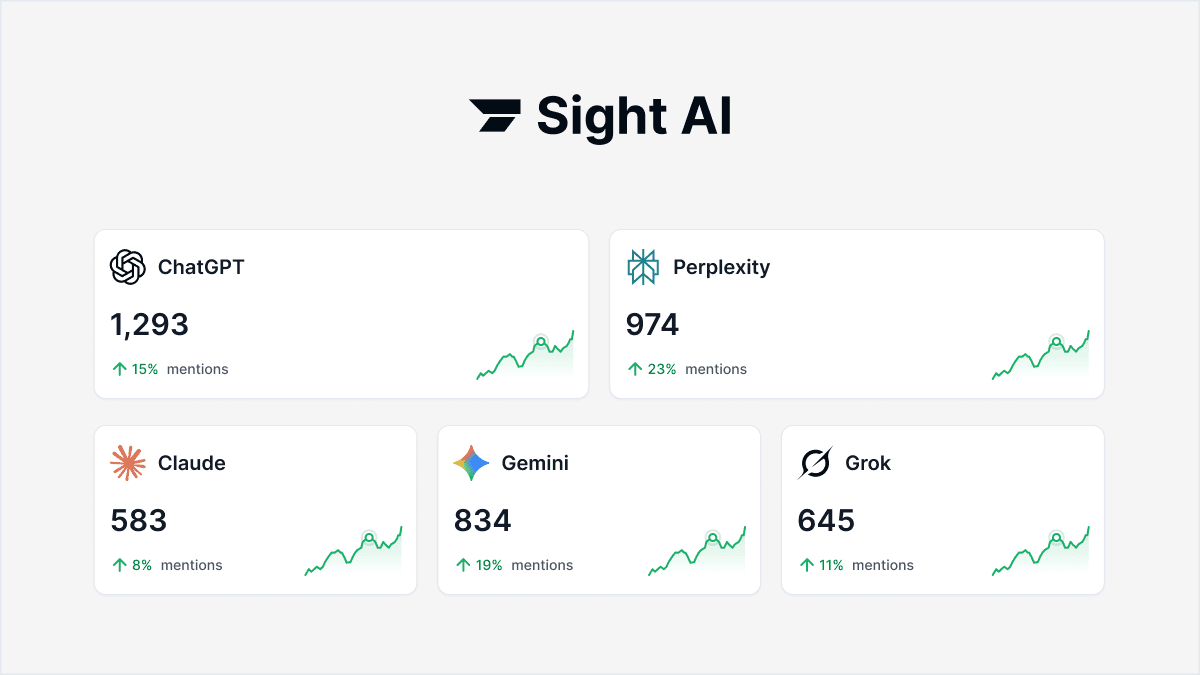
AI visibility mentions represent an emerging metric that's becoming increasingly important. As AI models like ChatGPT and Claude become primary research tools for many users, getting your brand mentioned in AI responses creates a new channel for discovery and authority building. Track how often AI models reference your brand, in what contexts they mention you, and whether the sentiment is positive. Content optimized for both traditional search and AI visibility creates a competitive advantage that compounds over time.
Efficiency gains quantify the business impact of your automation investments. Cost per article shows whether automation is actually reducing your content production costs or just maintaining them while increasing volume. Calculate the fully-loaded cost of producing each piece of content including team time, tool costs, and overhead.
Team capacity freed for strategic work might be the most important efficiency metric. Automation should give your team more time for high-value activities like strategy development, creative ideation, relationship building with subject matter experts, and deep research into emerging topics. Track how your team allocates their time before and after automation—if they're still drowning in tactical execution, your automation isn't delivering its full potential value.
Your Blueprint for Automation Success
Understanding content production workflow automation is one thing. Actually implementing it successfully is another. These practical guidelines help you avoid common pitfalls and build automation that delivers real value.
Start with one workflow segment rather than attempting full automation immediately. Trying to automate everything at once creates complexity that overwhelms teams and leads to implementation failure. Choose a single high-impact area—research automation, first-draft generation, or publishing and indexing—and get that working well before expanding to other stages.
This focused approach delivers quick wins that build momentum and organizational buy-in. When your team sees concrete improvements from automating research, they'll be more enthusiastic about automating creation. When automation eliminates publishing bottlenecks, stakeholders will support expanding automation to distribution.
Prioritize automation that improves both speed and discoverability. Some automation just makes existing processes faster. Better automation improves the end result while also accelerating production. For example, automated indexing doesn't just speed up publishing—it gets your content discovered faster, which improves performance and ROI.
Look for automation opportunities where the technology can actually improve quality, not just maintain it. AI content generation that's optimized for both SEO and AI visibility creates better-performing content than manual writing that only considers traditional search. Publishing automation that includes automatic internal linking improves site structure while saving time. Investing in the right content workflow automation tools makes these improvements possible.
Build feedback loops to continuously optimize automated processes. Set up regular reviews where your team examines automation outputs and identifies improvement opportunities. Which AI-generated drafts required the most editing? Which topics got indexed fastest? Which content formats perform best? Use these insights to refine your automation configuration and improve results over time.
Treat automation as an evolving system rather than a one-time implementation. As AI models improve, as your team's needs change, as new tools become available, your automated workflows should adapt. Regular optimization ensures your automation continues delivering value rather than becoming a rigid system that constrains rather than enables your content operations.
Moving Forward: From Manual Grind to Automated Growth
Content production workflow automation represents a fundamental shift in how teams approach content operations. Instead of accepting that scaling content requires proportionally scaling headcount, automation lets you grow output while keeping teams focused on the strategic and creative work that actually differentiates your content.
The path forward starts with honest assessment. Map your current content workflow in detail, identify where time and quality get lost, and prioritize the automation opportunities that will deliver the biggest impact for your specific situation. Don't try to copy someone else's automation stack—build the system that solves your actual bottlenecks.
Implement incrementally, measure carefully, and optimize continuously. Automation isn't a magic solution that instantly transforms your content operations. It's a systematic approach to eliminating waste and amplifying your team's capabilities. The teams that succeed with automation are the ones who treat it as an ongoing process of improvement rather than a one-time project.
Remember that automation's ultimate goal is freeing your team to focus on what humans do best—strategic thinking, creative insight, and quality judgment. Technology should handle the repetitive execution while your team provides the direction, creativity, and refinement that machines can't replicate. When automation works well, your team produces more content, faster, without sacrificing quality or burning out in the process.
As AI continues reshaping how audiences discover and consume content, automated workflows that optimize for both traditional search and AI visibility create lasting competitive advantages. Content that gets mentioned by AI models reaches audiences through an entirely new channel, building authority and driving discovery in ways that traditional SEO alone can't achieve.
Start tracking your AI visibility today and see exactly where your brand appears across top AI platforms. Stop guessing how AI models like ChatGPT and Claude talk about your brand—get visibility into every mention, track content opportunities, and automate your path to organic traffic growth. The future of content production combines intelligent automation with strategic human oversight, and the teams who master this balance will dominate their markets while their competitors are still stuck in manual processes.