As AI-generated content becomes a core part of modern content marketing workflows, quality assurance has shifted from a nice-to-have to a non-negotiable. Marketers, founders, and agencies are now producing content at scale using AI writing tools — but speed without oversight creates real risks: factual errors, brand inconsistency, thin coverage, and content that fails to rank or get cited by AI models like ChatGPT, Claude, and Perplexity.
AI content quality assurance (QA) is the systematic process of reviewing, validating, and optimizing AI-generated content before it goes live. It covers everything from factual accuracy and brand voice alignment to SEO structure, E-E-A-T signals, and GEO (Generative Engine Optimization) readiness — ensuring your content performs in both traditional search and AI-powered discovery.
This guide covers eight actionable strategies for building a robust AI content QA process. Whether you're running a lean in-house team or managing content production for multiple clients, these strategies will help you catch errors before they go live, improve content quality over time, and build a content library that earns visibility across both Google and AI search platforms.
The goal isn't to slow down your content pipeline. It's to make speed sustainable.
1. Establish a Brand Voice and Accuracy Baseline Before You Generate
The Challenge It Solves
Most QA problems are downstream symptoms of upstream gaps. When teams skip pre-generation standards, they spend hours rewriting AI drafts that were never set up to succeed. The result is inconsistent tone, off-brand messaging, and content that sounds like it came from a generic template rather than a credible authority in your space.
The Strategy Explained
Before any AI tool writes a single word, you need a documented baseline that defines what good looks like. This means creating a brand voice guide that captures your tone, vocabulary preferences, sentence style, and audience expectations. It also means building an approved source library — a curated list of credible publications, research bodies, and internal data sources your content can reference.
Prompt templates are the third pillar. Well-crafted prompts that embed your voice guidelines, target audience, content structure, and accuracy constraints dramatically reduce the variance in AI output. Think of it as quality control at the input layer, not just the output layer.
Implementation Steps
1. Document your brand voice in a one-page style guide: tone descriptors, vocabulary to use and avoid, and two to three example paragraphs that represent ideal output.
2. Build an approved source library with 10 to 20 authoritative references your content team can draw from, organized by topic cluster.
3. Create prompt templates for each content format you produce (listicles, guides, explainers) that embed your voice guide, target keyword, audience context, and a clear instruction to avoid unverified statistics.
4. Test each template against your existing top-performing content to calibrate output quality before scaling.
Pro Tips
Store your brand voice guide and prompt templates in a shared workspace your entire team can access. Review and update them quarterly as your brand evolves. The more specific your prompts, the less editorial cleanup you'll need on the back end — and the more consistent your content library becomes over time.
2. Build a Structured Multi-Layer Review Checklist
The Challenge It Solves
A single-pass review is the most common QA mistake teams make. When one editor tries to evaluate factual accuracy, brand voice, SEO structure, and readability simultaneously, things slip through. The cognitive load is too high, and the review becomes inconsistent across different team members and content pieces.
The Strategy Explained
Separate your review into four distinct layers, each with its own checklist and reviewer focus. Layered review mirrors how professional editorial teams at publishing organizations have always worked — different eyes for different criteria. Applied to AI content, it transforms an ad hoc review into a repeatable system.
The four layers are: factual accuracy and source verification, brand voice and tone alignment, SEO structure and keyword integration, and GEO readiness for AI citation. Each layer gets its own checklist column in your content management workflow, with a clear pass/fail or revision-needed status.
Implementation Steps
1. Create a shared review document or project management template with four labeled sections, one per review layer.
2. Define three to five specific criteria per layer. For example, the SEO layer might check: primary keyword in H1, keyword in first 100 words, meta description present, internal links included, heading hierarchy correct.
3. Assign review ownership: factual accuracy stays with a subject matter expert or senior editor, SEO checks can go to a specialist or be partially automated, GEO readiness review sits with whoever manages your AI visibility strategy.
4. Run the checklist on five existing published articles first to calibrate what pass/fail looks like before applying it to new content.
Pro Tips
Keep each checklist layer to five items or fewer. A checklist with 30 items becomes a checkbox exercise rather than a genuine quality gate. Fewer, higher-stakes criteria enforced consistently beats exhaustive criteria enforced sporadically.
3. Validate Factual Claims and Source Integrity Systematically
The Challenge It Solves
AI language models are documented to occasionally generate plausible-sounding but incorrect information — a phenomenon OpenAI, Anthropic, and Google DeepMind have each acknowledged in their own model documentation and research. Incorrect statistics, misattributed quotes, and fabricated citations can damage your brand credibility, invite corrections, and undermine the trust signals your content needs to rank and get cited.
The Strategy Explained
Factual validation needs to be a dedicated workflow step, not something folded into a general editorial pass. Every claim that includes a number, a named source, a quoted statement, or a specific date needs to be traced back to a verifiable primary source. If the source can't be found, the claim gets rewritten using general language or removed entirely.
Build a simple verification protocol: highlight every factual claim in the draft, assign a verification status (verified, rewritten, removed), and log the source URL for anything that stays in the content. This creates an audit trail and makes future updates faster.
Implementation Steps
1. After the initial AI draft, use your editor's highlight function to mark every statistic, quote, named study, or specific claim.
2. Attempt to verify each highlighted claim against a primary source: the original study, the organization's official website, or a credible publication with direct attribution.
3. For claims that can't be verified: rewrite using general language ("many practitioners observe" rather than "studies show X%") or remove them entirely.
4. Log verified sources in a reference section or internal note attached to the content file for future revision cycles.
Pro Tips
Instruct your AI tool explicitly in the prompt to avoid including statistics without citing sources. This won't eliminate hallucinations entirely, but it reduces the volume of unverified claims in the first draft and makes the verification step faster.
4. Audit for E-E-A-T Signals and First-Hand Expertise
The Challenge It Solves
Google's Search Quality Evaluator Guidelines explicitly include Experience as a quality signal alongside Expertise, Authoritativeness, and Trustworthiness. AI-generated content, by default, lacks the lived experience and first-hand perspective that Google rewards. Without deliberate E-E-A-T enrichment, AI drafts tend to read as competent but generic — which is increasingly not enough to rank in competitive verticals.
The Strategy Explained
E-E-A-T enrichment is the process of layering human expertise into AI drafts before publishing. This means adding author credentials, injecting real-world examples your team has actually encountered, including original opinions or perspectives that reflect genuine expertise, and citing primary sources that demonstrate you've done the research rather than summarized it.
Think of the AI draft as a well-organized skeleton. Your job in the E-E-A-T audit is to add the muscle and voice that makes it feel authored by a credible human expert, not assembled by a content generator.
Implementation Steps
1. Add a byline with a linked author bio that documents the author's credentials, professional background, and relevant experience for the topic.
2. Identify two to three points in the article where a real-world example, client observation, or first-hand insight can replace or supplement a generic AI statement.
3. Add an "expert perspective" sentence or short paragraph in the introduction that signals lived experience with the topic.
4. Review your external citations: replace generic references with primary sources — original research papers, official documentation, or named expert commentary.
Pro Tips
For teams producing content at scale, create a library of reusable expert insight snippets organized by topic cluster. These can be drawn from team interviews, client conversations, or documented observations. Injecting these into AI drafts is faster than writing from scratch and adds genuine differentiation to your content.
5. Optimize for GEO: Ensure AI Models Can Cite Your Content
The Challenge It Solves
Traditional SEO optimizes for Google's ranking algorithm. GEO (Generative Engine Optimization) optimizes for a different kind of retrieval: getting your content cited in AI-generated answers on platforms like ChatGPT, Claude, and Perplexity. Content that isn't structured for AI retrieval is invisible in this growing discovery channel, regardless of how well it ranks on Google.
The Strategy Explained
Practitioners and researchers documenting AI citation patterns have observed that AI models tend to prefer content with clear definitional statements, well-structured answer formats, authoritative sourcing, and comprehensive topical coverage. This means your QA process needs a dedicated GEO layer that checks whether each piece is structured to answer specific questions directly and completely.
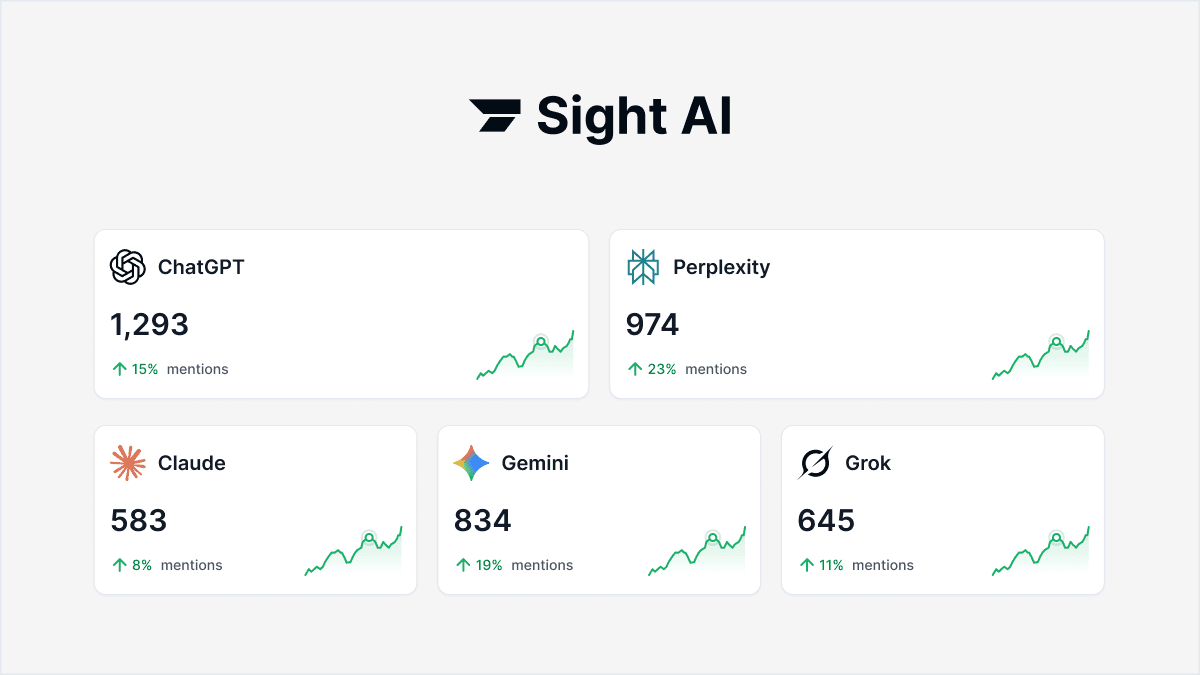
GEO optimization also involves monitoring your AI citation rate — tracking how often your brand or content appears in AI-generated responses. Tools like Sight AI track brand mentions across AI platforms, giving you visibility into which content is being cited and which isn't, so you can adjust your structure and coverage accordingly.
Implementation Steps
1. Ensure each article includes a clear, standalone definition or answer to its primary question within the first 150 words — the kind of direct statement an AI model can retrieve and cite.
2. Use structured heading hierarchies (H2 for main sections, H3 for sub-points) that make it easy for AI systems to parse your content's organization.
3. Include a concise summary section or FAQ block that answers common follow-up questions related to your topic.
4. Monitor your AI citation rate using an AI visibility tracking platform and note which content formats and structures appear most frequently in AI-generated answers.
Pro Tips
Write your H2 and H3 headings as questions or direct answer statements where possible. This mirrors the query format that AI models use when retrieving content, increasing the likelihood your structure matches what the model is looking for when generating a response.
6. Run Technical SEO Checks Before and After Publishing
The Challenge It Solves
AI content workflows introduce specific technical SEO gaps that manual writing workflows are less prone to. Missing internal links, broken heading hierarchies, absent meta descriptions, and slow indexing are common outputs of high-volume AI content production. These issues don't just hurt rankings — they reduce the likelihood that AI models discover and index your content at all.
The Strategy Explained
A two-stage technical checklist — one before publishing and one 48 to 72 hours after — closes the gaps that appear at both ends of the publishing process. The pre-publish check catches structural issues in the draft. The post-publish check verifies that the content has been correctly indexed and is accessible to both search crawlers and AI retrieval systems.
For faster indexing, IndexNow is a publicly documented protocol supported by Microsoft Bing and other search engines that allows publishers to notify search engines of new or updated content immediately. Integrating IndexNow into your publishing workflow — or using a platform that handles this automatically — reduces the delay between publishing and discovery.
Implementation Steps
1. Pre-publish checklist: verify H1 contains the target keyword, heading hierarchy is correct (H1 to H2 to H3 with no skipped levels), meta description is present and under 160 characters, at least two to three internal links are included, and images have descriptive alt text.
2. Check that the target keyword appears naturally in the first paragraph, at least one H2, and the meta description.
3. After publishing, submit the URL via IndexNow or your search engine's indexing API to trigger immediate crawl notification.
4. 48 to 72 hours post-publish, verify the URL is indexed using your search console, check that internal links resolve correctly, and confirm the page is rendering properly on mobile.
Pro Tips
Build your technical checklist directly into your content management workflow as a mandatory gate before the publish button is accessible. When the checklist is embedded in the process rather than living in a separate document, compliance rates improve significantly across distributed teams.
7. Score and Track Content Performance to Close the QA Loop
The Challenge It Solves
QA that ends at publish is only half a system. Without performance feedback, your review criteria never improve, your prompt templates stay static, and you have no way to know whether your QA process is actually producing better-performing content. Many teams invest in pre-publish QA but never close the loop between output quality and measurable results.
The Strategy Explained
Performance tracking creates the feedback mechanism that makes your QA process smarter over time. By correlating content quality scores with ranking outcomes, organic traffic, and AI citation rates, you can identify which QA criteria actually predict performance — and which are just bureaucratic checkboxes that don't move the needle.
Set up a simple content performance scorecard that tracks each published piece across four dimensions: search ranking for the target keyword, organic traffic within 30 and 90 days, AI citation rate (how often the content appears in AI-generated answers), and engagement signals like time on page and scroll depth.
Implementation Steps
1. Create a content performance log with one row per published article, tracking: publish date, target keyword, initial ranking, 30-day organic traffic, 90-day organic traffic, and AI citation appearances.
2. At 90 days post-publish, review the top-performing and bottom-performing articles and identify structural or content differences that correlate with performance gaps.
3. Feed findings back into your prompt templates and review checklist — if articles with FAQ sections consistently outperform those without, add FAQ inclusion as a mandatory QA criterion.
4. Review your AI citation rate monthly using an AI visibility tracking tool and note which topics, formats, and structures are earning citations most frequently.
Pro Tips
Don't wait for perfect data. Even a simple spreadsheet tracking 20 articles over 90 days will surface patterns that improve your QA criteria. The goal is a feedback loop, not a research study — directional insights are enough to make your process meaningfully better over time.
8. Automate Repetitive QA Tasks Without Sacrificing Human Judgment
The Challenge It Solves
As content volume scales, manual QA on every piece becomes a bottleneck. But the solution isn't to remove human judgment — it's to apply human judgment only where it adds irreplaceable value. Teams that automate indiscriminately end up with technically compliant content that lacks editorial quality. Teams that refuse to automate anything can't scale at all.
The Strategy Explained
The key is distinguishing between rules-based QA tasks that can be reliably automated and judgment-based tasks that require human expertise. Readability scoring, keyword density checks, duplicate content detection, heading structure validation, and meta description length checks are all rules-based — they have clear pass/fail criteria that software can evaluate consistently.
Factual accuracy, brand voice alignment, E-E-A-T enrichment, and GEO optimization require human judgment. These tasks involve nuance, context, and expertise that current automation tools can assist with but not replace. Build a hybrid system where automation handles the rules-based layer and humans focus on the judgment-based layer.
Implementation Steps
1. Audit your current QA checklist and categorize each item as rules-based (can be automated) or judgment-based (requires human review).
2. Implement automated checks for: readability score, keyword presence in key locations, heading hierarchy, meta description presence, internal link count, and duplicate content flag.
3. Configure your content platform or a third-party SEO tool to run these checks automatically before content enters the human review queue — so editors only see drafts that have already passed the baseline technical gates.
4. Protect the human review layer for: factual verification, brand voice alignment, E-E-A-T enrichment, and GEO structure review. These steps should never be removed from the process, even under production pressure.
Pro Tips
Introduce automation incrementally. Start with one or two automated checks, validate that they're catching real issues without false positives, then expand. Automation that generates too many false positives erodes team trust in the system and leads to checklist fatigue — the opposite of what you're trying to build.
Putting It All Together: Your Implementation Roadmap
Building a reliable AI content QA process is what separates brands that scale content sustainably from those that publish fast but rank poorly. The eight strategies in this guide aren't independent tactics — they form a connected system that gets stronger as each layer is added.
Start with the foundation: lock in your brand voice and accuracy standards before generation (Strategy 1), then build your structured review checklist (Strategy 2). These two steps alone will dramatically reduce the rework that currently eats into your team's time. From there, layer in factual validation (Strategy 3) and E-E-A-T enrichment (Strategy 4) to build the credibility signals that both Google and AI models reward.
For teams already using AI content tools, the highest-leverage next step is often the technical and GEO layer. Ensuring your published content is indexed quickly and structured so AI models can cite it addresses the growing share of discovery that happens outside traditional search. Platforms like Sight AI combine content generation, AI visibility tracking, and automated indexing in one workflow — making it easier to close the loop between what you publish and how it performs across both Google and AI search.
Add performance tracking (Strategy 7) only after your pre-publish process is consistent. Tracking performance before your QA is stable generates noisy data that's hard to act on. And introduce automation (Strategy 8) last — automate a process that works, not one that's still being refined.
Quality at scale is a system, not a shortcut. The brands building that system now will have a compounding advantage as AI-driven search continues to grow. Start tracking your AI visibility today and see exactly where your brand appears across top AI platforms — so every piece of content you publish has a measurable path to discovery.