The gap between creating content and getting it live has traditionally been a productivity killer. Marketing teams spend hours copying, formatting, and manually publishing articles across platforms—time that could be spent on strategy and optimization. AI content generators with built-in publishing capabilities are changing this equation entirely.
These tools don't just write content; they push it directly to your CMS, trigger indexing protocols, and start the ranking process while you move on to the next task. The difference isn't just about speed—it's about building a content operation that scales without requiring proportional increases in team size or manual effort.
This guide breaks down seven strategies for maximizing the value of AI content generation with publishing workflows, helping you build a content engine that runs efficiently without sacrificing quality or brand consistency. Each approach addresses a specific friction point in traditional content operations, from the moment an idea forms to the second it starts appearing in search results.
1. Build a Content-to-Publish Pipeline That Eliminates Manual Handoffs
The Challenge It Solves
Manual publishing workflows create multiple failure points where content stalls. A writer finishes an article, exports it, sends it to an editor, who then sends it to someone with CMS access, who copies it in, formats it, adds metadata, and finally hits publish. Each handoff introduces delays, formatting errors, and the risk that content sits in someone's inbox for days.
The real cost isn't just time—it's the mental overhead of tracking where each piece sits in the pipeline and the opportunity cost of content that could be ranking but isn't live yet.
The Strategy Explained
Direct CMS integration means your AI content generator connects to WordPress, Webflow, or whatever platform you use, and pushes finished articles straight into your publishing environment. The content appears in your CMS with proper formatting, assigned categories, and metadata already configured—no copying, no reformatting, no manual field entry.
Think of it like having a conveyor belt from your content factory directly into your storefront. The moment an article is ready, it moves into position without anyone touching it. This doesn't mean everything publishes instantly—you still control timing and approval workflows. But the mechanical work of moving content from Point A to Point B disappears entirely. Teams looking to streamline this process should explore automated content publishing workflow strategies that eliminate these bottlenecks.
Implementation Steps
1. Connect your AI content platform to your CMS through native integrations or API connections, verifying that authentication works and the system can access your site structure.
2. Map your content fields so the generator knows where titles, body content, meta descriptions, and featured images should go within your CMS structure.
3. Configure default settings for categories, tags, author attribution, and publishing status (draft vs. published) so every article arrives properly organized.
4. Test the pipeline with a few articles, checking formatting consistency and metadata accuracy before scaling up production.
Pro Tips
Set up staging workflows where content publishes to draft status first, giving you a final review checkpoint without slowing down the pipeline. Create templates for different content types so blog posts, landing pages, and resource articles each follow their appropriate format automatically.
2. Leverage Instant Indexing to Accelerate Content Discovery
The Challenge It Solves
Publishing content doesn't mean search engines know it exists. Traditional crawling can take days or weeks before new pages get discovered and indexed. During that time, your content sits invisible to search traffic, missing opportunities to rank for timely topics or capture search demand while it's fresh.
For competitive topics or news-related content, this delay can mean the difference between capturing traffic and arriving too late to matter.
The Strategy Explained
IndexNow protocol allows you to notify search engines the moment new content goes live. Instead of waiting for crawlers to eventually find your page, you actively tell search engines "new content here, come index it now." Supported by Microsoft Bing and other search engines, this protocol dramatically shortens the time between publishing and indexing.
When integrated with your publishing workflow, IndexNow notifications fire automatically as content goes live. Your AI-generated article publishes, the indexing request sends, and search engines receive immediate notification—all without manual intervention. This is a core feature of modern SEO content generators with publishing capabilities.
Implementation Steps
1. Generate an IndexNow API key and place the verification file on your website root directory to establish authentication with participating search engines.
2. Configure your content publishing system to trigger IndexNow notifications whenever new content goes live or existing content receives significant updates.
3. Update your sitemap automatically with each new publish, ensuring search engines have current information about your site structure.
4. Monitor indexing speed through search console tools to verify that notifications are working and content is getting indexed faster than before.
Pro Tips
Combine IndexNow with traditional sitemap submissions for maximum coverage across different search engines. Track which content types get indexed fastest to identify patterns and optimize your publishing schedule around peak crawling times.
3. Create Content Clusters Using Batch Generation and Scheduled Publishing
The Challenge It Solves
Publishing individual articles in isolation limits their SEO impact. Search engines favor sites that demonstrate topical authority—comprehensive coverage of a subject through multiple interconnected pieces. Creating these content clusters manually requires coordinating multiple writers, ensuring consistency across articles, and timing publication strategically.
The coordination overhead often means content clusters never get completed, leaving gaps in your topical coverage and missing opportunities to build authority signals.
The Strategy Explained
Batch generation lets you create an entire content cluster in one session—a pillar article plus supporting pieces that link back to it and to each other. You define the topic structure, generate all related articles simultaneously, and schedule them to publish over days or weeks in a strategic sequence.
This approach ensures consistency in terminology, maintains internal linking structure, and lets you build comprehensive topic coverage without the coordination headaches of managing multiple writers across weeks of production. For high-volume operations, bulk content generation with AI makes this process significantly more efficient.
Implementation Steps
1. Map your content cluster structure with a pillar topic and 5-8 supporting subtopics that address specific aspects or questions within the broader theme.
2. Generate all articles in the cluster during a single session, ensuring consistent terminology, linking structure, and depth of coverage across the entire set.
3. Schedule publication dates strategically, typically publishing the pillar content first, then releasing supporting articles over subsequent days or weeks.
4. Configure internal links so supporting articles reference the pillar and each other where contextually relevant, creating a tightly interconnected topic cluster.
Pro Tips
Publish your pillar content first and let it sit for a few days before releasing supporting pieces—this gives search engines time to index the main article before seeing the supporting structure. Use consistent URL structures within clusters (like /topic/subtopic-1, /topic/subtopic-2) to reinforce topical relationships.
4. Optimize for AI Search Visibility During the Generation Phase
The Challenge It Solves
AI models like ChatGPT, Claude, and Perplexity are increasingly answering user queries directly, sometimes without sending users to source websites. If your content isn't structured in ways these models can extract and cite, you're invisible in this growing channel—even if you rank well in traditional search.
Many marketing teams discover too late that their content isn't appearing in AI responses, missing opportunities to build brand awareness and authority in this emerging search paradigm.
The Strategy Explained
AI visibility optimization means structuring content so AI models can easily extract key information and cite your brand as a source. This involves clear section hierarchies, direct answers to questions, data presented in accessible formats, and consistent brand attribution throughout the content.
When you generate content with AI visibility in mind, you're not just creating articles for human readers—you're creating source material that AI models will reference when answering related queries. This dual optimization approach positions your brand to capture both traditional search traffic and AI-mediated discovery. The best AI content generators with SEO features build this optimization into the generation process.
Implementation Steps
1. Structure content with clear H2 and H3 hierarchies that signal topic relationships and make information easy for AI models to parse and extract.
2. Include direct, concise answers to common questions early in relevant sections, giving AI models quotable statements they can use in responses.
3. Add brand attribution naturally throughout content—not just in bylines—so AI models associate insights and recommendations with your company name.
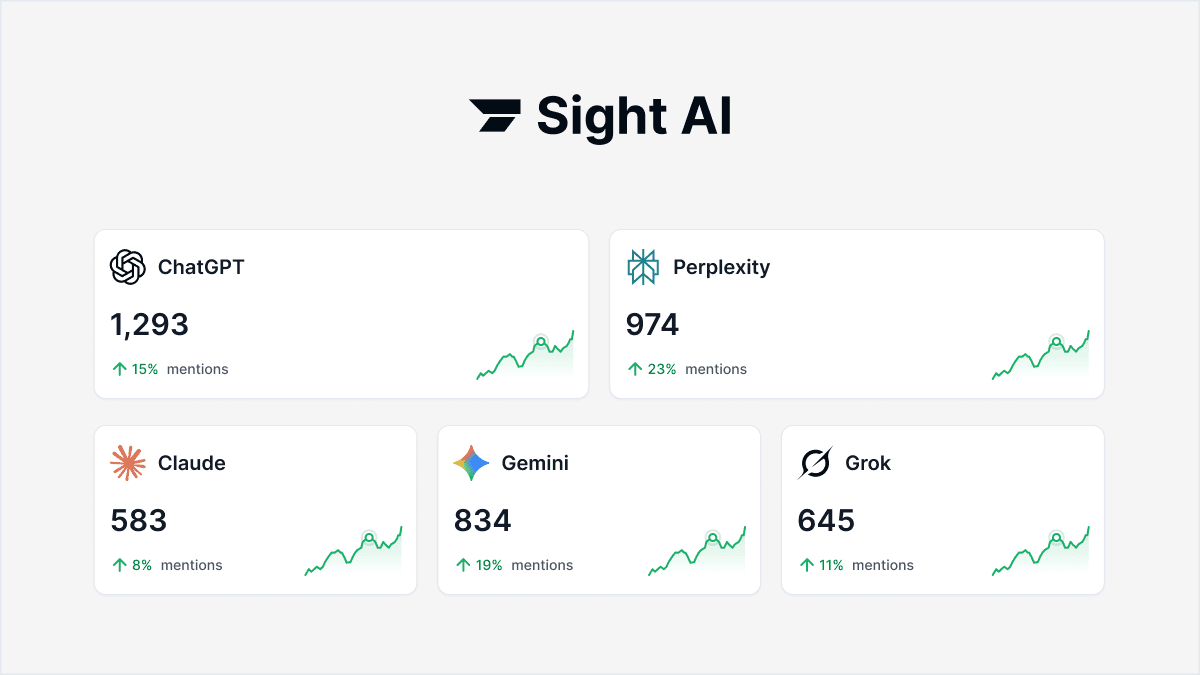
4. Monitor how AI platforms reference your content by tracking brand mentions across ChatGPT, Claude, Perplexity, and other models to understand what's working.
Pro Tips
Test your published content by asking AI models questions related to your topic and seeing if they cite your articles. This real-world testing reveals what structure and phrasing patterns get picked up most reliably. Focus on creating definitive, well-sourced content that AI models will trust enough to reference.
5. Implement Brand Voice Consistency Across Automated Workflows
The Challenge It Solves
Automated content generation can produce articles that sound generic or inconsistent with your established brand voice. When readers encounter content that doesn't match your brand's personality, trust erodes. The challenge intensifies when you're publishing frequently—maintaining voice consistency across dozens of articles requires either extensive editing time or accepting mediocre quality.
Many teams abandon automation because the editing required to fix voice issues negates the time savings from generation.
The Strategy Explained
Voice consistency parameters let you define how your AI generator writes—tone, terminology preferences, sentence structure patterns, and stylistic choices that make content sound distinctly like your brand. These settings act as guardrails, ensuring generated content matches your voice without manual editing on every piece.
Think of it as training a new writer on your style guide, except the AI writer never forgets the rules and applies them consistently across every article. You invest time upfront defining these parameters, then benefit from consistent voice across all automated content production. Understanding the tradeoffs between AI content generators vs human writers helps you determine where automation works best.
Implementation Steps
1. Document your brand voice characteristics—are you conversational or formal, technical or accessible, authoritative or approachable—with specific examples of phrasing that works and doesn't work.
2. Configure generation parameters around sentence length preferences, paragraph structure, use of analogies or examples, and technical depth appropriate for your audience.
3. Define terminology preferences, including industry jargon you embrace versus terms you avoid, and any brand-specific language that should appear consistently.
4. Test generated content against your voice guidelines, refining parameters until output matches your brand voice without requiring significant editing.
Pro Tips
Create voice templates for different content types—your product documentation might be more formal while blog content is conversational. Run periodic voice audits where you review published content to ensure consistency hasn't drifted over time as you refine generation settings.
6. Use Analytics Feedback Loops to Refine Generation Settings
The Challenge It Solves
Publishing content without understanding what performs creates a cycle of guessing. You generate articles, they go live, some perform well and others don't, but you lack visibility into which content characteristics drive results. This disconnect means you can't systematically improve—you're just producing more content without learning what works.
The gap between generation and performance data prevents you from optimizing your content engine based on actual results.
The Strategy Explained
Analytics feedback loops connect performance data back to your content generation process. You track which articles drive traffic, engagement, and conversions, identify patterns in what works, then adjust generation parameters to produce more of what succeeds and less of what doesn't.
This creates a continuous improvement cycle where your content engine gets smarter over time. Instead of static generation settings, you're constantly refining based on real performance data, making each batch of content more effective than the last. A robust SEO content platform with analytics makes this feedback loop seamless.
Implementation Steps
1. Tag generated content with metadata about generation settings—topic type, content structure, depth level, and any other variables you're testing—so you can correlate settings with performance.
2. Monitor key performance metrics including organic traffic, time on page, scroll depth, and conversion rates for content generated with different parameter sets.
3. Identify patterns in high-performing content—are longer articles performing better, do certain content structures drive more engagement, which topics generate the most traffic—and document what's working.
4. Adjust generation parameters based on performance insights, emphasizing successful patterns and minimizing approaches that underperform.
Pro Tips
Run controlled experiments where you test different content approaches on similar topics, isolating variables to understand what specifically drives performance differences. Build a performance dashboard that shows content metrics alongside generation parameters, making patterns immediately visible.
7. Scale Content Operations Without Scaling Your Team
The Challenge It Solves
Traditional content operations face a linear scaling problem—producing twice as much content requires roughly twice as many writers, editors, and coordinators. This creates a ceiling on content velocity that's determined by budget and headcount rather than market opportunity or content needs.
For growing companies or agencies managing multiple clients, this scaling limitation means either accepting slow content production or dramatically increasing team size and costs.
The Strategy Explained
AI-powered publishing workflows break the linear scaling relationship between content output and team size. A small team can oversee significantly higher content production by focusing on strategy, quality control, and optimization while automation handles generation and publishing mechanics.
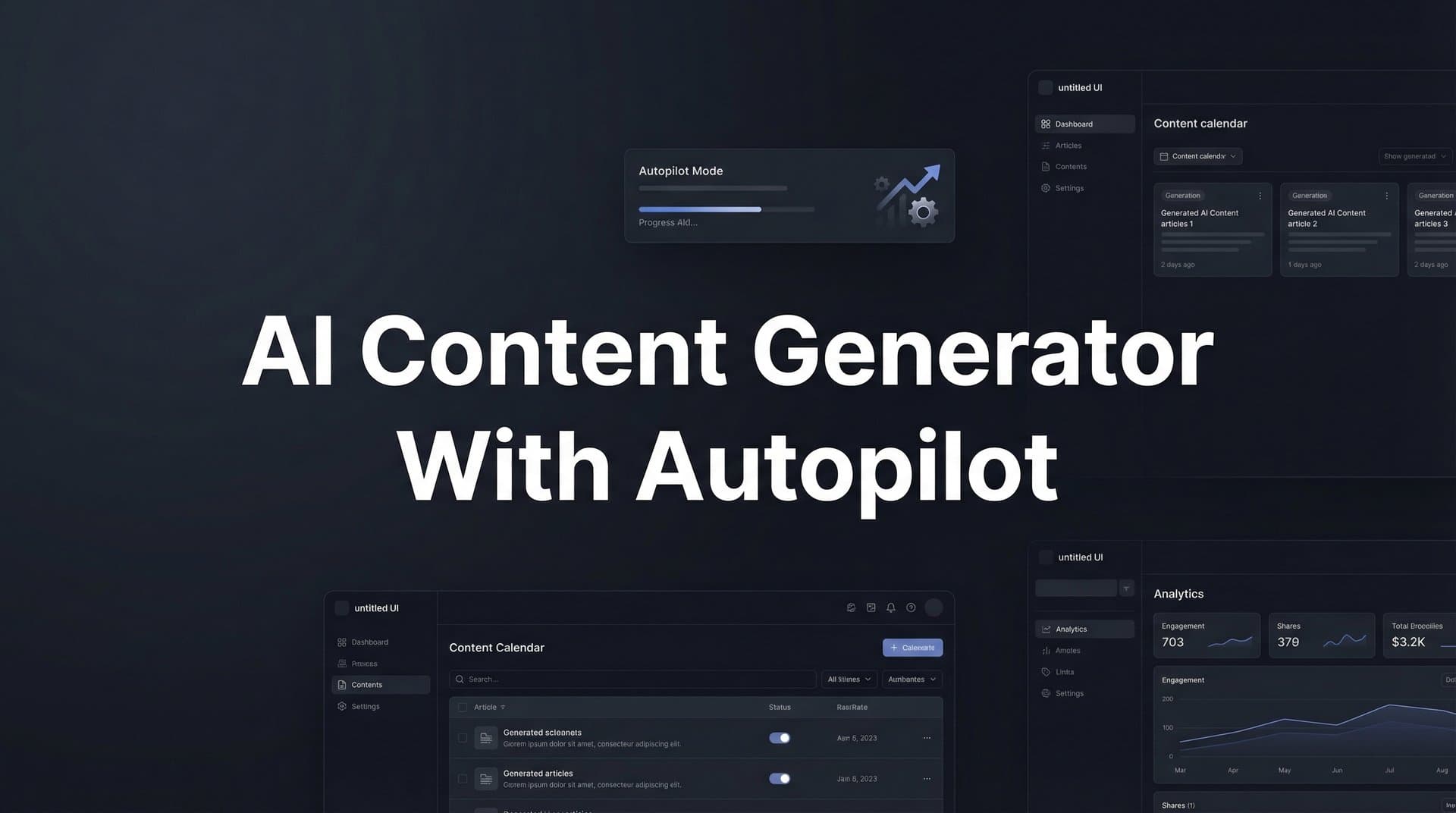
The key is finding the right balance—full autopilot works for some content types while others benefit from human oversight at specific checkpoints. You're not replacing human creativity; you're removing mechanical work so people focus on high-value strategic decisions. Tools offering AI content generation with autopilot capabilities enable this hands-off scaling approach.
Implementation Steps
1. Categorize your content into tiers based on strategic importance—tier one might be thought leadership that needs extensive human input, while tier three could be informational content that runs mostly automated.
2. Define quality control checkpoints appropriate for each tier, with high-value content receiving human review before publishing and lower-tier content publishing automatically with periodic spot checks.
3. Set up monitoring systems that flag potential issues—factual inconsistencies, off-brand voice, or technical errors—so you catch problems without manually reviewing every article.
4. Track content velocity metrics to understand your actual output capacity and identify bottlenecks that still require manual intervention.
Pro Tips
Start with higher automation on content types where the risk of errors is lower and the volume need is higher—think FAQ content, product descriptions, or basic how-to guides. Gradually expand automation to more complex content as you gain confidence in your quality controls and generation parameters.
Putting It All Together
Implementing AI content generation with publishing isn't about replacing human creativity—it's about removing friction from the content pipeline so your team focuses on strategy instead of mechanical publishing tasks. The teams seeing the best results start with fundamentals: establishing CMS integration and indexing protocols that eliminate manual handoffs and accelerate content discovery.
From that foundation, you can layer in advanced strategies like content clustering and AI visibility optimization. Build your batch generation workflows to create comprehensive topic coverage efficiently. Structure content so AI models can extract and cite it when answering user queries. Implement voice consistency parameters that maintain quality without requiring extensive editing on every piece.
The analytics feedback loop ties everything together, letting you refine generation settings based on actual performance data rather than assumptions. This continuous improvement approach means your content engine gets more effective over time, producing better results without requiring proportional increases in effort or team size.
Whether you're a solo marketer trying to compete with larger teams or running an agency managing multiple client content calendars, these strategies help you publish more content, faster, while maintaining the quality standards your audience expects. The goal isn't maximum automation—it's optimal automation that balances efficiency with quality control.
Stop guessing how AI models like ChatGPT and Claude talk about your brand—get visibility into every mention, track content opportunities, and automate your path to organic traffic growth. Start tracking your AI visibility today and see exactly where your brand appears across top AI platforms.