Small businesses are under increasing pressure to produce consistent, high-quality content without the budget or headcount of enterprise marketing teams. AI content platforms have changed that equation considerably, but not all of them are built with small business workflows in mind. Some are bloated with enterprise features; others lack the visibility and indexing tools needed to actually drive organic traffic.
This list focuses on platforms that help small businesses do three things well: create SEO and GEO-optimized content, get that content discovered by both search engines and AI models, and track how their brand appears across AI-powered search. Whether you're a solo founder, a lean marketing team, or an agency managing small business clients, these tools represent the strongest options available in 2026. We've evaluated each based on ease of use, content quality, AI visibility features, indexing capabilities, and overall value for smaller teams.
1. Sight AI
Best for: Small businesses and agencies that want content creation, AI visibility, and indexing in one platform.
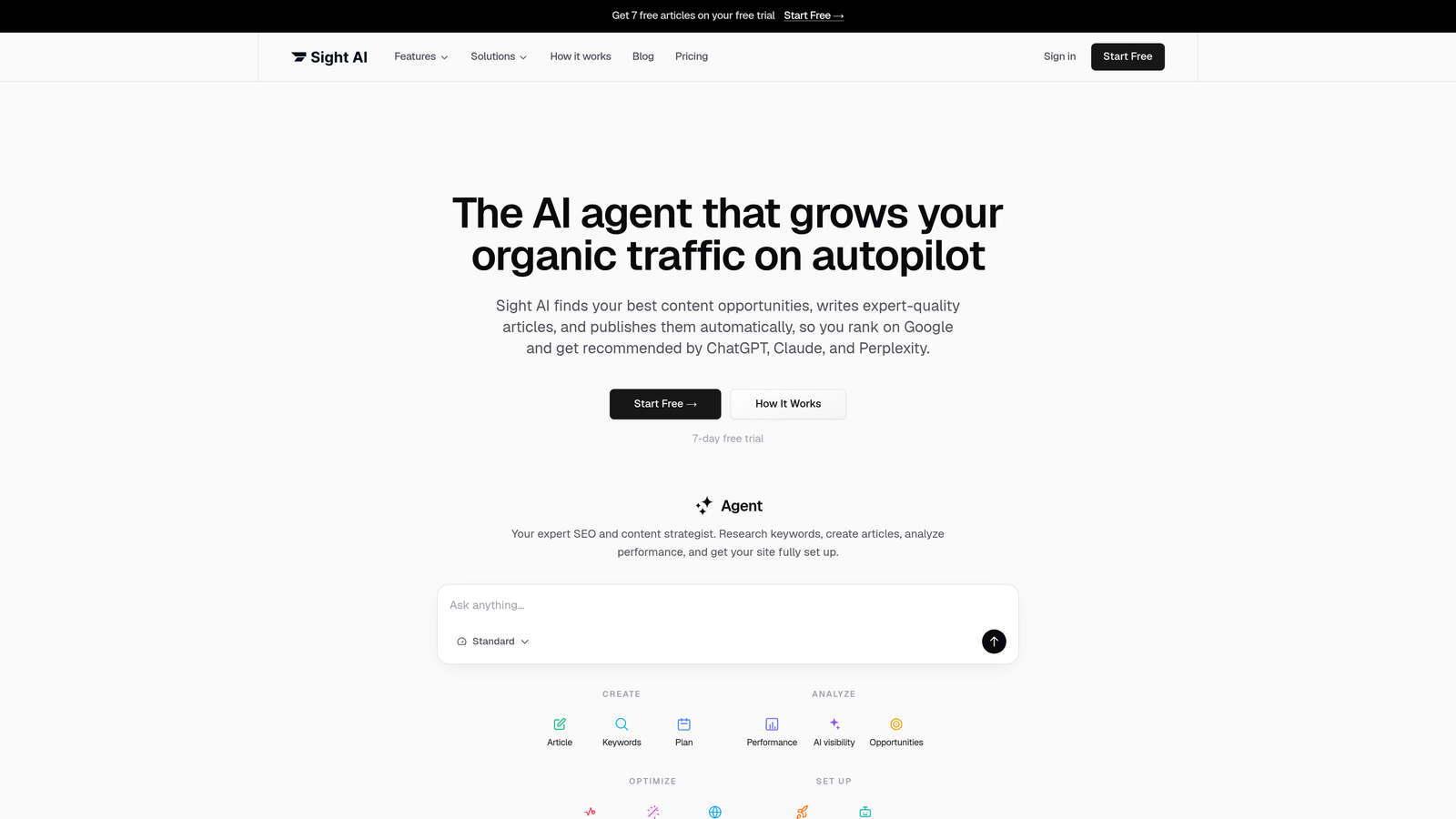
Sight AI is an all-in-one AI content and visibility platform combining GEO/SEO-optimized content generation, brand monitoring across 6+ AI models, and automated website indexing.
Where This Tool Shines
Most small business content tools force you to choose: either write content or track how it performs in AI search. Sight AI is one of the few platforms that handles both within a single workflow. You can generate a listicle, publish it automatically to your CMS, index it via IndexNow, and then monitor whether it starts appearing in ChatGPT or Perplexity responses — all without switching tabs.
The platform's AI Visibility Score is particularly useful for small businesses building a GEO strategy from scratch. Rather than guessing whether your content is influencing AI-generated answers, you get sentiment analysis and prompt-level tracking that shows exactly how AI models are describing your brand. That kind of feedback loop is rare at any price point.
Key Features
AI Visibility Score: Tracks how ChatGPT, Claude, Perplexity, and other AI models describe your brand, with sentiment analysis and prompt-level reporting.
13+ Specialized AI Agents: Purpose-built agents for generating listicles, how-to guides, and explainers optimized for both traditional SEO and generative engine optimization (GEO).
IndexNow Integration: Automated sitemap updates and IndexNow submission push new content to search engines faster, reducing the typical indexing lag.
CMS Auto-Publishing: Connects directly to your CMS so content moves from generation to live page without manual upload steps.
Autopilot Mode: Hands-off content production that keeps your publishing cadence consistent even when your team is stretched thin.
Best For
Sight AI is best suited for small businesses and lean agencies that want to consolidate their content stack. If you're currently juggling separate tools for writing, publishing, indexing, and AI monitoring, this platform is built to replace all of them. It's especially valuable for teams investing early in GEO as a growth channel.
Pricing
Current pricing tiers are available at trysight.ai. The platform offers plans designed for small teams and agencies rather than enterprise-only contracts.
2. Writesonic
Best for: Small businesses that need a broad range of content formats at accessible price points.
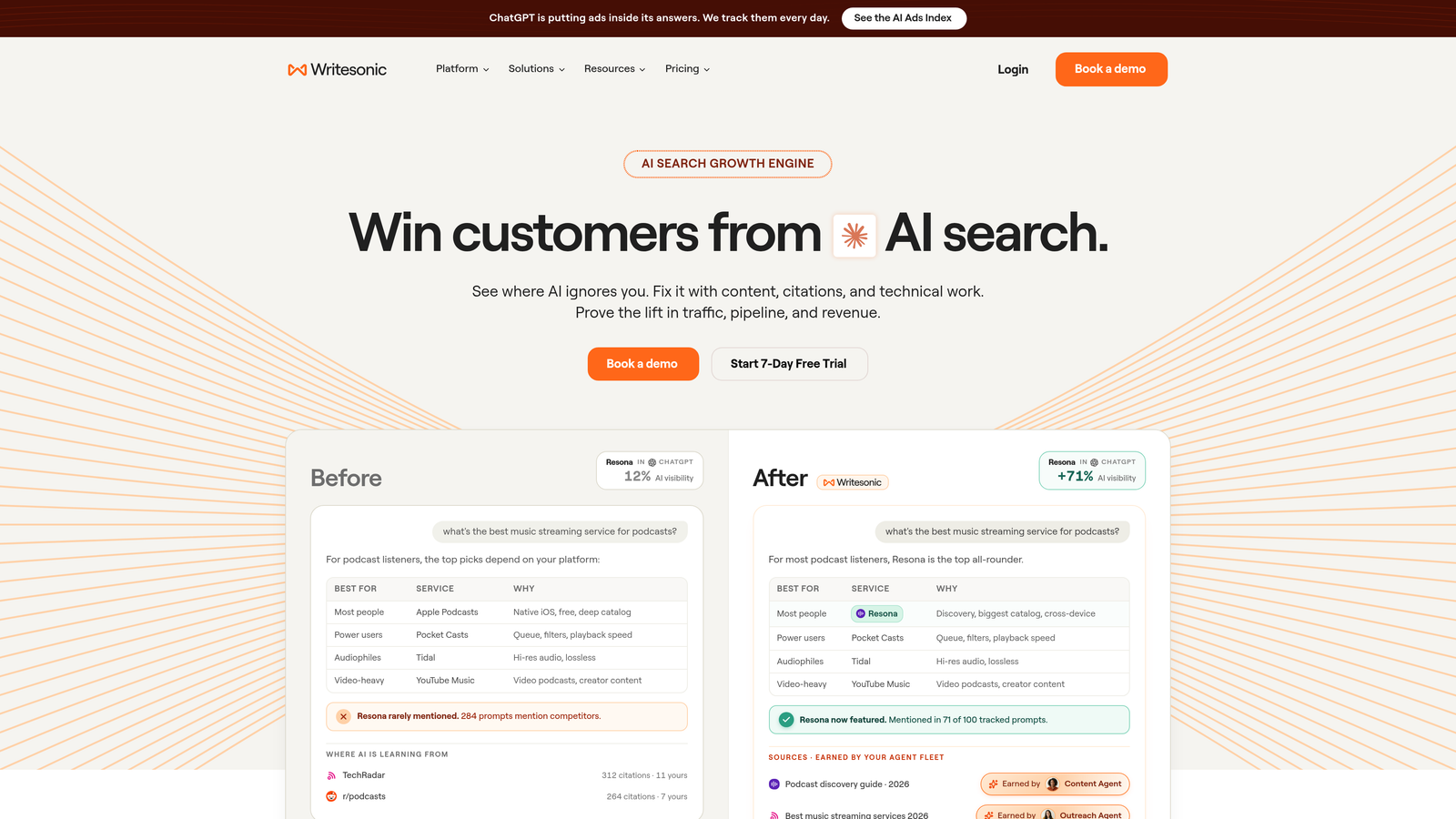
Writesonic is a widely-used AI writing platform with an extensive template library covering blog content, ads, landing pages, and social copy.
Where This Tool Shines
Writesonic's strength is breadth. With over 80 content format templates and a capable AI article writer with web-grounding (which helps reduce factual errors and hallucinations), it covers most of the content types a small business marketing team needs on a daily basis. The Chatsonic assistant adds an interactive layer for ideation, making it useful beyond just hitting "generate."
For small businesses that need to produce a high volume of varied content — blog posts one day, ad copy the next, social captions after that — Writesonic's template depth is hard to match at its price tier. Brand voice customization also helps maintain consistency across different content types without starting from scratch each time.
Key Features
AI Article Writer with Web-Grounding: Pulls from current web sources to reduce hallucinations and keep content factually grounded.
80+ Content Templates: Covers a wide range of formats from long-form blog posts to short-form ad copy and email subject lines.
Chatsonic AI Assistant: Interactive AI interface for brainstorming, ideation, and iterative content development.
Brand Voice Customization: Saves your tone and style preferences so outputs feel consistent across campaigns.
Bulk Content Generation: Useful for teams that need to produce multiple content pieces in a single session.
Best For
Writesonic works well for small businesses with active content calendars that need a reliable, affordable writing assistant across multiple formats. It's less suited for teams that need AI visibility tracking or automated indexing — it's primarily a content generation tool, so you'll need separate solutions for those functions.
Pricing
Writesonic offers a free tier with limited credits. Paid plans start at accessible price points — check writesonic.com for current rates and word limits per tier.
3. AirOps
Best for: Ops-minded small business teams and agencies that need structured, repeatable content pipelines.
AirOps is a workflow-focused AI platform that lets teams build structured content pipelines connected to their own data sources and brand guidelines without requiring engineering resources.
Where This Tool Shines
AirOps takes a different approach than most AI writing tools. Instead of a blank canvas with templates, it gives you a visual workflow builder where you can design exactly how content moves from input to output. You can connect your brand guidelines, internal data sources, and preferred AI models into a single repeatable pipeline. For agencies managing multiple clients or small businesses with consistent content needs, this kind of structure pays dividends over time.
The multi-model support within a single workflow is a standout feature. You're not locked into one AI provider, which gives you flexibility as the underlying models continue to evolve. The tradeoff is that AirOps requires more upfront setup than plug-and-play writing tools, but teams that invest the time typically get more consistent, on-brand outputs as a result.
Key Features
Visual Workflow Builder: Drag-and-drop interface for designing structured AI content pipelines without writing code.
Proprietary Data Connections: Link your own brand guidelines, knowledge bases, and data sources to keep outputs consistent and accurate.
Multi-Model Support: Run different AI models within a single workflow to optimize for quality, speed, or cost.
Team Collaboration Features: Shared workspaces and workflow libraries that work well for agency environments.
Template Library: Pre-built workflow templates for common content production use cases to accelerate setup.
Best For
AirOps is the right choice for small businesses and agencies that think in systems rather than one-off tasks. If you have a defined content process you want to scale and automate, this platform is built for that. It's less suited for teams that need immediate, low-setup content generation or AI visibility tracking features.
Pricing
AirOps offers plans suited to small teams and agencies. Check airops.com for current pricing and plan details.
4. Profound
Best for: Small businesses focused on understanding and improving their presence in AI-generated answers.
Profound is a specialized AI answer engine optimization tool that helps brands track and improve how they appear in AI-generated responses across major platforms.
Where This Tool Shines
Profound sits at the intersection of brand monitoring and GEO strategy. Rather than focusing on content creation, it focuses on what happens after your content is published: specifically, whether AI models are picking it up and how they're representing your brand in generated answers. For small businesses that have already built a content foundation and want to optimize for AI search, this kind of dedicated visibility analysis is genuinely useful.
The platform's recommendations for improving AI search visibility move it beyond pure monitoring into actionable territory. Instead of just showing you where you stand, it provides direction on what to change. That combination of diagnostic and prescriptive capability makes it more practical for small teams that don't have a dedicated GEO analyst on staff.
Key Features
AI Response Tracking: Monitors how AI models describe your brand within generated answers across major answer engines.
Visibility Improvement Recommendations: Provides specific guidance on how to improve your brand's representation in AI-generated responses.
Multi-Platform Brand Monitoring: Tracks your presence across multiple AI answer engines rather than a single platform.
Competitive Analysis: Shows how your brand appears relative to competitors within AI-generated responses.
GEO-Focused Reporting: Dashboards and insights designed specifically around generative engine optimization metrics.
Best For
Profound is best for small businesses that are past the early content-building stage and are now asking "is our content actually influencing AI search?" It's a GEO strategy tool first, not a content creation tool, so it works best alongside a separate content generation platform.
Pricing
Check profound.com for current pricing details. Verify the URL is current before visiting.
5. Peec
Best for: Small businesses that want competitive intelligence on how their brand performs in AI search versus competitors.
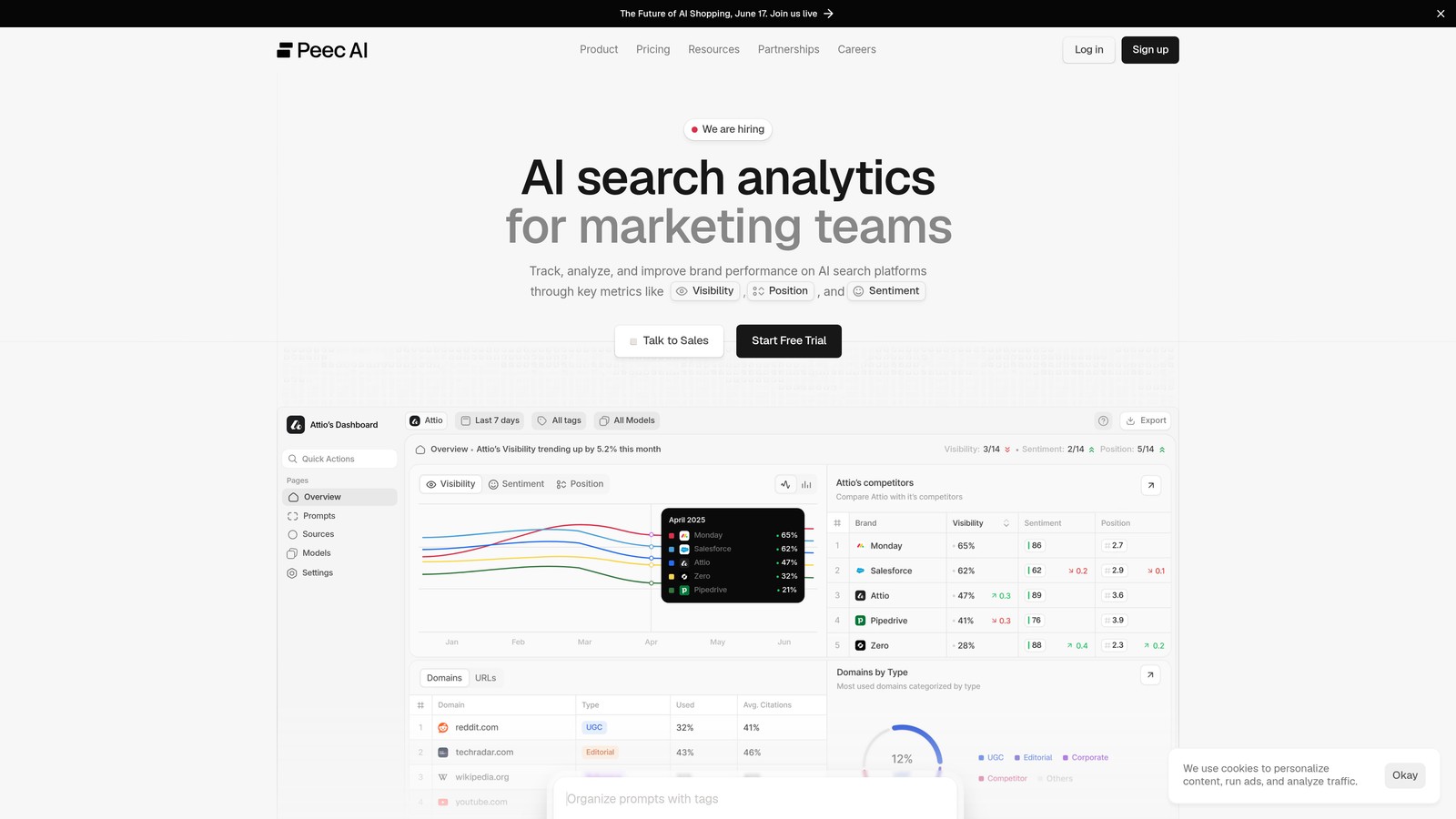
Peec is an AI search monitoring tool that tracks brand mentions within AI-generated answers and benchmarks your visibility against competitors.
Where This Tool Shines
Where Peec differentiates itself is in competitive benchmarking. It's not just about knowing whether your brand appears in AI-generated answers — it's about knowing how you compare to the other brands that appear in the same responses. For small businesses operating in competitive niches, that context changes how you prioritize your GEO efforts.
The prompt-level visibility tracking is another practical feature. By monitoring specific queries over time, you can see whether your content investments are actually moving the needle in AI search. Trend reporting adds a longitudinal dimension that's useful for measuring GEO campaign performance over weeks and months rather than just a point-in-time snapshot.
Key Features
Brand Mention Monitoring: Tracks when and how your brand appears inside AI-generated responses across platforms.
Competitor Benchmarking: Compares your AI search visibility against competitors appearing in the same AI-generated answers.
Prompt-Level Tracking: Monitors specific queries to see exactly which prompts surface your brand in AI responses.
Trend Reporting: Historical data on brand visibility over time to measure the impact of content and GEO efforts.
Visibility Alerts: Notifications when your brand representation in AI responses changes significantly.
Best For
Peec suits small businesses that are actively running GEO campaigns and need a way to measure competitive positioning in AI search. It's a monitoring and intelligence tool rather than a content creation platform, so it pairs well with tools like Sight AI or Writesonic for end-to-end workflow coverage.
Pricing
Check peec.ai for current pricing. Verify the URL before visiting.
6. Promptwatch
Best for: Marketing teams and agencies that need historical, prompt-level data on AI brand visibility over time.
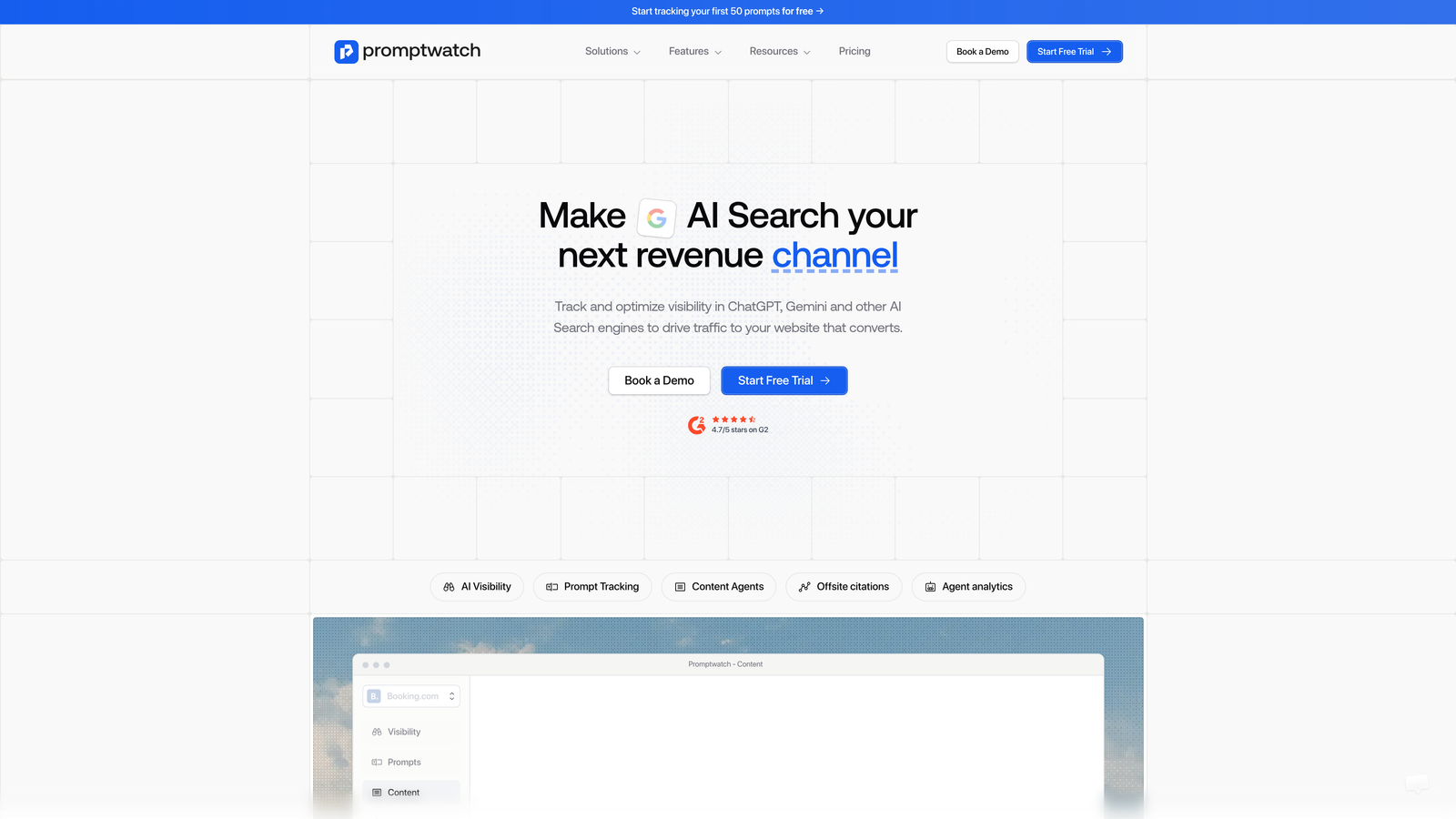
Promptwatch is a prompt-level AI monitoring tool that tracks how specific queries surface your brand across AI platforms and provides historical trend data for GEO measurement.
Where This Tool Shines
Promptwatch is built for teams that think in campaigns. Rather than offering a broad overview of AI visibility, it lets you drill into specific prompts and track exactly how your brand's presence in those queries changes over time. That level of granularity is particularly valuable when you're trying to measure whether a specific piece of content or a GEO optimization effort is producing results.
For agencies managing GEO for multiple small business clients, the reporting dashboards provide a structured way to show clients what's working and where opportunities remain. The multi-platform monitoring coverage means you're not limited to a single AI platform, which matters as AI search continues to fragment across different tools and assistants.
Key Features
Prompt-Level Tracking: Monitors specific queries across AI platforms to see exactly when and how your brand surfaces in responses.
Historical Trend Data: Longitudinal visibility data that shows how your brand's AI search presence changes over time.
Campaign-Level Measurement: Ties GEO content initiatives to measurable changes in AI search visibility at the prompt level.
Multi-Platform Coverage: Monitors brand presence across multiple AI platforms rather than a single source.
Agency Reporting Dashboards: Structured reporting views designed for presenting AI visibility data to clients.
Best For
Promptwatch is the right tool for agencies and marketing teams that need granular, time-series data on AI search visibility. It's less suited for teams still in the early stages of content production — it's a measurement tool for teams that already have content in market and want to understand its AI search impact.
Choosing the Right Platform for Your Business
The right tool depends on where you are in your content and visibility journey. Here's a quick way to think through the decision.
If content creation is your primary need: Start with Writesonic for broad format coverage at an accessible price point, or Sight AI if you want content generation bundled with AI visibility tracking and automated indexing from day one.
If workflow automation and scalability matter most: AirOps is the strongest option for building structured, repeatable content pipelines connected to your own data sources. It requires setup investment but pays off for agencies and ops-focused teams.
If AI visibility and GEO measurement are your focus: Profound, Peec, and Promptwatch each offer specialized monitoring capabilities. Profound is strongest for optimization recommendations; Peec adds competitive benchmarking; Promptwatch is best for campaign-level, prompt-specific measurement over time.
If you want one platform that covers all three areas: Sight AI is the most complete option for small businesses that don't want to manage a stack of disconnected tools. Content generation, AI visibility tracking, and automated indexing in a single platform is a meaningful operational advantage for lean teams.
For most small businesses starting out in 2026, the strategic priority is clear: create content optimized for both search engines and AI-powered answer engines, get it indexed quickly, and monitor whether it's actually influencing how AI models describe your brand. That's a three-part problem, and most tools on this list solve only one or two parts of it.
Stop guessing how AI models like ChatGPT and Claude talk about your brand. Start tracking your AI visibility today and see exactly where your brand appears across top AI platforms, what content is driving those mentions, and where your biggest opportunities for organic growth still lie.