The best SEO title generator depends on your workflow. For free, no-signup title ideas, use the Ahrefs Title Generator or Portent. For titles grounded in live SERP data, use Frase or Semrush's SEO Writing Assistant. For titles produced as part of an automated SEO and GEO content pipeline, use Sight AI. Whichever generator you choose, check the final title's length and rendering in a SERP simulator before publishing.
Your page title is the most visible element in search results, and increasingly in AI-generated answers. Writing unique, keyword-optimized titles for hundreds of pages is slow work. The tools below were evaluated on title quality, SEO intelligence, ease of use and value for money. They range from full AI content platforms to lightweight single-purpose generators.
Quick comparison
| Tool | Best for | Uses SERP data | Starting price |
|---|---|---|---|
| Sight AI | Titles inside a full SEO/GEO content pipeline | Yes | Paid plans |
| Ahrefs Title Generator | Quick free titles | Indirectly | Free |
| Semrush SEO Writing Assistant | Real-time optimization against competitors | Yes | $139.95/mo (Semrush plan) |
| Frase | Titles from content briefs | Yes | $15/mo |
| Copy.ai | High-volume, brand-voice titles | No | Free / $49/mo |
| CoSchedule Headline Studio | Scoring existing titles | Partial | Free / $9/mo |
| Mangools SERP Simulator | Validating length and truncation | Preview only | Free |
| Portent | Creative brainstorming | No | Free |
| ChatGPT | Custom prompts with full control | No | Free / $20/mo |
1. Sight AI
Best for: Teams wanting titles as part of a full SEO/GEO content production pipeline
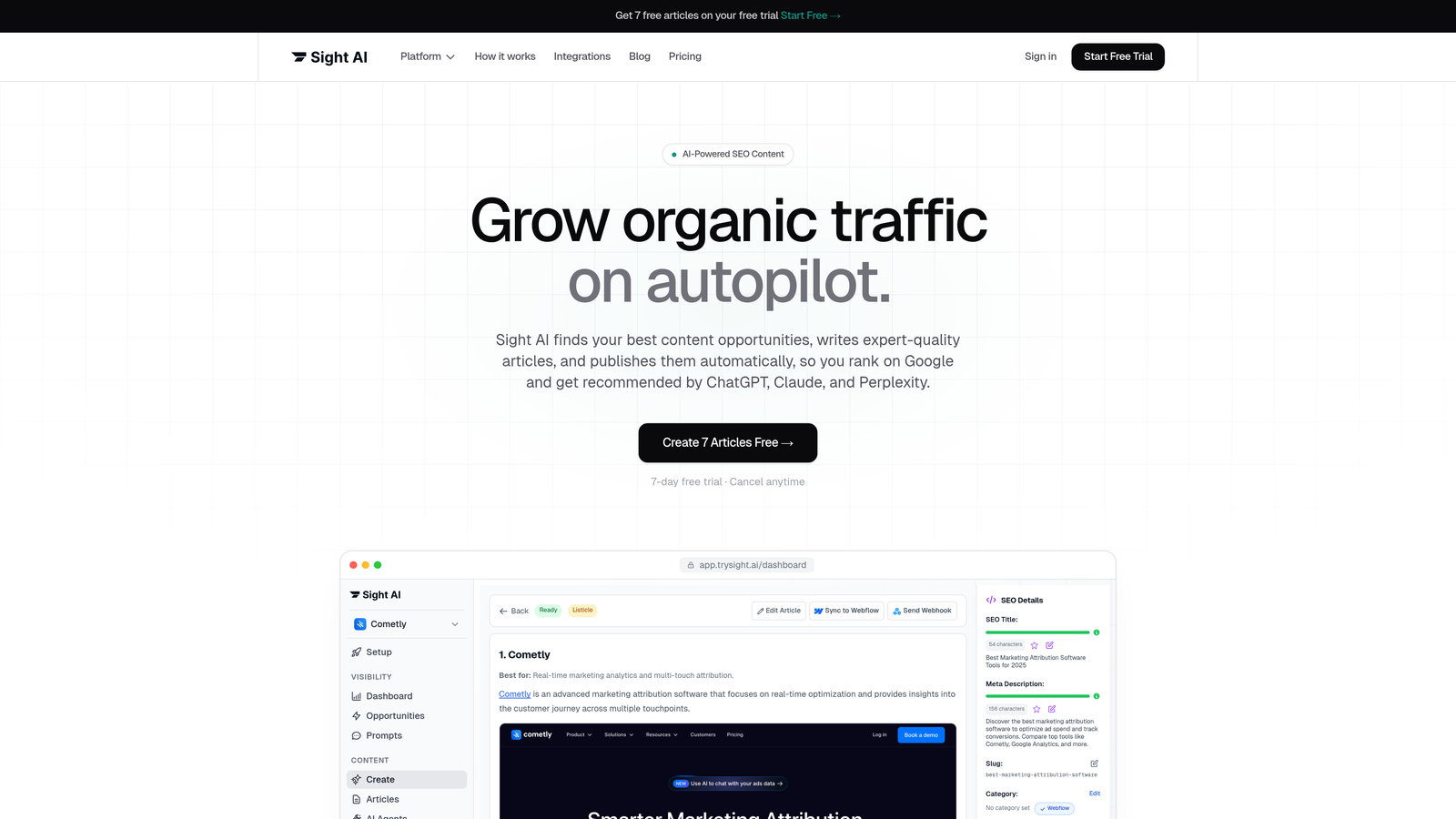
Sight AI is an AI-powered content platform. It uses 13+ specialized AI agents to generate SEO and GEO-optimized page titles, meta descriptions and full articles.
Where This Tool Shines
Most title generators stop at the title. Sight AI treats the page title as the entry point to a complete content workflow. Its AI agents write titles for search engine rankings and also for how they appear in AI-generated answers across ChatGPT, Claude and Perplexity. Few tools offer this dual approach, which covers both traditional SEO and Generative Engine Optimization (GEO).
Autopilot Mode lets you run title and content generation at scale without constant manual input. IndexNow integration speeds up page discovery. Together they cover the full lifecycle from title creation to indexed, AI-visible content.
Key Features
13+ Specialized AI Agents: Generate optimized titles as part of full article workflows, including listicles, guides and explainers.
SEO and GEO Optimization: Titles are written for both search engine rankings and AI model mentions.
AI Visibility Tracking: Monitor how your brand and content appear across ChatGPT, Claude and Perplexity, with sentiment analysis and prompt tracking.
Autopilot Mode: Hands-off content and title production at scale. Useful for agencies managing multiple clients or large content calendars.
IndexNow Integration: Automatically notifies search engines of newly published pages for faster discovery and indexing.
Best For
Marketers, founders and agencies who want page titles as part of a broader, automated content strategy. It is especially relevant for teams investing in GEO alongside traditional SEO and for anyone producing optimized content at volume.
Pricing
Visit trysight.ai for current plan details. Multiple tiers are available, from solo operators to larger teams.
2. Ahrefs Title Generator
Best for: Quick, free title generation backed by real keyword and SERP data
Ahrefs Title Generator is a free AI-powered tool that produces multiple title suggestions from a single topic or keyword.
Where This Tool Shines
What separates this free generator from generic AI tools is the data ecosystem behind it. Ahrefs maintains one of the largest keyword and SERP databases in the industry. The free tool doesn't expose that data directly, but its suggestions reflect patterns from real search behavior rather than purely generic AI output.
The interface is clean and fast: enter a keyword, get several title variations, move on. No sign-up is required, so it is one of the lowest-friction options on this list for one-off titles.
Key Features
Multiple Title Variations: Generates several distinct options from one keyword, giving you choices to test or refine.
SERP Data Context: Draws on Ahrefs' keyword and SERP data ecosystem for more informed suggestions.
No Subscription Required: Free to use without an Ahrefs account or paid plan.
Minimal Interface: A no-frills design focused on fast title output.
Best For
SEO professionals and writers who want quick title inspiration without committing to a tool. It also works as a second generator to cross-check other tools. Existing Ahrefs subscribers will find it fits naturally into their workflow.
Pricing
Free as a standalone tool. Full Ahrefs suite access starts at $129/month and adds keyword research, backlink analysis and more.
3. SEMrush SEO Writing Assistant
Best for: Real-time title and content optimization against live SERP competitors
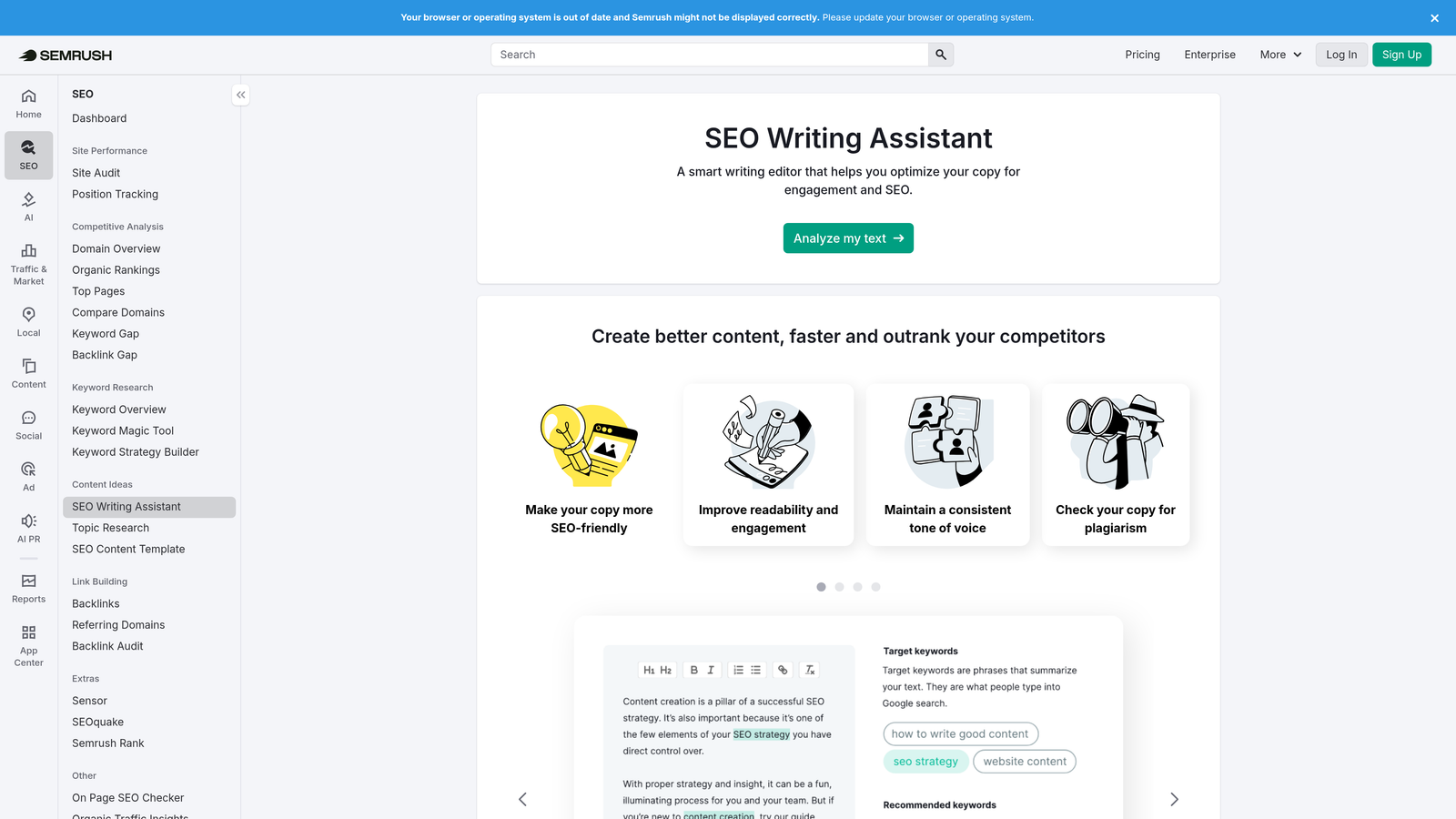
SEMrush SEO Writing Assistant is a real-time content optimization tool. It analyzes top-ranking pages and gives title, readability and SEO recommendations as you write.
Where This Tool Shines
The SEO Writing Assistant's core strength is competitive intelligence. Instead of generating titles in a vacuum, it analyzes the top 10 pages ranking for your target keyword. Its recommendations are based on what's actually working in the SERP, not just AI pattern matching.
The Google Docs and WordPress integrations help teams that write directly in those environments. You get real-time feedback on your title as you draft, with no switching between tools.
Key Features
Competitor-Based Title Recommendations: Analyzes the top 10 SERP results for your keyword and suggests titles based on what's ranking.
Real-Time SEO Scoring: Scores your title on keyword usage, readability and optimization as you type.
Google Docs and WordPress Integration: Works inside the tools your team already uses.
Tone of Voice Consistency: Checks that your title and content keep a tone aligned with your brand.
Best For
Content teams and SEO professionals already in the Semrush ecosystem, or who want title optimization combined with full-content guidance. Given the price, it is a poor fit as a standalone title generator.
Pricing
Included with Semrush plans starting at $139.95/month. It is not sold separately, which makes it a large investment for title generation alone.
4. Frase
Best for: SERP-informed title suggestions as part of content brief creation
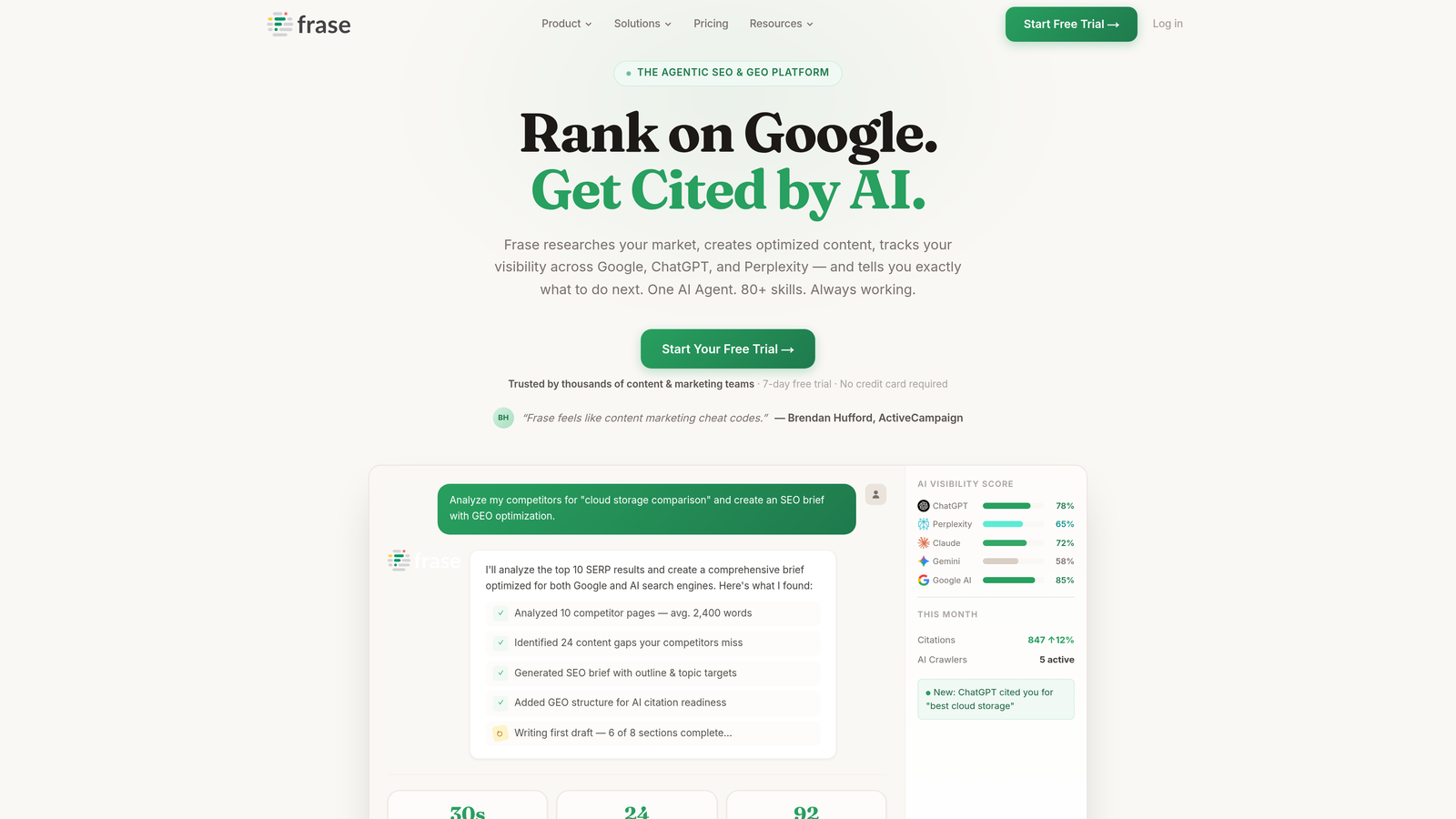
Frase is an AI content platform that builds SERP-analyzed content briefs. It suggests optimized titles, headings and outlines based on what's currently ranking.
Where This Tool Shines
Frase takes a research-first approach. Before suggesting a title, it pulls the top-ranking pages for your keyword and maps out the SERP. Titles built from that context tend to be more topically relevant and competitive than titles generated from a keyword alone.
Its question research feature pulls from People Also Ask and related queries. That helps you write titles that match specific user intent, which matters for both rankings and AI model citations.
Key Features
SERP-Analyzed Content Briefs: Title suggestions are generated after analyzing what's ranking for your target keyword.
AI Writing Assistant: Refine and iterate on title suggestions inside the platform.
Topic Scoring: Checks that your title and content cover the topic completely.
People Also Ask Integration: Surfaces question-based title angles from real search queries.
Best For
Content strategists and SEO writers who want titles that come out of a full research and briefing process. It suits teams producing long-form content, where the title must align with a broader content strategy rather than a single keyword.
Pricing
Starts at $15/month for the Solo plan, one of the more accessible paid options for individual creators and small teams.
5. Copy.ai
Best for: High-volume title generation with brand voice and tone controls
Copy.ai is an AI copywriting platform. Its headline and title templates generate multiple variations with tone and brand voice customization.
Where This Tool Shines
Copy.ai excels when you need volume and variety. Its templates produce many distinct variations quickly. Brand voice controls keep titles consistent with your company's style, which is valuable for agencies managing content across multiple clients.
Workflow automation sets it apart from simpler generators. You can build repeatable title creation workflows that plug into broader content processes, which cuts manual effort on large content calendars.
Key Features
Dedicated Title and Headline Templates: Purpose-built templates for page titles, blog headlines and ad copy variations.
Brand Voice Customization: Keeps tone and style consistent across all generated titles.
Bulk Generation: Produces large volumes of title variations for high-output content operations.
Workflow Automations: Build repeatable title creation processes that connect to broader content workflows.
Best For
Marketing agencies and content teams managing high-volume output across multiple brands or clients. It also helps e-commerce operators who need optimized titles for large product catalogs.
Pricing
A free plan with limited features is available. The Pro plan starts at $49/month, with enterprise pricing for large teams and agencies.
6. CoSchedule Headline Studio
Best for: Scoring and improving existing titles on emotional appeal and SEO readiness
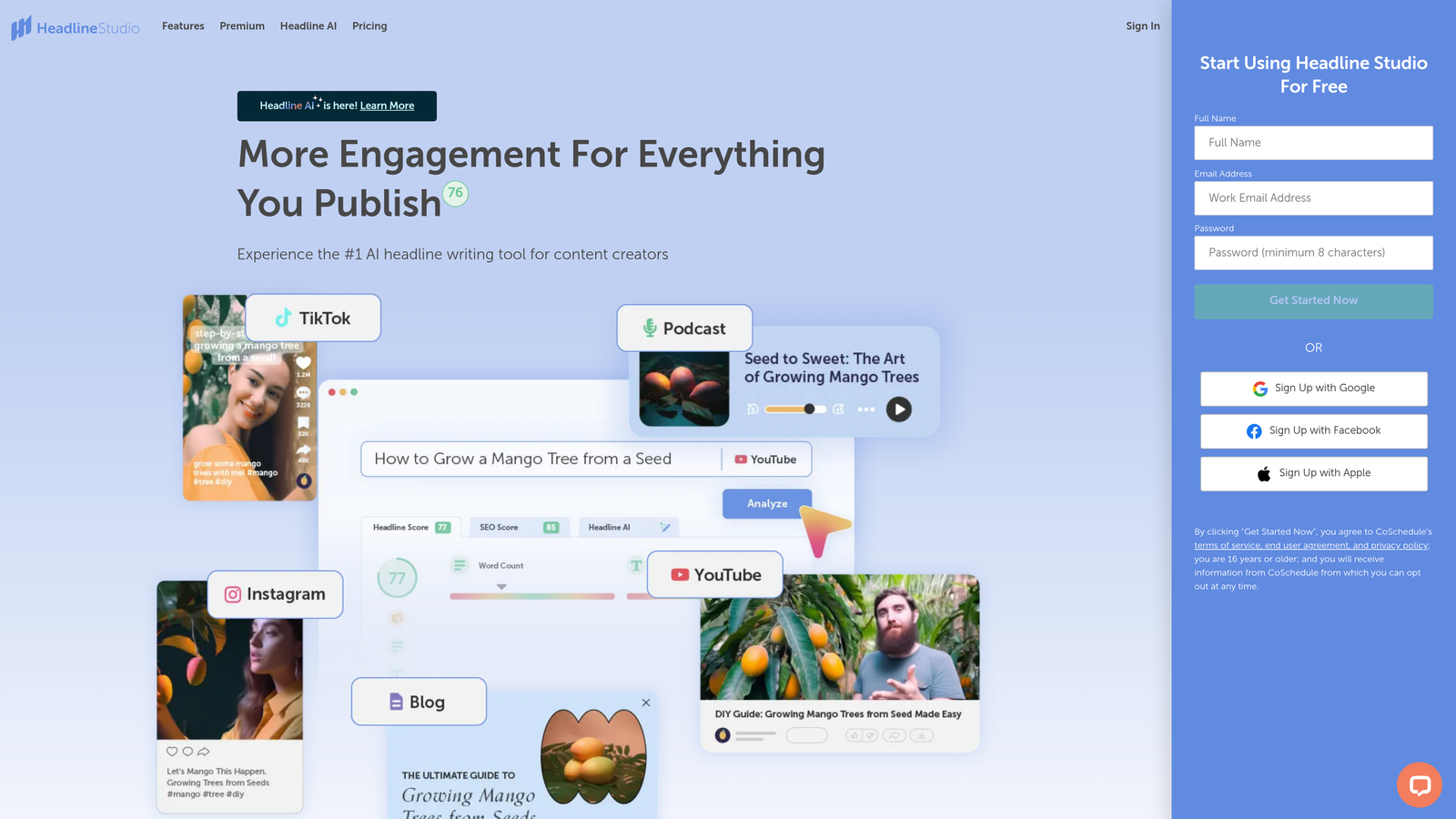
CoSchedule Headline Studio is a headline analysis and generation tool. It scores titles on emotional appeal, word balance, clarity and SEO readiness.
Where This Tool Shines
Headline Studio evaluates titles rather than only generating them. You paste in a title and get a proprietary score based on word balance, sentiment, structure and SEO factors. That makes it most useful for refining titles you've already drafted.
Its AI improvement suggestions are practical and specific. If a title scores poorly on emotional appeal, the tool offers concrete alternatives instead of just flagging the issue. This helps teams understand why a title works or doesn't.
Key Features
Proprietary Headline Score: Rates titles on word balance, sentiment, structure and clarity using CoSchedule's scoring method.
AI-Powered Suggestions: Generates improved alternatives when a title scores below a target threshold.
SEO Score Component: Checks keyword placement and title structure for search readiness.
Performance History Tracking: Paid plans track your headline scores over time.
Best For
Content marketers and editors who want to validate and improve titles rather than generate them from scratch. It gives editorial teams an objective benchmark for headline quality.
Pricing
A free headline analyzer with basic features is available. Headline Studio Pro starts at $9/month, one of the most affordable paid options for dedicated title optimization.
7. Mangools SERP Simulator
Best for: Visualizing and validating title tag length before publishing
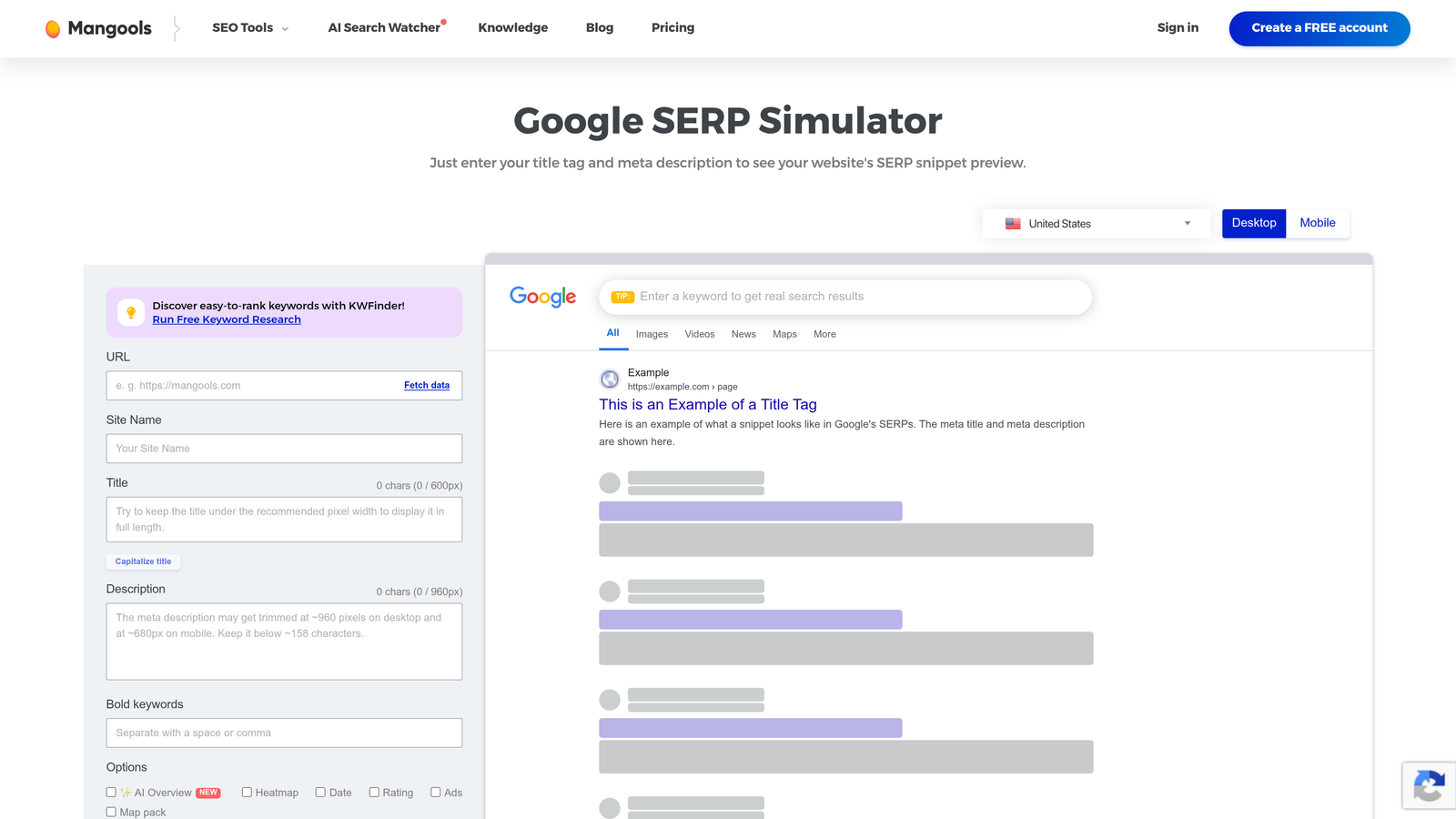
Mangools SERP Simulator is a free tool that shows how your title tag and meta description will render in Google search results, with pixel-width validation.
Where This Tool Shines
This tool answers a question that often gets skipped: will your title be truncated in search results? Google limits title display by pixel width, roughly 580–600px on desktop, rather than a fixed character count. A title that looks fine in your CMS can still get cut off in the SERP, and the simulator shows exactly what searchers will see.
You can also compare your title side by side with actual SERP competitors, which adds competitive context. It's not a generator, but it is an essential companion to any title generation workflow.
Key Features
Pixel-Accurate SERP Preview: Shows how your title and meta description will render in Google search results.
Character and Pixel-Width Counters: Real-time feedback to prevent truncation before you publish.
Competitor Comparison: Side-by-side view of your title against pages currently ranking for your keyword.
No Sign-Up Required: Free and usable without a Mangools account.
Best For
Any SEO professional or content team that wants to validate title length and rendering before publishing. Use it as a final check after generation, not as a primary generator. It pairs well with any tool on this list.
Pricing
Free as a standalone tool. The full Mangools SEO suite, including KWFinder and SERPChecker, starts at $29.90/month.
8. Portent Content Idea Generator
Best for: Fast, creative title brainstorming with no setup required
Portent Content Idea Generator is a lightweight, free brainstorming tool. It generates catchy, formula-driven title ideas from a single subject keyword.
Where This Tool Shines
Portent's generator has been around for years and stays popular because it's fast, free and occasionally brilliant. It applies classic copywriting formulas to your keyword, such as listicles, how-tos, provocative angles and unexpected juxtapositions. Each title comes with a short explanation of why the formula works, which makes it more useful than a pure black-box generator.
It won't replace a data-driven tool for serious SEO work. For brainstorming or breaking a creative block, though, it's one of the quickest ways to get a starting point, with no sign-up or subscription.
Key Features
Instant Title Ideas: Generates a title immediately from one keyword, with a new suggestion on each refresh.
Formula-Based Suggestions: Applies proven copywriting structures, including listicles, how-tos and curiosity-gap formats.
Formula Explanations: Short notes explain the reasoning behind each title, which helps you learn copywriting principles.
Zero Friction: Free with no account or sign-up required.
Best For
Writers who want quick inspiration or creative angles before refining with a data-driven tool. It doesn't suit high-volume SEO workflows, but it is an excellent lightweight starting point.
Pricing
Completely free, with no paid tiers or limits.
9. ChatGPT (with Custom Prompts)
Best for: Highly customized title generation with precise control over format, tone and constraints
ChatGPT can generate highly customized page titles when your prompt specifies keywords, character limits, tone and format requirements.
Where This Tool Shines
ChatGPT isn't a dedicated SEO title tool, but with the right prompts it becomes one of the most flexible options available. In a single prompt you can set the target keyword, enforce a character limit, choose a tone, require the keyword up front and ask for dozens of variations. No purpose-built generator offers that level of control.
The catch is that ChatGPT has no built-in SEO data. It doesn't know what's ranking, which SERP features are active for your keyword or what titles your competitors use. You have to supply that context yourself. For users who can write detailed SEO prompts, that's a minor limitation. For users who want the tool to do the research, it's a significant gap.
A reliable prompt pattern: Write 10 title tags for a page about [topic]. Primary keyword: [keyword], placed in the first 5 words. Max 60 characters. Include one concrete hook (number, year or specific benefit). Avoid clickbait. Competing titles: [paste top 5].
Key Features
Unlimited Prompt Flexibility: Specify keyword placement, character limits, tone, format and audience in one prompt for tailored output.
High Volume Generation: Produces dozens of title variations in seconds, so iteration is fast.
Tone and Style Control: Adjust formality, urgency, curiosity and other tone dimensions with plain-language instructions.
No Built-In SEO Data: You must supply keyword context and competitive intelligence. It does not pull in SERP or search volume data natively.
Best For
SEO-savvy marketers and strategists who write effective prompts and want maximum flexibility without paying for a specialized tool. It also supplements data-driven tools when you need rapid creative variation. For more AI options, see our review of the best ChatGPT SEO tools.
Pricing
A free tier is available with limited access to OpenAI's current models. ChatGPT Plus costs $20/month and adds more capable models and higher usage limits.
How to Evaluate a Generated SEO Title
Every tool on this list produces drafts, not finished titles. Before publishing, run each candidate through these checks:
- Keyword placement: The primary keyword appears in the first half of the title, ideally the first few words.
- Length: Roughly 50–60 characters, or under about 600 pixels, so it isn't truncated on desktop.
- Intent match: The title promises what the page delivers, such as a list, a guide, a tool or a comparison. Mismatched titles get rewritten by Google or skipped by searchers.
- Concrete hook: A number, year, price point or specific outcome beats vague adjectives like "ultimate" or "amazing".
- Uniqueness: No two pages on your site share a title. Duplicate titles split relevance signals.
- Brand suffix: Add " | Brand" only if it fits within the length budget.
If you just need a fast, free title draft for a single page, Sight AI's free title tag generator applies these rules automatically. Its Google SERP simulator lets you preview the result before publishing.
Which Tool Is Right for You?
The right SEO title generator depends on what you're trying to accomplish and where title creation fits in your broader workflow.
For a lightweight, free tool for quick brainstorming, Portent and the Ahrefs Title Generator are solid, zero-friction starting points. For validating title length before publishing, the free Mangools SERP Simulator is an essential final check, whichever generator you use.
For data-driven recommendations grounded in real SERP analysis, Frase offers strong value at an accessible price. SEMrush SEO Writing Assistant and CoSchedule Headline Studio are worth considering if you're already in those ecosystems or need editorial scoring alongside generation. Copy.ai stands out for agencies managing high-volume content across multiple clients, particularly where brand voice consistency matters.
ChatGPT sits in its own category. It isn't an SEO tool by design, but it is a powerful generation engine for users who can supply the right context through prompts.
For teams that want page titles as part of a complete, automated content strategy, Sight AI is the strongest choice. It is the only tool on this list that does all three of the following:
- Optimizes titles for both traditional search engines and AI model mentions.
- Tracks how your content appears across ChatGPT, Claude and Perplexity.
- Automates the full pipeline from title creation to indexed, published content.
As AI-generated answers send a growing share of organic traffic, growth-focused teams need to optimize titles for GEO as well as SEO.
Frequently asked questions
What is the best free SEO title generator?
The Ahrefs Title Generator is the strongest free option. It requires no sign-up and returns several keyword-based variations at once. Portent is better for creative brainstorming, and Sight AI's free title tag generator applies length and keyword-placement rules automatically. Pair any of them with a free SERP simulator to confirm the title won't be truncated before you publish.
How long should an SEO title tag be?
Aim for roughly 50–60 characters. Google truncates titles by pixel width (around 600px on desktop), not character count, so wide letters like W and M use more space. Put the primary keyword near the start so it stays visible even if the end is cut off. Then preview the title in a SERP simulator to confirm exactly how it will display.
Does Ahrefs have a free title generator?
Yes. Ahrefs offers a free AI title generator among its writing tools, with no account required. You enter a topic or keyword and receive multiple title suggestions. Full Ahrefs features such as keyword research and backlink analysis require a paid plan starting at $129/month. See the Ahrefs section above for its strengths and limitations.
Can AI write good SEO titles?
AI writes good first drafts quickly, but quality depends on context. Tools that analyze live SERPs, such as Frase, Semrush and Sight AI, produce better-targeted titles than generic chatbots. Always review AI output for intent match, accurate claims and length. Google may rewrite titles that misrepresent the page or stuff in keywords.
What is the difference between a title tag and an H1?
The title tag is HTML metadata shown in search results and browser tabs. The H1 is the visible headline on the page itself. They can match, but many sites write a shorter, keyword-focused title tag and a more descriptive H1. Both should describe the same topic so search engines and readers get a consistent signal.
The tools you use to generate titles today will shape which channels surface your content tomorrow. Start tracking your AI visibility today to see exactly where your brand appears across top AI platforms. Then optimize not just for clicks, but for every answer your potential customers are getting.