Getting your content indexed quickly is one of the most overlooked leverage points in SEO. You can publish a perfectly optimized article and still wait days or even weeks for search engines to discover it. SEO indexing automation software solves this by programmatically submitting URLs, syncing sitemaps, and triggering crawls the moment content goes live.
For marketers, founders, and agencies managing high-volume content operations, manual indexing simply doesn't scale. This list covers the best tools available in 2026 for automating the indexing process, from platforms that combine indexing with full content workflows to specialized tools that help you prioritize which pages need attention. We evaluated each based on automation depth, protocol support (especially IndexNow), integration flexibility, and overall value for teams focused on organic growth.
1. Sight AI
Best for: Teams that want to generate, publish, and index content in a single automated workflow.
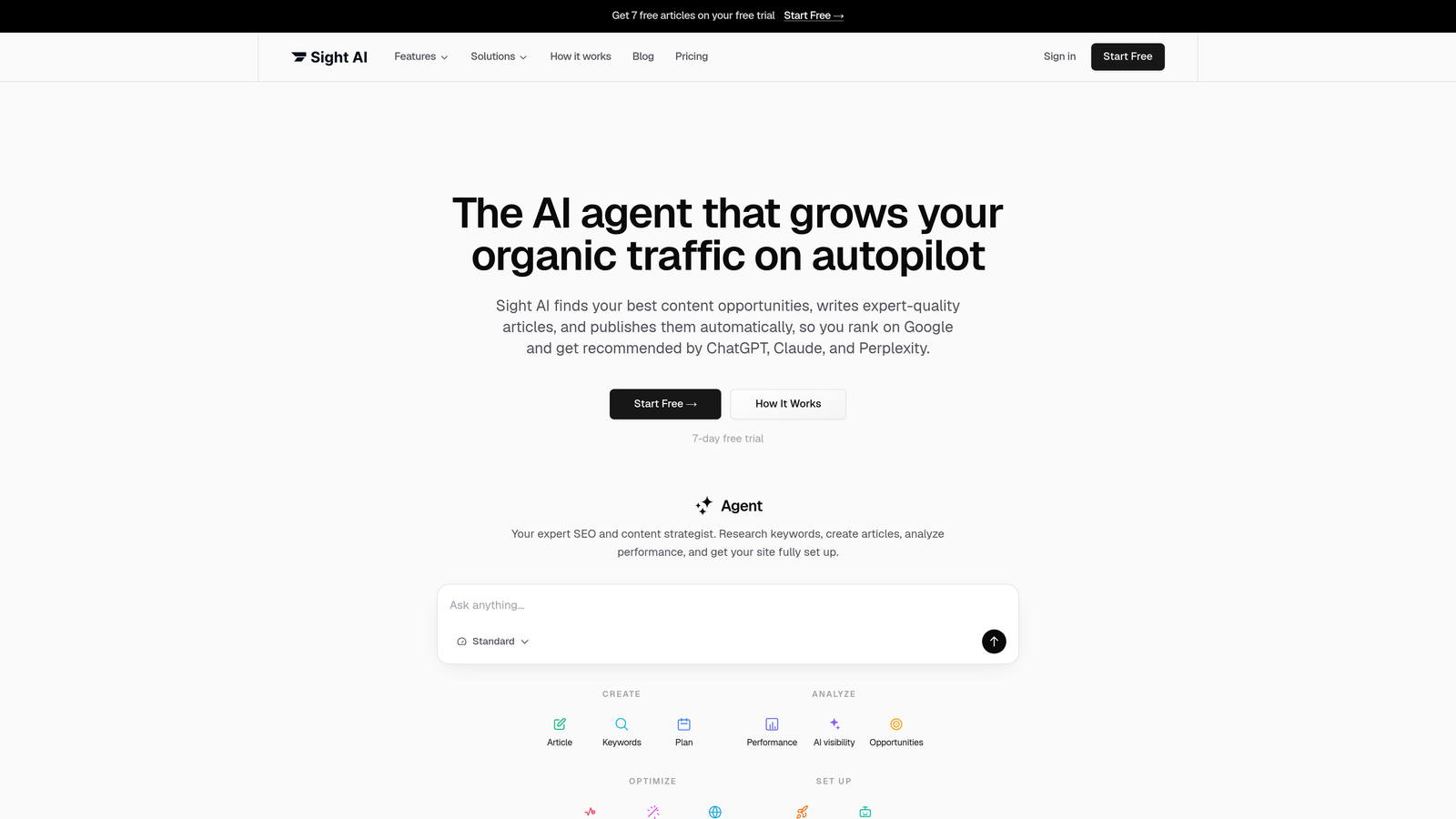
Sight AI is an all-in-one AI content and SEO platform with native IndexNow integration, automated sitemap updates, and CMS auto-publishing built directly into its workflow.
Where This Tool Shines
Most indexing tools are point solutions. You generate content somewhere, publish it somewhere else, then manually trigger indexing in yet another tool. Sight AI collapses that chain into a single automated pipeline. When content is published through the platform, sitemap updates and IndexNow submissions happen automatically, without any manual intervention.
What sets it apart further is the AI visibility layer. Beyond indexing, Sight AI tracks how your brand is mentioned across AI platforms like ChatGPT, Claude, and Perplexity, giving you a feedback loop between what's indexed and what's actually being surfaced in AI-generated answers. That's a genuinely different value proposition from anything else on this list.
Key Features
IndexNow Integration: Automatically submits URLs to IndexNow-supported search engines at the moment content is published, reducing the discovery lag that slows most content operations.
Automated Sitemap Updates: Sitemap generation and updates are triggered on publish, keeping your sitemap accurate without manual maintenance.
CMS Auto-Publishing: Connects content generation directly to live deployment, so the path from draft to indexed page is fully automated.
13+ AI Content Agents: Specialized agents generate SEO and GEO-optimized content formats including listicles, guides, and explainers, with an Autopilot Mode for hands-off production.
AI Visibility Tracking: Monitors brand mentions and sentiment across ChatGPT, Claude, Perplexity, and three or more additional AI platforms, with prompt tracking and an AI Visibility Score.
Best For
Sight AI is the strongest fit for marketers, founders, and agencies that want to unify their content generation, publishing, and indexing operations under one platform. It's especially valuable for teams investing in both traditional SEO and AI search visibility, where understanding how AI models cite your content matters as much as getting it indexed.
Pricing
Plans are available for individual marketers, growing teams, and agencies. Visit the Sight AI website for current pricing details.
2. Writesonic
Best for: Content teams scaling SEO output with AI-assisted writing and CMS publishing integrations.
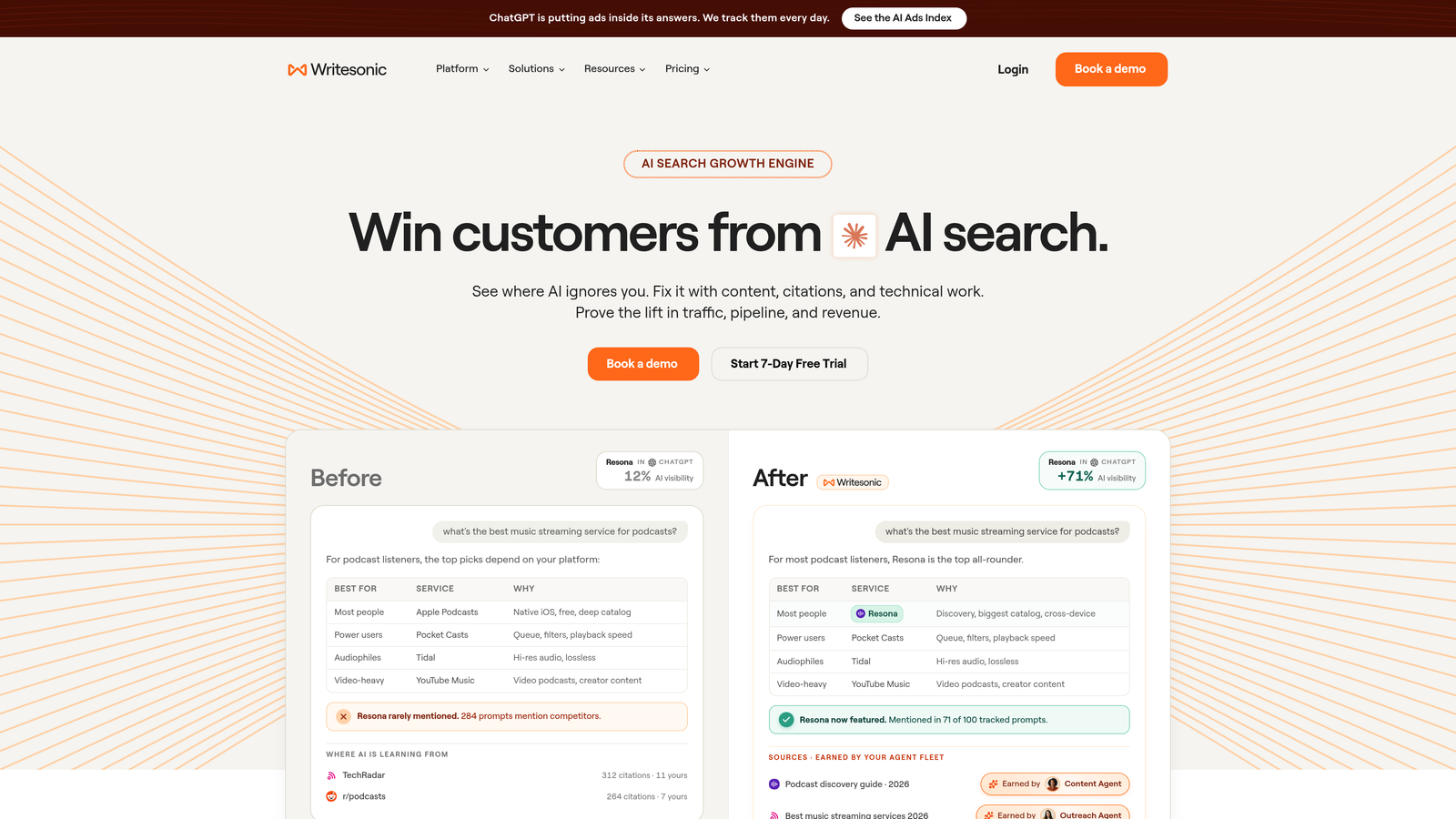
Writesonic is an AI content generation platform with SEO-focused writing tools and publishing integrations that support content-to-index workflows at scale.
Where This Tool Shines
Writesonic's strength is in the content creation layer of the indexing pipeline. For teams running programmatic SEO campaigns, the ability to generate large volumes of optimized articles and push them directly to a CMS removes a significant bottleneck. The platform's publishing integrations mean content doesn't sit in a staging environment waiting for a human to hit publish.
It's worth being clear about what Writesonic is and isn't. It's primarily a content tool, not a dedicated indexing engine. But for teams where the indexing delay starts with slow content production and publishing, Writesonic addresses the upstream part of that problem effectively.
Key Features
AI Article Generation: Produces long-form blog posts and articles with SEO optimization built into the output, including keyword targeting and structured formatting.
CMS Publishing Integrations: Connects to major CMS platforms so content can be pushed to live environments without manual export and upload steps.
Keyword Research and Brief Generation: Helps teams identify content opportunities and structure briefs before writing begins, keeping output aligned with search intent.
Brand Voice Customization: Allows teams to define tone and style parameters so bulk-generated content remains consistent with existing brand standards.
Bulk Content Generation: Supports programmatic SEO use cases where large numbers of pages need to be produced and published in parallel.
Best For
Writesonic suits content-heavy SEO teams that need to produce and publish articles at volume. It's a strong fit for agencies managing multiple client sites and in-house teams running programmatic content strategies where publishing velocity is the primary constraint.
Pricing
A free tier is available. Paid plans are offered at a monthly subscription. Check Writesonic's website for current plan details and pricing.
3. AirOps
Best for: Technical SEO and growth teams building custom end-to-end content and publishing pipelines.
AirOps is an AI workflow automation platform that enables growth and SEO teams to build custom pipelines connecting content generation, CMS publishing, and indexing triggers.
Where This Tool Shines
AirOps sits in a different category from most tools on this list. Rather than offering a fixed product with preset features, it gives technically capable teams the building blocks to design their own automated workflows. If your indexing bottleneck is somewhere specific in your stack, AirOps lets you build around it precisely.
For programmatic SEO operations, this flexibility is significant. Teams can wire together content generation, data enrichment, CMS publishing, and indexing triggers in a single pipeline, with full control over logic and sequencing. The tradeoff is that setup requires more technical investment than a plug-and-play solution.
Key Features
Custom AI Workflow Builder: Enables teams to design automated pipelines tailored to their specific content and publishing architecture, rather than conforming to a fixed product workflow.
CMS and API Integrations: Connects to CMS platforms, databases, and external APIs, making it possible to orchestrate complex multi-step publishing and indexing sequences.
AI-Powered Content Generation: Incorporates AI writing capabilities directly within automated pipelines so content production and distribution happen in the same workflow.
Data Enrichment and Transformation: Supports large-scale content operations where source data needs to be processed, formatted, or enriched before content generation begins.
Team Collaboration Features: Includes workflow management tools for teams working across multiple pipelines or client accounts simultaneously.
Best For
AirOps is best suited for technically sophisticated growth teams and agencies that need custom automation rather than an off-the-shelf solution. If your team has engineering resources and a complex content stack, AirOps offers flexibility that purpose-built tools can't match.
Pricing
Enterprise and team plans are available. Contact AirOps directly for current pricing information.
4. Profound
Best for: Brands that need to understand how they appear in AI-generated search results and prioritize indexing accordingly.
Profound is an AI answer engine optimization platform that monitors how brands appear in AI-generated search results, helping teams decide which content needs indexing and optimization attention most urgently.
Where This Tool Shines
Profound addresses a question that traditional indexing tools don't ask: which of your indexed pages are actually being cited by AI models? In a world where a growing share of search interactions happen through AI answer engines, being indexed by Google is necessary but no longer sufficient. Profound tells you whether your content is making it into the answers that matter.
That insight directly informs indexing strategy. If AI models are consistently surfacing competitor content in response to queries where you should be visible, you can identify which pages need to be refreshed, better optimized, and resubmitted for indexing priority. It's a diagnostic layer that makes your broader indexing effort more targeted.
Key Features
AI Answer Engine Monitoring: Tracks how and where your brand appears in AI-generated search responses across major platforms.
Content Surfacing Visibility: Shows which of your pages are being cited in AI answers, giving you a clear picture of which content is performing in AI search.
Content Optimization Recommendations: Provides guidance on how to improve content based on observed AI citation patterns, not just traditional ranking signals.
Competitive Visibility Comparison: Benchmarks your AI search presence against competitors so you can identify where you're losing ground in AI-generated responses.
Indexing Priority Insights: Surfaces data that helps teams decide which pages to prioritize for re-indexing or content updates based on AI citation gaps.
Best For
Profound is a strong fit for brand and SEO teams that are actively tracking their presence in AI search and need data to inform which content deserves indexing and optimization priority. It's particularly useful for larger organizations with enough content volume that triage decisions matter.
Pricing
Contact Profound directly for pricing details and available plans.
5. Peec
Best for: SEO and GEO teams tracking brand citations across AI search platforms to identify indexing gaps.
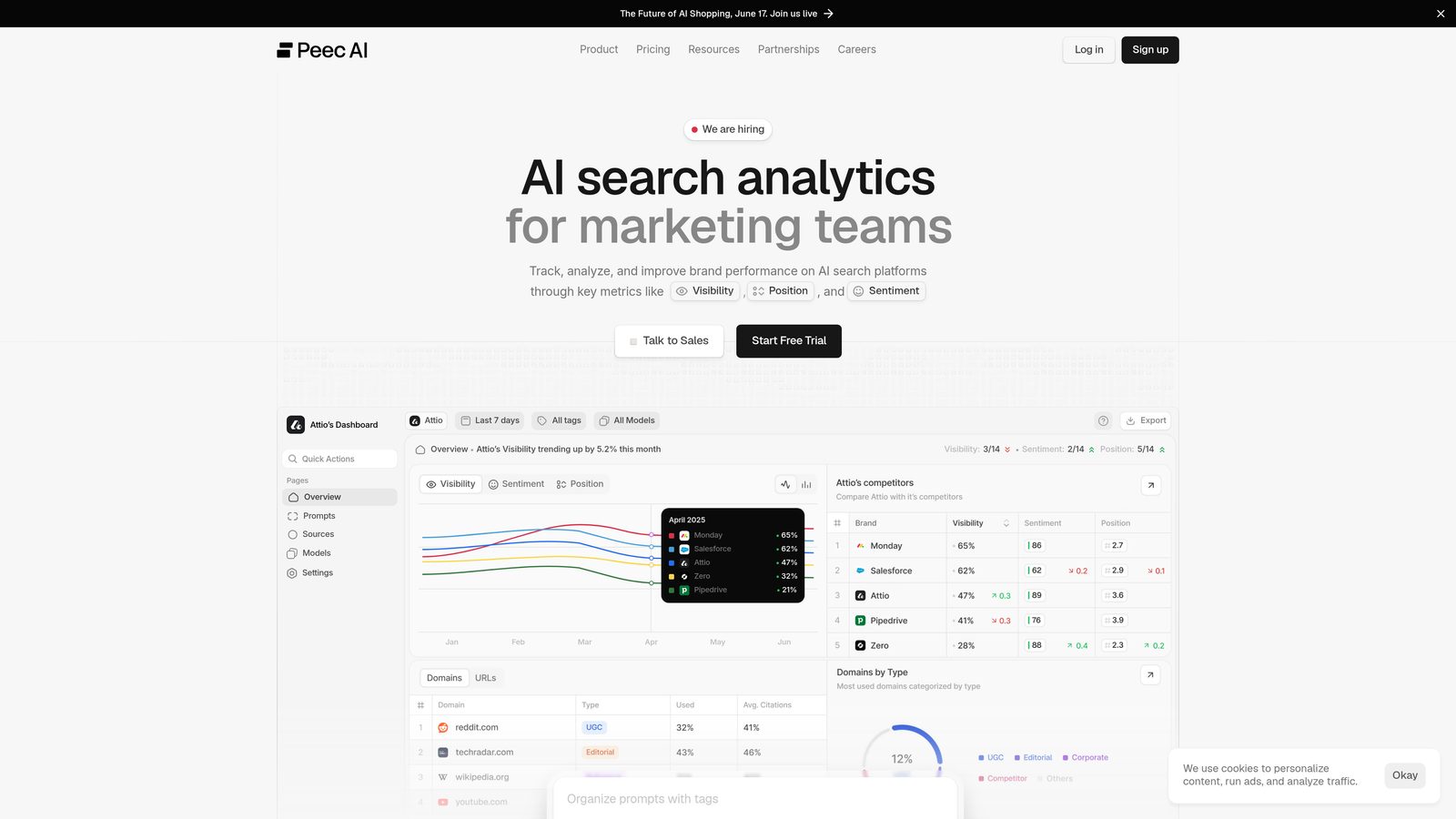
Peec is an AI visibility and citation monitoring tool that tracks brand and content mentions across AI search platforms, helping teams identify which pages need indexing attention.
Where This Tool Shines
Peec approaches the indexing problem from the AI citation angle. Rather than asking "did this URL get submitted?", it asks "is this content being referenced by AI models?" That's a meaningful distinction as generative search becomes a primary discovery channel for many audiences.
When Peec surfaces a content gap, it's telling you that AI models aren't citing your brand in contexts where they should be. That gap is often a signal of an indexing or authority issue, making Peec a useful diagnostic tool that feeds back into your indexing prioritization decisions.
Key Features
AI Citation Tracking: Monitors which of your pages are being cited in AI-generated answers across major generative search platforms.
Brand Mention Monitoring: Tracks how often and in what context your brand appears in AI-generated responses to relevant queries.
Content Gap Identification: Highlights topics and queries where AI models are answering without citing your content, pointing to opportunities for new or updated pages.
GEO Reporting: Provides reporting tailored to Generative Engine Optimization, bridging traditional SEO metrics with AI search performance data.
Indexing Priority Insights: Helps teams make data-driven decisions about which URLs deserve immediate indexing attention based on AI citation behavior.
Best For
Peec is well-suited for SEO teams that are already thinking about GEO and want a tool that connects AI citation data to their content and indexing workflows. It's a good complement to traditional indexing tools rather than a replacement for them.
Pricing
Visit the Peec website for current plan details and pricing options.
6. Promptwatch
Best for: Teams diagnosing AI search visibility gaps to inform content creation and indexing strategy.
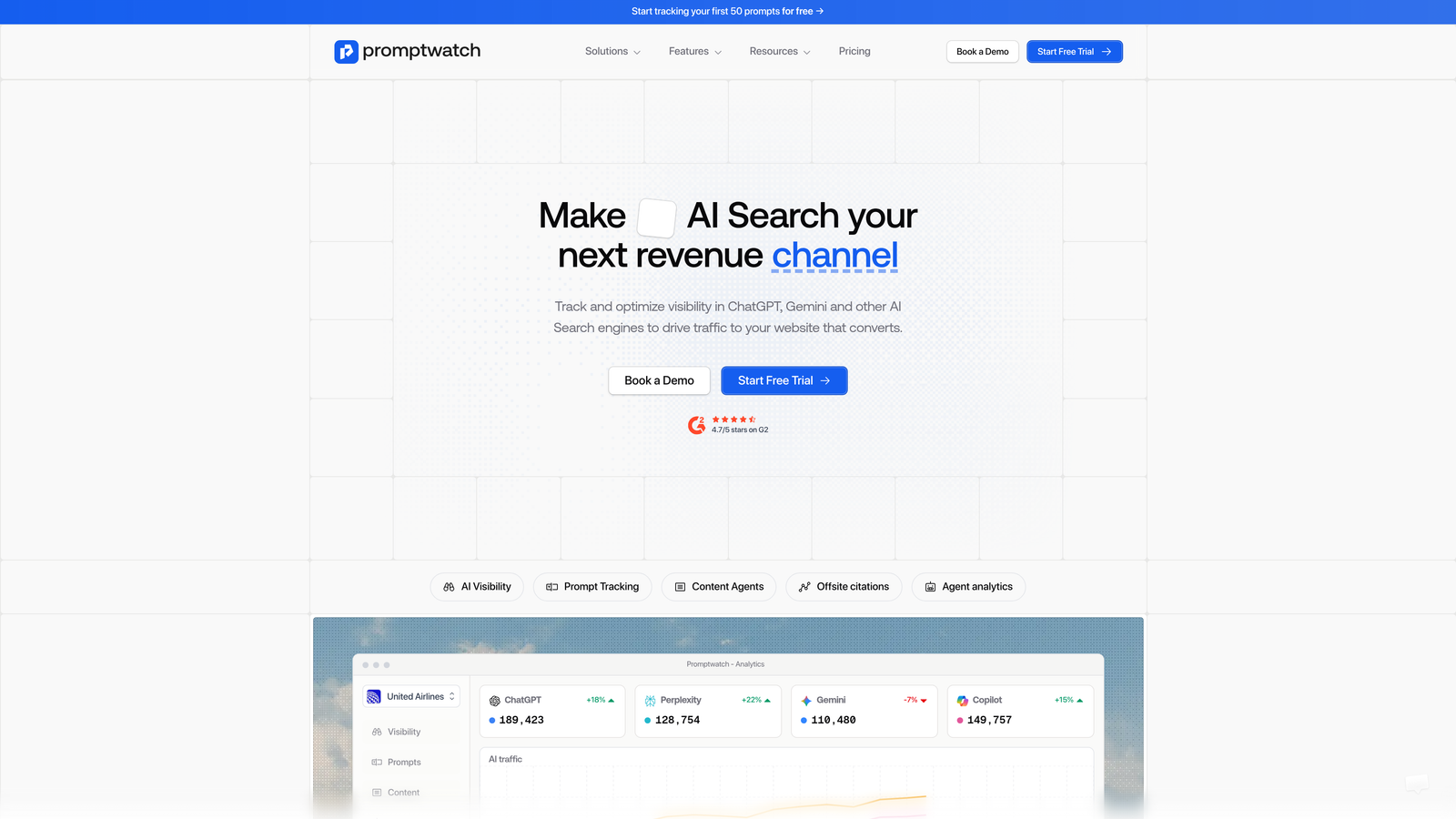
Promptwatch is a prompt monitoring tool that tracks how AI language models respond to branded and category-level queries, surfacing content and indexing gaps that affect AI search visibility.
Where This Tool Shines
Promptwatch takes a prompt-first approach to AI visibility. Instead of monitoring where your content appears, it monitors what AI models say when asked about your brand or category, then identifies what's missing from those answers. That's a subtle but important distinction: you're not just tracking citations, you're tracking the narrative AI models construct around your space.
For indexing strategy, this matters because it reveals which topics and content types are absent from AI-generated answers, pointing directly to pages that need to be created, optimized, and indexed. It functions as a strategic diagnostic layer on top of your broader SEO and indexing workflow.
Key Features
Prompt Response Monitoring: Tracks how AI language models respond to specific branded and category-level queries over time, capturing shifts in how your brand is represented.
Content Gap Identification: Identifies which topics are missing from AI-generated answers about your brand or industry, informing new content and indexing priorities.
Response Change Tracking: Monitors how AI model outputs evolve over time so teams can detect when content updates are influencing AI citation behavior.
Strategic Content Planning Support: Provides data that informs decisions about which content to create and submit for indexing, based on what AI models are and aren't surfacing.
AI Search Diagnostic Layer: Functions as a diagnostic tool that sits alongside traditional SEO analytics, adding an AI-specific dimension to content and indexing strategy.
Best For
Promptwatch is a good fit for SEO and content strategy teams that are actively working to improve their presence in AI search results and want a systematic way to identify where their content is falling short. It works best as a complement to a broader indexing and content workflow rather than a standalone solution.
Pricing
Visit the Promptwatch website for current pricing details.
Which Tool Fits Your Workflow
The right choice here depends on where your biggest bottleneck actually sits. Here's a quick decision framework to help you match tool to need.
If you want a single platform that handles content generation, publishing, and indexing in one automated workflow, Sight AI is the clearest choice. It's the only tool on this list that connects all three layers, including AI visibility tracking, so you're not stitching together separate tools to cover the full pipeline.
If your bottleneck is content production volume and you need AI writing with CMS publishing connectivity, Writesonic addresses that upstream problem well. For teams that need fully custom automation across a complex content stack, AirOps offers the flexibility to build exactly the pipeline your operation requires.
If your focus is understanding how AI models are discovering and citing your content, Profound and Peec both offer strong AI visibility monitoring with different reporting angles. Promptwatch rounds out that category with a prompt-first diagnostic approach that's useful for identifying narrative and content gaps before they become indexing problems.
For most teams, the highest-leverage move is starting with a platform that closes the loop between content creation and indexing automatically. Stop guessing how AI models like ChatGPT and Claude talk about your brand. Start tracking your AI visibility today and see exactly where your brand appears across top AI platforms, while keeping your content indexed and discoverable from the moment it goes live.