If you are weighing the SE Ranking tool against other platforms, or deciding what to pair with it as search shifts toward AI-generated answers, this list is for you. The tools below were chosen on five criteria: rank tracking quality, research depth, auditing capability, AI visibility coverage, and fit for different team sizes and budgets. Some are direct alternatives. Others are companions that fill gaps a single platform leaves open.
Quick Comparison of the Tools
- Sight AI: teams measuring brand mentions in AI answers; pricing on the website; links AI visibility tracking to content generation and indexing in one workflow.
- SE Ranking: small agencies and SMBs wanting a value all-in-one; pricing on the website; full SEO toolset with agency-friendly reporting at a lower price point.
- Semrush: teams needing cross-channel competitive research; pricing on the website; SEO and PPC market intelligence in one suite.
- Ahrefs: link builders and backlink analysts; pricing on the website; the deepest backlink index and link analysis on the list.
- Moz Pro: newer SEO teams wanting clear guidance; pricing on the website; the Domain Authority metric with beginner-friendly recommendations.
- Serpstat: freelancers and small businesses on tight budgets; pricing on the website; a low-cost combined toolset covering keywords, audits, and backlinks.
- Mangools: bloggers and small sites doing long-tail research; pricing on the website; clear keyword difficulty scoring in a simple interface.
- Screaming Frog SEO Spider: technical SEOs running deep audits; free version with a URL limit, paid annual license; customizable desktop crawling on large sites.
- Google Search Console: every site owner as a free baseline; free; first-party Google performance data for your own site.
1. Sight AI
Sight AI is the company's own product, so weigh this entry with that in mind. It is an AI visibility platform that monitors how models such as ChatGPT, Claude, and Perplexity mention your brand, then connects what it finds to content creation and indexing. It is built for marketers, founders, and agencies who want to know whether their brand appears when buyers ask AI assistants for recommendations.
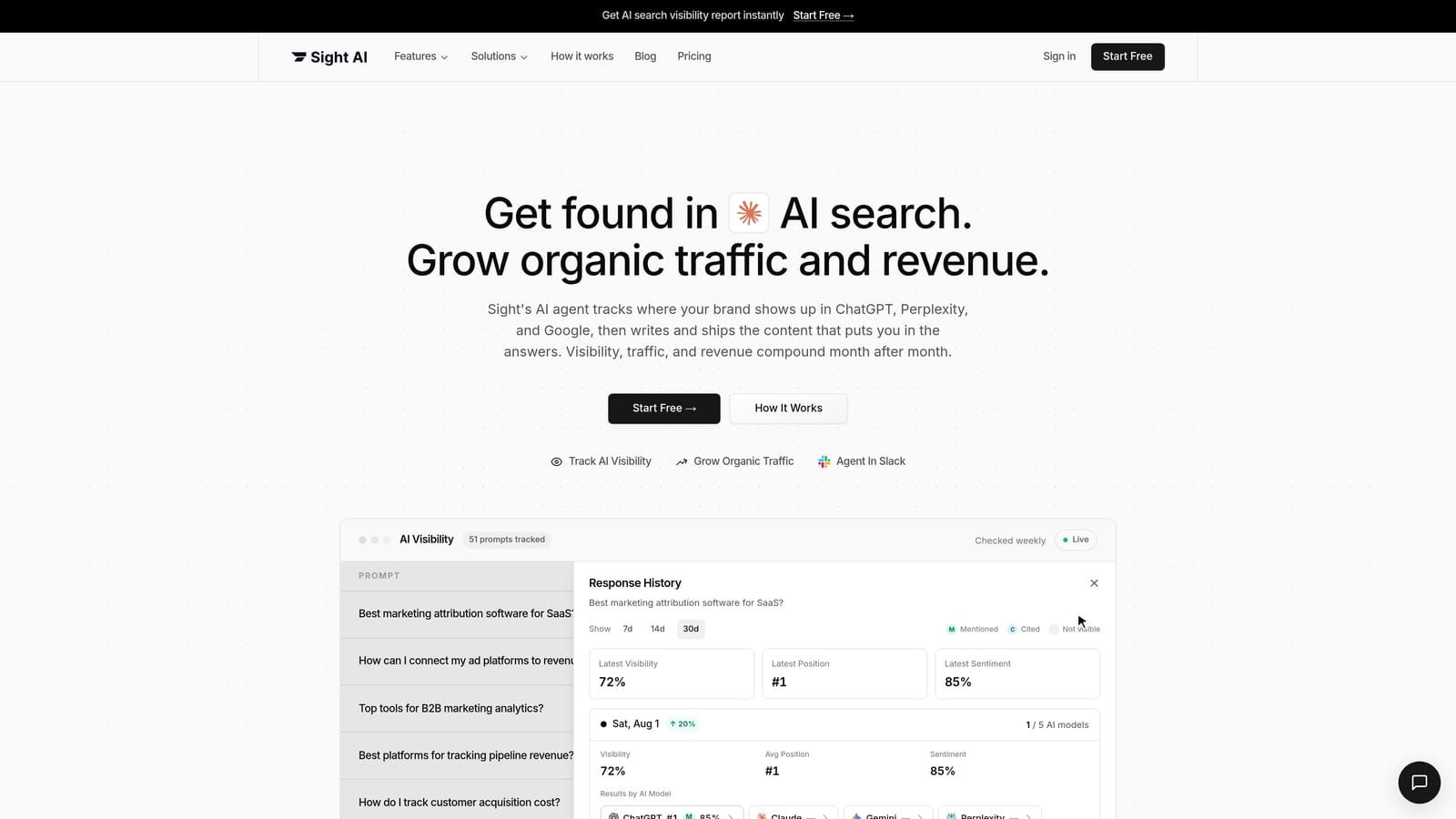
What sets it apart on this list is the closed loop. Most platforms here report on classic search rankings. Sight AI measures how AI models talk about you, surfaces content opportunities from that data, and helps you publish articles designed to earn mentions. Tracking, writing, and indexing sit in one workflow rather than three subscriptions.
- An AI Visibility Score with sentiment analysis shows whether mentions are present and whether they are positive, neutral, or negative.
- Prompt tracking across ChatGPT, Claude, Perplexity, and other AI platforms shows which questions trigger your brand and which trigger competitors.
- The AI Content Writer uses 13+ specialized agents to draft SEO and GEO (generative engine optimization) articles such as listicles, guides, and explainers, with an Autopilot Mode for hands-off production.
- IndexNow integration and automated sitemap updates push new pages to participating search engines faster than waiting for a crawl.
- CMS auto-publishing removes the copy-and-paste step between draft and live page.
Setup is light: connect your site and CMS, define the prompts and competitors you care about, and the content and indexing features run from there. A marketer or content lead can operate it without technical support.
The limitation is plain. Sight AI has no traditional keyword rank tracking and no backlink database, so it complements SE Ranking rather than replacing it. If you need position tracking, site audits, or link data, you still need one of the tools below. Pricing is listed on the Sight AI website.
Best for: Teams that want to measure and improve brand mentions in AI search answers.
2. SE Ranking
SE Ranking is an all-in-one SEO platform covering rank tracking, site audits, keyword research, backlink checking, and competitor research. It is designed for small agencies and SMBs that want a broad toolset without enterprise pricing, and it is the reference point for every other tool here.
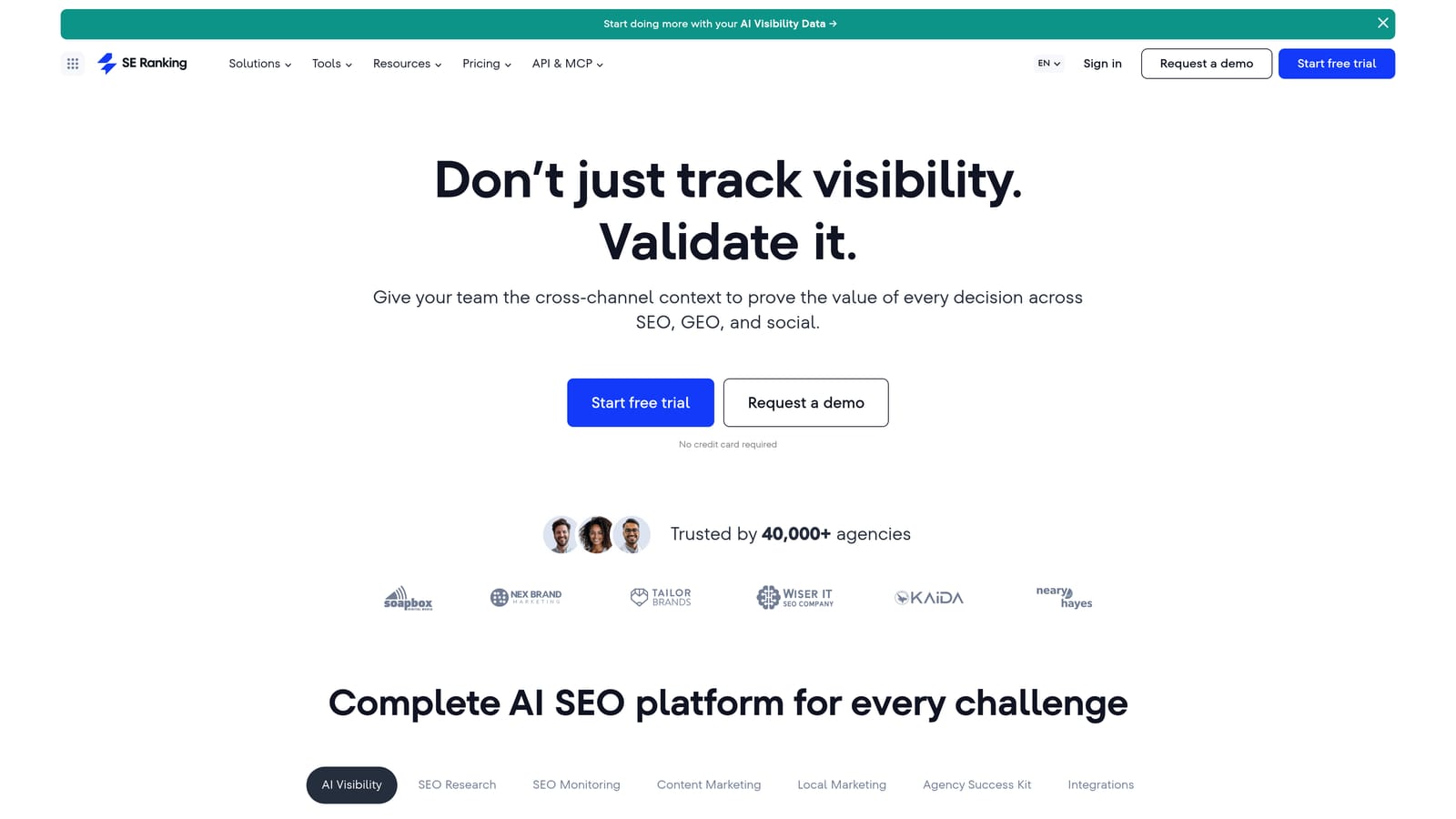
Its strongest case is value. You get most of what a larger suite offers at a lower price point, along with reporting that agencies can hand to clients. Rank tracking is the core of the product, and the rest of the toolset hangs around it.
- Rank tracking monitors keyword positions over time so you can see what moved after a change.
- The website audit flags technical issues on your pages and ranks them for fixing.
- Keyword research helps you find terms worth targeting and gauge their difficulty.
- The backlink checker shows who links to you and to competitors.
- Competitor research reveals the keywords and pages rivals rank for.
It connects to Google Search Console, Google Analytics, and Looker Studio, so reporting can sit alongside your existing dashboards. Setup is quick, and an SEO generalist can run it day to day. Verify AI-related tracking features on the vendor site, since those capabilities were still evolving as of October 2026.
The main limitation is a smaller backlink index than enterprise leaders such as Ahrefs. Link-heavy strategies may want a specialist alongside it. Plans are tiered by keyword and project limits; check current pricing as of October 2026.
Best for: Small agencies and SMBs wanting a value all-in-one.
3. Semrush
Semrush is a large marketing suite that spans SEO, PPC, content, and competitive intelligence. It is built for teams that treat search as one channel among several and want to see how competitors compete across all of them.
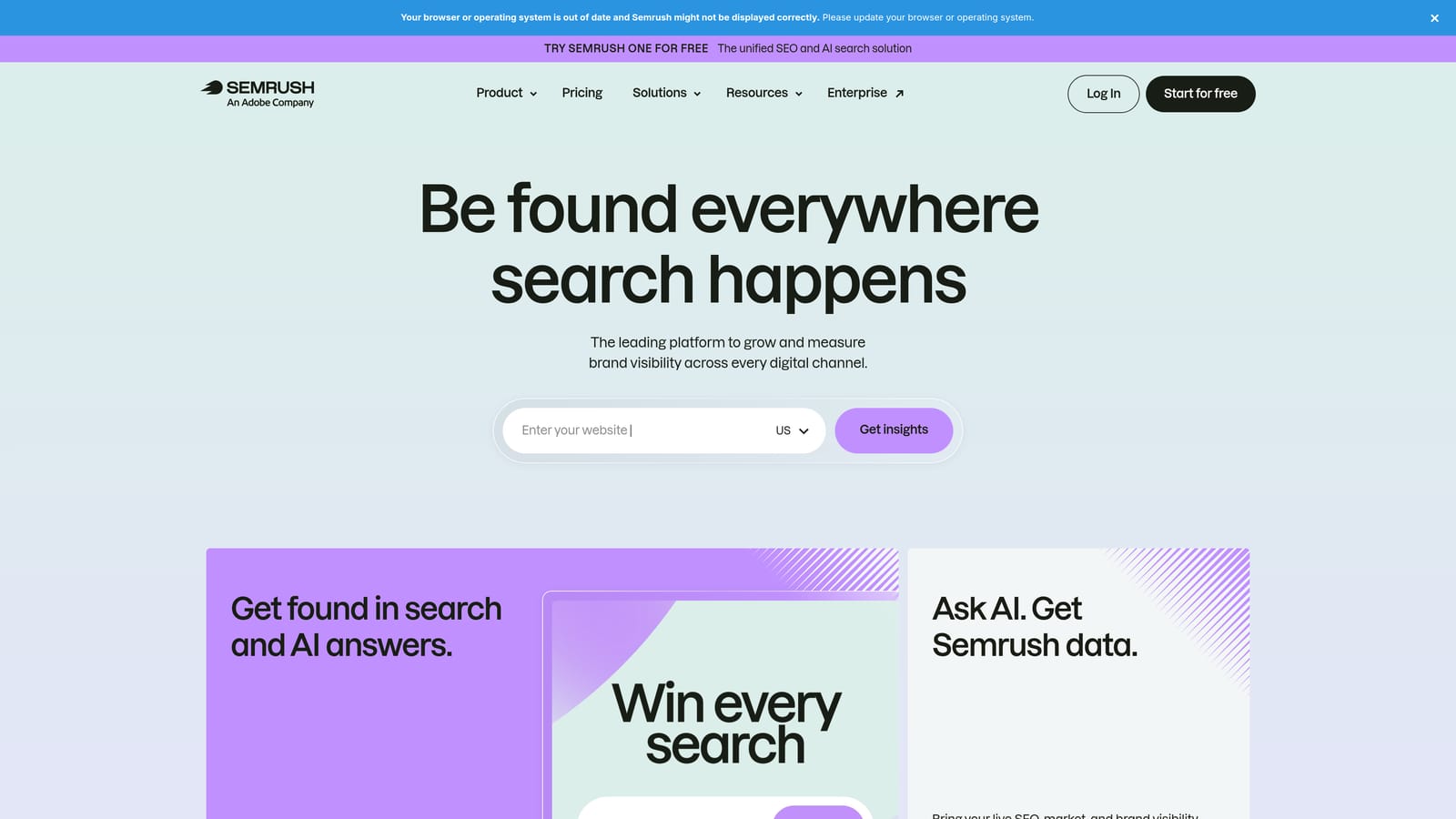
Its distinguishing strength is breadth of market intelligence. You can study a rival's organic keywords, paid campaigns, and traffic patterns in the same environment, which suits strategy work as much as day-to-day optimization.
- Keyword Magic Tool generates large keyword sets with filters, so research scales to big topic maps.
- Site Audit crawls your site and prioritizes technical fixes.
- Position Tracking monitors rankings for your chosen keywords, locations, and devices.
- Traffic analytics estimates competitor visits and sources for benchmarking.
- Content tools help plan and optimize pages against ranking competitors.
It integrates with Google Search Console, Google Analytics, Google Ads, and Looker Studio. Expect more setup time than with lighter tools, and a learning curve because of the number of modules. Semrush has also added AI visibility offerings; confirm the current scope and plan requirements on its site, as these have changed frequently.
The main drawback is cost. Base plans are tiered, but add-ons and extra seats push the total up, so budget for the real configuration rather than the headline price. Verify details as of October 2026.
Best for: Teams needing deep competitive research across channels.
4. Ahrefs
Ahrefs is an SEO platform best known for its backlink data, alongside keyword research and site auditing. It is aimed at link builders, content strategists, and analysts who need to understand why competitors rank.
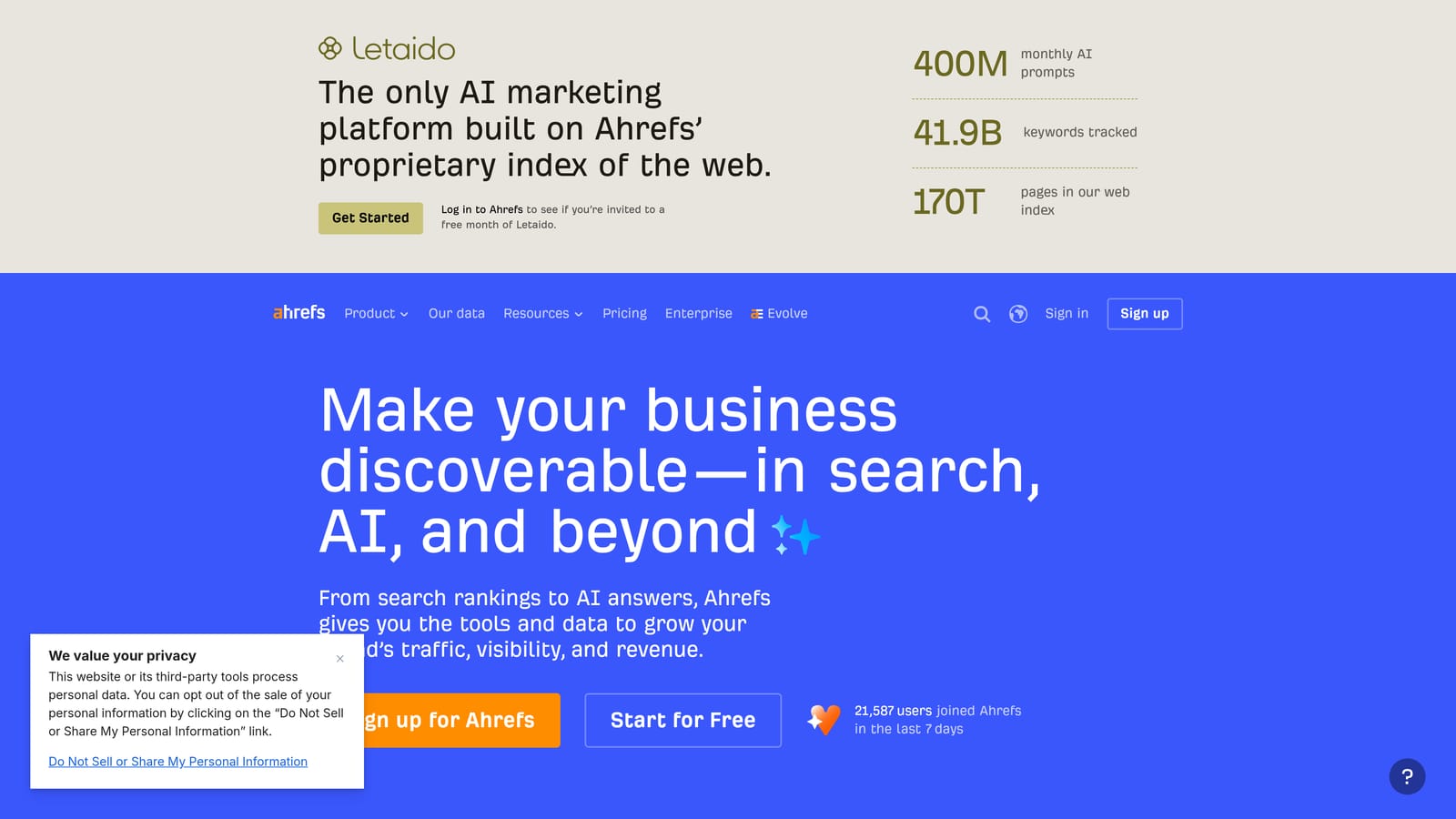
The standout is the depth of its backlink index and the link analysis built on it. When the question is who links to a competitor and how you could earn similar links, Ahrefs is the usual first stop, and it is where SE Ranking's smaller index shows its limits.
- Site Explorer breaks down any domain's backlinks, referring domains, and organic keywords.
- Keywords Explorer provides keyword ideas with difficulty and click estimates.
- Rank Tracker monitors your positions and compares them against competitors.
- Site Audit finds technical problems and tracks improvement across crawls.
- Content Explorer surfaces top-performing content by topic, which helps with outreach and ideation.
It works with Google Search Console, Google Analytics, and Looker Studio. Setup is simple, though getting full value from Site Explorer takes practice. Ahrefs has also introduced AI-search-related features, so check the current offering on its site.
The trade-offs are a higher entry price than value platforms and usage limits that can constrain heavy analysis or large teams. Plans are tiered with limits; verify as of October 2026.
Best for: Link building and competitor backlink analysis.
5. Moz Pro
Moz Pro is an SEO suite with keyword research, rank tracking, site crawling, and link analysis, and it is the home of the Domain Authority metric. It suits newer SEO teams that want the tool to explain what to do next.
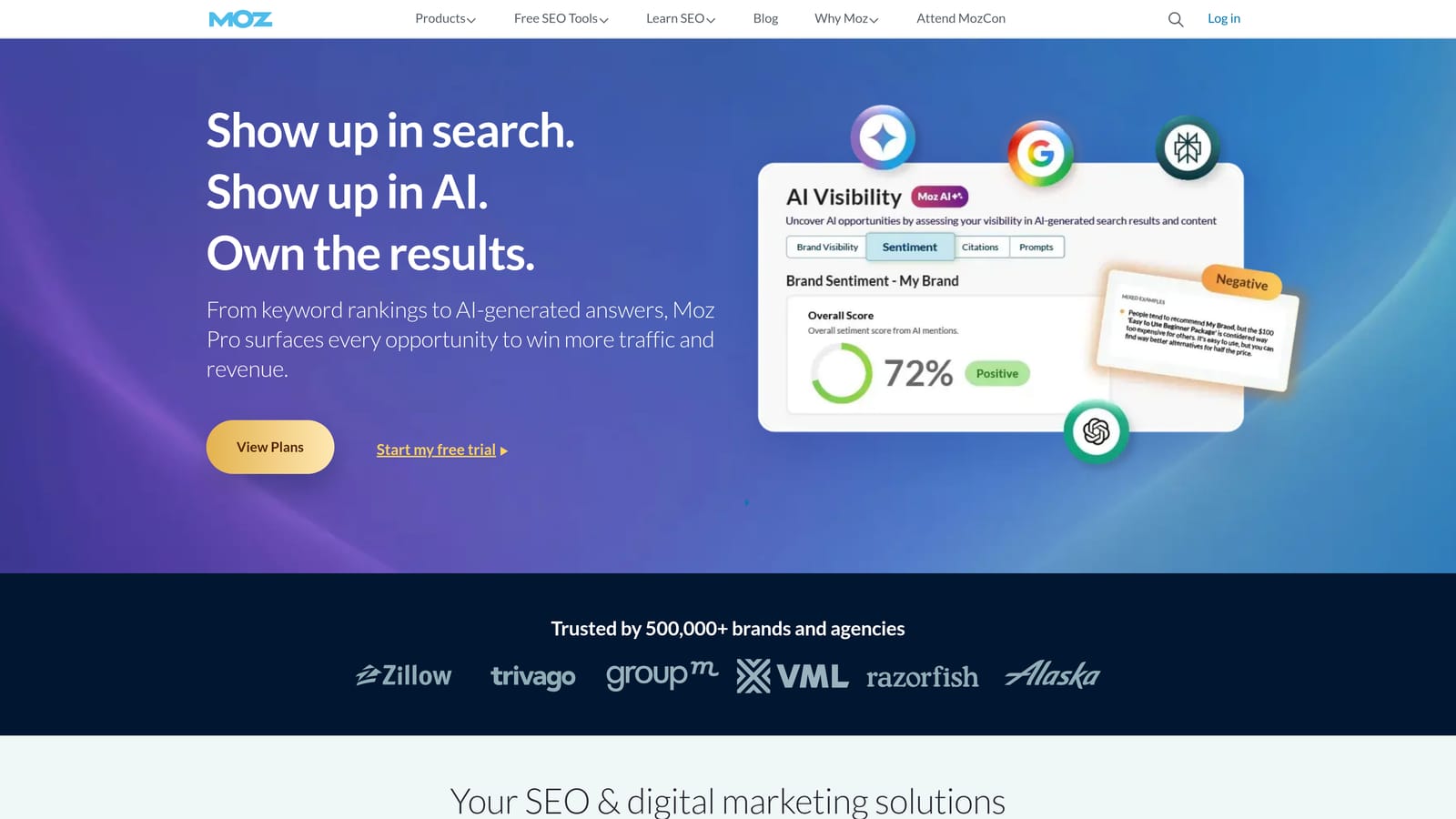
Its distinctive strength is guidance. On-page suggestions and plain-language recommendations make it easier for a marketer without a deep SEO background to act on the data.
- Keyword Explorer suggests terms and scores them so you can choose realistic targets.
- Rank tracking shows how your pages move for chosen keywords.
- Site Crawl identifies technical issues in a prioritized list.
- On-page optimization suggestions tell you what to change on a specific page.
- Link Explorer lets you inspect link profiles for your site and competitors.
It integrates with Google Analytics and Google Search Console. Setup is straightforward and a non-specialist can run it.
One point worth correcting: Domain Authority is a third-party score created by Moz, not a Google ranking signal. Use it to compare sites relative to each other, never as a measure of what Google thinks. The limitations are a smaller index and narrower feature breadth than the larger rivals, so teams outgrowing it often move to Semrush or Ahrefs. Plans are tiered; verify as of October 2026.
Best for: Newer SEO teams wanting clear guidance.
6. Serpstat
Serpstat is a budget all-in-one SEO platform covering keyword research, rank tracking, site audits, backlink analysis, and competitor analysis. It targets freelancers and small businesses that need broad coverage without paying for a premium suite.
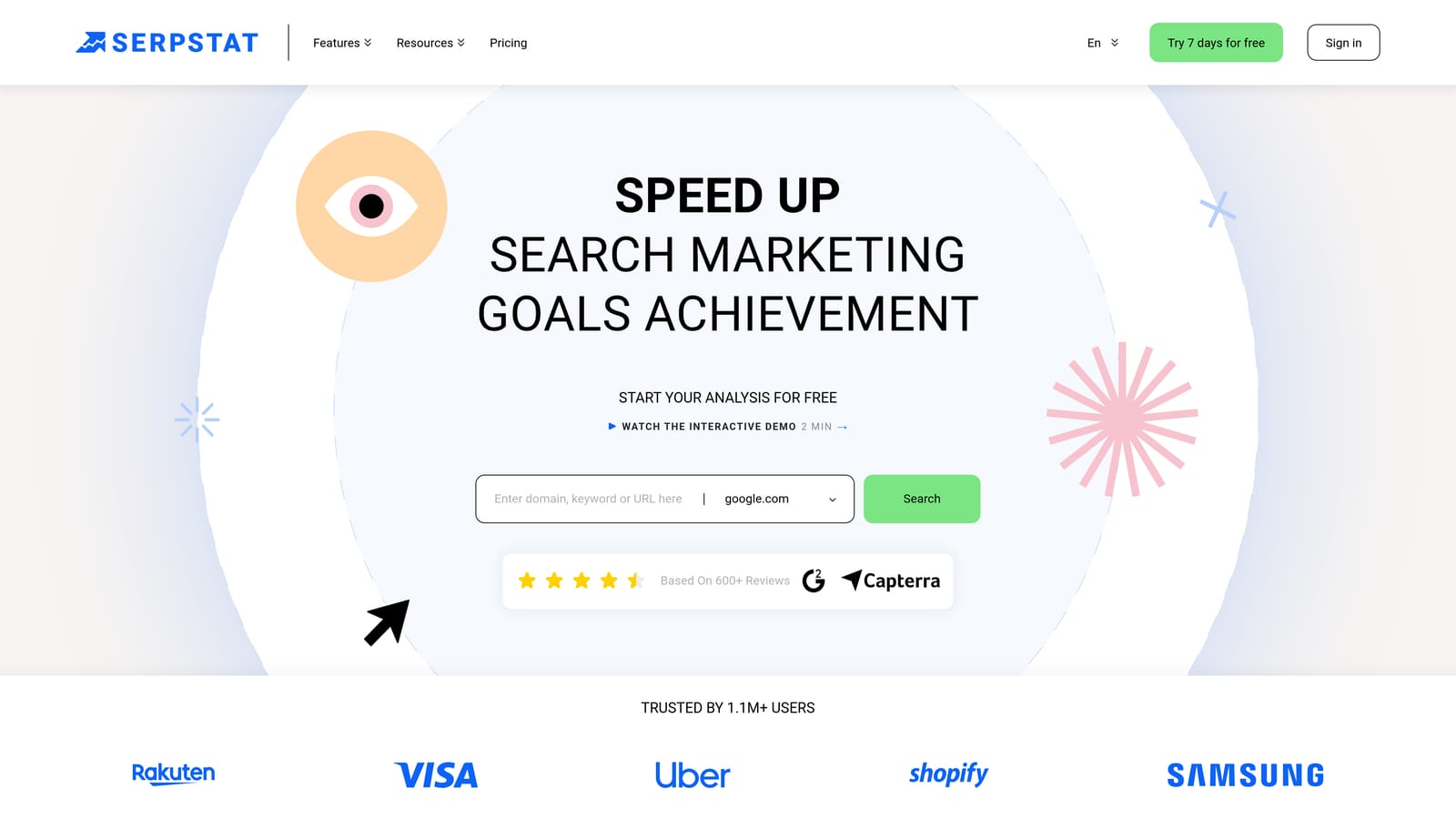
Its edge is the combination of breadth and low cost. It is the closest like-for-like alternative to SE Ranking on price, which makes it worth a trial if budget is the deciding factor.
- Keyword research gives you ideas and metrics for planning content.
- Rank tracking follows your positions over time.
- Site audit surfaces technical issues to fix.
- Backlink analysis shows link profiles for your site and others.
- Competitor analysis reveals rivals' keywords and visibility.
It connects to Google Analytics, Google Search Console, and Looker Studio. One person can set it up and run it without help.
The compromise is data depth and polish. Interfaces and datasets are less refined than those of larger platforms, so cross-check important numbers before committing budget to them. It is also not the right pick for agencies that need extensive white-label reporting or very large datasets. Plans are tiered; verify as of October 2026.
Best for: Freelancers and small businesses on tight budgets.
7. Mangools
Mangools is a set of simple SEO tools built around keyword research and SERP analysis. It is designed for bloggers, small site owners, and solo marketers who want answers quickly without a heavy interface.
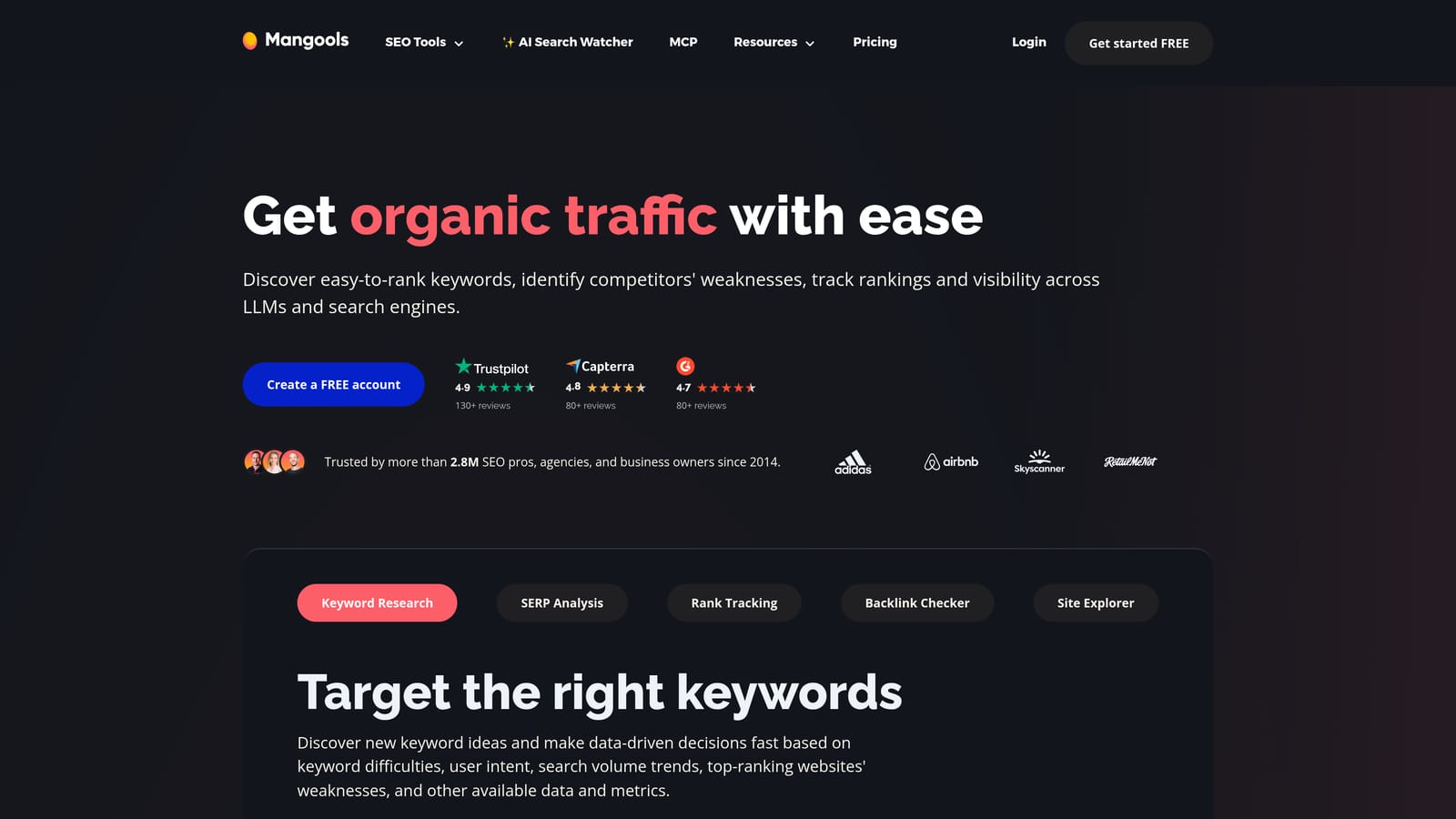
What it does best is make keyword difficulty easy to read. A clear score and a clean layout help you pick winnable long-tail targets, which is useful when a bigger keyword database would simply overwhelm you.
- KWFinder suggests long-tail keywords with difficulty and volume.
- SERPChecker analyzes the top results so you can judge how hard a query is to beat.
- SERPWatcher tracks your rankings over time.
- LinkMiner lets you inspect backlinks for outreach ideas.
- SiteProfiler gives a quick overview of any domain.
It integrates with Google Search Console, and setup takes minutes. A single blogger or marketer can run it.
The limitation is scope. Technical auditing is limited and enterprise reporting is absent, so agencies managing many clients will outgrow it. It works best as a lightweight research tool alongside a crawler or as the main tool for a small content site. Plans are tiered; verify as of October 2026.
Best for: Bloggers and small sites doing long-tail keyword research.
8. Screaming Frog SEO Spider
Screaming Frog SEO Spider is a desktop crawler for technical SEO audits. It is built for technical SEOs and developers who want to inspect every URL on a site and shape the crawl to their needs.
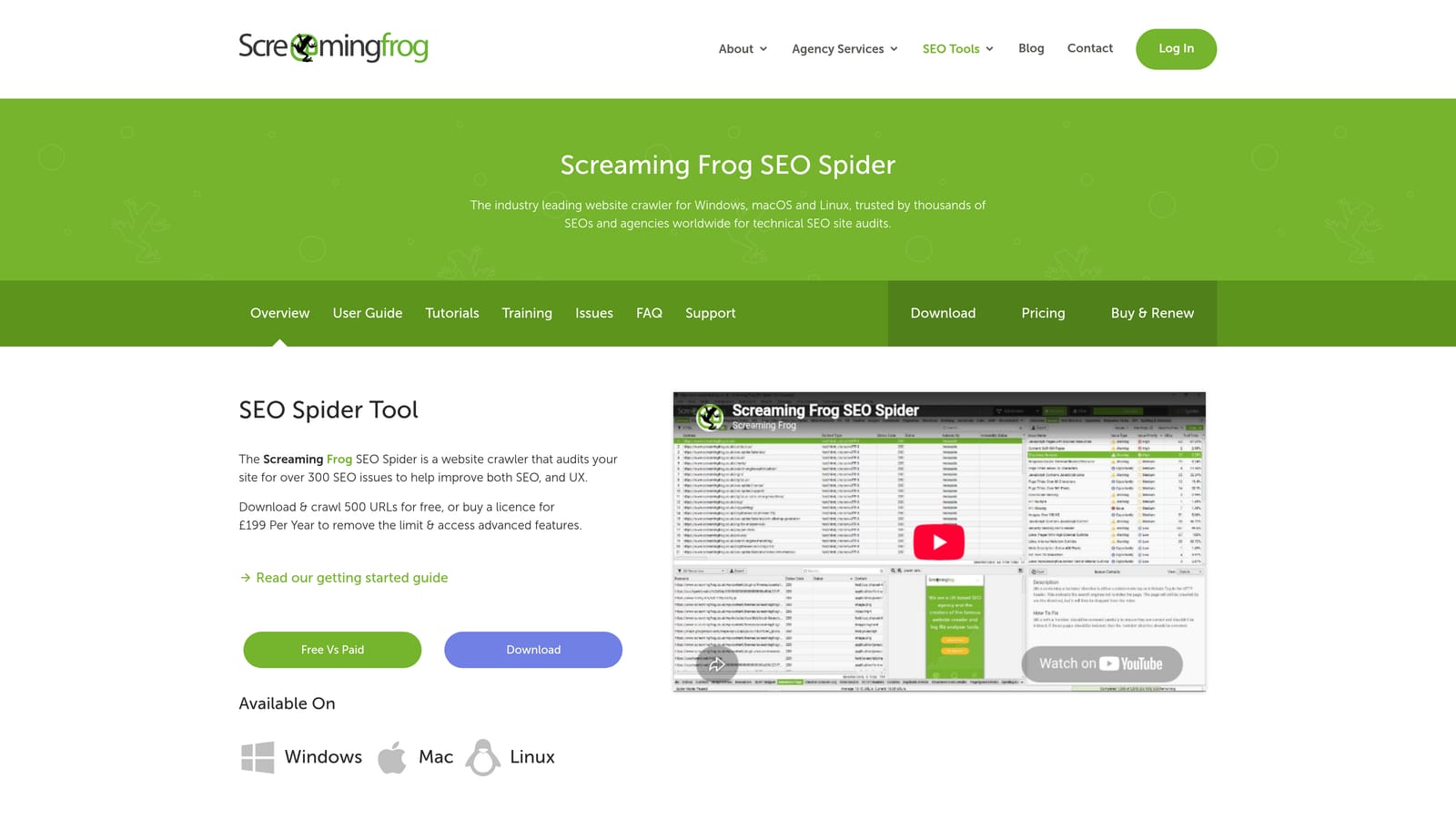
Its strength is depth and control on large sites. Cloud auditors give you a summary; Screaming Frog gives you the raw crawl data to filter, export, and query however you like.
- Site crawling maps every URL, status code, and internal link so structure problems are visible.
- Broken link and redirect detection finds chains and dead ends to clean up.
- Metadata and duplicate content analysis highlights thin or repeated pages.
- JavaScript rendering lets you audit sites that load content client-side.
- Custom extraction pulls specific elements, such as schema or product data, from pages at scale.
It can pull in data from Google Analytics, Google Search Console, and PageSpeed Insights. Setup means installing the software, and the learning curve is steeper than for browser-based tools.
Because it runs locally, it has no rank tracking and no cloud collaboration, which makes sharing results with clients more manual. A free version caps the number of URLs it will crawl, and an annual paid license removes that limit; check the current license cost on the vendor site.
Best for: Technical SEOs running in-depth site audits.
9. Google Search Console
Google Search Console is Google's free tool for monitoring a site's search performance and indexing. Every site owner should have it connected, whatever else they pay for.
Its unique value is first-party data. Third-party tools estimate rankings and traffic; Search Console reports the actual queries, clicks, and impressions Google recorded for your site, which makes it the benchmark for checking other tools' numbers.
- Query, click, and impression reports show which searches bring visibility and how your pages perform.
- Index coverage reveals which pages Google has indexed and why others were excluded.
- Core Web Vitals reports flag page experience problems affecting real users.
- Sitemap submission tells Google where your content lives.
- URL inspection shows how Google sees a specific page and lets you request indexing.
It connects to Google Analytics and Looker Studio, and most SE Ranking, Semrush, and Ahrefs workflows pull from it. Verification takes a few minutes, and marketers can run it without developer help, though some fixes need one.
The limitation is scope: no competitor data and no keyword research. It tells you about your own site only, and its data is aggregated and sampled in places. It is free.
Best for: Every site owner as a free baseline.
Matching a Core Suite to a Specialist Companion
No single tool on this list covers everything, and a bigger keyword database does not automatically mean better data. The practical approach is one core suite plus one specialist, chosen by your situation.
- Agencies: SE Ranking or Semrush as the core for reporting and client work, with Screaming Frog for deep audits.
- Budget teams: Serpstat or Mangools as the core, with Google Search Console as the free baseline.
- Link-focused strategists: Ahrefs as the core, since its backlink index is the strongest here.
- Technical auditors: Screaming Frog paired with Search Console, adding a rank tracker of your choice.
- Teams needing AI visibility coverage: Sight AI alongside whichever classic suite you already use.
The last pairing is the one most teams are missing. A rank tracker tells you where you sit in traditional results; it does not tell you whether ChatGPT, Claude, or Perplexity recommend you. Sight AI fills that gap, and it is honest to say it does so as a companion rather than a replacement.
Stop guessing how AI models like ChatGPT and Claude talk about your brand. Get visibility into every mention, track content opportunities, and automate your path to organic traffic growth. Start tracking your AI visibility today and see exactly where your brand appears across top AI platforms.