SaaS SEO best practices are well-documented at this point. Product-led content, programmatic landing pages, topical authority hubs, technical health, AI visibility, and content velocity at scale. The challenge isn't knowing what to do. It's having the right tools to actually execute.
The gap between strategy and results almost always comes down to tooling. The right stack turns a well-researched SEO plan into measurable organic growth. The wrong stack leaves your team doing manual work, missing signals, and falling behind competitors who have automated the fundamentals.
This list covers the top tools that help SaaS teams put SEO and GEO best practices into action across AI visibility, content creation, technical audits, keyword research, link building, and analytics. Each tool was selected based on its relevance to SaaS-specific challenges, depth of features, pricing transparency, and compatibility with modern workflows including Generative Engine Optimization. If you're also thinking about how to increase organic traffic beyond traditional search, you'll find that several of these tools address the AI-driven discovery layer that's becoming impossible to ignore.
1. Sight AI
Best for: SaaS teams that want to track AI visibility, produce GEO-optimized content, and automate indexing in one platform.
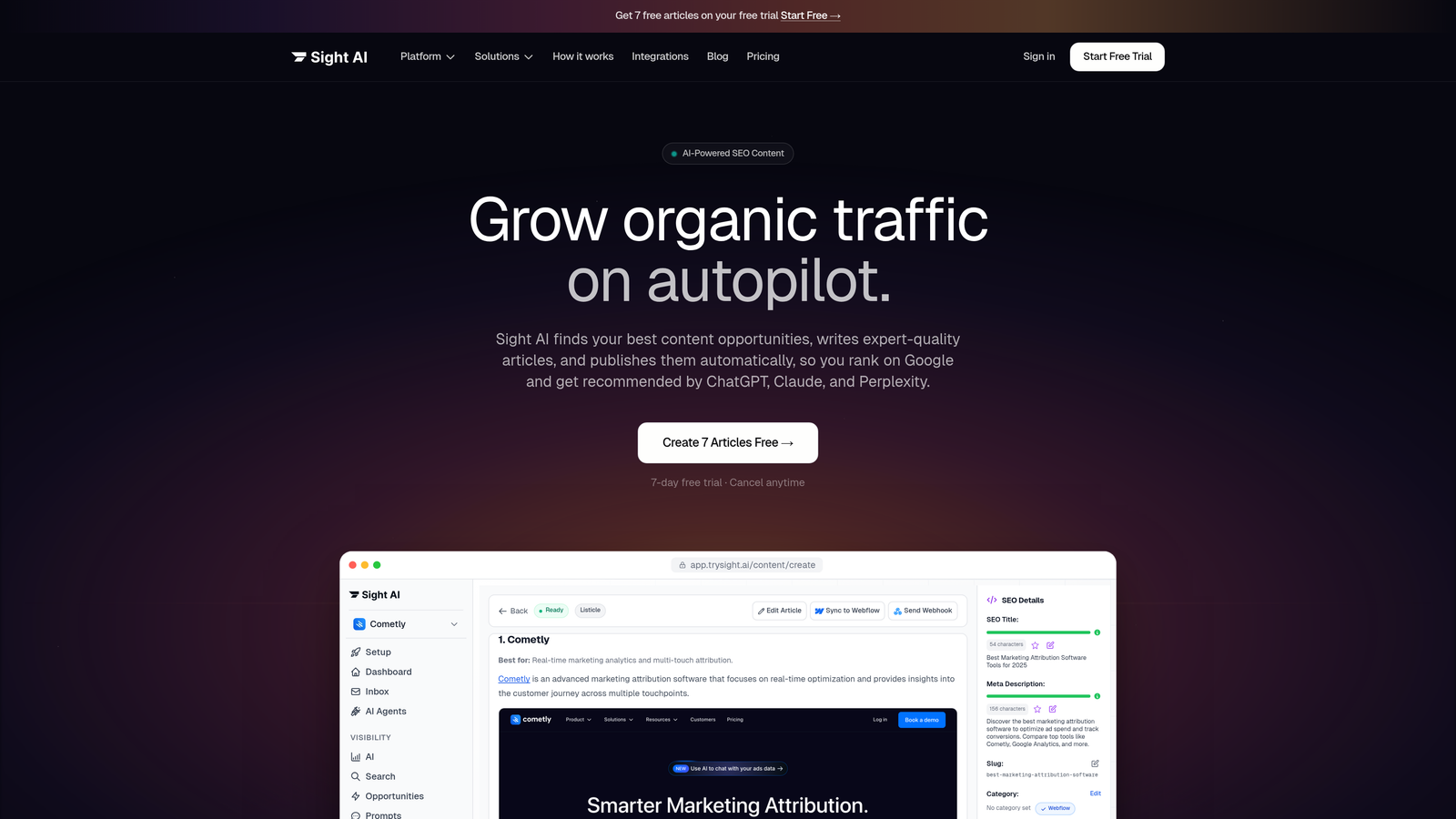
Sight AI is an all-in-one platform combining AI visibility tracking, SEO/GEO content generation, and automated website indexing built specifically for SaaS teams competing in both traditional and AI-driven search.
Where This Tool Shines
Most SaaS SEO stacks have a blind spot: they track rankings in Google but have no idea how AI assistants like ChatGPT, Claude, or Perplexity describe their brand to potential buyers. Sight AI closes that gap with an AI Visibility Score that monitors brand mentions across 6+ AI platforms, giving you the kind of signal that's increasingly influencing buying decisions at the top of the funnel.
Beyond tracking, Sight AI accelerates content production with 13+ specialized AI writing agents capable of generating SEO and GEO-optimized listicles, guides, and explainers. Autopilot Mode handles content production hands-off, while IndexNow integration and automated sitemap updates ensure new content gets discovered and indexed faster than waiting for Google's crawl queue.
Key Features
AI Visibility Score: Tracks how your brand is mentioned and positioned across ChatGPT, Claude, Perplexity, and 6+ AI platforms with sentiment analysis and prompt tracking.
13+ Specialized AI Writing Agents: Generates SEO/GEO-optimized content across formats including listicles, how-to guides, and explainers tailored for both search engines and AI discovery.
Autopilot Mode: Hands-off content production that keeps your publishing cadence consistent without requiring constant manual input from your team.
IndexNow Integration: Automated sitemap updates and instant URL submission to search engines so new content gets crawled and indexed faster.
CMS Auto-Publishing: Streamlines end-to-end content workflows by publishing directly to your CMS, reducing the gap between content creation and going live.
Best For
SaaS marketers, founders, and agencies who need to monitor their brand presence across AI platforms, maintain high content velocity, and ensure every new page gets indexed quickly. Particularly valuable for teams that want a single platform rather than stitching together separate tools for content, tracking, and indexing.
Pricing
Visit trysight.ai for current plans and pricing details.
2. Ahrefs
Best for: Competitive backlink analysis, keyword research, and link-driven growth strategies for SaaS teams.
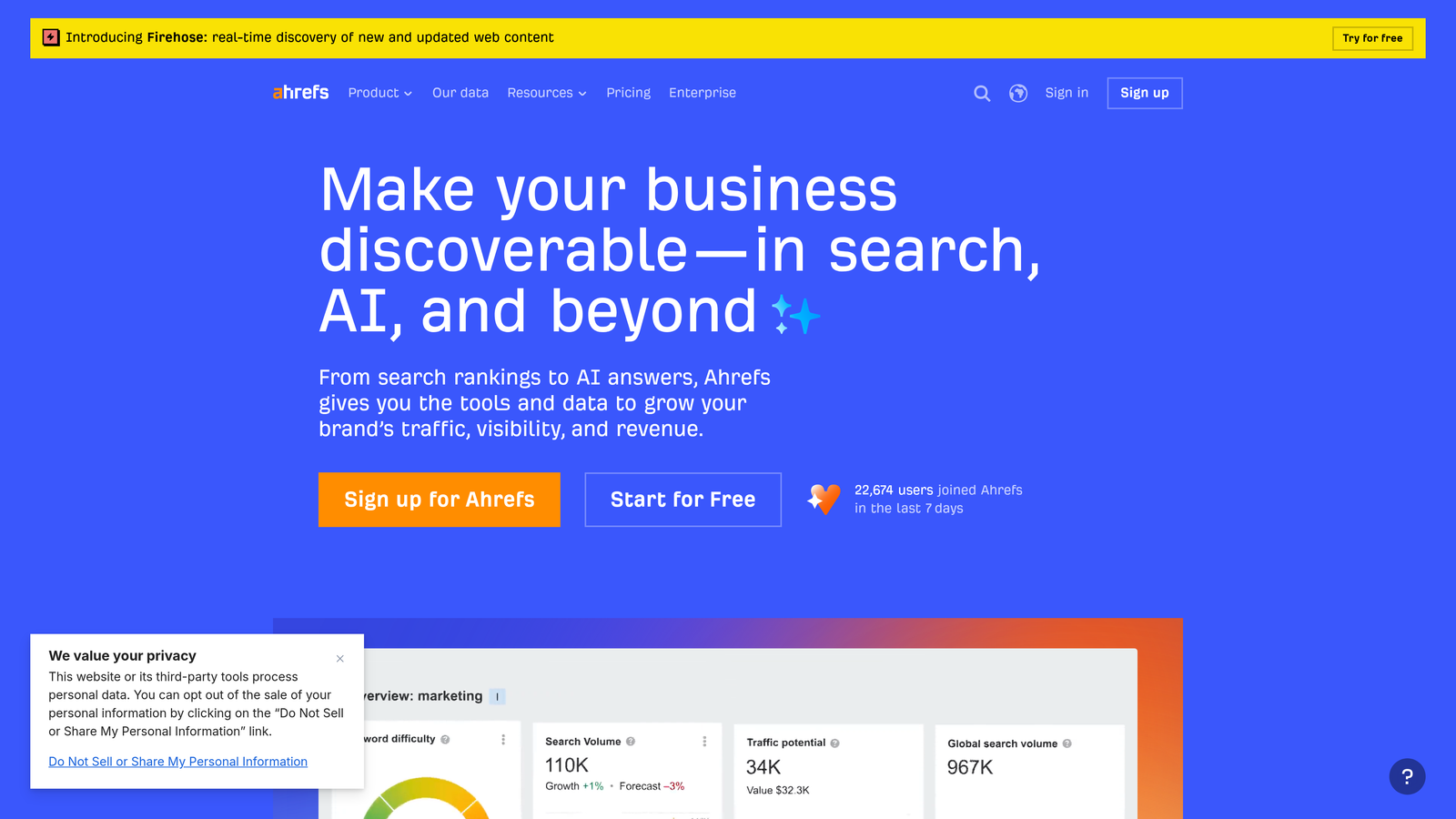
Ahrefs is an industry-leading SEO platform with the largest live backlink index available, widely trusted by SaaS SEO teams for competitive intelligence and link acquisition strategy.
Where This Tool Shines
If your SaaS is competing for high-volume keywords in a crowded category, understanding your competitors' link profiles is non-negotiable. Ahrefs makes that analysis fast and thorough. You can identify exactly which domains are linking to competitors but not to you, then build a prioritized outreach list based on domain authority and relevance.
The Content Explorer is equally useful for SaaS content teams. Search any topic and surface the highest-performing articles by traffic, backlinks, or social shares. This makes it straightforward to identify content gaps and build a pipeline of topics with proven demand.
Key Features
Backlink Index: The largest live backlink database available, enabling detailed link gap analysis and competitor monitoring.
Content Explorer: Surfaces high-performing content by niche, traffic, and backlink count to inform your content strategy.
Site Audit: Crawls your site to identify technical SEO issues including broken links, redirect chains, and crawlability problems.
Keyword Explorer: Provides click-through rate estimates and traffic potential alongside standard keyword difficulty metrics.
Rank Tracker: Monitors SERP positions with SERP feature tracking so you can see when featured snippets or other rich results appear.
Best For
SaaS SEO teams focused on link-driven growth, competitive keyword research, and content gap analysis. Especially valuable for teams with dedicated link building programs or those in competitive categories where backlink profiles significantly influence rankings.
Pricing
Starts at $129/month for the Lite plan. Higher tiers unlock additional seats, historical data, and advanced reporting.
3. Semrush
Best for: All-in-one SEO, content marketing, and competitive intelligence for SaaS marketing teams.
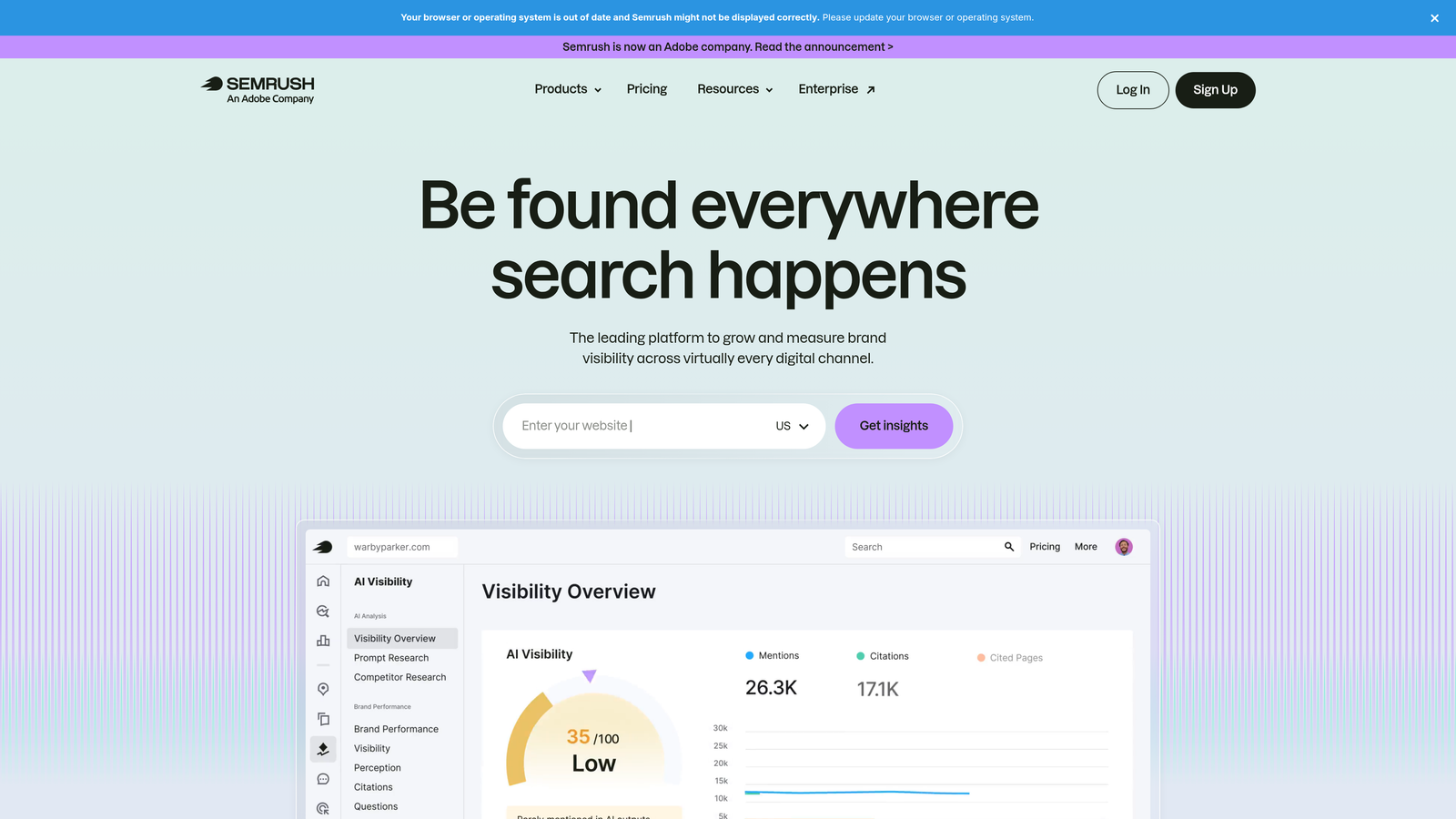
Semrush is a comprehensive digital marketing suite covering keyword research, site audits, rank tracking, content marketing tools, and competitive analysis in a single platform.
Where This Tool Shines
Semrush earns its place in SaaS stacks because it covers so much ground. Instead of juggling separate tools for keyword research, rank tracking, and technical audits, teams can handle all three from one interface. The Market Explorer feature is particularly useful for SaaS companies still defining their total addressable market, offering estimates of competitor traffic and audience overlap.
The Content Marketing Toolkit adds another layer of value. Topic Research surfaces related questions and trending subtopics, while the SEO Writing Assistant grades content in real time against top-ranking pages. For SaaS teams running content at scale, having these features alongside keyword and rank data reduces context-switching significantly.
Key Features
Keyword Database: Extensive keyword data with difficulty scores, intent classification, and SERP feature analysis.
Position Tracking: Daily rank updates with competitor benchmarking and visibility trend reporting.
Site Audit: Runs 140+ technical SEO checks and prioritizes issues by impact severity.
Content Marketing Toolkit: Combines topic research, content briefs, and an SEO writing assistant in one workflow.
Market Explorer: Estimates competitor traffic, audience demographics, and market share for strategic planning.
Best For
SaaS marketing teams that want a single platform for SEO, content, and competitive research. Particularly strong for teams where one or two people own multiple functions and need breadth over depth in any single area.
Pricing
Starts at $139.95/month for the Pro plan. Business and Agency plans are available at higher price points with expanded limits and features.
4. Surfer SEO
Best for: On-page content optimization using real-time NLP scoring against top-ranking pages.
Surfer SEO is an on-page optimization platform that scores your content against the top-ranking pages for any keyword, giving writers real-time guidance on structure, keyword usage, and topical depth.
Where This Tool Shines
Surfer's Content Editor is where most SaaS writers spend their time. As you write, it scores your article on a 0-100 scale based on how well it compares to the top 10 results for your target keyword. You can see exactly which terms to include, how many times to use them, and whether your word count and heading structure align with what's already ranking.
The SERP Analyzer adds competitive context by breaking down what the top-ranking pages are doing structurally and semantically. This is useful for SaaS content teams building topical authority, because it reveals patterns in how Google currently rewards content in your category.
Key Features
Content Editor: Real-time optimization scoring with keyword recommendations as you write, integrated directly into the drafting workflow.
SERP Analyzer: Compares your content structure and keyword usage against the top 10 ranking pages for any query.
Keyword Clustering: Groups related keywords into topic clusters to inform content planning and internal linking strategy.
Google Docs and WordPress Integrations: Brings the optimization score directly into the tools your writers already use.
Audit Tool: Identifies underperforming existing pages and provides specific recommendations to improve rankings.
Best For
SaaS content teams that produce high volumes of SEO-targeted articles and need a structured, data-driven process for ensuring each piece is optimized before publishing. Also useful for refreshing existing content that has stalled in rankings.
Pricing
Starts at $99/month for the Essential plan. Higher tiers include more content editor articles per month and additional team seats.
5. Screaming Frog SEO Spider
Best for: Deep technical SEO audits and site crawls to uncover indexing and architecture issues.
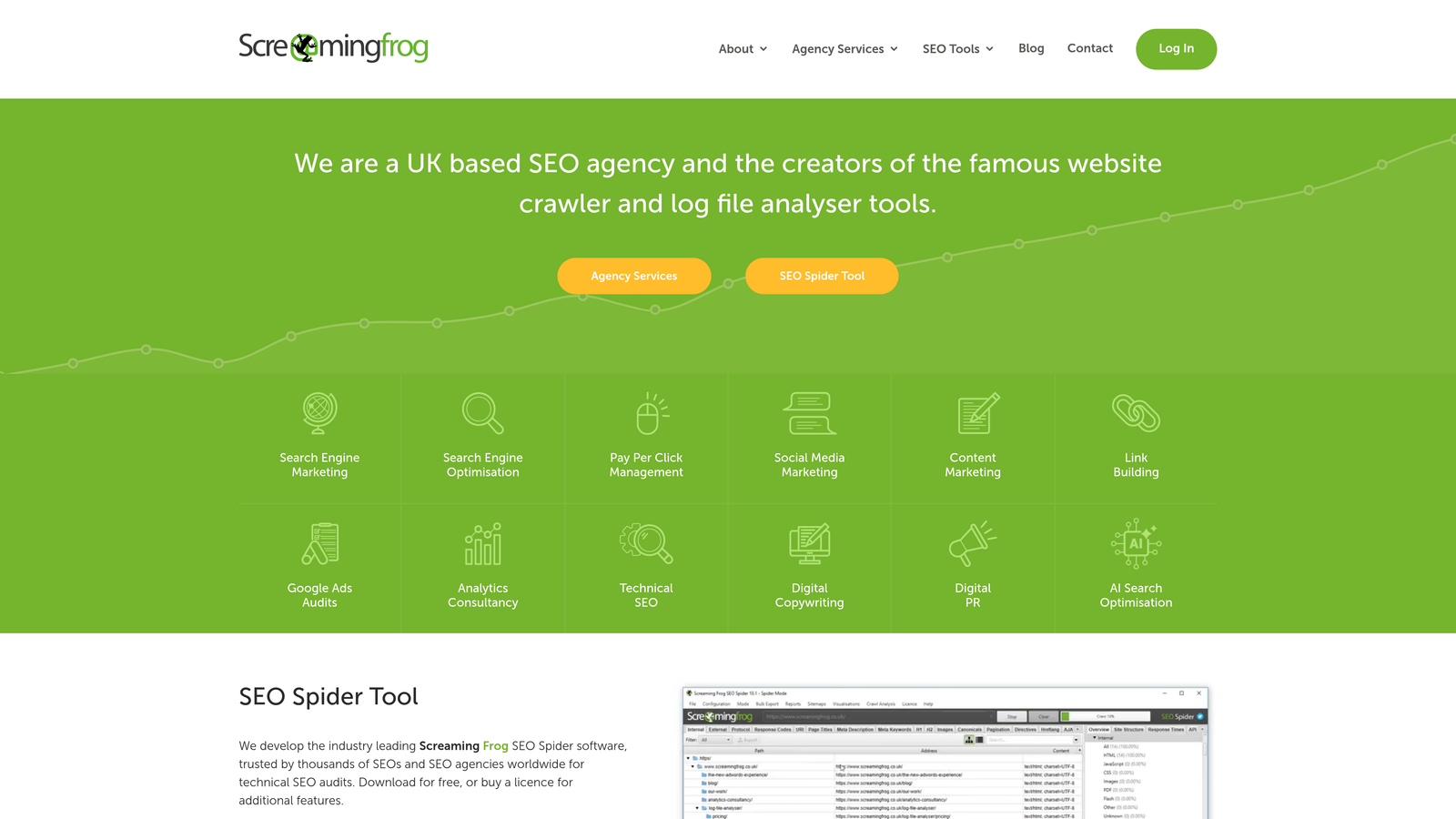
Screaming Frog SEO Spider is a desktop-based website crawler that replicates how search engines navigate your site, surfacing technical issues that block rankings and slow down indexing.
Where This Tool Shines
SaaS companies tend to have large, complex sites with multiple subdomains, product pages, documentation, blog content, and landing pages all competing for crawl budget. Screaming Frog is built for exactly this kind of complexity. It crawls your entire site and returns a detailed report on broken links, redirect chains, duplicate content, missing meta tags, and pages that are blocked from indexing.
What makes it particularly valuable for technical SEO work is the depth of data it returns. You can filter by status code, response time, content type, or any number of other parameters to isolate specific problem areas. For SaaS teams doing quarterly technical audits, this level of granularity is hard to match with cloud-based tools alone.
Key Features
Full Site Crawl: Crawls unlimited URLs on the paid license, identifying broken links, server errors, and redirect chains at scale.
On-Page Analysis: Reviews page titles, meta descriptions, H1 tags, and canonical tags across your entire site in one pass.
XML Sitemap Generation: Creates and exports sitemaps directly from the crawl data for submission to search engines.
Third-Party Integrations: Connects with Google Analytics, Google Search Console, and PageSpeed Insights to enrich crawl data with performance metrics.
Custom Extraction: Uses XPath and regex to pull specific data points from pages for advanced technical analysis.
Best For
Technical SEO specialists and SaaS teams with large or complex sites who need thorough, customizable crawl data for audits, migrations, or ongoing health monitoring.
Pricing
Free for crawls up to 500 URLs. The full license is £259/year with no URL limit and access to all advanced features.
6. Clearscope
Best for: Building topical authority through semantically complete, intent-aligned content graded by NLP analysis.
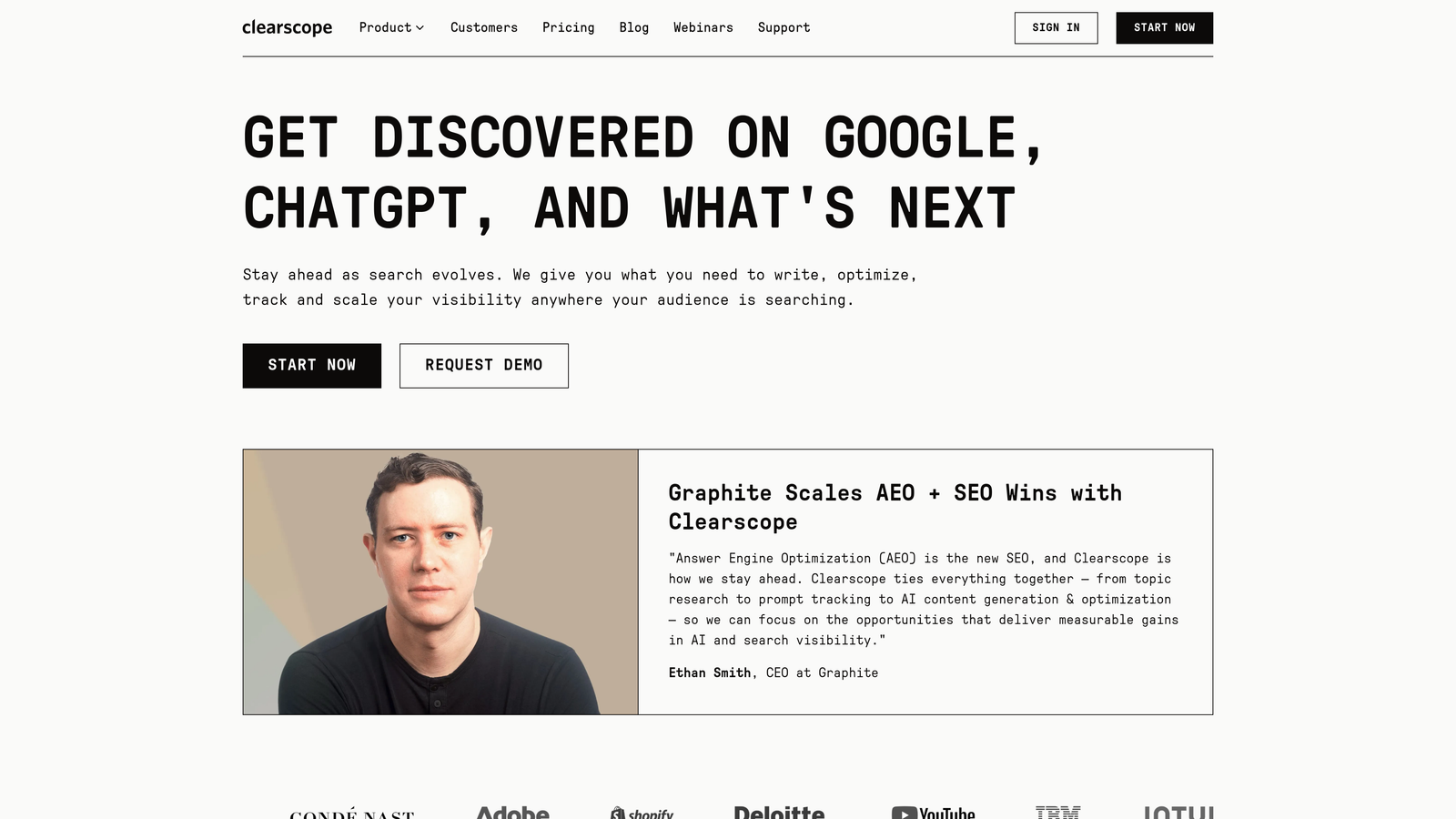
Clearscope is a content optimization platform that grades articles on semantic relevance and topical completeness, helping SaaS teams produce content that comprehensively covers the topics buyers are searching for.
Where This Tool Shines
Where Surfer SEO focuses heavily on competitive benchmarking, Clearscope leans into semantic completeness. Its grading system, which runs from F up to A++, is based on how thoroughly your content covers the relevant terms and concepts that top-ranking pages include. This makes it particularly useful for SaaS teams trying to build genuine topical authority rather than just hitting keyword density targets.
The term recommendations come with search intent context, so writers understand not just which terms to include but why they matter to the reader. The Google Docs and WordPress plugins keep this guidance accessible without requiring writers to switch between multiple tabs during drafting.
Key Features
Content Grading System: Scores content from F to A++ based on NLP analysis of semantic relevance and topical coverage.
Term Recommendations: Surfaces related terms with search intent context to guide writers toward comprehensive coverage.
Competitor Content Comparison: Shows how your content compares to the top-ranking pages for your target keyword.
Google Docs and WordPress Plugins: Delivers optimization guidance directly inside the tools your writing team already uses.
Content Inventory Tools: Helps teams audit existing content and identify pages that need refreshing to maintain or improve rankings.
Best For
SaaS content teams focused on building deep topical authority, particularly those producing long-form guides and pillar pages where semantic completeness is a key ranking factor.
Pricing
Starts at $189/month for the Essentials plan. Enterprise plans are available for larger teams with higher content volume needs.
7. Google Search Console
Best for: First-party search performance data, indexing status monitoring, and Core Web Vitals reporting at no cost.
Google Search Console is Google's own free tool providing direct data on how your site performs in search, what gets indexed, and where technical issues exist.
Where This Tool Shines
Every other tool on this list is interpreting data about Google's search results. Search Console gives you data directly from Google itself. That distinction matters. When you need to know whether a page is indexed, why it's excluded, or how many impressions a keyword is generating, Search Console is the authoritative source. No estimation or approximation involved.
For SaaS teams publishing content regularly, the Index Coverage report is essential. It shows exactly which pages are indexed, which are excluded and why, and which have errors that need fixing. Combined with the URL Inspection tool, you can diagnose and resolve indexing problems faster than waiting for third-party crawl data to catch up.
Key Features
Search Performance Reports: Shows impressions, clicks, click-through rate, and average position for every query and page across your site.
Index Coverage Report: Categorizes all pages as indexed, excluded, or errored with specific reasons for each status.
URL Inspection Tool: Provides real-time indexing status for any URL and lets you request indexing directly from the interface.
Core Web Vitals Report: Identifies pages with poor LCP, INP, or CLS scores based on real user data from the Chrome User Experience Report.
Sitemap Submission: Allows direct sitemap submission to Google and tracks crawl stats over time.
Best For
Every SaaS team, without exception. Search Console is foundational infrastructure for any SEO program. It should be configured and monitored regardless of what other tools are in your stack.
Pricing
Completely free. No paid tiers or feature limits.
8. Jasper
Best for: High-volume, on-brand AI content generation for marketing teams with diverse content needs across campaigns.
Jasper is an AI content generation platform with brand voice customization, campaign-level workflows, and a broad template library designed for marketing teams producing content at scale.
Where This Tool Shines
Jasper's Brand Voice feature sets it apart from generic AI writing tools. You train it on your existing content, style guides, and messaging frameworks, and it applies that voice consistently across everything it generates. For SaaS companies with established brand guidelines, this reduces the editing time required to bring AI-generated content up to standard.
The campaign-level workflow is useful for coordinated content launches. Rather than generating individual pieces in isolation, you can build out a full campaign with interconnected blog posts, landing page copy, email sequences, and ad variations that share consistent messaging and structure. The Surfer SEO integration adds an optimization layer for teams that want both volume and search performance.
Key Features
Brand Voice: Trains on your existing content and style guides to produce consistently on-brand output across all content types.
Campaign Workflows: Coordinates content creation across multiple formats and channels for cohesive campaign launches.
Template Library: Covers blog posts, landing pages, email sequences, ad copy, and social content with structured prompts.
Team Collaboration: Includes approval workflows and commenting so editors and stakeholders can review before publishing.
Surfer SEO Integration: Connects content generation with on-page optimization scoring in a single workflow.
Best For
SaaS marketing teams that need to produce large volumes of on-brand content across multiple formats and channels, particularly those running coordinated campaign launches or maintaining active blogs alongside other content programs.
Pricing
Starts at $49/month for the Creator plan. Team and Business plans are available at higher tiers with expanded seats and features.
9. Pitchbox
Best for: Scalable link building outreach with automated prospecting, personalized sequences, and CRM-style pipeline management.
Pitchbox is a link building outreach platform that automates prospecting, personalizes multi-step email sequences, and manages relationships through a structured pipeline for teams running link acquisition at scale.
Where This Tool Shines
Link building is one of the most time-intensive parts of SaaS SEO, and Pitchbox is built to compress that time without sacrificing personalization. The automated prospecting uses built-in search operators to find relevant link opportunities based on your target keywords and niche, then pulls contact information and domain metrics so your team can qualify prospects before reaching out.
The CRM-style pipeline is what keeps link building organized at scale. Every opportunity moves through defined stages from prospecting to outreach to follow-up to placement, with team assignments and status tracking throughout. The integration with Ahrefs, Semrush, and Moz means you can filter prospects by domain authority or traffic directly inside the platform.
Key Features
Automated Prospecting: Finds link opportunities using built-in search operators and automatically pulls contact data and domain metrics.
Personalized Outreach Sequences: Builds multi-step email campaigns with dynamic fields for personalization at scale without sounding templated.
CRM-Style Pipeline: Tracks every link opportunity through defined stages with team assignments and status updates in one view.
SEO Tool Integrations: Connects with Ahrefs, Semrush, and Moz to qualify prospects by domain authority and traffic data.
Team Reporting: Tracks outreach performance, response rates, and link placements across the full team for accountability and optimization.
Best For
SaaS teams with dedicated link building programs or agencies managing outreach across multiple clients. The pricing reflects its positioning as an enterprise-grade outreach tool rather than a lightweight option for occasional campaigns.
Pricing
Custom pricing model. Plans typically start around $550/month, making it best suited for teams where link building is a consistent, high-priority activity.
Which Tool Is Right for Your SaaS SEO Stack?
No single tool covers every dimension of SaaS SEO, and the best stack depends on where your biggest gaps are right now. Here's a quick-reference guide by use case to help you prioritize.
AI visibility and GEO-optimized content: Start with Sight AI. It's the only tool on this list that tracks how AI assistants describe your brand, generates content optimized for both search engines and AI discovery, and automates indexing through IndexNow. For SaaS teams where AI-driven buyer research is becoming a meaningful traffic source, this is the gap most stacks aren't addressing yet.
Competitive research and backlinks: Ahrefs and Semrush are both strong here. Ahrefs has the edge on backlink depth; Semrush offers more breadth across content and competitive intelligence in a single platform.
On-page content optimization: Surfer SEO for competitive benchmarking and real-time scoring during drafting. Clearscope for deeper semantic analysis and topical authority building. Many teams use both.
Technical audits: Screaming Frog for thorough crawl-based audits, especially on large or complex SaaS sites. Pair it with Google Search Console for authoritative indexing data directly from Google.
Content production at scale: Jasper for high-volume, multi-format content with brand voice consistency. Sight AI for SEO and GEO-optimized articles with Autopilot Mode handling the production cadence.
Link building outreach: Pitchbox for teams running link acquisition as a structured, ongoing program rather than an occasional effort.
The most important audit you can do right now is mapping your current stack against these use cases and identifying which pillars have no coverage. For most SaaS teams in 2026, AI visibility is the most common gap. Start tracking your AI visibility today and see exactly where your brand appears across top AI platforms. Then build out the rest of your stack from there, using this list as your reference for content marketing and how to measure SEO success as your program matures.