The AI search landscape has fundamentally changed how brands get discovered. When someone asks ChatGPT, Claude, or Perplexity for a product recommendation, your brand either appears in that response or it doesn't. AI visibility tracking tools like Promptwatch and its competitors have emerged to help marketers, founders, and agencies understand exactly how AI models perceive and mention their brands.
But choosing the right platform isn't straightforward. Each tool takes a different approach to prompt tracking, sentiment analysis, competitor benchmarking, and content optimization. Picking the wrong one means blind spots in your AI presence data and missed opportunities to influence how language models talk about your brand.
This guide breaks down seven strategic evaluation criteria to help you compare Promptwatch against its competitors, including Profound, Peec, AirOps, Writesonic, and Sight AI, so you can make a confident, data-informed decision. Whether you're a solo founder tracking brand mentions or an agency managing AI visibility for multiple clients, these strategies will sharpen your evaluation process and point you toward the platform that actually moves the needle.
1. Audit the Breadth of AI Model Coverage Before Committing
The Challenge It Solves
Not all AI visibility tools monitor the same set of language models. If a platform only tracks ChatGPT but ignores Claude, Perplexity, or Gemini, you're working with a partial picture of your brand's AI presence. Decisions made on incomplete coverage data can lead you to over-invest in optimizing for one model while losing ground everywhere else.
The Strategy Explained
Before evaluating any other feature, map out which AI platforms each tool actually monitors. Ask vendors for a specific, current list of supported models and how frequently those models are queried. Some platforms claim broad coverage but only run queries against a limited subset of models in practice.
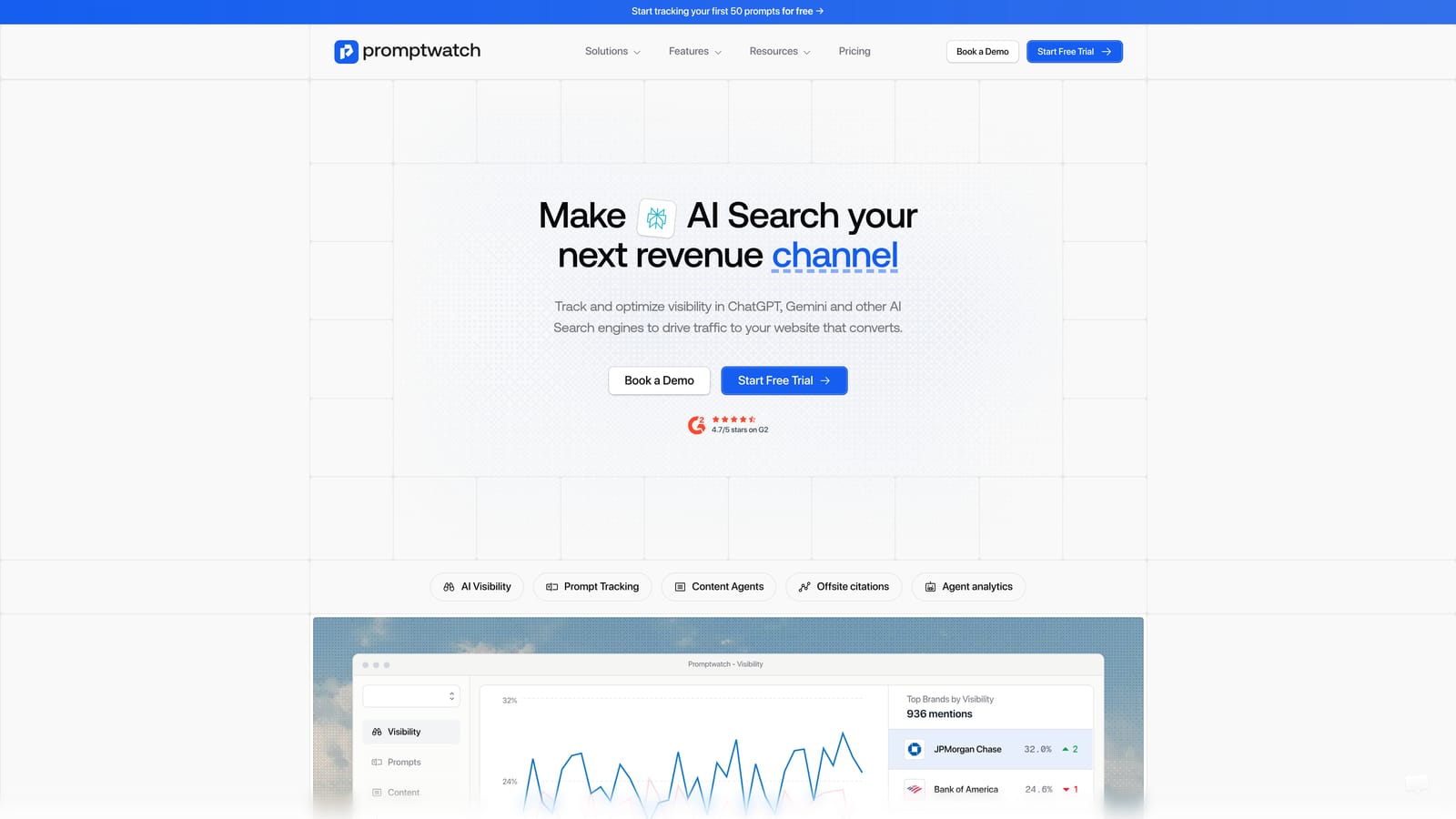
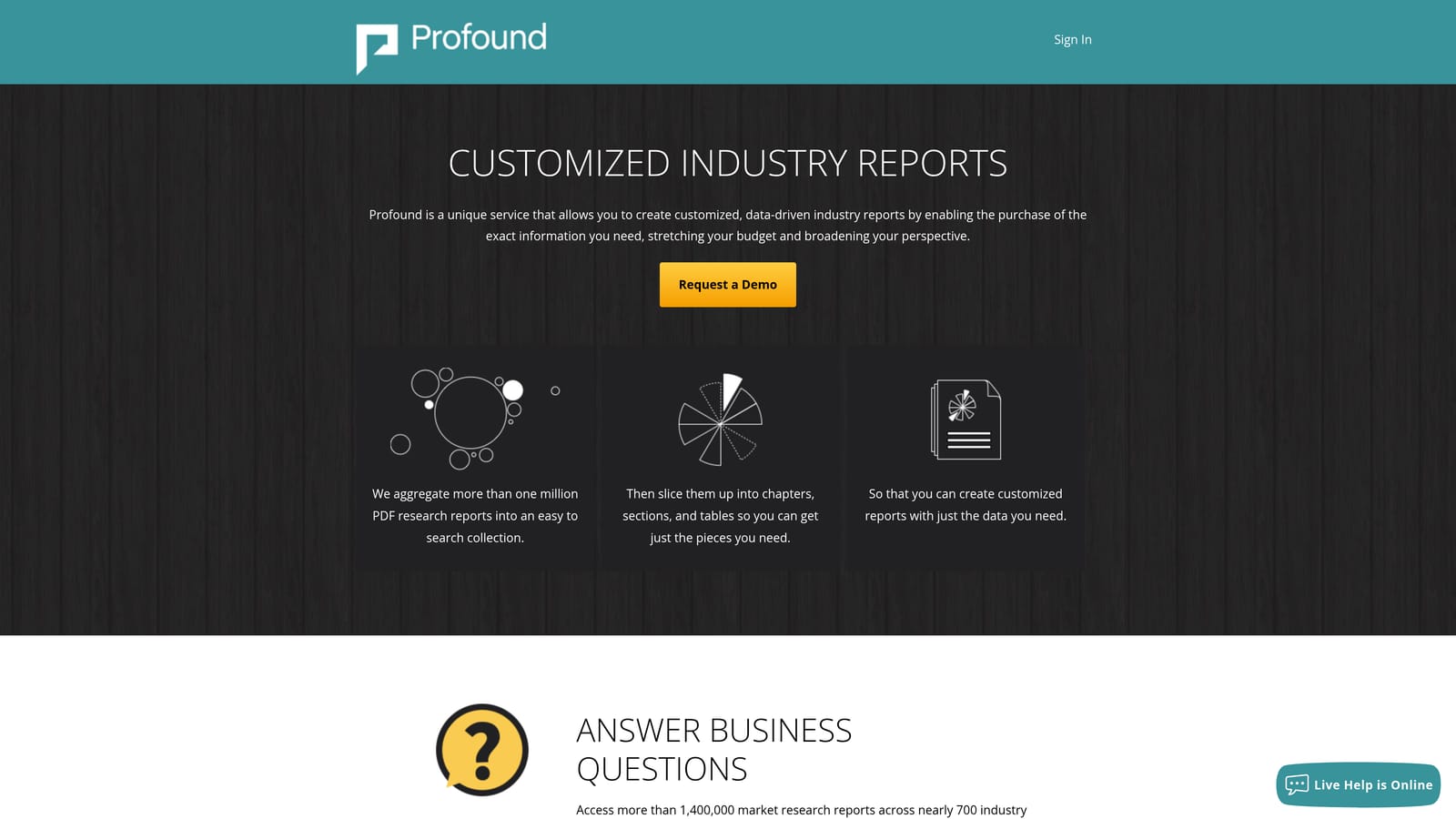
Promptwatch focuses primarily on tracking brand mentions within AI-generated responses, but the depth of its model coverage compared to newer entrants varies. Platforms like Sight AI explicitly track across six-plus AI models, which matters if your audience uses multiple AI assistants for research and discovery. Profound and Peec also position around AI search analytics, so it's worth requesting a live demo that shows real query results across multiple models simultaneously.
Implementation Steps
1. List the AI platforms your target audience uses most frequently for product discovery in your category. Prioritize ChatGPT, Claude, Perplexity, and Gemini as a baseline.
2. During each vendor demo, request a live query run across all supported models for the same prompt. Compare the outputs side by side to verify actual coverage versus claimed coverage.
3. Ask whether new AI models are added automatically as they gain adoption, or whether coverage updates require manual configuration or additional cost.
Pro Tips
Don't accept a vendor's marketing page as proof of model coverage. Run a test query during your trial period for a branded term you know exists in AI responses, and check whether the tool surfaces results from at least three distinct AI platforms. If it can't, that's a coverage gap you'll feel immediately.
2. Compare Prompt Library Depth and Customization Capabilities
The Challenge It Solves
Generic prompts like "what is the best CRM?" rarely reflect how real buyers actually ask AI assistants for recommendations. If a platform only tracks broad, preset prompts, the visibility data you receive won't correlate with the actual queries driving discovery in your category. You end up optimizing for scenarios that don't match real user behavior.
The Strategy Explained
Evaluate two distinct dimensions: the depth of the platform's default prompt library and the flexibility to define custom prompts that reflect your specific niche, use case, and buyer persona. A robust default library accelerates setup, but custom prompt capability is what makes the data genuinely actionable for your brand.
When comparing Promptwatch to competitors like Profound, Peec, and Sight AI, ask whether custom prompts can be segmented by buyer stage, persona, or geography. Some platforms allow you to build prompt sets that mirror the exact language your customers use when researching solutions, which produces far more relevant visibility data than generic category queries.
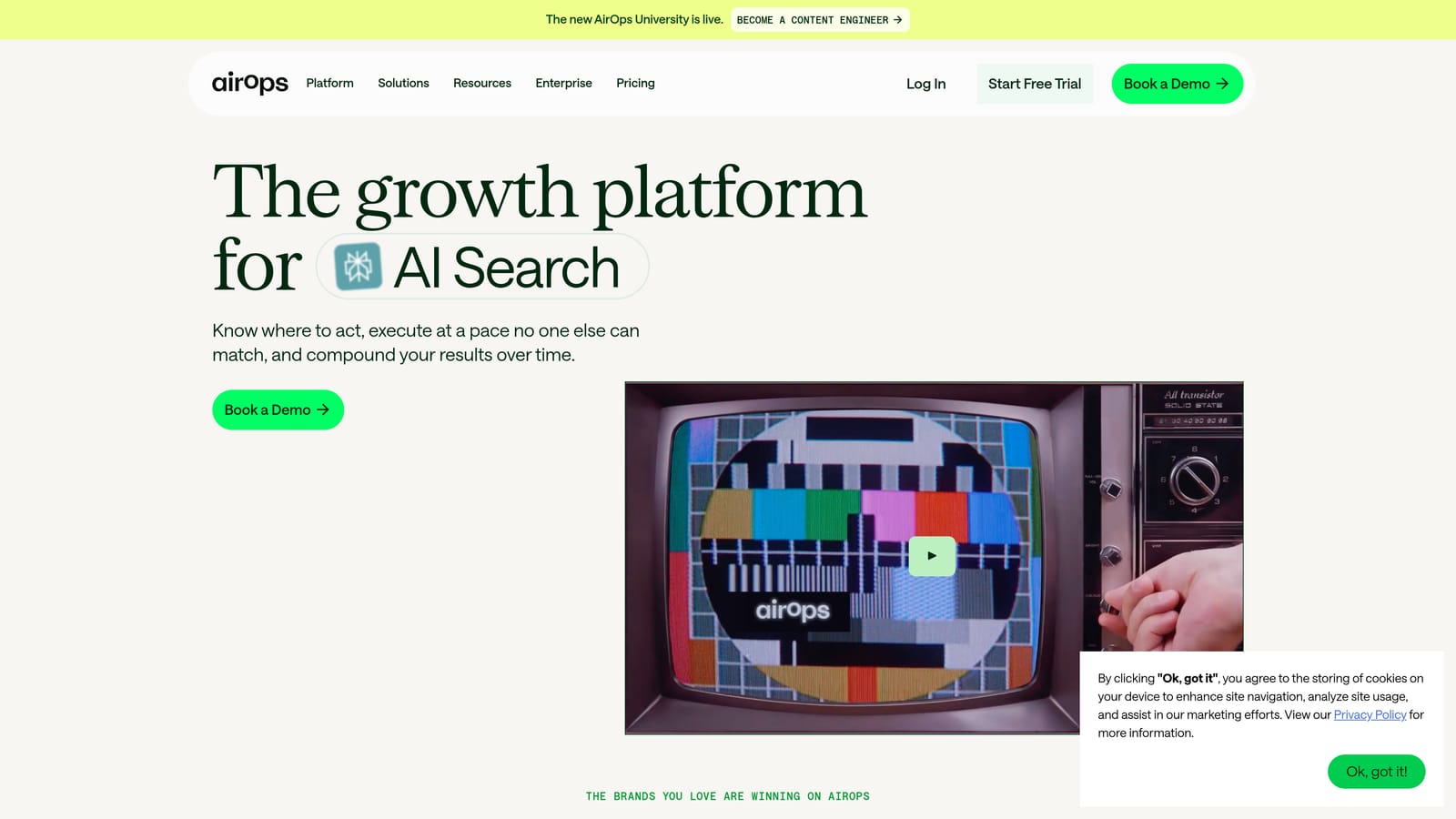
AirOps approaches this differently, with a workflow automation focus that includes AI prompt management, but its primary use case is operational rather than visibility-oriented. Writesonic's overlap here is minimal since it's primarily a content generation platform. The tools most directly comparable on prompt depth are Promptwatch, Profound, Peec, and Sight AI.
Implementation Steps
1. Compile a list of 10 to 15 prompts that reflect how your actual buyers ask AI assistants for product recommendations in your category. Include both broad and long-tail variations.
2. During each platform trial, attempt to enter your custom prompts and run them. Note whether the platform limits prompt volume, charges per prompt, or restricts customization to higher-tier plans.
3. Compare the results from your custom prompts against the platform's default library results. If the default library produces wildly different data, that's a signal the preset prompts don't reflect real buyer behavior in your niche.
Pro Tips
Pay attention to how the platform handles prompt updates. Buyer language evolves, and a tool that makes it cumbersome to edit or expand your prompt library will become a bottleneck. Look for platforms that allow bulk prompt imports and version tracking so you can maintain prompt consistency over time.
3. Evaluate Sentiment Analysis Accuracy and Contextual Depth
The Challenge It Solves
A simple positive or negative label on a brand mention tells you almost nothing useful. What matters is context: is your brand being mentioned as the leading solution, a budget alternative, a legacy tool being replaced, or a cautionary example? Without contextual sentiment depth, you can't identify whether your AI presence is helping or hurting your brand perception.
The Strategy Explained
Look for platforms that go beyond binary sentiment scoring and analyze the positioning context of each mention. This means understanding whether your brand is cited as a primary recommendation, a secondary option, or mentioned in a comparative context where a competitor is favored. Nuanced sentiment analysis also captures whether the AI response includes qualifiers like "but" or "however" that soften or undercut a positive mention.
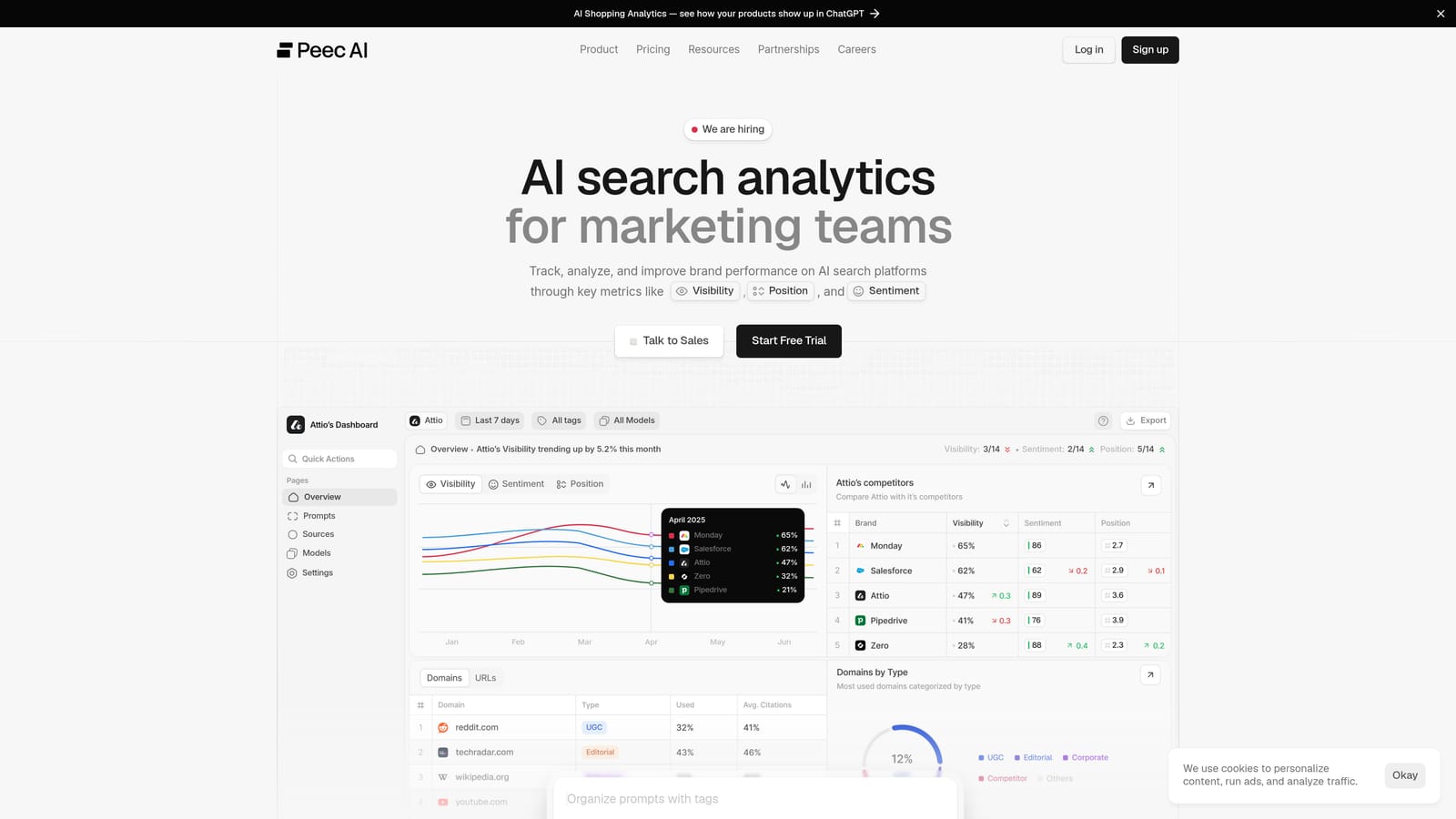
When evaluating Promptwatch against competitors, ask specifically how the platform classifies sentiment. Does it use a simple three-tier scale, or does it provide positional context within the response? Sight AI's approach includes sentiment analysis tied to an AI Visibility Score, which provides a structured view of how brand mentions trend over time rather than just snapshots. Profound and Peec also offer competitive visibility analytics, so compare their sentiment granularity directly during trials.
Implementation Steps
1. Run the same set of branded prompts across each platform and export the sentiment results. Look for whether the output explains why a mention was classified as positive, negative, or neutral.
2. Manually review five to ten AI responses flagged as "positive" by each platform. Check whether the context genuinely supports that classification or whether the tool is over-counting neutral mentions as favorable.
3. Test whether the platform tracks sentiment trends over time, so you can identify whether a content or PR initiative is actually shifting how AI models position your brand.
Pro Tips
Contextual depth matters most when you're trying to identify specific content gaps. If an AI model consistently mentions your brand as a "good option for small teams but not enterprise use," that's an actionable insight. A platform that only flags it as "positive" leaves you blind to a positioning problem worth fixing.
4. Assess Competitor Benchmarking and Share-of-Voice Reporting
The Challenge It Solves
Knowing your brand appears in AI responses is useful. Knowing whether you appear more or less frequently than your competitors is strategic. Without share-of-voice data, you can't measure relative AI visibility or identify which competitors are outperforming you in specific prompt categories. You're flying blind on competitive positioning.
The Strategy Explained
Competitive benchmarking in AI visibility means tracking how often your brand appears in AI responses compared to named competitors across the same prompt set. Share-of-voice reporting quantifies this as a percentage, giving you a clear view of who dominates AI-generated recommendations in your category.
When comparing Promptwatch to platforms like Profound, Peec, and Sight AI, evaluate whether competitor tracking is built into the core product or available only as an add-on. Some platforms require you to set up separate tracking configurations for each competitor, which adds manual overhead. Others automatically surface competitor mentions within your existing prompt results, making benchmarking seamless.
Also assess whether the platform tracks competitor sentiment, not just mention frequency. A competitor mentioned frequently but in a negative context represents a different competitive threat than one mentioned positively and consistently. This distinction is critical for understanding where you have genuine opportunities to capture share.
Implementation Steps
1. Identify three to five direct competitors you want to benchmark against. During each platform trial, configure competitor tracking and run your standard prompt set.
2. Compare how each platform visualizes share-of-voice data. Look for dashboards that show mention frequency trends over time, not just point-in-time snapshots.
3. Check whether the platform allows you to filter share-of-voice by AI model, so you can identify whether you're winning on Perplexity but losing on ChatGPT for the same category prompts.
Pro Tips
The most actionable competitive benchmarking data shows you which specific prompts your competitors are winning and you're not. That gap represents a direct content opportunity. Prioritize platforms that surface prompt-level competitive data rather than only aggregate share-of-voice numbers.
5. Stress-Test the Content Optimization and GEO Feedback Loop
The Challenge It Solves
Tracking your AI visibility is only half the equation. The other half is knowing what to do about it. If a platform surfaces the fact that your brand is underrepresented in AI responses for a key category but offers no guidance on how to fix it, the data creates awareness without driving action. That's a significant gap in platforms that treat monitoring and optimization as separate problems.
The Strategy Explained
Generative Engine Optimization, or GEO, is the emerging practice of creating and structuring content specifically to improve how AI models reference your brand in generated responses. The best AI visibility platforms don't just report the problem; they connect visibility gaps to content recommendations and, ideally, help you produce the content that closes those gaps.
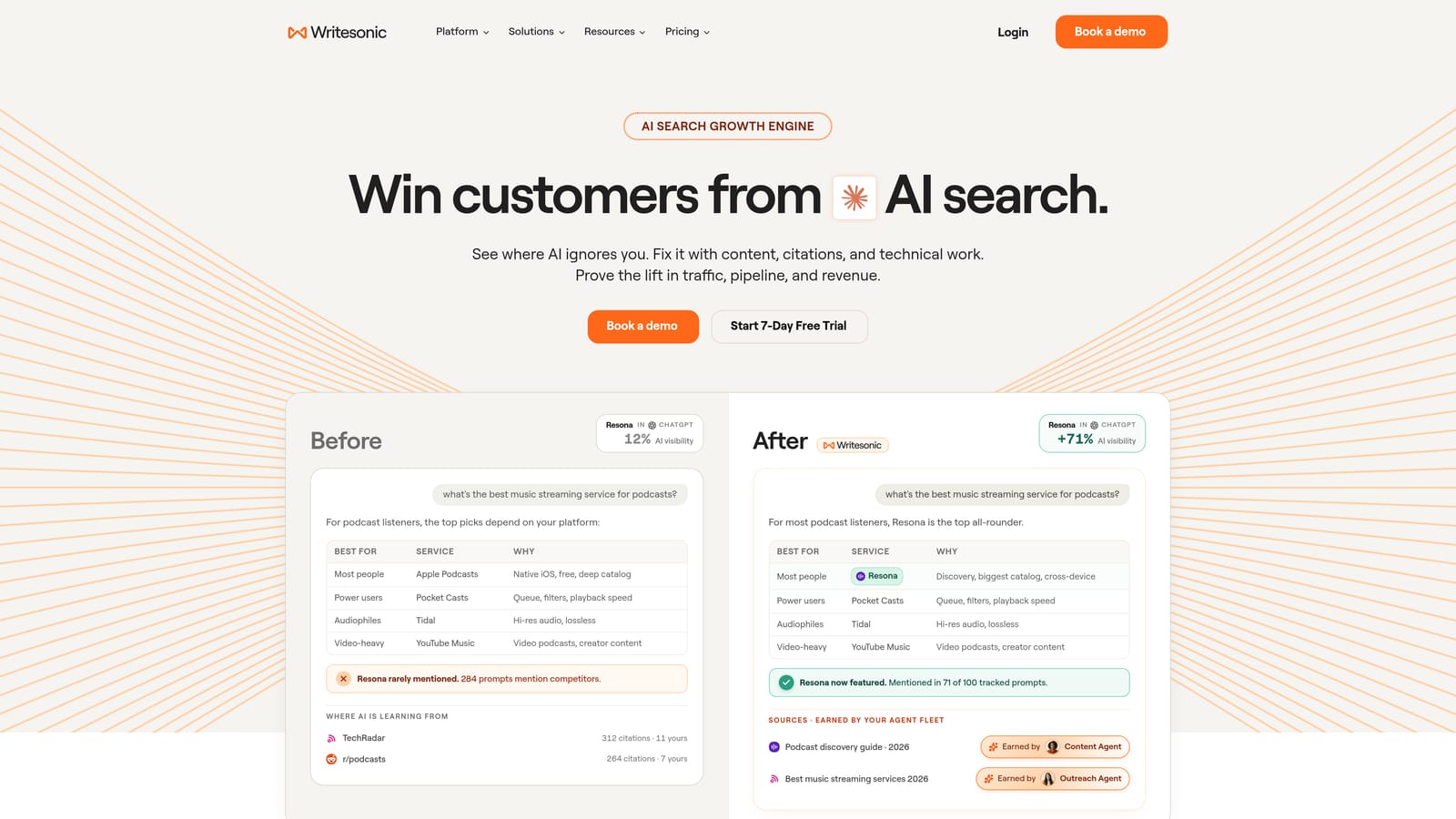
This is where the platforms diverge most sharply. Promptwatch, Profound, and Peec are primarily monitoring tools. Their value is in the data they surface. Sight AI takes a different approach by integrating AI visibility tracking with a content generation engine that includes 13-plus specialized AI agents, allowing teams to go from identifying a visibility gap to publishing an optimized article without switching platforms. Writesonic offers strong AI content generation capabilities but lacks the visibility tracking side of the equation, making it a partial solution rather than a complete feedback loop.
For teams serious about improving their AI presence, the connection between visibility data and content output is a critical differentiator. Evaluate whether each platform makes this loop explicit or whether you'd need to manually transfer insights from a monitoring tool to a separate content workflow.
Implementation Steps
1. During each trial, identify a prompt category where your brand has low visibility. Ask the platform whether it provides content recommendations tied to that gap.
2. If the platform offers content optimization guidance, evaluate the specificity of those recommendations. "Publish more content about X topic" is less useful than "AI models favor sources that include structured comparison data and specific use case examples for this prompt type."
3. Test whether the platform integrates with your existing CMS or content workflow, or whether acting on its recommendations requires significant manual effort outside the tool.
Pro Tips
The GEO feedback loop is most valuable when it's automated. Look for platforms that can flag new visibility gaps as they emerge and connect those gaps to content briefs or drafts automatically. The faster you can move from insight to published content, the faster your AI presence improves.
6. Examine Reporting Cadence, Alerting, and Team Collaboration Features
The Challenge It Solves
AI visibility data has a shelf life. A brand mention that shifts from positive to negative overnight can affect how thousands of AI-assisted buyers perceive your product before you even know it happened. Without real-time alerting and structured reporting, you're always reacting to changes after the fact rather than catching them early enough to respond.
The Strategy Explained
Evaluate each platform's reporting infrastructure across three dimensions: alerting speed, report customization, and multi-user collaboration. For individual founders, daily digest emails may be sufficient. For agencies managing AI visibility across multiple client accounts, the requirements are entirely different: white-label reporting, role-based access controls, and multi-client dashboards become essential.
When comparing Promptwatch to competitors, ask specifically whether the platform supports white-label reporting for client-facing deliverables. This is a common requirement for agencies that want to present AI visibility data under their own brand rather than directing clients to a third-party tool's interface. Also assess whether the platform offers API access, which enables teams to pull visibility data into custom dashboards or internal reporting systems.
Sight AI's platform includes features designed for scalable team use, which matters if you're managing visibility tracking across multiple brands or clients. Platforms like Profound and Peec also serve agency and enterprise use cases, so compare their collaboration features directly during demos by asking to see the multi-client workflow in action.
Implementation Steps
1. Define your reporting requirements before evaluating platforms. Specify whether you need white-label reports, scheduled exports, API access, or multi-client dashboards.
2. During each trial, configure an alert for a branded keyword and verify how quickly the platform notifies you when a new mention appears or sentiment shifts. Test the alert latency across at least two AI models.
3. If you manage multiple brands or clients, ask each vendor to walk you through their multi-client workflow. Evaluate how many steps it takes to switch between client accounts and whether reporting can be customized per client.
Pro Tips
For agencies, the ability to generate white-label reports on demand is often a deal-breaker. Before committing to any platform, ask for a sample white-label report and check whether it includes the specific metrics your clients care about. A platform that requires significant manual formatting to produce client-ready reports will quietly drain your team's time every reporting cycle.
7. Calculate Total Value: Pricing Models, Scalability, and Platform Consolidation
The Challenge It Solves
The sticker price of an AI visibility tool rarely reflects its true cost. Per-seat pricing, prompt volume limits, add-on fees for competitor tracking, and the overhead of managing multiple disconnected tools all contribute to a total cost of ownership that can far exceed the base subscription. Without a clear TCO comparison, you risk selecting a tool that looks affordable at signup but becomes expensive as your usage scales.
The Strategy Explained
Build a total cost of ownership framework that accounts for every variable: base subscription, per-seat fees, prompt volume allowances, API access costs, reporting add-ons, and the cost of any additional tools you'd need to complete your workflow. A platform that appears more expensive upfront may actually reduce total overhead if it eliminates the need for separate content generation or indexing tools.
This is where platform consolidation becomes a meaningful factor. If you're currently using a monitoring tool, a separate content generation platform, and a third tool for website indexing, the combined cost of those subscriptions plus the time spent transferring data between them represents real overhead. Sight AI's positioning as an all-in-one platform that combines AI visibility tracking, content generation with 13-plus AI agents, and IndexNow integration for automatic content indexing addresses this consolidation opportunity directly. For teams paying for multiple point solutions, the math on consolidation is worth running explicitly.
Promptwatch, Profound, and Peec are primarily monitoring tools, so they'd typically sit alongside rather than replace a content generation workflow. AirOps adds workflow automation but doesn't cover the visibility tracking side. Writesonic covers content generation but not monitoring. Understanding where each tool sits in your stack helps you calculate the true cost of each option.
Implementation Steps
1. List every tool currently in your AI visibility and content workflow, including their monthly costs and the time your team spends managing each one. This is your baseline TCO.
2. For each platform you're evaluating, map out which tools in your current stack it would replace and which it would complement. Calculate the net cost difference, including any tools you could eliminate.
3. Model your usage at two to three times your current scale. Check whether each platform's pricing scales linearly with usage or whether there are steep jumps at volume thresholds that would make the tool prohibitively expensive as you grow.
Pro Tips
Negotiate prompt volume limits before signing an annual contract. Many platforms offer flexible prompt allowances that aren't advertised on their pricing pages. If you anticipate running high-volume prompt tracking across multiple brands or clients, getting this in writing before committing will save you from unexpected overage fees down the line.
Putting It All Together: Your Evaluation Roadmap
Choosing between Promptwatch and its competitors isn't a decision you should make based on a feature checklist alone. The right platform is the one that aligns with your specific use case: whether that's granular prompt tracking for a single brand, white-label reporting for agency clients, or a fully integrated workflow that connects AI visibility data to content creation and indexing.
Start with strategies one and two. Audit model coverage and prompt depth first, because everything else depends on the quality of the underlying data. Then layer in sentiment accuracy, competitive benchmarking, and GEO feedback capabilities to understand how actionable the insights actually are. Finally, evaluate reporting infrastructure and total cost of ownership to ensure the platform scales with your needs without creating unexpected overhead.
For teams that want to go beyond tracking and actively improve their AI presence, platforms like Sight AI combine visibility monitoring across six-plus AI models with AI-powered content generation and automatic IndexNow indexing, turning insights into published, optimized content without switching tools.
Use the free trials available across these platforms to run the head-to-head tests outlined in each strategy above. Real-world testing with your own brand and prompts will tell you more than any feature comparison page. The brands winning in AI search aren't just monitoring their visibility; they're systematically improving it.
Stop guessing how AI models like ChatGPT and Claude talk about your brand. Start tracking your AI visibility today and see exactly where your brand appears across top AI platforms, uncover content opportunities, and automate your path to organic traffic growth.