As AI search engines like ChatGPT, Claude, and Perplexity increasingly shape how buyers discover brands, knowing whether your brand appears in those answers has shifted from a nice-to-have to a genuine competitive priority. Multi AI model tracking software gives marketers, founders, and agencies the ability to monitor brand mentions across AI platforms, understand the sentiment behind those mentions, and identify where competitors are getting recommended instead.
The challenge is that not every platform tracks the same models, at the same depth, or with output that connects back to content strategy and indexing workflows. Some tools are built for enterprise reporting. Others are designed for prompt-level monitoring or competitive benchmarking. A few extend into content generation and automation territory.
This list covers the top multi AI model tracking tools available in 2026, evaluated on model coverage, prompt tracking, sentiment analysis, reporting depth, and whether they connect AI visibility insights to actionable content workflows. Whether you're managing multiple clients at an agency or trying to understand your brand's footprint across AI platforms as a founder, these tools represent the current landscape.
1. Sight AI
Best for: Teams that want AI visibility tracking, content generation, and indexing in one platform
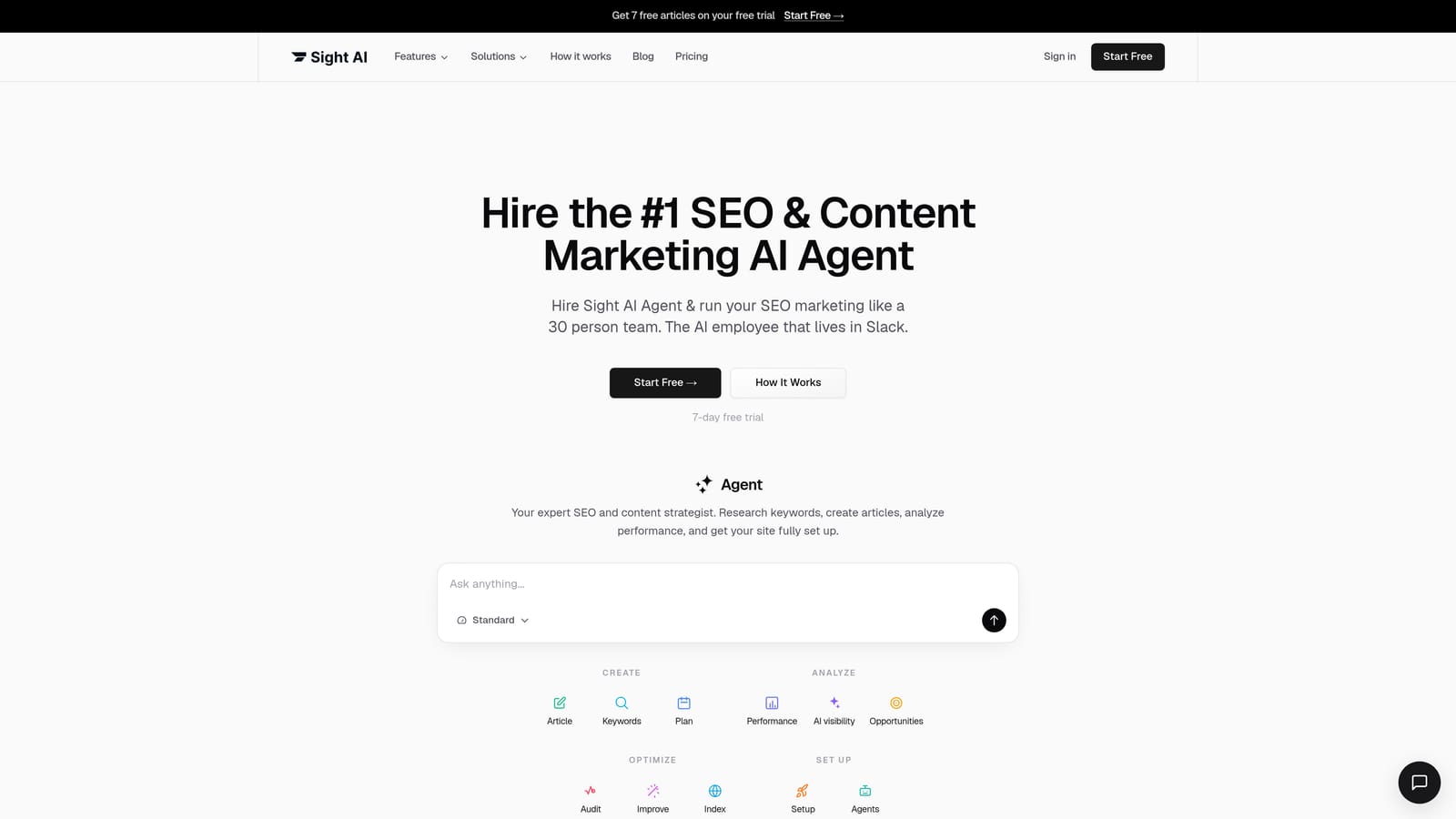
Sight AI is an all-in-one platform that tracks brand mentions across 6+ AI models, generates SEO/GEO-optimized content using 13+ specialized AI agents, and automates content indexing through IndexNow integration.
Where This Tool Shines
Most AI visibility tools stop at reporting. Sight AI connects the monitoring layer to a content production and indexing pipeline, so when you discover a gap in how AI models represent your brand, you have a direct path to addressing it. That end-to-end workflow is genuinely rare in this category.
The AI Visibility Score gives you a consolidated view of how your brand is performing across platforms, with sentiment analysis layered in so you can distinguish between being mentioned positively, neutrally, or in a context that needs attention. Custom prompt tracking lets you define the specific queries that matter most to your business rather than relying on generic monitoring.
Key Features
Multi-Model Brand Mention Tracking: Monitors brand mentions across ChatGPT, Claude, Perplexity, and 3+ additional AI platforms from a single dashboard.
AI Visibility Score: A consolidated scoring system with sentiment analysis that shows how your brand is represented across AI-generated answers over time.
Custom Prompt Tracking: Define the specific prompts and queries relevant to your brand or industry and monitor how AI responses to those queries evolve.
13+ AI Content Agents with Autopilot Mode: Specialized agents for generating SEO and GEO-optimized articles, listicles, guides, and explainers, with Autopilot Mode for automated content workflows.
IndexNow Integration and Automated Sitemap Updates: Ensures newly published content is discovered by search engines faster, closing the loop between content creation and indexing.
CMS Auto-Publishing: End-to-end pipeline automation from content generation through to live publication.
Best For
Sight AI is particularly well-suited for growth-focused founders, in-house marketing teams, and agencies that want more than a reporting dashboard. If your goal is to track AI visibility and then act on those insights through content and indexing, this platform is built for that full workflow rather than just the monitoring piece.
Pricing
Check trysight.ai for current pricing tiers. The platform offers multiple plans designed to scale with team size and content output needs.
2. Profound
Best for: Enterprise marketing teams focused on AI answer engine monitoring and share-of-voice analytics
Profound is an enterprise-focused AI answer engine monitoring platform that tracks brand presence and share of voice across AI-generated responses.

Where This Tool Shines
Profound is built with enterprise marketing organizations in mind. The platform's emphasis on structured analytics and share-of-voice reporting makes it a strong fit for teams that need to present AI visibility data to senior stakeholders or client organizations. The reporting dashboards are designed for clarity at scale rather than hands-on prompt experimentation.
For brands that are primarily concerned with understanding their relative presence in AI-generated answers compared to industry peers, Profound's competitive benchmarking capabilities give marketing teams a clear picture of where they stand in the AI discovery landscape.
Key Features
AI Answer Engine Monitoring: Tracks brand presence across major LLM platforms with a focus on how brands appear in AI-generated responses.
Share-of-Voice Analytics: Structured reporting on how much of the AI-generated answer landscape your brand occupies relative to competitors.
Enterprise Reporting Dashboards: Designed for marketing teams that need to communicate AI visibility performance to leadership and clients.
Competitive Visibility Benchmarking: Side-by-side comparison of brand presence in AI answers against defined competitors.
Best For
Larger marketing organizations and enterprise teams that prioritize structured analytics and executive-ready reporting over workflow automation. Particularly useful for brands where AI visibility is a board-level conversation and needs to be tracked with rigor over time.
Pricing
Profound is enterprise-oriented. Check profound.co for current pricing, as plans are typically tailored to organization size and scope.
3. Promptwatch
Best for: SEO professionals and brand teams who think in terms of specific query-response pairs
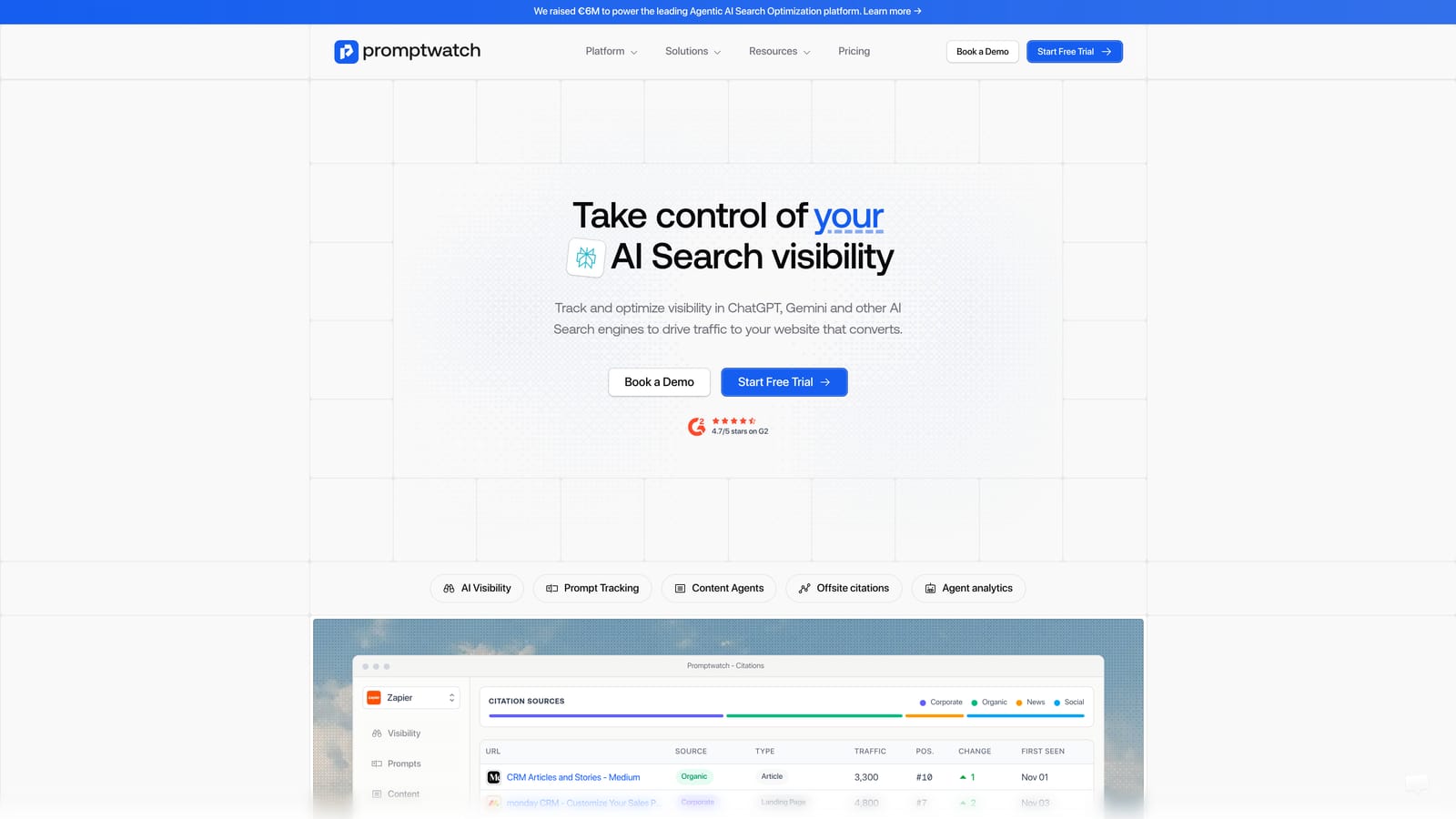
Promptwatch is a prompt-level AI monitoring tool that tracks how specific queries return brand mentions across AI models over time.
Where This Tool Shines
Where many AI monitoring tools give you broad brand mention data, Promptwatch operates at the query level. You define the specific prompts that matter to your brand, and the platform tracks how AI model responses to those prompts shift over time. This is particularly valuable when AI models update their training data or change how they weight certain sources, because you can see the impact directly on prompts you care about.
For SEO professionals who are accustomed to tracking keyword rankings, Promptwatch offers a conceptually familiar but AI-native approach. Instead of watching a keyword move up or down in search results, you're watching how a prompt response changes across model updates.
Key Features
Custom Prompt Definition: Define and monitor specific prompts across multiple AI models to track exactly the queries most relevant to your brand.
Response Change Tracking: Monitor how AI model responses to brand-relevant queries evolve over time, including when your brand appears or disappears from answers.
Brand Mention Alerts: Receive notifications when significant shifts occur in how AI models mention or omit your brand in response to tracked prompts.
Query-Response Pair Analysis: Detailed analysis of how specific queries map to AI-generated answers, useful for both SEO and brand positioning strategy.
Best For
SEO teams, content strategists, and brand managers who want granular visibility into how specific queries perform across AI platforms. A strong choice for teams actively working to influence how AI models respond to brand-relevant searches.
Pricing
Check promptwatch.io for current pricing tiers and plan options.
4. Peec
Best for: Agencies and competitive strategy teams focused on AI share-of-voice benchmarking
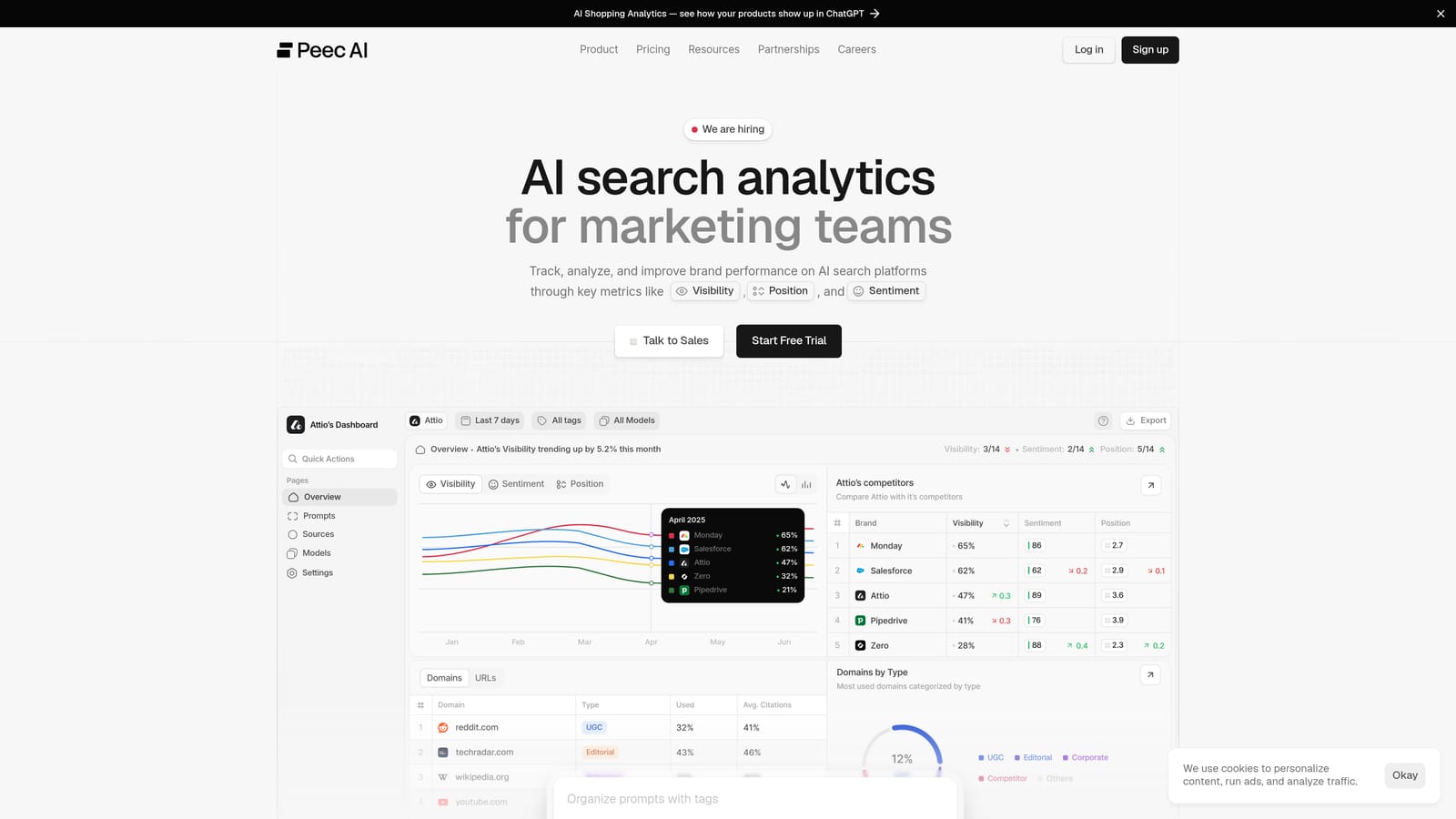
Peec is a competitive AI visibility platform that benchmarks your brand against competitors in AI search results across multiple models.
Where This Tool Shines
Peec takes a benchmarking-first approach to AI visibility. Rather than focusing primarily on your own brand's absolute presence, it frames AI visibility as a competitive metric: how does your brand's appearance in AI-generated answers compare to the specific competitors you're up against? This framing makes it particularly useful for agencies that need to present AI share-of-voice data in client reports.
The multi-model coverage ensures that competitive comparisons aren't limited to a single AI platform, giving a more complete picture of where brands win and lose visibility across the AI search landscape as a whole.
Key Features
Competitive AI Visibility Comparison: Side-by-side analysis of how your brand and defined competitors appear in AI-generated answers across platforms.
Share-of-Voice Tracking: Ongoing measurement of how AI-generated answer space is distributed among brands in your competitive set.
Agency-Ready Reporting: Competitive benchmarking reports structured for client presentation and regular performance reviews.
Multi-Model Coverage: Tracks competitive visibility across multiple AI platforms for a comprehensive view of the competitive landscape in AI search.
Best For
Digital agencies managing AI visibility reporting for clients, as well as in-house teams in competitive industries where AI share-of-voice is a meaningful strategic metric. Particularly useful when you need to show clients not just where they stand, but how they compare to named competitors.
Pricing
Check peec.ai for current pricing and plan details.
5. AirOps
Best for: Teams building structured AI workflows to operationalize LLM outputs at scale
AirOps is an AI workflow automation platform that helps teams build structured pipelines connecting LLM outputs to content operations and business processes.
Where This Tool Shines
AirOps occupies a different position in this category than pure brand monitoring tools. Its strength is workflow architecture: building repeatable, structured processes around AI model outputs so that teams can scale what they learn from AI-generated data into operational action. For organizations that have already established AI visibility monitoring and want to build automation around those insights, AirOps provides the connective tissue.
The platform's integrations with multiple AI models and data sources make it flexible for teams working across different LLMs. It's less about passive monitoring and more about actively building workflows that put AI outputs to work in content and operational pipelines.
Key Features
Custom AI Workflow Builder: Build structured pipelines that connect LLM outputs to content creation, operational processes, and downstream systems.
Multi-Model and Data Source Integrations: Connect to multiple AI models and external data sources within a single workflow architecture.
Content Operations Automation: Scale AI-assisted content operations through repeatable, automated pipelines rather than manual processes.
Workflow Flexibility for Enterprise Teams: Suitable for teams that need to operationalize AI insights across departments and at significant scale.
Best For
Operations-minded teams and growth-stage companies that want to build scalable AI-powered workflows rather than simply monitor brand mentions. A strong fit when the goal is connecting AI model data to content production and business process automation.
Pricing
Check airops.com for current pricing tiers and plan options.
6. Writesonic
Best for: Content teams focused on producing AI-optimized content that surfaces in generative search answers
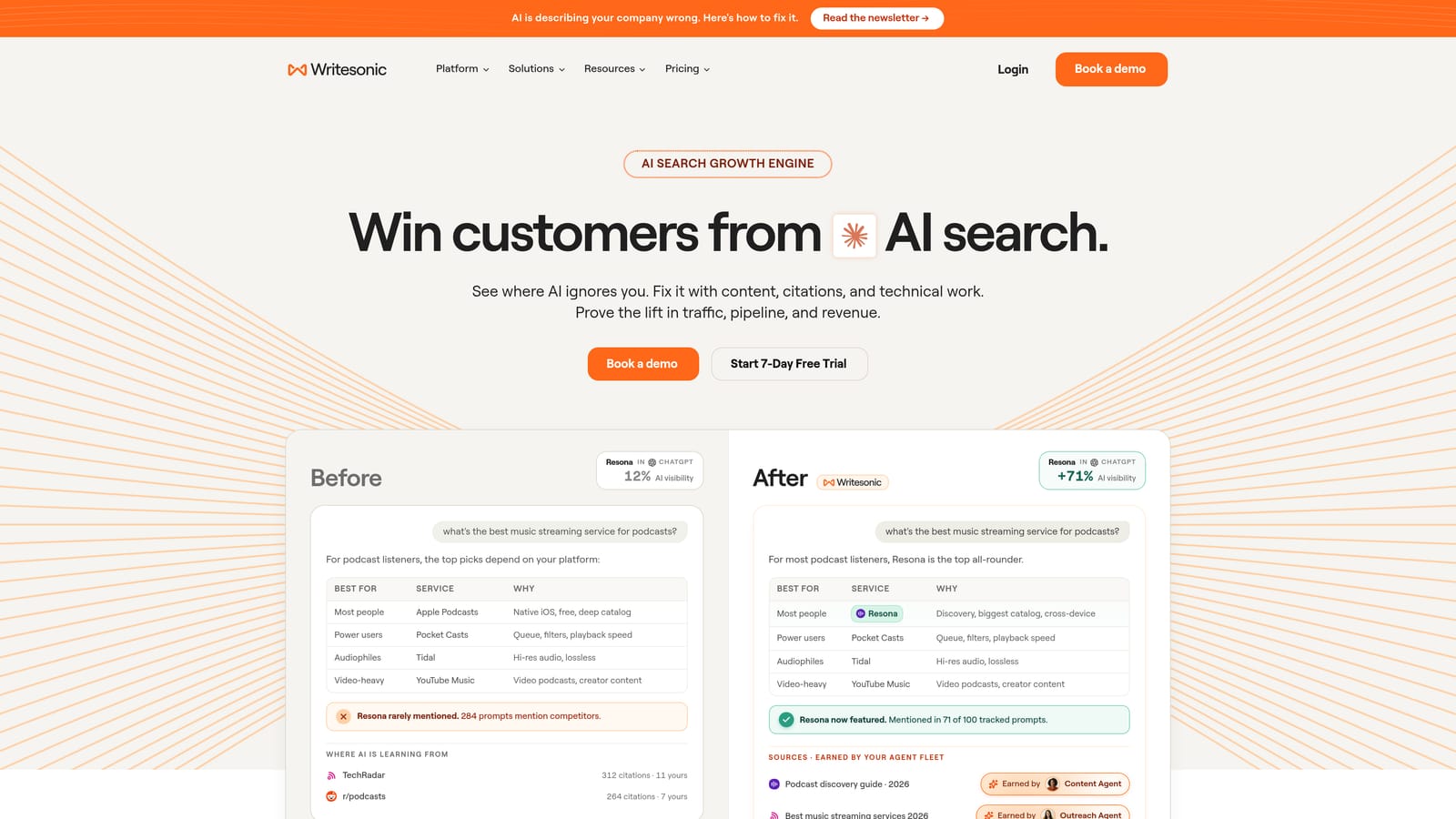
Writesonic is an AI content generation platform with growing generative engine optimization (GEO) capabilities designed to help brands produce content that surfaces in AI-generated answers.
Where This Tool Shines
Writesonic approaches the AI visibility challenge from the content production side rather than the monitoring side. Its GEO-focused features are built around helping brands create content that is more likely to be referenced by AI models when answering relevant queries. For teams that are primarily focused on content output volume and AI search optimization rather than tracking existing brand mentions, this is a practical starting point.
The platform covers a wide range of content formats, which makes it useful for teams that need to produce articles, landing pages, and social content in addition to long-form GEO-optimized pieces. It's worth noting that Writesonic is primarily a content generation tool with AI search optimization features layered in, rather than a dedicated multi-model tracking platform.
Key Features
AI-Powered Content Generation: Produce articles, landing pages, and social content at scale using AI writing capabilities.
GEO-Focused Content Features: Content creation tools designed with generative engine optimization in mind, aimed at improving brand visibility in AI-generated answers.
Multiple Content Formats: Supports a broad range of content types for teams with diverse publishing needs across channels.
Built-In SEO Guidance: Integrated optimization suggestions to help content perform in both traditional search and AI-generated answer environments.
Best For
Content teams and solo marketers who need to produce high volumes of AI-optimized content and want GEO considerations built into the creation process. Better suited as a production tool than a monitoring platform, making it a complement to dedicated AI visibility tracking tools rather than a replacement.
Pricing
Writesonic offers a free plan with paid tiers available. Check writesonic.com for current pricing details.
Which Tool Is Right for Your Situation
Each tool in this list approaches multi AI model tracking from a different angle, and the right choice depends heavily on what you actually need to accomplish.
Sight AI is the strongest option for teams that want tracking, content generation, and indexing in a single platform. If you need to monitor how AI models represent your brand and then act on those insights through optimized content, the end-to-end workflow is a genuine differentiator.
Profound is the natural fit for enterprise marketing organizations that need structured analytics and executive-ready reporting on AI share-of-voice. If you're presenting AI visibility performance to a CMO or board, Profound's reporting layer is designed for that context.
Promptwatch suits SEO professionals and brand teams who want to monitor specific prompts and understand how AI model responses to those queries shift over time. It's the most granular option for query-level tracking.
Peec is the go-to for agencies and competitive strategy teams. If the core deliverable is showing clients how their brand compares to named competitors in AI-generated answers, Peec's benchmarking-first approach is built for that use case.
AirOps serves teams that have moved past basic monitoring and want to build scalable workflows around AI model outputs. It's an operational platform rather than a pure tracking tool, and it shines when the goal is automation at scale.
Writesonic is best approached as a content production platform with AI search optimization features, rather than a monitoring solution. It works well alongside a dedicated tracking tool rather than as a standalone choice for multi-model visibility.
If you're a founder trying to understand your brand's AI footprint, an agency managing multiple client accounts, or a marketer looking to connect AI visibility insights directly to content and indexing workflows, Sight AI brings those capabilities together in one place. Stop guessing how AI models like ChatGPT and Claude talk about your brand. Start tracking your AI visibility today and see exactly where your brand appears across top AI platforms.