As AI-powered workflows become central to marketing and product teams, understanding what you're actually paying for LLM monitoring has never been more important. Pricing models vary wildly, from per-token usage fees to flat monthly subscriptions to enterprise-only quotes, and choosing the wrong tier can mean either overpaying for unused capacity or hitting walls when you scale.
Before diving into pricing comparisons, it's worth clarifying something: "LLM monitoring" means two very different things depending on who's asking. Developers and MLOps teams typically want tracing, latency measurement, and token cost tracking inside their pipelines. Marketers, founders, and agencies often want something entirely different: visibility into how AI models like ChatGPT, Claude, and Perplexity actually talk about their brand in response to user queries. Both are legitimate LLM monitoring needs, and this guide covers tools from both categories.
We've evaluated nine tools across four dimensions: pricing structure, feature depth per tier, scalability, and value for AI visibility use cases. Tools are ordered starting with the most relevant for marketers and agencies focused on organic growth and AI-driven discovery.
Understanding Which Type of LLM Monitoring You Actually Need
The tools below split into two broad categories. Developer observability tools (Langfuse, Helicone, LangSmith, Arize, W&B Weave, Datadog, Portkey, Galileo) monitor what happens inside your LLM pipelines: API calls, response latency, token costs, and output quality. These are built for engineering teams building AI applications.
AI visibility tools (Sight AI) monitor what AI models say about your brand when users ask questions. This is the emerging category that matters most for marketers trying to capture AI search traffic. Knowing which category you need will save you from buying the wrong tool entirely.
1. Sight AI
Best for: Marketers, founders, and agencies tracking brand presence across AI search platforms
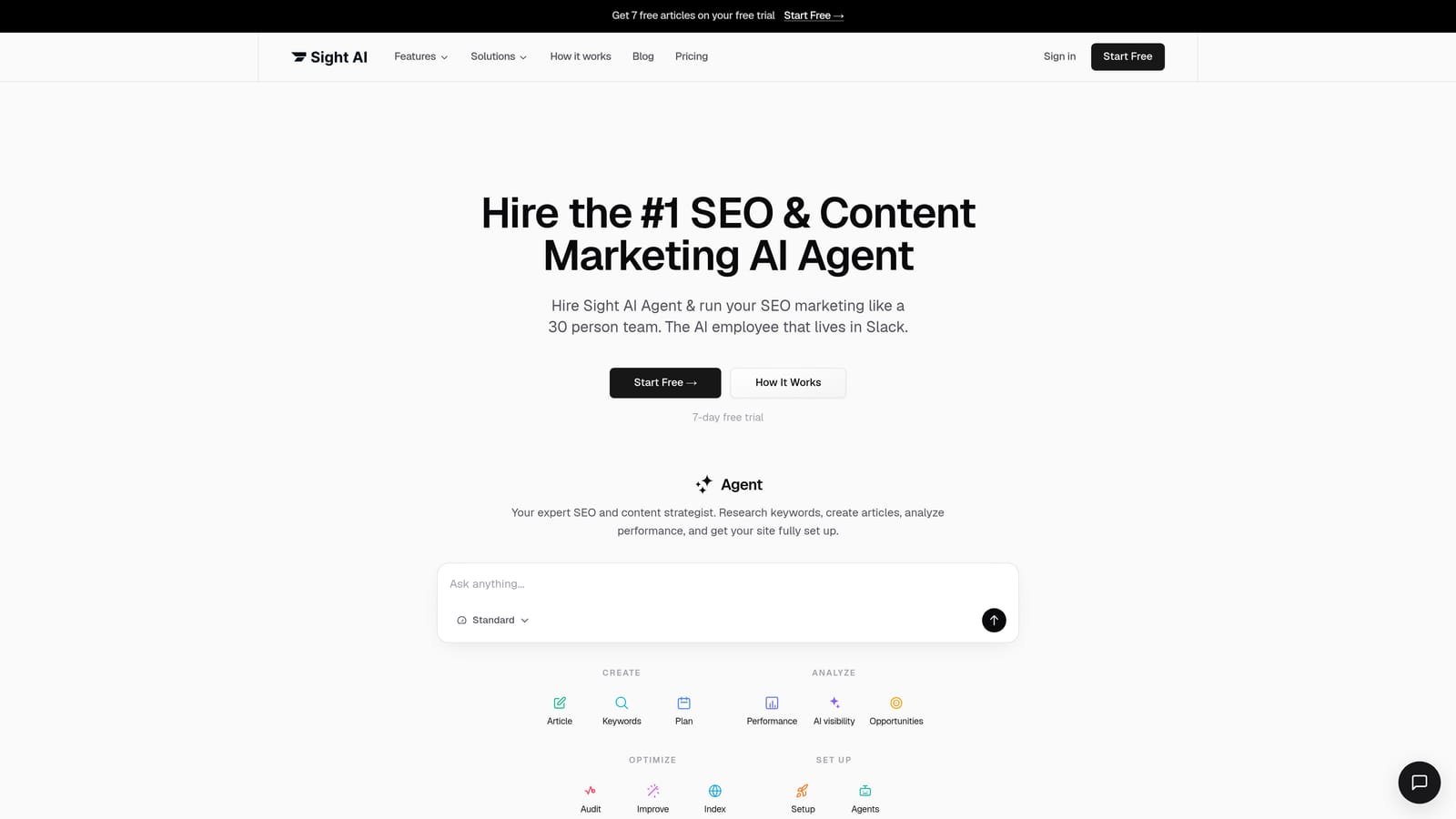
Sight AI is an all-in-one AI visibility and content platform that monitors how AI models mention your brand, generates SEO and GEO-optimized content, and automates indexing — purpose-built for teams growing organic and AI search presence.
Where This Tool Shines
Sight AI occupies a distinct category from the developer observability tools in this list. Rather than tracing API calls or measuring latency, it answers a different question: when someone asks ChatGPT, Claude, or Perplexity about your industry, does your brand come up, and if so, how is it framed? For marketers investing in content and SEO, this is the signal that actually matters.
What makes Sight AI particularly compelling for agencies and growth-focused teams is the combination of monitoring and content creation in a single platform. You don't just learn where your brand is underrepresented across AI models — you get the tools to fix it, from AI-generated articles to automatic indexing that accelerates content discovery.
Key Features
AI Visibility Score: Tracks brand mentions across ChatGPT, Claude, Perplexity, and three or more additional AI platforms, giving you a consolidated view of your AI search presence.
Sentiment Analysis and Prompt Tracking: Reveals not just whether AI models mention your brand, but how they frame it — positive, neutral, or negative — and which prompts trigger those mentions.
13+ Specialized AI Agents: Generates SEO and GEO-optimized content including listicles, guides, and explainers through specialized agents, with Autopilot Mode for hands-off publishing workflows.
IndexNow Integration: Automatically submits new content to search engines via IndexNow, accelerating discovery and reducing the lag between publishing and indexing.
CMS Auto-Publishing: Connects directly to your CMS so content flows from generation to publication without manual intervention.
Best For
Sight AI is the right fit for marketers, founders, and agencies who want to understand and improve how AI models represent their brand. If your primary concern is AI search visibility rather than debugging LLM pipelines, this is the tool designed specifically for your use case. Agencies managing multiple client brands will find the multi-brand tracking particularly valuable.
Pricing
Subscription-based tiers with a free trial available. Pricing is structured around AI visibility tracking, content generation volume, and publishing features. Visit trysight.ai for current plan details, as rates are updated regularly.
2. Langfuse
Best for: Developer teams wanting open-source LLM observability with self-hosting flexibility
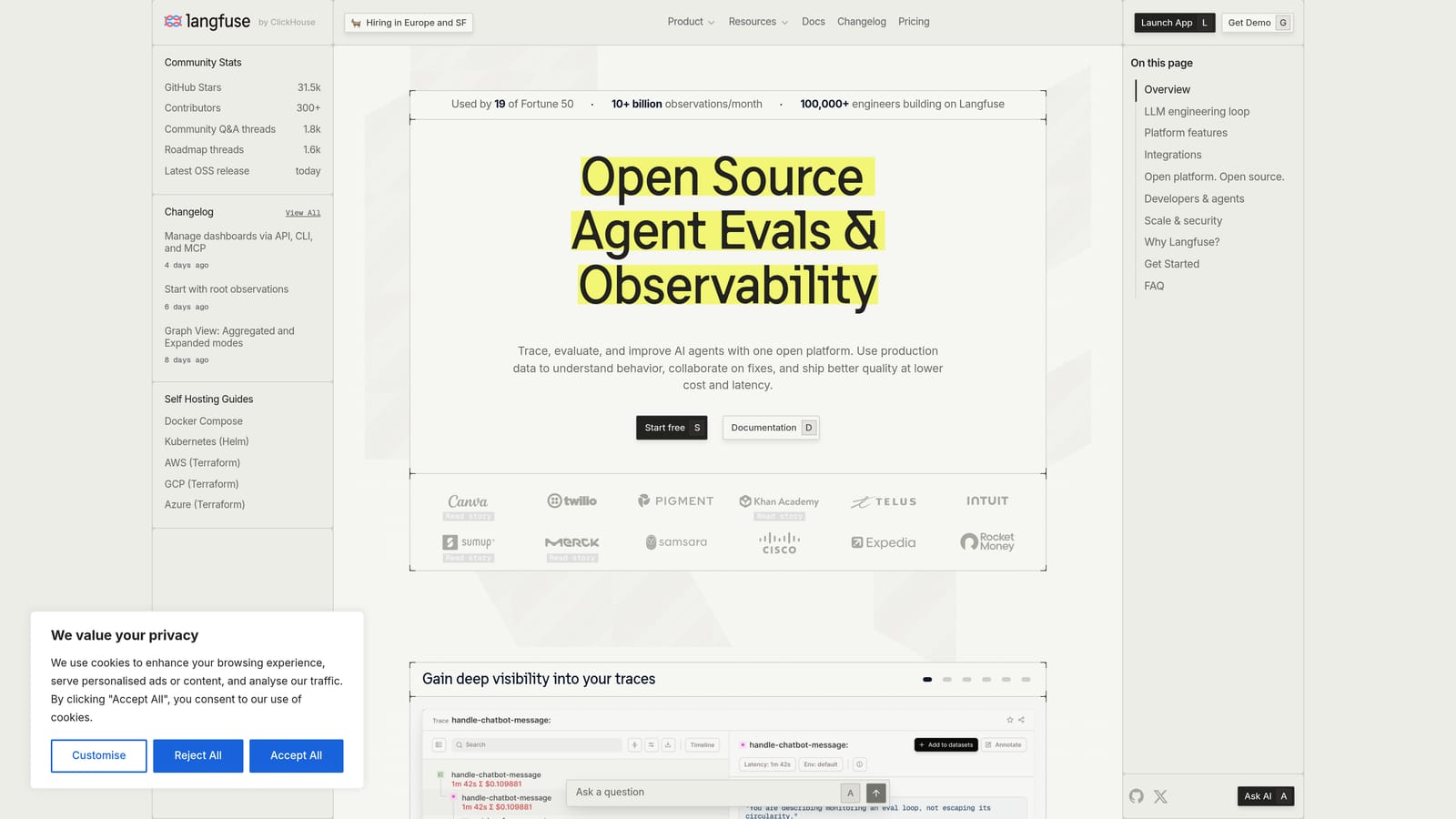
Langfuse is an open-source LLM observability platform offering self-hosting flexibility and a cloud option, designed for developer teams that need detailed tracing, prompt management, and evaluation workflows.
Where This Tool Shines
Langfuse's open-source core is its defining advantage. Teams with data residency requirements or a preference for avoiding vendor lock-in can self-host the entire platform at no licensing cost. The community around Langfuse is active, and the documentation is thorough enough that engineering teams can get up and running quickly.
On the cloud side, Langfuse offers a generous free tier that works well for low-volume teams or those evaluating the platform before committing to infrastructure. The trace-based pricing model on paid cloud tiers means costs scale predictably with usage rather than surprising you with seat-based jumps.
Key Features
Open-Source Core: Fully self-hostable with no vendor lock-in, giving teams complete control over their data and infrastructure.
Trace-Based Cloud Pricing: Cloud plans charge per event ingested, so costs stay proportional to actual usage rather than estimated capacity.
Prompt Management: Version and manage prompts centrally, with evaluation pipelines and dataset versioning built in.
Multi-Language SDKs: Native SDKs for Python, TypeScript, and OpenAI-compatible integrations cover most modern LLM development stacks.
Generous Free Tier: The cloud free tier accommodates low-volume teams without requiring a credit card commitment upfront.
Best For
Engineering teams building LLM applications who want observability without vendor dependency. Particularly well-suited for startups with technical founders who prefer open-source infrastructure and teams in regulated industries where self-hosting is a requirement.
Pricing
Free for self-hosted deployments (open-source). Cloud plans include a free tier, then usage-based pricing per event ingested. Check langfuse.com/pricing for current rates, as they are updated periodically.
3. Helicone
Best for: Teams wanting fast LLM cost tracking with minimal setup overhead
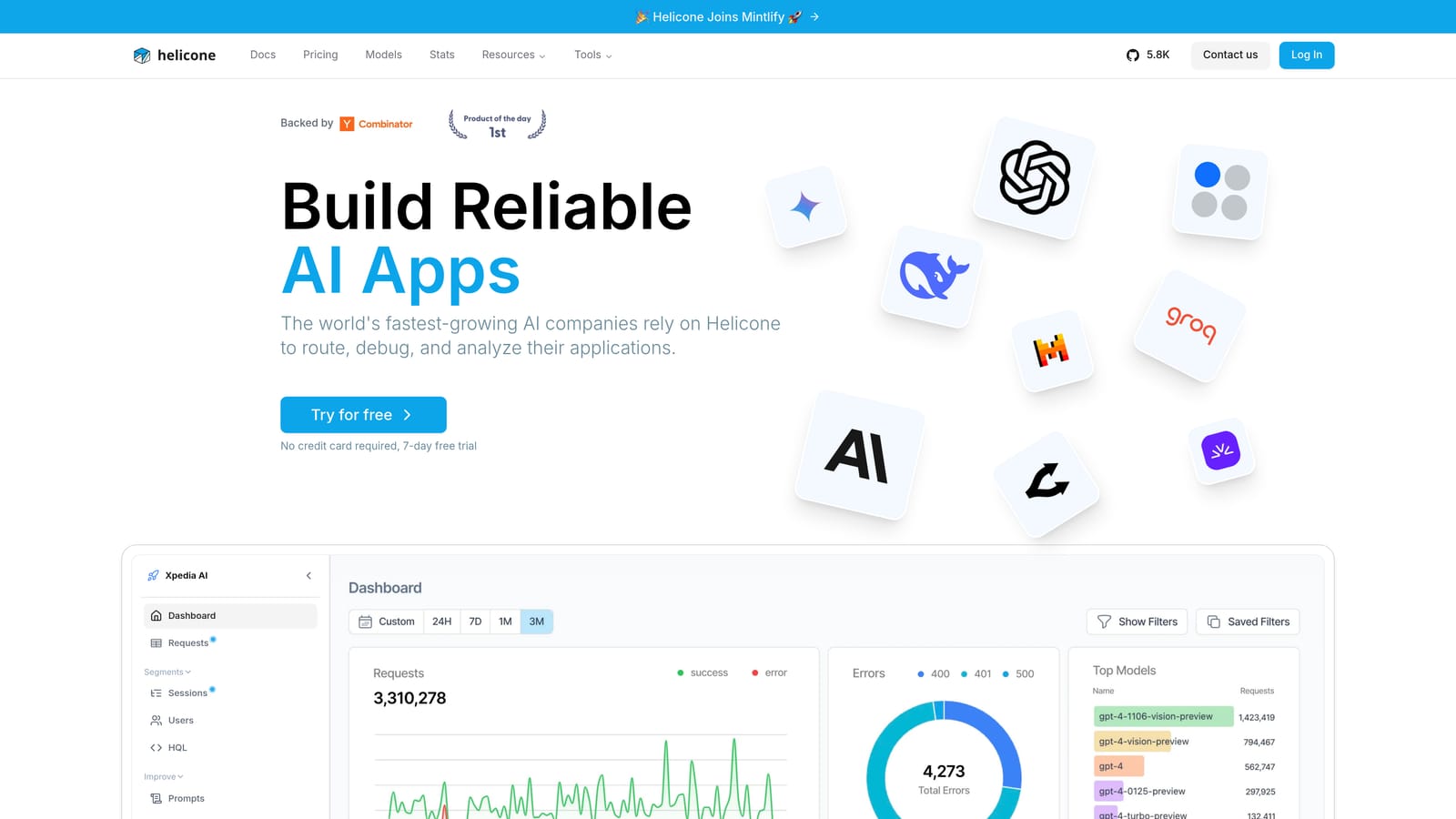
Helicone is a lightweight LLM observability tool that works as a proxy, logging every request and response with minimal setup — ideal for teams that want cost tracking and usage analytics without complex instrumentation.
Where This Tool Shines
Helicone's one-line proxy setup is genuinely its superpower. Most LLM observability tools require SDK integration and code changes throughout your application. Helicone routes your existing API calls through its proxy, capturing logs automatically. For teams that want visibility fast without a multi-day instrumentation project, this is a meaningful advantage.
The per-request cost tracking across OpenAI, Anthropic, and other providers gives product teams a clear picture of where their LLM budget is going, broken down by user, feature, or endpoint. This level of granularity is particularly useful when you're trying to identify which parts of your product are expensive to run.
Key Features
One-Line Proxy Setup: No SDK required for basic logging — route existing API calls through Helicone and start capturing data immediately.
Per-Request Cost Tracking: Monitors costs across OpenAI, Anthropic, and other providers at the individual request level.
User-Level Analytics: Breaks down usage patterns by user, helping teams understand consumption distribution across their customer base.
Caching and Rate Limiting: Available on paid tiers to reduce redundant API calls and control costs at scale.
Published Free Tier Limits: Free tier request limits are clearly documented, making it easy to assess whether the free tier fits your volume before upgrading.
Best For
Product teams and early-stage startups that want LLM cost visibility quickly. Also a strong fit for teams running multiple LLM providers who want unified logging without rebuilding their instrumentation layer.
Pricing
Free tier available with a published monthly request limit. Paid plans scale with request volume. Visit helicone.ai/pricing for current rates.
4. Arize AI
Best for: Enterprise teams needing deep ML and LLM observability with governance controls
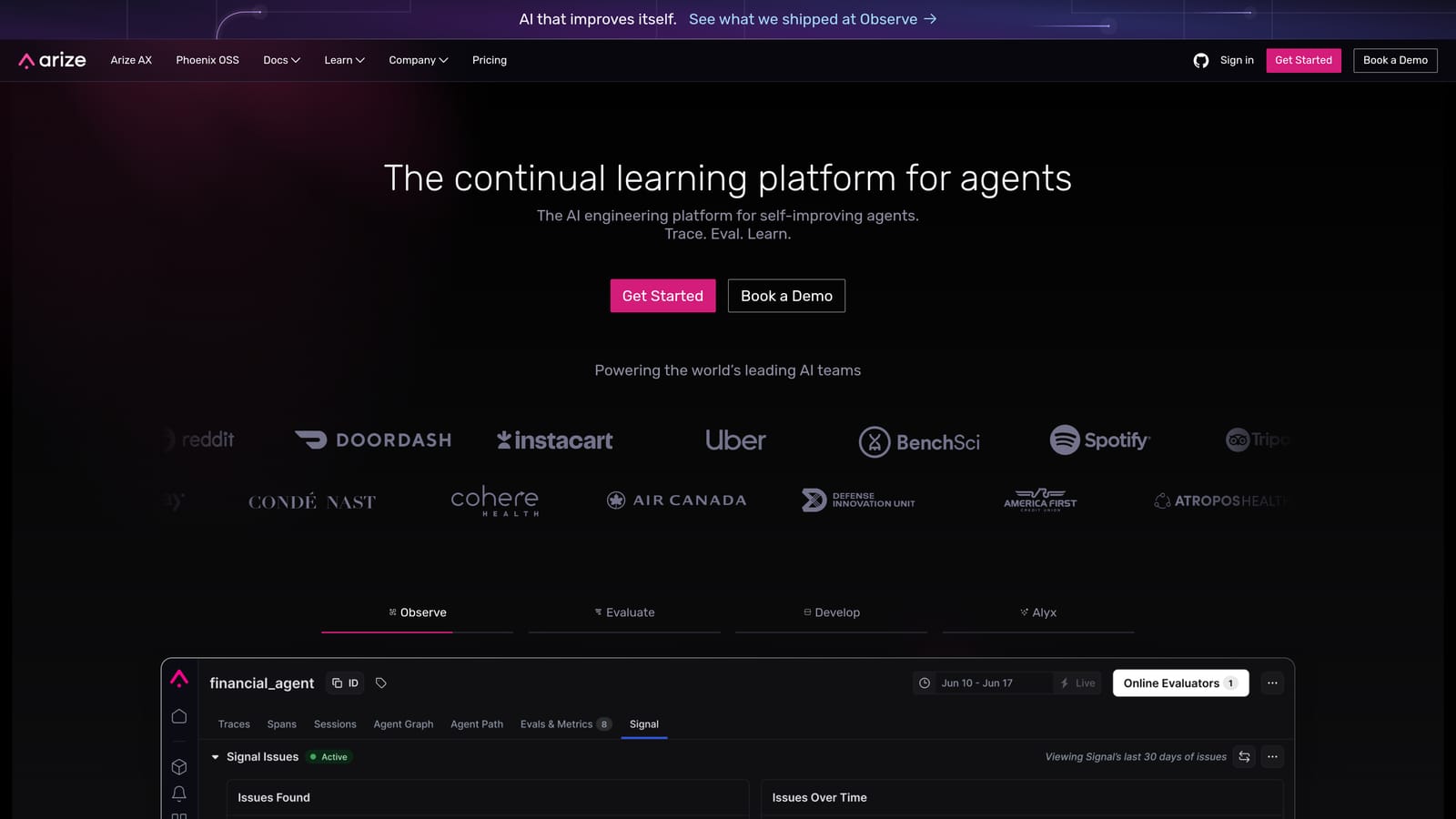
Arize AI is an enterprise-grade ML and LLM observability platform offering deep model performance monitoring, drift detection, and LLM tracing — particularly strong for regulated industries and large-scale deployments.
Where This Tool Shines
Arize stands out by covering both traditional ML model monitoring and LLM observability in a single platform. For organizations running a mix of classical machine learning models and newer LLM-based applications, consolidating monitoring into one tool reduces operational overhead considerably.
The Phoenix open-source project gives teams a free, local option for LLM evaluation and experimentation before committing to the cloud product. This makes Arize accessible at the exploration stage while offering a clear upgrade path to enterprise capabilities when production requirements demand it.
Key Features
Unified ML and LLM Monitoring: Monitors traditional ML models alongside LLM traces in a single platform, reducing tool sprawl for data science teams.
Phoenix Open-Source Project: A free, locally runnable evaluation tool for teams that want to experiment without cloud infrastructure commitments.
Hallucination Detection: Evaluates response quality and flags potential hallucinations in LLM outputs, critical for production deployments where accuracy matters.
Enterprise Access Controls: Role-based access, data governance features, and audit logging built for compliance-sensitive environments.
Broad Framework Integrations: Connects with major ML frameworks and LLM providers, fitting into existing MLOps stacks without requiring significant rearchitecting.
Best For
Enterprise data science and MLOps teams in regulated industries such as finance, healthcare, or legal, where governance, audit trails, and output quality monitoring are non-negotiable requirements.
Pricing
Phoenix is free and open-source. The cloud product offers tiered plans with enterprise pricing available on request. Visit arize.com/pricing for current details.
5. LangSmith
Best for: LangChain users wanting native observability without additional instrumentation
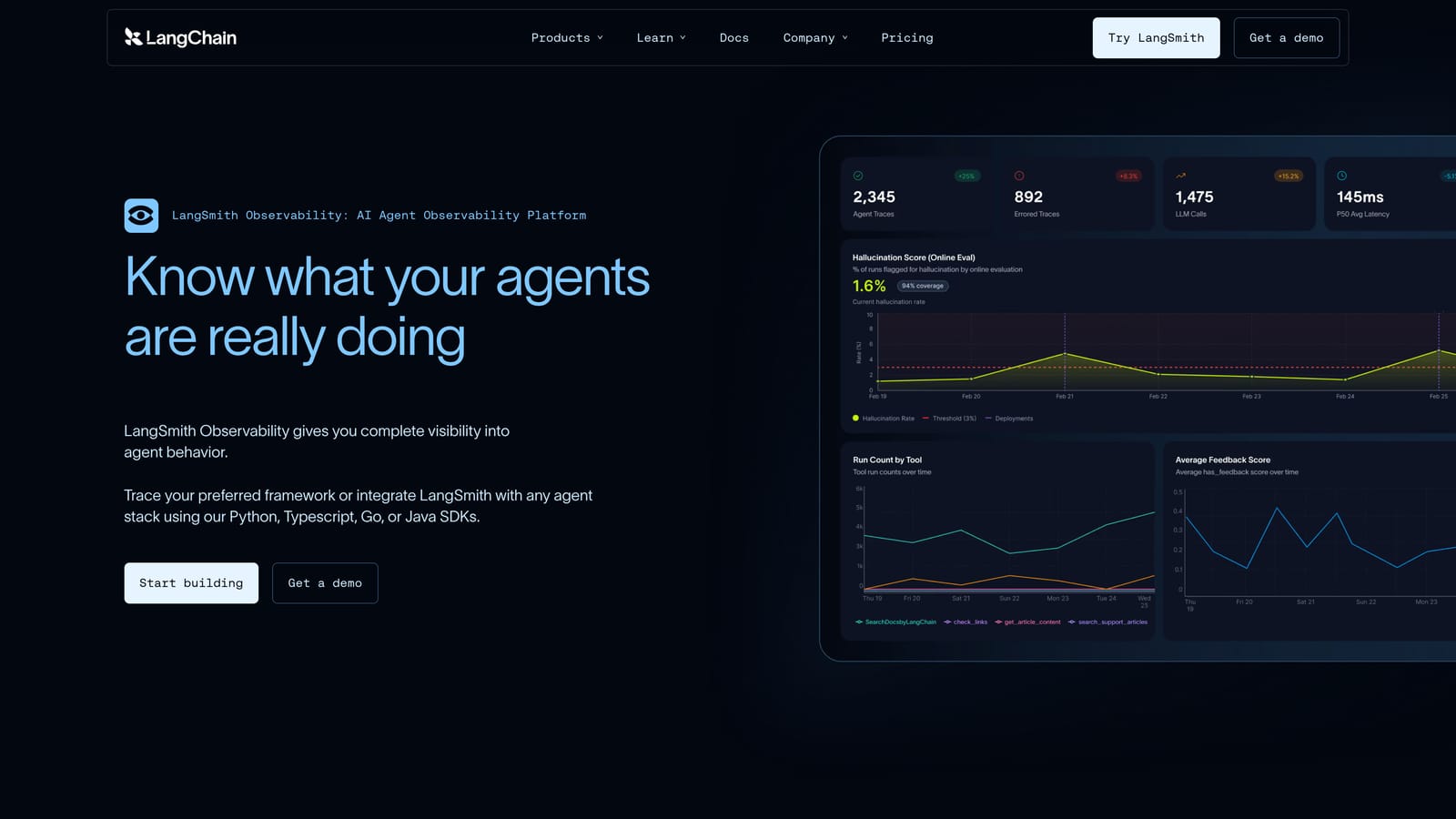
LangSmith is LangChain's native observability and evaluation platform, offering tight integration with LangChain pipelines for teams that want tracing, testing, and dataset management without leaving the LangChain ecosystem.
Where This Tool Shines
If your team is already building with LangChain or LangGraph, LangSmith is the path of least resistance for observability. The integration is native, meaning traces appear automatically without additional SDK setup or code changes. For teams deep in the LangChain ecosystem, this zero-friction onboarding is a significant time saver.
The evaluation and testing capabilities are particularly mature. LangSmith's dataset management and automated testing pipelines allow teams to run regression tests on prompt changes before deploying to production, reducing the risk of shipping degraded outputs after updates.
Key Features
Native LangChain Integration: Zero additional instrumentation for LangChain and LangGraph users — traces appear automatically as part of the existing workflow.
Trace-Based Pricing with Free Tier: Developer tier includes a meaningful trace allowance before paid tiers kick in, making it accessible for early-stage projects.
Evaluation Datasets and Automated Testing: Supports creating evaluation datasets and running automated tests against prompt changes, enabling systematic quality control.
Human Feedback Annotation: Allows teams to collect and organize human feedback on LLM outputs directly within the platform.
Prompt Hub: Centralized prompt versioning and sharing across teams, reducing the risk of prompt drift in collaborative environments.
Best For
Engineering teams already using LangChain or LangGraph who want observability without introducing a separate vendor. Also a strong fit for teams that prioritize systematic prompt testing and evaluation workflows.
Pricing
Free developer tier with trace limits. Plus and Team plans offer higher trace volumes with per-trace pricing above the free threshold. Visit smith.langchain.com/pricing for current rates.
6. Weights & Biases (W&B) Weave
Best for: Teams already on W&B who want to extend monitoring to LLM applications
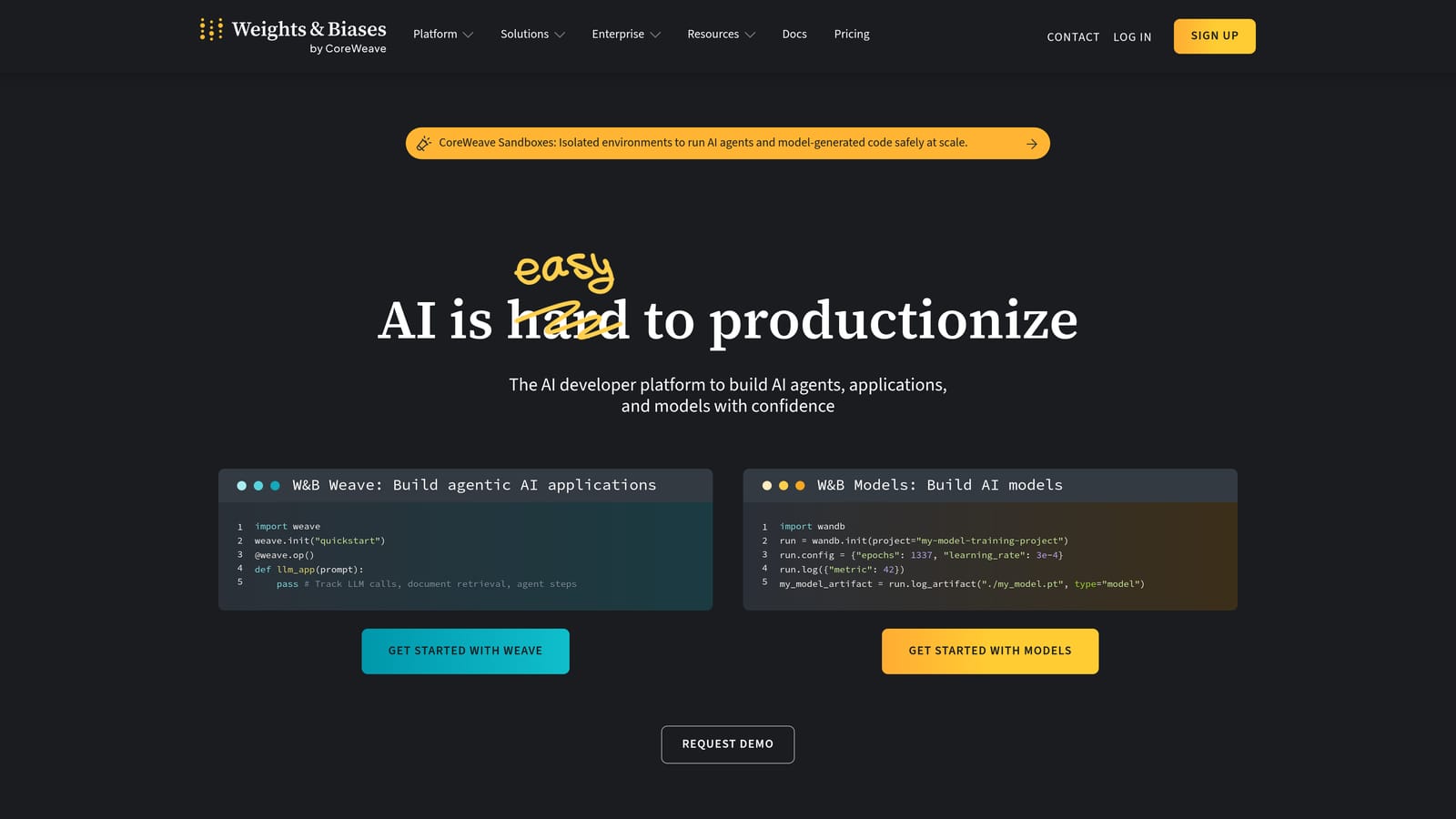
W&B Weave is W&B's LLM tracing and evaluation layer, integrated into the broader Weights & Biases platform — ideal for teams already using W&B for experiment tracking who want to extend monitoring to LLM applications.
Where This Tool Shines
The core value proposition of W&B Weave is consolidation. If your team is already running ML experiments through Weights & Biases, adding LLM tracing through Weave means no new vendor contracts, no new authentication systems, and no new dashboards to learn. Everything lives in the same platform your team already uses daily.
Weave is also notably strong for research and academic teams. W&B has deep roots in the ML research community, and its pricing structure reflects this, with a free individual tier that's genuinely useful for solo researchers and small teams exploring LLM evaluation without a production budget.
Key Features
Integrated W&B Ecosystem: LLM tracing sits alongside ML experiment tracking, making it easy to correlate model training decisions with downstream LLM behavior.
Custom Evaluation Scoring: Supports custom scoring functions for evaluation workflows, giving teams flexibility to define what "good" output means for their specific use case.
Dataset Versioning and Model Comparison: Tracks datasets and model versions over time, enabling systematic comparison of LLM performance across iterations.
Free Individual Tier: Individuals get meaningful access without a paid commitment, making it accessible for researchers and solo developers.
Research and Academic Support: W&B's history in the research community means strong community resources and academic pricing options.
Best For
Teams already using Weights & Biases for ML experiment tracking, and research or academic teams that want LLM evaluation capabilities without enterprise-tier pricing.
Pricing
Free tier for individuals. Team and Enterprise plans are priced alongside W&B's main platform. Visit wandb.ai/pricing for current details.
7. Datadog LLM Observability
Best for: Enterprise teams already running Datadog infrastructure who want to add LLM monitoring
Datadog LLM Observability is Datadog's LLM monitoring product built into its full-stack observability platform — best suited for enterprise teams already running Datadog infrastructure who want to add LLM tracing without introducing a new vendor.
Where This Tool Shines
For organizations already invested in Datadog, this is the most operationally efficient path to LLM monitoring. Your existing alerting rules, dashboards, on-call workflows, and team permissions all carry over. LLM spans integrate directly into APM traces, so you can correlate LLM behavior with broader application performance in a single view.
The trade-off is cost predictability. Datadog's per-span pricing model means LLM observability costs scale with volume, and teams running high-frequency LLM calls should model their expected span volume carefully before assuming this is the most cost-effective option.
Key Features
APM Integration: LLM spans appear within Datadog's existing APM and distributed tracing, providing end-to-end visibility from user request to LLM response.
Per-Span Pricing: Consistent with Datadog's existing billing model, making it straightforward to forecast costs if you already understand your Datadog usage patterns.
PII Scrubbing: Prompt and response logging includes options for scrubbing personally identifiable information before data is stored.
Existing Monitor Reuse: Alerting and anomaly detection leverage existing Datadog monitors, so teams don't need to rebuild their alerting logic.
No New Vendor Onboarding: For existing Datadog customers, there's no new contract, no new SSO setup, and no new compliance review required.
Best For
Enterprise engineering teams already running Datadog for infrastructure and application monitoring who want to extend observability to LLM applications without adding a new vendor to their stack.
Pricing
Priced per LLM span ingested, billed alongside existing Datadog usage. Costs scale with span volume. Visit datadoghq.com for current rates and to model expected costs against your usage patterns.
8. Portkey
Best for: Product teams running multiple LLM providers who want unified cost control and reliability
Portkey is an AI gateway that combines multi-provider LLM routing with built-in monitoring, caching, and fallback logic — useful for product teams running multiple LLM providers who want unified cost control and reliability.
Where This Tool Shines
Portkey's gateway architecture means it sits between your application and your LLM providers, handling routing, fallbacks, and caching automatically. This is particularly valuable for teams using more than one LLM provider, where managing separate integrations, rate limits, and failover logic across providers quickly becomes complex.
The semantic caching feature is worth highlighting specifically: it stores responses to semantically similar queries and serves cached results instead of making redundant API calls. For applications where users frequently ask similar questions, this can meaningfully reduce LLM costs without degrading the user experience.
Key Features
Unified Gateway for 200+ Providers: Routes requests across a wide range of LLM providers with automatic fallback when a provider is unavailable or rate-limited.
Request-Level Monitoring: Tracks cost, latency, and usage at the individual request level across all connected providers.
Semantic Caching: Reduces redundant LLM calls by serving cached responses to semantically equivalent queries, directly cutting API costs.
Centralized Guardrails and Prompt Templates: Manages prompts and safety guardrails in one place, ensuring consistency across your application.
Free Tier with Upgrade Path: A published free tier makes it accessible for early-stage teams, with team and enterprise plans available for higher volume.
Best For
Product teams and startups running multi-provider LLM architectures who want unified monitoring, cost control, and reliability features without building custom gateway infrastructure from scratch.
Pricing
Free tier available. Paid plans based on request volume and team size. Visit portkey.ai/pricing for current rates.
9. Galileo
Best for: Teams where LLM output accuracy and safety are critical business requirements
Galileo is a purpose-built LLM evaluation and guardrails platform focused on detecting hallucinations, measuring output quality, and running automated safety testing — aimed at teams where AI output accuracy is a critical business requirement.
Where This Tool Shines
Galileo takes a different angle from most tools in this list. Rather than focusing primarily on tracing and cost visibility, it specializes in output quality: is the LLM actually producing accurate, safe, and factually grounded responses? For teams in healthcare, legal, finance, or any domain where hallucinations carry real risk, this specialized focus is genuinely valuable.
The Chainpoll evaluation methodology is Galileo's proprietary approach to assessing LLM output quality, designed to provide more reliable quality signals than simple human annotation at scale. Teams building production AI applications where accuracy is non-negotiable will find this evaluation depth hard to replicate with general-purpose observability tools.
Key Features
Automated Hallucination Detection: Flags potentially hallucinated content in LLM outputs at scale, reducing the manual review burden on teams.
Chainpoll Evaluation Methodology: Galileo's proprietary approach to LLM output quality scoring, designed for reliable evaluation at production scale.
Guardrail Testing Pipelines: Runs automated safety checks against production outputs, helping teams catch problematic responses before they reach end users.
Framework and Provider Integrations: Connects with popular LLM frameworks and providers, fitting into existing development workflows.
Enterprise-Focused Onboarding: Custom onboarding and support processes reflect the complexity of deploying safety-critical AI systems.
Best For
Enterprise teams in regulated or high-stakes industries where LLM output accuracy, factuality, and safety are core product requirements. Less suited for teams whose primary concern is cost tracking or general observability.
Pricing
Enterprise-oriented pricing with custom plans. Developer access is available for evaluation. Contact Galileo directly or visit rungalileo.io for current pricing details, as plans are typically scoped to organizational requirements.
Which Tool Fits Your Team?
The right choice depends almost entirely on what you're actually trying to monitor. Here's a quick guide by team type.
Marketers and agencies focused on AI search visibility: Sight AI is the only tool in this list built specifically for tracking how AI models mention your brand and generating content to improve that presence. The other tools won't give you this — they're built for developers, not marketers.
Developer teams building LangChain applications: LangSmith is the obvious starting point given its native integration and generous free tier. If you need self-hosting flexibility, Langfuse is the strongest open-source alternative.
Teams wanting fast setup with minimal code changes: Helicone's proxy-based approach gets you logging in minutes without touching your application code. Portkey is a strong alternative if you're also managing multiple LLM providers.
Enterprise teams on Datadog: Datadog LLM Observability is the most operationally efficient path if you're already in the Datadog ecosystem. Arize is the better choice if you need unified ML and LLM monitoring with stronger governance features.
Teams where output accuracy is critical: Galileo's hallucination detection and guardrail testing make it the specialist choice for high-stakes AI applications in regulated industries.
If you're a marketer, founder, or agency trying to understand and grow your brand's presence across AI platforms, start with Sight AI. The developer observability tools in this list are powerful, but they're solving a different problem than the one you're facing. Start tracking your AI visibility today and see exactly where your brand appears across ChatGPT, Claude, Perplexity, and more — then use the built-in content tools to close the gaps.