Generative engines are quietly rewriting the rules of online discovery. When someone asks ChatGPT which project management tool is best for remote teams, or asks Perplexity to explain the top cybersecurity platforms for small businesses, they're not scanning a list of links. They're reading a synthesized answer that names specific brands, cites specific sources, and delivers a recommendation with the confidence of a trusted advisor. If your brand isn't in that answer, you effectively don't exist for that query.
This shift is happening fast. ChatGPT, Claude, Perplexity, and Google's AI Overviews are increasingly becoming the first stop for research, comparison, and discovery across every industry. For marketers, founders, and agencies focused on organic growth, the question is no longer whether to pay attention to generative engines. It's how to optimize for them systematically.
That's exactly what this guide covers. Generative Engine Optimization (GEO) is the discipline of making your content and brand presence visible, credible, and citable to AI-powered search tools. It builds on traditional SEO foundations while adding new strategies tailored to how large language models retrieve, evaluate, and reference information.
The seven steps ahead will walk you through a complete GEO workflow: auditing your current AI visibility, researching the prompts your audience actually uses, structuring content for AI comprehension, building topical authority, strengthening your brand signals off-site, ensuring technical discoverability, and tracking your progress over time. Each step is designed to be immediately actionable, whether you're starting fresh or layering GEO onto an existing SEO strategy.
Let's get into it.
Step 1: Audit Your Current AI Visibility Across Generative Platforms
You can't improve what you don't measure. Before you write a single piece of GEO-optimized content, you need a clear picture of where your brand currently stands in the AI search landscape. This baseline audit will shape every decision you make in the steps that follow.
Start manually. Open ChatGPT, Claude, Perplexity, and Google's AI Overviews and begin querying with prompts relevant to your brand, your product category, and the core topics your audience cares about. Think in terms of how a real user would ask: "What's the best tool for tracking brand mentions in AI search?" or "Which platforms help with SEO content automation?" Document every response carefully.
As you review the responses, track three things. First, note where your brand is mentioned directly. Second, identify where competitors appear in your place. Third, flag responses where AI provides an answer but cites no clear source at all. That third category is particularly valuable because it signals a gap where well-structured, authoritative content could earn a citation.
Manual auditing gives you qualitative insight, but it doesn't scale. If you're tracking dozens of prompts across multiple AI platforms, you'll quickly hit the limits of doing this by hand. This is where AI visibility tracking tools become essential. If you're wondering why AI search engines are missing your website, automated monitoring across multiple platforms can reveal the specific gaps holding you back.
Once you have your audit data, organize it into a prioritized list of gaps. These are the topics and prompts where you should be the authority but AI models aren't referencing you yet. Ask yourself: does this topic align with your core expertise? Is a competitor consistently appearing here instead? Is the AI response currently weak or unsourced? High scores on all three criteria mean high priority.
Your audit output becomes the strategic foundation for everything that follows. Without it, you're optimizing in the dark. With it, you have a precise map of where to focus your effort for maximum AI visibility impact.
Step 2: Research the Questions and Prompts Your Audience Asks AI
Traditional keyword research asks: what terms do people type into Google? GEO research asks a different question: what do people ask AI, and how do they phrase it? These are meaningfully different, and conflating them will lead you to create content that ranks in traditional search but gets ignored by generative engines.
Generative engines are built for conversational, multi-part queries. A user might ask, "I'm running a B2B SaaS company with a small marketing team. What content strategy should I use to show up in AI search results?" That's not a keyword. It's a nuanced question with context, intent, and multiple embedded sub-questions. The AI model synthesizes an answer that addresses all of it simultaneously. Your content needs to be structured to serve that kind of query.
Here's how to build your prompt research bank. Start by querying AI platforms directly and observing what follow-up questions they suggest. These suggested continuations reveal how AI models map out a topic's information architecture. Next, mine Google's People Also Ask boxes for your core topics. These surface the natural-language questions real users have, and they often translate directly into the kinds of prompts that drive AI queries.
Community forums are another rich source. Reddit threads and Quora discussions show you the exact phrasing real people use when they're confused, curious, or comparing options. This language is gold for GEO because it mirrors how users phrase prompts to AI tools. Understanding how AI search engines work will help you reverse-engineer the types of queries that trigger brand citations.
Map every prompt you collect to a buyer journey stage. Informational queries ("how does AI search work?") require educational content. Comparative queries ("ChatGPT vs. Perplexity for research") need structured comparison content. Transactional queries ("best AI visibility tracking tool for agencies") call for solution-focused content with clear positioning. Each stage requires a different content approach to earn an AI citation.
Organize your findings into a prompt bank grouped by topic cluster and intent. This becomes your GEO content roadmap. Pay special attention to prompts where AI currently delivers incomplete or unsourced answers. These represent your biggest immediate opportunities because there's a citation vacancy waiting to be filled.
Step 3: Structure Your Content for AI Comprehension and Citation
Here's the thing about generative engines: they don't read your content the way a human does. They parse it, extract key claims, evaluate structural clarity, and decide whether a passage is specific and authoritative enough to cite. Content that's vague, meandering, or structured like a stream of consciousness gets passed over in favor of content that's crisp, factually dense, and easy to extract.
The single most important structural principle is to answer the question directly and immediately. Don't bury your main point three paragraphs in after a lengthy preamble. State your definition, your answer, or your core claim in the first paragraph of every section. AI models prioritize content that delivers value at the top of each passage because that's what they can most reliably extract and cite without distorting your meaning.
Use explicit definitions and clear topic sentences throughout. If you're writing about topical authority, start that section with a clean definition of what topical authority means. If you're explaining a process, number the steps explicitly. If you're making a claim, attribute it clearly. Understanding how AI models choose information sources will help you structure content that meets their selection criteria.
Structured data is your technical ally here. Implementing schema markup gives AI systems machine-readable context that supplements what they extract from your prose. For GEO purposes, focus on these schema types:
FAQ Schema: Wraps question-and-answer pairs in a format that AI retrieval systems can parse directly. Ideal for content that addresses common user queries.
HowTo Schema: Marks up step-by-step processes so AI models can extract and present your instructions accurately.
Article and Organization Schema: Establishes authorship, publication date, and brand identity context that helps AI models understand who is speaking and whether the source is credible.
Write in a modular format. Each section of your content should be self-contained enough to be cited independently. A reader, or an AI, should be able to drop into any section and immediately understand what it's about without reading everything before it. For a deeper dive into structuring pages effectively, explore our guide on how to optimize content for AI search.
The common pitfall here is fluffy, generic content. Phrases like "in today's fast-paced digital landscape" or "it's more important than ever to" are signals to both readers and AI models that what follows lacks specificity. Generative engines consistently favor concrete, information-rich content. Be specific, be direct, and cite real sources when you make factual claims.
Step 4: Build Topical Authority Through Comprehensive Content Clusters
Generative engines don't just evaluate individual pages. They synthesize information about your brand across everything they can access, and they develop a sense of whether you're a genuine authority on a topic or just someone who wrote one article about it. Depth and interconnection matter enormously.
This is the concept of topical authority, and it applies even more forcefully in GEO than in traditional SEO. When an AI model is deciding whether to cite your brand on a complex topic, it effectively asks: does this source demonstrate comprehensive, reliable expertise here, or is this an isolated piece? Our detailed guide on how to build topical authority for AI breaks down the specific strategies that earn this kind of trust from language models.
A content cluster follows a hub-and-spoke structure. Your pillar page covers the broad topic comprehensively, serving as the authoritative overview. Supporting articles branch out from it, each addressing a specific subtopic, related question, or edge case in depth. Internal links connect these pieces explicitly, signaling both to search crawlers and to AI training pipelines that these pages form a coherent knowledge base.
When building clusters, be deliberate about coverage. Each piece should explore unique ground. Redundant content that rehashes the same points across multiple pages dilutes your authority signal rather than strengthening it. Think of it like a textbook: each chapter covers new material while referencing and building on the others.
Producing cluster content at scale is one of the real operational challenges of GEO. This is where AI tools for content creation with specialized agents become genuinely useful. Sight AI's platform includes 13+ specialized AI agents designed to generate SEO/GEO-optimized articles across formats: listicles, step-by-step guides, explainers, and comparisons. With Autopilot Mode, you can build out content clusters efficiently without sacrificing the structural quality that AI citation requires.
When prioritizing which clusters to build first, go back to your Step 1 audit. If competitors are consistently appearing in AI responses for a topic that sits squarely in your area of expertise, that cluster is your highest-priority investment. Closing that gap is both a GEO win and a competitive defense.
Step 5: Strengthen Off-Page Authority and Brand Signals
Your website is only one input in how generative engines understand your brand. AI models synthesize information from across the entire web: news articles, review sites, social profiles, knowledge bases, directories, forum discussions, and more. The picture they construct of your brand is a composite of all of it. If that composite is thin, inconsistent, or contradictory, AI models will lack the confidence to recommend you.
Start with brand entity consistency. Your company name, description, industry category, and key product information should be uniform across every platform where you have a presence. This includes your website, LinkedIn, Crunchbase, Google Business Profile, and any relevant industry directories. AI models use these signals to build a reliable internal representation of what your brand is and does. Inconsistencies create ambiguity, and ambiguous brands get skipped in favor of clearly defined ones.
Next, pursue authoritative third-party mentions. Guest posts on respected industry publications, appearances in expert roundup articles, podcast interviews, and citations in research pieces all contribute to your brand's authority profile in AI training data. Understanding how AI models verify information accuracy reveals why these third-party signals carry so much weight in citation decisions.
Digital PR is particularly powerful here. When journalists or analysts quote your team members as expert sources in articles that AI models are likely to reference, those citations transfer credibility to your brand. Think about building relationships with journalists who cover your space, contributing data or insights to industry reports, and positioning your founders or subject matter experts as go-to voices on your core topics.
User-generated content also contributes. Reviews on G2, Capterra, or industry-specific platforms that mention your brand in natural, contextual language help AI models understand your product from a user perspective. The role of sentiment analysis for AI recommendations means that the tone and specificity of these reviews directly influence whether AI models position your brand favorably.
The common pitfall in this step is neglecting brand entity signals entirely while focusing all effort on on-page content. If AI models can't confidently identify what your brand does, who it serves, and why it's credible, they simply won't recommend it, regardless of how well-structured your content is.
Step 6: Ensure Technical Discoverability Through Indexing and Crawlability
All the content strategy in the world means nothing if AI crawlers can't access your pages. Technical discoverability is the unglamorous but non-negotiable foundation of GEO. If your content isn't indexed and accessible, it doesn't exist from an AI model's perspective.
Begin with a crawlability audit. Use Google Search Console and Bing Webmaster Tools to verify that your key pages are indexed. Run a site crawl to identify broken links, redirect chains, orphaned pages, and crawl errors that might be preventing bots from accessing your content. For a comprehensive walkthrough, our guide on how to get indexed by search engines faster covers the exact steps to accelerate this process.
Your XML sitemap should be current, comprehensive, and submitted to all major search engines. Every time you publish or significantly update a piece of content, your sitemap should reflect it. Stale sitemaps mean delayed discovery, which translates to delayed AI visibility.
This is where the IndexNow protocol becomes a meaningful advantage. IndexNow allows publishers to notify participating search engines instantly when content is created or updated, dramatically reducing the lag between publication and indexing. Understanding how search engines discover new content will help you appreciate why this speed advantage compounds over time in a landscape where AI search tools pull from freshly indexed sources.
Page speed and Core Web Vitals also matter. Fast, technically sound pages are more likely to be crawled frequently and referenced by AI systems. Use tools like Google PageSpeed Insights to identify and resolve performance bottlenecks.
Here's a critical check that many brands miss: review your robots.txt file for inadvertent AI crawler blocks. AI companies use specific user agents to crawl the web. OpenAI uses GPTBot, Anthropic uses ClaudeBot, and Perplexity uses PerplexityBot. If your robots.txt is blocking these agents, you've effectively opted out of AI-generated responses without realizing it. Audit your file carefully and ensure these crawlers have access to the content you want cited.
Technical discoverability is maintenance work, not a one-time fix. Build a monthly check into your workflow to catch new issues before they compound into significant visibility losses.
Step 7: Track, Measure, and Iterate on Your GEO Performance
GEO is not a set-it-and-forget-it project. Generative engines update their models, retrieval methods, and source preferences on an ongoing basis. A brand that earns strong AI visibility in one quarter can lose it in the next if they stop paying attention. Continuous measurement and iteration are what separate brands that sustain GEO performance from those that experience it briefly and then wonder what happened.
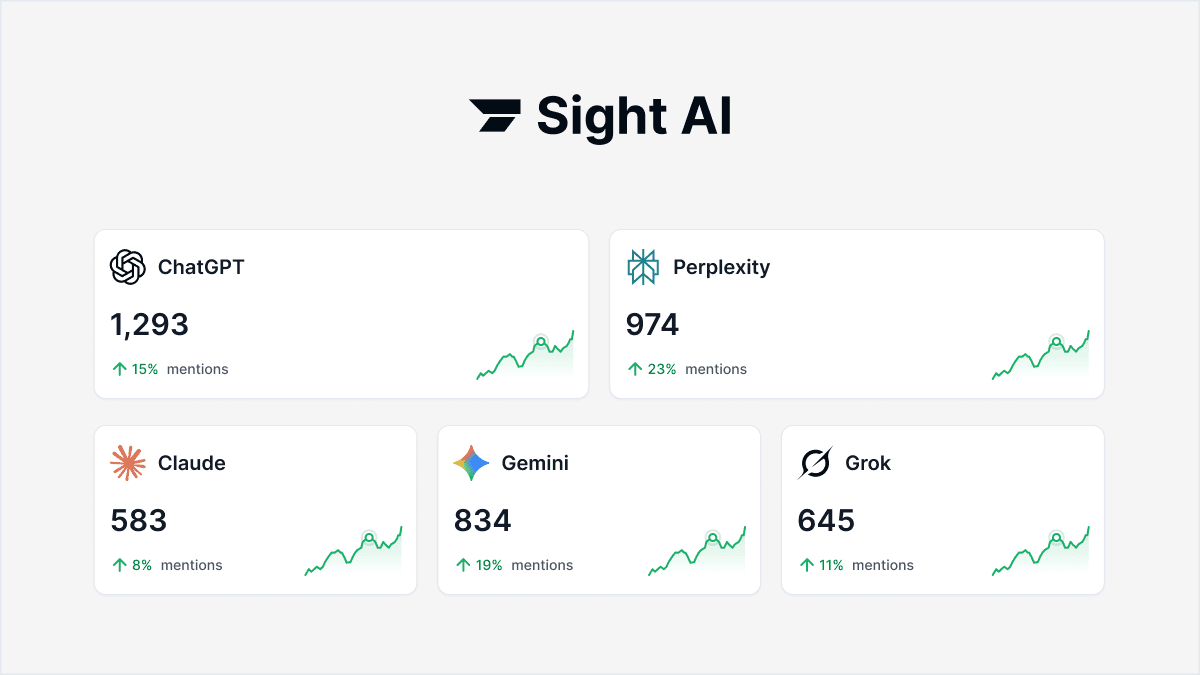
Define your core GEO metrics before you start tracking. The most important ones to monitor are your AI visibility score across platforms, the frequency of brand mentions in AI-generated responses, the sentiment of those mentions (are AI models describing your brand positively, neutrally, or negatively?), and your share of voice relative to key competitors. A dedicated generative engine optimization platform can centralize these metrics and streamline your monitoring workflow.
Set up a monitoring cadence that balances thoroughness with practicality. Weekly prompt checks on your highest-priority queries will catch rapid changes quickly. Monthly deep audits across your full prompt bank will surface slower-moving trends and competitive shifts. Quarterly reviews of your overall GEO strategy will ensure you're adapting to platform-level changes.
Combine your AI visibility metrics with traditional SEO data for a complete picture. Organic traffic, keyword rankings, and click-through rates from search still matter because traditional search and AI search coexist and often reinforce each other. A unified dashboard that shows both gives you the full story of how your content is performing across all discovery channels.
Iterate based on what you find. If a competitor starts appearing for prompts where you previously had strong visibility, don't just note it and move on. Analyze their content: is it more structured? More specific? Does it have stronger schema markup or more authoritative citations? Use those observations to improve your own content rather than simply publishing more of it.
The success indicator to watch for is a steady, compounding increase in AI brand mentions with positive sentiment, alongside growing organic traffic from both traditional and AI-driven search. When those trends move together, you're building the kind of durable visibility that compounds over time.
Putting It All Together: Your GEO Action Checklist
Generative Engine Optimization is a discipline that rewards systematic effort. Here's your quick-reference checklist summarizing the seven steps covered in this guide:
Step 1: Audit AI Visibility. Query ChatGPT, Claude, Perplexity, and Google AI Overviews with your core prompts. Document brand mentions, competitor appearances, and unsourced gaps. Use AI visibility tracking tools to automate ongoing monitoring.
Step 2: Research AI-Native Prompts. Build a prompt bank using AI platform suggestions, People Also Ask data, and community forums. Map prompts to buyer journey stages and prioritize queries where AI currently gives incomplete answers.
Step 3: Structure Content for Citation. Lead with direct answers, use modular section structures, implement FAQ, HowTo, and Organization schema markup, and eliminate vague filler language in favor of specific, attributable claims.
Step 4: Build Topical Authority. Create hub-and-spoke content clusters with a pillar page and interconnected supporting articles. Use internal linking to signal topical depth and leverage AI content tools to scale production efficiently.
Step 5: Strengthen Brand Signals. Ensure consistent brand information across all platforms, pursue authoritative third-party mentions and digital PR, and build your brand entity profile through knowledge bases, reviews, and expert citations.
Step 6: Ensure Technical Discoverability. Verify indexing and crawlability, maintain an updated XML sitemap, implement IndexNow for faster content discovery, optimize page speed, and check robots.txt for inadvertent AI crawler blocks.
Step 7: Track and Iterate. Monitor AI visibility scores, brand mention frequency, sentiment, and competitive share of voice. Run weekly prompt checks and monthly deep audits, and update content based on what the data reveals.
The brands investing in GEO now are building a compounding advantage. As generative engines become an increasingly central discovery channel, the gap between brands with strong AI visibility and those without will only widen. Starting with Step 1 this week, running your first AI visibility audit, puts you ahead of the majority of your competitors who haven't done it yet.
You don't have to manage all of this manually. Start tracking your AI visibility today with Sight AI's platform and get a clear view of exactly where your brand appears across top AI platforms, which prompts are driving competitor mentions, and where your biggest content opportunities lie. From AI visibility tracking and GEO-optimized content generation to automated indexing with IndexNow, it's everything you need to build and sustain AI search visibility in one place.