An online rank tracking tool checks where your pages appear in Google for a defined set of keywords on a fixed schedule, by country, city and device, so you don't have to search manually or rely on personalized results. In 2026, a useful tracker should also flag SERP features such as AI Overviews and show whether AI assistants like ChatGPT and Perplexity mention your brand. Below are six tools compared, including which ones track positions and which ones focus on AI visibility or content production.
Classic position tracking now covers only part of search visibility. A brand can hold a top-three Google ranking and still be missing from the AI-generated answers that sit above it. The tools here were selected for accuracy, feature depth and fit with modern SEO workflows, from solo founders watching a handful of keywords to agencies running dozens of client sites.
Quick comparison
| Tool | Core focus | Best for |
|---|---|---|
| Sight AI | AI visibility tracking, SEO/GEO content, indexing | Teams tracking Google and AI search in one platform |
| Writesonic | AI content generation | High-volume SEO article production |
| Promptwatch | Prompt and brand monitoring in AI answers | Brand marketers watching AI responses |
| Profound | Enterprise AI visibility analytics | Large teams reporting AI visibility as a KPI |
| Peec | AI citation tracking (AEO) | SEOs building an answer engine optimization practice |
| AirOps | Content operations and workflow automation | Growth teams and agencies scaling content |
1. Sight AI
Best for: Marketers and agencies tracking both Google rankings and AI search visibility in one platform.
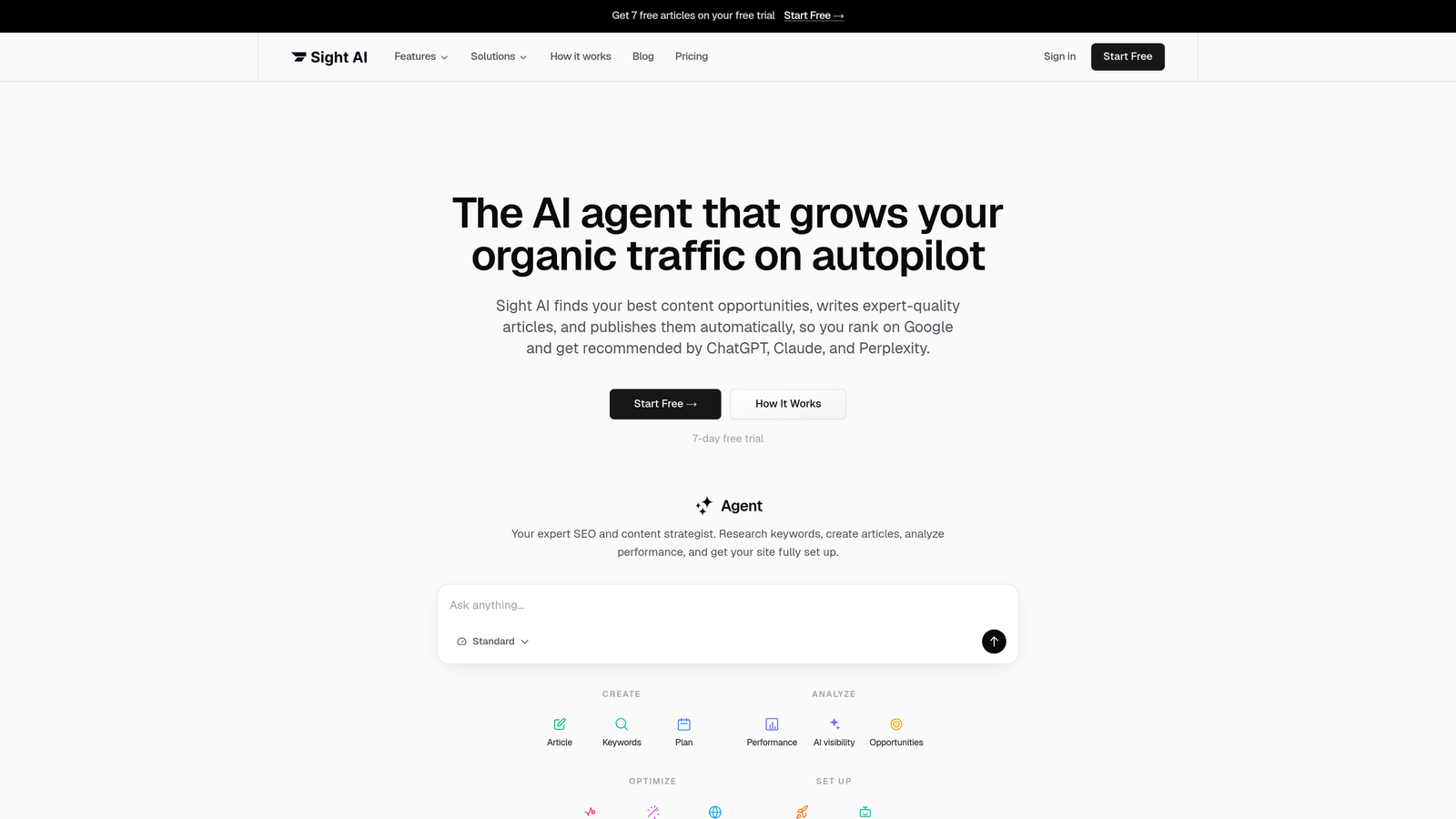
Sight AI is an all-in-one platform combining AI visibility tracking, SEO/GEO content generation, and website indexing for teams who need to monitor performance across both Google and AI search.
Where This Tool Shines
Most rank trackers stop at Google. Sight AI goes further by monitoring how your brand appears across AI platforms like ChatGPT, Claude, and Perplexity, giving you a complete picture of your search presence in 2026. This matters because a brand can rank well in traditional SERPs while being entirely absent from AI-generated answers, and without visibility into both layers, you're working with incomplete data.
What makes Sight AI genuinely different is the combination of tracking, content creation, and indexing under one roof. You're not just seeing where you stand; you're getting the tools to improve it, from AI-generated articles optimized for both search and AI visibility to automated indexing that gets your content discovered faster.
Key Features
AI Visibility Score: Tracks brand mentions across ChatGPT, Claude, Perplexity, and 6+ AI platforms, with sentiment analysis to show how AI models describe your brand.
Prompt Tracking: Monitors specific prompts and queries to show when and how your brand surfaces in AI-generated responses.
13+ Specialized AI Agents: Generates SEO/GEO-optimized articles including listicles, guides, and explainers, each designed to improve visibility in both Google and AI search.
IndexNow Integration: Automatically submits new and updated content to search engines via IndexNow, paired with automated sitemap updates for faster content discovery.
Autopilot Mode: Enables hands-off content workflows with CMS auto-publishing, so your content pipeline keeps moving without manual intervention.
Best For
Sight AI is the strongest fit for growth-focused marketers, agency teams, and founders who recognize that Google rankings are just one part of the visibility equation. If you're serious about being present in AI-generated answers and want content generation and indexing built into the same workflow, this is the platform built for that reality.
Pricing
Check trysight.ai for current pricing and plan details, as options vary by team size and feature requirements.
2. Writesonic
Best for: Content teams producing high-volume SEO articles and landing pages optimized for Google search.
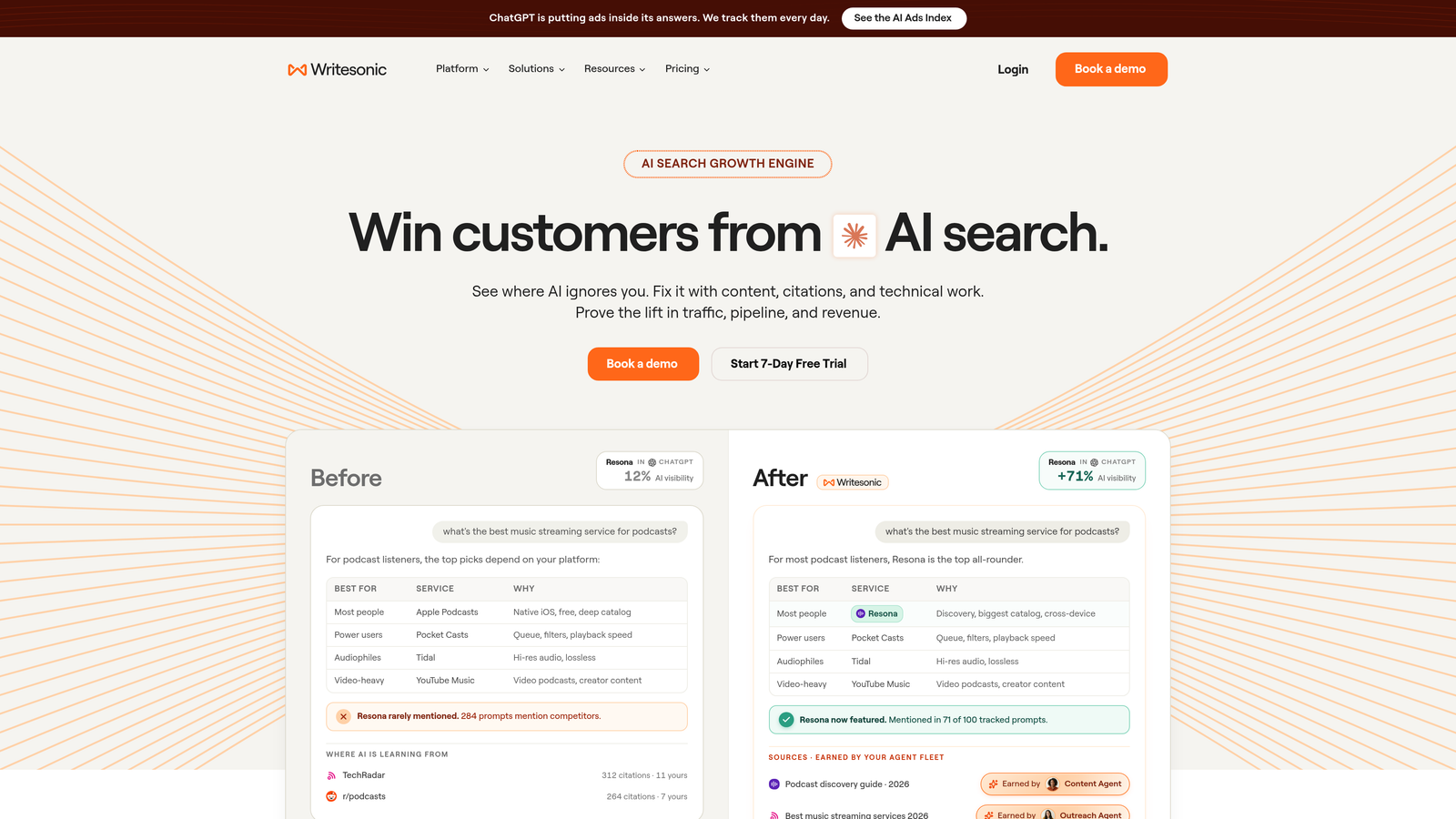
Writesonic is an AI-powered content generation platform that helps teams produce search-optimized articles, blog posts, and landing pages designed to rank in Google.
Where This Tool Shines
Writesonic's strength is in volume and versatility. For teams that need to produce a consistent stream of SEO-optimized content across multiple formats, the platform provides a well-structured environment for generating long-form articles with keyword targeting built into the workflow. It's particularly useful when you need to scale content production without scaling headcount.
It's worth being direct here: Writesonic is primarily a content generation tool, not a rank tracker in the traditional sense. Its place in this list reflects the reality that content quality and publishing velocity are directly tied to ranking outcomes. If your ranking problem is actually a content gap problem, Writesonic addresses that upstream.
Key Features
Long-Form Article Generation: Produces full-length blog posts and guides with keyword targeting and SEO-oriented structure built into the output.
SEO Writing Modes: Includes dedicated modes for producing search-optimized content, helping teams align output with Google's ranking expectations.
Multi-Format Content: Covers blog posts, product descriptions, landing pages, and ad copy, giving teams flexibility across the content marketing funnel.
Built-In Editor with SEO Suggestions: Allows writers to refine AI-generated content with on-page SEO guidance directly in the editing interface.
Best For
Content marketers and SEO teams that need to produce large volumes of search-optimized articles efficiently. It's particularly well-suited for teams with established keyword strategies who need a reliable content engine to execute against them at scale.
Pricing
A free tier is available. Paid plans vary in feature access and usage limits. Check writesonic.com for current pricing details.
3. Promptwatch
Best for: Marketers monitoring their brand's presence in AI-generated search responses across major AI platforms.
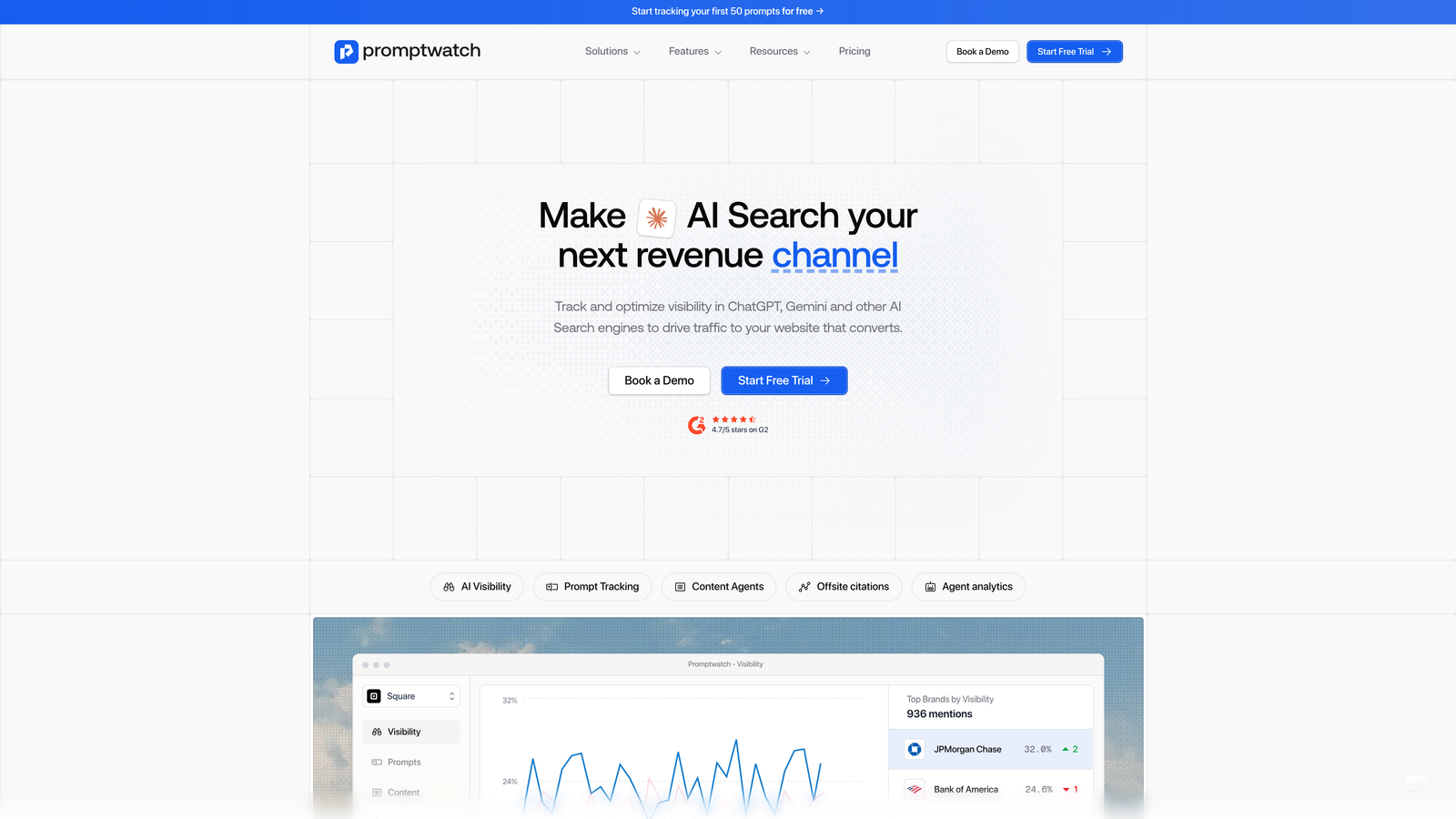
Promptwatch is a prompt monitoring tool that tracks how AI models respond to branded and category-level queries, extending visibility beyond traditional Google rankings into AI search.
Where This Tool Shines
Promptwatch is designed for the specific challenge of understanding what AI models say about your brand when users ask relevant questions. This is a fundamentally different kind of tracking than keyword position monitoring. Instead of checking where you appear in a ranked list, you're examining whether you appear at all in a conversational AI answer, and what that answer actually says about you.
For brands investing in AI visibility as part of their broader SEO strategy, Promptwatch provides the monitoring layer that traditional rank trackers don't offer. It's particularly useful for competitive intelligence, since you can see how AI models position your brand relative to competitors within the same responses.
Key Features
Prompt-Level Tracking: Monitors specific prompts across major AI platforms to track when and how your brand appears in AI-generated answers.
Brand Mention Monitoring: Surfaces instances where AI models reference your brand, giving you a clear picture of your AI search footprint.
Competitive Visibility Comparisons: Shows how your brand's AI search presence compares to competitors within the same answer contexts.
Change Alerts: Notifies you when AI models shift how they describe or position your brand, helping you respond quickly to reputational changes in AI answers.
Best For
SEO professionals and brand marketers who need dedicated monitoring of their presence in AI-generated responses. It complements traditional rank tracking well for teams that already have Google visibility covered and want to extend their monitoring into the AI search layer.
Pricing
Check promptwatch.io for current pricing and plan details.
4. Profound
Best for: Enterprise marketing teams tracking brand visibility across AI-generated search answers at scale.
Profound is an enterprise-grade AI visibility platform focused on tracking how brands appear in AI-generated search answers, built for large marketing teams managing complex brand monitoring needs.
Where This Tool Shines
Profound is built with enterprise requirements in mind. Where smaller tools offer basic brand mention tracking, Profound provides the analytics depth and team collaboration infrastructure that larger organizations need to operationalize AI visibility monitoring. If you're managing a multi-brand portfolio or coordinating tracking across a large marketing team, the platform's reporting and collaboration features become significant advantages.
The platform's focus on AI answer tracking reflects a clear understanding of where search is heading. For enterprise teams that need to demonstrate AI visibility performance to stakeholders alongside traditional SEO metrics, Profound's analytics-forward approach makes that reporting straightforward.
Key Features
AI Answer Tracking: Monitors how your brand appears across major AI search platforms, providing structured visibility into AI-generated content that references your brand.
Brand Visibility Analytics: Delivers detailed analytics on brand presence in AI-generated content, including trends and performance over time.
Competitive Benchmarking: Compares your AI search visibility against competitors, helping teams understand relative positioning in AI-generated answers.
Enterprise Reporting and Collaboration: Includes team-level features for sharing reports, coordinating monitoring workflows, and presenting AI visibility data to stakeholders.
Best For
Enterprise marketing teams and large agencies that need robust AI visibility analytics with the collaboration and reporting infrastructure to support multiple stakeholders. It's best suited for organizations where AI visibility has become a formal KPI alongside traditional search metrics.
Pricing
Enterprise pricing model. Check profound.ai for current plan details and to request a demo.
5. Peec
Best for: SEO professionals focused on answer engine optimization and tracking brand citations in AI search responses.
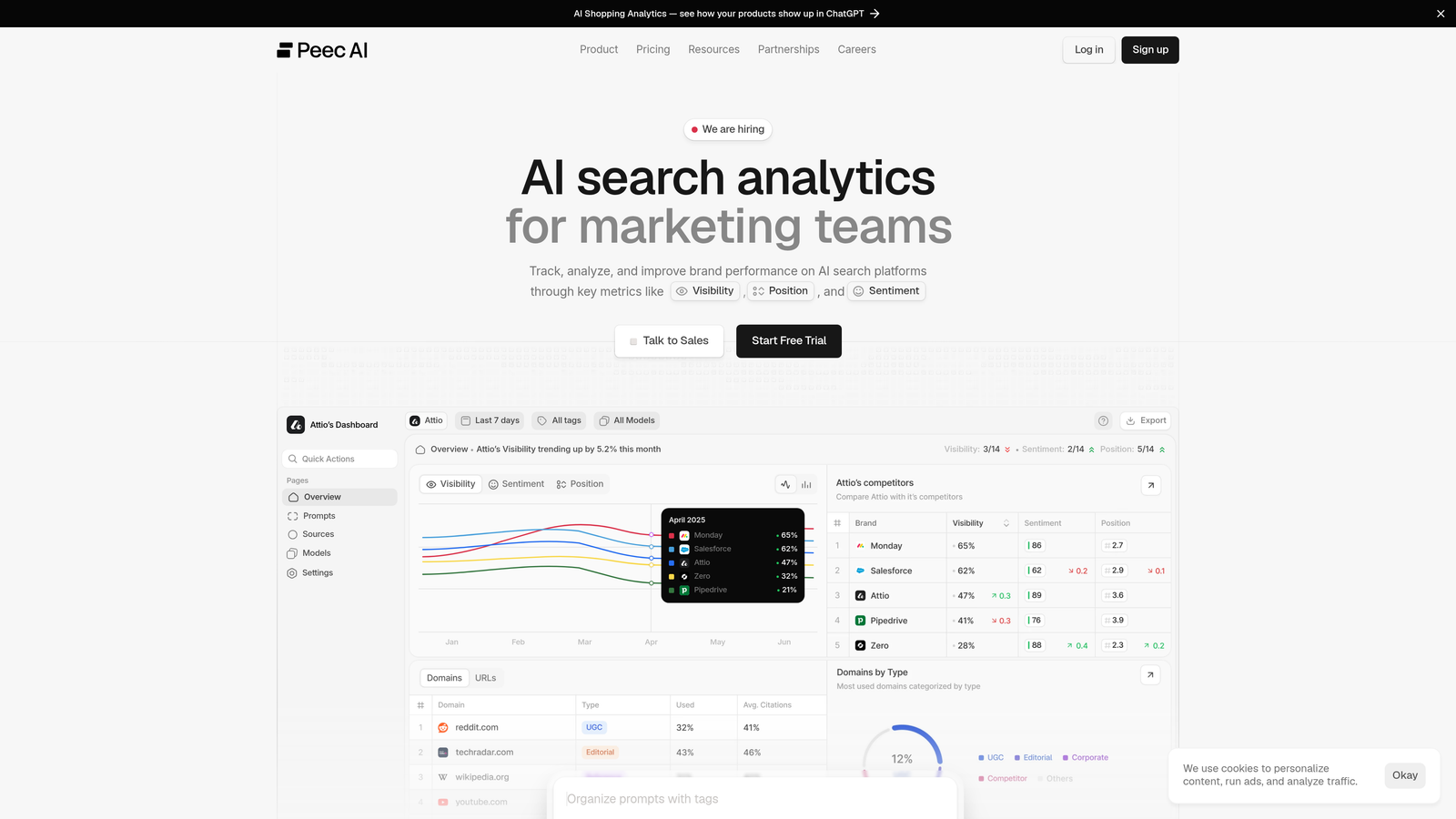
Peec is an answer engine optimization (AEO) tool focused on tracking brand citations and mentions within AI-generated search responses, helping SEO teams adapt to the AI search landscape.
Where This Tool Shines
Peec takes a focused approach to a specific and growing problem: understanding whether your brand is being cited as a source in AI-generated answers. As AI search platforms increasingly synthesize information and attribute it to sources, citation tracking becomes a meaningful signal of authority and visibility. Peec is built around this specific metric.
For SEO professionals who are already fluent in traditional rank tracking and want to extend their practice into answer engine optimization, Peec provides a purpose-built environment for that work. The AEO-focused analytics give you the data points needed to understand how your content is being used by AI models when answering user queries.
Key Features
AI Citation and Mention Tracking: Monitors when and how AI answer engines cite or reference your brand across their generated responses.
AEO-Focused Analytics: Provides analytics specifically designed around answer engine optimization, rather than adapting traditional SEO metrics to a new context.
Keyword and Topic Monitoring: Tracks which keywords and topics trigger AI-generated answers that include your brand, helping you identify content opportunities.
AI Search Presence Reporting: Delivers structured reporting on your AI search visibility over time, making it easier to track progress and demonstrate results.
Best For
SEO professionals and content strategists who are actively building an AEO practice alongside their traditional SEO work. Particularly useful for teams that need clear data on how their content is being sourced and cited by AI search platforms.
Pricing
Check peec.ai for current pricing and plan details.
6. AirOps
Best for: Growth teams and agencies scaling SEO content workflows with AI-powered automation.
AirOps is an AI-powered content operations platform that helps growth teams and agencies scale SEO content production, connecting AI-assisted workflows directly to search ranking outcomes.
Where This Tool Shines
AirOps is built for teams where content production is a bottleneck. Rather than focusing on tracking where you rank, it focuses on building the operational infrastructure to produce ranking-worthy content consistently and at scale. The platform's workflow automation capabilities are particularly valuable for agencies managing content production across multiple clients, where manual processes quickly become unsustainable.
The connection between content operations and SEO outcomes is central to AirOps's positioning. For teams that have identified content volume and quality as the primary lever for improving rankings, having a dedicated operations platform to manage that production is a meaningful advantage over ad-hoc workflows.
Key Features
AI Workflow Automation: Automates large-scale content production workflows, reducing the manual overhead involved in briefing, drafting, and reviewing SEO content.
SEO Content Templates: Provides structured templates and output formats designed for ranking-focused articles, ensuring consistency across high-volume content production.
Team Collaboration Tools: Includes collaboration features for content operations at scale, supporting review cycles and approvals across distributed teams.
CMS and SEO Tool Integrations: Connects with content management systems and SEO tools, allowing teams to build end-to-end content workflows without switching between platforms.
Best For
Growth teams and digital agencies that need to scale SEO content production systematically. AirOps is best suited for organizations where content operations is a defined function, and where workflow efficiency directly affects the volume and quality of content published.
Pricing
Check airops.com for current pricing and plan details.
What to Look for in an Online Rank Tracking Tool
Whatever you shortlist, test it against these criteria before committing. They are the differences that show up in your data three months later, not on the pricing page.
- Check frequency: Daily updates are the norm for competitive keywords; weekly is enough for long-tail sets. On-demand refreshes help during site migrations and Google core updates, when positions can move several places in a day.
- Location and device granularity: Rankings differ by country, city and device. If you serve local markets, you need city- or ZIP-level tracking and separate mobile and desktop positions, since mobile results often carry more SERP features.
- SERP feature tracking: A position-3 ranking under an AI Overview, a local pack and a People Also Ask box gets far fewer clicks than position 3 on a clean page. Good trackers record which features appear and whether you own any of them.
- Tracking depth: Since Google stopped honoring the
num=100results parameter in September 2025, collecting the full top 100 became more expensive for tracking vendors, and some reduced depth or changed pricing. Confirm how deep your tool tracks if you monitor keywords outside the top 20. - Search Console integration: Tracker positions come from neutral, non-personalized queries; Google Search Console reports impression-weighted average positions from real users. Seeing both side by side helps you separate ranking changes from demand changes.
- AI visibility coverage: Check which AI platforms are monitored (ChatGPT, Perplexity, Claude, Gemini, Google AI Mode), how many prompts you can track, and whether results are sampled repeatedly, because AI answers vary between runs.
- Pricing model: Most dedicated trackers price by number of keywords multiplied by check frequency and locations. Tracking 500 keywords daily across three cities is effectively 1,500 daily checks, so model your real volume before comparing plans.
Which Tool Is Right for You?
The right choice depends on where you are in your SEO and AI visibility journey, and what problem you're actually trying to solve.
If you're a solo founder or small team looking for a single platform that covers both Google visibility and AI search monitoring without juggling multiple subscriptions, Sight AI is the most practical starting point. The combination of AI visibility tracking, content generation, and automated indexing means you can move from insight to published content without leaving the platform.
If you're an agency managing multiple client sites, the tools in this list address different parts of the workflow. AirOps handles content production at scale. Writesonic covers AI-assisted article generation. Sight AI's Autopilot Mode and CMS publishing capabilities make it a strong candidate for agencies that want to systematize content delivery across accounts.
If you're an enterprise marketing team, Profound's collaboration and reporting infrastructure is built for your scale. Peec and Promptwatch both offer specialized AI visibility monitoring that complements whatever traditional SEO tooling you already have in place.
Here's the broader point: traditional Google rank tracking is table stakes in 2026. Knowing your keyword positions matters, but it no longer tells the full story. As AI-generated answers capture more user attention, brands that only monitor Google rankings are missing an increasingly significant portion of their search visibility. The differentiator this year is pairing traditional rank tracking with AI visibility monitoring, so you know exactly how your brand appears across every surface where users are getting answers.
That's the gap Sight AI was built to close. Start tracking your AI visibility today and see exactly where your brand appears across top AI platforms, from ChatGPT and Claude to Perplexity and beyond. Stop guessing what AI models say about you, and start building content that earns the right mentions.
Frequently asked questions
Is there a free online rank tracker for Google?
Google Search Console is the free baseline. It shows average position, clicks and impressions per query and page, keeps 16 months of data, and typically lags two to three days. Because it averages across all locations and devices, it is not a precise daily position. For exact positions on a fixed keyword list, most dedicated trackers offer limited free tiers; see our roundup of free rank checkers for Google rankings.
Can Google Analytics track keyword rankings?
Not on its own. GA4 does not record search positions, but you can link it to your Search Console property. Once linked and the Search Console collection is published in the reports library, GA4 shows queries with impressions, clicks, CTR and average position next to engagement and conversion data. That is useful for tying rankings to revenue, but it is not a replacement for daily keyword tracking.
How often should you check your Google rankings?
Daily for revenue-driving keywords, during migrations and around confirmed Google core updates; weekly for long-tail and informational terms. Movements of a few positions from one day to the next are normal noise, so judge performance on 7-day or 28-day trends rather than single readings, and annotate dates when you publish or update content.
Why does my rank tracker show a different position than my own Google search?
Your own searches are influenced by location, device, search history and signed-in personalization. Trackers query from a fixed, neutral location and device, and Search Console reports an average across every real impression. All three can be correct at once. Use the tracker for consistent trend data and Search Console for what users actually saw.
Can you track rankings in ChatGPT, Perplexity or DeepSeek?
Not as a fixed position. AI assistants generate a different answer per prompt and even per run, so AI visibility tools measure mention rate, citation share and sentiment across a set of prompts sampled repeatedly. Our six-step framework for measuring AI visibility performance explains which metrics to track and how to benchmark them against competitors.