Generative Engine Optimization has moved fast. What started as a niche experiment for early adopters is now a legitimate channel for marketers and agencies who need their brands surfaced by ChatGPT, Claude, Perplexity, and other AI models. The challenge is that pricing pages are scattered, feature sets overlap in confusing ways, and most comparison articles were written before the category had a chance to mature.
This guide cuts through that noise. We evaluated six tools across AI visibility tracking, GEO-optimized content generation, prompt monitoring, and SEO/GEO analytics. The selection criteria were straightforward: each tool had to offer a genuine GEO or AI visibility feature set (not just traditional SEO relabeled), have publicly available or verifiable pricing, and be actively maintained as of mid-2026. Whether you're a solo founder tracking brand mentions or an agency managing GEO strategy at scale, this breakdown will help you put budget where it actually moves the needle.
1. Sight AI
Best for: All-in-one AI visibility tracking, GEO content generation, and automated indexing
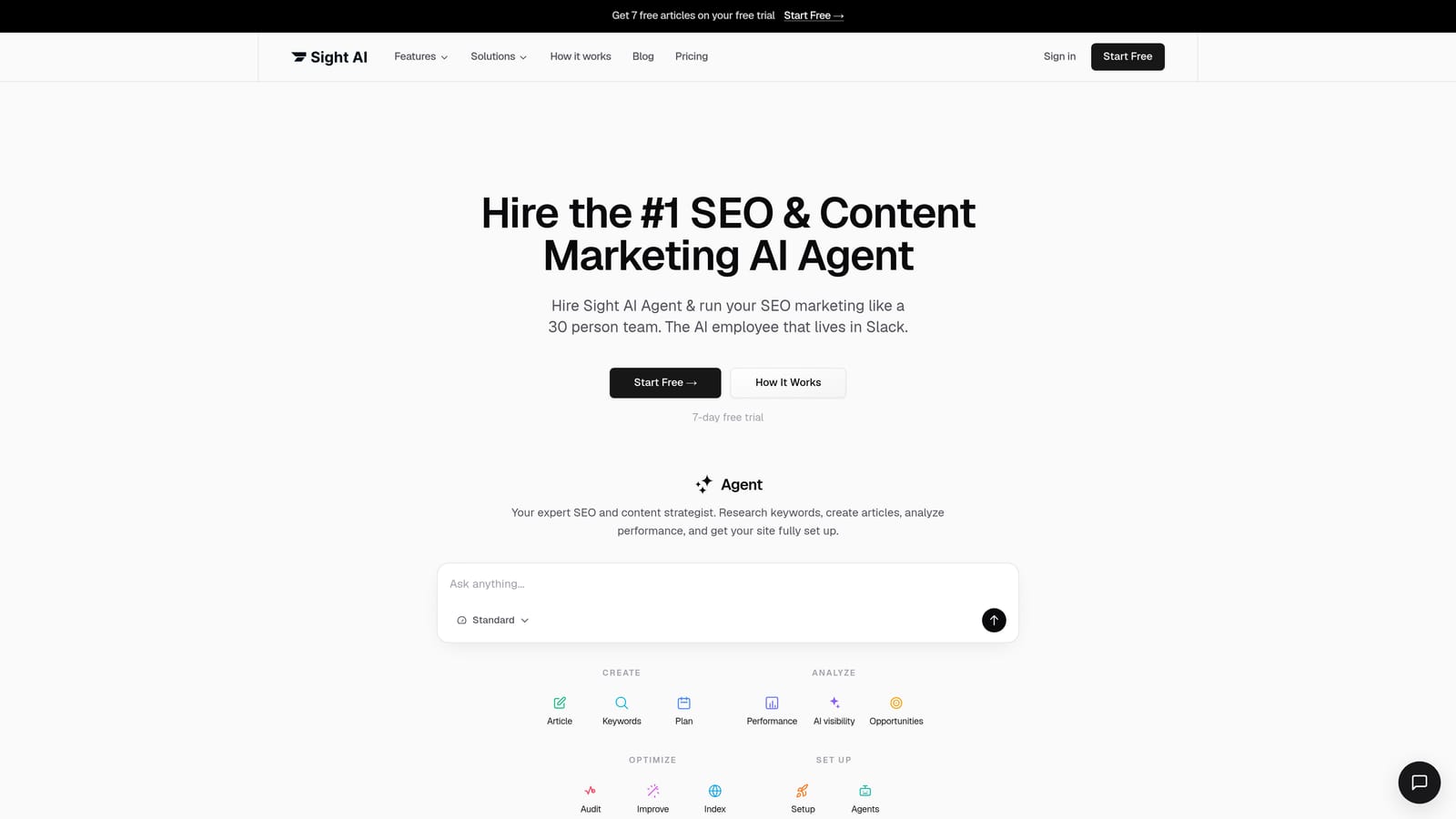
Sight AI is a comprehensive GEO SEO platform that combines AI brand monitoring, a multi-agent content writer, and website indexing tools into a single workflow.
Where This Tool Shines
Most tools in this category make you choose between monitoring your AI visibility and doing something about it. Sight AI is built around closing that loop. You can track how AI models describe your brand, identify which prompts surface competitors instead of you, and then immediately act on those gaps with content built specifically to perform in AI-generated responses.
The 13+ specialized AI agents cover the content formats that matter most for GEO: listicles, how-to guides, and explainers structured to be cited by AI models. Pair that with Autopilot Mode and CMS auto-publishing, and you have a system that can run content operations without constant manual intervention. For teams that want to grow AI visibility without hiring a full content department, that combination is a genuine differentiator.
Key Features
AI Visibility Score: Tracks brand sentiment and presence across ChatGPT, Claude, Perplexity, and 3+ additional AI platforms with a consolidated score that's easy to report on.
Prompt Tracking: Monitors which specific queries surface your brand in AI responses, so you know exactly where you appear and where you don't.
13+ Specialized AI Agents: Purpose-built agents for listicles, guides, and explainers optimized for GEO, not just traditional keyword density.
Autopilot Mode: Automates content generation and publishing workflows so teams can maintain publishing velocity without constant manual input.
IndexNow Integration: Automatically notifies search engines of new content and updates sitemaps, reducing the lag between publishing and indexing.
Best For
Marketers, founders, and agencies who want a single platform to monitor AI brand presence and act on it with content. Particularly strong for teams that need to scale GEO content output without scaling headcount proportionally.
Pricing
Check trysight.ai for current pricing tiers. Verify live before making a budget decision, as the platform continues to expand its feature set.
2. Profound
Best for: Enterprise-grade AI search analytics and competitive share-of-voice reporting
Profound is an enterprise-focused AI search analytics platform built for teams that need deep measurement and structured reporting across AI-generated responses.

Where This Tool Shines
Profound is built for organizations where analytics rigor matters as much as the insights themselves. If you need to present AI visibility data to leadership in a structured, boardroom-ready format, Profound's reporting dashboards are designed with that workflow in mind. The competitive benchmarking features let you track share-of-voice against named competitors across major AI models, which is valuable for brand and marketing teams running ongoing competitive analysis.
The trade-off is that Profound is primarily a measurement platform. It tells you how your brand is performing in AI search with considerable depth, but it doesn't offer the content generation capabilities you'd need to act on those findings directly within the tool.
Key Features
AI Search Visibility Analytics: Detailed measurement of brand presence across AI-generated responses with trend tracking over time.
Share-of-Voice Tracking: Competitive benchmarking that shows how your brand stacks up against peers across major AI models.
Structured Reporting Dashboards: Pre-built and customizable dashboards designed for marketing and leadership reporting workflows.
Competitive Benchmarking: Side-by-side analysis of brand positioning in AI responses relative to named competitors.
Best For
Mid-market and enterprise marketing teams with dedicated analytics workflows, brand managers tracking competitive AI visibility, and organizations where structured reporting to leadership is a regular requirement.
Pricing
Profound uses enterprise-oriented pricing. Verify current tiers and contact options at profound.co before making a purchase decision.
3. Promptwatch
Best for: Prompt-level brand monitoring with alert-based workflows
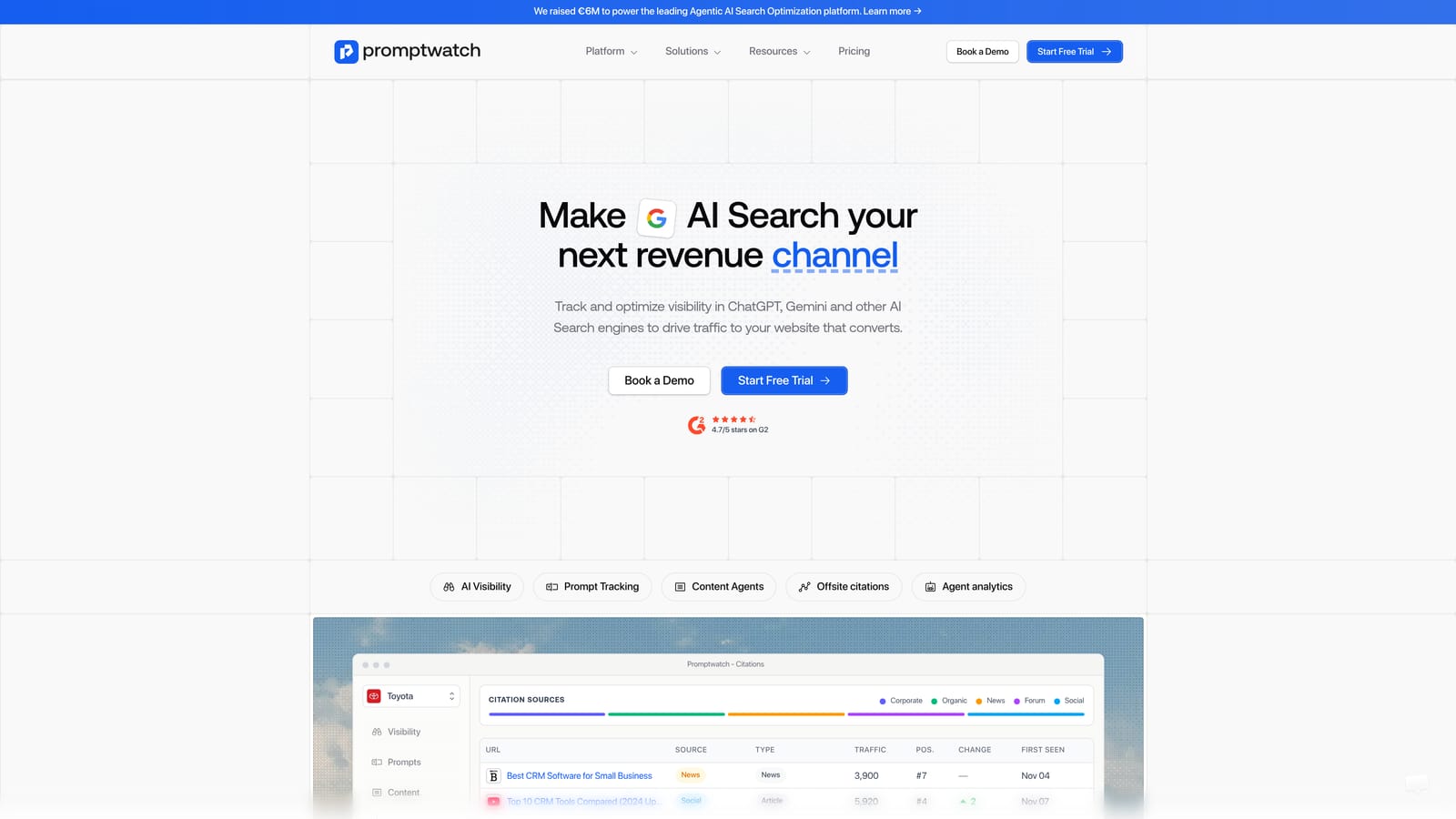
Promptwatch is a focused monitoring tool that tracks how AI models respond to specific queries relevant to your brand and notifies your team when those responses shift.
Where This Tool Shines
The core value proposition here is precision. Rather than measuring broad AI visibility across categories, Promptwatch lets you define the exact prompts that matter to your brand and monitors those specifically. When a competitor starts appearing in responses where you used to dominate, or when your brand's sentiment shifts in AI-generated answers, the alert system surfaces that change quickly.
This makes it particularly useful for brand and PR teams who need to stay on top of narrative shifts in AI responses. The response comparison feature, which shows how different AI models answer the same prompt, is a practical tool for understanding where your brand messaging is landing consistently and where it isn't.
Key Features
Prompt-Specific Monitoring: Define targeted queries and track exactly how AI models respond to those prompts over time.
Alert and Notification System: Automated alerts when brand mentions change in AI responses, keeping teams informed without manual checking.
Cross-Model Response Comparison: Compare how ChatGPT, Claude, Perplexity, and other models answer the same prompt to identify consistency gaps.
Focused Monitoring Scope: Intentionally narrow feature set optimized for monitoring rather than content creation or broad analytics.
Best For
Brand managers, PR teams, and marketing leads who need targeted, alert-driven monitoring of specific AI responses. Works well as a complement to a broader GEO content platform rather than a standalone solution.
Pricing
Verify current pricing tiers at promptwatch.io before committing. Tier structures in this category shift frequently.
4. Peec
Best for: AI citation tracking and content gap analysis for GEO strategy
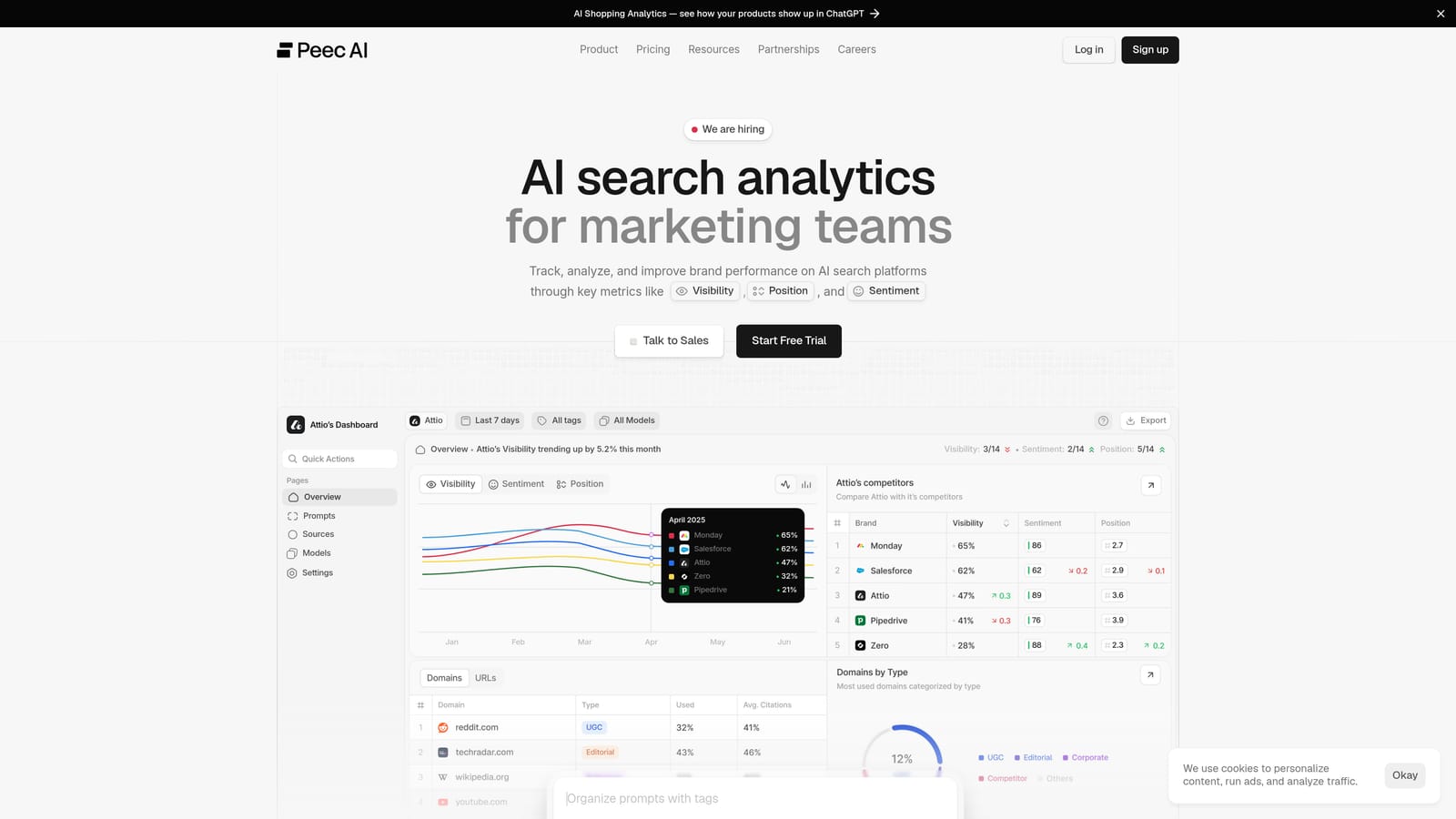
Peec is an AI citation tracking tool that analyzes which web sources AI models reference when generating responses, helping content teams understand what earns citations and where their strategy has gaps.
Where This Tool Shines
Peec addresses a question that most GEO tools don't answer directly: not just whether AI models mention your brand, but whether they cite your content as a source. That distinction matters because citation-level visibility often drives more meaningful traffic and authority than a passing mention. Understanding which content types, formats, and domains AI models pull from gives content strategists a concrete foundation for GEO planning.
The competitive citation tracking feature is worth noting. Seeing which of your competitors' content is being cited by AI models, and for which queries, gives you a roadmap for content development that's grounded in how AI models actually make sourcing decisions.
Key Features
Source-Level Citation Analysis: Identifies which specific content AI models pull from when generating responses, not just brand mentions.
GEO Gap Analysis: Surfaces content opportunities where competitors are being cited and your brand is absent.
Competitive Citation Tracking: Benchmarks your citation footprint against industry peers across AI-generated responses.
Content Strategy Guidance: Translates citation pattern data into actionable recommendations for content development priorities.
Best For
Content strategists and SEO teams who want to build their GEO content plan around data on what AI models actually cite. Particularly useful for teams already producing high content volume who want to optimize for AI citation rather than just search ranking.
Pricing
Verify current pricing tiers at peec.ai before purchasing. Check the live pricing page for the most accurate tier information.
5. AirOps
Best for: High-volume content operations teams building scalable GEO-integrated workflows
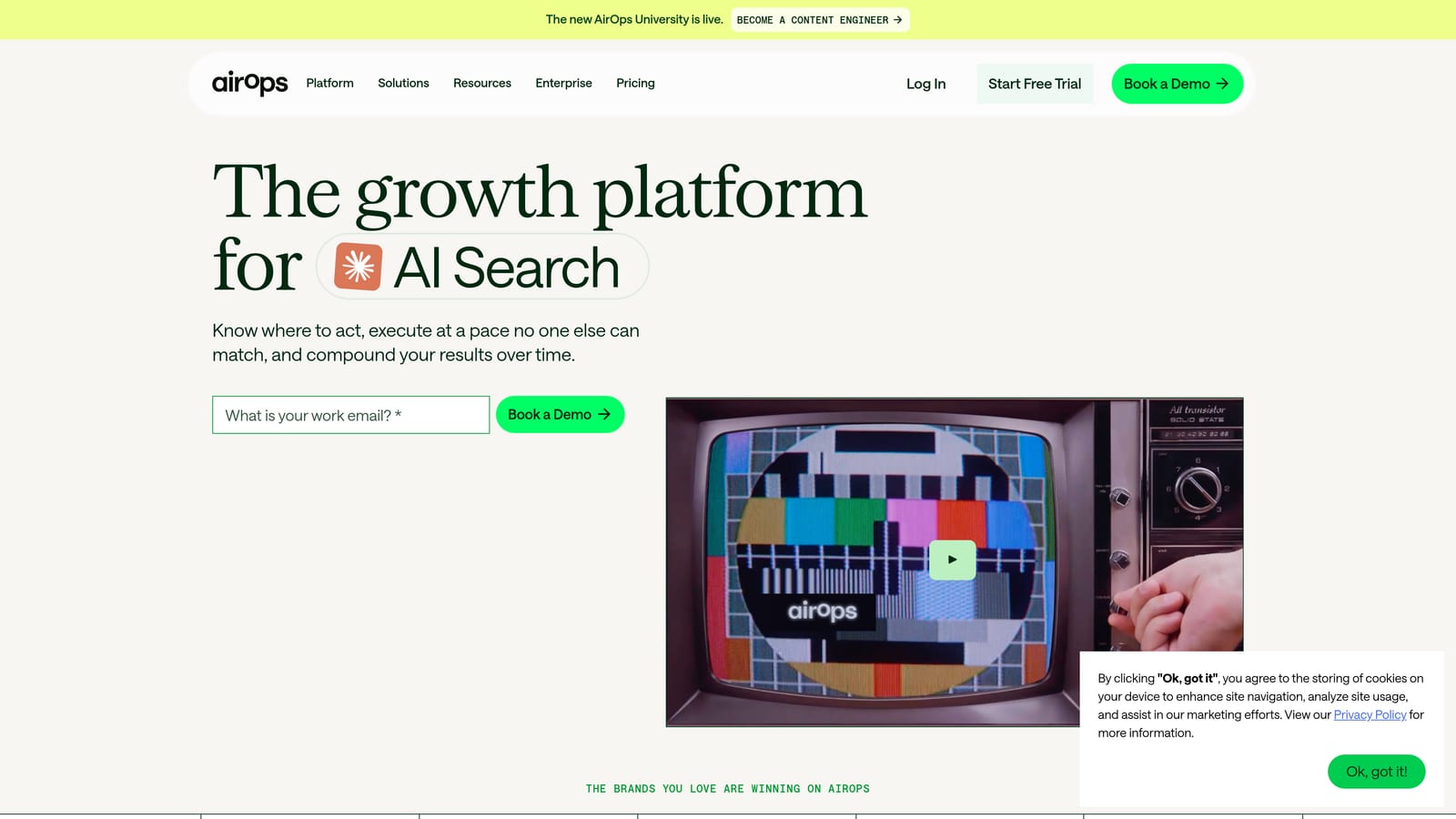
AirOps is an AI workflow automation platform that enables content teams to build scalable content pipelines with GEO optimization built into the production process.
Where This Tool Shines
AirOps is less of a GEO monitoring tool and more of a content operations engine. If your team produces content at high volume and needs GEO optimization integrated into the workflow itself rather than applied after the fact, AirOps gives you the flexibility to build that pipeline. The template and workflow builder lets teams create repeatable processes for content types, with AI model integrations that can be configured for specific use cases.
The trade-off is that AirOps doesn't offer the brand monitoring or AI visibility tracking that purpose-built GEO tools provide. It's a strong choice for content operations teams, but teams that need to measure AI visibility alongside production will likely need to pair it with a dedicated monitoring tool.
Key Features
AI Workflow Automation: Build custom content production pipelines with AI model integrations and configurable automation steps.
Multi-Model Integrations: Connect to multiple AI models within a single workflow for flexible content generation at scale.
Template and Workflow Builder: Create repeatable content operations workflows that teams can run consistently without starting from scratch each time.
GEO as Part of Broader Workflow: GEO optimization is incorporated into content production rather than offered as a standalone tracking or analytics feature.
Best For
Content operations teams and agencies managing high-volume content production who need GEO optimization baked into their workflow infrastructure. Less suited for teams whose primary need is AI visibility monitoring or brand mention tracking.
Pricing
AirOps has updated its pricing structure multiple times as the platform evolved. Verify current tiers at airops.com before budgeting.
6. Writesonic
Best for: Smaller teams and individuals who need GEO-aware content generation at an accessible price point
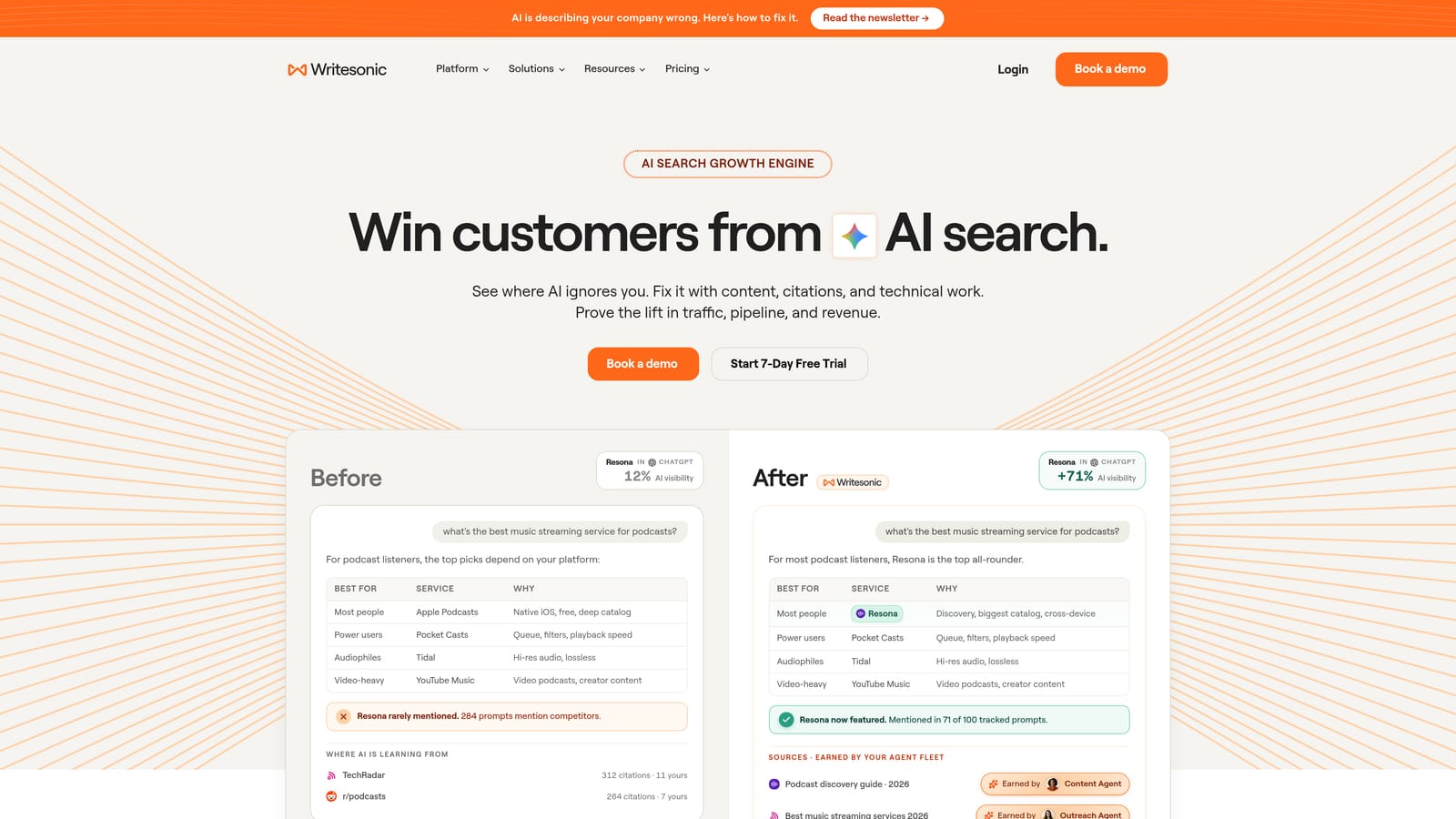
Writesonic is a broad AI content generation platform with SEO-focused features and one of the more accessible entry price points in this comparison.
Where This Tool Shines
Writesonic's strength is breadth and accessibility. The platform covers a wide range of content formats, from blog posts and landing pages to social content, with an SEO mode that integrates keyword optimization directly into the editor. For smaller teams or individual marketers who need to produce GEO-aware content without a significant platform investment, Writesonic offers a practical entry point into AI-optimized content creation.
The GEO-oriented features are present, but it's worth being clear-eyed about the positioning: Writesonic is a content generation platform that has added GEO features, rather than a purpose-built GEO tool. Teams with serious AI visibility tracking needs will likely outgrow what it offers on that front, but for content volume at a reasonable cost, it delivers.
Key Features
Wide Content Format Coverage: Generates blog posts, landing pages, social content, and other formats from a single platform.
SEO Mode: Built-in keyword optimization integrated into the content editor for traditional SEO alignment.
GEO-Oriented Content Features: Content generation options designed with AI search optimization in mind, though less specialized than purpose-built GEO tools.
Accessible Entry Tiers: Free and low-cost tiers make it one of the more approachable options for individuals and small teams testing GEO content strategies.
Best For
Solo founders, small marketing teams, and individuals who need GEO-aware content generation without enterprise-level investment. A good starting point for teams newer to GEO who want to experiment before committing to a specialized platform.
Pricing
Writesonic updates its pricing frequently. Verify current tiers at writesonic.com/pricing before making a decision.
Which GEO SEO Tool Fits Your Situation
The right tool depends almost entirely on what problem you're solving. Here's a quick way to think through the options based on use case.
Solo founders on a budget: Writesonic gives you GEO-aware content generation at an accessible price point. It's not a full monitoring suite, but it's a practical starting point for testing AI-optimized content without a major commitment.
Brand and PR monitoring focus: Promptwatch is built for exactly this. If your priority is knowing when and how AI models mention your brand in specific queries, its alert-driven workflow is the most targeted option in this comparison.
Enterprise analytics and share-of-voice reporting: Profound is the strongest fit for larger organizations that need structured reporting, competitive benchmarking, and the kind of analytics depth that justifies enterprise pricing.
Citation-focused content strategy: Peec fills a specific gap that most tools ignore: understanding which content actually gets cited by AI models, not just which brands get mentioned. Content strategists building GEO plans from the ground up will find it genuinely useful.
High-volume content operations: AirOps is the right choice for teams that need GEO optimization embedded into a scalable content pipeline, particularly if you're managing production across multiple clients or content types at volume.
All-in-one AI visibility, content, and indexing: Sight AI is the only platform in this comparison that combines brand monitoring across 6+ AI models, GEO-optimized content generation with 13+ specialized agents, and automated indexing in a single workflow. For teams that want to both measure and grow AI visibility without stitching together multiple tools, it's the most complete option available.
One final note: the GEO SEO category is evolving quickly, and pricing structures across all six tools will shift as the market matures. Always verify live pricing pages before finalizing your budget. The feature comparisons in this guide reflect the platforms as of mid-2026, but capabilities are expanding regularly.
Stop guessing how AI models like ChatGPT and Claude talk about your brand. Start tracking your AI visibility today and see exactly where your brand appears across top AI platforms, which content opportunities you're missing, and how to close the gap with content that actually gets cited.