SaaS companies face a content challenge that most generic tools weren't built to solve. You need to rank in traditional search, stay visible in AI-powered answers from ChatGPT, Claude, and Perplexity, and publish consistently enough to build compounding organic traffic — often without a large team behind you.
The platforms on this list were evaluated specifically for SaaS use cases: AI visibility tracking, SEO and GEO-optimized content generation, indexing speed, and workflow automation. Whether you're a solo founder trying to scale content output or an agency managing multiple SaaS clients, these are the tools worth your attention in 2026.
Sight AI leads the list because it's the most comprehensive option for SaaS teams that need AI visibility alongside content creation. That said, every tool here earns its place on merit — and depending on your stage and priorities, a different platform may be the better fit.
1. Sight AI
Best for: SaaS teams that need AI visibility tracking and content creation in one platform.
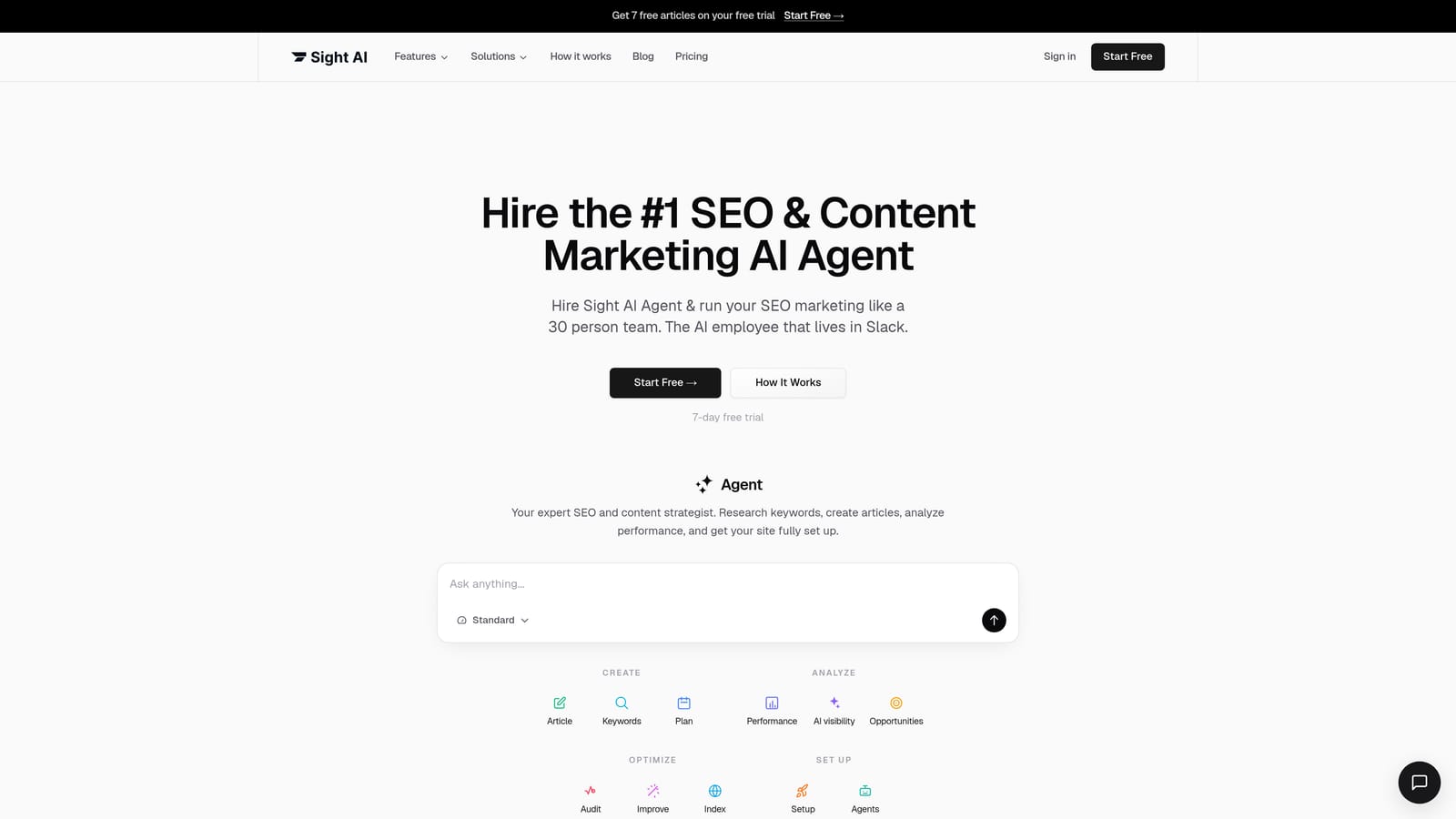
Sight AI is an all-in-one content marketing platform built specifically for SaaS teams that combines AI visibility tracking, a multi-agent content writer, automated indexing, and CMS publishing under a single roof.
Where This Tool Shines
Most content platforms help you create and distribute. Sight AI adds a layer that's increasingly critical in 2026: understanding how AI models actually talk about your brand. Its AI Visibility Score tracks brand mentions across ChatGPT, Claude, Perplexity, and other major AI platforms, giving SaaS teams a clear picture of their presence in AI-generated answers — not just traditional search rankings.
The content side is equally capable. Thirteen-plus specialized AI agents handle different content formats — listicles, guides, explainers — each optimized for both SEO and GEO (Generative Engine Optimization). Autopilot Mode ties it together, enabling near-hands-free content production that keeps your publishing cadence consistent without requiring constant manual input.
Key Features
AI Visibility Score: Tracks how ChatGPT, Claude, Perplexity, and other AI models mention your brand, with sentiment analysis to show whether those mentions are positive, neutral, or negative.
Prompt Tracking: Monitors which prompts surface your brand across AI platforms so you can identify gaps and optimize accordingly.
13+ Specialized AI Agents: Purpose-built agents for generating listicles, guides, and explainers that are optimized for both traditional SEO and generative engine visibility.
Autopilot Mode: Automates content production workflows so your team can scale output without proportionally scaling headcount.
IndexNow Integration: Automatically submits new content to search engines via IndexNow and updates your sitemap, accelerating the time between publishing and indexing.
CMS Auto-Publishing: Pushes finished content directly to your CMS, removing manual deployment steps from the workflow.
Best For
Sight AI is best suited for SaaS marketing teams, growth-focused founders, and agencies managing multiple SaaS clients who want a single platform that handles AI visibility monitoring, content creation, and technical indexing — rather than stitching together three or four separate tools.
Pricing
See trysight.ai for current pricing and plan details. Multiple tiers are available to accommodate teams at different growth stages.
2. Writesonic
Best for: SaaS marketing teams that need high-volume, multi-format content generation with SEO integrations.
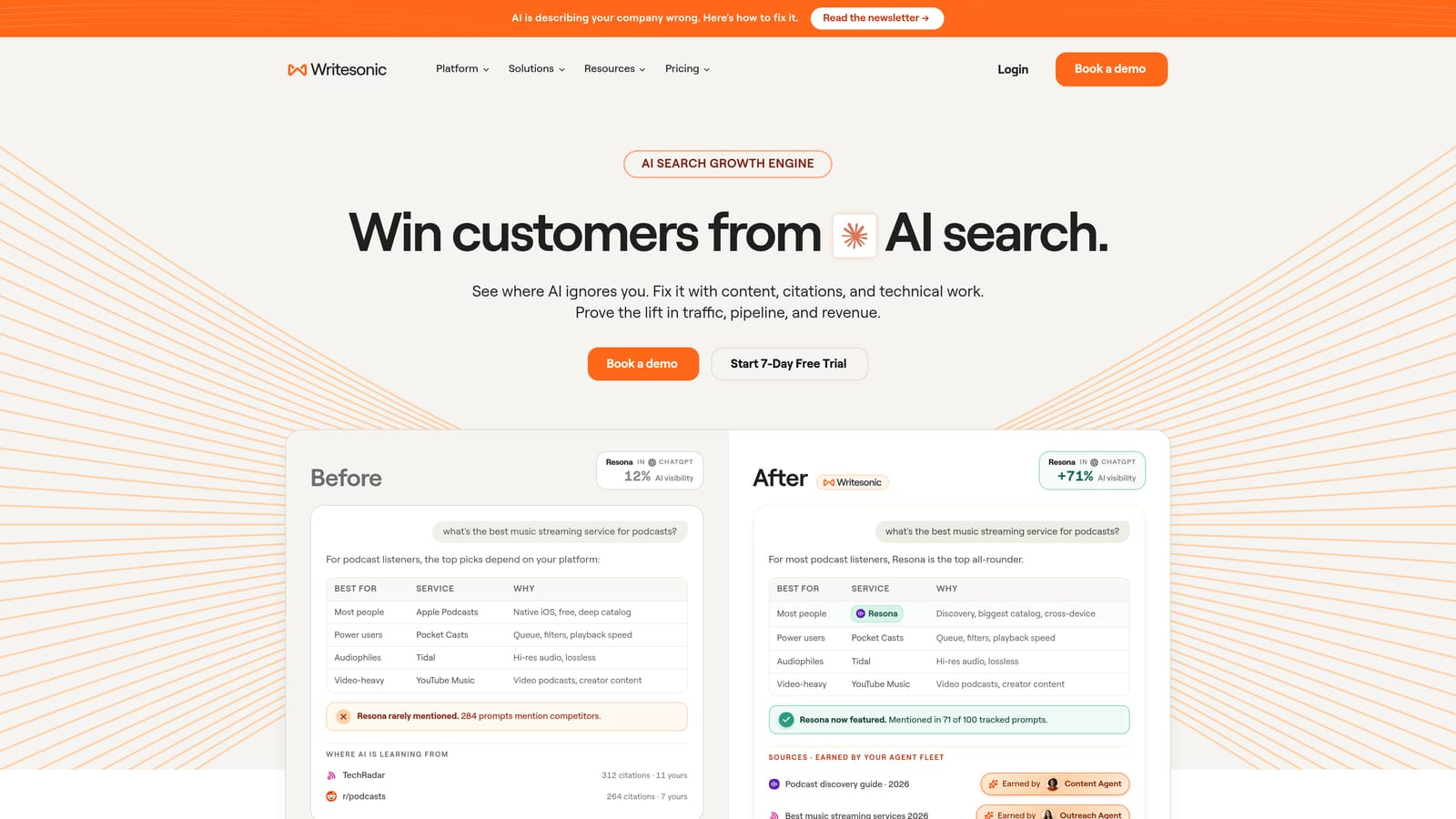
Writesonic is a broad AI writing platform with a well-established feature set that covers everything from long-form articles to landing pages and ad copy.
Where This Tool Shines
Writesonic's strength is versatility and volume. For SaaS teams that need to produce a wide variety of content formats consistently, the platform covers a lot of ground: blog articles with SEO workflow integrations, brand voice customization, and an AI assistant (Chatsonic) that helps with research and ideation. It's a solid choice when content variety and output speed are the primary priorities.
The brand voice feature is particularly useful for SaaS companies with established positioning. Rather than editing every piece to match your tone, you can configure the platform to write in your voice from the start, which meaningfully reduces post-generation editing time.
Key Features
AI Article Writer: Produces long-form SEO-oriented content with built-in workflow integrations to streamline the research-to-publish process.
Brand Voice Customization: Configures the platform to write consistently in your established tone across all content types.
Chatsonic AI Assistant: Handles research, ideation, and Q&A to support the content planning process.
Multi-Format Support: Covers blogs, landing pages, ad copy, and other content formats from a single platform.
Team Collaboration Features: Supports multiple users with shared workspaces and collaboration tools suited for marketing teams.
Best For
Writesonic works well for early- to mid-stage SaaS marketing teams that need to produce high content volume across multiple formats and want SEO integrations baked in. It's less suited for teams whose primary need is AI visibility monitoring — that's not what this platform is built for.
Pricing
Writesonic uses tiered pricing with plans accessible for smaller teams. See writesonic.com for current plan details.
3. AirOps
Best for: Technically-oriented SaaS growth teams building data-driven, programmatic content at scale.
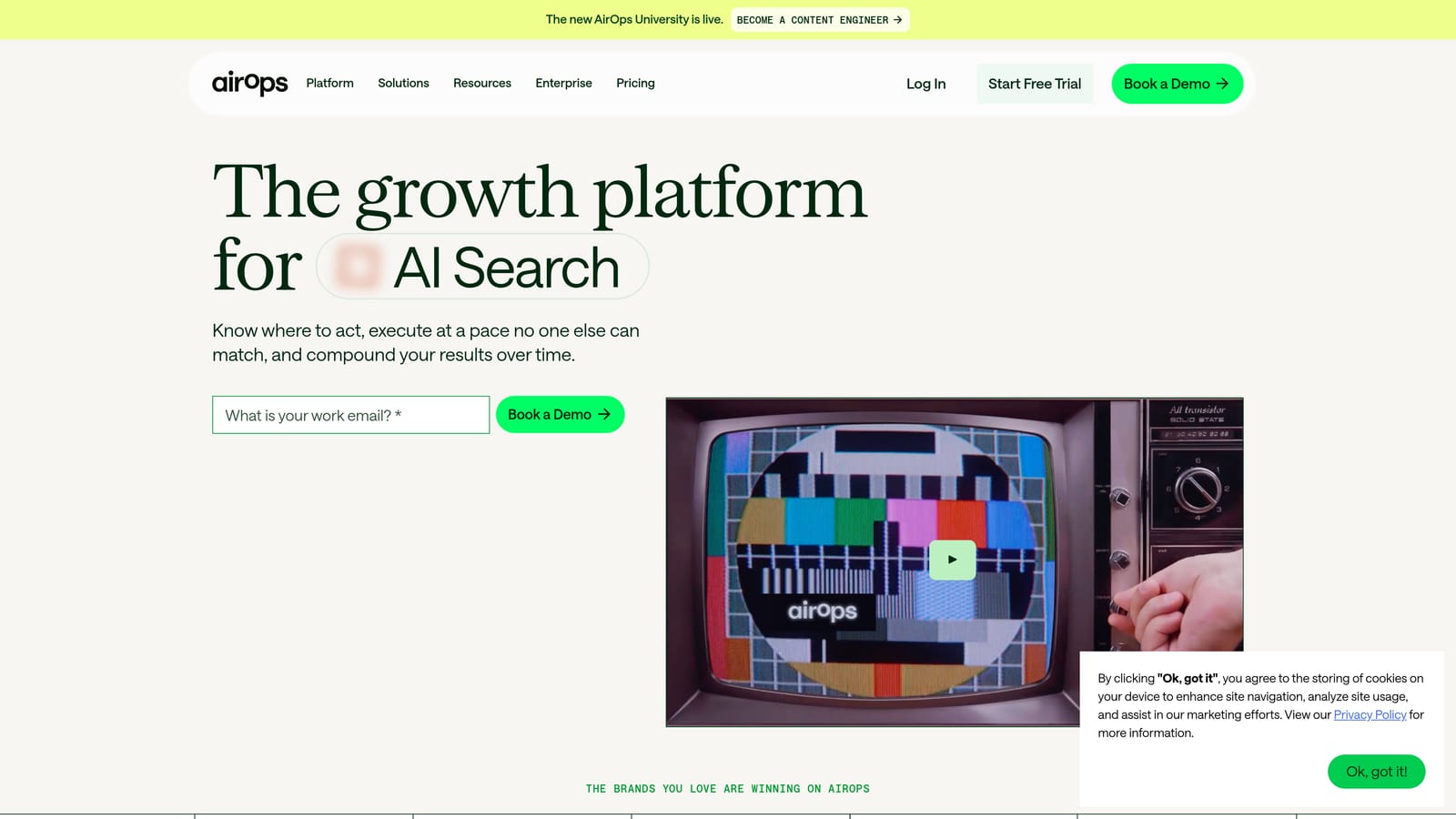
AirOps is an AI content operations platform that lets teams build custom workflows connecting AI models to internal data sources for scalable, data-driven content production.
Where This Tool Shines
AirOps takes a different approach than most content platforms. Instead of providing a pre-built writing experience, it gives you the infrastructure to build your own AI-powered content pipelines. You can connect AI models to your CRM, product data, customer insights, or any structured data source — then automate content production that reflects what's actually happening in your business.
This makes AirOps particularly powerful for programmatic SEO strategies, where you need to generate large volumes of content based on structured data. For SaaS companies with rich product or customer data they want to leverage in content, this is a meaningful differentiator.
Key Features
No-Code Workflow Builder: Lets non-technical marketers build sophisticated AI content pipelines without engineering support.
Data Source Connections: Integrates AI models with CRM, product, and customer data to produce contextually relevant content at scale.
Programmatic SEO Support: Designed to handle large-scale content generation for programmatic SEO use cases.
Custom Prompt Templates: Allows teams to standardize prompt logic across workflows for consistent output quality.
Team and Enterprise Collaboration: Supports multi-user workflows with collaboration features suited for larger teams and agencies.
Best For
AirOps is best for growth-oriented SaaS teams and agencies with a technical bent who want to build custom AI content workflows rather than use an out-of-the-box solution. It rewards teams that have clear data assets and defined content strategies to plug into it.
Pricing
See airops.com for current pricing and plan options.
4. Profound
Best for: SaaS brands focused on understanding and improving their representation in AI answer engines.
Profound is an AI search visibility platform built specifically to help brands monitor and improve how AI answer engines represent their products and content.
Where This Tool Shines
Profound focuses squarely on answer engine optimization (AEO), which is becoming a distinct discipline from traditional SEO. Rather than tracking keyword rankings in Google, it monitors how AI platforms like ChatGPT and Perplexity describe your brand, products, and category — and identifies where your representation is inaccurate, incomplete, or missing entirely.
For SaaS companies in competitive categories where AI models are frequently asked to compare or recommend tools, knowing exactly how you're being described in those answers is strategically valuable. Profound provides that visibility with reporting dashboards designed to make the data actionable.
Key Features
AI Answer Engine Monitoring: Tracks brand representation across major LLMs to surface how AI models describe your product.
Brand Representation Analysis: Identifies inaccuracies, gaps, or missed opportunities in how AI platforms position your brand.
Content Gap Identification: Highlights where your content strategy is failing to influence AI-generated answers in your category.
Reporting Dashboards: Provides structured performance views of AI visibility metrics for teams and stakeholders.
AEO-Focused Recommendations: Offers guidance specifically oriented toward improving answer engine presence rather than generic SEO advice.
Best For
Profound is a strong fit for mid-to-enterprise SaaS brands that have established content programs and now want dedicated tooling to monitor and improve their AI search presence. It's oriented toward visibility analysis rather than content creation.
Pricing
See profound.ai for current pricing details.
5. Peec
Best for: SaaS companies in competitive categories that need share-of-voice analysis across AI-generated responses.
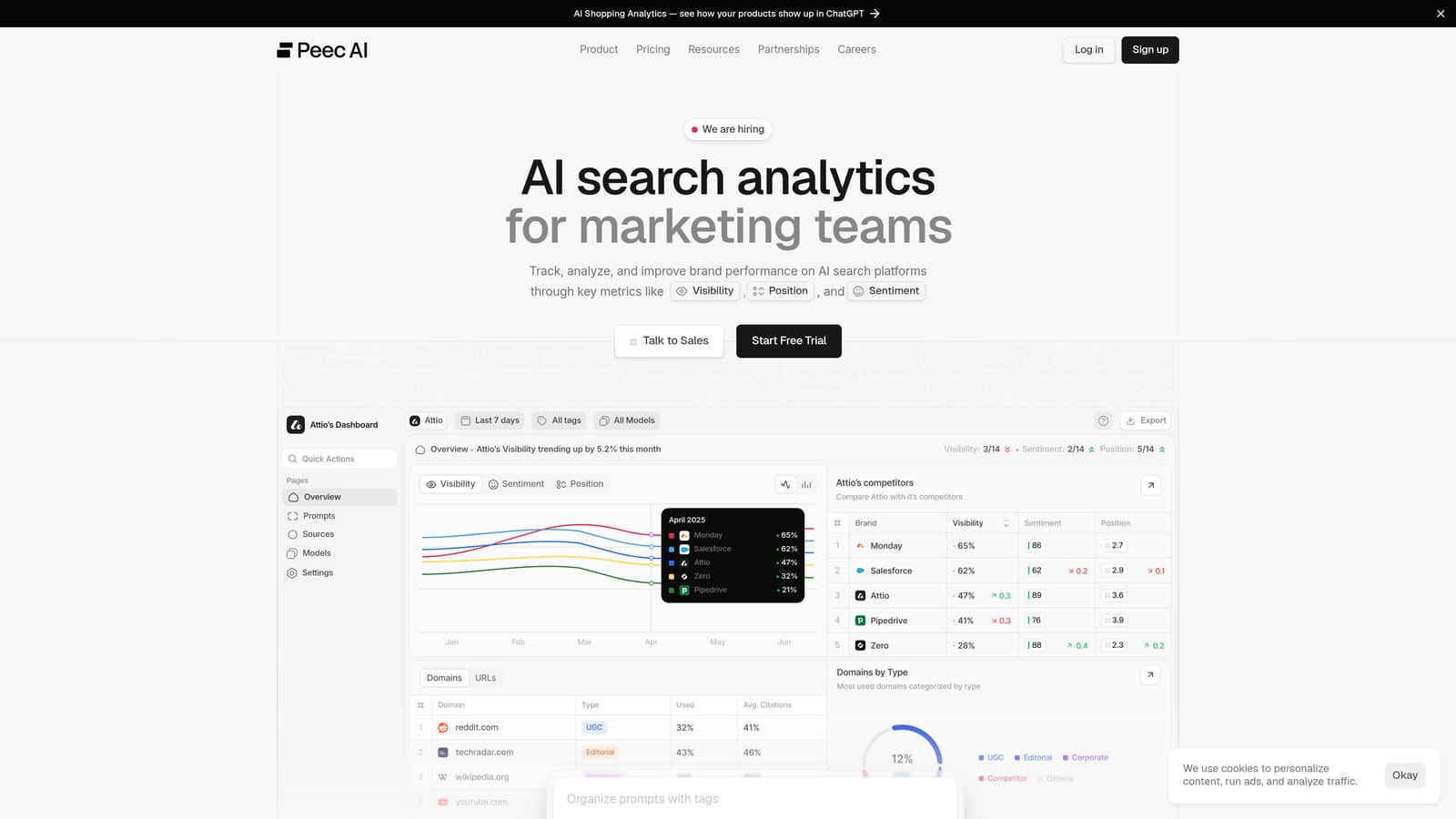
Peec is a competitive AI visibility platform that tracks brand and competitor mentions within AI-generated responses, enabling share-of-voice analysis in AI search.
Where This Tool Shines
Where most AI visibility tools focus on your brand in isolation, Peec brings competitive intelligence into the picture. It tracks not just how AI models mention you, but how they mention your competitors — giving you a relative sense of where you stand in AI-generated answers within your category. For SaaS companies in crowded markets, this context matters.
The prompt-level visibility benchmarking is particularly useful. You can see which specific prompts surface competitors instead of you and use that intelligence to inform both your content strategy and your positioning. It's the kind of competitive insight that was previously unavailable for AI search.
Key Features
Competitor Mention Tracking: Monitors how AI models mention competing brands alongside your own in generated responses.
Share-of-Voice Analysis: Quantifies your relative presence in AI-generated answers compared to competitors in your category.
Prompt-Level Benchmarking: Identifies which queries surface competitors instead of your brand, enabling targeted content responses.
Competitive Positioning Insights: Surfaces patterns in how AI models compare and contrast products in your space.
Brand Mention Alerts: Notifies teams when significant changes occur in how AI models reference their brand or competitors.
Best For
Peec is well-suited for SaaS marketing and product teams in competitive categories where AI-generated comparisons and recommendations directly influence buyer decisions. It works best alongside a content creation tool rather than as a standalone solution.
Pricing
See peec.ai for current pricing information.
6. Promptwatch
Best for: SaaS teams building a systematic, prompt-by-prompt approach to AI answer optimization.
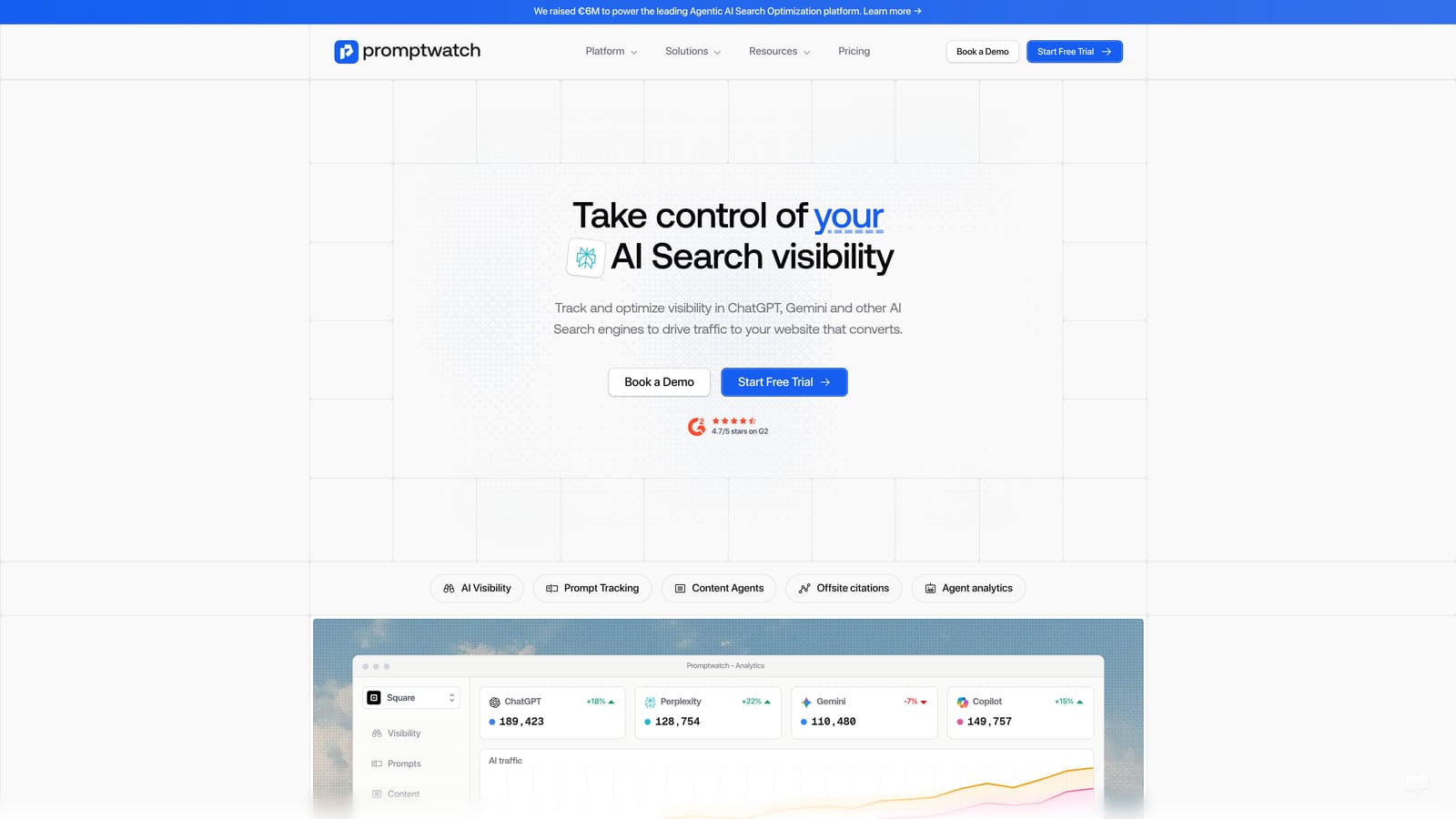
Promptwatch is a specialized AI monitoring tool that tracks how specific prompts surface brand mentions across AI models over time, helping teams build a structured approach to AI answer optimization.
Where This Tool Shines
Promptwatch takes a granular, longitudinal approach to AI visibility. Rather than giving you a broad overview of brand presence, it focuses on tracking specific prompts over time — so you can see not just where you appear today, but how your presence changes as AI models update and evolve. This is particularly useful for teams that want to understand the cause-and-effect relationship between content changes and AI visibility shifts.
The historical response monitoring is a standout capability. As LLMs update their training data and behavior, your brand's representation can change in ways that are hard to detect without systematic tracking. Promptwatch surfaces those changes, giving teams the data they need to respond proactively.
Key Features
Prompt-Level Tracking: Monitors how specific queries surface your brand across different AI models over time.
Historical Response Monitoring: Tracks changes in AI-generated responses across model updates to detect shifts in brand representation.
Brand Mention Detection by Query Type: Categorizes which types of prompts reliably surface your brand versus where you're absent.
Content Gap Identification: Uses prompt analysis to reveal where your content strategy needs to improve to influence AI answers.
Structured Reporting: Provides organized performance data for AI search visibility that teams can act on and share with stakeholders.
Best For
Promptwatch suits SaaS teams with an analytical mindset that want detailed, time-series data on AI visibility at the prompt level. It functions best as a dedicated monitoring layer paired with a content creation platform rather than as an all-in-one solution.
Pricing
See promptwatch.io for current pricing details.
Which Platform Is Right for Your SaaS Team?
The right platform depends heavily on where you are in your content journey and what problem you're trying to solve first. Here's a quick-reference guide by use case.
Solo founder or early-stage SaaS team: Start with Sight AI. The combination of AI visibility tracking and automated content production in a single platform means you're not managing multiple tools or stitching together a fragmented stack. Autopilot Mode and CMS auto-publishing are particularly valuable when you have limited bandwidth.
Agency managing multiple SaaS clients: Sight AI and AirOps are both strong options. Sight AI gives you the AI visibility layer your clients increasingly need, while AirOps offers the workflow customization to build scalable content pipelines tailored to different client contexts.
Enterprise SaaS with an established content program: If you already have content production handled and your primary gap is AI search visibility, Profound or Peec offer deep monitoring capabilities. Promptwatch adds a useful longitudinal layer if you want prompt-level data over time. For teams that want everything in one place, Sight AI remains the most comprehensive option at any stage.
High-volume content teams focused on SEO: Writesonic handles multi-format content at scale with solid SEO integrations, making it a practical choice for teams whose primary bottleneck is content production rather than AI visibility.
Here's the broader point worth sitting with: AI visibility is no longer a nice-to-have for SaaS content strategy. As ChatGPT, Claude, Perplexity, and Google AI Overviews increasingly answer buyer questions directly, your brand's presence in those answers is becoming as important as your traditional search rankings. The SaaS companies building systematic approaches to this now will have a meaningful advantage as AI-powered search continues to grow.
If you're ready to stop guessing how AI models talk about your brand, start tracking your AI visibility today and see exactly where your brand appears across the top AI platforms. Sight AI gives you the visibility, the content engine, and the indexing infrastructure to turn that insight into organic growth — without building a tool stack to do it.