Pricing pages for content marketing platforms are notoriously confusing. Tiers overlap, seat limits sneak up on you, and that "starter" plan often locks away the features you actually need behind a $500/month upgrade. If you're trying to build a sustainable organic growth strategy, whether through better SEO-optimized content or learning how to increase organic traffic, the last thing you need is a surprise invoice.
This guide cuts through the noise. Below, you'll find a clear breakdown of what nine leading content marketing platforms actually cost, what you get at each tier, and which ones make sense for different team sizes and goals. Selection criteria focused on pricing transparency, feature-to-cost ratio, scalability, and relevance to teams prioritizing organic growth and AI visibility.
1. Sight AI
Best for: Marketers and agencies who need AI visibility tracking, SEO/GEO content generation, and automated indexing in one platform.
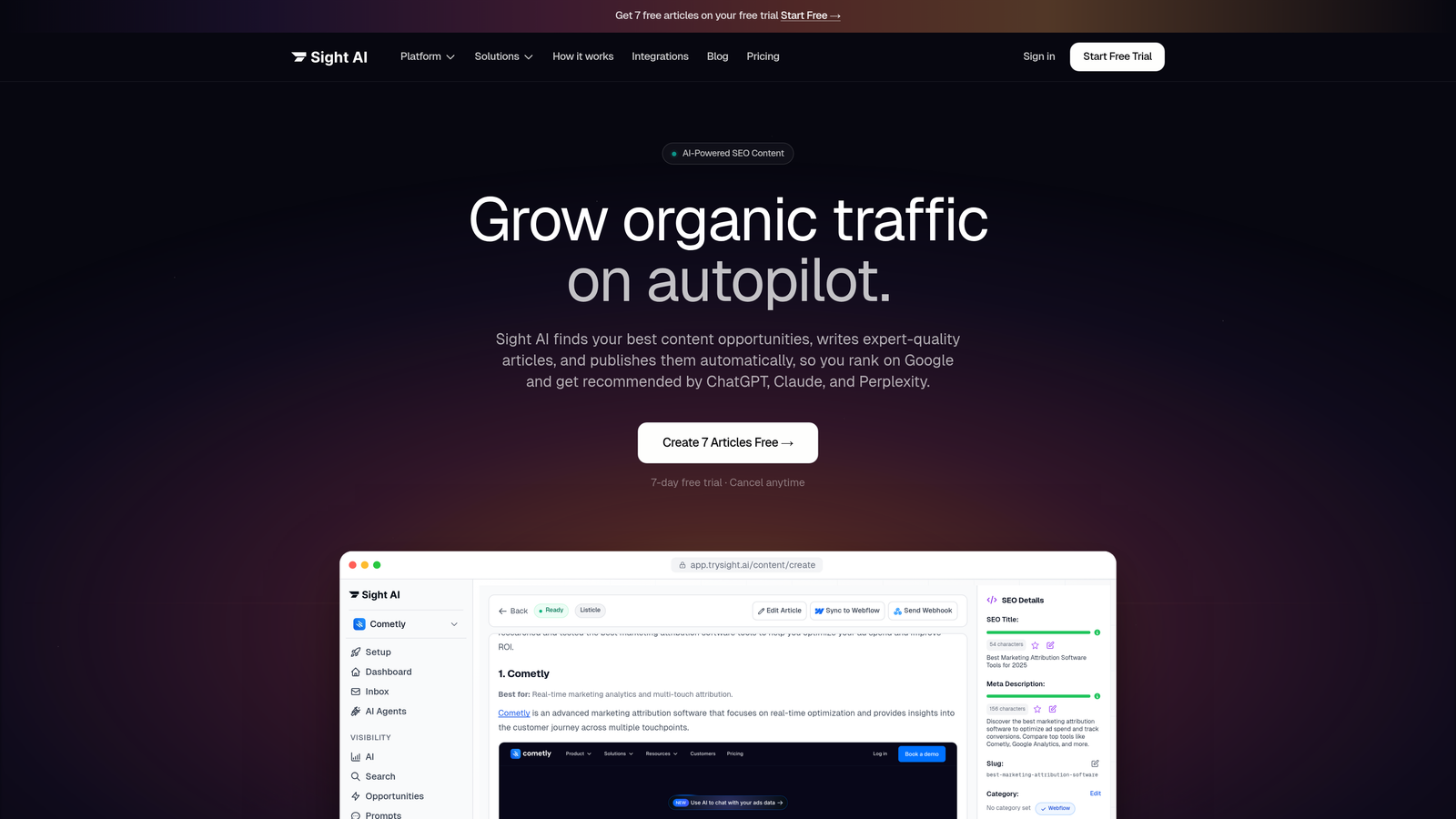
Sight AI is an AI-powered platform that combines brand mention tracking across AI models, specialized content generation agents, and automatic website indexing into a single workflow.
Where This Tool Shines
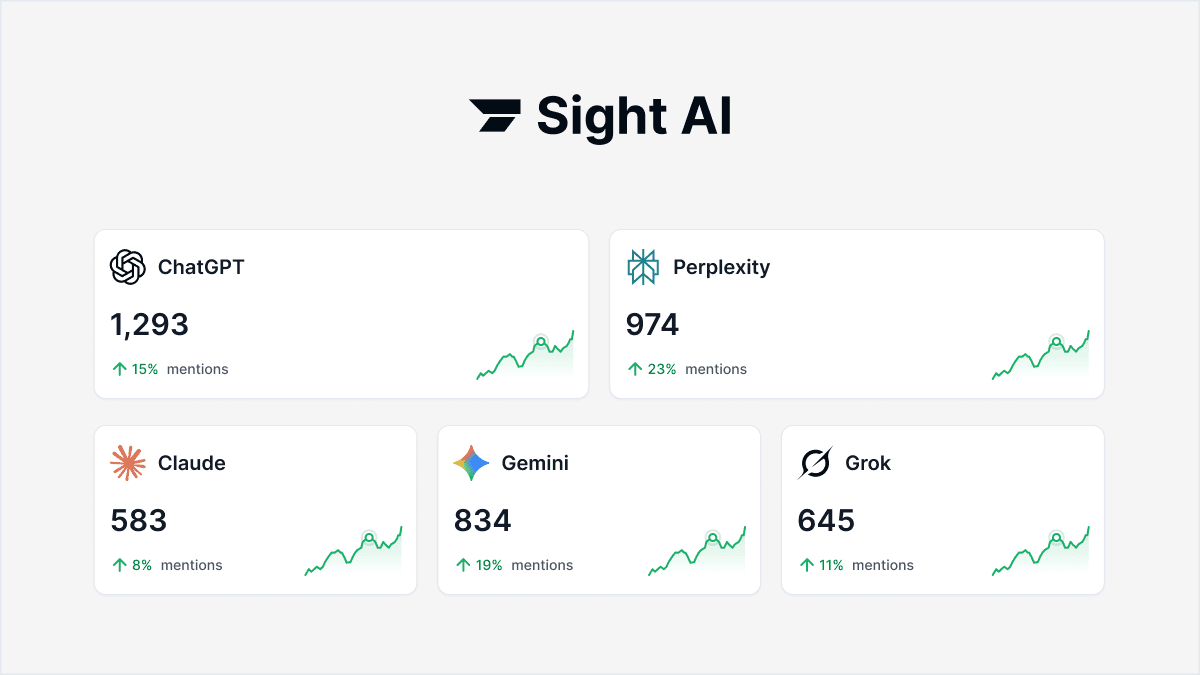
Most content marketing platforms focus on creation or distribution, but they ignore a growing blind spot: how AI models like ChatGPT, Claude, and Perplexity describe your brand when users ask questions in your category. Sight AI addresses this directly with an AI Visibility Score that tracks your brand mentions across 6+ AI platforms, giving you data that most teams simply don't have.
On the content side, 13+ specialized AI writing agents handle different formats — listicles, guides, explainers — with SEO and GEO optimization built in. Autopilot Mode means you can run content production without manually managing every piece, while IndexNow integration ensures new content gets discovered faster than standard crawl cycles allow.
Key Features
AI Visibility Score: Tracks how your brand is mentioned across ChatGPT, Claude, Perplexity, and other major AI platforms with sentiment analysis included.
13+ Specialized AI Writing Agents: Purpose-built agents for listicles, how-to guides, explainers, and other SEO/GEO-optimized formats.
Autopilot Mode: Hands-off content production that keeps your publishing cadence consistent without constant manual input.
IndexNow Integration: Automatically submits new and updated content to search engines for faster indexing, paired with automated sitemap updates.
CMS Auto-Publishing: Connects directly to your CMS to streamline the entire workflow from generation to publication.
Best For
Founders, in-house marketers, and agencies who want to consolidate content creation, AI brand monitoring, and indexing into one platform rather than paying for three separate tools. Particularly valuable for teams investing in both traditional SEO and emerging AI search visibility.
Pricing
Sight AI offers tiered pricing designed for marketers, founders, and agencies at various scales. Visit trysight.ai for current plan details and to find the tier that fits your team size.
2. HubSpot Content Hub
Best for: Growing teams that need content marketing tightly integrated with CRM and lead generation.
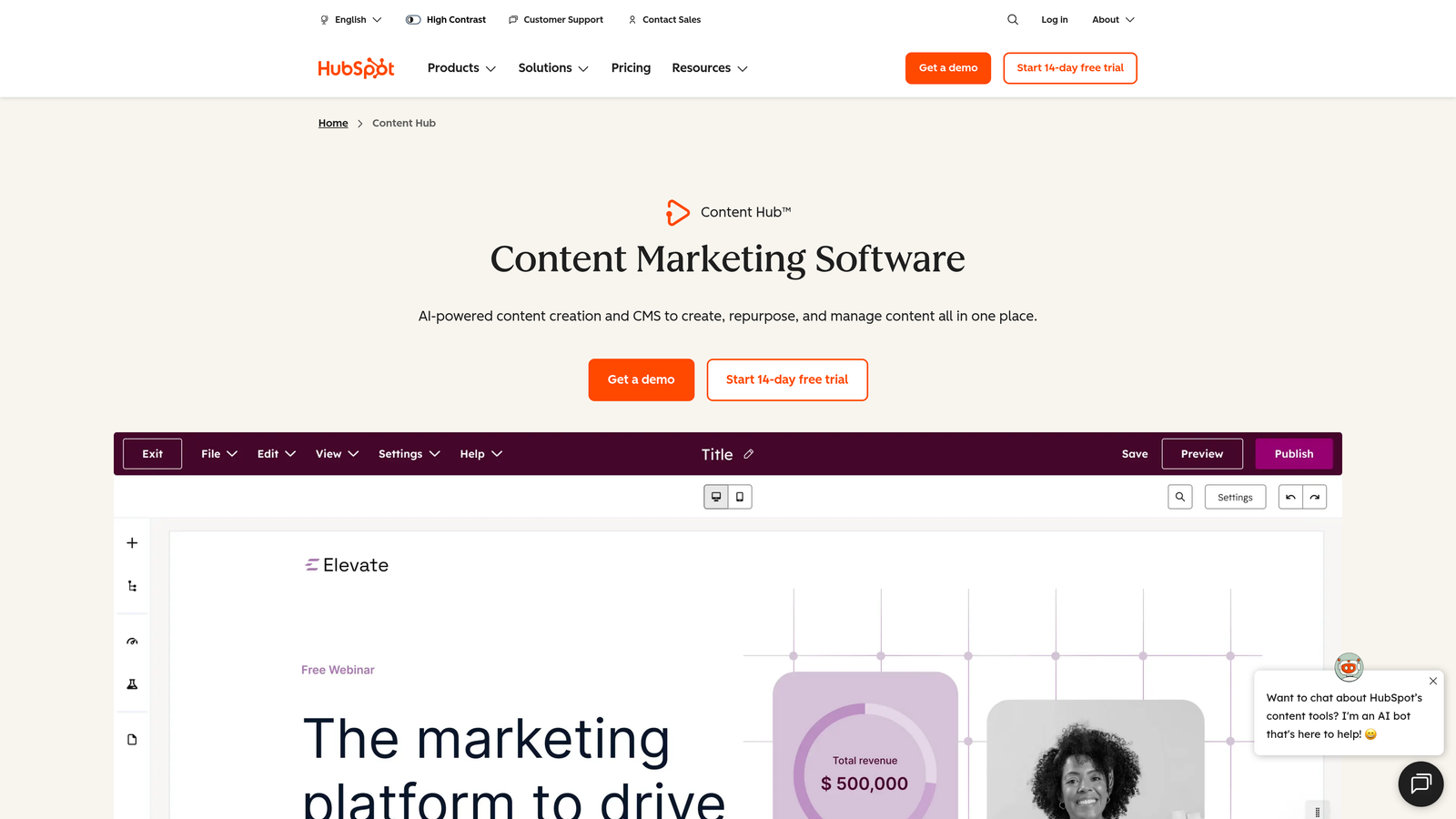
HubSpot Content Hub is HubSpot's dedicated content product, offering AI-assisted creation, blog and landing page management, and analytics tied directly to revenue attribution.
Where This Tool Shines
If your team already lives in HubSpot, Content Hub is a natural extension. The tight CRM integration means you can personalize content experiences based on contact data and tie content performance directly to pipeline — something standalone content tools can't easily replicate.
The AI content remix tools are a practical time-saver, letting you repurpose existing content into new formats without starting from scratch. Brand voice consistency tools also help larger teams maintain a coherent tone across multiple writers and campaigns.
Key Features
AI Content Creation and Remix: Generate and repurpose content across formats with AI assistance built into the editor.
CRM-Integrated Personalization: Serve different content experiences based on contact lifecycle stage or audience segment.
Revenue Attribution Analytics: Connect content performance to lead generation and closed deals, not just traffic.
Blog, Landing Page, and Website Management: Manage all web content from a single hub with scalable publishing tools.
Brand Voice Tools: Maintain consistent tone and style guidelines across your entire content team.
Best For
Mid-market teams and agencies already using HubSpot's CRM or Marketing Hub who want content management without switching platforms. Less cost-effective as a standalone content tool if you're not using the broader HubSpot ecosystem.
Pricing
Free tier available. Starter from $20/month per seat; Professional from $500/month (3 seats); Enterprise from $1,500/month (5 seats). Verify current pricing at hubspot.com.
3. Semrush Content Marketing Toolkit
Best for: SEO-focused teams that want content research, optimization, and auditing within their existing SEO platform.
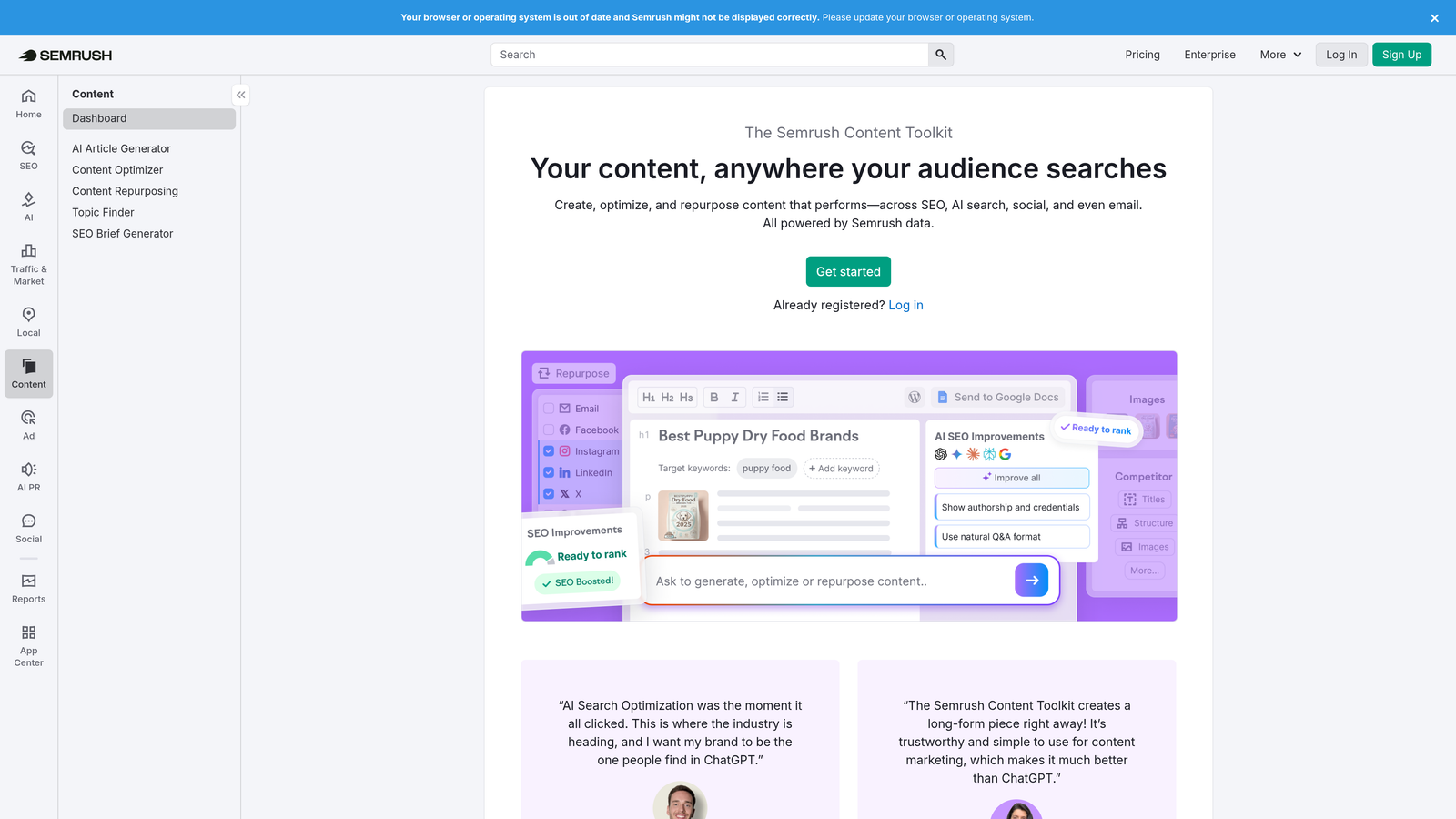
Semrush's Content Marketing Toolkit is a suite of content tools bundled within Semrush's broader SEO platform, covering ideation through performance tracking.
Where This Tool Shines
The real advantage here is that content tools are powered by Semrush's underlying keyword and competitive data. When the SEO Content Template pulls recommendations, it's drawing from real search data, not generic suggestions. This makes the optimization guidance more actionable than many standalone writing assistants.
The SEO Writing Assistant integrates directly with Google Docs and WordPress, which means writers can optimize in their existing workflow without copying content into a separate tool. For teams already paying for Semrush's SEO features, the content toolkit represents solid added value at no extra cost.
Key Features
Topic Research: Identify content ideas based on actual search volume and competitive landscape data.
SEO Content Template: Generates real-time optimization recommendations based on top-ranking pages for your target keyword.
SEO Writing Assistant: Live scoring and suggestions within Google Docs and WordPress as you write.
Content Audit: Identifies underperforming pages that need updating, consolidation, or removal.
Post Tracking: Monitors the performance of published content over time across search and social signals.
Best For
SEO professionals and content teams who already use or plan to use Semrush for keyword research and competitive analysis. The content tools are bundled with paid plans, making them a cost-effective addition for existing subscribers rather than a standalone purchase.
Pricing
Content marketing tools are included in Pro ($139.95/month), Guru ($249.95/month), and Business ($499.95/month) plans. Verify current pricing at semrush.com.
4. Contently
Best for: Enterprise brands that need managed freelance content production with built-in strategy and ROI analytics.
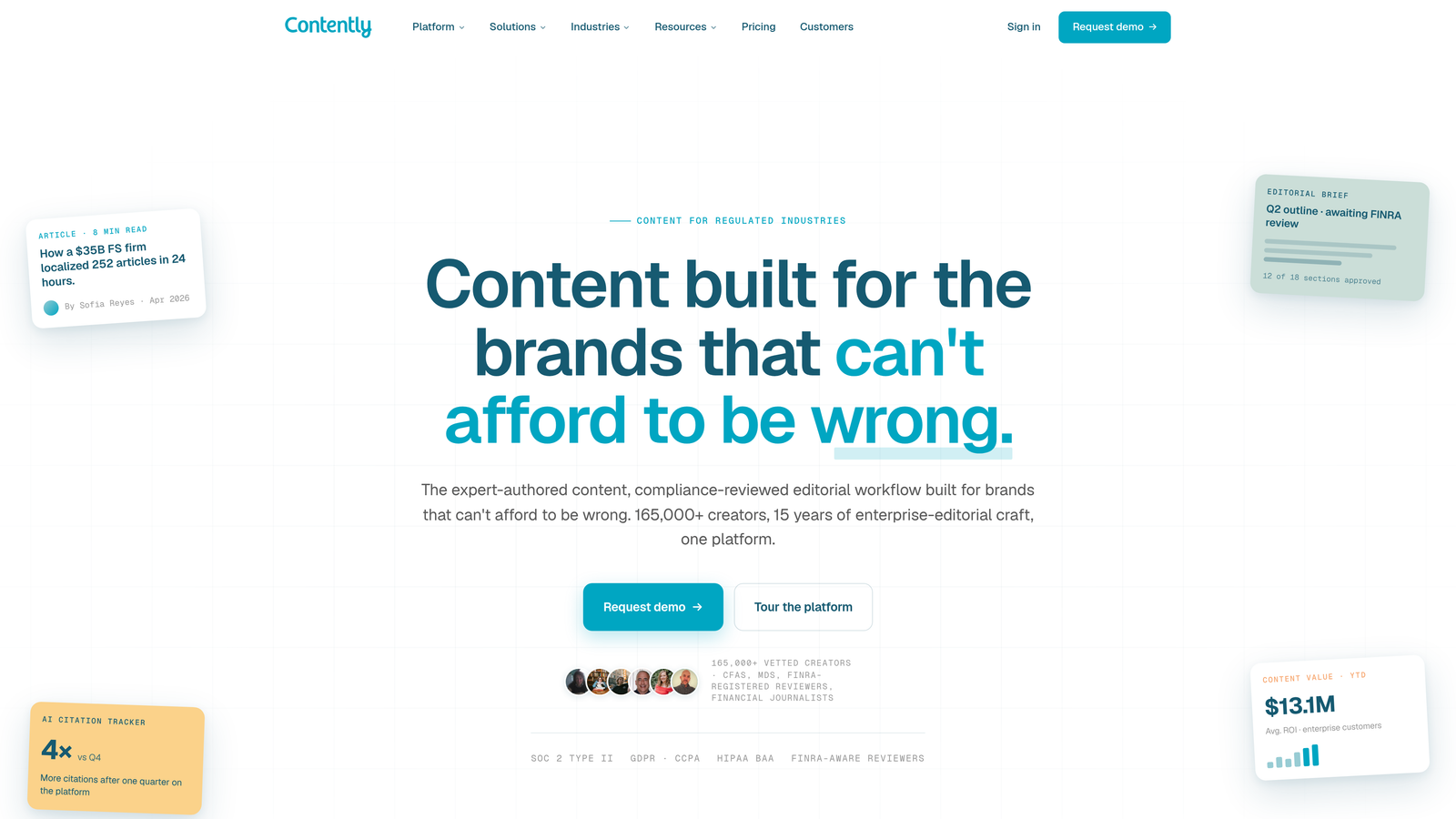
Contently is an enterprise content marketing platform that combines a vetted freelance creator network with editorial workflow management and performance analytics.
Where This Tool Shines
Contently solves a specific enterprise problem: producing high-quality, on-brand content at scale without building a large in-house team. The freelance network is pre-vetted across formats including articles, video scripts, and infographics, which reduces the sourcing overhead that typically slows down content operations.
The StoryBook analytics suite is a genuine differentiator at the enterprise level, providing content performance and ROI data that goes beyond standard page views. Brand compliance and governance tools also make Contently a reasonable choice for regulated industries where content approval workflows are non-negotiable.
Key Features
Vetted Freelance Creator Network: Access to pre-screened writers, designers, and video creators across content formats.
Editorial Workflow Management: End-to-end content operations from brief to publication with team collaboration built in.
StoryBook Analytics: Performance and ROI tracking that ties content investment to measurable business outcomes.
Brand Compliance Tools: Governance features for maintaining brand standards and managing approval requirements.
CMS and Marketing Platform Integrations: Connects with major publishing and marketing tools to reduce manual handoffs.
Best For
Enterprise marketing teams with significant content budgets who need to scale production through external creators while maintaining editorial control. Not well-suited for small teams or anyone without budget for custom enterprise contracts.
Pricing
Custom enterprise pricing only, typically on annual contracts. Contact Contently directly for a quote, as pricing is not publicly listed.
5. CoSchedule
Best for: Teams that need a centralized marketing calendar to organize content and social publishing across channels.
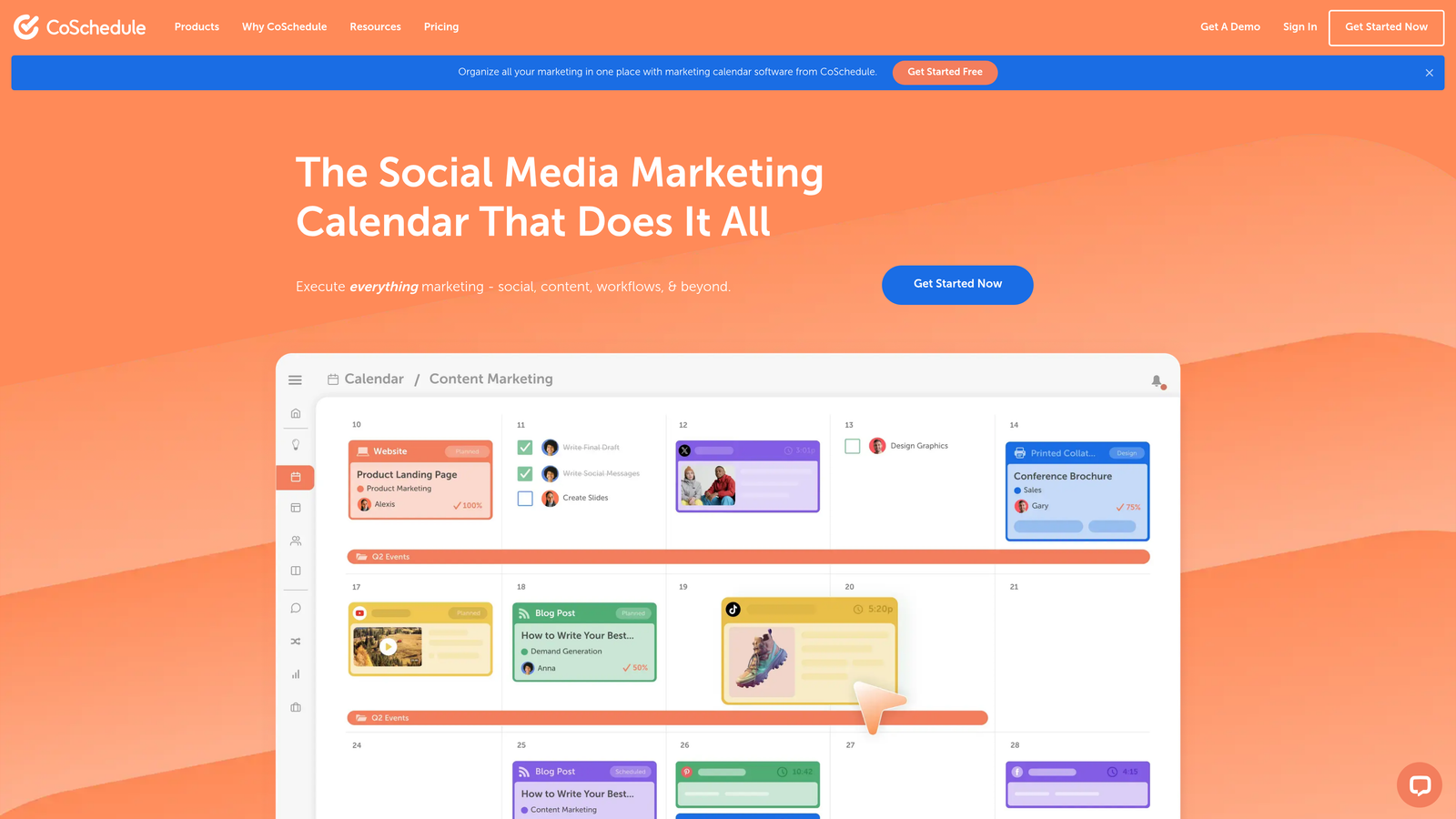
CoSchedule is a marketing calendar and content organizer that helps teams plan, schedule, and publish content from a single drag-and-drop dashboard.
Where This Tool Shines
CoSchedule's core strength is visibility. When your content, social posts, email campaigns, and projects all live on one calendar, it's much easier to spot gaps, avoid overlap, and keep the team aligned. The drag-and-drop interface makes rescheduling straightforward, which matters when priorities shift mid-campaign.
The ReQueue feature is a practical addition for teams that want to get more mileage from existing content. Rather than manually resharing top-performing posts, ReQueue automatically recirculates them based on performance data, which helps maintain social presence without extra effort.
Key Features
Drag-and-Drop Marketing Calendar: Visual content planning with team collaboration and cross-channel scheduling in one view.
Social Media Scheduling: Publish to multiple social platforms directly from the calendar interface.
Headline Analyzer: Scores content titles on clarity, engagement potential, and SEO-friendliness.
ReQueue: Automatically reshares high-performing social content on an intelligent schedule.
Workflow and Approval Automation: Assign tasks, set deadlines, and manage approvals without leaving the platform.
Best For
Marketing teams and agencies that struggle with content coordination across channels and need a single source of truth for scheduling. Strong fit for teams that already have content creation covered and need better organization and distribution tooling.
Pricing
Free marketing calendar tier available. Social Calendar from $29/month per user; Agency and Content Calendar tiers available at higher price points. Verify current pricing at coschedule.com.
6. Clearscope
Best for: Content writers and SEO teams focused on producing comprehensive, high-ranking articles through data-driven optimization.
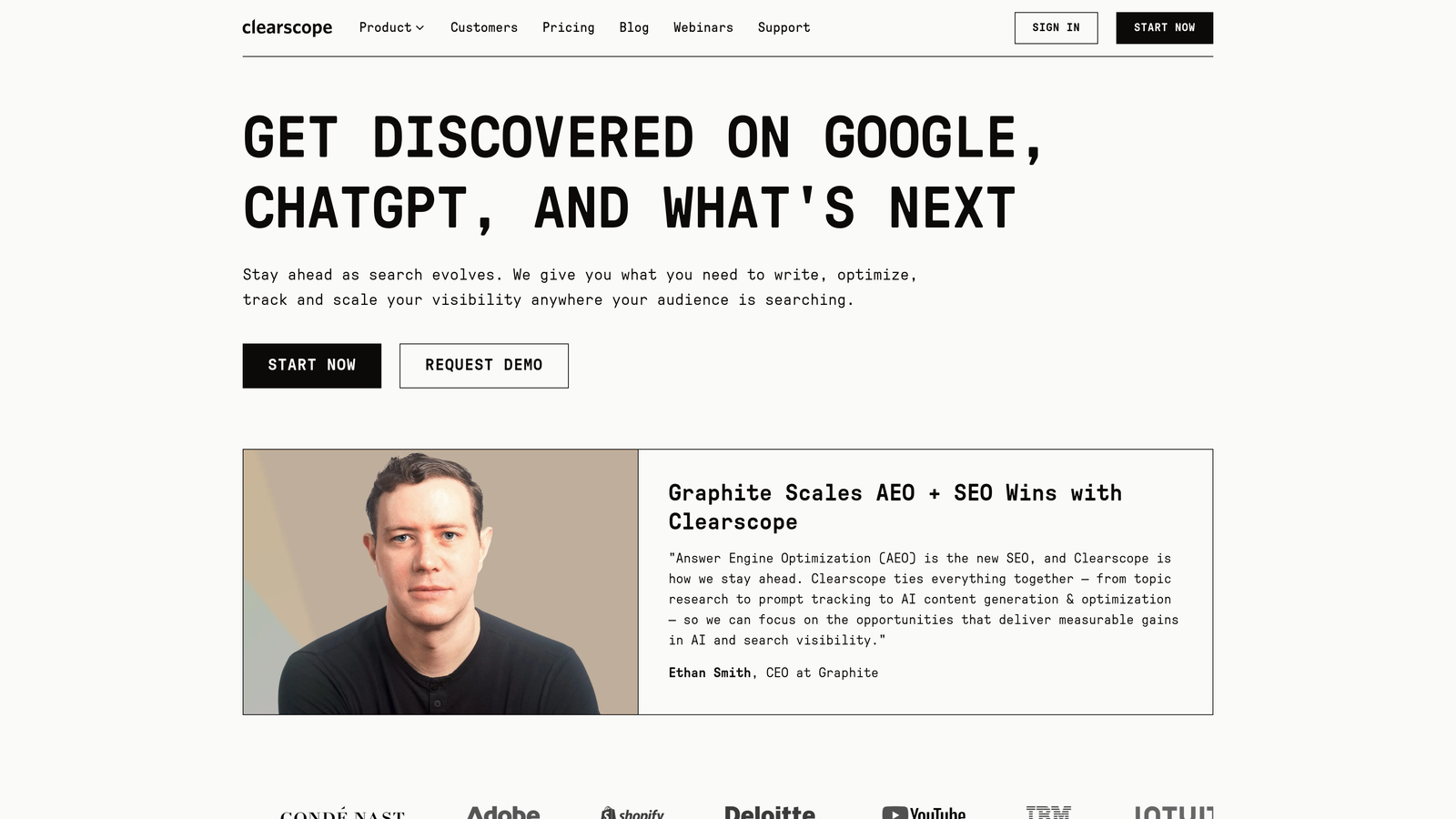
Clearscope is an AI-powered content optimization platform that grades written content against top-ranking search results to help writers produce more thorough, SEO-friendly articles.
Where This Tool Shines
Clearscope's NLP-driven grading system gives writers a concrete, actionable target. Instead of vague advice to "cover the topic thoroughly," you get specific term recommendations based on what top-ranking pages actually include. The A++ to F scoring system makes it easy to know when a piece is ready to publish versus when it still has gaps.
The Google Docs and WordPress integrations are well-executed, allowing writers to optimize in real time without switching between tools. The content inventory feature is also valuable for existing sites, helping teams identify which published pages are slipping in rankings and need a content refresh.
Key Features
NLP Content Grading: Scores content from A++ to F based on topical coverage compared to top-ranking competitor pages.
Term-Level Recommendations: Specific keyword and phrase suggestions derived from analysis of ranking content in your target SERP.
Google Docs and WordPress Integration: Optimize content in your existing writing environment without copying and pasting.
Content Inventory and Monitoring: Track the performance of existing published pages and flag those needing updates.
Keyword Discovery: Identify related topics and search intent signals to inform content planning.
Best For
SEO content teams producing a high volume of articles who need consistent quality and topical depth. The per-report pricing model means costs scale with output, making it important to estimate your monthly report usage before committing to a plan.
Pricing
Essentials from $189/month (10 reports); Business from $399/month (50 reports); Enterprise custom pricing. Verify current pricing at clearscope.io.
7. Contentful
Best for: Development and content teams that need a flexible, API-first CMS to deliver content across multiple digital channels.
Contentful is a headless CMS and composable content platform that separates content from presentation, enabling delivery across websites, apps, and digital products via API.
Where This Tool Shines
Contentful is built for teams that need content to appear in multiple places: a website, a mobile app, a digital display, and a third-party integration, all pulling from the same source. The API-first architecture means developers have full flexibility over how content is rendered, without being constrained by a traditional CMS template structure.
The composable content modeling system allows teams to create structured content types that can be reused and remixed across channels, which reduces duplication and keeps content consistent at scale. AI-powered translation tools are a useful addition for teams managing multilingual content operations.
Key Features
API-First Headless CMS: Deliver content to any channel or application via REST or GraphQL APIs without front-end constraints.
Composable Content Modeling: Build structured content types designed for reuse across websites, apps, and other digital surfaces.
AI Content Creation and Translation: AI-assisted writing and localization tools built into the content management workflow.
App Framework and Marketplace: Extensive integration ecosystem connecting Contentful to marketing, analytics, and commerce tools.
Enterprise Security and Governance: Role-based access controls, audit logs, and compliance features for larger organizations.
Best For
Technology-forward teams with developer resources who need content infrastructure for multi-channel delivery. Less suitable for small teams without technical capacity to implement and maintain API-based content architecture.
Pricing
Free tier available (up to 5 users, 1 space); Basic from $300/month; Premium custom pricing for enterprise. Verify current pricing at contentful.com.
8. StoryChief
Best for: Agencies and multi-brand teams that need to create, collaborate on, and distribute content across multiple channels from one workspace.
StoryChief is a multi-channel content marketing platform built around creation, collaboration, and one-click distribution to blogs, social media, and newsletters simultaneously.
Where This Tool Shines
StoryChief's strongest value proposition is the combination of a collaborative content editor with direct multi-channel publishing. Instead of writing in one tool, approving in another, and then manually publishing to each channel, the entire workflow happens in one place. For agencies managing content for multiple clients, the multi-brand workspace structure keeps everything cleanly separated.
The built-in SEO and readability scoring provides lightweight optimization guidance without requiring a separate tool for every article. It won't replace a dedicated optimization platform like Clearscope for high-volume SEO operations, but for agencies producing a moderate volume of content across multiple clients, it reduces the number of tools in the stack.
Key Features
One-Click Multi-Channel Publishing: Distribute content to your blog, social media accounts, and newsletter simultaneously from a single editor.
Collaborative Editor with Approval Workflows: Built-in commenting, version control, and approval stages for team and client review.
SEO and Readability Scoring: In-editor optimization guidance to improve content quality before publishing.
Content Calendar with Campaign Management: Plan and organize content by campaign, channel, or client with a visual calendar view.
Multi-Brand Client Workspaces: Manage separate brand environments for multiple clients within a single agency account.
Best For
Content agencies and freelance consultants managing content production for multiple clients who want to reduce tool fragmentation. Also a solid choice for small in-house teams that need a straightforward, all-in-one content workflow without enterprise complexity.
Pricing
Individual from $40/month; Team from $100/month; Agency from $250/month. Verify current pricing at storychief.io.
9. Kapost (by Upland Software)
Best for: Enterprise B2B organizations that need to align content production with buyer journey stages and sales enablement requirements.
Kapost is a B2B content operations platform focused on connecting marketing content production to buyer journey mapping and sales team needs, used primarily by larger enterprise organizations.
Where This Tool Shines
Kapost addresses a challenge that's common in enterprise B2B environments: content gets created without clear alignment to where buyers are in the purchase process, and sales teams can't find or use what marketing produces. The buyer journey content mapping and gap analysis tools help marketing teams identify where content is missing and prioritize production accordingly.
Content tagging, taxonomy, and governance features make Kapost useful for organizations managing large content libraries where discoverability and consistency are ongoing challenges. The analytics on content usage across sales teams also provides visibility into which assets are actually being used versus which are sitting unused in a shared drive.
Key Features
Content Operations Workflow: Manages the full content lifecycle from ideation through distribution with structured workflow stages.
Buyer Journey Mapping: Maps content to specific buyer journey stages and identifies coverage gaps in the content library.
Sales Enablement Delivery: Surfaces relevant content for sales teams based on deal stage and buyer persona.
Content Tagging and Taxonomy: Structured metadata and governance tools for managing large, complex content libraries.
Content Usage Analytics: Tracks which content assets are being used by sales teams and how they perform in buyer engagement.
Best For
Large B2B enterprises with dedicated content operations teams where sales and marketing alignment is a strategic priority. The custom pricing and annual contract model makes Kapost a significant investment, best suited for organizations with established content programs rather than teams just getting started.
Pricing
Custom enterprise pricing only, with annual contracts typical. Contact Upland Software directly for a quote, as pricing is not publicly listed.
Which Platform Is Right for Your Budget and Goals?
The right content marketing platform depends on what problem you're actually trying to solve, and how that problem maps to your current budget.
If you're a startup, solopreneur, or early-stage team, CoSchedule's free calendar tier and StoryChief's individual plan give you a functional starting point without a significant financial commitment. HubSpot's free tier is worth exploring if CRM integration matters from day one.
For growing mid-market teams, the more interesting question is whether you're paying for multiple tools that could be consolidated. A team subscribing separately to an AI writing tool, an indexing solution, and a brand monitoring platform is often spending more than an integrated platform would cost. Sight AI is worth evaluating here specifically: it combines AI visibility tracking, SEO/GEO content generation, and automatic IndexNow-based indexing in one platform, which can meaningfully reduce total tool spend for teams investing in both traditional SEO and AI search.
Semrush's Content Marketing Toolkit is the strongest value for teams already paying for SEO tooling, since the content features come bundled. Clearscope makes sense when content quality and topical depth are the primary bottleneck. Contentful is the right choice when multi-channel content delivery requires developer-grade infrastructure.
At the enterprise level, Contently and Kapost serve specific operational needs — managed freelance production and B2B content operations, respectively — but both require custom contracts and meaningful budget commitments. HubSpot Content Hub at the Enterprise tier fits large teams already embedded in the HubSpot ecosystem.
One pattern worth noting: many teams overpay not because any single tool is overpriced, but because they're subscribing to four or five tools with overlapping functionality. Before renewing or adding to your stack, it's worth auditing what you're actually using and whether a more integrated platform could cover the same ground for less.
Start tracking your AI visibility today and see exactly where your brand appears across top AI platforms. As AI search continues to reshape how buyers discover products and services, knowing how ChatGPT, Claude, and Perplexity describe your brand is becoming as important as knowing where you rank on Google. The platforms that help you win in both environments are the ones worth investing in.