Getting your content indexed quickly is one of the most underrated levers in SEO. Publish a page today, and without the right infrastructure behind it, that page could sit invisible to search engines and AI models for days or even weeks. That's lost traffic, lost citations, and lost competitive ground.
Content indexing service providers solve this by automating the submission, discovery, and crawl-triggering process so your content enters the search ecosystem faster. But in 2026, "content indexing" means more than pinging Google with a URL. It now spans the full pipeline: creating optimized content, submitting it for technical indexing, and tracking whether AI models like ChatGPT, Claude, and Perplexity are actually surfacing it in their answers.
This guide covers the top content indexing service providers available right now, evaluated on indexing speed, automation capabilities, AI search compatibility, integration options, and overall value. Whether you're a founder pushing out product pages, a marketer scaling a blog, or an agency managing dozens of client sites, there's a solution here that fits your workflow.
1. Sight AI
Best for: Teams that want technical indexing, AI content generation, and AI visibility tracking in a single platform.
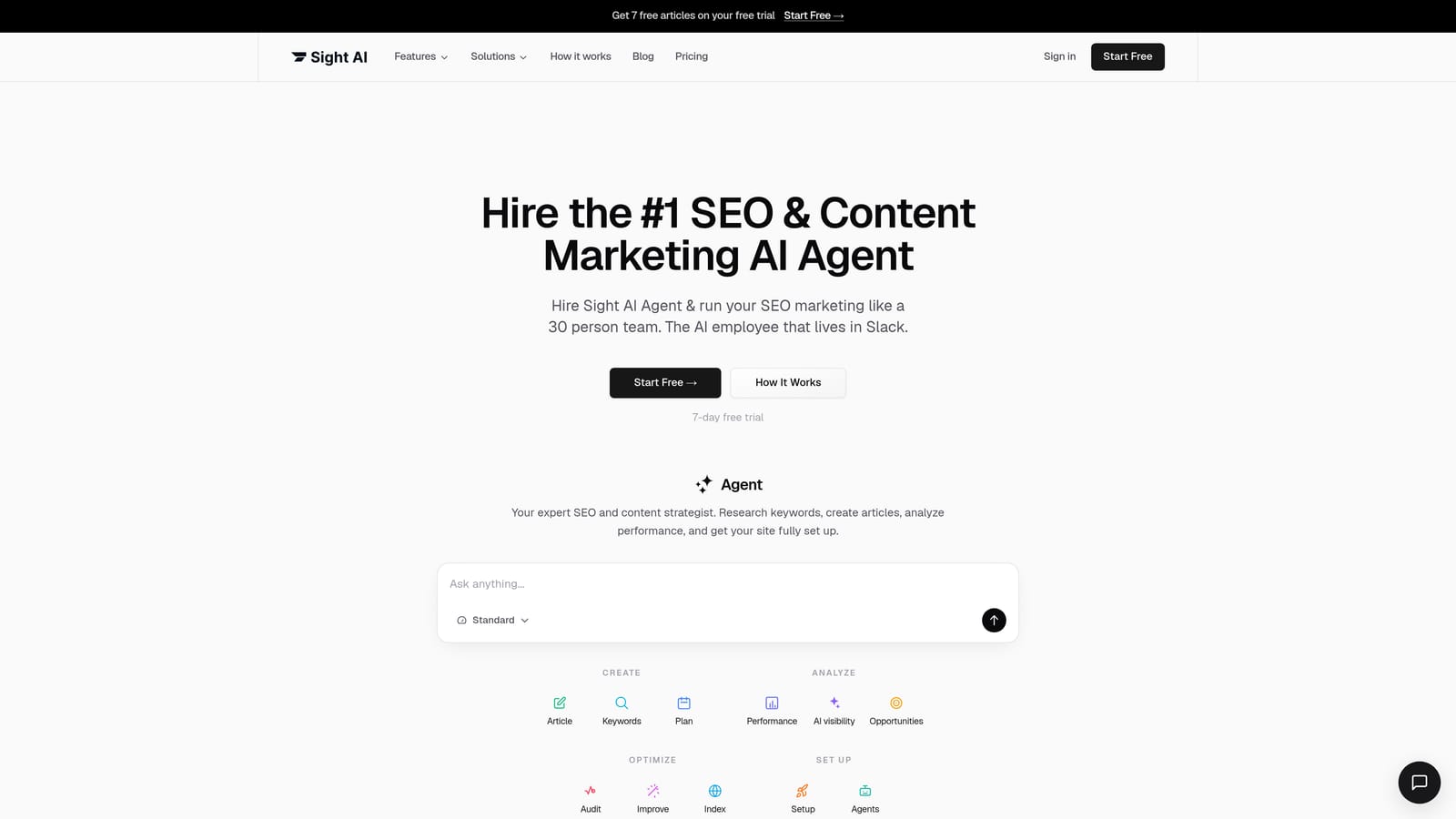
Sight AI is an all-in-one platform combining technical content indexing infrastructure, AI-powered content generation, and AI visibility tracking across 6+ AI platforms including ChatGPT, Claude, and Perplexity.
Where This Tool Shines
Most tools in this space solve one part of the indexing problem. Sight AI is built around the idea that technical indexing, content creation, and AI visibility are three layers of the same challenge. You can't just submit URLs to search engines and call it done when AI models are increasingly where discovery happens.
The platform's Autopilot Mode is particularly compelling for growth-focused teams. It handles content generation and publishing end-to-end, meaning new articles can go from brief to live and indexed without manual intervention at each step. That's a meaningful operational advantage when you're trying to scale content output consistently.
Key Features
IndexNow Integration: Submits URLs to supported search engines near-instantly after publishing, bypassing the typical crawl delay that slows new content discovery.
Automated Sitemap Updates: New content is immediately reflected in sitemap files without any manual steps, keeping search engines and AI crawlers current at all times.
CMS Auto-Publishing: Closes the gap between content creation and live indexing by automating the publishing step directly from the platform.
13+ AI Content Agents: Specialized agents generate SEO and GEO-optimized articles including listicles, guides, and explainers, each structured for both search and AI answer inclusion.
AI Visibility Score: Tracks brand mentions, sentiment, and prompt-level data across 6+ AI platforms, giving teams a direct feedback loop between what's indexed and what's being cited by AI models.
Best For
Sight AI is best suited for marketers, founders, and agencies who want to stop managing indexing, content creation, and AI visibility as separate workflows. If you're serious about both traditional SEO and showing up in AI-generated answers, this all-in-one approach removes a lot of the coordination overhead that comes with stitching together multiple point solutions.
Pricing
Visit trysight.ai for current pricing plans. Multiple tiers are available depending on your content volume and team size.
2. Writesonic
Best for: Content teams that need to produce high volumes of SEO-optimized articles and marketing copy quickly.
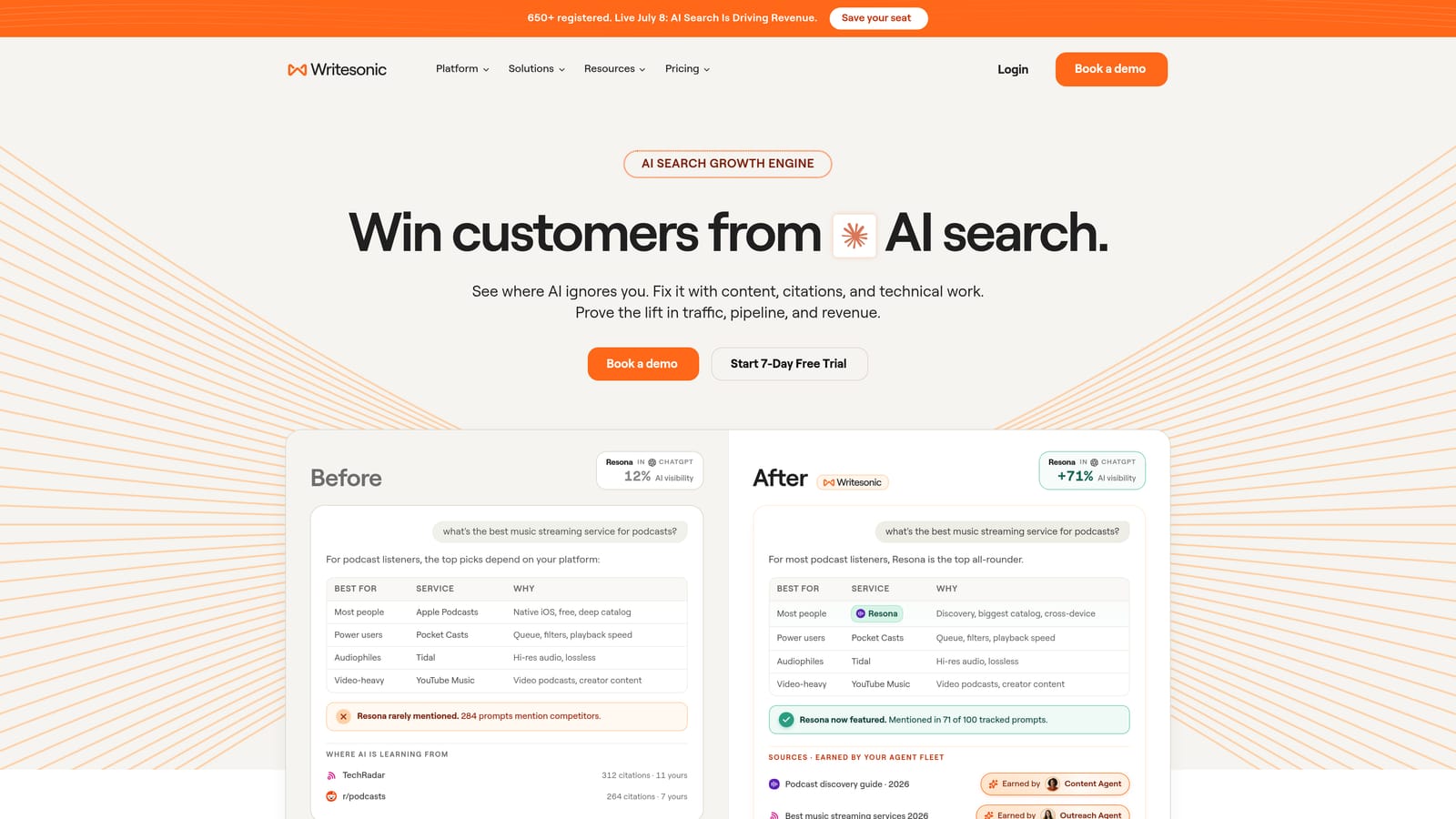
Writesonic is an AI content generation platform designed to help teams produce SEO-optimized blog posts, landing pages, ads, and marketing copy at scale.
Where This Tool Shines
Writesonic's relevance to content indexing comes from the volume side of the equation. The more high-quality, optimized content you publish, the more URLs you're feeding into indexing pipelines. Writesonic accelerates that production cycle significantly, helping teams maintain publishing cadences that would be difficult to sustain manually.
Its SEO mode is particularly useful for teams that want keyword integration and content structuring handled during the generation process, rather than as a separate editing pass. This reduces the time between drafting and final publication.
Key Features
AI Blog and Article Generation: Produces long-form content optimized for search, with options to target specific keywords and content structures.
SEO Mode: Integrates keyword targeting and content hierarchy guidance directly into the generation workflow.
Publishing Workflow Tools: Streamlines the path from generated content to live pages, reducing manual handoffs in the content pipeline.
Multi-Format Output: Supports articles, landing pages, ad copy, social content, and more, making it useful across multiple content channels simultaneously.
Best For
Writesonic works well for marketing teams and agencies that need to scale content production without proportionally scaling headcount. It's a strong fit when the primary bottleneck is content volume rather than technical indexing infrastructure.
Pricing
Visit writesonic.com for current pricing plans, which vary based on word output and team seats.
3. AirOps
Best for: Growth and content operations teams building scalable, automated content pipelines connected to real data sources.
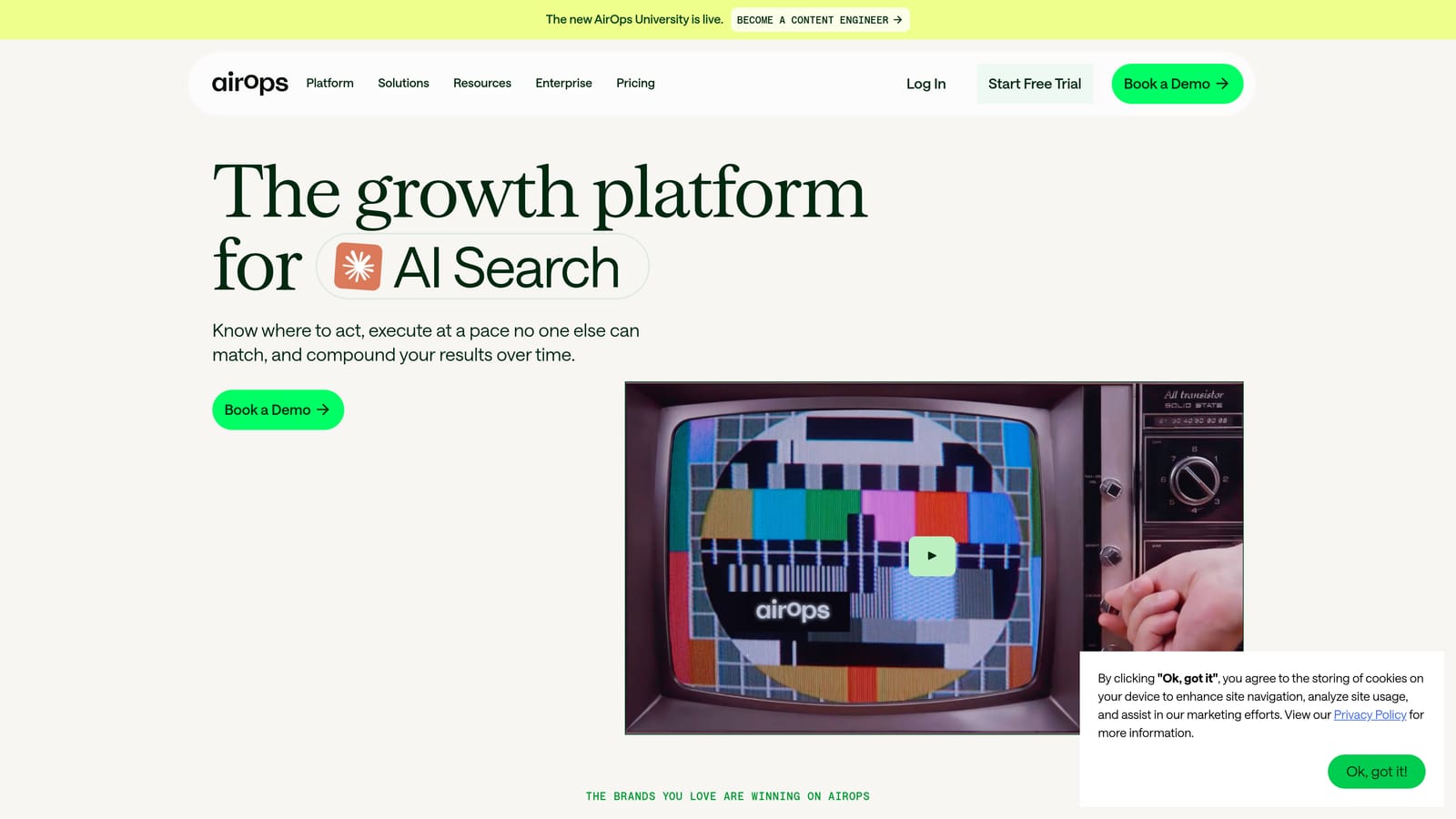
AirOps is a workflow automation platform for AI-powered content operations, enabling teams to build programmatic content pipelines that connect AI models to data sources and publishing systems.
Where This Tool Shines
AirOps sits at the intersection of AI and content operations. Rather than just generating content, it lets you build repeatable workflows that pull from data sources, run AI generation steps, and push output into publishing systems. For teams doing programmatic content at scale, that's a fundamentally different capability than a standard AI writing tool.
The platform is particularly effective at eliminating manual bottlenecks in content operations. When your content pipeline has multiple steps, each one handled manually creates friction and delays the point at which content is live and indexable. AirOps automates those handoffs.
Key Features
AI Workflow Builder: A visual interface for constructing multi-step content production workflows without requiring engineering resources.
Data Source Connectivity: Connects to external data sources, CMS platforms, and publishing systems to enable truly programmatic content generation.
Programmatic Content at Volume: Supports generating large batches of content variations, useful for location pages, product descriptions, and similar use cases.
Reduced Manual Bottlenecks: Automates the handoff steps between content creation, review, and publishing so content reaches indexing systems faster.
Best For
AirOps is best for growth teams and content operations leads who are building scalable content systems rather than producing individual pieces. It's particularly valuable when content production needs to be tied to structured data or repeated across many templates.
Pricing
Visit airops.com for current pricing. Plans typically scale with workflow volume and team size.
4. Profound
Best for: Enterprise teams tracking and improving brand visibility within AI-generated search answers.
Profound is an AI search optimization platform focused on tracking how brands appear in AI-generated answers, helping teams identify content gaps that affect both indexing priority and AI citation rates.
Where This Tool Shines
Profound addresses a question that's becoming central to modern content strategy: once your content is indexed, is it actually influencing AI-generated answers? That's a different question from traditional SEO ranking, and it requires different tooling to answer.
The platform's competitive analysis capabilities are particularly useful at the enterprise level, where understanding how competitors are being cited by AI models can directly inform content investment decisions. It surfaces which topics and content types are driving AI citations and which gaps represent opportunities.
Key Features
AI Answer Visibility Tracking: Monitors how and where your brand appears across AI-generated search responses at scale.
Content Gap Identification: Surfaces topics where competitors are being cited by AI models but your brand is absent, informing indexing and content priorities.
Competitive Analysis: Provides positioning data within AI answer environments, showing share-of-voice across AI-generated responses.
Enterprise Reporting: Delivers structured reporting on AI search presence suitable for stakeholder visibility and strategic planning.
Best For
Profound is best suited for enterprise marketing teams and SEO leads who need structured visibility into their AI search presence and want to make data-informed decisions about which content to prioritize for indexing and optimization.
Pricing
Visit profound.ai for current pricing. Enterprise positioning suggests custom pricing tiers are likely available.
5. Peec
Best for: Marketers who want to monitor AI search brand mentions and identify content gaps affecting their AI visibility footprint.
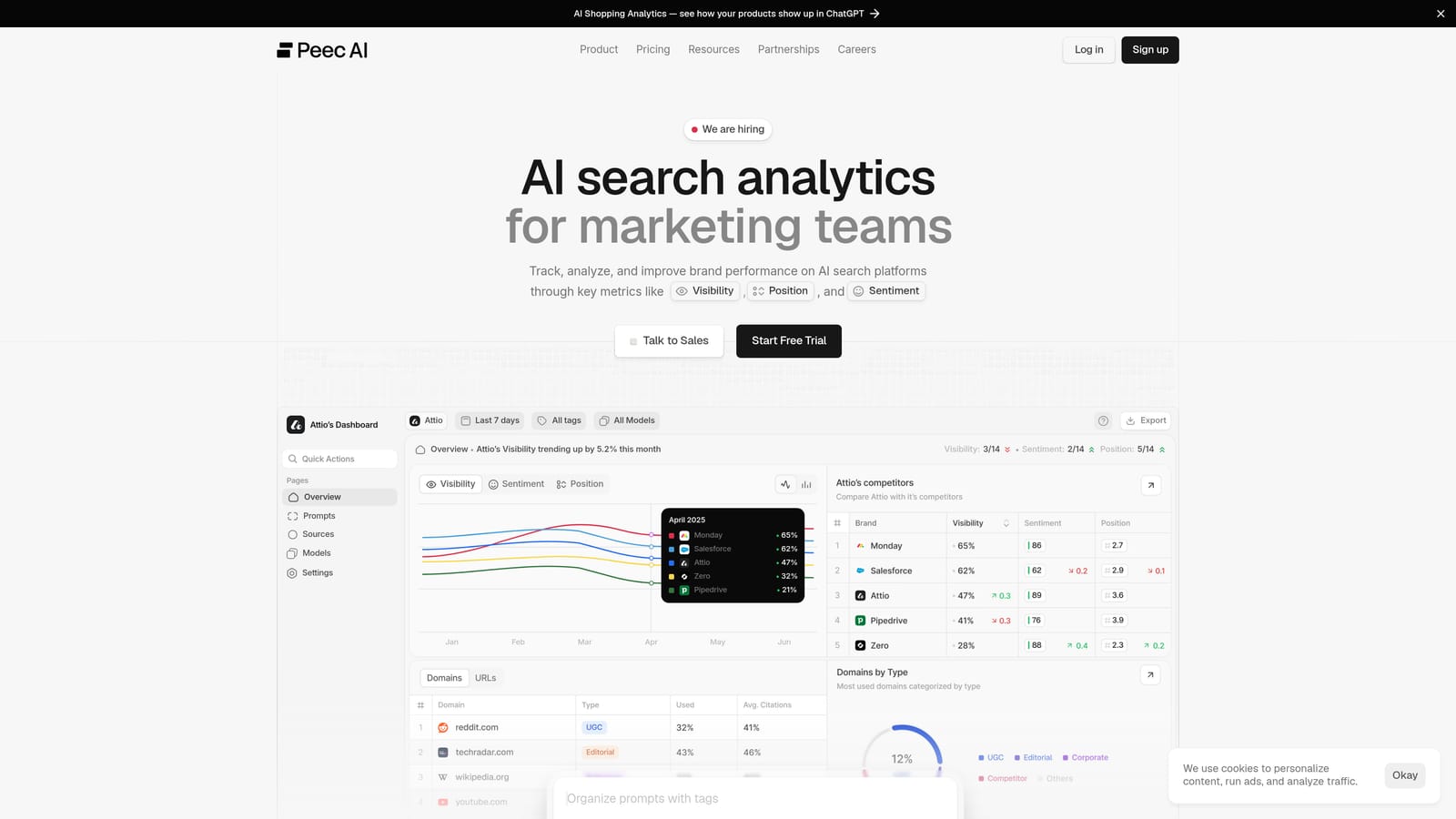
Peec is an AI visibility monitoring tool that tracks how brands are mentioned across AI search platforms, surfacing actionable insights on content that needs better indexing or optimization to improve AI answer inclusion.
Where This Tool Shines
Peec approaches the content indexing problem from the output side: instead of focusing on how you submit content, it focuses on whether that content is actually showing up in AI-generated answers. That feedback loop is genuinely useful for diagnosing indexing and optimization gaps you might not otherwise see.
The share-of-voice reporting is a practical tool for competitive benchmarking. Knowing that a competitor is being cited significantly more often than your brand in a particular topic area is a clear signal about where to focus content creation and indexing efforts next.
Key Features
Brand Mention Tracking: Monitors how your brand is referenced across major AI search platforms in real time.
AI Search Footprint Analysis: Provides share-of-voice reporting on your brand's presence within AI-generated answers relative to competitors.
Content Opportunity Identification: Flags topic areas where AI answer gaps suggest content creation and indexing opportunities.
Sentiment and Context Monitoring: Tracks not just whether your brand is mentioned, but how it's framed within AI responses.
Best For
Peec is a good fit for marketers and content strategists who want a focused tool for monitoring AI search presence without the broader platform overhead. It's particularly useful for teams already producing content who want to understand what's actually getting cited.
Pricing
Visit peec.ai for current pricing plans.
6. Promptwatch
Best for: Teams that want granular, prompt-level insight into how specific queries trigger brand mentions in AI model responses.
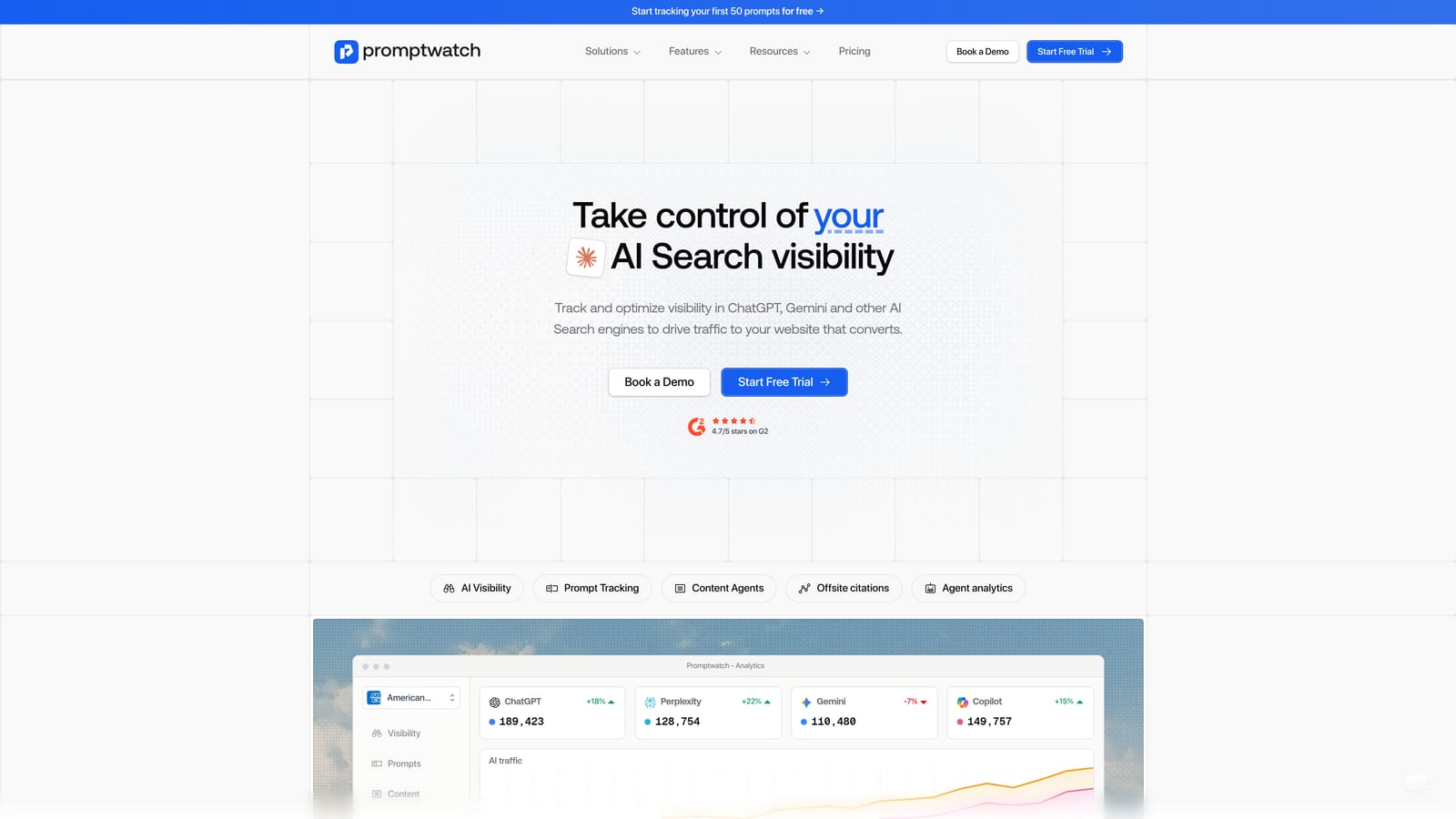
Promptwatch is a prompt-level AI monitoring tool that tracks how specific queries trigger brand mentions in AI model responses, providing detailed insight into the relationship between indexed content and AI answer inclusion.
Where This Tool Shines
Where most AI visibility tools operate at the brand or topic level, Promptwatch goes deeper. It tracks how individual prompts and query types influence whether your brand gets mentioned in AI responses. That granularity is valuable when you're trying to understand not just that you're being cited, but which content and which queries are driving those citations.
This makes it particularly useful for teams doing iterative content optimization. If you publish a new article targeting a specific topic and want to know whether it's starting to influence AI answers for related queries, Promptwatch gives you that signal at a level of specificity that broader monitoring tools don't provide.
Key Features
Prompt-Level Monitoring: Tracks AI model responses at the individual query level rather than just at the brand or topic level.
Brand Mention Tracking by Query: Shows which specific queries are triggering brand mentions and which are not, enabling targeted content responses.
Competitive Positioning Analysis: Compares your brand's citation frequency against competitors within AI-generated answers for specific query types.
Content-to-Citation Correlation: Helps teams understand which published and indexed content is actually influencing AI model responses over time.
Best For
Promptwatch is best for content strategists and SEO teams who want to go beyond surface-level AI visibility metrics and understand the specific content-to-citation relationships driving their AI search presence.
Pricing
Visit promptwatch.io for current pricing details.
Which Tool Fits Your Situation
The right content indexing service provider depends heavily on where your biggest bottleneck actually is. Not every team needs the same solution, and the tools above address meaningfully different parts of the pipeline.
For solo founders and small teams: Sight AI offers the most complete starting point. You get technical indexing infrastructure, AI content generation, and AI visibility tracking without needing to stitch together separate tools. That operational simplicity matters when you're managing everything yourself.
For content teams focused on volume: Writesonic and AirOps both accelerate the content production side of the equation. Writesonic is the faster entry point for teams that need more articles published quickly. AirOps is the stronger choice when you're building programmatic content systems connected to data sources and CMS platforms.
For enterprise and agency teams: Profound offers the structured reporting and competitive analysis that enterprise stakeholders typically need. If you're managing AI visibility strategy across multiple brands or client accounts, its enterprise-grade positioning reflects that use case.
For teams focused specifically on AI search monitoring: Peec and Promptwatch both address the question of whether indexed content is actually influencing AI-generated answers. Peec provides broader share-of-voice reporting; Promptwatch goes deeper at the individual prompt and query level.
One thing worth keeping in mind: indexing is only as powerful as the content strategy behind it. Submitting URLs faster doesn't help if the content itself isn't structured to be cited by AI models or ranked by search engines. The tools that combine technical indexing with content quality and AI visibility tracking give you the most complete feedback loop.
If you're ready to stop guessing how AI models like ChatGPT and Claude talk about your brand, Start tracking your AI visibility today and see exactly where your brand appears across top AI platforms. Sight AI brings together the indexing infrastructure, content generation, and AI visibility monitoring that modern growth teams need in a single platform built for the way search actually works in 2026.