When you hit publish on a new article, the clock starts ticking. Every hour your content spends undiscovered is an hour a competitor's page sits in that ranking position instead. But here's the thing: in 2026, "getting indexed" means something broader than it did a few years ago. You're not just racing to get into Google's index anymore. You're also trying to get your brand recognized and cited by ChatGPT, Claude, Perplexity, and other AI answer engines that are increasingly shaping how people find information.
Content indexing services now span two distinct problems: accelerating traditional search engine discovery and ensuring your brand surfaces in AI-generated responses. The tools below address one or both of these challenges. We evaluated each on indexing speed, AI visibility coverage, automation depth, and practical value for marketers, founders, and agencies scaling organic content operations.
The Two-Layer Indexing Problem Every Content Team Faces
Before diving into the tools, it's worth understanding why this comparison includes tools that look quite different from each other. Traditional indexing services focus on getting your URLs crawled and cached by search engines as quickly as possible, using protocols like IndexNow or direct API submissions. AI visibility tools tackle a newer challenge: monitoring and influencing how AI language models reference your brand when answering user queries.
These are genuinely separate problems. A page can be fully indexed by Google and still never appear in a ChatGPT or Perplexity response. The most forward-thinking content operations are building workflows that address both layers simultaneously. With that context in place, here are the tools worth knowing about.
1. Sight AI
Best for: Teams that need traditional indexing speed, AI visibility tracking, and content generation in one platform.
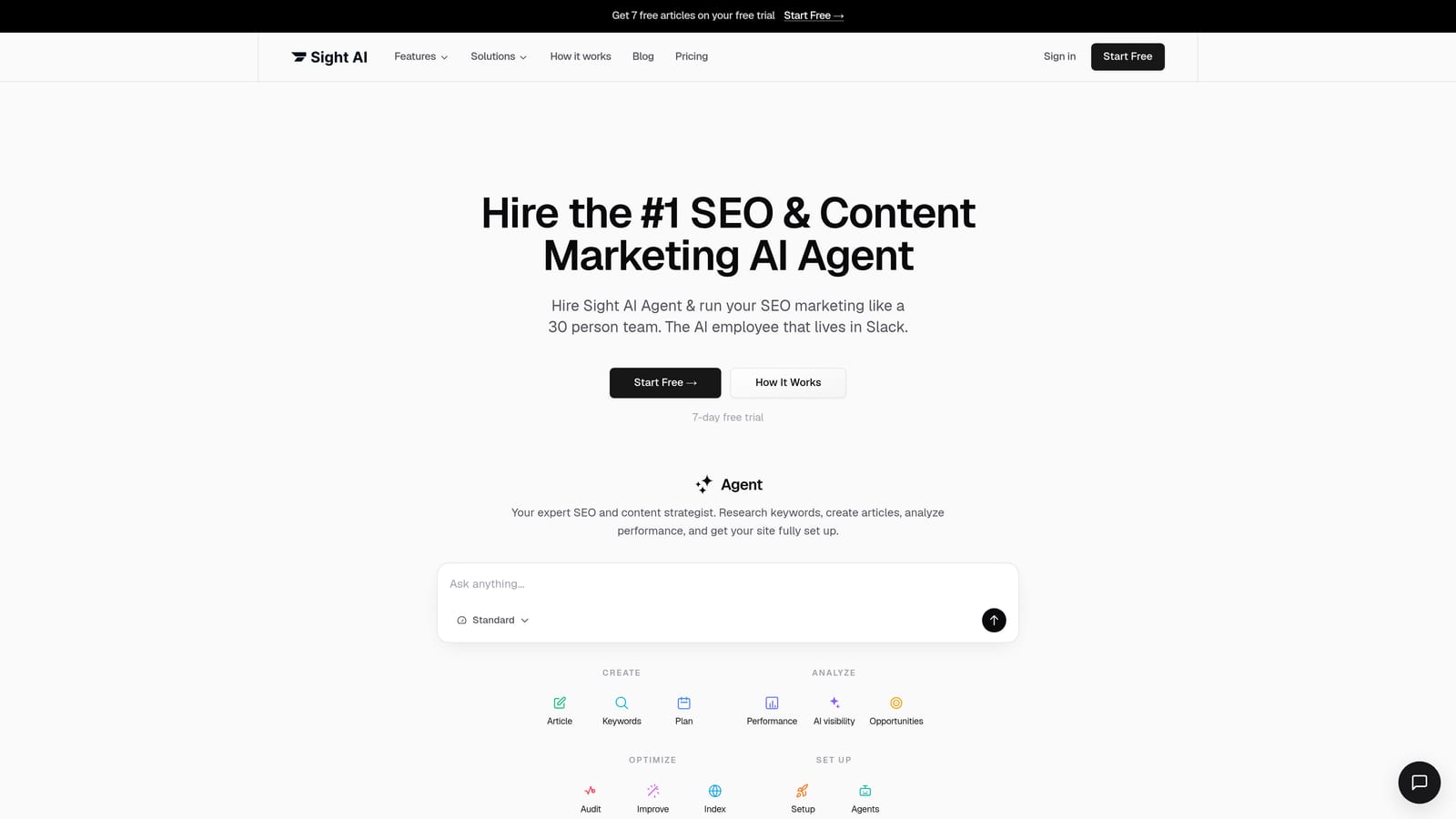
Sight AI is an all-in-one platform combining IndexNow-powered website indexing, AI visibility monitoring across 6+ AI models, and a 13-agent AI content writer built for SEO and GEO-optimized output.
Where This Tool Shines
Sight AI is the only tool in this comparison that directly addresses the technical indexing layer. Its IndexNow integration means that when you publish new content, URLs are submitted to supported search engines almost immediately, rather than waiting for the next scheduled crawl. Automated sitemap updates run in the background, so your sitemap stays current without manual intervention.
What separates Sight AI from a standard indexing utility is the AI visibility layer built on top. The platform tracks how AI models like ChatGPT, Claude, and Perplexity mention your brand, assigns an AI Visibility Score, and provides sentiment analysis on those mentions. You can monitor which prompts surface your brand and which don't, giving you actionable data to inform your content strategy rather than guessing at what AI systems are saying about you.
Key Features
IndexNow Integration: Near-instant URL submission to IndexNow-supported search engines upon content publish, reducing crawl lag compared to passive discovery.
Automated Sitemap Updates: Sitemap stays current automatically when new content is added, removing a common manual step from publishing workflows.
AI Visibility Score: Tracks brand mentions across ChatGPT, Claude, Perplexity, and three or more additional AI platforms with sentiment analysis included.
Prompt Tracking: Monitors which specific queries and prompts surface your brand in AI-generated answers, giving you data to refine your GEO strategy.
13+ AI Agents with Autopilot Mode: Specialized agents generate SEO and GEO-optimized content formats including listicles, guides, and explainers, with auto-publishing to your CMS when Autopilot is enabled.
Best For
Sight AI suits marketers, founders, and agency teams who want to close both the traditional indexing gap and the AI visibility gap without stitching together multiple point solutions. It's particularly valuable for high-volume content operations where manual sitemap management and URL submission would otherwise create bottlenecks.
Pricing
Pricing tiers are available directly at trysight.ai. Check the site for current plans, as offerings are updated regularly.
2. Writesonic
Best for: Content teams producing high volumes of SEO-optimized articles who need a capable AI writing assistant.
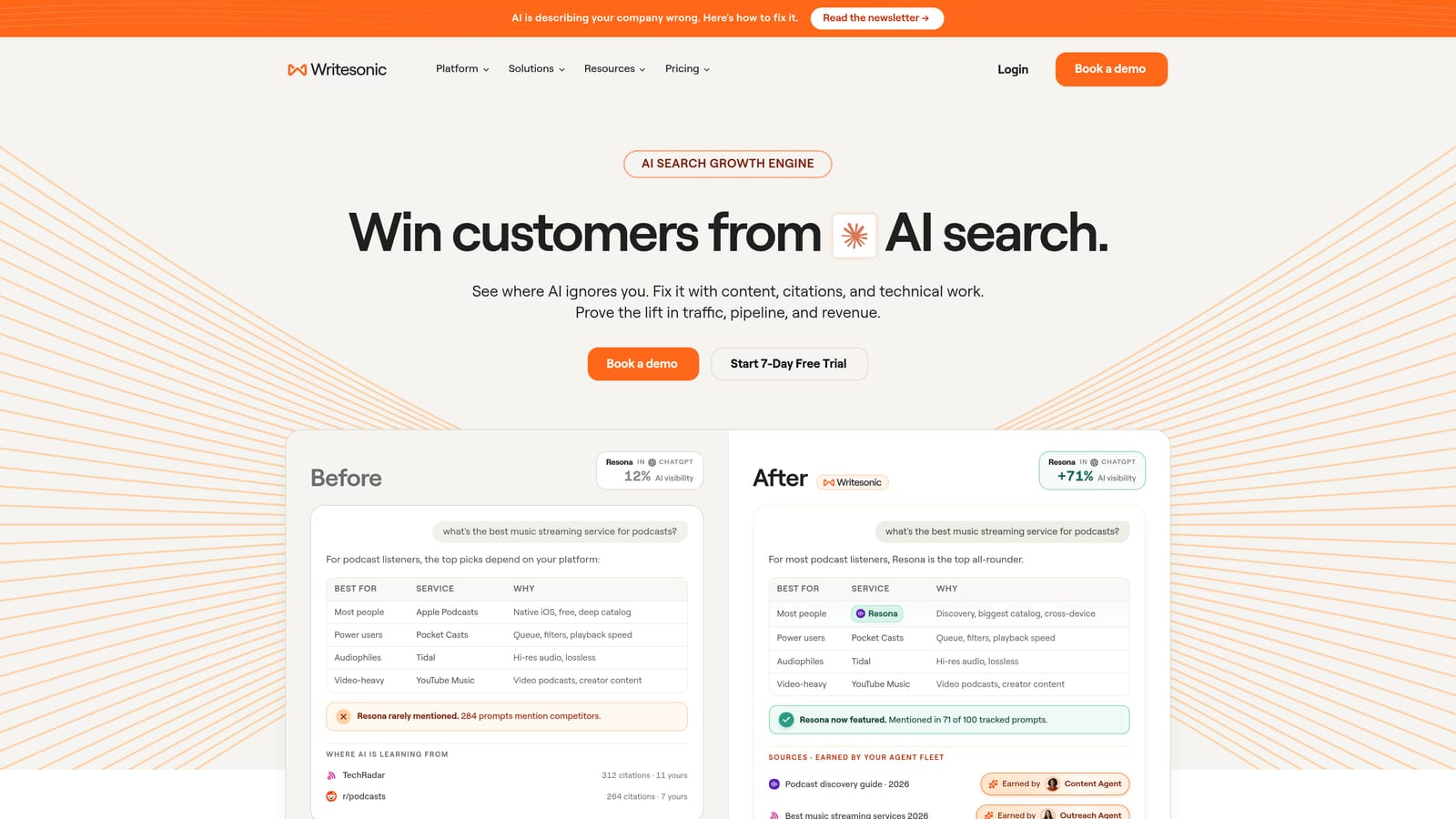
Writesonic is an AI-powered content creation platform with built-in SEO optimization features designed to help teams produce search-ready content at scale.
Where This Tool Shines
Writesonic sits at the content creation end of the indexing pipeline rather than the technical submission end. The logic is straightforward: well-structured, SEO-optimized content gets crawled and indexed more reliably, and it stands a better chance of being cited by AI answer engines. Writesonic's article writer is built with this in mind, producing content with proper heading structures, keyword integration, and on-page optimization signals baked in.
The platform's brand voice customization is a practical feature for agencies managing multiple clients. Rather than editing every output to match a client's tone, you configure the voice once and apply it across content types. The Chatsonic conversational interface also makes it easy to iterate on drafts without leaving the platform.
Key Features
AI Article Writer: Generates long-form content with SEO optimization built into the output structure, including headings and keyword placement.
SEO Checker: On-page optimization suggestions help ensure content meets indexability and ranking criteria before publication.
Brand Voice Customization: Configure and apply consistent tone across different content types and client accounts.
Chatsonic: Conversational AI interface for iterating on content drafts and brainstorming within the same environment.
Botsonic: AI chatbot builder for teams that want to extend their content into interactive formats.
Best For
Writesonic works well for content teams and agencies that need to produce large volumes of SEO-ready articles without building out a full AI content pipeline. It's not a technical indexing tool, but it serves the upstream step of creating content that indexes well and earns AI citations.
Pricing
Writesonic offers a free tier with limited usage. Paid plans are available at multiple levels. Verify current pricing at writesonic.com as plans change frequently.
3. AirOps
Best for: Growth and content teams building automated, repeatable AI-powered content pipelines.
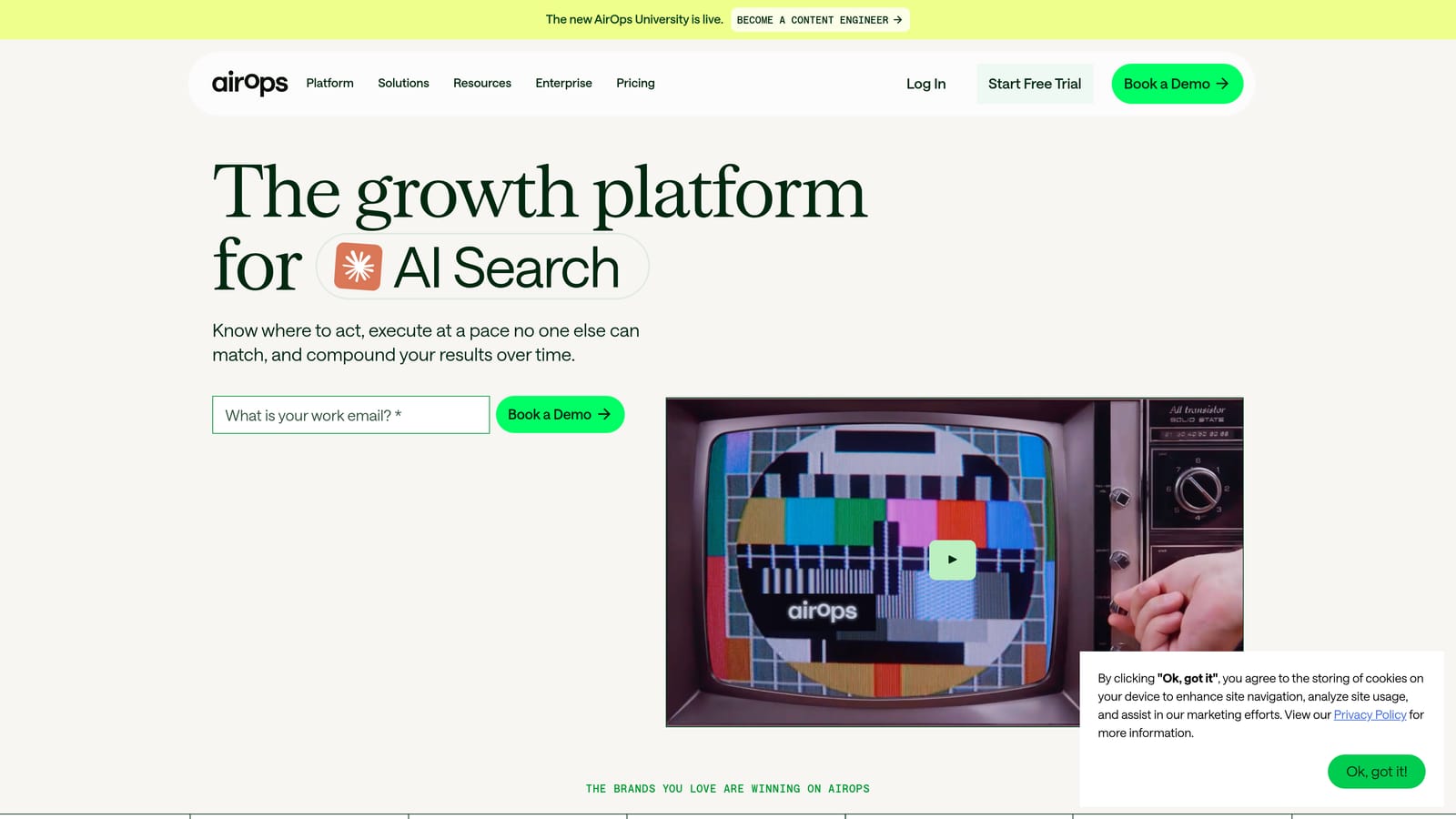
AirOps is an AI workflow automation platform that lets content and growth teams build pipelines connecting multiple AI models to content operations and publishing workflows.
Where This Tool Shines
AirOps operates at the workflow layer rather than the indexing layer directly. Its value proposition is that content operations often break down not at the writing stage, but at the handoff stages: moving from brief to draft, draft to optimization, optimization to CMS, CMS to publication. AirOps builds connective tissue between these steps using a visual workflow builder that doesn't require engineering resources to configure.
For teams running content at scale, the ability to chain AI models together with data sources and CMS integrations can meaningfully reduce the time between content creation and publication, which in turn reduces the time to indexing. Data enrichment capabilities also make it possible to automate research steps that typically slow down content pipelines.
Key Features
Visual AI Workflow Builder: Build multi-step content pipelines with a no-code interface that connects AI models, data sources, and publishing destinations.
Multi-Model Support: Connect different AI models within a single workflow to use each where it performs best.
CMS Integrations: Direct connections to content management systems reduce manual copy-paste steps between creation and publication.
SEO Content Automation: Automate repetitive content tasks like meta description generation, title variations, and structured content reformatting.
Data Enrichment: Pull in external data sources to inform and personalize content generation at scale.
Best For
AirOps is best suited for technically capable content or growth teams that want to build custom automation pipelines rather than use a pre-built tool. It rewards teams willing to invest time in workflow configuration upfront in exchange for significant efficiency gains at scale.
Pricing
Verify current pricing and plan details at airops.com. Pricing structures for workflow automation tools in this category vary significantly by usage volume.
4. Profound
Best for: Enterprise teams and brands that need structured share-of-voice analysis across AI answer engines.
Profound is an AI answer engine monitoring platform that tracks how brands appear in AI-generated search results, with a focus on share-of-voice analysis and competitive benchmarking.
Where This Tool Shines
Profound approaches the AI visibility problem with the kind of structured reporting that enterprise marketing teams expect. Rather than simply flagging when your brand appears in an AI response, Profound contextualizes those appearances: how often does your brand appear compared to competitors, across which topics, and how is that share of voice trending over time?
This competitive benchmarking angle is particularly useful for brands operating in crowded categories where multiple competitors are actively trying to influence AI-generated answers. Knowing that you appear in a given percentage of relevant AI responses is one thing; knowing how that compares to your nearest competitor is what drives actionable strategy.
Key Features
AI Answer Engine Monitoring: Tracks brand presence in ChatGPT, Perplexity, and other major AI tools across a defined set of relevant queries.
Share-of-Voice Analysis: Quantifies how frequently your brand appears in AI-generated responses relative to competitors in your space.
Competitive Benchmarking: Compares your AI visibility performance against named industry peers, not just your own historical data.
Topic and Query Monitoring: Tracks performance at the topic and query level, revealing where you're visible and where you're absent.
Trend Reporting: Surfaces changes in AI search visibility over time, helping teams identify whether their content efforts are moving the needle.
Best For
Profound is well suited to larger brands and enterprise marketing teams with established content operations who need structured AI visibility reporting and competitive intelligence. The depth of reporting makes it more appropriate for teams with dedicated analysts than for solo operators.
Pricing
Verify current pricing at profoundapp.com. Enterprise-focused platforms in this category typically offer custom pricing based on query volume and team size.
5. Peec
Best for: Marketers who want competitive positioning data alongside brand mention tracking in AI model outputs.
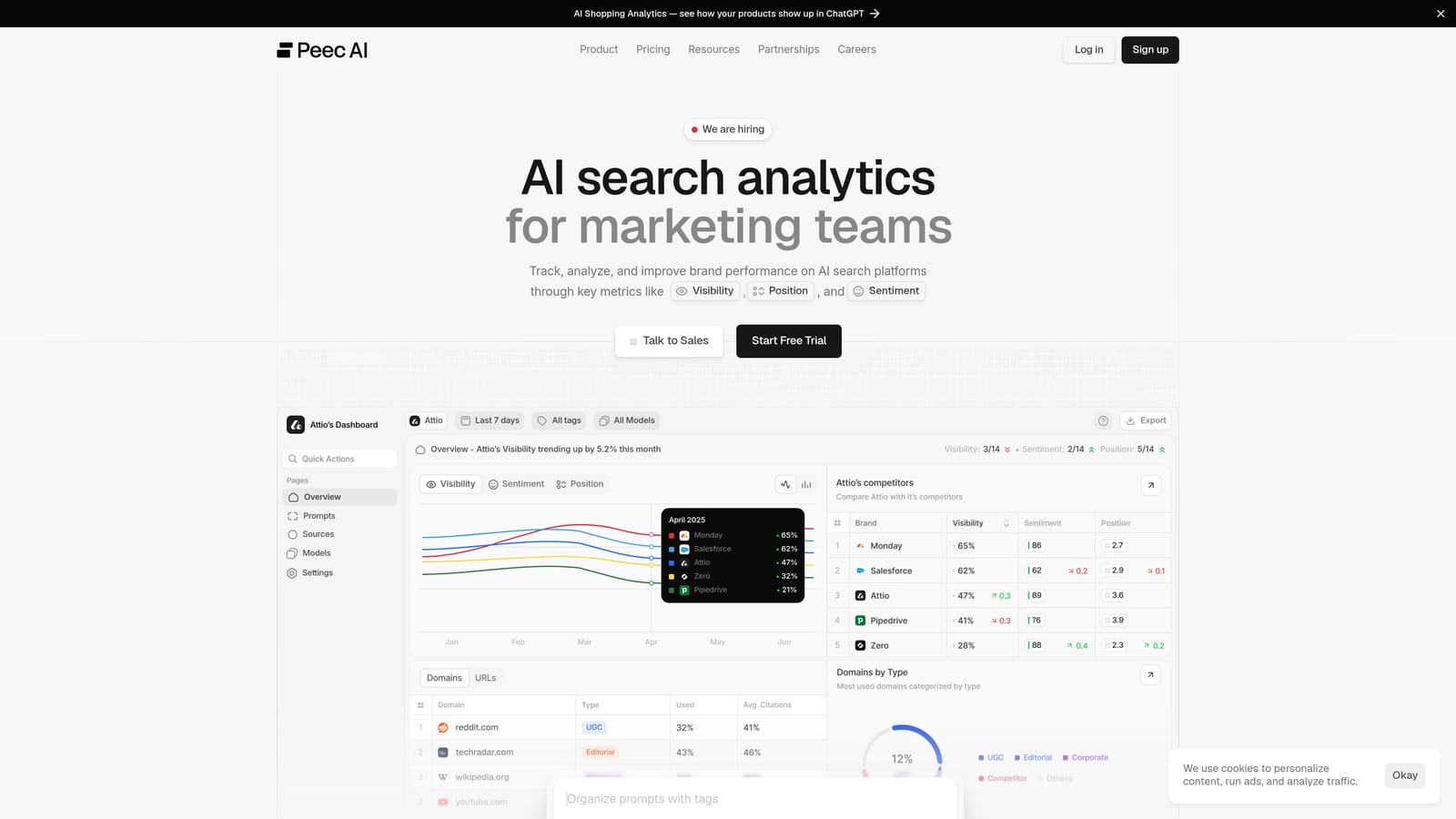
Peec is an AI visibility monitoring tool focused on tracking brand mentions and competitive positioning within AI model responses.
Where This Tool Shines
Peec focuses on making AI visibility data accessible without requiring the kind of enterprise setup that more complex platforms demand. Its competitive positioning analysis is designed to give content teams a clear picture of where their brand stands relative to others in AI-generated answers, with alerts that flag meaningful changes rather than requiring teams to check dashboards constantly.
The prompt and query performance monitoring is a practical feature for content strategists. Understanding which queries reliably surface your brand in AI responses, and which queries your competitors dominate, provides a direct input into editorial planning. It shifts AI visibility from a vanity metric into a content strategy driver.
Key Features
Brand Mention Tracking: Monitors how frequently and in what context your brand appears across AI model responses.
Competitive Positioning Analysis: Shows how your brand's AI visibility compares to competitors across relevant query categories.
Query and Prompt Monitoring: Tracks which specific prompts surface your brand and how that performance changes over time.
AI Search Visibility Reporting: Trend reporting that makes it easier to spot patterns and communicate progress to stakeholders.
Mention Frequency Alerts: Notifies you when your brand's mention frequency in AI responses changes significantly, so you can investigate and respond quickly.
Best For
Peec works well for mid-market brands and growing content teams that want competitive AI visibility benchmarking without the complexity of an enterprise platform. It's a practical choice for marketers who want actionable data without a steep learning curve.
Pricing
Verify current pricing at peec.ai for the most accurate and up-to-date plan information.
6. Promptwatch
Best for: SEO specialists and technical marketers who need prompt-level granularity in AI brand monitoring.
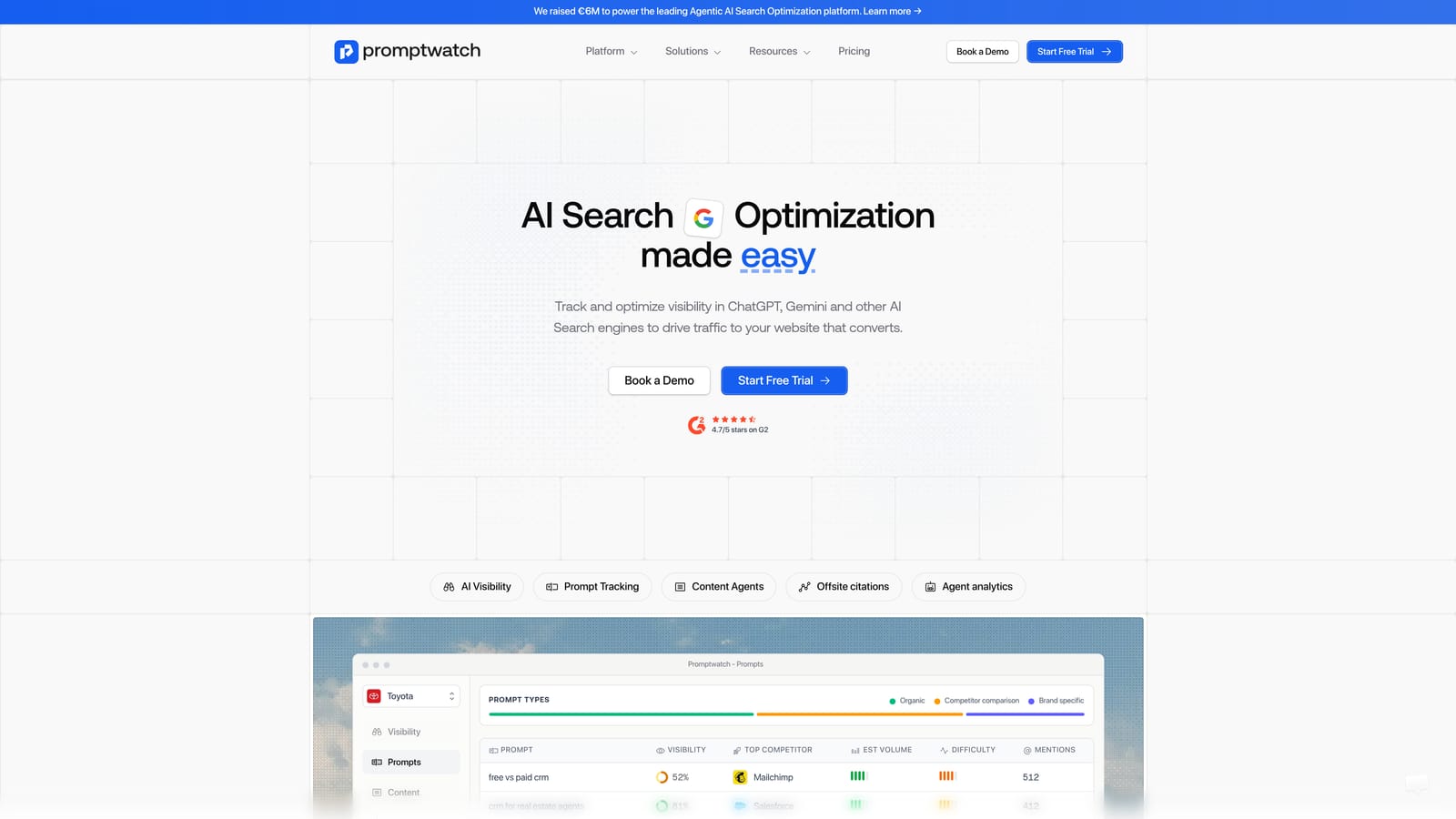
Promptwatch is a specialized tracking tool that monitors how specific queries and prompts in AI tools surface brand-related content and mentions, with a technical depth suited to advanced practitioners.
Where This Tool Shines
Where other AI visibility tools track brand mentions at a category or topic level, Promptwatch goes deeper. It analyzes AI model behavior at the prompt level, meaning you can understand not just whether your brand appears in AI responses, but exactly which prompt formulations trigger those appearances and which don't. For teams actively working to optimize their content for AI citation, this level of granularity is genuinely useful.
The query categorization and comparison features allow you to group prompts by intent, product category, or competitive context and compare performance across those groups. This is the kind of analysis that helps technical SEO practitioners build a systematic approach to GEO rather than making educated guesses about what AI models are responding to.
Key Features
Prompt-Level Brand Tracking: Monitors brand mentions at the individual prompt level rather than just by topic or category, providing maximum granularity.
AI Model Behavior Analysis: Analyzes how different AI models respond to brand-specific queries, revealing model-by-model variation in your visibility.
Query Categorization: Groups and compares prompt performance across categories, making it easier to identify patterns in when and why your brand appears.
Brand Mention Change Alerts: Notifies you when mention patterns shift by prompt type, enabling faster response to changes in AI model behavior.
Technical Reporting: Detailed reporting outputs designed for SEO and AI search specialists who need data they can act on, not just observe.
Best For
Promptwatch is the right choice for technical SEO practitioners, GEO specialists, and advanced content strategists who want the deepest available view into how AI models process and respond to brand-related queries. It assumes familiarity with AI search concepts and rewards users who know what to do with granular prompt data.
Pricing
Verify current pricing at promptwatch.io before making a purchasing decision.
Which Tool Closes Your Biggest Gap
The honest answer is that no single tool in this comparison solves every layer of the indexing problem, with one exception. If you need traditional indexing speed through IndexNow and automated sitemap management, combined with AI visibility monitoring and content generation, Sight AI is the only platform here that handles all three in one place. That integration matters because managing three separate point solutions for indexing, AI visibility, and content creation creates coordination overhead that compounds as your content operation scales.
For teams with more specific needs, the choice becomes clearer. Writesonic fits content teams whose primary bottleneck is producing SEO-ready articles at volume. AirOps suits technically capable teams that want to build custom automation pipelines connecting AI models to their publishing workflow. Profound and Peec both address AI search monitoring, with Profound offering the deeper enterprise-grade share-of-voice analysis and Peec providing competitive benchmarking in a more accessible format. Promptwatch is the specialist's choice when prompt-level granularity is what your GEO strategy actually requires.
The most durable approach combines fast technical indexing with active AI visibility monitoring. Getting indexed by Google and getting cited by ChatGPT are now two separate problems, and the content teams winning on organic discovery in 2026 are the ones treating them as such. Start with the tool that closes your most pressing gap today, then build out from there as your operation matures.
Start tracking your AI visibility today and see exactly where your brand appears across the AI platforms your audience is already using to find answers.