Brand visibility has expanded far beyond Google rankings. In 2026, your brand needs to appear in traditional search results, AI-generated answers from ChatGPT and Perplexity, and across every digital touchpoint where your buyers are looking. The tools powering this kind of multi-channel visibility have evolved significantly, and picking the right stack can mean the difference between being the brand AI models recommend or being invisible to an entire generation of search behavior.
This list covers the best brand visibility optimization tools available today, selected based on feature depth, AI-era relevance, ease of use, and value for marketers, founders, and agencies. Whether you're tracking how AI models talk about your brand, optimizing content for organic search, or ensuring your pages are indexed and discoverable, there's a tool here for every layer of your visibility strategy.
1. Sight AI
Best for: Brands that need AI visibility tracking, content generation, and indexing in one platform.
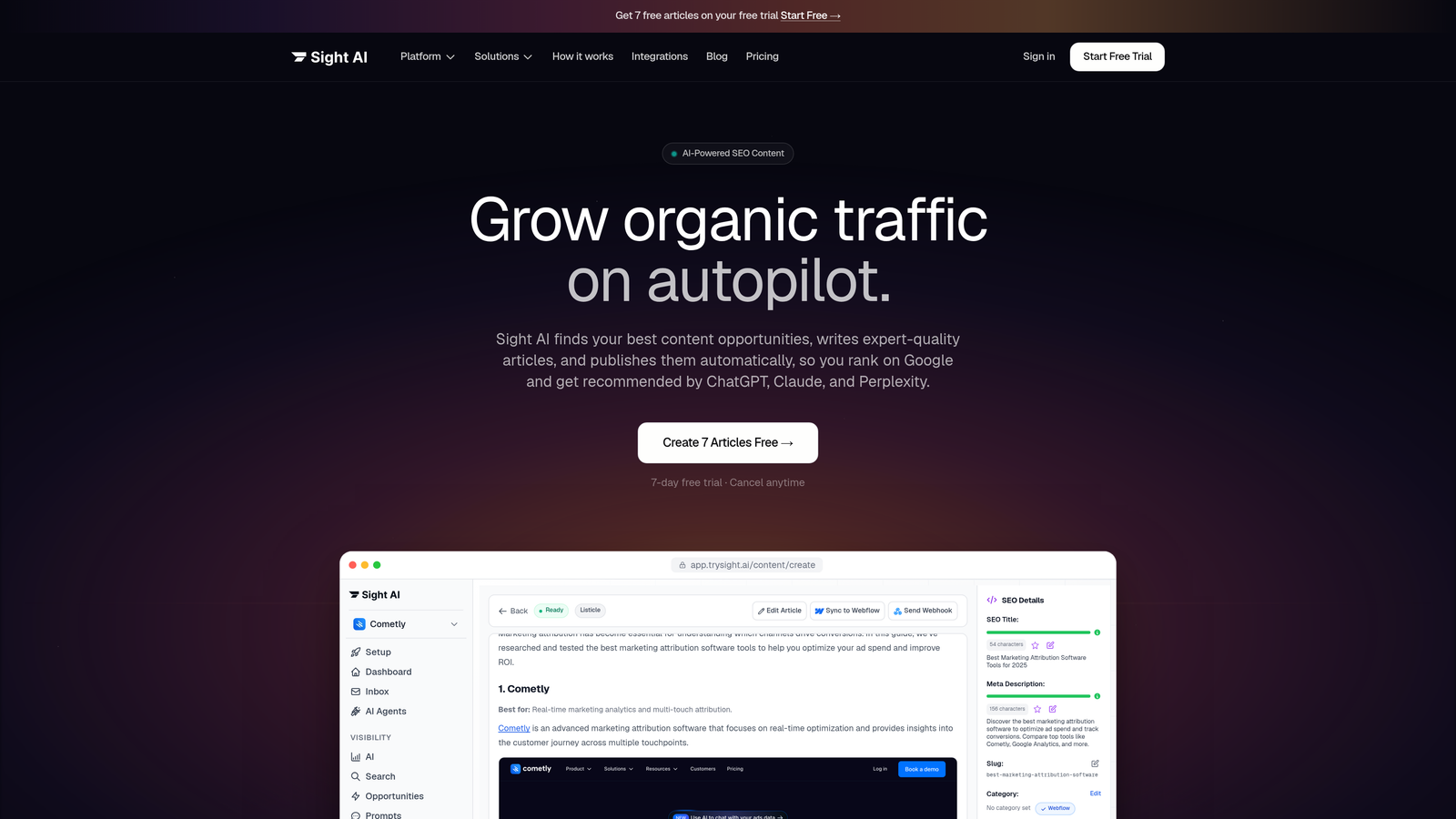
Sight AI is an all-in-one AI visibility and content platform that tracks brand mentions across AI models, generates SEO/GEO-optimized content, and automates website indexing via IndexNow.
Where This Tool Shines
Most visibility tools were built for the Google era. Sight AI was built for what comes after it. Its core differentiator is the AI visibility layer: it monitors how your brand is discussed across ChatGPT, Claude, Perplexity, and other leading AI platforms, giving you an AI Visibility Score alongside sentiment analysis and prompt tracking. This tells you not just whether your brand appears in AI answers, but how it's described and what queries trigger those mentions.
Beyond monitoring, Sight AI closes the loop by helping you act on what you find. Its 13+ specialized AI agents generate SEO and GEO-optimized articles, listicles, and guides. Autopilot Mode handles hands-off publishing, and IndexNow integration pushes new content to search engines faster than waiting for organic crawls. For teams that want a single platform covering AI visibility, content creation, and indexing, this is the only tool in this list that covers all three.
Key Features
AI Visibility Score: Tracks brand mentions across ChatGPT, Claude, Perplexity, and 3+ other AI platforms with sentiment analysis and prompt-level detail.
Prompt Tracking: Shows exactly which queries surface your brand in AI responses and which ones don't, revealing content gaps you can act on.
13+ AI Content Agents: Specialized agents for generating SEO/GEO-optimized listicles, guides, explainers, and more, each tuned to a specific content format.
Autopilot Mode: Hands-off content publishing that keeps your content calendar moving without manual intervention.
IndexNow Integration: Automatically submits new and updated content to search engines for faster discovery, paired with automated sitemap updates and CMS auto-publishing.
Best For
Sight AI is the right fit for marketers, founders, and agencies who are actively thinking about AI search visibility alongside traditional SEO. If you're asking "how does ChatGPT describe my brand?" and want to do something about the answer, this platform is built specifically for that problem. It's also a strong fit for content teams that want to scale production without scaling headcount.
Pricing
Paid plans available. Visit trysight.ai for current pricing details and plan options.
2. Semrush
Best for: Agencies and in-house SEO teams needing a comprehensive traditional SEO and competitive intelligence platform.
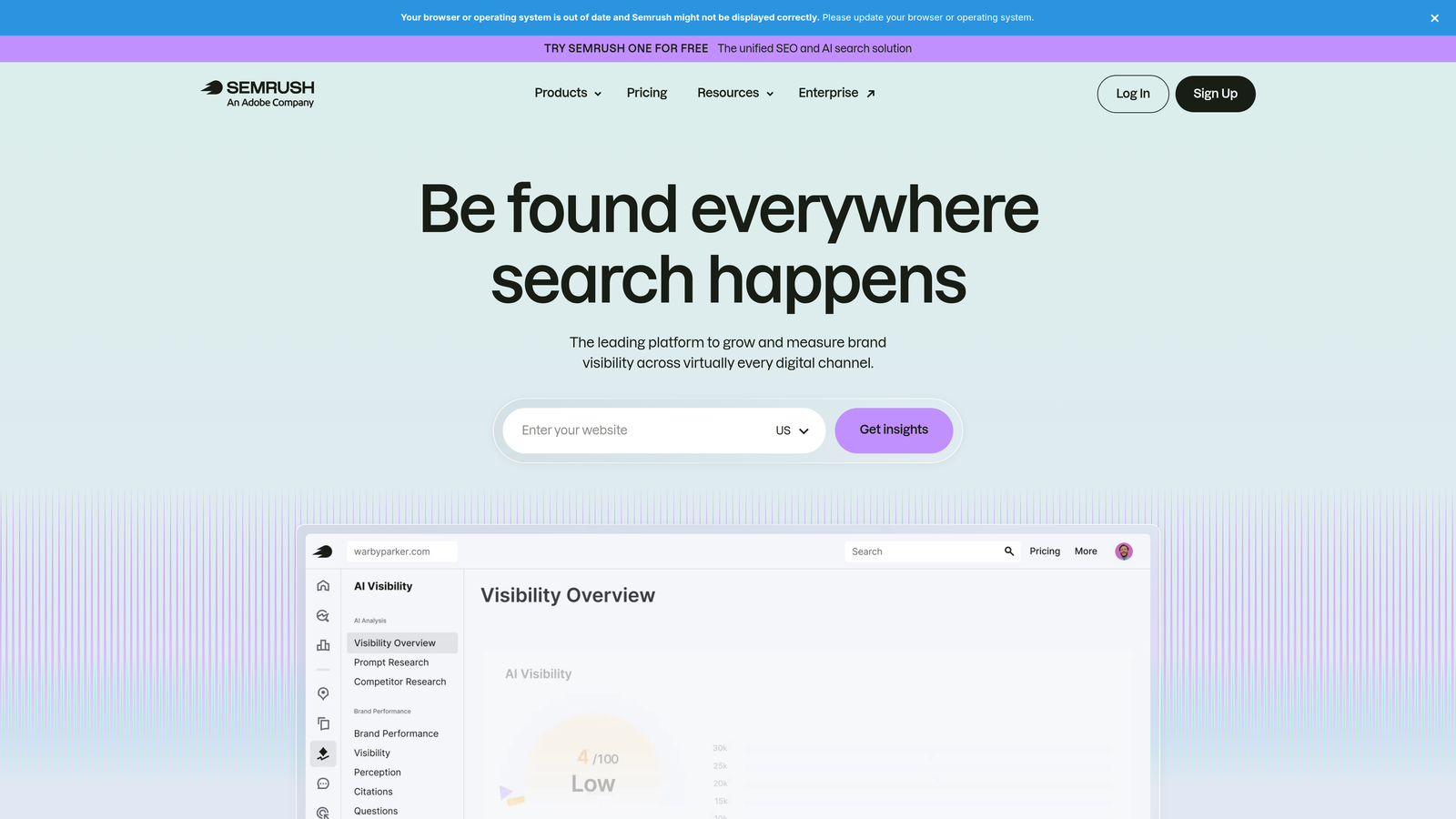
Semrush is one of the most widely used SEO and digital marketing platforms, offering keyword research, competitor analysis, backlink auditing, and brand monitoring.
Where This Tool Shines
Semrush has built one of the most complete traditional SEO toolsets available. Its competitive analysis capabilities are particularly strong: you can see which keywords a competitor ranks for, estimate their organic traffic, and identify backlink opportunities they're capitalizing on. For agencies managing multiple clients, the ability to pull this data at scale across different domains is genuinely useful.
The Brand Monitoring add-on extends Semrush's reach beyond pure SEO into web mention tracking, covering news sites, blogs, and forums. It's a solid addition, though it's worth noting this is an add-on rather than a core feature, and it doesn't extend to AI model monitoring.
Key Features
Keyword Rank Tracking: Historical rank data with position tracking across desktop and mobile, segmented by location and device.
Competitive Domain Analysis: Traffic estimates, keyword overlap analysis, and side-by-side domain comparisons for competitive benchmarking.
Backlink Auditing: Comprehensive backlink analysis with toxic link identification and link-building opportunity discovery.
Brand Monitoring Add-on: Tracks web mentions across news, blogs, and forums with basic sentiment context.
Content Marketing Toolkit: Topic research, content templates, and SEO writing assistance for content-driven visibility strategies.
Best For
Semrush is best suited for SEO professionals and agencies who need deep keyword and competitive data as their primary workflow. It's a strong anchor tool for traditional search visibility, and its breadth makes it useful across multiple team functions from SEO to content to PR.
Pricing
Starts at $139.95/month for the Pro plan. Higher-tier plans for agencies and enterprises are available at increased cost.
3. Ahrefs
Best for: SEO teams focused on backlink strategy, content gap analysis, and brand authority building.
Ahrefs is a powerful SEO toolset best known for its backlink index and Content Explorer, used for competitive analysis and brand authority building.
Where This Tool Shines
Ahrefs has earned its reputation primarily through the quality of its backlink data. Its index is large, frequently updated, and genuinely useful for understanding the link profiles of both your own site and your competitors. If backlink strategy is central to your visibility work, Ahrefs gives you the depth to do it properly.
Content Explorer is another standout feature. It lets you search for content by topic or keyword and see what's performing well across the web, which makes it useful for identifying brand mention opportunities and content gaps. The combination of backlink data and content discovery makes Ahrefs a strong tool for building brand authority through organic search.
Key Features
Backlink Database: Industry-leading backlink index with frequent updates, covering both linked and unlinked brand mentions.
Content Explorer: Discovers high-performing content by topic, useful for identifying brand mention opportunities and content gaps.
Keyword Explorer: Keyword research with SERP analysis, difficulty scores, and traffic potential estimates.
Site Audit: Technical SEO crawling to surface indexing issues, broken links, and on-page visibility problems.
Rank Tracker: Monitors keyword position changes over time across locations and devices.
Best For
Ahrefs is ideal for SEO practitioners who prioritize link building and competitive content analysis. It's particularly strong for teams doing in-depth competitor research or managing content-driven authority strategies at scale.
Pricing
Starts at $129/month for the Lite plan. Higher tiers unlock more data and user seats.
4. Brandwatch
Best for: Enterprise brands needing deep social listening, share-of-voice analysis, and reputation monitoring.
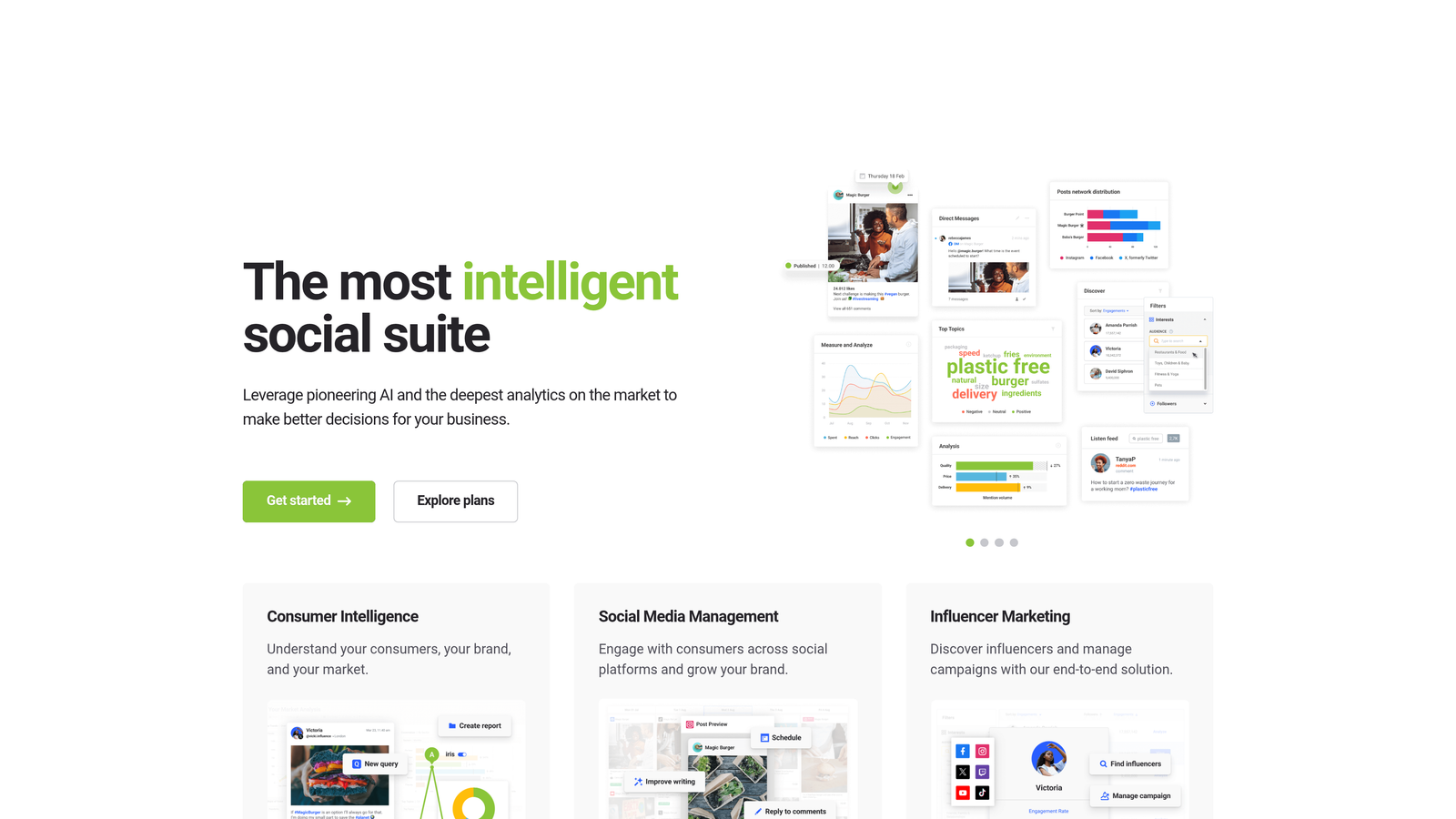
Brandwatch is an enterprise-grade social listening and brand intelligence platform that monitors brand mentions across social networks, news, blogs, and forums.
Where This Tool Shines
Brandwatch operates at a different scale than most monitoring tools. It ingests data from social media platforms, news sources, forums, and the broader web, then surfaces trends, sentiment shifts, and audience insights through customizable dashboards. For large brands managing global reputation or tracking campaign impact across channels, this level of data depth is genuinely valuable.
The crisis detection capability is worth highlighting. Brandwatch can surface sudden spikes in negative sentiment or mention volume, giving communications teams early warning before a reputational issue escalates. This makes it as much a risk management tool as a brand visibility tool.
Key Features
Real-Time Monitoring: Covers social media, news, blogs, and web sources with minimal delay for time-sensitive brand tracking.
Sentiment Analysis: Classifies mentions as positive, neutral, or negative, with trend tracking over time.
Share-of-Voice Reporting: Compares your brand's mention volume and sentiment against competitors in the same conversation.
Crisis Detection: Alerts for unusual spikes in mention volume or sentiment shifts that may signal reputational risk.
Custom Dashboards: Configurable reporting views for brand health, campaign performance, and audience insights.
Best For
Brandwatch is best suited for enterprise marketing and communications teams with dedicated budget for brand intelligence. It's particularly valuable for organizations where brand reputation management is a strategic priority rather than a secondary concern.
Pricing
Enterprise pricing model. Contact Brandwatch directly for a custom quote based on your data and user requirements.
5. Surfer SEO
Best for: Content teams optimizing blog posts and landing pages to rank against top competitors.
Surfer SEO is a content optimization platform that scores and improves on-page content against top-ranking competitors using NLP-based signals.
Where This Tool Shines
Surfer SEO's strength is its content editor. As you write or paste in content, it scores your piece in real time against the pages currently ranking for your target keyword. It surfaces NLP-based term recommendations, heading structure guidance, and word count benchmarks derived from what's actually working in the SERP. This takes a lot of the guesswork out of on-page optimization.
The Content Planner feature adds a strategic layer by helping teams build topical clusters rather than optimizing individual pages in isolation. For brands trying to establish topical authority in a niche, this kind of cluster-based planning can meaningfully improve how search engines perceive the depth of your expertise.
Key Features
Real-Time Content Score: Scores content against top-ranking pages as you write, with live recommendations for terms and structure.
NLP Keyword Recommendations: Surfaces semantically related terms and topics that top-ranking pages include, beyond just primary keywords.
SERP Analyzer: Breaks down ranking factors for any keyword, including word count, backlinks, and on-page signals.
Content Planner: Generates topical cluster maps to guide a comprehensive content strategy around a core topic.
Integrations: Connects directly with Google Docs and WordPress for in-workflow optimization without switching tools.
Best For
Surfer SEO is the right choice for content writers, editors, and SEO content teams who want clear, actionable guidance for improving individual pieces of content. It's less suited for technical SEO or backlink work, but for pure on-page content optimization, it's one of the most focused tools available.
Pricing
Starts at $99/month for the Essential plan. Higher tiers unlock more articles per month and additional team seats.
6. Google Search Console
Best for: Any brand that has a website and wants first-party data on how Google sees and indexes their content.
Google Search Console is Google's free, first-party tool for monitoring how your site performs in Google Search, including indexing status, search queries, and Core Web Vitals.
Where This Tool Shines
There's no substitute for first-party data, and that's exactly what Search Console provides. While third-party tools estimate traffic and rankings, Search Console shows you the actual clicks, impressions, and average positions Google is recording for your pages. This makes it the most reliable baseline tool for understanding your organic search visibility.
The indexing and coverage reports are equally valuable. You can see exactly which pages Google has indexed, which ones have errors, and why certain pages might be excluded from search results. For brands publishing content regularly, the URL Inspection tool and sitemap submission features help ensure new content gets discovered without unnecessary delays.
Key Features
Search Performance Reports: Actual clicks, impressions, CTR, and average position data segmented by query, page, country, and device.
Index Coverage Reporting: Shows which pages are indexed, which have errors, and which are excluded, with actionable error descriptions.
Core Web Vitals: Page experience signals including loading performance, interactivity, and visual stability, all of which influence search rankings.
URL Inspection Tool: Checks the indexing status of individual URLs and allows you to request indexing for new or updated pages.
Sitemap Submission: Submit XML sitemaps directly to Google to guide crawling and improve content discoverability.
Best For
Google Search Console is a non-negotiable baseline tool for any brand with a web presence. It should be the first tool set up and the last one turned off. It doesn't replace paid SEO tools, but it provides ground-truth data that makes every other tool more useful.
Pricing
Completely free. No paid tiers or usage limits.
7. Moz Pro
Best for: Teams that value Domain Authority metrics and brands with a local SEO component to their visibility strategy.
Moz Pro is an established SEO platform with proprietary Domain Authority metrics, keyword tracking, site auditing, and local SEO tools for location-based brand visibility.
Where This Tool Shines
Moz's Domain Authority metric has become one of the most widely recognized signals in the SEO industry. While it's a Moz-proprietary score rather than a Google ranking factor, it's broadly used as a proxy for site authority when evaluating link building opportunities, partnership potential, and content distribution targets. If your team or clients rely on DA as a benchmark, Moz Pro is where that data lives.
Moz Local is the other area where Moz differentiates itself. For businesses with physical locations or service areas, Moz Local manages listings across directories and data aggregators, helping ensure consistent NAP (name, address, phone) data that supports local search visibility. This is a capability that Semrush and Ahrefs don't replicate as directly.
Key Features
Domain Authority and Page Authority: Moz's proprietary authority metrics, widely used as benchmarks for site and page-level credibility.
Keyword Explorer: Keyword research with SERP feature tracking, showing where featured snippets, local packs, and other features appear.
Link Explorer: Backlink analysis with spam score identification and link building opportunity discovery.
Moz Local: Manages local business listings across directories to support location-based brand visibility.
Site Crawl: Technical SEO auditing to identify crawl errors, duplicate content, and on-page visibility issues.
Best For
Moz Pro is a solid choice for local businesses, multi-location brands, and teams that work with clients who benchmark against Domain Authority. It's a reliable, approachable platform, though teams needing the deepest competitive data may find Semrush or Ahrefs offer more breadth at a similar price point.
Pricing
Starts at $99/month for the Starter plan. Higher tiers unlock more campaigns, tracked keywords, and crawl volume.
8. Mention
Best for: Startups and small teams that need real-time brand mention monitoring without enterprise pricing.
Mention is a real-time brand monitoring tool that tracks mentions across social media, news, blogs, and the web, accessible for startups and small teams.
Where This Tool Shines
Mention occupies a practical middle ground between free Google Alerts and enterprise platforms like Brandwatch. It monitors brand mentions across social networks, news sites, blogs, and forums in real time, then surfaces them in a clean, manageable interface. For smaller teams that need to stay on top of their brand reputation without dedicating significant budget, it delivers meaningful coverage at a reasonable cost.
The competitor monitoring feature adds useful context. You can track mentions of competing brands alongside your own, which gives you a rough share-of-voice picture without needing enterprise-level analytics. Integrations with Slack and Hootsuite make it easy to route alerts into existing team workflows.
Key Features
Real-Time Mention Alerts: Immediate notifications when your brand is mentioned across web, social, news, and blog sources.
Sentiment Tracking: Classifies mentions as positive, neutral, or negative to surface reputation trends over time.
Competitor Monitoring: Tracks mentions of competitor brands alongside your own for basic share-of-voice context.
Shareable Reports: Clean, exportable reports for sharing brand monitoring data with clients or stakeholders.
Integrations: Connects with Slack, Hootsuite, and other tools to route mentions into existing team workflows.
Best For
Mention is a strong fit for founders, early-stage startups, and small marketing teams that want reliable brand monitoring without committing to enterprise pricing. It's a focused tool that does one thing well: tells you when and where your brand is being talked about.
Pricing
Free plan available with limited alerts. Paid plans start at $41/month with expanded monitoring volume and features.
9. Clearscope
Best for: Content teams at growing and enterprise companies focused on topical authority and content quality.
Clearscope is a content optimization platform focused on topical authority and NLP-based content grading, designed for content teams at growing and enterprise companies.
Where This Tool Shines
Clearscope's approach to content optimization is thorough and editor-friendly. Its NLP-powered grading system analyzes top-ranking content for a given keyword and produces a content brief that includes the terms, topics, and depth of coverage needed to compete. The result is a clear, actionable target for writers, with a letter grade that updates as they write.
Where Clearscope differentiates from tools like Surfer SEO is in its emphasis on content quality and readability alongside SEO signals. It's designed to help content teams produce pieces that are genuinely comprehensive and well-written, not just keyword-dense. The content inventory feature also makes it useful for auditing and improving existing content, not just creating new pieces.
Key Features
NLP Content Grading: Scores content based on topical coverage and keyword depth compared to top-ranking competitors, with a clear letter-grade system.
Readability Scoring: Combines SEO optimization with readability assessment to keep content accessible to human readers.
Google Docs and WordPress Integrations: Allows writers to optimize content directly in their preferred editing environment without switching tools.
Content Inventory Management: Tracks existing pages and surfaces optimization opportunities for content that's already published.
Team Collaboration: Shared content briefs and team workflows designed for larger content operations with multiple contributors.
Best For
Clearscope is best suited for content teams at mid-size to enterprise companies where content quality and topical authority are strategic priorities. Its pricing reflects its target market, making it less practical for solo creators or small teams but well-suited for organizations producing content at scale.
Pricing
Starts at $199/month for the Essentials plan. Higher tiers are available for larger teams and higher content volume.
Which Tool Is Right for You
The honest answer is that no single tool covers every layer of brand visibility in 2026. The most effective stacks combine tools that address different visibility dimensions: AI search, traditional organic search, brand mentions, and content optimization.
Here's a quick way to think about it by situation:
Solo founders and early-stage teams: Start with Google Search Console (free, essential) and Sight AI to cover the AI visibility layer that traditional tools miss. Add Mention if brand monitoring is a priority. This gives you coverage across the most critical channels without significant overhead.
Growing marketing teams: Sight AI for AI visibility and content generation, paired with Semrush or Ahrefs for deep keyword and competitive data, gives you a strong foundation. Add Surfer SEO or Clearscope if your content volume warrants a dedicated optimization layer.
Agencies and enterprise teams: The full picture likely includes Sight AI for AI visibility tracking, Semrush or Ahrefs for SEO intelligence, Brandwatch for social listening and reputation management, and one of the content optimization tools depending on your production workflow.
The most important gap to close right now is AI search visibility. Most brands have some form of traditional SEO coverage, but very few are actively tracking how AI models describe them, what prompts surface their brand, and where the gaps are. That's the layer that Start tracking your AI visibility today and see exactly where your brand appears across ChatGPT, Claude, Perplexity, and other leading AI platforms. Stop guessing how AI models talk about your brand and start building visibility where the next generation of search is already happening.