AI-powered search platforms have fundamentally changed how people discover brands. When someone asks ChatGPT "what's the best project management tool for remote teams?" or queries Perplexity for software recommendations, the brands that appear in those synthesized answers are capturing attention that never touches a traditional search results page.
The challenge for marketers and founders is real: your Google rankings tell you nothing about your AI visibility. Traditional SEO tools weren't built for this. A new category of purpose-built platforms has emerged to help brands monitor how AI models reference them, optimize content for generative engine optimization (GEO), and publish at the scale needed to stay competitive in AI search.
Here are the top tools available in 2026 for building and tracking your brand presence across AI platforms, from all-in-one monitoring and content platforms to specialized visibility trackers and AI writing tools.
1. Sight AI
Best for: Brands that want to monitor AI visibility and generate GEO-optimized content from a single platform.
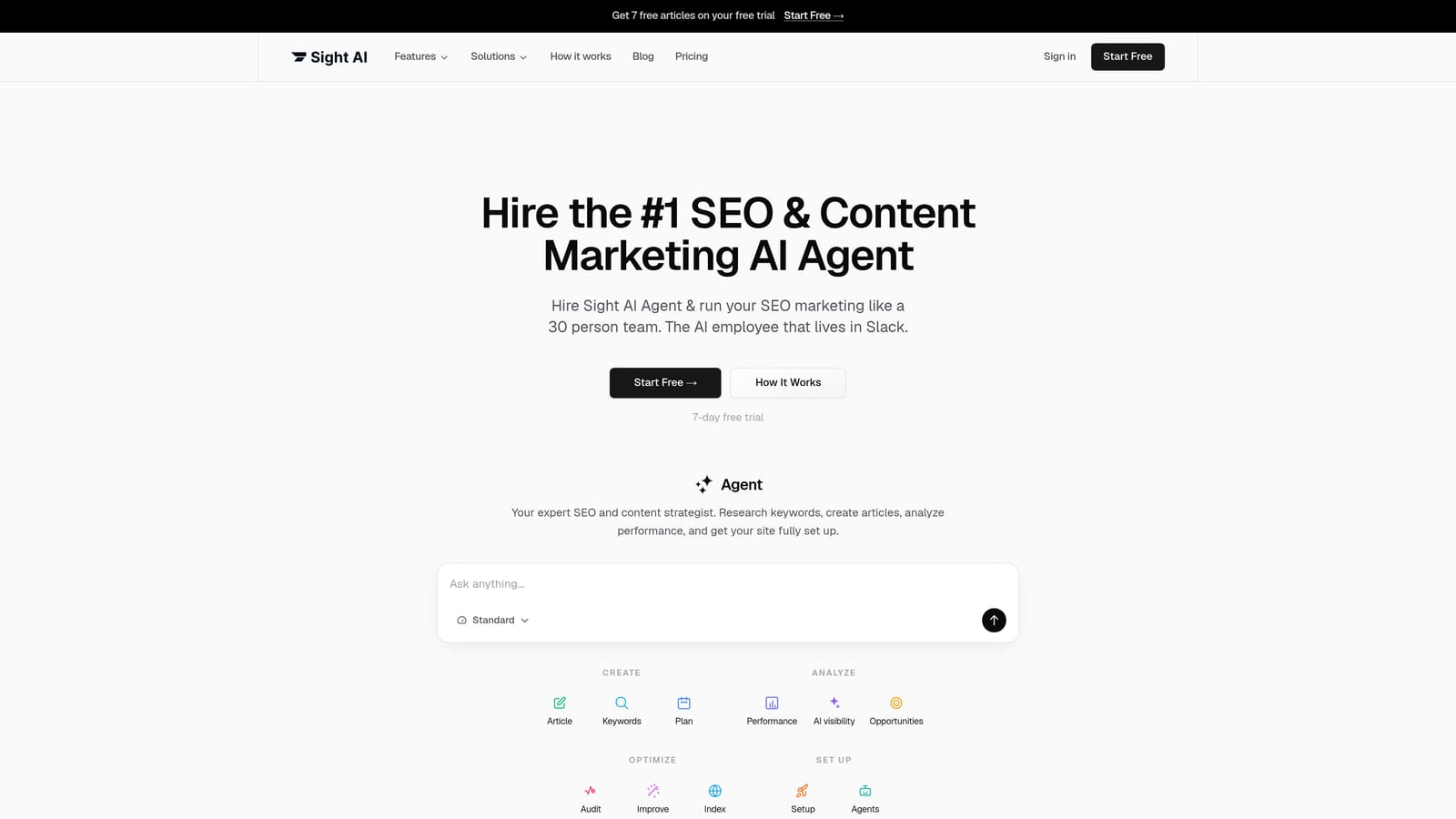
Sight AI is an all-in-one platform that tracks how AI models reference your brand across 6+ platforms and generates SEO/GEO-optimized content to improve those mentions.
Where This Tool Shines
What sets Sight AI apart from every other tool on this list is that it addresses both sides of the AI visibility problem: understanding where you stand today and doing something about it. Most platforms make you choose between monitoring and content creation. Sight AI combines them into a single workflow, so insights from your AI Visibility Score can directly inform the content you publish next.
The Autopilot Mode is particularly valuable for lean teams. Rather than manually coordinating research, writing, and publishing, the platform's 13+ specialized AI agents handle listicles, guides, and explainers optimized for GEO. Pair that with IndexNow-powered indexing and CMS auto-publishing, and you have a near-complete pipeline from brand tracking to content discovery.
Key Features
AI Visibility Score: Tracks how your brand is mentioned across ChatGPT, Claude, Perplexity, and 3+ other AI models, with sentiment analysis to surface whether those mentions are positive, neutral, or negative.
Prompt Tracking: Monitors how AI models respond to both category-level queries (like "best tools for X") and brand-specific questions, giving you a clear picture of your share of voice in AI search.
13+ Specialized AI Agents: A content writer built specifically for GEO, capable of generating listicles, how-to guides, and explainer articles that are structured to earn AI citations.
Autopilot Mode: Near-hands-free content publishing that lets teams maintain publishing velocity without manual oversight at every step.
IndexNow Integration: Automated sitemap updates and IndexNow-powered indexing so your newly published content gets discovered by search engines and AI crawlers faster.
Best For
Sight AI is the strongest fit for marketers, founders, and agencies who want a unified platform rather than stitching together separate monitoring and content tools. It's especially well-suited to teams running content-driven organic growth strategies who also need visibility into how AI models are representing their brand.
Pricing
Paid plans are available. Visit trysight.ai for current pricing details and plan options.
2. Profound
Best for: Enterprise marketing teams that need deep analytics on AI-generated brand narratives.
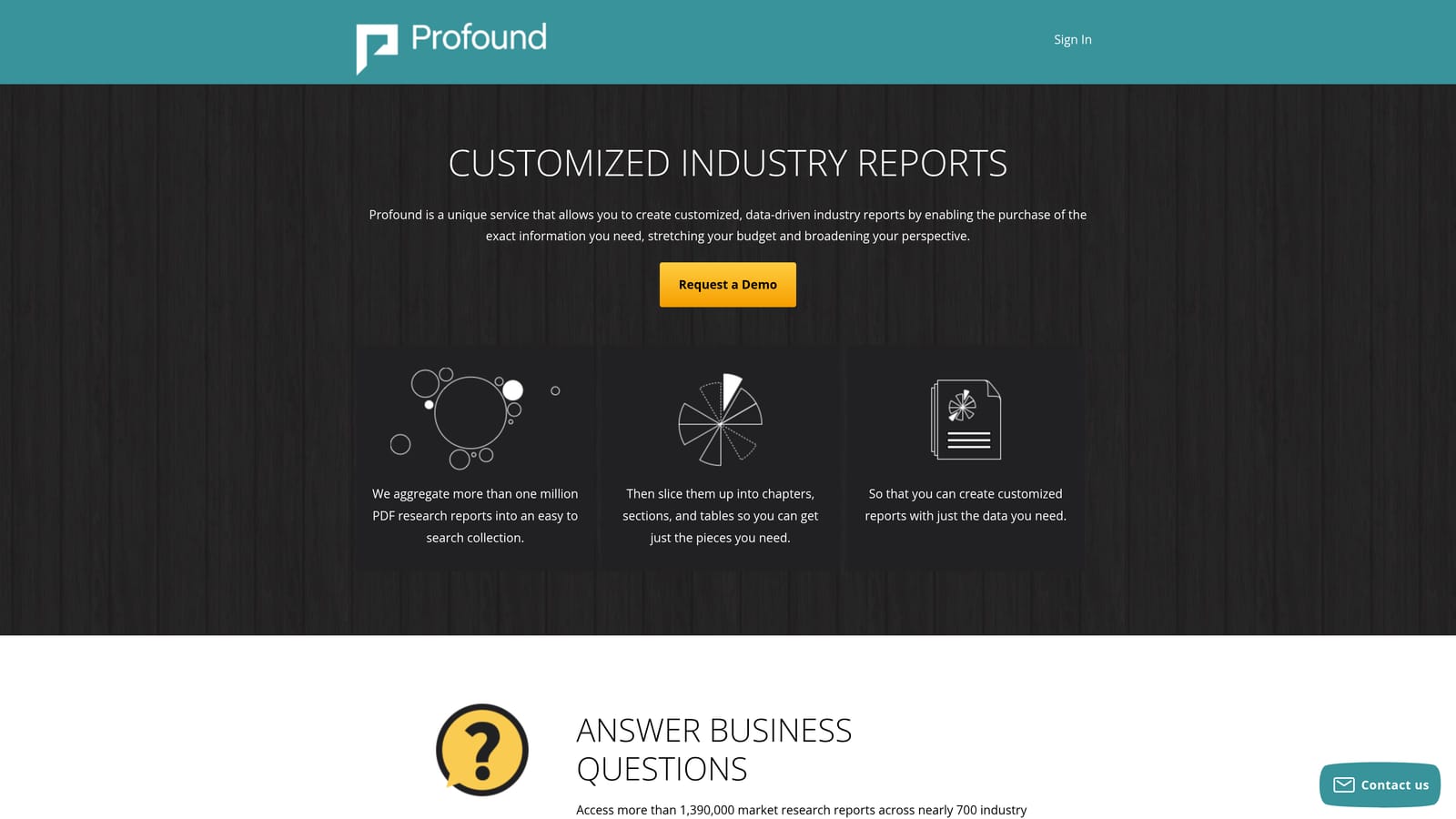
Profound is an enterprise-focused AI search intelligence platform built to help brands understand how AI-generated responses represent their brand, products, and category across major AI platforms.
Where This Tool Shines
Profound is built for scale and depth. For larger organizations where brand consistency across AI-generated responses is a strategic priority, the platform provides the kind of detailed analytics that enterprise marketing and brand management teams need to make informed decisions. It goes beyond surface-level mention tracking to analyze the narratives AI models construct around your brand.
The category-level AI share of voice reporting is particularly useful for brand strategists who need to understand competitive positioning in AI search, not just whether their brand appears but how it appears relative to others in the space.
Key Features
Brand Monitoring Across AI Search: Tracks how major AI platforms represent your brand across a range of query types and topics.
AI-Generated Brand Narrative Analytics: Goes deeper than mention counts to analyze the context and framing of how AI models describe your brand.
Category-Level Share of Voice: Reports on your brand's competitive standing within AI-generated responses for your product category.
Enterprise-Grade Reporting: Designed for marketing and brand management teams that need structured, shareable insights for stakeholder reporting.
Best For
Profound is best suited to enterprise marketing teams, brand managers, and large agencies managing brand reputation at scale. It's less focused on content creation and more on intelligence and reporting, making it a strong fit for organizations where brand monitoring is its own dedicated function.
Pricing
Enterprise pricing applies. Contact Profound directly for plan details and custom quotes.
3. Promptwatch
Best for: Teams focused on competitive intelligence around specific AI prompts and brand queries.
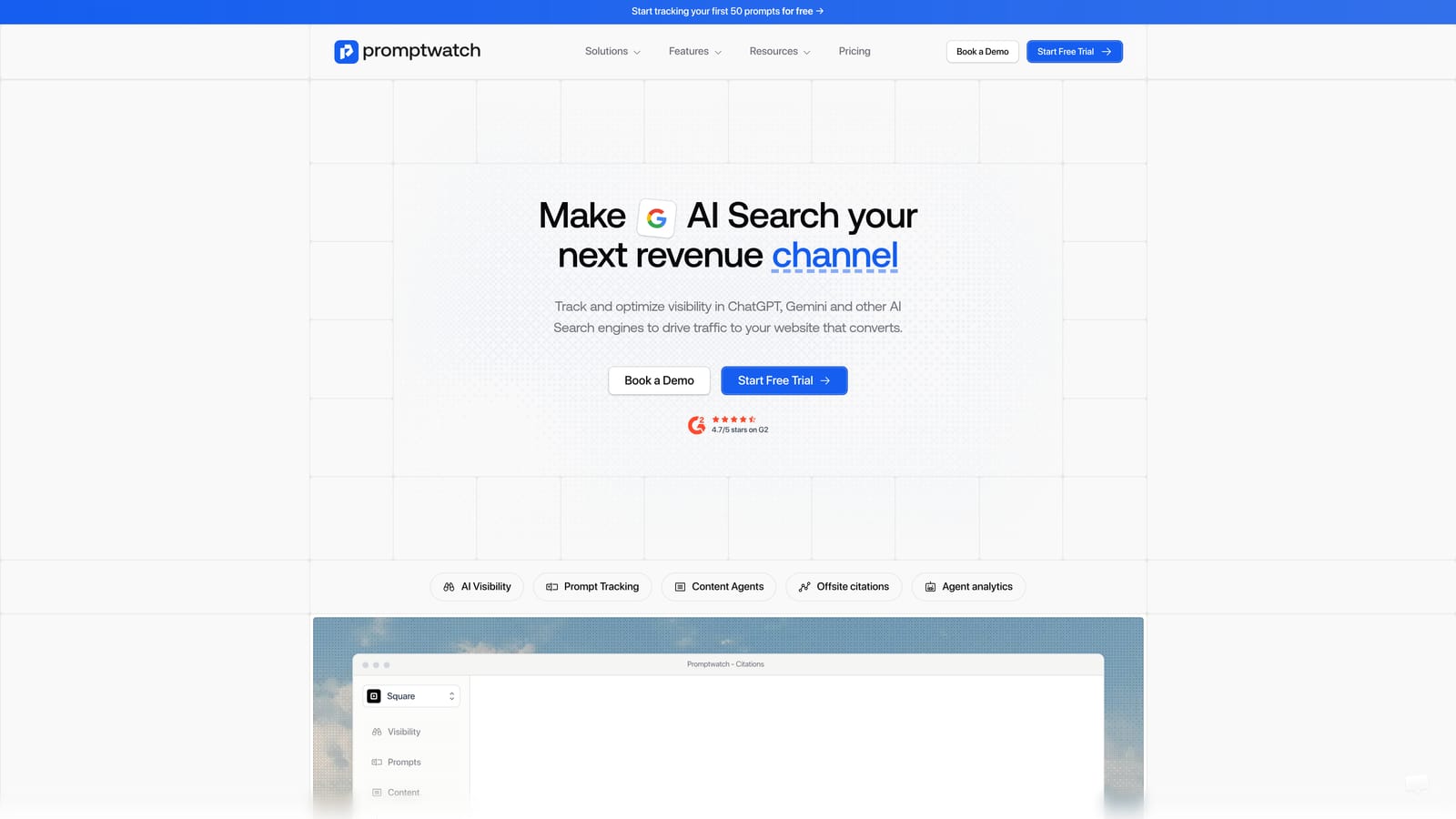
Promptwatch is a specialized AI monitoring tool focused on tracking how AI models respond to specific prompts related to your brand or competitive category.
Where This Tool Shines
Promptwatch takes a granular approach to AI visibility. Rather than broad brand monitoring, it zeroes in on prompt-level tracking: what exactly does an AI model say when a user asks a specific question in your niche? This level of specificity makes it particularly useful for competitive intelligence work, where understanding how AI models position your competitors can inform your own content and positioning strategy.
The alerts feature is a practical differentiator. When AI responses about your brand shift, whether due to new training data, updated model behavior, or competitive changes, Promptwatch surfaces those changes so your team can respond proactively rather than discovering a shift months later.
Key Features
Prompt-Level Tracking: Monitors AI model responses to specific prompts across major platforms, giving granular visibility into what AI says about your brand and category.
Competitive Intelligence: Surfaces how AI models reference and position your competitors, helping you identify gaps and opportunities in AI search coverage.
Category and Brand Query Monitoring: Covers both broad category-level queries and brand-specific questions to give a complete picture of AI visibility.
Response Change Alerts: Notifies your team when AI-generated responses about your brand change, enabling faster reaction to shifts in AI representation.
Best For
Promptwatch works well for SEO teams, content strategists, and competitive intelligence professionals who want detailed, prompt-specific data on AI model behavior. It's more narrowly focused on the monitoring side, so teams also needing content creation tools will want to pair it with another solution.
Pricing
Visit Promptwatch directly for current plan details and pricing.
4. Peec
Best for: SEO and marketing teams benchmarking AI search share of voice against competitors over time.
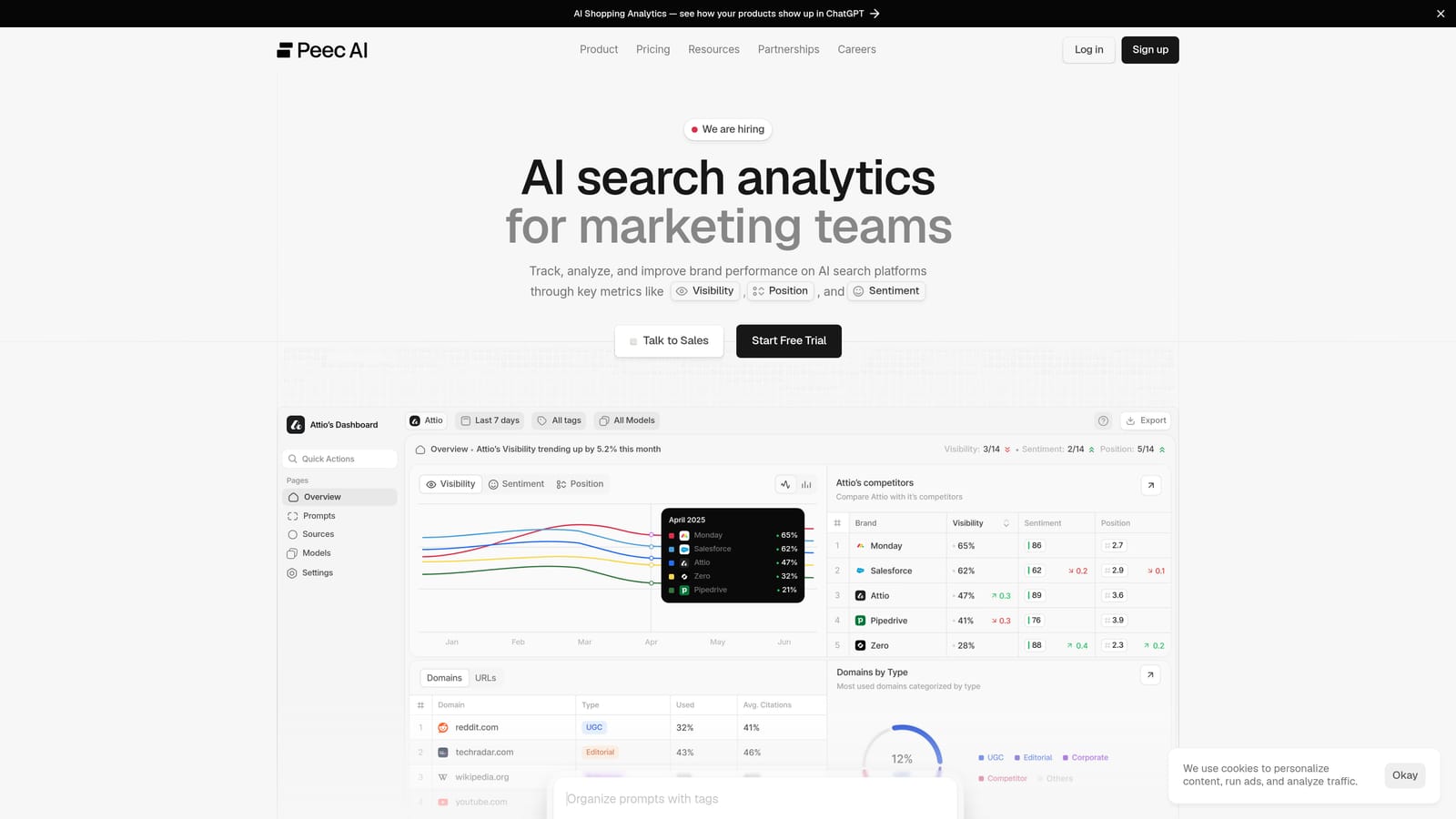
Peec is an AI visibility measurement platform that benchmarks your brand's presence in AI-generated search results against competitors, helping teams track share of voice over time.
Where This Tool Shines
Peec's strength is in competitive benchmarking. If your primary question is "how does our AI visibility compare to our top competitors?" Peec is built to answer that directly. The platform focuses on quantifying AI search share of voice in a way that translates naturally into the reporting frameworks SEO and marketing teams already use.
The trend tracking capability adds longitudinal value. Rather than a point-in-time snapshot, Peec lets teams observe how brand mentions in AI responses evolve, which is critical for measuring whether content and optimization efforts are actually moving the needle in AI search.
Key Features
AI Search Share of Voice Benchmarking: Quantifies your brand's presence in AI-generated responses relative to competitors in your category.
Competitor Visibility Comparison: Side-by-side comparison of brand visibility across AI platforms, making competitive gaps immediately visible.
Trend Tracking: Monitors how brand mentions in AI responses change over time, supporting ongoing measurement of optimization efforts.
SEO-Friendly Reporting: Reporting formats designed to integrate with the workflows and metrics that SEO and marketing teams already track.
Best For
Peec is a strong fit for in-house SEO teams and digital marketing managers who want to add AI visibility metrics to their existing reporting. It's focused on measurement and benchmarking rather than content creation, so it works best as part of a broader toolkit.
Pricing
Visit Peec directly for current pricing and plan options.
5. AirOps
Best for: Content teams and agencies building scalable AI-assisted content production pipelines.
AirOps is a workflow automation platform for AI-assisted content operations, helping teams build scalable pipelines for producing and publishing GEO-optimized content at volume.
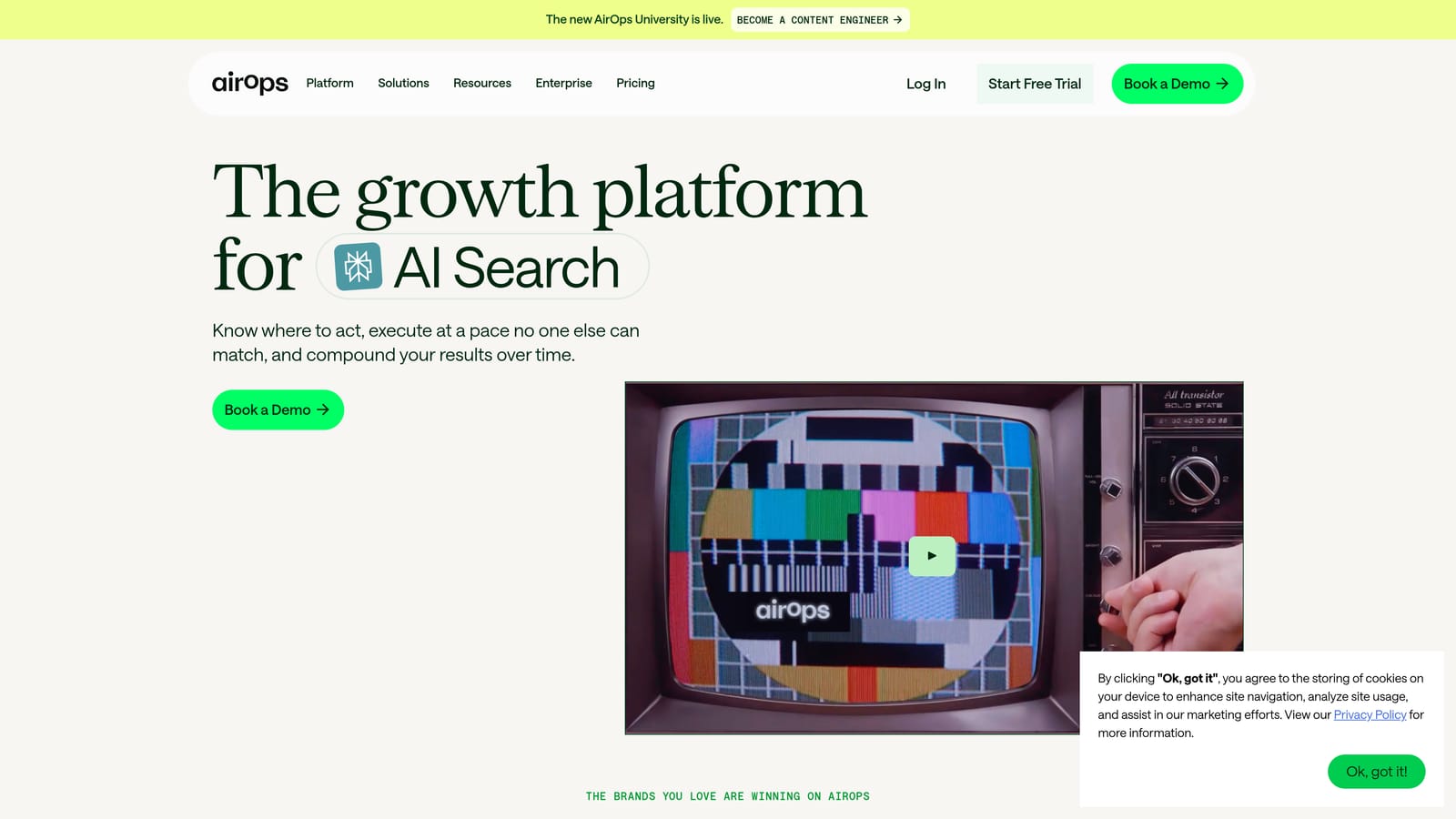
Where This Tool Shines
AirOps approaches the AI visibility challenge from the content production angle. The premise is straightforward: the more high-quality, well-structured content your brand publishes at scale, the more surface area you create for AI models to cite and reference you. AirOps makes that volume achievable by letting teams build repeatable AI workflows rather than handling each piece of content manually.
For agencies managing content operations across multiple clients, the workflow builder is particularly powerful. You can create standardized pipelines that maintain quality and consistency while dramatically increasing output, which is essential for content-driven GEO strategies that require sustained publishing velocity.
Key Features
AI Workflow Builder: A visual interface for constructing multi-step AI content production pipelines tailored to your team's specific process.
Scalable Content Operations: Designed to support high-volume content production for agencies and in-house teams running large-scale SEO and GEO strategies.
CMS and Publishing Integrations: Connects to content management systems and publishing platforms to reduce manual handoff steps in the content workflow.
Large-Volume Strategy Support: Built to handle the kind of content throughput that meaningful AI visibility improvement often requires over time.
Best For
AirOps is best suited to content agencies, large in-house content teams, and operations-focused marketers who need to systematize AI content production. It's less focused on AI visibility monitoring and more on the production side of the equation.
Pricing
Tiered plans are available. Visit AirOps for current pricing details.
6. Writesonic
Best for: Marketers and small teams looking for an accessible AI writing tool with built-in SEO features.
Writesonic is a broad AI writing platform with built-in SEO features, supporting content generation strategies that can improve brand presence in AI search through consistent, optimized publishing.
Where This Tool Shines
Writesonic lowers the barrier to entry for AI-assisted content creation. It's not purpose-built for GEO or AI visibility tracking, but it gives marketers and small teams a capable, accessible tool for producing SEO-optimized articles, blog posts, and landing pages at a pace that would be difficult to sustain manually. For brands just beginning to build their content foundation, that consistency matters.
The keyword-informed content planning features help ensure that published content targets the right topics, which indirectly supports AI visibility by creating well-structured, authoritative content that AI models are more likely to reference when answering related queries.
Key Features
AI Article and Blog Generation: Produces long-form content with SEO optimization built into the generation process, covering structure, headings, and keyword usage.
Keyword-Informed Content Planning: Helps teams identify and target relevant topics to build topical authority over time.
Multiple Content Formats: Supports a range of content types including long-form articles, landing pages, and marketing copy.
Accessible Interface: Designed with a relatively low learning curve, making it a practical option for solo marketers and small teams without dedicated content operations resources.
Best For
Writesonic is a good fit for solo founders, small marketing teams, and early-stage brands that need to start building content volume without a large budget or complex workflow setup. Teams specifically focused on AI visibility tracking will need to pair it with a dedicated monitoring tool.
Pricing
A free tier is available. Paid plans start at approximately $16/month, though pricing changes regularly. Verify current rates on Writesonic's website.
Which Tool Is Right for Your Team
The right choice here depends heavily on where you are in your AI visibility journey and what your team actually needs to move forward.
If you're a solo founder or small marketing team just starting to think about AI visibility, Writesonic gives you an accessible entry point for building content volume. AirOps is the better choice once you're ready to systematize that production into repeatable, scalable workflows.
For teams whose primary need is competitive intelligence and monitoring, Promptwatch, Peec, and Profound each serve distinct segments. Promptwatch excels at granular prompt-level tracking. Peec focuses on share of voice benchmarking over time. Profound is built for enterprise teams that need deep narrative analytics and structured reporting for larger organizations.
The critical distinction worth noting: most tools on this list solve one side of the problem. The monitoring tools tell you where you stand. The content tools help you produce more. Very few platforms bridge that gap.
Sight AI is the only platform on this list that combines AI visibility monitoring, GEO-optimized content generation, and automated indexing in a single workflow. For marketers and agencies who want to understand their AI visibility and act on it without managing multiple disconnected tools, that integration is a meaningful practical advantage.
AI visibility is a new discipline, and the brands building systematic approaches to it now will have a compounding advantage as AI search continues to grow. The tools exist. The question is whether you're using them.
Stop guessing how AI models like ChatGPT and Claude talk about your brand. Start tracking your AI visibility today and see exactly where your brand appears across top AI platforms, with the content engine to improve those mentions over time.