The best AI analytics platforms for tracking brand citations in 2026 are Sight AI, Promptwatch, Profound and Peec. They run your buyers' prompts through models like ChatGPT, Claude and Perplexity and record whether your brand is named, how it is framed, and which source URLs the model cites. AirOps and Writesonic do not monitor citations. They handle the production side: creating the content that earns citations in the first place.
Traditional backlink monitoring only covers part of this. This list compares each tool on AI model coverage, citation versus mention reporting, sentiment analysis, competitor benchmarking, multi-client support for agencies, and pricing transparency. A comparison table and a short guide to the core metrics follow the reviews.
1. Sight AI
Best for: All-in-one AI citation tracking, content generation, and rapid indexing
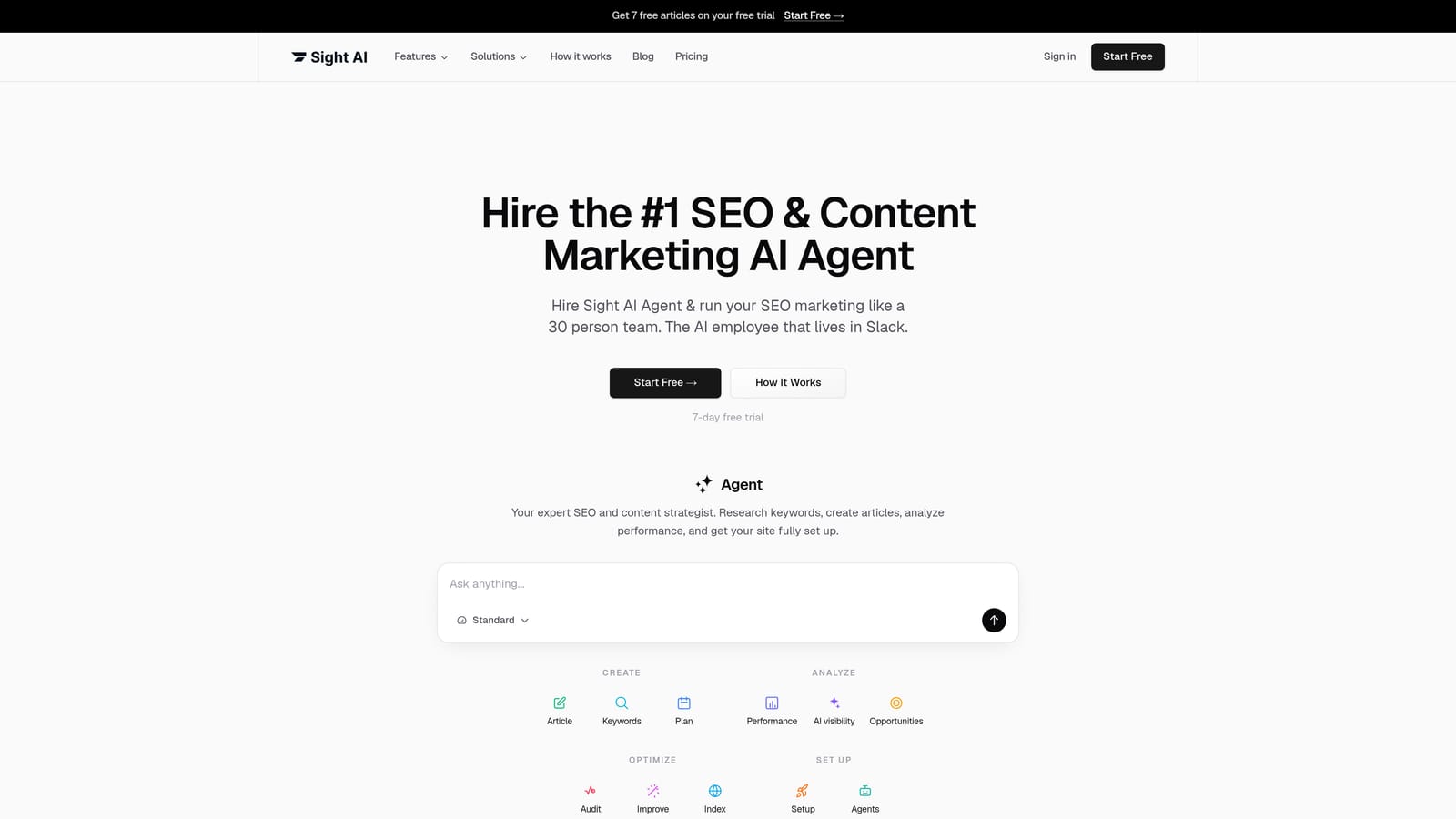
Sight AI is an all-in-one AI visibility and content platform. It tracks brand citations across 6+ AI models, generates SEO/GEO-optimized content, and speeds up indexing through IndexNow integration.
Where This Tool Shines
Most citation tracking tools stop at monitoring. Sight AI covers the full loop:
- Find where your brand is mentioned, or missing.
- Generate content designed to earn more citations.
- Publish that content with automated indexing.
It was built for AI search from the start, not adapted from an older SEO tool.
The AI Visibility Score gives you one trackable metric for how prominently your brand appears across platforms like ChatGPT, Claude and Perplexity. Prompt tracking for AI assistants shows which queries trigger brand mentions and which leave you invisible. That makes it straightforward to decide which content to work on first.
Key Features
AI Visibility Score: A single, sentiment-aware score that tracks your brand's presence across 6+ AI platforms at once.
Prompt Tracking: Shows which user queries trigger brand mentions, so you can find and close specific visibility gaps.
13+ AI Content Agents: Specialized agents that write listicles, guides and explainers optimized for both traditional SEO and generative engine optimization (GEO).
Autopilot Mode: Automates content publishing so your pipeline keeps running without constant manual work.
IndexNow Integration: Submits new content to search engines for faster discovery and updates sitemaps automatically.
Best For
Marketers and founders who want one platform for AI visibility monitoring, content creation and indexing. It is especially strong for teams that need to act on citation gaps quickly, not just report on them. Agencies managing several client brands benefit from the structured reporting and automation.
Pricing
Multiple tiers are available. Check trysight.ai for current pricing, since plans are updated regularly as new features ship.
2. Promptwatch
Best for: Prompt-level monitoring of brand mentions in AI-generated responses
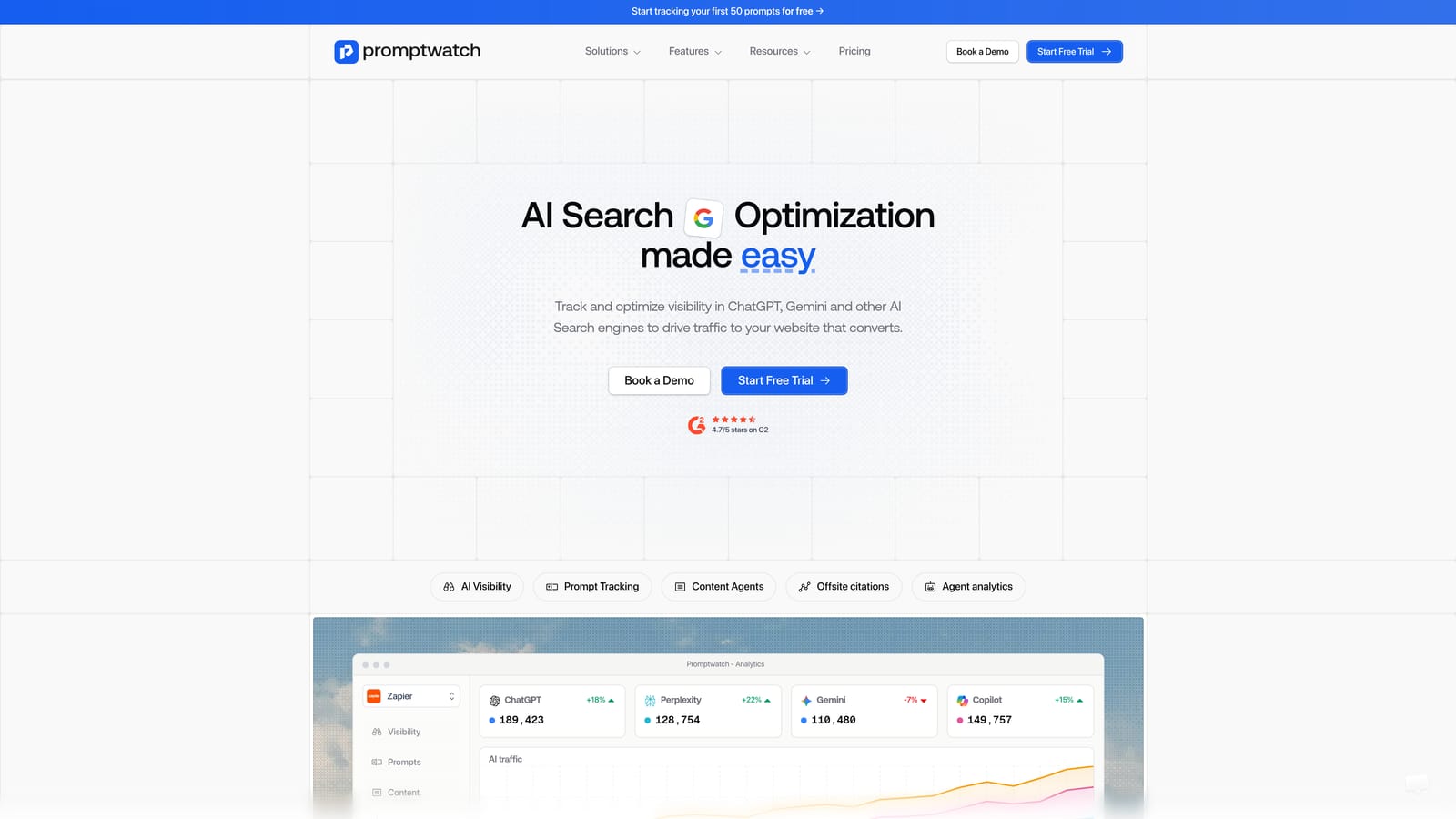
Promptwatch is a prompt-level AI monitoring tool. It tracks how AI models respond to brand-relevant queries, showing where your brand appears, how it is framed, and which prompts leave you out.
Where This Tool Shines
Promptwatch goes to a level of detail most monitoring tools skip. Instead of only flagging that your brand was mentioned, it ties each mention to the specific prompt that triggered it. That matters because a prompt that surfaces your competitors but not you is a ready-made content brief.
The alert system is useful for brands in fast-moving categories. When your presence in AI answers changes, for better or worse, you get notified right away instead of finding out weeks later in a quarterly review.
Key Features
Prompt-Level Tracking: Maps brand mentions to the specific queries that triggered them across major AI models.
Brand Mention Detection: Identifies when and how your brand appears in AI-generated responses, including framing and context.
Change Alerts: Notifies you when your brand's presence in AI answers shifts, so you can respond faster.
Competitive Prompt Monitoring: Tracks which prompts surface competitor brands, revealing gaps in your own citation strategy.
Best For
Brands and marketers actively managing their presence in AI-generated answers who need prompt-level detail to guide content decisions. It suits teams running structured AEO or GEO programs that must tie content output to specific query performance.
Pricing
Check the official Promptwatch site for current pricing tiers and available plans.
3. Profound
Best for: Enterprise-grade AI answer monitoring across complex brand portfolios
Profound is an enterprise AI answer monitoring platform. It provides structured analytics on how AI search engines surface brand content and is designed for large marketing teams and agencies managing multiple brands.
Where This Tool Shines
Profound is built for scale. Smaller tools work well for a single brand, but Profound's structured dashboards handle multi-brand portfolios across different categories and markets. Its reporting is mature enough for executive presentations as well as day-to-day analyst work.
Category and query-level analysis is a standout capability. Profound goes beyond whether your brand is mentioned and maps the wider landscape: which categories your brands win in AI search, which are contested, and where you do not appear at all.
Key Features
Enterprise AI Answer Tracking: Monitors how AI search engines surface brand content at scale, with structured reporting for large teams.
Brand Citation Analytics: Detailed data on citation frequency, context and sentiment across AI search platforms.
Category and Query Analysis: Breaks down brand presence by category and query type to reveal gaps and opportunities.
Multi-Brand Dashboards: Reporting views built for agencies and enterprises managing several brands at once.
Best For
Enterprise marketing teams and large agencies, including UK and EU B2B organizations, that need rigorous, structured reporting on AI search visibility across multiple brands or product lines. It is less suited to solo marketers or small teams who need something lightweight and quick to deploy.
Pricing
Profound uses enterprise pricing. Contact the company directly for a quote based on your requirements.
4. Peec
Best for: Competitive AI visibility benchmarking and citation gap analysis
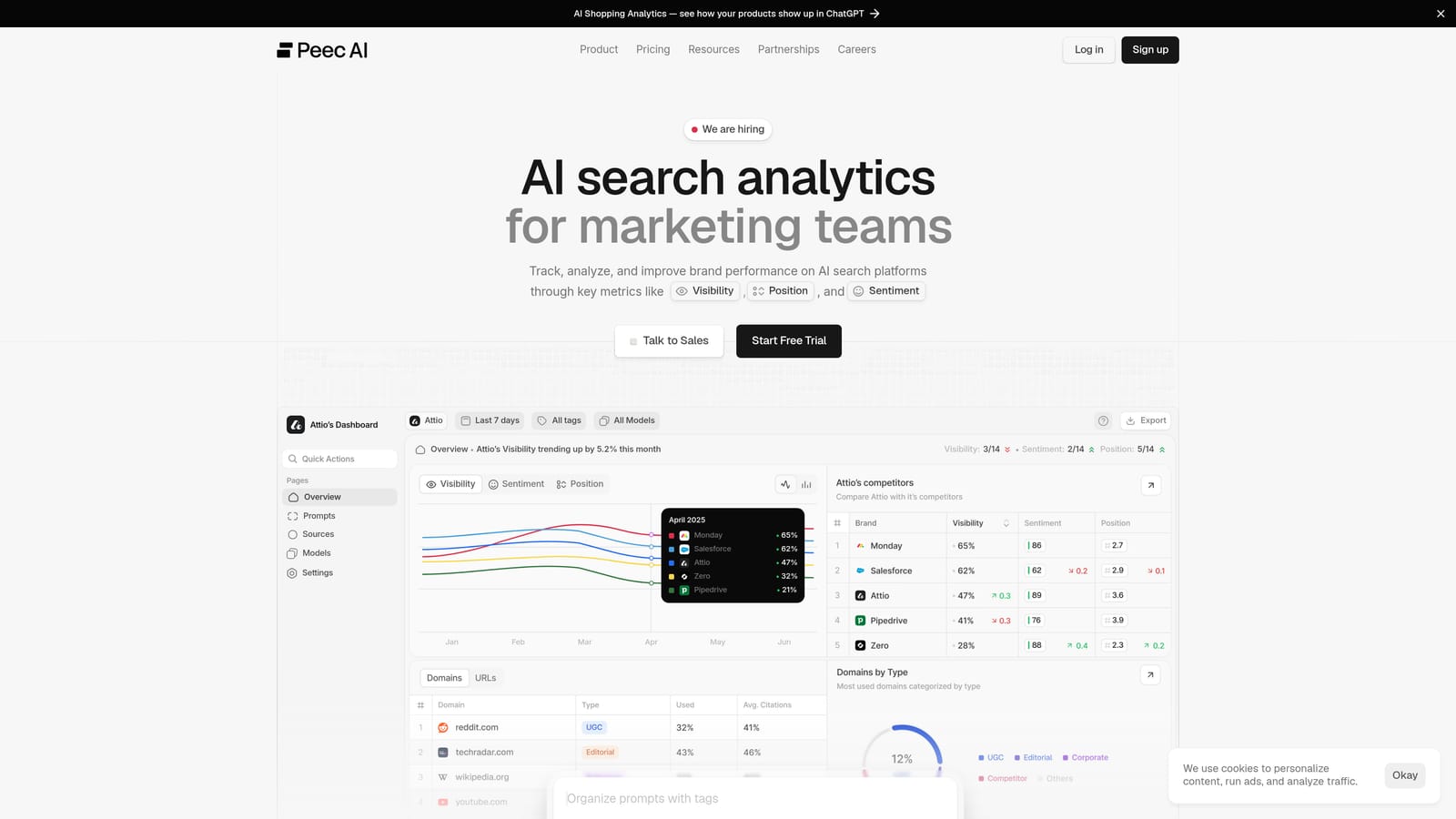
Peec is a competitive AI visibility benchmarking tool. It compares your citation frequency and sentiment against competitors across AI platforms and highlights gaps in your AI search positioning.
Where This Tool Shines
Peec's strength is clarity about competitive standing. Knowing your brand is mentioned in AI responses is useful. Knowing how that compares with the three competitors your buyers are also evaluating is more useful. Peec puts those comparisons side by side, so you can see where you lead and where you fall behind.
Its gap analysis is actionable rather than a raw data dump. Peec frames competitive citation differences in a way that points to specific content or positioning changes worth making.
Key Features
Side-by-Side Competitor Comparison: Compares your citation frequency and sentiment against selected competitors across AI platforms.
AI Platform Coverage: Benchmarks competitive performance across multiple AI search engines.
Sentiment Tracking: Shows not only whether brands are mentioned but how each one is framed relative to the others.
Gap Analysis: Identifies where competitors earn AI citations that your brand is missing, with context to inform strategy.
Best For
Brands and agencies focused on competitive positioning in AI search. It is particularly useful in crowded categories, where standing out in AI-generated recommendations is a meaningful growth lever.
Pricing
Check the official Peec site for current pricing options and available plans.
5. AirOps
Best for: Building scalable, repeatable AI content pipelines for citation-worthy output
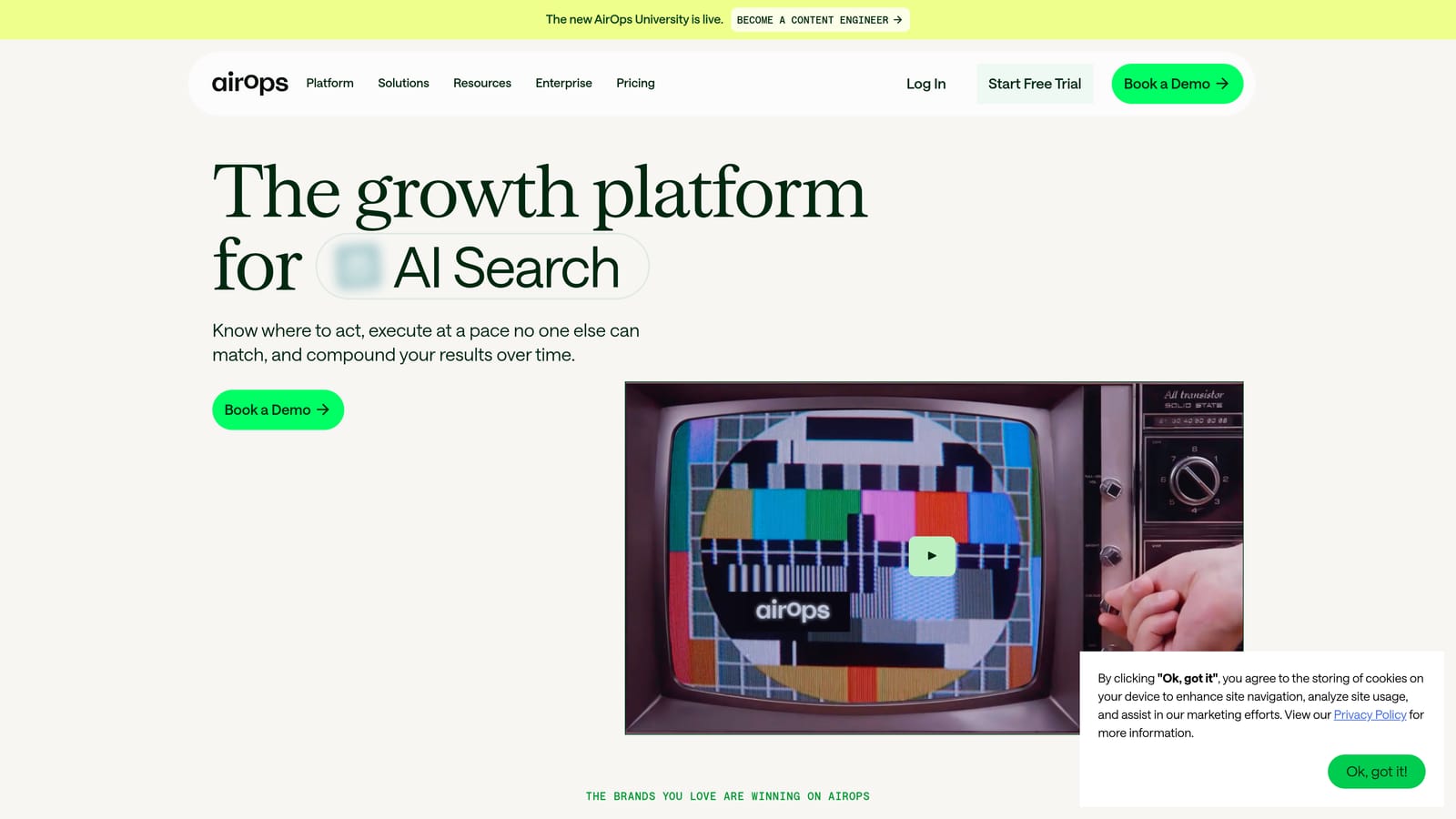
AirOps is an AI workflow automation platform. It helps content teams build repeatable pipelines for producing brand-consistent content at scale.
Where This Tool Shines
AirOps is not a citation monitoring tool. It sits on the production side, helping teams systematize the creation of content that earns citations. If your challenge is keeping up with content demand without losing brand consistency, AirOps addresses that directly.
The custom workflow builder is flexible. Teams can design pipelines that reflect their brand voice, approval processes and output formats, then run them repeatedly without rebuilding each time. For agencies producing content for multiple clients, that repeatability has real operational value.
Key Features
Custom AI Workflow Builder: Lets teams design and automate content workflows tailored to their own processes and brand requirements.
Brand Voice Controls: Applies consistent voice and style across all outputs, reducing editorial cleanup.
CMS and Tool Integrations: Connects to existing marketing stacks so content moves from creation to publishing without manual handoffs.
Scalable Content Pipelines: Supports high volumes of structured content without a matching increase in headcount.
Best For
Content teams and agencies focused on producing citation-worthy content efficiently at scale. Pair it with a dedicated citation monitoring tool so you can see how that content performs in AI search.
Pricing
Check airops.com for current pricing tiers and plan details.
6. Writesonic
Best for: High-volume SEO content production with brand voice consistency
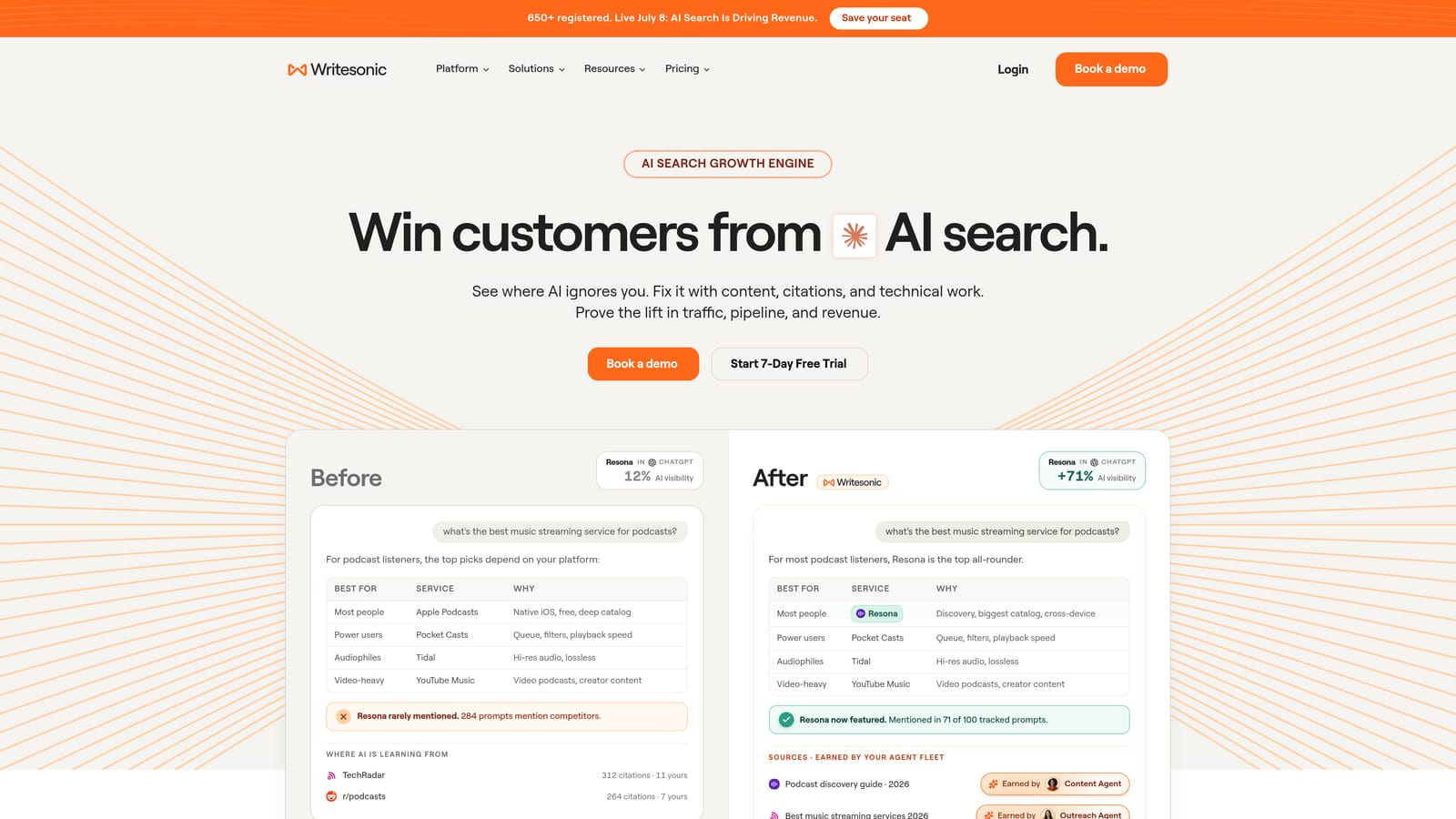
Writesonic is a generative AI writing platform with SEO optimization features and brand voice controls. Marketers and agencies use it to produce structured, on-brand content for both traditional and AI search.
Where This Tool Shines
Like AirOps, Writesonic is a content generation tool, not a citation monitoring platform. It earns its place here on the production side: creating structured content in the volume and quality that tends to earn brand citations in AI responses. Its SEO optimization layer helps build content around the right topics and keywords from the start.
The brand voice settings are practical for teams managing multiple clients or product lines. You configure tone and style once instead of re-briefing the AI for every piece. That consistency matters more as AI models get better at judging which sources to cite.
Key Features
SEO-Aware Content Generation: Produces articles and long-form content with optimization built in, narrowing the gap between generation and search performance.
Brand Voice Settings: Keeps tone and style consistent across large content volumes.
Long-Form Article Generation: Handles full blog posts and structured articles, not just short snippets.
Keyword and Topic Research: Built-in research helps find content opportunities without a separate ideation tool.
Best For
Marketers and agencies producing large volumes of SEO content who want AI help with brand alignment and topic coverage. It works best alongside a monitoring tool that tracks how the content performs in AI search.
Pricing
A freemium plan is available. Paid tiers add features and higher usage limits. Check writesonic.com for current plan details.
Brand Citation Tracking Tools Compared
| Tool | Category | Tracks AI citations | Competitor benchmarking | Creates content | Pricing |
|---|---|---|---|---|---|
| Sight AI | Monitoring + content + indexing | Yes, 6+ models | Yes | Yes | Tiered plans |
| Promptwatch | Prompt-level monitoring | Yes | Yes, by prompt | No | Tiered plans |
| Profound | Enterprise monitoring | Yes | Yes, by category | No | Custom quote |
| Peec | Competitive benchmarking | Yes | Yes, side by side | No | Tiered plans |
| AirOps | Content workflows | No | No | Yes | Tiered plans |
| Writesonic | Content generation | No | No | Yes | Freemium + paid |
Citation Rate vs Mention Rate: The Metrics That Matter
AI citation tools report several overlapping numbers. Understanding them helps you compare tools and prioritize work:
- Mention rate: the share of tracked AI responses that name your brand. If 120 prompts are run across four models (480 responses) and your brand appears in 96, your mention rate is 20%.
- Citation rate: the share of responses that link to or attribute a source on your domain. A brand can be mentioned often but cited rarely when the model draws on third-party reviews instead of your own pages.
- Share of voice: your mentions divided by total mentions of you and your tracked competitors across the same prompt set. Example: you 96, competitor A 140, competitor B 64 gives you a 32% share of voice.
- Sentiment and position: whether you appear as the first recommendation or as a caveat, and whether the framing is positive, neutral or negative.
The most useful view puts mention rate and citation rate side by side for each page or topic:
- High mention rate, low citation rate: the model knows your brand but cites someone else's page. Strengthen brand naming, clear definitions and original data on your own URLs.
- Low on both: this is a coverage gap, and new content is usually the fix.
Track these metrics weekly with a fixed prompt set. Results vary between runs, so trends over 4 to 8 weeks are more reliable than single snapshots. For a full measurement setup, see our 6-step framework for measuring AI visibility performance.
Which Tool Is Right for Your Citation Strategy?
Each tool on this list addresses a different part of the brand citation challenge. The right choice depends on where your biggest gap is today.
Best for AI-first citation tracking: Sight AI is the strongest choice for teams that want one platform for monitoring, content generation and indexing. The AI Visibility Score and prompt tracking show you what to fix, and the content agents and Autopilot Mode let you fix it without switching tools.
Best for prompt-level monitoring: Promptwatch fits if you need detailed visibility into which specific queries surface your brand and which do not. Its alert system makes it strong for teams running active AEO or GEO programs.
Best for enterprise analytics: Profound is built for large organizations managing complex, multi-brand portfolios. If you need structured reporting that scales across teams and executive stakeholders, it is the most mature option here.
Best for competitive benchmarking: Peec gives you the clearest picture of how your AI citation performance compares with competitors. If competitive positioning in AI search is a priority, it belongs in your stack.
Best for content workflow automation: AirOps suits agencies and content teams that need repeatable, scalable pipelines for brand-consistent content. It is a production tool, so pair it with a monitoring solution for full coverage.
Best for high-volume content production: Writesonic suits marketers who need to produce large volumes of structured, SEO-optimized content efficiently. Its brand voice controls make it practical at scale, especially for agencies with multiple clients.
Frequently asked questions
What is a brand citation in AI search?
A brand citation occurs when an AI assistant such as ChatGPT, Claude, Perplexity or Google AI Mode names your brand in an answer or links to your content as a source. A mention is just your name appearing. A citation attributes information to your domain. Both matter, but citations send referral traffic and signal that the model treats your pages as authoritative on the topic.
How do I calculate brand mention percentage vs competitor citation rate across LLMs?
Run a fixed set of prompts across each model. Divide the responses that name your brand by total responses to get your mention percentage. Divide responses that cite your domain by total responses to get your citation rate. Repeat the same calculation for each competitor on the same prompt set. The worked example in the metrics section above shows the full calculation, including share of voice.
Which tools are best for agencies tracking client AI brand mentions?
Agencies need multi-brand workspaces, per-client reporting and competitor sets. Sight AI combines client-level tracking with content and indexing automation, so teams can act on gaps without adding tools. Profound suits large agencies with enterprise clients, and Peec works well when competitive benchmarking is the main deliverable. Confirm per-seat and per-brand pricing before committing, since costs scale with client count.
Can I see historical trends of AI brand mentions?
Yes. Dedicated monitoring platforms store results from each prompt run, so you can chart mention rate, citation rate and sentiment over time. Because AI answers vary between runs, use weekly or daily runs with a stable prompt set and judge performance on multi-week trends. Content-only tools like AirOps and Writesonic do not provide this history.
How often should brand citations be monitored?
Weekly monitoring is enough for most brands, with daily runs for high-priority prompts in competitive categories or during launches. Models and their retrieval sources change frequently, so a monthly check can miss shifts. If Perplexity is a key channel, see our guide to tracking brand visibility on Perplexity AI for a platform-specific setup.
As AI search keeps reshaping how buyers discover and evaluate brands, citation tracking is no longer an optional add-on to your SEO program. It is a core part of any modern SEO and GEO strategy. Brands that know where they appear, how they are framed and which content gaps exist will consistently outpace those relying on traditional monitoring alone.
Stop guessing how AI models like ChatGPT and Claude talk about your brand. Start tracking your AI visibility today to see exactly where your brand appears across top AI platforms, uncover content opportunities, and automate your path to organic traffic growth.