Choosing the right CMS for SEO is no longer just about clean URLs and meta tags. In 2026, search engines and AI models alike reward content that is technically sound, consistently published, and optimized for both traditional and generative search.
The best SEO CMS platforms now need to support automated indexing, AI-assisted content creation, and visibility tracking across platforms like ChatGPT, Claude, and Perplexity, not just Google. This list covers the top platforms for marketers, founders, and agencies who want to grow organic traffic without stitching together a dozen disconnected tools.
We evaluated each option on content creation capabilities, indexing controls, SEO automation, AI visibility features, and ease of use for non-developers. Whether you are running a lean startup or managing content at scale for clients, one of these platforms will fit your workflow.
1. Sight AI
Best for: Teams that want content creation, automated indexing, and AI visibility tracking in one platform.
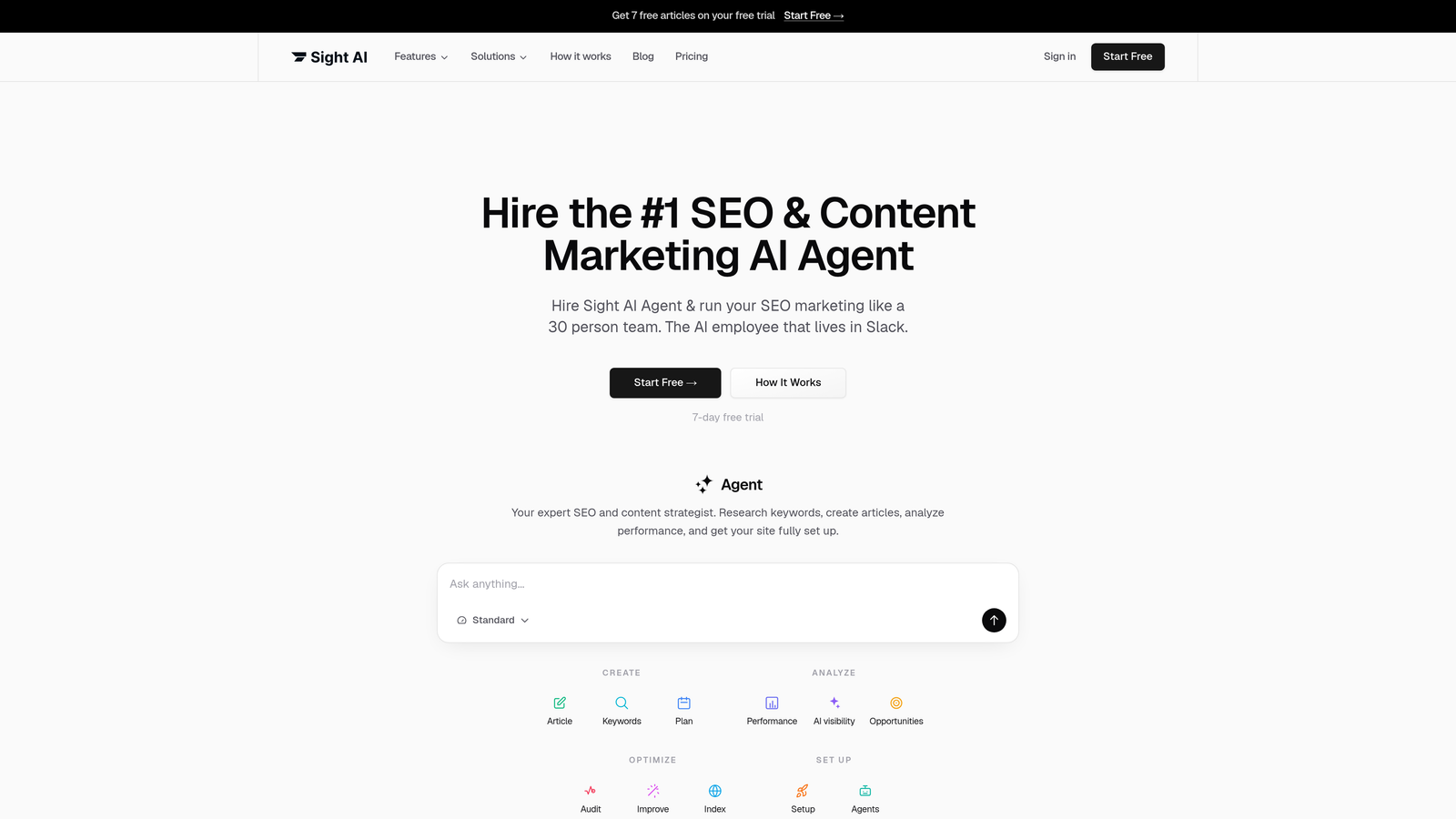
Sight AI is an all-in-one SEO and GEO platform combining AI content generation, automated website indexing via IndexNow, CMS auto-publishing, and AI visibility tracking across ChatGPT, Claude, Perplexity, and more.
Where This Tool Shines
Most SEO teams today are running three or four separate tools to cover what Sight AI handles in one place: an AI writer, an indexing solution, a CMS integration, and some form of AI brand monitoring. Sight AI collapses that stack into a single workflow, which matters a lot when you are trying to move fast without adding operational overhead.
What makes it genuinely distinct is the combination of content generation and AI visibility tracking. You can produce optimized articles with specialized AI agents and then measure whether those articles are actually influencing how AI models like ChatGPT and Claude describe your brand. That feedback loop is something most platforms do not offer at all.
Key Features
13+ Specialized AI Agents: Purpose-built agents for generating SEO and GEO-optimized article formats including listicles, guides, and explainers, rather than relying on a generic AI writer.
Autopilot Mode: Hands-off content publishing that automates the full cycle from content creation to CMS publishing, reducing manual touchpoints for high-volume workflows.
AI Visibility Score: Tracks brand mentions and sentiment across six or more AI platforms including ChatGPT, Claude, and Perplexity, giving you a measurable signal for your GEO performance.
IndexNow Integration: Submits new content for near-instant indexing and handles automated sitemap updates, so you are not waiting days for search engines to discover new pages.
CMS Auto-Publishing: Connects directly to your CMS so content moves from generation to live publication without manual intervention at every step.
Best For
Sight AI is the right fit for marketers, founders, and agencies who need to produce SEO and GEO-optimized content at scale while also tracking how their brand appears in AI-generated answers. It is particularly well-suited for teams that want to reduce tool sprawl and manage their entire organic content operation from a single platform.
Pricing
Visit trysight.ai for current pricing tiers. Plans are designed to scale with content volume and team size.
2. Writesonic
Best for: High-volume AI content generation with keyword optimization and brand voice controls.
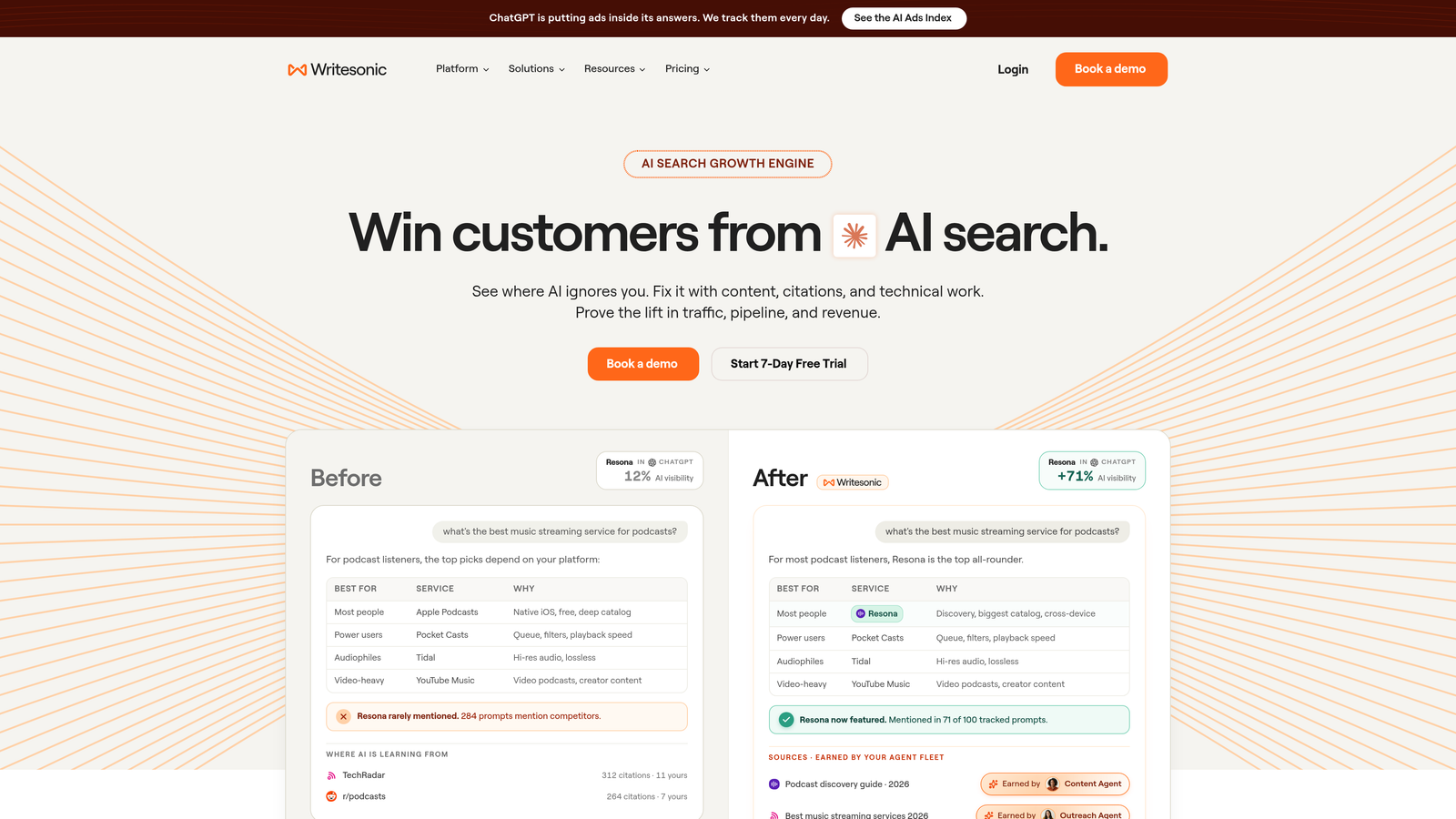
Writesonic is an AI-powered content generation platform with SEO-focused writing modes, brand voice customization, and integrations that help teams produce optimized articles at scale.
Where This Tool Shines
Writesonic has built a strong reputation as a content generation workhorse. Its SEO mode is designed to produce keyword-optimized drafts quickly, which makes it a practical choice for teams running content-heavy organic strategies that need consistent output without a large editorial team.
The brand voice feature is worth highlighting for agencies managing multiple clients. Being able to define and lock in a tone for each account reduces the back-and-forth editing that typically slows down content pipelines. It is not a full CMS replacement, but as a content generation layer it covers a lot of ground.
Key Features
AI Article Writer with SEO Mode: Generates keyword-optimized drafts with built-in guidance for search intent and on-page structure.
Chatsonic AI Assistant: A conversational AI tool for research, ideation, and content planning that goes beyond simple text generation.
Brand Voice Customization: Lets teams define tone and style parameters so all generated content stays consistent across campaigns and clients.
CMS and Publishing Integrations: Connects with popular publishing platforms to reduce manual copy-paste steps in content workflows.
Bulk Content Generation: Supports high-volume production runs for teams managing large keyword portfolios or programmatic SEO strategies.
Best For
Writesonic suits content teams and agencies focused primarily on generating large volumes of SEO articles. It works best as part of a broader stack rather than a standalone platform, since it does not include indexing automation or AI visibility tracking natively.
Pricing
A free tier is available for getting started. Paid plans scale with usage and features. Verify current pricing at writesonic.com.
3. AirOps
Best for: SEO teams that want to build custom AI content pipelines without engineering resources.
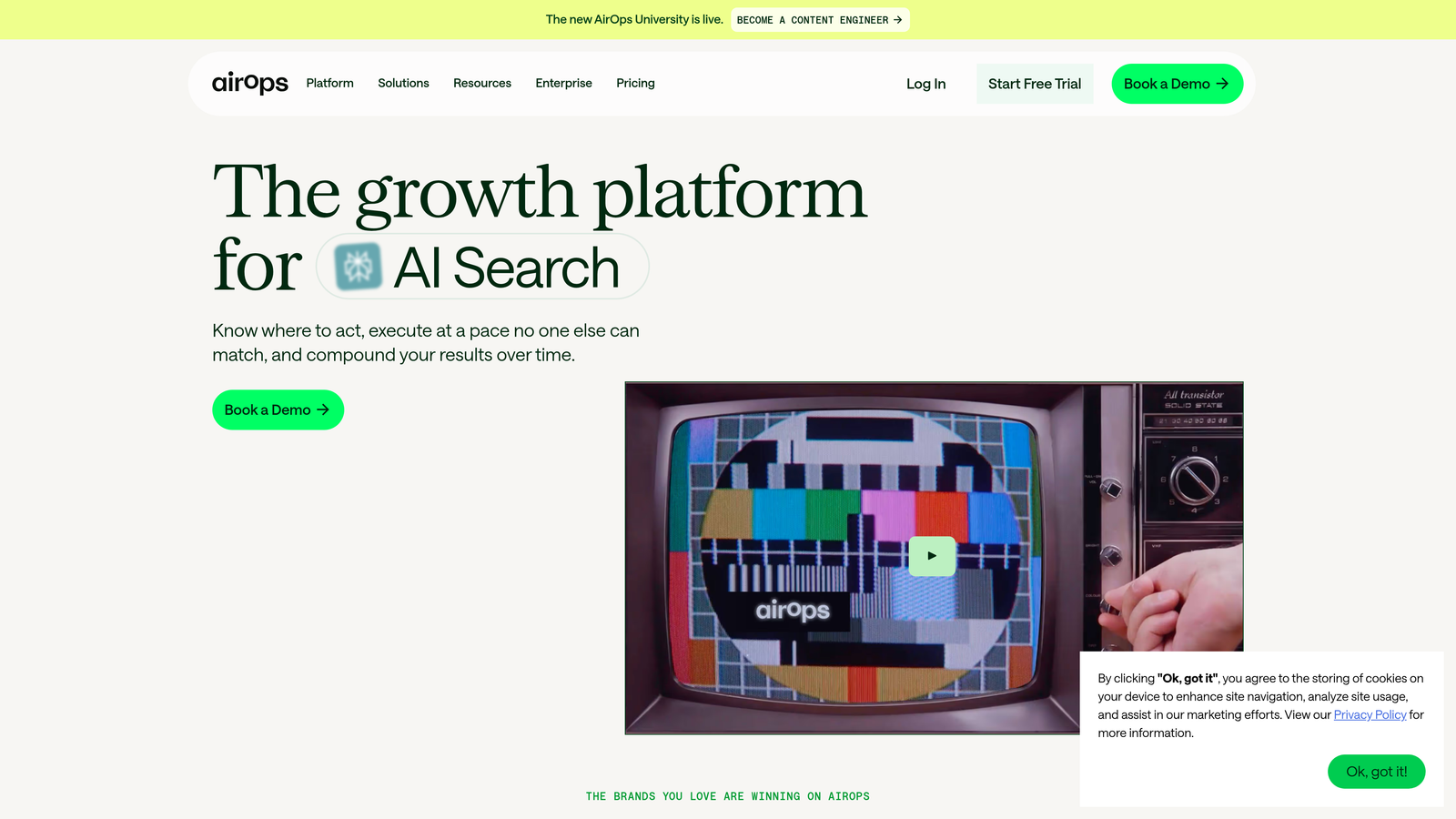
AirOps is a no-code AI workflow automation platform that connects SEO data sources to content pipelines, enabling teams to automate briefs, drafts, and publishing without engineering support.
Where This Tool Shines
AirOps sits at an interesting intersection between SEO tooling and workflow automation. Rather than giving you a fixed content generation experience, it lets you build the exact pipeline your team needs, connecting data sources like Google Search Console to AI-powered content steps in a visual, no-code environment.
For agencies and in-house SEO teams with specific, repeatable workflows, this flexibility is genuinely valuable. You can automate the creation of content briefs from keyword data, feed those briefs into AI drafting steps, and route outputs to your publishing tools, all without writing a single line of code.
Key Features
No-Code Workflow Builder: A visual interface for constructing custom SEO content pipelines that match your team's specific process rather than a generic template.
Data Source Connections: Integrates with Google Search Console and analytics platforms so content workflows can be informed by real performance data.
Automated Brief and Draft Generation: Chains keyword research inputs into AI-generated briefs and first drafts, reducing manual handoffs between strategy and writing.
Custom AI Prompts at Scale: Supports repeatable prompt templates so your content operations stay consistent across large keyword sets.
Team Collaboration Features: Built for agency and in-house teams that need shared workflows, review steps, and access controls.
Best For
AirOps is a strong fit for SEO teams and agencies that have well-defined content workflows and want to automate them without custom development. It is more of an automation layer than a traditional CMS, so it works best when paired with dedicated publishing and tracking tools.
Pricing
Verify current pricing and plan details at airops.com.
4. Profound
Best for: Enterprise teams measuring and improving brand visibility in generative AI search responses.
Profound is an enterprise-grade AI answer engine visibility platform that tracks how brands and categories appear in generative AI responses, helping teams measure and improve their GEO performance.

Where This Tool Shines
Profound approaches the GEO challenge from a measurement-first perspective. Rather than starting with content creation, it starts with the question: how does your brand actually appear when AI models answer questions in your category? That diagnostic capability is increasingly important as more purchase decisions begin with an AI query rather than a traditional search.
The competitive share-of-voice analysis is particularly useful for enterprise teams that need to benchmark their AI visibility against category rivals. Understanding where competitors are being cited by AI models, and where you are not, is the kind of strategic intelligence that shapes content investment decisions.
Key Features
AI Answer Engine Tracking: Monitors how your brand and product category appear in responses from major AI answer engines across a range of relevant queries.
Generative Search Visibility Analytics: Provides structured data on your brand's presence and positioning in AI-generated answers over time.
Competitive Share-of-Voice Analysis: Measures how your brand's AI visibility compares to competitors within your category.
Strategic Insights for GEO Improvement: Surfaces actionable recommendations for improving how AI models represent your brand in their outputs.
Enterprise Reporting and Dashboards: Designed for teams that need to present GEO performance data to stakeholders with structured, professional reporting.
Best For
Profound is built for enterprise marketing and SEO teams that are serious about GEO strategy and need robust measurement capabilities. It is focused on visibility analytics rather than content creation, so it complements rather than replaces a content production platform.
Pricing
Profound is enterprise-focused. Contact their team directly or verify current pricing at profound.co.
5. Peec
Best for: Teams tracking brand presence and competitive performance in AI-generated search answers.
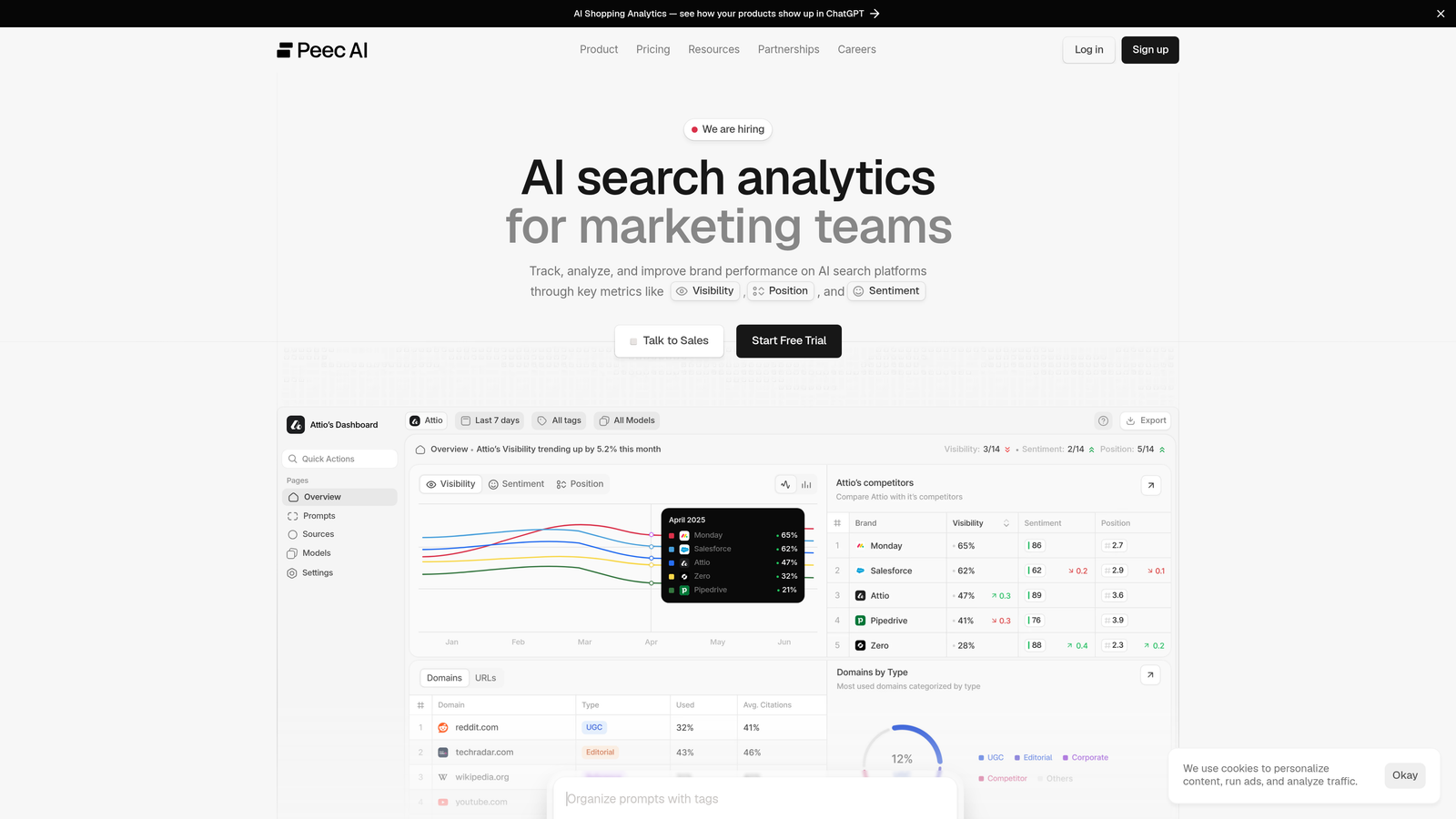
Peec is an AI search visibility tracking tool that monitors brand presence in AI-generated answers and provides competitive analysis for generative engine optimization.
Where This Tool Shines
Peec focuses on a specific and growing problem: knowing where your brand stands in the AI search landscape relative to your competitors. As AI answer engines become a primary discovery channel for many product categories, having consistent visibility data on your brand's representation in those answers becomes operationally important.
The trend analysis capability is where Peec adds ongoing value. Rather than a one-time audit, it tracks how your AI visibility shifts over time, which helps teams connect content and PR activities to measurable changes in how AI models reference their brand.
Key Features
Brand Visibility Monitoring in AI Responses: Tracks how and when your brand appears in AI-generated answers across relevant queries in your category.
Competitive Share-of-Voice Tracking: Measures your brand's presence relative to competitors in AI answer engine outputs.
Visibility Trend Analysis: Monitors changes in your AI brand presence over time so you can correlate content activity with visibility shifts.
Gap Identification: Surfaces specific queries or topics where competitors are outperforming your brand in AI results, pointing to content opportunities.
GEO Performance Reporting: Provides reporting tools designed for communicating generative search performance to marketing and leadership teams.
Best For
Peec suits marketing and SEO teams that want dedicated GEO tracking without the complexity of an enterprise platform. It works well as a complementary tool alongside content creation platforms, providing the measurement layer that informs what content to produce next.
Pricing
Verify current pricing and available plans at peec.ai.
6. Promptwatch
Best for: Teams wanting granular, prompt-level data on how AI models surface their brand.
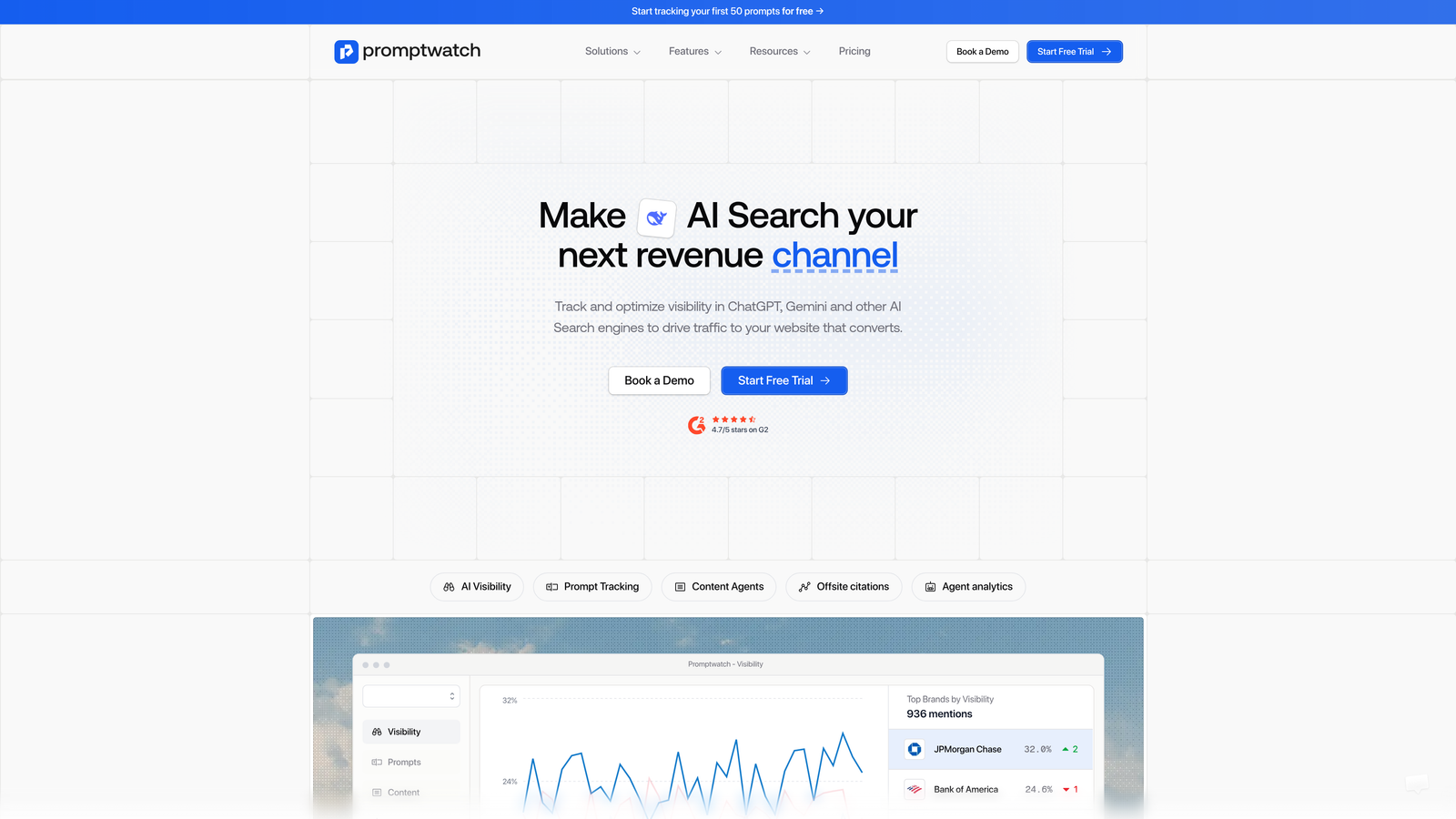
Promptwatch is a brand monitoring tool focused on tracking how specific prompts trigger brand mentions inside AI model outputs, giving teams granular data on their AI search presence.
Where This Tool Shines
Where broader GEO platforms track category-level visibility, Promptwatch goes deeper into the prompt layer. It lets you define specific queries, questions, and scenarios and then monitor exactly how AI models respond to them over time. For teams that want to understand the mechanics of their AI brand representation, this level of granularity is hard to find elsewhere.
It is also a practical entry point for teams that are new to GEO monitoring and want to start with a focused, manageable scope before investing in a larger enterprise platform. You can begin by tracking a handful of high-priority prompts and build your monitoring program from there.
Key Features
Prompt-Level Brand Tracking: Monitors specific prompts to see exactly how AI models respond and whether your brand is mentioned, recommended, or absent.
Branded and Non-Branded Query Monitoring: Covers both direct brand queries and category or problem-based queries where your brand could appear.
Competitive Prompt Analysis: Identifies which prompts surface competitors instead of your brand, pointing to specific gaps in your AI presence.
Alerts for AI Representation Changes: Notifies your team when AI model responses to tracked prompts shift in ways that affect your brand visibility.
GEO Entry-Point Reporting: Provides accessible reporting that helps teams new to generative engine optimization get a clear picture of their starting position.
Best For
Promptwatch is well-suited for smaller teams and those early in their GEO journey who want prompt-specific monitoring without the overhead of an enterprise platform. It pairs naturally with content tools that can act on the gaps it identifies.
Pricing
Verify current pricing and plan options at promptwatch.io.
Which Platform Is Right for Your Team?
The tools on this list reflect the new reality of organic growth: it is no longer enough to publish well-structured content and wait for Googlebot. In 2026, winning teams are tracking their presence in AI-generated answers, automating their indexing workflows, and using AI agents to produce content at a pace that manual processes simply cannot match.
Here is a quick guide to matching the right tool to your situation:
You need content creation, indexing, and AI visibility in one place: Sight AI is the only platform on this list that combines all three layers. If you want to generate SEO and GEO-optimized content, get it indexed fast via IndexNow, and track how AI models are talking about your brand, it is the natural starting point.
You need high-volume AI content generation: Writesonic handles bulk content production well and includes SEO mode and brand voice controls for teams focused primarily on output volume.
You want to build a custom content automation pipeline: AirOps gives you the flexibility to connect your data sources and automate your specific workflow without writing code.
You are an enterprise team focused on GEO measurement: Profound offers the depth of analytics and competitive intelligence that large organizations need to manage their AI visibility strategically.
You want dedicated GEO tracking and trend analysis: Peec and Promptwatch both serve this need, with Peec offering broader category tracking and Promptwatch going deeper at the individual prompt level.
If you are still piecing together separate tools for writing, publishing, indexing, and AI monitoring, there is a faster path. Start tracking your AI visibility today and see exactly where your brand appears across top AI platforms, while generating the content that gets you mentioned more often.