AI writing tools have moved well beyond basic text generation. The best SEO AI writing tools in 2026 combine content creation with optimization signals, helping marketers, founders, and agencies publish content that ranks in traditional search and gets cited by AI models like ChatGPT, Claude, and Perplexity. That second dimension, often called Generative Engine Optimization (GEO), is increasingly where organic visibility is won or lost.
This list covers six tools that genuinely serve SEO and GEO content workflows. Selection criteria include quality of AI-generated output, SEO and GEO optimization depth, workflow automation, indexing support, and value for teams focused on organic growth. Whether you're scaling content production, tracking how AI models talk about your brand, or trying to improve website ranking through consistent publishing, one of these tools will fit your workflow.
1. Sight AI
Best for: Teams that want SEO content creation, GEO optimization, and AI visibility tracking in one platform.
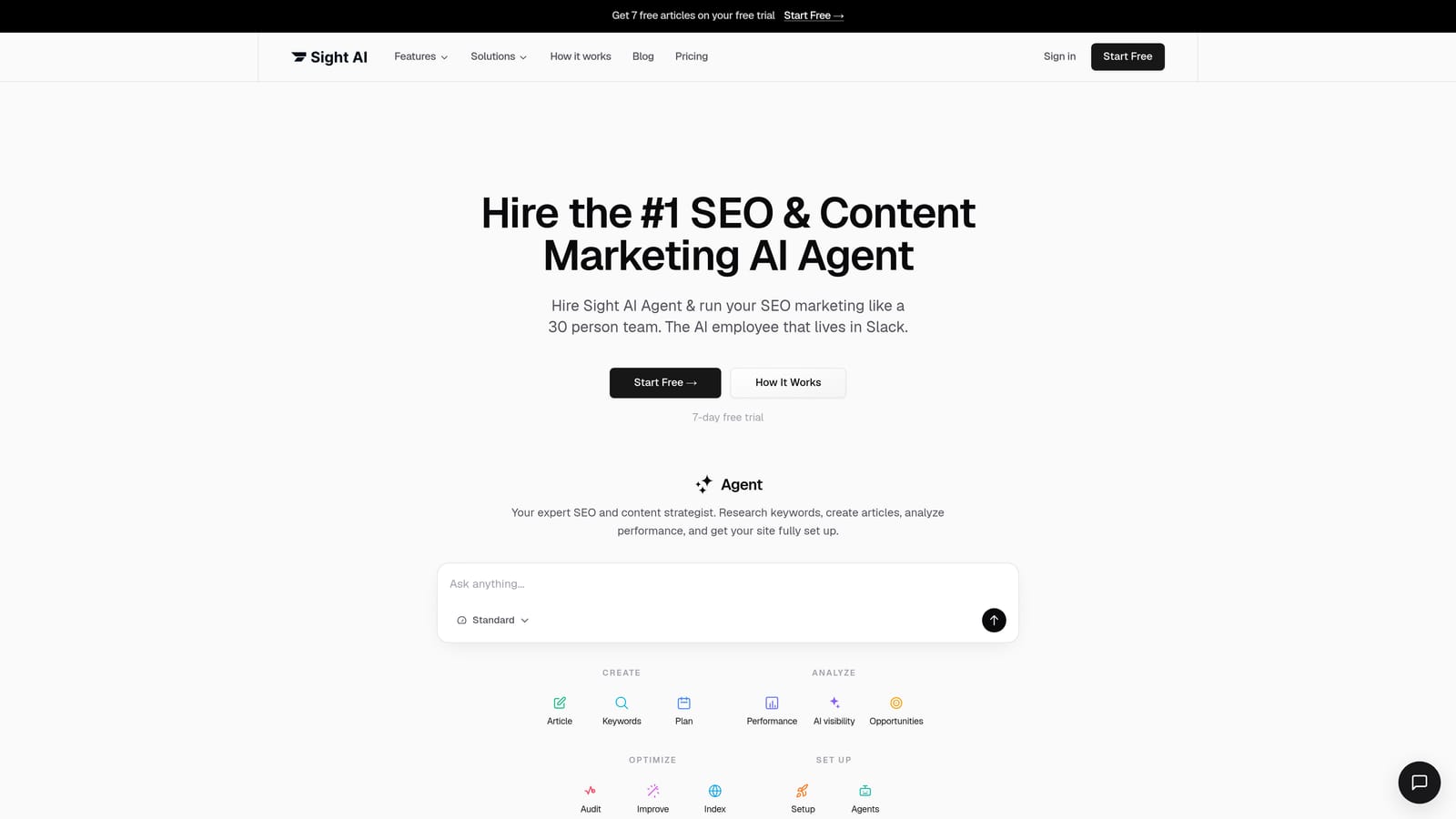
Sight AI is an all-in-one SEO and GEO platform combining AI content writing, AI visibility tracking across 6+ AI platforms, IndexNow-powered indexing, and CMS auto-publishing.
Where This Tool Shines
Most content teams end up stitching together separate tools for writing, optimization, indexing, and brand monitoring. Sight AI is built to collapse that stack. The 13+ specialized AI agents handle different content formats — listicles, guides, explainers — rather than using one generic model for everything. That specialization tends to produce more structurally appropriate output for each format.
The AI Visibility Score is the feature that sets Sight AI apart from pure content tools. It tracks how AI models like ChatGPT, Claude, and Perplexity actually talk about your brand, including sentiment analysis and prompt-level data. For teams investing in GEO, that feedback loop between what you publish and how AI models respond is genuinely hard to replicate by combining separate tools.
Key Features
13+ Specialized AI Agents: Purpose-built agents for listicles, guides, explainers, and other content formats, producing structurally appropriate output rather than generic text.
Autopilot Mode: Hands-off content production pipelines that reduce the manual steps between ideation and a published, indexed article.
AI Visibility Score: Tracks brand mentions across ChatGPT, Claude, Perplexity, and 3+ other AI platforms, with sentiment analysis and prompt-level reporting.
IndexNow Integration: Automated sitemap updates and IndexNow submission to reduce the time gap between publishing and search engine discovery.
CMS Auto-Publishing: Direct publishing to your CMS removes a manual handoff step that slows most content workflows.
Best For
Sight AI is the strongest fit for agencies managing multiple client content programs, founders building organic growth channels without large teams, and marketing leads who want a single platform for content creation and AI visibility rather than managing four or five separate subscriptions. If your goal is to publish consistently and track how that content performs in both traditional search and AI-generated answers, this is the most integrated option on this list.
Pricing
Visit trysight.ai for current pricing and free trial options. Plans are designed for individual marketers through agency-scale teams.
2. Writesonic
Best for: High-volume content production across multiple formats with real-time web data integration.
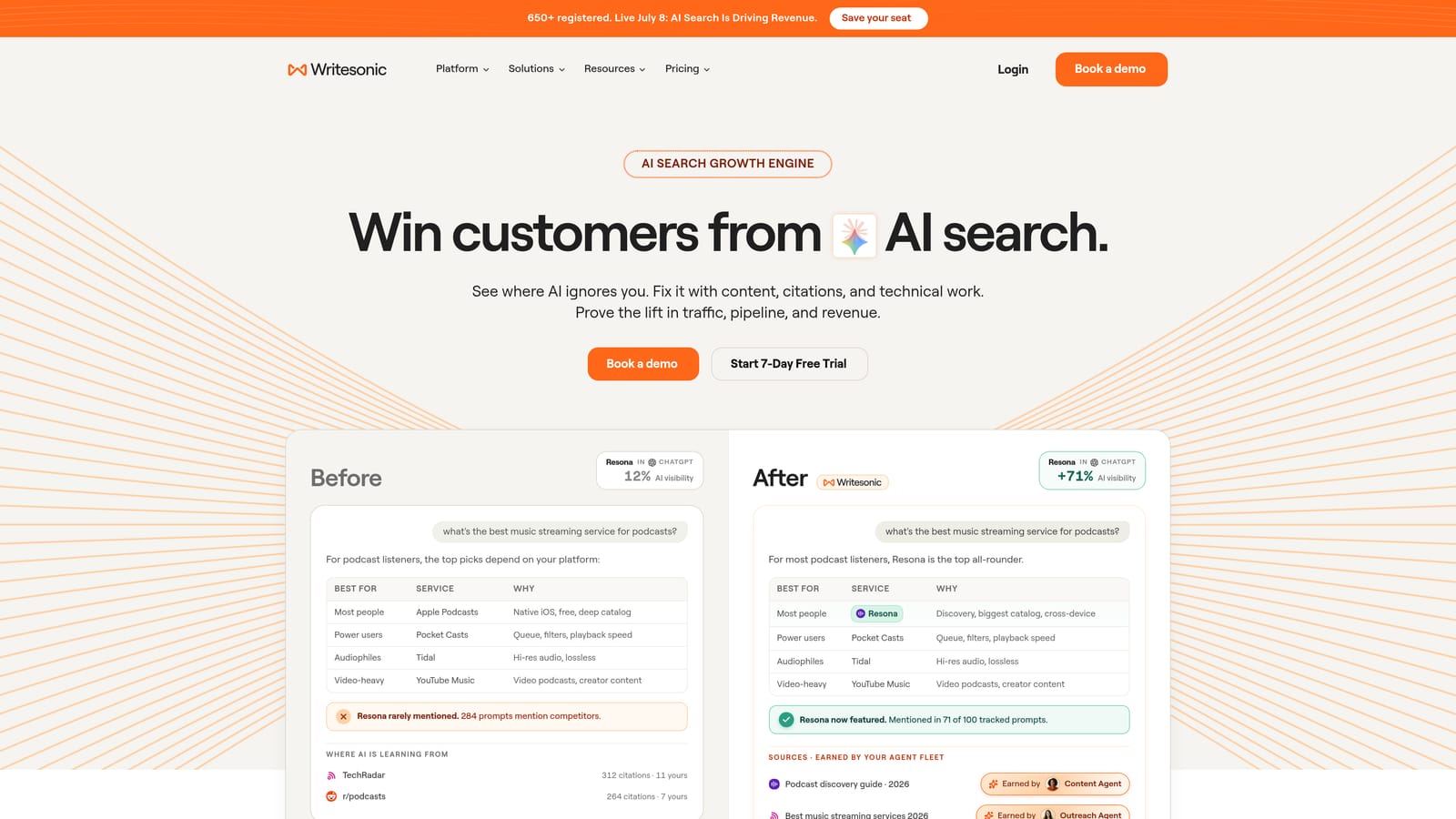
Writesonic is a well-established AI content generation platform known for speed, breadth of content formats, and a growing set of SEO-focused writing features.
Where This Tool Shines
Writesonic's core strength is volume and versatility. The template library spans blog posts, product descriptions, ad copy, and more, making it useful for content teams that need to produce across multiple formats without switching tools. The Chatsonic feature integrates real-time web data, which is particularly valuable for keeping content current in fast-moving niches where outdated information hurts both rankings and credibility.
The SEO-mode article writing feature adds keyword targeting and structured outlines to the generation process, giving content teams a more optimization-aware starting point than a raw draft. It's a solid choice when your primary need is output volume with basic SEO structure baked in.
Key Features
Chatsonic: Real-time web data integration keeps generated content current and reduces the need for manual fact-checking on recent topics.
SEO-Mode Writing: Keyword targeting and structured article outlines built into the generation workflow for more optimization-aware drafts.
Extensive Template Library: Covers blogs, ads, product content, and social formats, reducing the need to switch tools for different content types.
Brand Voice Settings: Team collaboration features and brand voice configurations help maintain consistency across multiple contributors.
AI Search Presence Features: Basic visibility features have been added to the platform, though content generation remains the primary focus.
Best For
Writesonic suits content teams and agencies that prioritize high output volume across diverse formats. It's a practical choice when your workflow already handles SEO strategy and optimization separately, and you need a reliable generation engine to keep up with publishing cadence.
Pricing
Tiered plans are available with a free trial. Verify current pricing at writesonic.com as plans and word limits are updated periodically.
3. AirOps
Best for: Growth and SEO teams building repeatable, data-driven content pipelines for programmatic SEO at scale.
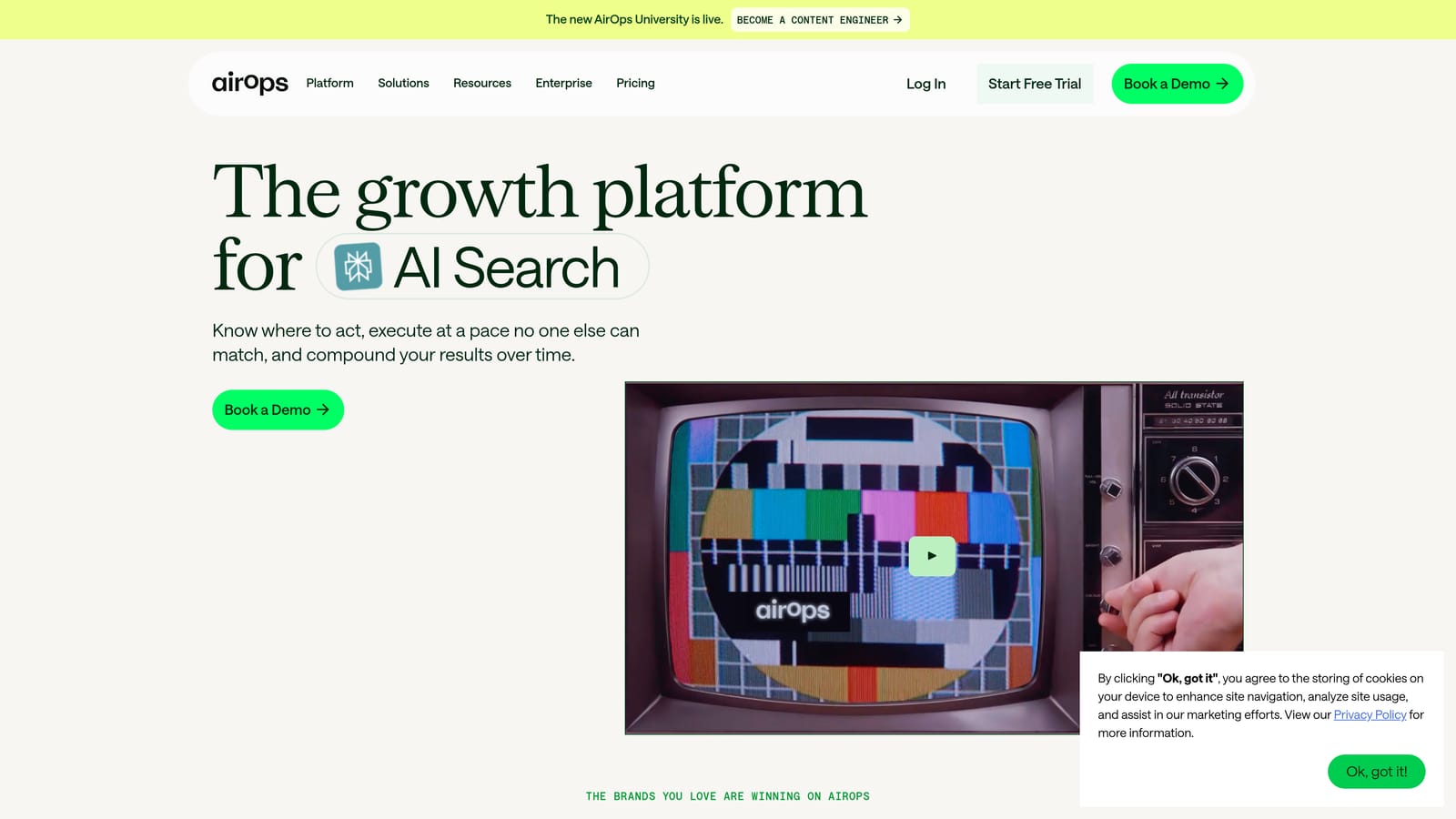
AirOps is an AI workflow builder that lets teams create custom content pipelines connected to live data sources, spreadsheets, and CRMs without heavy engineering requirements.
Where This Tool Shines
AirOps occupies a different category from most AI writing tools. Rather than providing a writing interface, it provides the infrastructure to build your own content production workflows. Teams can connect live data sources and define repeatable pipeline logic that outputs structured SEO content at scale. This makes it especially powerful for programmatic SEO use cases where content needs to be generated from structured data across hundreds or thousands of pages.
The flexibility to configure multiple LLMs and prompt structures within a single workflow gives technical SEO teams meaningful control over output quality and consistency. There is an upfront setup investment, but once pipelines are established, the scale potential is significant compared to manual or template-based approaches.
Key Features
Custom AI Workflow Builder: Build content pipelines tailored to your data structure and output requirements without requiring engineering resources.
Live Data Integration: Connect to spreadsheets, CRMs, and external data sources to power data-driven content generation at scale.
Structured Content Output: Designed for programmatic SEO use cases where consistent, structured output across large content sets is the priority.
Multi-LLM Support: Supports multiple language models and prompt configurations within a single workflow for quality control and flexibility.
Repeatable Pipeline Architecture: Once built, pipelines run consistently, reducing the per-piece effort for large-volume content programs.
Best For
AirOps is best suited for growth teams, technical SEO leads, and agencies running programmatic content operations at scale. It requires more configuration than a plug-and-play writing tool, but delivers considerably more flexibility for teams with specific pipeline requirements.
Pricing
Verify current pricing and plan details at airops.com. Plans vary based on workflow volume and team size.
4. Profound
Best for: Content strategists who need to understand where competitors are winning AI citations and where content gaps exist.
Profound is an AI answer engine visibility platform that tracks how brands appear in AI-generated responses and surfaces content gaps where competitors are being cited instead.
Where This Tool Shines
Profound is built for a specific and increasingly important question: when someone asks an AI model a question relevant to your market, is your brand being cited? The platform tracks this systematically across AI answer engines and surfaces competitive gap data, showing you the topics and queries where competitors appear in AI answers and your brand does not.
This kind of intelligence directly informs GEO content strategy. Rather than guessing which topics to cover, Profound gives content teams data-driven signals about where producing or improving content could shift AI citation patterns in their favor. It's best used alongside a content creation tool rather than as a standalone writing solution.
Key Features
AI Answer Engine Visibility Tracking: Monitors how and where your brand appears in AI-generated responses across major platforms.
Competitive Gap Analysis: Identifies topics and queries where competitors appear in AI answers and your brand does not, prioritizing content opportunities.
Content Strategy Signals: Surfaces actionable data based on AI citation patterns to guide editorial planning.
Topic and Query-Level Reporting: Granular visibility into which specific topics and query types drive AI citations for your category.
GEO Content Planning: Designed specifically to inform the kind of content that earns AI model citations rather than just traditional search rankings.
Best For
Profound is a strong fit for SEO leads and content strategists at brands where AI search visibility is a priority. It's particularly useful for competitive categories where understanding the AI citation landscape can directly shape content investment decisions.
Pricing
Verify current pricing and plan options at withprofound.com.
5. Peec
Best for: Content teams that want to understand the structural and topical factors driving AI citations, not just whether they're being cited.
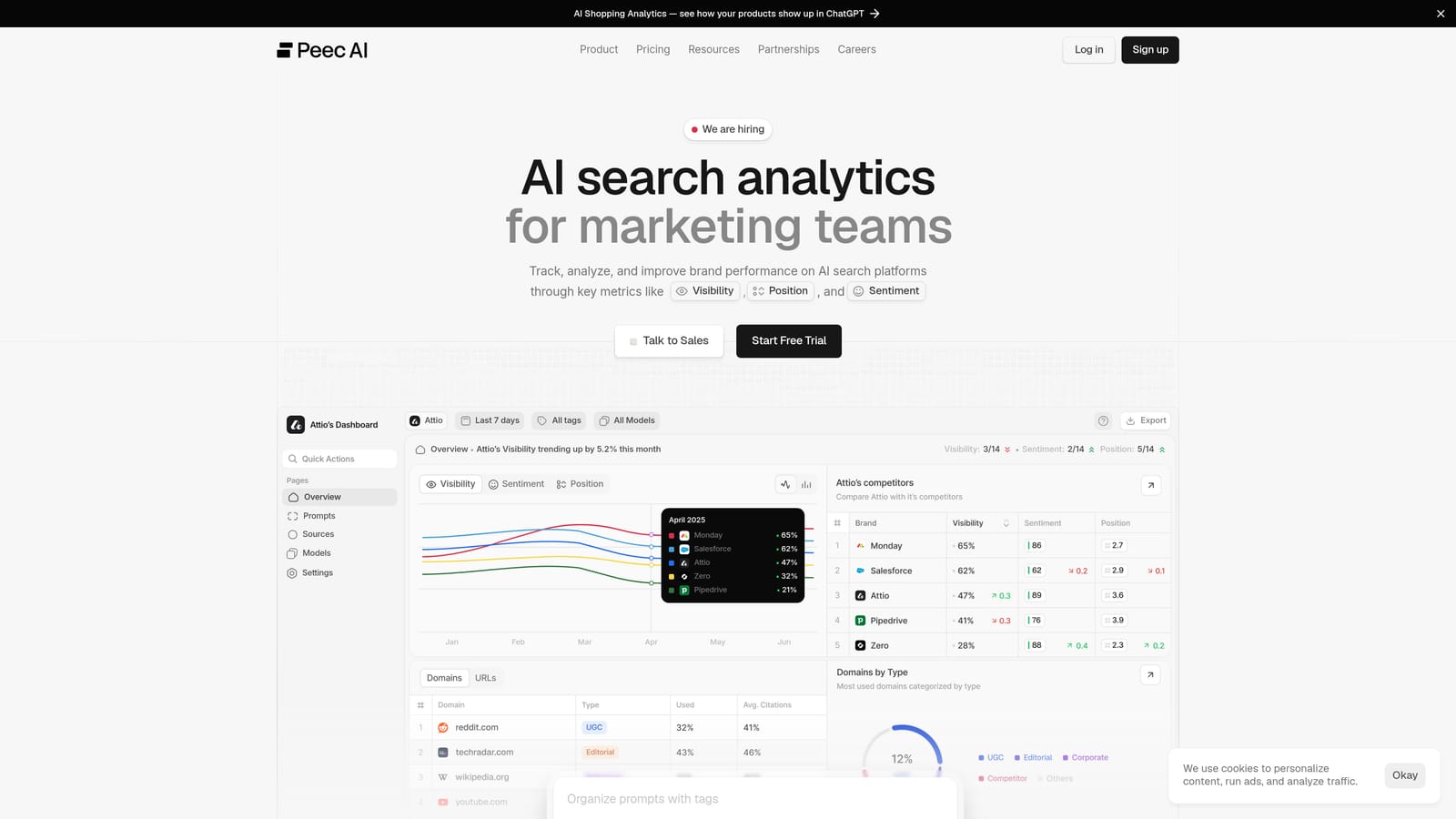
Peec is an AI citation and visibility tracking platform that analyzes which content earns mentions from AI models and provides structural and topical signals to guide content improvements.
Where This Tool Shines
Where many AI visibility tools tell you what is happening, Peec focuses on why. The platform analyzes the content characteristics associated with AI citations, giving teams signals about what structural or topical factors contribute to a piece of content being referenced by AI models. That diagnostic layer is useful for content teams that want to improve existing content rather than only create new pieces.
The topic-level share of voice reporting gives a broader view of how your brand's AI presence compares across different subject areas. Combined with content gap identification, Peec helps teams prioritize both new content creation and optimization of existing assets based on AI citation potential.
Key Features
AI Citation Tracking: Monitors which content earns mentions from major language models across key topics in your category.
Citation Factor Analysis: Surfaces signals about structural and topical characteristics that contribute to AI visibility, going beyond raw citation counts.
Topic-Level Share of Voice: Tracks your brand's AI presence relative to competitors across different subject areas.
Content Gap Identification: Highlights topics where AI models cite competitors but not your brand, pointing to specific content opportunities.
GEO Strategy Signals: Actionable intelligence for teams building or refining a GEO content program.
Best For
Peec works well for content teams and SEO leads who want to move beyond basic AI visibility monitoring into understanding the content factors that drive citations. It's a useful complement to a content creation workflow, particularly for teams doing regular content audits and optimization cycles.
Pricing
Verify current pricing at peec.ai.
6. Promptwatch
Best for: Brand managers and SEO leads who need granular, prompt-level data on exactly where and why their brand appears in AI-generated responses.
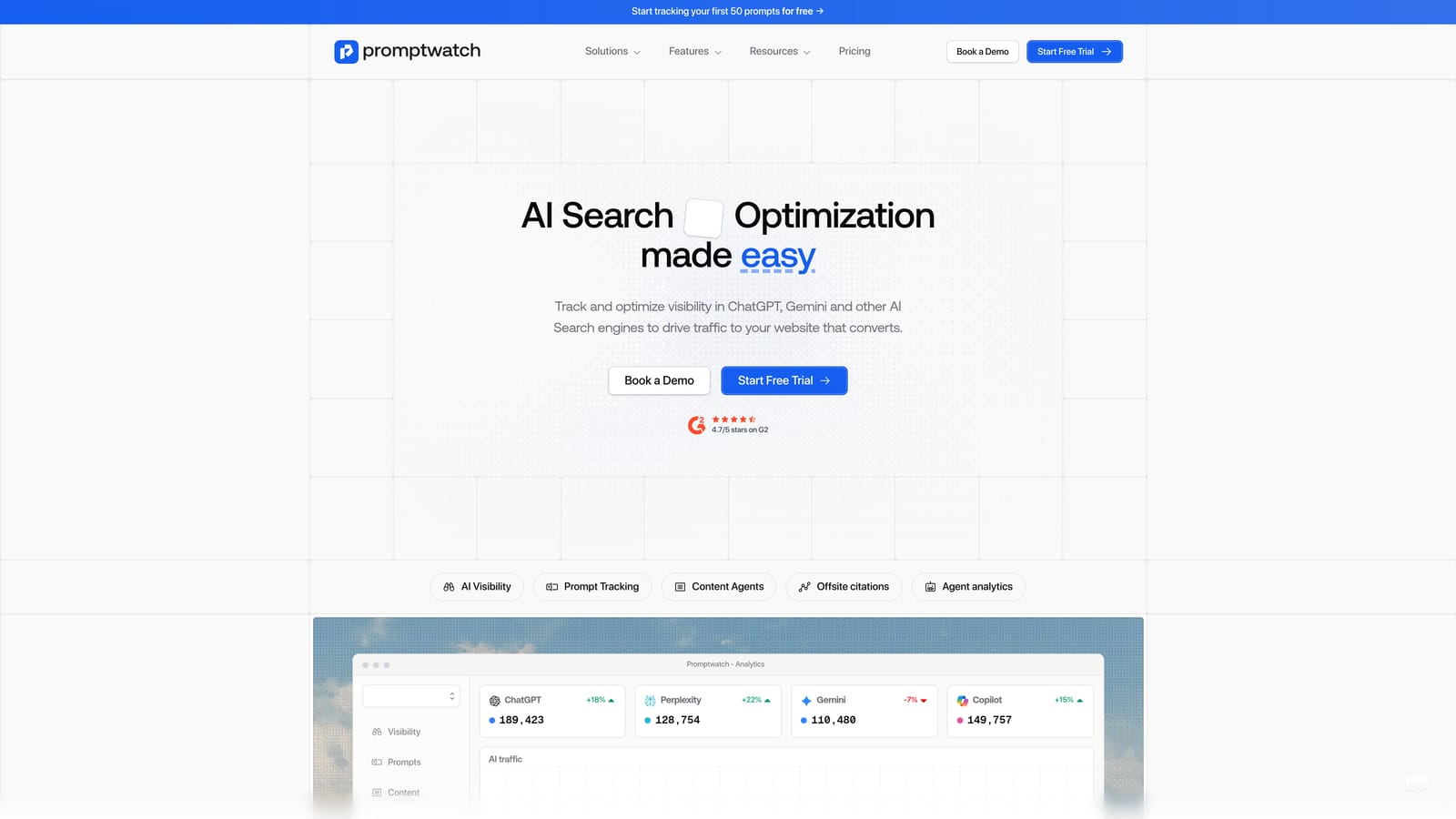
Promptwatch is a prompt-level brand monitoring tool that tracks exactly which user queries cause AI models to mention — or not mention — your brand.
Where This Tool Shines
Promptwatch operates at a level of granularity that broader AI visibility tools don't reach. Rather than reporting on general topic-level presence, it tracks specific prompts and queries, showing you exactly which user questions trigger AI models to reference your brand and which ones send users to competitors instead. That specificity transforms AI visibility data from a reporting metric into a content brief generator.
The AI share of voice reporting by topic and query type gives brand and SEO teams a precise view of their competitive position in AI-generated answers. When your brand is missing from high-value prompts, Promptwatch surfaces that gap with enough detail to inform a targeted content response rather than a broad editorial strategy.
Key Features
Granular Prompt-Level Tracking: Monitors specific user queries across AI platforms to identify exactly where your brand appears or is absent in AI responses.
AI Share of Voice Reporting: Tracks your brand's presence by topic and query type relative to competitors in AI-generated answers.
Competitor Prompt Gap Analysis: Identifies the specific prompts where competitors are cited instead of your brand, enabling targeted content responses.
Content Brief Intelligence: Turns prompt gap data into actionable content briefs, connecting visibility gaps directly to editorial priorities.
Brand Sentiment Tracking: Monitors how your brand is characterized within AI-generated responses, not just whether it appears.
Best For
Promptwatch is best for brand managers, SEO leads, and agency strategists who need precise AI visibility data to justify content investments and brief writers on specific gaps. It's particularly valuable in competitive categories where knowing the exact prompts driving competitor citations can meaningfully shape content strategy.
Pricing
Verify current pricing at promptwatch.io.
Which Tool Fits Your Workflow
The right tool depends on where your biggest gap actually is. Here's a quick way to think through it.
If you need an all-in-one platform that handles content creation, GEO optimization, AI visibility tracking, and indexing without stitching together multiple tools, Sight AI is the most integrated option. It's built specifically for teams that want organic growth and AI brand presence managed in one workflow.
If your primary need is high-volume content generation across multiple formats, Writesonic delivers speed and versatility with basic SEO structure built in. If you're running programmatic SEO at scale and need custom pipeline infrastructure connected to live data, AirOps is purpose-built for that use case.
For teams whose gap is specifically in GEO monitoring rather than content creation, Profound and Peec both offer strong AI visibility intelligence. Profound is stronger on competitive gap analysis and editorial prioritization; Peec goes deeper on the content factors that drive citations, which is useful for optimization work on existing assets.
Promptwatch rounds out the list for teams that need the most granular prompt-level data on AI brand presence, particularly when you want to connect specific visibility gaps directly to content briefs.
Before choosing, audit your current workflow: is the gap in creation speed, optimization depth, indexing and discovery, or AI visibility tracking? That answer will point you to the right tool faster than any feature comparison.
If you're not yet tracking how AI models talk about your brand, that's the most important gap to close in 2026. Start tracking your AI visibility today and see exactly where your brand appears across top AI platforms, what content is driving those mentions, and where your competitors are winning citations you should be earning.