You hit publish. The article is live. And then... nothing. Days pass before Google even acknowledges the page exists, and for some sites, that crawl never comes at all. If you're publishing at scale, running time-sensitive campaigns, or building authority on a newer domain, that delay isn't just frustrating. It's a direct hit to your organic performance.
Content indexing services solve this by proactively pushing your URLs to search engines rather than waiting for crawlers to find them on their own. They work through a combination of protocols like IndexNow, the Google Indexing API, sitemap pinging, and link-based strategies to accelerate discovery and get your pages into the index faster.
To evaluate the tools in this list, we looked at indexing speed, protocol support (IndexNow, Google API, Bing), automation capabilities, bulk URL handling, pricing transparency, and how well each fits into existing publishing workflows. Whether you're a solo founder, a content-heavy agency, or an enterprise SEO team, the right indexing setup can be the difference between content that ranks and content that sits unseen.
Here are the top content indexing services worth knowing in 2026.
1. Sight AI
Best for: Teams that want content creation, indexing, and AI visibility tracking in one platform.
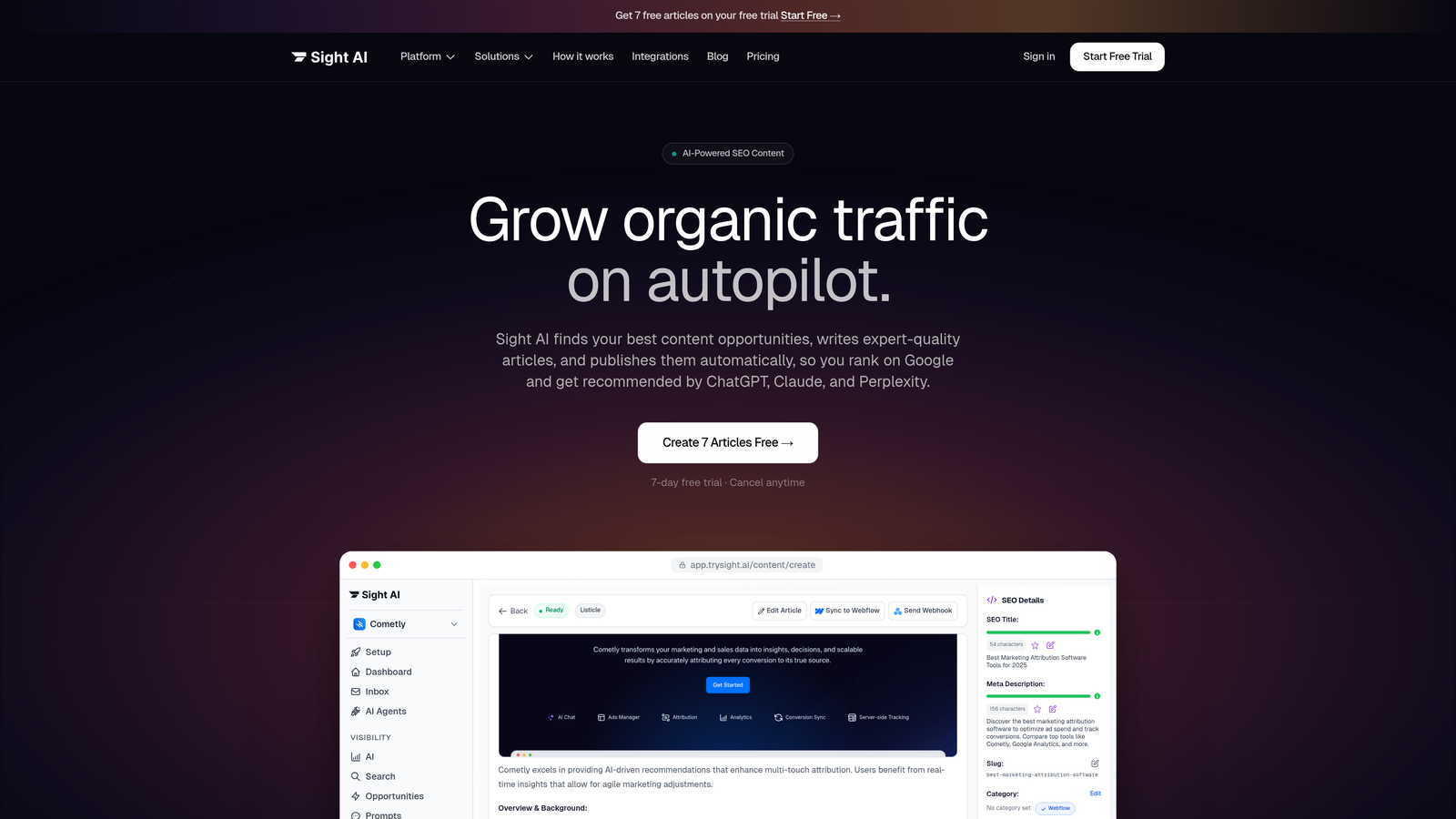
Sight AI is an all-in-one platform combining AI content generation, automated IndexNow integration, sitemap management, and AI visibility tracking across models like ChatGPT, Claude, and Perplexity.
Where This Tool Shines
Most indexing tools are bolt-ons. You write content somewhere, publish it somewhere else, then remember to submit it to an indexing service. Sight AI eliminates that fragmentation by building indexing directly into the publishing workflow. When you create and publish content through the platform, IndexNow notification happens automatically, without a separate step or manual submission.
Beyond indexing, Sight AI tracks how AI models actually mention and represent your brand across platforms like ChatGPT, Claude, and Perplexity. For teams investing in GEO (Generative Engine Optimization), that combination of content creation, indexing, and AI mention tracking is genuinely hard to find elsewhere.
Key Features
IndexNow Integration: Automatically notifies participating search engines the moment new content is published, no manual submission required.
Automated Sitemap Management: Generates and updates XML sitemaps dynamically as new pages are added.
AI Content Writer: 13+ specialized AI agents for generating SEO and GEO-optimized articles including listicles, guides, and explainers.
AI Visibility Score: Tracks brand mentions, sentiment, and prompt performance across 6+ AI platforms including ChatGPT, Claude, and Perplexity.
CMS Auto-Publishing: Publishes content directly to your CMS with indexing built into the same workflow, reducing manual handoffs.
Best For
Marketers, founders, and agencies who want to stop managing indexing as a separate task. Particularly well-suited for teams publishing AI-optimized content at scale and those who want visibility into how AI models represent their brand, not just how search engines index their pages.
Pricing
Visit trysight.ai for current plans and pricing. The platform combines multiple capabilities that would otherwise require separate subscriptions.
2. IndexNow (via Bing Webmaster Tools)
Best for: Developers and site owners who want free, protocol-level indexing notification across multiple search engines.
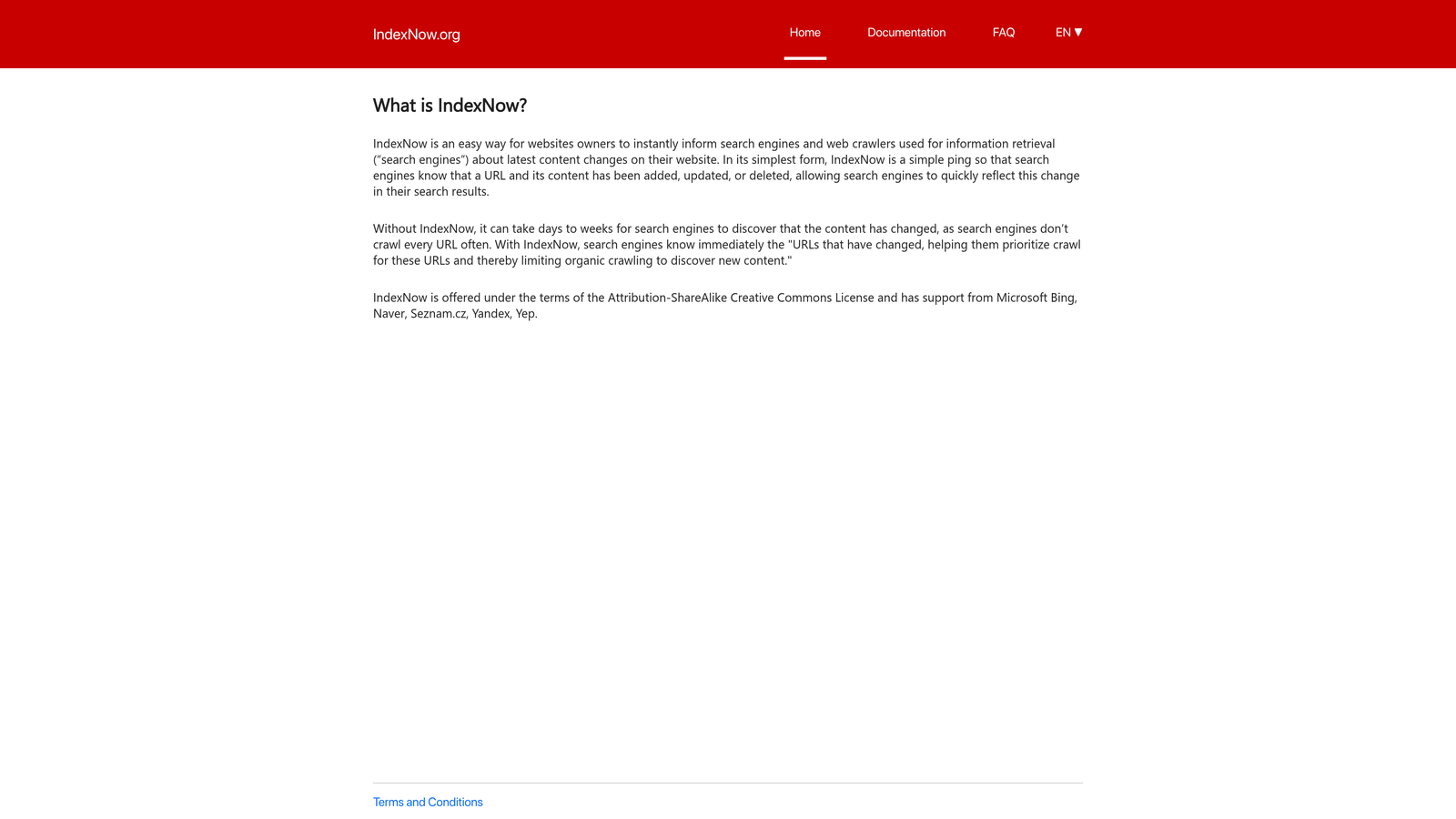
IndexNow is an open protocol backed by Microsoft that lets websites instantly notify participating search engines when content is created or updated.
Where This Tool Shines
The elegance of IndexNow is its simplicity. One API call notifies all participating search engines simultaneously, including Bing, Yandex, Seznam, and Naver. There's no per-URL fee, no account tier, and no throttling. For developers comfortable with REST APIs, it's one of the most efficient indexing methods available.
The main limitation is that Google is not a participating search engine. IndexNow covers a meaningful portion of the search landscape, but if Google is your primary traffic source, you'll need a complementary approach for Google-specific indexing.
Key Features
Single API Call: One submission notifies all participating search engines simultaneously, reducing integration complexity.
Zero Cost: Completely free to use with no usage caps or subscription requirements.
Broad Engine Support: Covers Bing, Yandex, Seznam, and Naver with a single integration.
Simple Verification: API key-based site verification with straightforward REST API implementation.
CMS Plugins: Ready-made plugins available for WordPress, Wix, and other popular CMS platforms.
Best For
Developers building custom publishing pipelines, WordPress site owners using compatible plugins, and any team that wants a free, low-maintenance indexing layer for non-Google search engines. Best used alongside a Google-specific solution.
Pricing
Completely free. No plans, no tiers, no usage fees.
3. Google Search Console
Best for: Site owners who need direct insight into Google's indexing status and want manual or API-based submission for Google specifically.
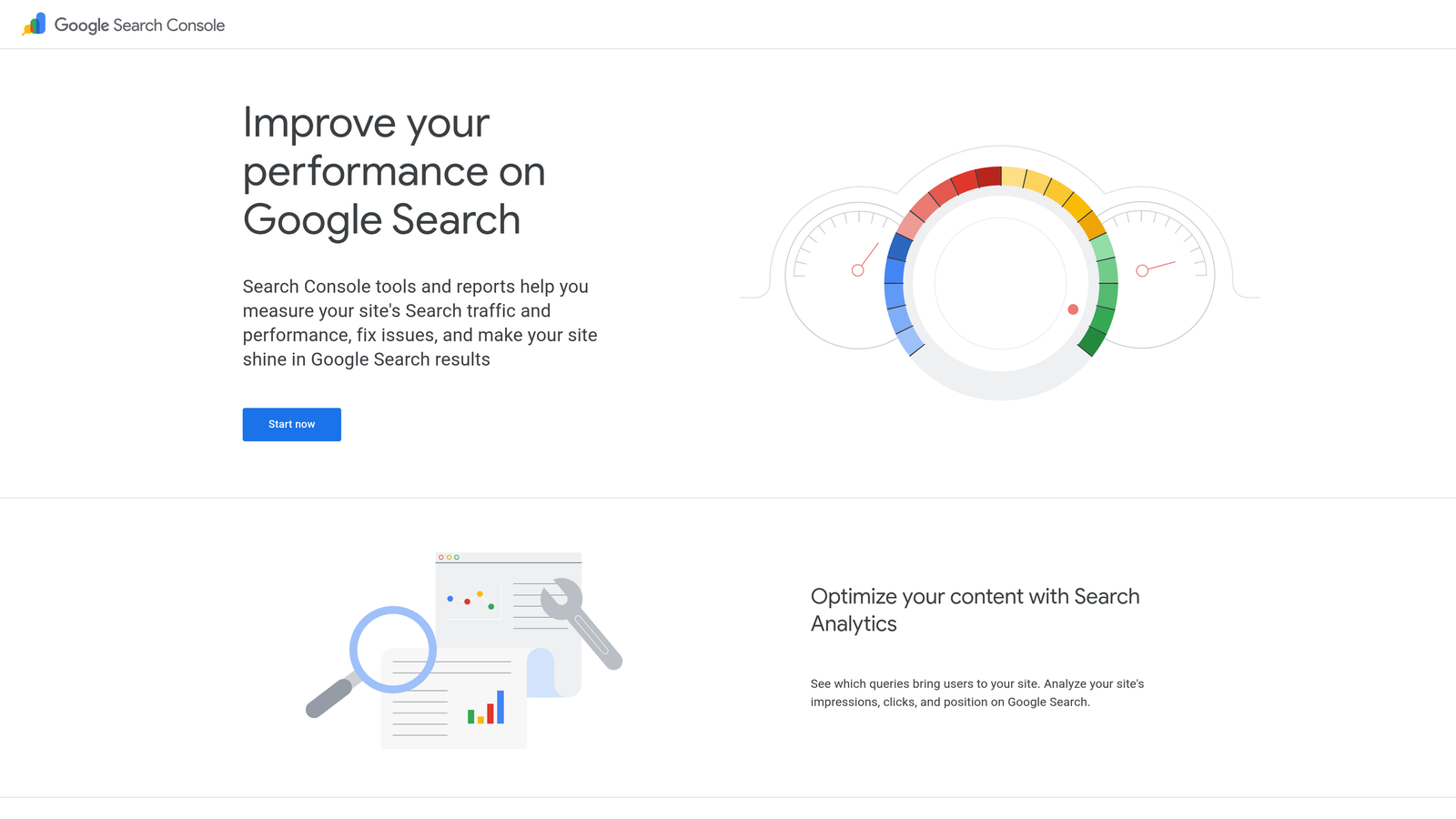
Google Search Console is Google's official webmaster platform for requesting indexing, inspecting URL coverage, and monitoring site health directly within Google's ecosystem.
Where This Tool Shines
No third-party tool gives you more authoritative data on how Google sees your site. The URL Inspection tool shows exactly why a page is or isn't indexed, and the Index Coverage report surfaces crawl errors, excluded pages, and sitemap issues at a glance. For diagnosing indexing problems, it's the first place to look.
The Indexing API offers programmatic access, though it's officially designed for job posting and livestream structured data. Many SEOs use it more broadly, with results that vary. For manual, one-at-a-time requests, the URL Inspection tool works well but comes with daily submission limits that make it impractical for bulk operations.
Key Features
URL Inspection Tool: Manually request indexing for individual URLs and see Google's crawl and render data.
Indexing API: Programmatic submission for eligible structured data content types.
Index Coverage Report: Full visibility into indexed, excluded, and errored pages across your site.
Sitemap Submission: Submit and monitor XML sitemaps directly within the platform.
Free Access: Available to all verified site owners at no cost.
Best For
Every site owner should have Google Search Console set up. It's essential for diagnosing indexing issues and monitoring coverage, though it's not designed for bulk or automated indexing workflows. Use it as a diagnostic and monitoring layer alongside faster submission tools.
Pricing
Free for all verified site owners.
4. IndexMeNow
Best for: SEOs and site owners who need bulk Google indexing submissions beyond what Search Console allows.
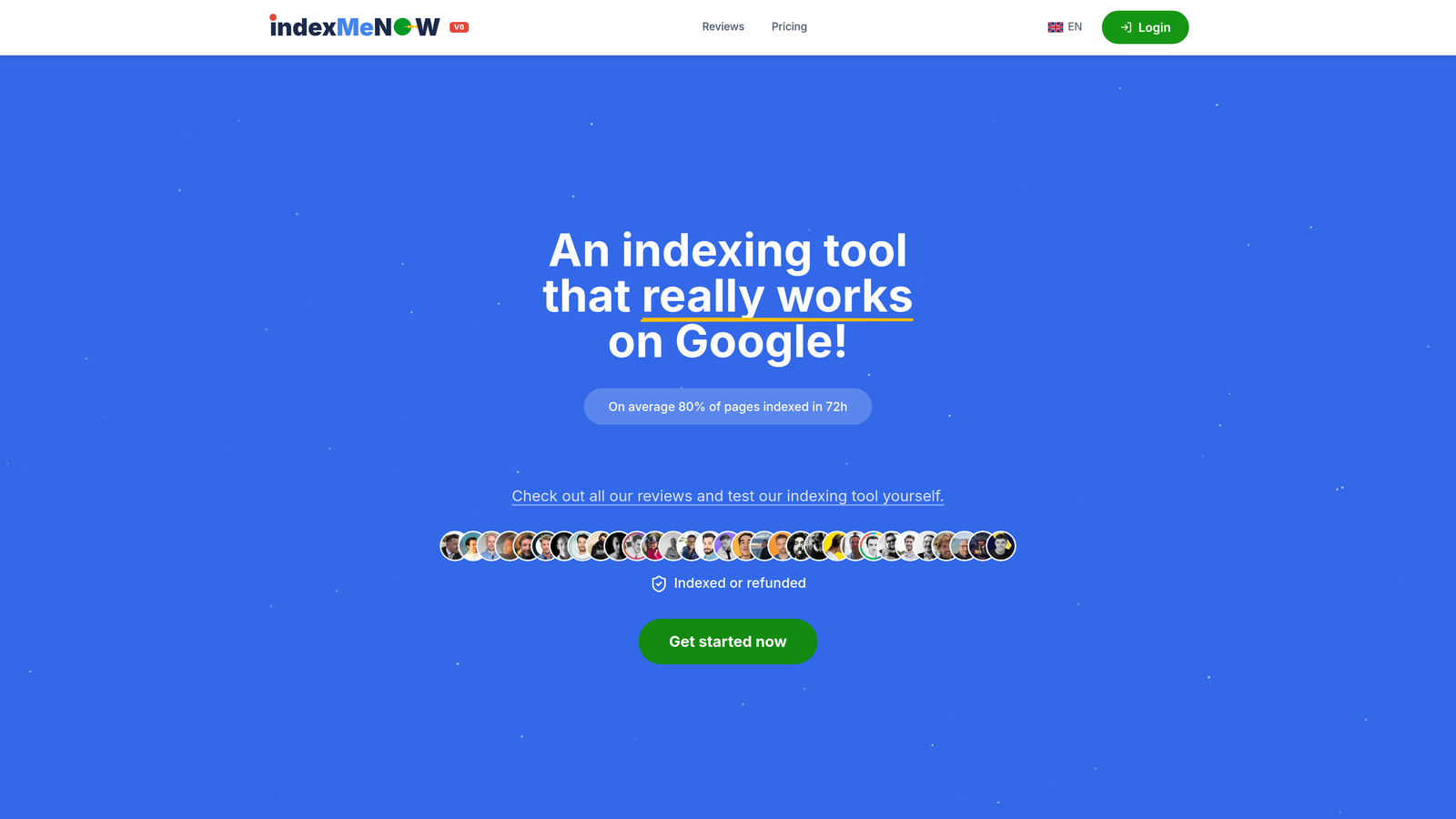
IndexMeNow is a third-party indexing service focused on getting pages into Google's index using a combination of link-based and ping-based strategies, particularly suited for bulk URL campaigns.
Where This Tool Shines
Where Google Search Console caps out at individual URL requests with daily limits, IndexMeNow is built for volume. Submit a batch of URLs, and the service works through link-based and ping-based methods to accelerate discovery. The dashboard provides per-URL tracking so you can see which pages have been picked up and which are still pending.
It's worth noting that third-party Google indexing services operate in a gray area. They don't use the official Google Indexing API in the traditional sense; instead, they rely on indirect strategies. Results can vary depending on site authority and content quality.
Key Features
Bulk Submission: Submit large batches of URLs in a single campaign rather than one at a time.
Multi-Strategy Approach: Combines backlink and ping-based methods to trigger Google crawling.
Status Dashboard: Track indexing progress per URL with a visual reporting interface.
Google-Focused: Specifically designed to address Google's indexing pipeline rather than multi-engine coverage.
Best For
Link builders, content publishers, and SEOs dealing with large volumes of URLs that aren't being discovered organically. Good for sites that have crawl budget constraints or are publishing faster than Google's natural crawl rate can keep up with.
Pricing
Credit-based pricing; plans start at around $10 for a batch of URLs. Check the site for current credit packages.
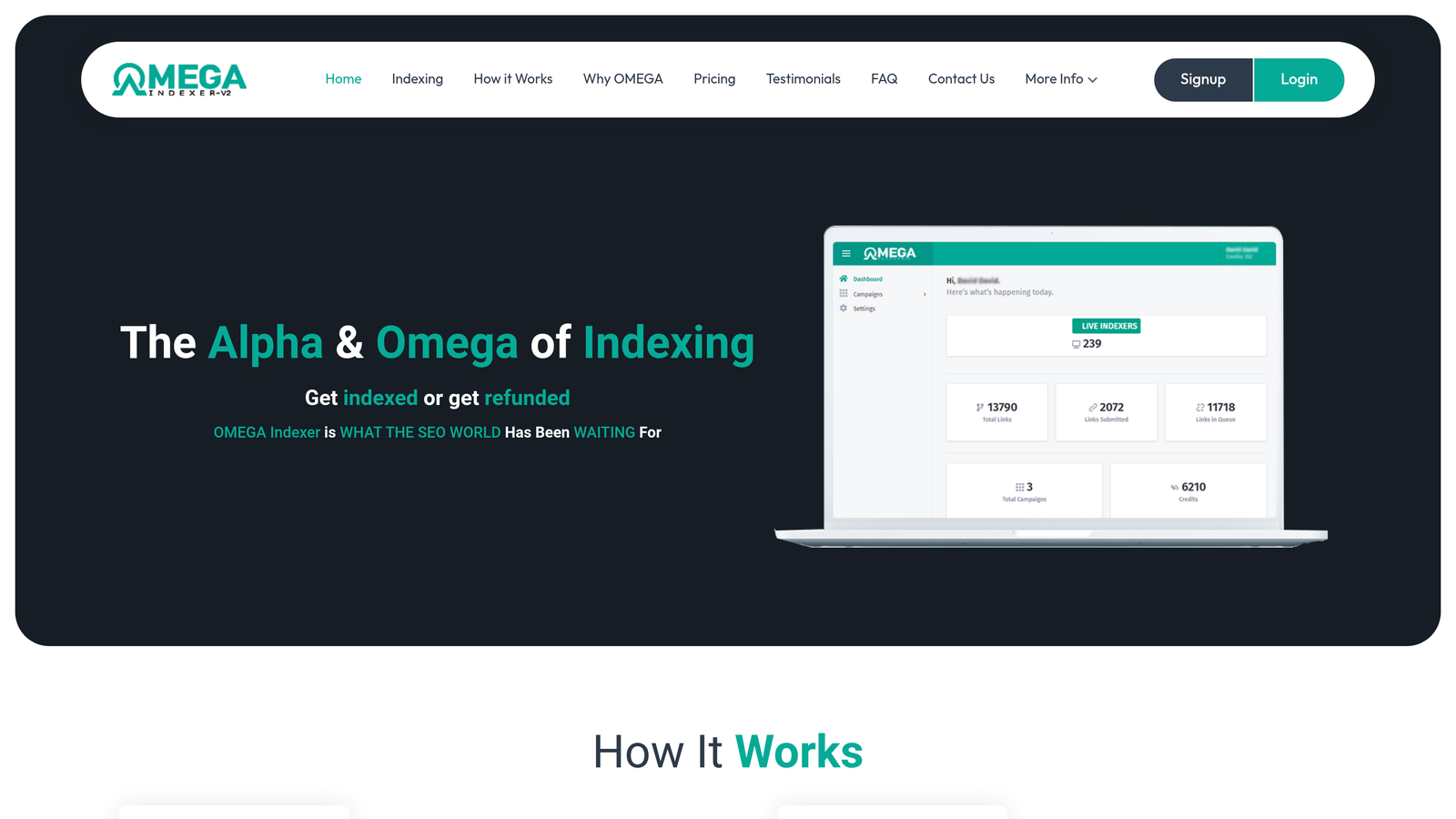
5. Omega Indexer
Best for: Link builders and affiliate marketers who need cost-effective bulk indexing for pages and backlinks.
Omega Indexer is a budget-friendly bulk indexing service built around a pay-per-URL credit model, popular in the link building and affiliate marketing communities.
Where This Tool Shines
Omega Indexer keeps things straightforward. You buy credits, submit URLs, and the service handles the rest. There's no subscription lock-in, which makes it easy to use on a campaign-by-campaign basis. For link builders who need to get newly acquired backlinks indexed quickly, the low per-URL cost makes it a practical option without a large upfront commitment.
The interface is minimal by design. It won't win any awards for sophistication, but for teams that just need URLs submitted efficiently and affordably, that simplicity is actually a feature.
Key Features
Pay-Per-URL Credits: No mandatory subscription; buy what you need when you need it.
Bulk Submission: Submit multiple URLs simultaneously through a simple interface.
Backlink Indexing: Specifically designed to support indexing of backlinks, not just site pages.
Submission Tracking: Basic dashboard for monitoring submitted URLs and status.
Best For
Affiliate marketers, link builders, and SEO freelancers who need occasional bulk indexing without committing to a monthly plan. Works well as a supplementary tool rather than a primary indexing strategy for large content operations.
Pricing
Credit-based; typically a few cents per URL depending on volume purchased. No subscription required.
6. SpeedyIndex
Best for: Teams that prioritize fast Google indexing turnaround with real-time tracking.
SpeedyIndex is an indexing service that emphasizes rapid turnaround times for Google indexing, with a real-time dashboard for tracking submission status.

Where This Tool Shines
SpeedyIndex positions itself on speed, which is the core value proposition for time-sensitive content. The real-time status dashboard is a practical differentiator: rather than submitting URLs and hoping for the best, you get ongoing visibility into which pages have been indexed and when. For content teams working against publishing deadlines or news cycles, that transparency is valuable.
The API access option makes SpeedyIndex a reasonable choice for teams that want to automate submissions as part of a broader publishing workflow, without building a full custom integration from scratch.
Key Features
Fast Turnaround: Focused on minimizing the time between submission and Google indexing.
Real-Time Dashboard: Live status tracking for submitted URLs, showing indexed vs. pending.
Bulk Submission: Handle large batches of URLs through a single submission interface.
API Access: Programmatic submission for teams building automated publishing pipelines.
Best For
Content teams publishing time-sensitive material, agencies managing multiple client sites, and developers who want API-driven indexing built into their deployment process. The real-time tracking makes it easier to manage and report on indexing performance.
Pricing
Subscription plans available. Visit speedyindex.com for current pricing tiers.
7. Ping Farm and Mass Ping Services
Best for: Bloggers and small site owners who want a free, lightweight supplementary indexing signal.
Ping Farm and similar mass ping services use the XML-RPC ping protocol to broadcast new content URLs to search engines, blog directories, and content aggregators at no cost.
Where This Tool Shines
Pinging services are the original lightweight indexing nudge. They've been around since the early blogging era, and while they're not a substitute for modern indexing protocols, they still serve a role as a supplementary signal. A single ping can notify dozens of aggregators and directories simultaneously, which can contribute to faster discovery for new content.
The honest caveat: pinging alone is unlikely to drive meaningful indexing for competitive content or large sites. It's best understood as one small layer in a broader indexing strategy, not a standalone solution.
Key Features
Free to Use: No account, payment, or setup required for most ping services.
XML-RPC Protocol: Supported natively by most blogging platforms including WordPress.
Multi-Target Broadcast: Notifies multiple search engines and aggregators in a single action.
Lightweight Integration: Minimal technical overhead; works alongside any other indexing approach.
Best For
Bloggers, small publishers, and anyone looking for a free, zero-friction supplementary indexing signal. Not recommended as a primary strategy for sites publishing at scale or with competitive SEO goals.
Pricing
Free. No registration or payment required.
8. Yoast SEO
Best for: WordPress site owners who want indexing automation built directly into their publishing workflow.
Yoast SEO is a widely-used WordPress plugin that combines built-in IndexNow support, automatic XML sitemap generation, and on-page optimization in a single package.
Where This Tool Shines
For WordPress users, Yoast SEO removes the need to think about indexing as a separate step. When you publish or update a post, IndexNow notification fires automatically in the background. The sitemap is updated without any manual intervention. From an operational standpoint, it's one of the cleanest integrations available for WordPress-based content teams.
Beyond indexing, Yoast's on-page analysis, schema markup support, and readability scoring make it a comprehensive SEO layer for WordPress. The indexing functionality is a meaningful bonus on top of an already well-established plugin.
Key Features
IndexNow Integration: Automatically pings participating search engines when content is published or updated.
XML Sitemap Generation: Creates and updates sitemaps dynamically with no manual steps.
On-Page SEO Analysis: Real-time content scoring and optimization suggestions as you write.
Schema Markup: Built-in support for structured data to improve rich result eligibility.
WordPress Native: Installs and configures within the standard WordPress plugin workflow.
Best For
WordPress site owners and content teams who want indexing handled automatically without a separate tool or integration. Particularly useful for editorial teams that don't have developer resources to manage custom API integrations.
Pricing
Free version available with core features. Yoast SEO Premium starts at $99 per year for advanced capabilities and priority support.
9. Rank Math
Best for: WordPress users who want both IndexNow and Google's Instant Indexing API in a single free plugin.
Rank Math is a feature-rich WordPress SEO plugin that supports both IndexNow and Google's Instant Indexing API, combining comprehensive SEO tooling with automated indexing capabilities.
Where This Tool Shines
Rank Math's key differentiator in the indexing space is its dual-protocol support. While Yoast covers IndexNow, Rank Math adds Google's Instant Indexing API to the mix, giving WordPress users a single plugin that addresses both Google and non-Google indexing within the same interface. For teams prioritizing Google coverage, that's a meaningful advantage over IndexNow-only solutions.
The free tier is also notably generous compared to many competing plugins. Advanced schema markup, keyword tracking, and on-page scoring are all available without a paid upgrade, making it an attractive option for budget-conscious teams that don't want to sacrifice capability.
Key Features
Dual Protocol Support: Covers both IndexNow and Google's Instant Indexing API from a single plugin.
Automatic Sitemap Management: Generates and updates XML sitemaps as content is published or modified.
Advanced Schema Generator: Supports a wide range of structured data types for rich result eligibility.
Keyword Tracking: Built-in rank tracking and on-page SEO scoring within the WordPress dashboard.
Generous Free Tier: Core indexing and SEO features available without a paid subscription.
Best For
WordPress users who want maximum indexing coverage across both Google and other search engines, particularly those who want a capable free option. Also well-suited for developers who appreciate the plugin's extensive configuration options and API flexibility.
Pricing
Free version available with substantial features. Rank Math PRO starts at $6.99 per month for advanced capabilities and multi-site support.
How to Choose the Right Indexing Service for Your Workflow
Indexing is the final mile of content SEO, and it's consistently the most overlooked one. You can have the best-optimized article on the web, but if search engines haven't indexed it, it doesn't rank. Getting this step right matters more than most teams realize until they audit their current setup and discover pages sitting unindexed for weeks.
Here's a practical breakdown by use case to help you match the right tool to your situation.
If you're on WordPress: Start with Rank Math or Yoast SEO. Both handle IndexNow automatically, and Rank Math adds Google's Instant Indexing API for broader coverage. Either one removes indexing from your mental checklist entirely.
If you need free multi-engine coverage: Implement IndexNow directly via the open protocol or Bing Webmaster Tools. It's free, well-supported, and handles Bing, Yandex, and others with a single integration. Pair it with Google Search Console for Google-specific monitoring.
If you're running bulk indexing campaigns: IndexMeNow, Omega Indexer, or SpeedyIndex are worth evaluating. They're particularly useful for link builders, affiliate marketers, and anyone publishing faster than natural crawl rates can accommodate. SpeedyIndex's real-time dashboard is a practical advantage if you need to report on indexing performance.
If you want indexing built into your content pipeline: Sight AI is the option to look at seriously. Rather than treating indexing as a separate task, it integrates IndexNow notification and sitemap management directly into the content creation and publishing workflow. Add AI content generation and AI visibility tracking across platforms like ChatGPT and Claude, and it becomes a compelling all-in-one solution for teams investing in both SEO and GEO.
Before adding any new tool, audit your current setup. Check Google Search Console's Index Coverage report to understand how many pages are actually indexed versus excluded. That baseline tells you whether you have a discovery problem, a crawl budget problem, or a content quality problem, and each requires a different solution.
The indexing gap is real, but it's fixable. Start tracking your AI visibility today and see exactly where your brand appears across top AI platforms, while ensuring every piece of content you publish gets discovered, indexed, and working for your organic growth.