Automating SEO means different things depending on the job: audits, content production, indexing, on-page changes, reporting, or monitoring how AI models describe your brand. This list is for marketers, founders, and agencies who want to remove manual hours without handing quality control to a script. Tools were chosen by which tasks they actually automate, how much human review the output needs, how well they fit an existing stack, and how clearly they present pricing. Most teams will end up combining two or three of them rather than finding one that does everything.
Quick Comparison of the Automated SEO Tools
- Sight AI: teams that want to be mentioned in AI search and automate content-to-index publishing; pricing on the vendor site; ties AI visibility tracking directly to content generation, publishing, and indexing.
- Semrush: marketing teams wanting one suite for research, monitoring, and competitive analysis; subscription tiers, see vendor site; the widest single-vendor coverage with scheduled audits and alerts.
- Ahrefs: link-focused SEOs and analysts; subscription tiers, see vendor site; a large backlink index with automated link-change alerts.
- Surfer: content teams optimizing for target keywords; subscription tiers, see vendor site; real-time on-page scoring built from live SERP analysis.
- Screaming Frog SEO Spider: technical SEOs and developers; free tier, paid annual license; the deepest configurable crawl, with custom extraction.
- Clearscope: established editorial teams; premium subscription; grading designed around writer and editor workflows.
- Jasper: marketing teams producing varied on-brand content at volume; subscription tiers, see vendor site; brand voice consistency across many content types.
- Alli AI: agencies managing many client sites; quote-based or tiered; deploys on-page changes site-wide without developer tickets.
- SE Ranking: small agencies and freelancers on a budget; subscription tiers, see vendor site; white-label scheduled client reporting at a budget-friendly tier.
1. Sight AI
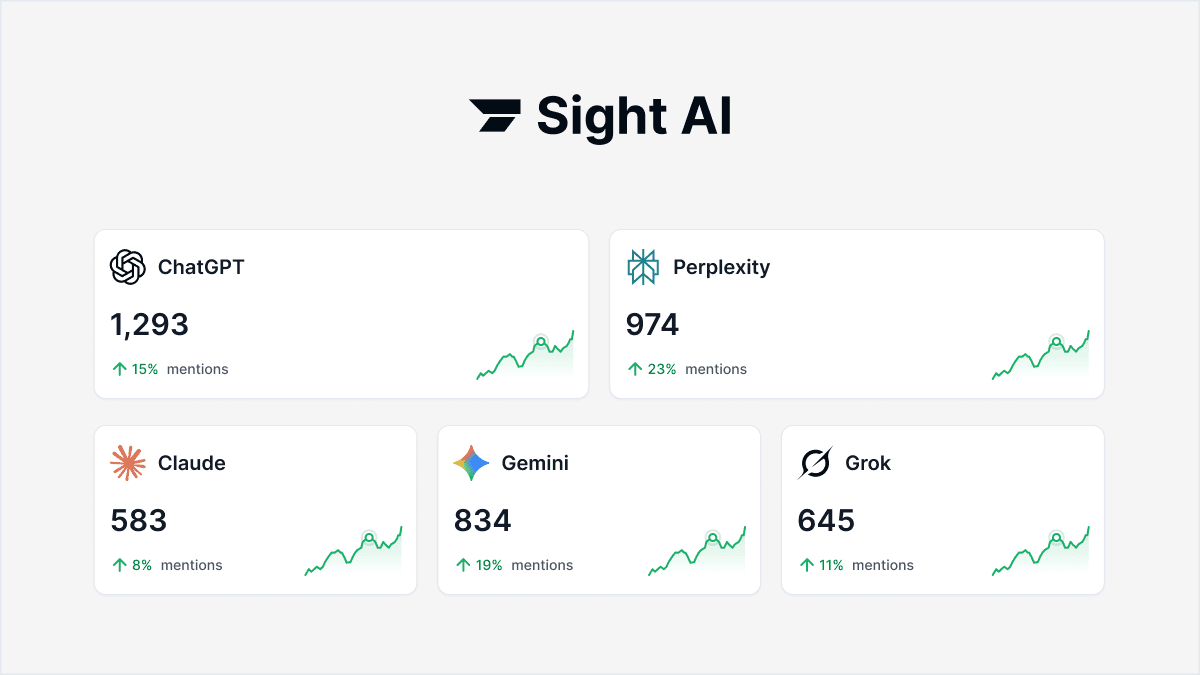
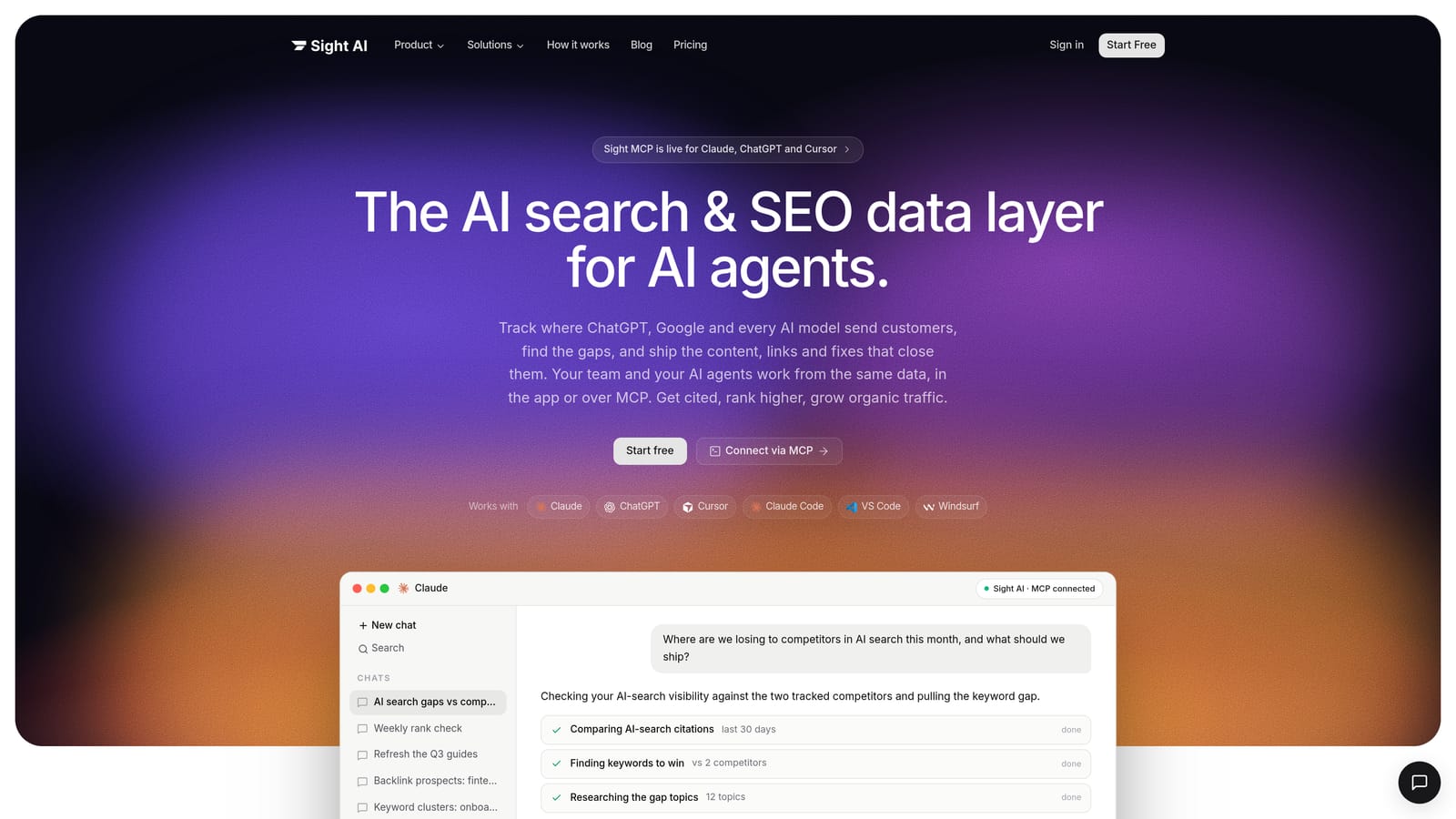
Sight AI is our own product, so weigh this entry with that in mind. It is an all-in-one platform built for teams that care about visibility inside AI answers as well as classic search. It tracks how models describe your brand, generates articles aimed at both search engines and generative engines, and pushes finished content through publishing and indexing.
Two terms matter here. GEO (generative engine optimization) is the practice of structuring content so AI models cite or mention your brand. IndexNow is a protocol that notifies participating search engines when a URL is added or changed. Google had not adopted it as of our last check, so treat it as a faster signal for engines such as Bing, not a guarantee of anything in Google.
What sets it apart on this list is the loop: visibility data informs what you write, and what you write is published and submitted for indexing without leaving the platform. Most other tools here handle only one stage.
- AI visibility tracking across ChatGPT, Claude, Perplexity, and other AI platforms shows whether and how your brand gets mentioned.
- Sentiment analysis and prompt tracking reveal whether mentions are favorable and which questions trigger them.
- The AI Content Writer uses 13+ specialized agents to draft listicles, guides, and explainers, with an Autopilot Mode for hands-off production.
- IndexNow integration and automated sitemap updates alert participating engines when content goes live.
- CMS auto-publishing removes the copy-paste step between draft and live page.
Setup is mainly connecting your site and CMS; confirm the supported CMS platforms on the vendor site before committing. A content or marketing lead can run it day to day, though someone should still edit drafts and check facts. AI-generated copy needs review, and indexing tools do not guarantee rankings.
The limitation is scope. Sight AI is not a backlink analysis tool or a deep technical crawler, so pair it with something like Screaming Frog or Ahrefs if you need full audits. Pricing: see the website for current plans.
Best for: Teams that want to get mentioned in AI search and automate content-to-index publishing.
2. Semrush
Semrush is a broad SEO suite covering keyword research, site audits, rank tracking, competitive and backlink analysis, and reporting. It is aimed at marketing teams that would rather manage one vendor than five.
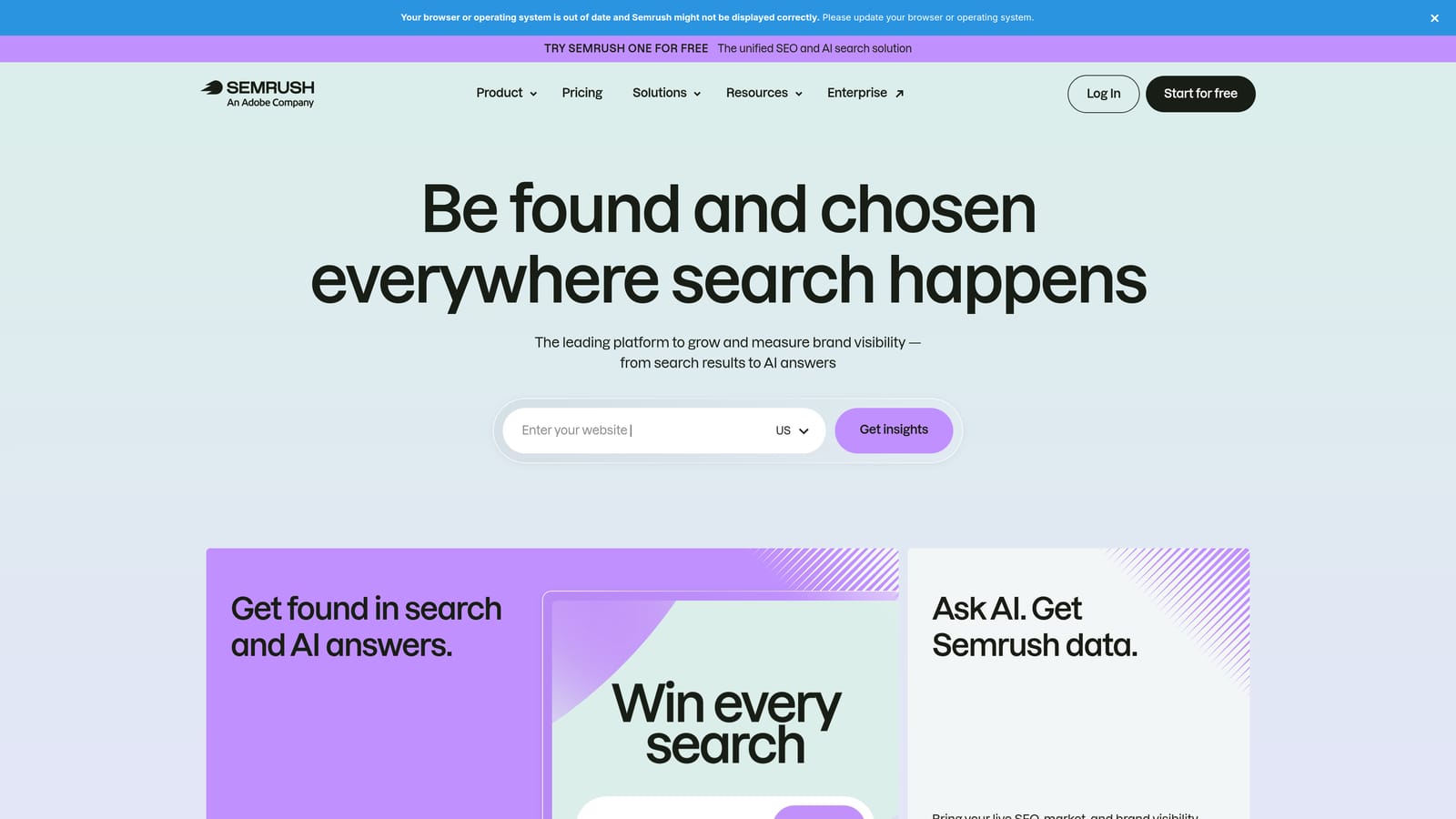
Its edge over the rest of this list is breadth with scheduling built in. Audits run on a timetable, rankings are monitored continuously, and alerts surface problems without anyone opening a dashboard.
- Site Audit runs scheduled crawls and flags technical issues so regressions are caught after releases.
- Position Tracking monitors keyword rankings by location and device over time.
- Keyword Magic Tool generates and groups large keyword sets for planning.
- Backlink analytics shows who links to you and your competitors.
- Automated reporting sends stakeholder reports on a schedule.
It connects to Google Search Console, Google Analytics, Looker Studio, and WordPress. Setup is light for the basics, but getting value from the full suite takes an hour or two of configuration per project, and an SEO owner should be assigned to it.
The main drawback is sprawl. Add-ons and modules can raise the cost and complexity, which hurts small teams that only need two or three features. Pricing is by subscription tier; limits on projects, tracked keywords, and crawled pages push you up a tier. Check the vendor site for current figures as of October 2026.
Best for: Marketing teams wanting one suite for research, monitoring, and competitive analysis.
3. Ahrefs
Ahrefs is known for its backlink data, alongside keyword research, rank tracking, and site auditing. It suits analysts and link builders who need dependable competitive numbers more than a content engine.
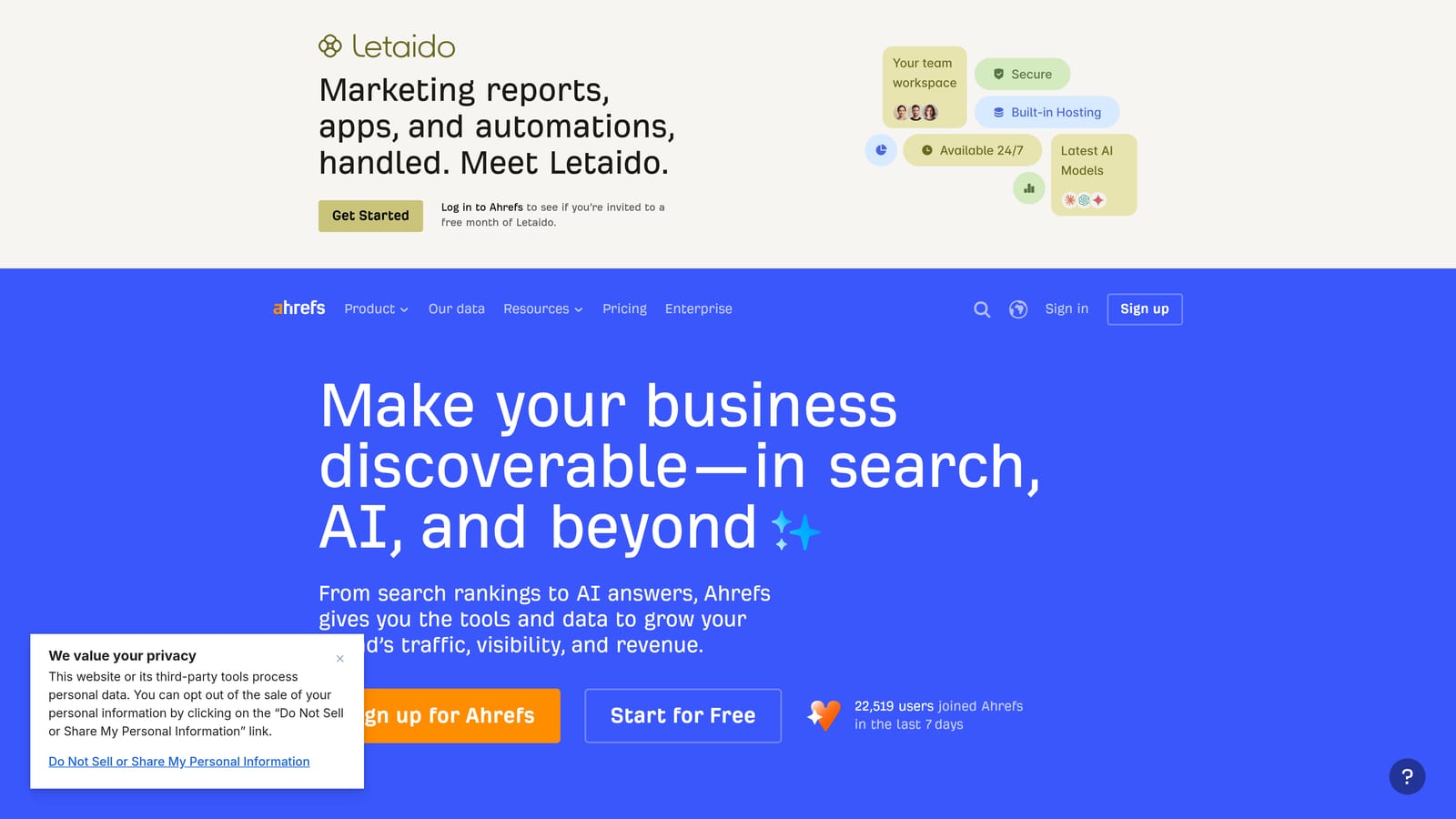
Its distinctive strength is the size of its backlink index combined with alerts that tell you when links are gained or lost, so link monitoring happens without manual checks.
- Site Explorer breaks down any domain's backlinks, top pages, and organic traffic.
- Keywords Explorer surfaces search volume, difficulty, and related terms for planning.
- Site Audit crawls your site and reports technical problems.
- Rank Tracker follows positions for your target keywords.
- Backlink and keyword alerts notify you of changes automatically.
It integrates with Google Search Console, Google Analytics, and Looker Studio. Setup is quick, and one SEO analyst can run it. The learning curve sits in interpreting the data rather than configuring the tool.
Ahrefs is not built to produce or publish content, so it will not shorten your writing or indexing workflow. If you want drafts and CMS publishing automated, you will need another tool alongside it. Pricing is subscription-based, with tiers that vary by number of projects, users, and usage limits; see the vendor site for current rates.
Best for: Link-focused SEOs and analysts needing reliable competitive data.
4. Surfer
Surfer is a content optimization platform that scores drafts against top-ranking pages and can also generate AI-assisted articles. It is built for content teams who write to a target keyword and want a measurable standard for the draft.
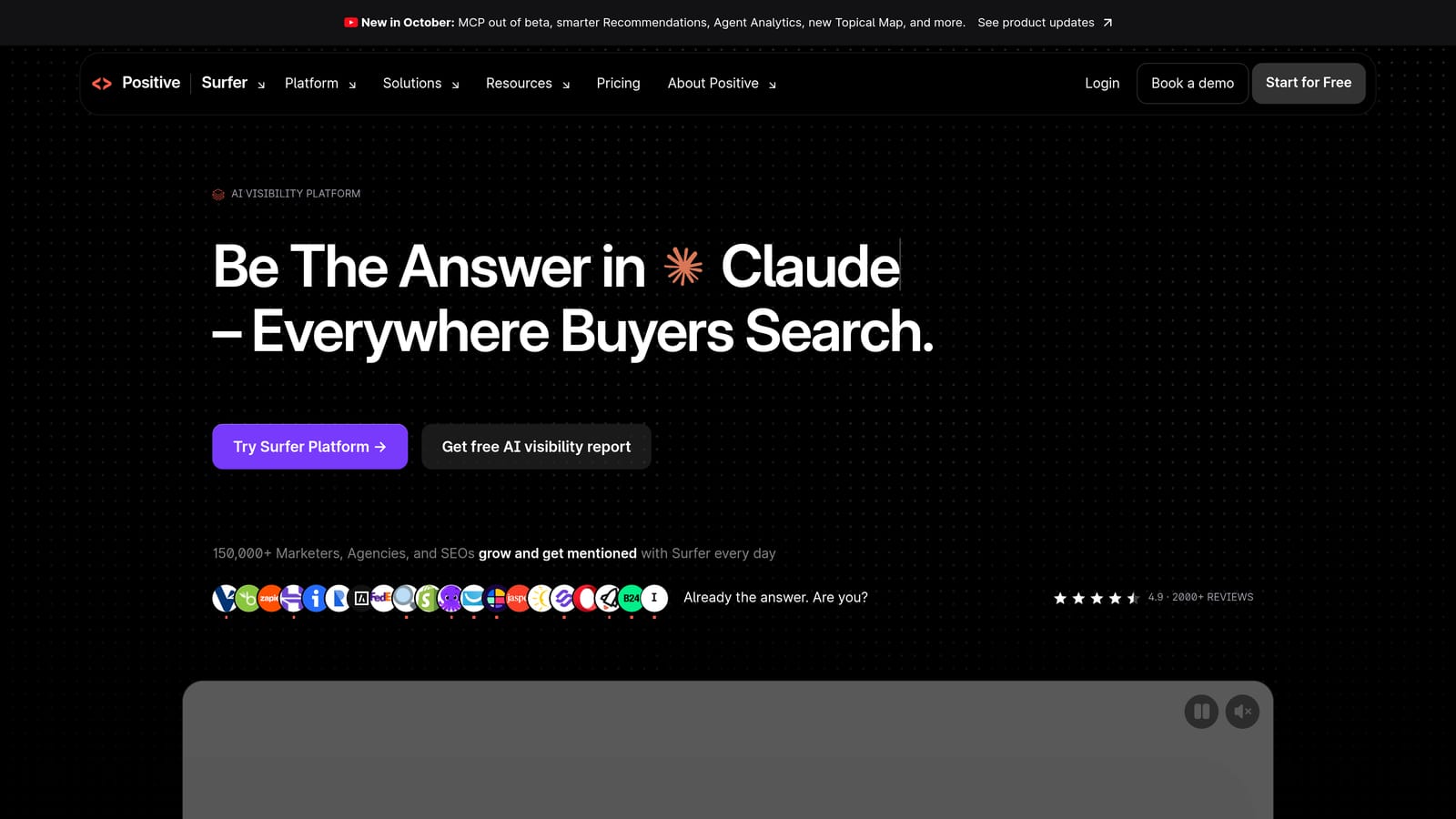
The standout is real-time scoring built from live SERP analysis. As you write, the editor updates its guidance on terms, structure, and length based on what currently ranks.
- The Content Editor scores your draft live so editors know when it is competitive.
- AI article generation produces a first draft you can refine.
- SERP-based term and structure guidance shows what ranking pages cover.
- Audit reviews existing pages and suggests improvements.
- Keyword research and content planning help organize topic clusters.
It works with Google Docs, WordPress, and Jasper, which makes it easy to slot into a drafting workflow. Setup is minimal, and writers or content managers use it directly.
The focus is on-page. There is no technical crawling and no indexing automation, so it will not find broken links or tell search engines about new URLs. A high score also does not replace original insight, and chasing the score can produce bland copy. Pricing is by subscription tier, typically scaling with the number of articles or credits; see the vendor site as of October 2026.
Best for: Content teams optimizing articles for target keywords.
5. Screaming Frog SEO Spider
Screaming Frog SEO Spider is a desktop crawler for in-depth technical analysis, with scheduling and export options. It is aimed at technical SEOs and developers working on large or complex sites.
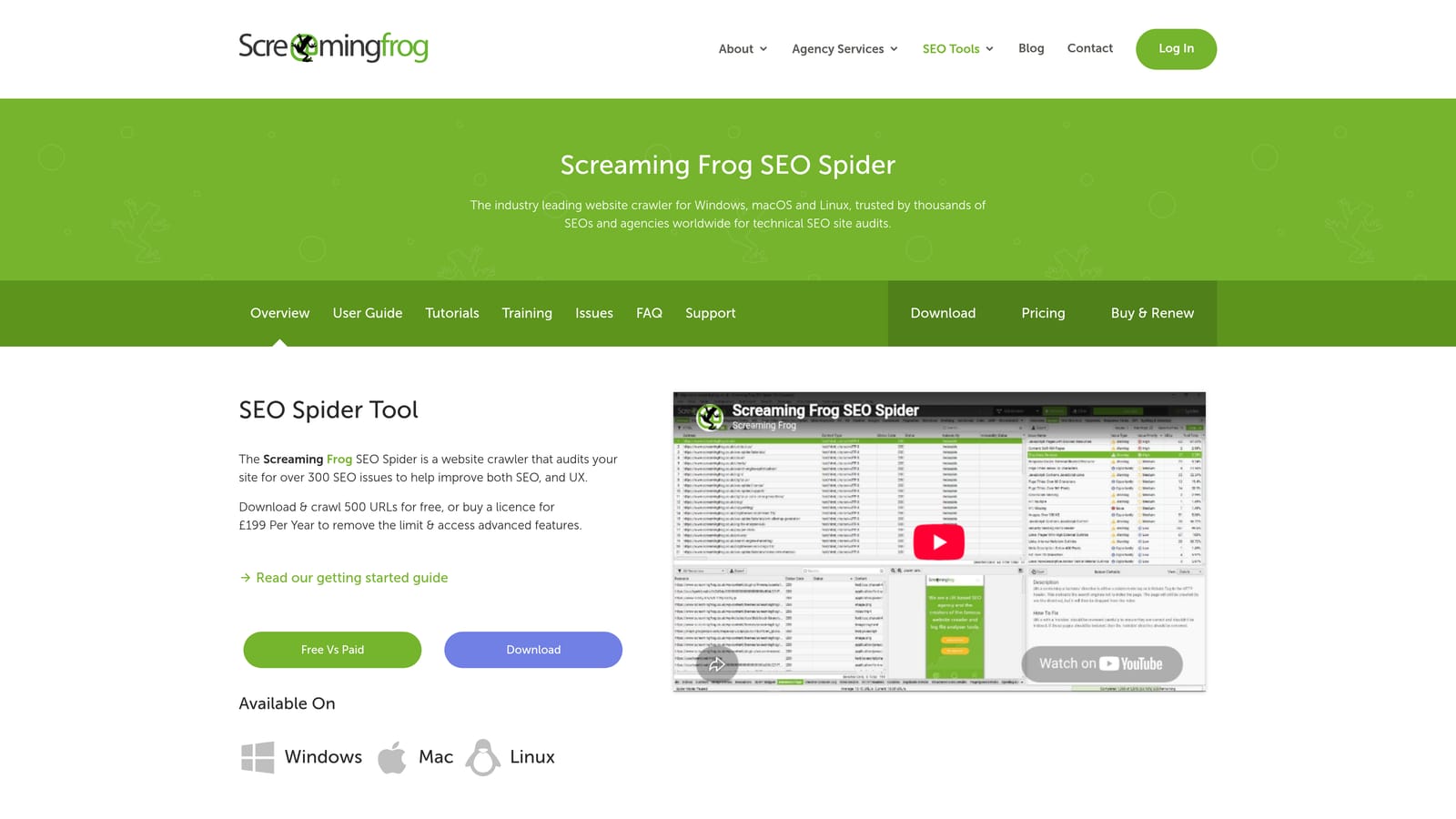
No other tool here matches its configurable crawl depth. Custom extraction lets you pull arbitrary data from page HTML, which makes it useful for checks no preset report covers.
- Broken link and redirect detection finds dead ends and redirect chains in bulk.
- Duplicate content and canonical checks expose indexing conflicts.
- Structured data validation catches schema errors before they cost you rich results.
- Scheduled crawls run audits automatically and export results.
- Custom extraction pulls specific elements, such as prices or author tags, across every page.
It connects to Google Analytics, Google Search Console, and PageSpeed Insights, and feeds Looker Studio through exports. Because it runs on your machine, large crawls depend on your memory and hardware settings.
The learning curve is steep, and the output needs an expert to interpret; it reports issues but does not prioritize them for you. It also does nothing for content or AI visibility. There is a free tier with a crawl limit, and a paid annual license removes it; see the vendor site for the current fee.
Best for: Technical SEOs and developers auditing large or complex sites.
6. Clearscope
Clearscope gives writers and editors term recommendations and a grade for each draft. It targets established editorial teams that already have a content process and want consistent quality across many writers.
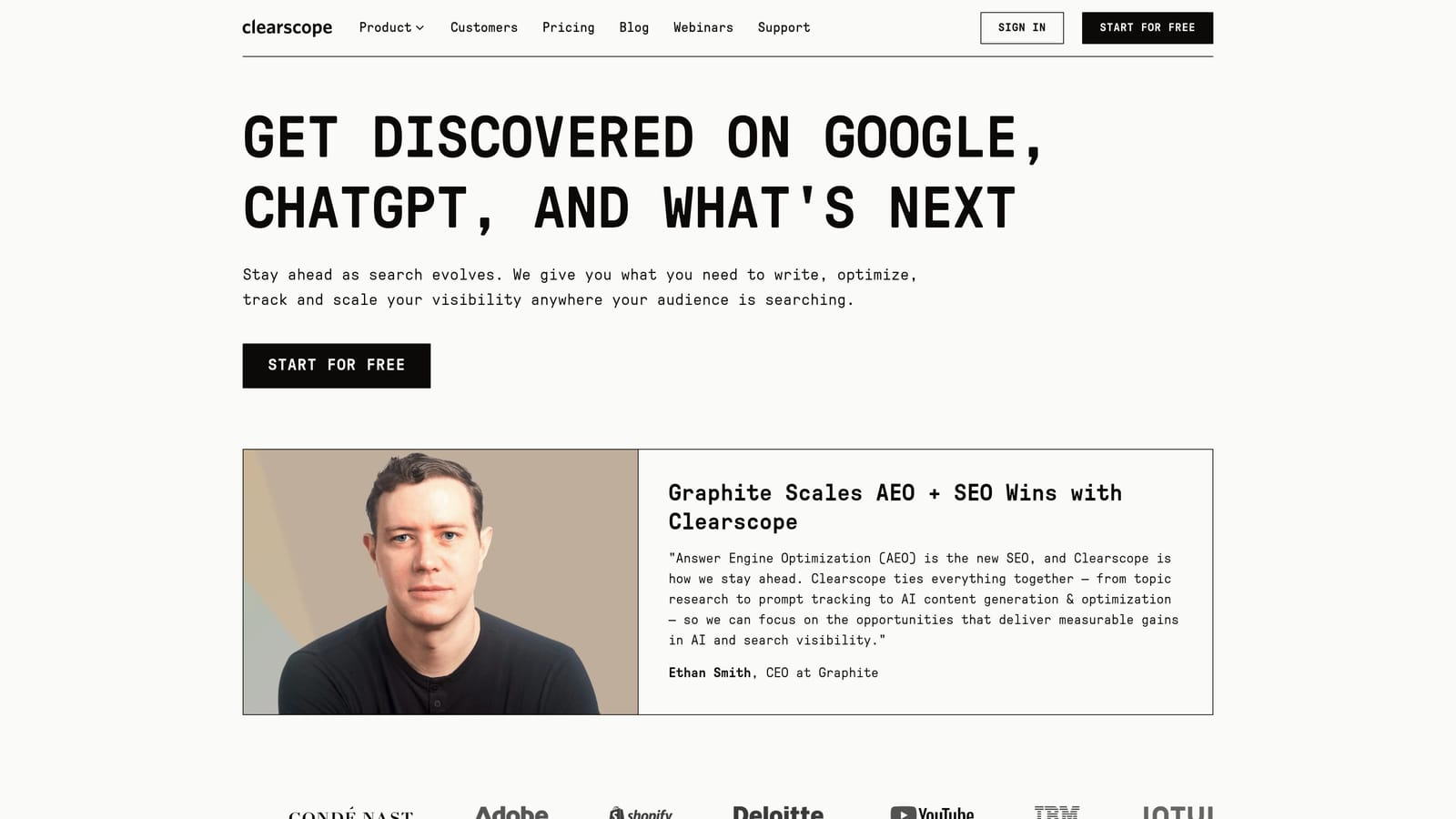
What distinguishes it is the editorial focus. The interface is designed around how writers and editors work, so adoption tends to be easier than with more technical tools.
- Content grading gives a clear pass mark editors can enforce across contributors.
- Keyword and term recommendations show which topics a thorough article should cover.
- Content inventory and reporting track performance across your library.
- Google Docs integration lets writers work where they already draft.
- WordPress integration brings the scoring into the publishing environment.
It also connects with Semrush. Setup takes little effort, and editors or content leads typically own it.
The trade-offs are cost and narrowness. It is priced at a premium, and it does only content optimization: no crawling, no rank tracking, no indexing, no AI visibility. Small teams or solo operators may find the price hard to justify. Pricing is a premium subscription; see the vendor site for current plans.
Best for: Established editorial teams refining content quality at scale.
7. Jasper
Jasper is an AI marketing platform for generating on-brand content across channels, including blog posts. It is built for marketing teams that need varied output, such as emails, ads, and social copy, as well as articles.

Its distinguishing strength is brand voice consistency across many content types. SEO is only one use case, which makes it the most general-purpose writer on this list.
- Brand voice controls keep tone and terminology consistent across writers and formats.
- Templates and workflow agents speed up repeatable content tasks.
- Multi-channel generation covers blog posts, ads, emails, and social from one place.
- Team collaboration lets several people work within shared voice settings.
- A browser extension brings generation into other tools.
It integrates with Surfer, Google Docs, and possibly Zapier (confirm on the vendor site). Setup mostly involves training the brand voice, and marketers use it directly.
SEO-specific optimization is lighter than in Surfer or Clearscope, and it has no AI visibility tracking, indexing, or technical features. Output still needs fact-checking and editing. Pricing is by subscription tier; see the vendor site as of October 2026 for current plans and seat limits.
Best for: Marketing teams producing varied on-brand content at volume.
8. Alli AI
Alli AI automates on-page SEO by deploying optimizations across a site through a code snippet. It is aimed at agencies and in-house teams who cannot wait for developer tickets to change titles, schema, or internal links.
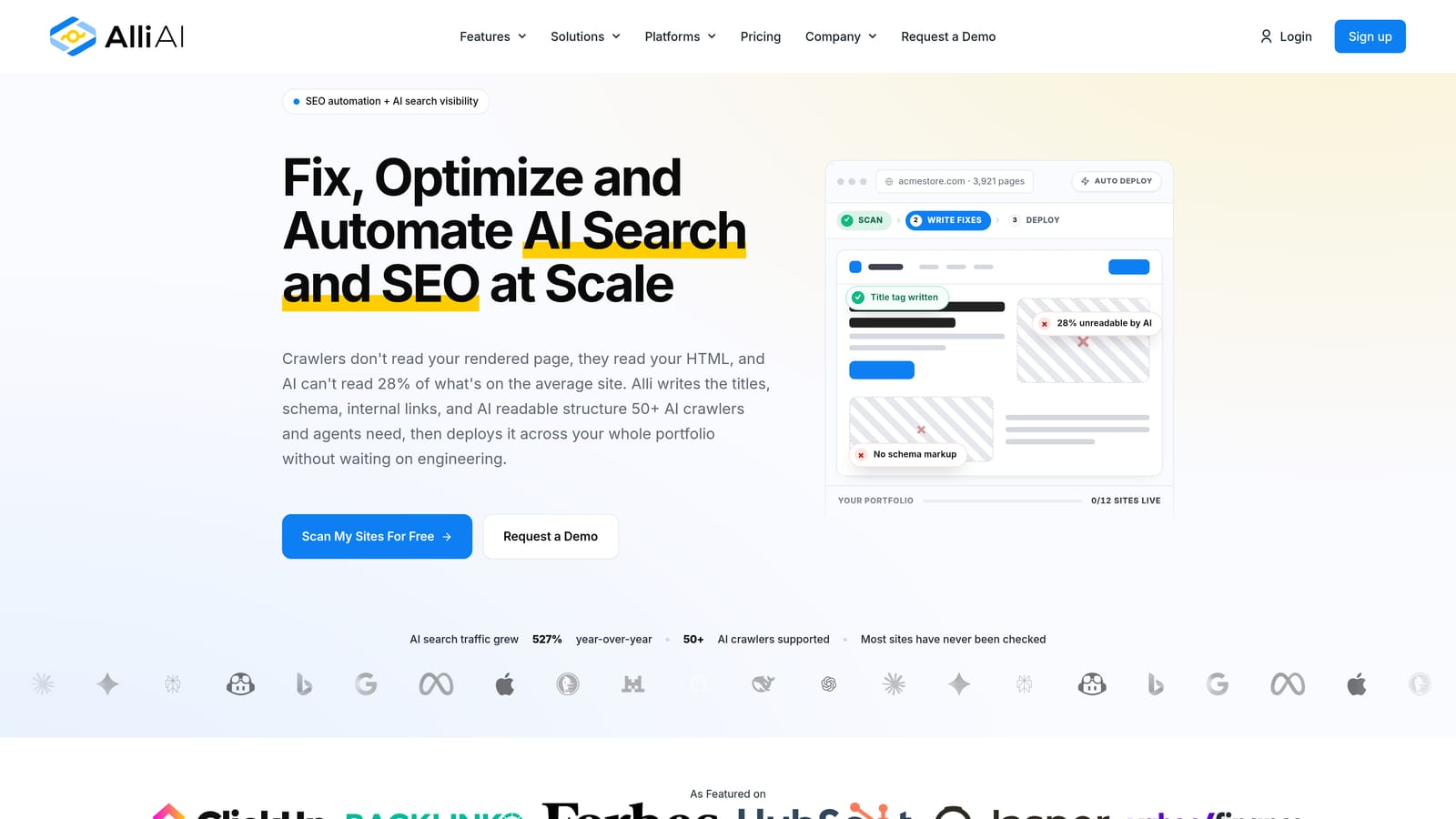
Its distinctive trait is that changes go live site-wide without touching the underlying CMS code, which turns a weeks-long backlog into a bulk edit.
- Bulk on-page changes apply edits across many pages at once.
- Automated schema and meta updates keep markup and snippets current.
- Internal linking automation adds links without manual placement.
- Multi-site management lets agencies handle many clients from one account.
- Change tracking records what was altered so you can audit or roll back.
It works with major CMS platforms through the snippet (confirm compatibility for yours) and with Google Search Console. Setup means installing the snippet, which may still need developer or IT sign-off.
Bulk automated changes are risky. A bad rule can spread an error across hundreds of pages, so it needs careful QA and ongoing oversight. It is also not a research, content, or AI visibility tool. Pricing is quote-based or tiered and tends to scale with sites and pages; see the vendor site.
Best for: Agencies managing many client sites that need fast on-page fixes.
9. SE Ranking
SE Ranking is an affordable all-in-one SEO platform combining rank tracking, audits, and white-label reporting. It is designed for small agencies and freelancers who need to show clients results without enterprise software costs.
Its standout is scheduled, white-label client reporting at a budget-friendly tier, so reports go out under your brand without manual assembly.
- Rank tracking monitors client keywords across locations and devices.
- Website audit finds technical issues on a schedule.
- White-label reports deliver branded, automated updates to clients.
- Backlink monitoring keeps an eye on link gains and losses.
- Competitor research benchmarks your clients against rivals.
It connects to Google Search Console, Google Analytics, and Looker Studio. Setup is straightforward, and one account manager can handle many projects.
Its data indexes are smaller than those of the largest suites, so backlink and keyword depth may fall short for competitive niches. It also offers no content generation or AI visibility tracking comparable to Sight AI. Pricing is by subscription tier, generally driven by tracked keywords and projects; check the vendor site for current rates as of October 2026.
Best for: Small agencies and freelancers needing automated client reporting on a budget.
Matching Automated SEO Software to Your Stack
No single tool automates every part of SEO, so pick by job. For GEO plus content-to-index automation, Sight AI is the strongest fit here: it connects AI visibility tracking to drafting, publishing, and indexing. For all-in-one research and monitoring, choose Semrush for breadth or Ahrefs if backlink data matters most. Screaming Frog remains the pick for technical audits, and Surfer or Clearscope for content optimization, with Clearscope suiting larger editorial teams. For agency scale, Alli AI handles bulk on-page fixes and SE Ranking handles budget client reporting.
Whatever you choose, automation does not replace strategy. Edit AI-written drafts, check facts, QA bulk changes, and remember that indexing tools speed discovery but do not guarantee rankings. Verify current pricing and plan limits on each vendor's site before buying.
Stop guessing how AI models like ChatGPT and Claude talk about your brand. Get visibility into every mention, track content opportunities, and automate your path to organic traffic growth. Start tracking your AI visibility today and see exactly where your brand appears across top AI platforms.