Automated publishing tools have moved well beyond simple scheduling. Today's top platforms combine content generation, SEO optimization, CMS integration, and AI visibility tracking into unified workflows, helping marketers, founders, and agencies ship more content without scaling headcount.
The challenge is finding a tool that doesn't just publish fast, but publishes smart: content that ranks in traditional search and gets cited by AI models like ChatGPT, Claude, and Perplexity. That second part is where most tools fall short.
This review covers six tools selected for their publishing automation depth, SEO and GEO optimization capabilities, and fit for growth-focused teams. The comparison spans the full spectrum from standalone content generators to platforms that close the entire loop: generate, publish, index, and track AI mentions. Whether you're a solo founder building topical authority or an agency managing multiple client content pipelines, this list will help you find the right fit.
1. Sight AI
Best for: Teams that want a single platform covering content generation, automated publishing, indexing, and AI visibility tracking.
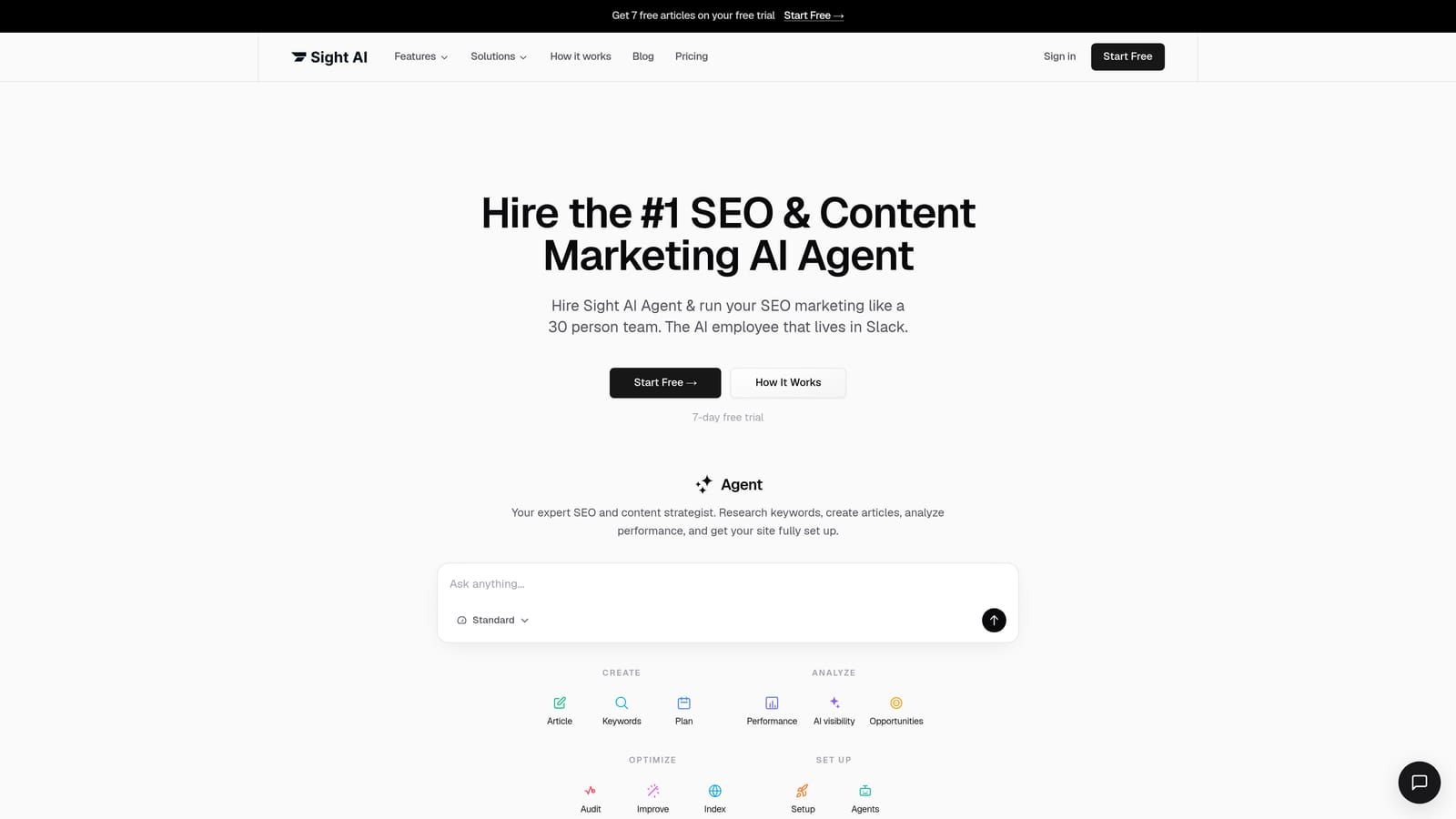
Sight AI is an all-in-one platform that combines AI content generation, automated CMS publishing, IndexNow-powered indexing, and brand mention tracking across 6+ AI models including ChatGPT, Claude, and Perplexity.
Where This Tool Shines
Most publishing tools handle one side of the content equation: either they help you create and publish, or they help you track performance. Sight AI is built around the idea that these two functions belong together. Its Autopilot Mode runs the entire pipeline from topic discovery through AI writing, SEO and GEO optimization, auto-publishing, and indexing, then feeds results directly into AI visibility tracking.
The AI visibility layer is genuinely differentiated. Knowing that your content was published is one thing; knowing whether ChatGPT or Claude is actually citing it in responses is another. Sight AI's AI Visibility Score gives you that second layer of insight, along with sentiment analysis and prompt tracking that surfaces new content opportunities based on how AI models are already discussing your space.
Key Features
13+ Specialized AI Writing Agents: Purpose-built agents for listicles, how-to guides, explainers, and other content formats, each optimized for SEO and GEO output rather than generic text generation.
Autopilot Mode: End-to-end pipeline automation that moves content from topic discovery through writing, optimization, publishing, and indexing with minimal manual intervention.
CMS Auto-Publishing with IndexNow: Direct CMS integration paired with IndexNow protocol submission, so published content gets discovered by search engines faster than standard crawl timelines allow.
AI Visibility Score: Tracks how your brand is mentioned across 6+ AI platforms, including sentiment analysis and share-of-voice benchmarking against competitors.
Prompt Tracking and Content Opportunity Discovery: Monitors what prompts are surfacing competitor mentions and identifies gaps your content strategy can target.
Best For
Sight AI is best suited for marketers, founders, and agencies who need to build topical authority in both traditional search and AI search simultaneously. It's particularly valuable for teams that don't want to stitch together separate tools for writing, publishing, indexing, and visibility tracking. If closing the full content loop matters to you, this is the platform built for it.
Pricing
Visit trysight.ai for current pricing tiers and free trial availability. Plans are designed to scale with team size and content volume.
2. Writesonic
Best for: High-volume content production teams that need flexible AI writing across multiple formats.
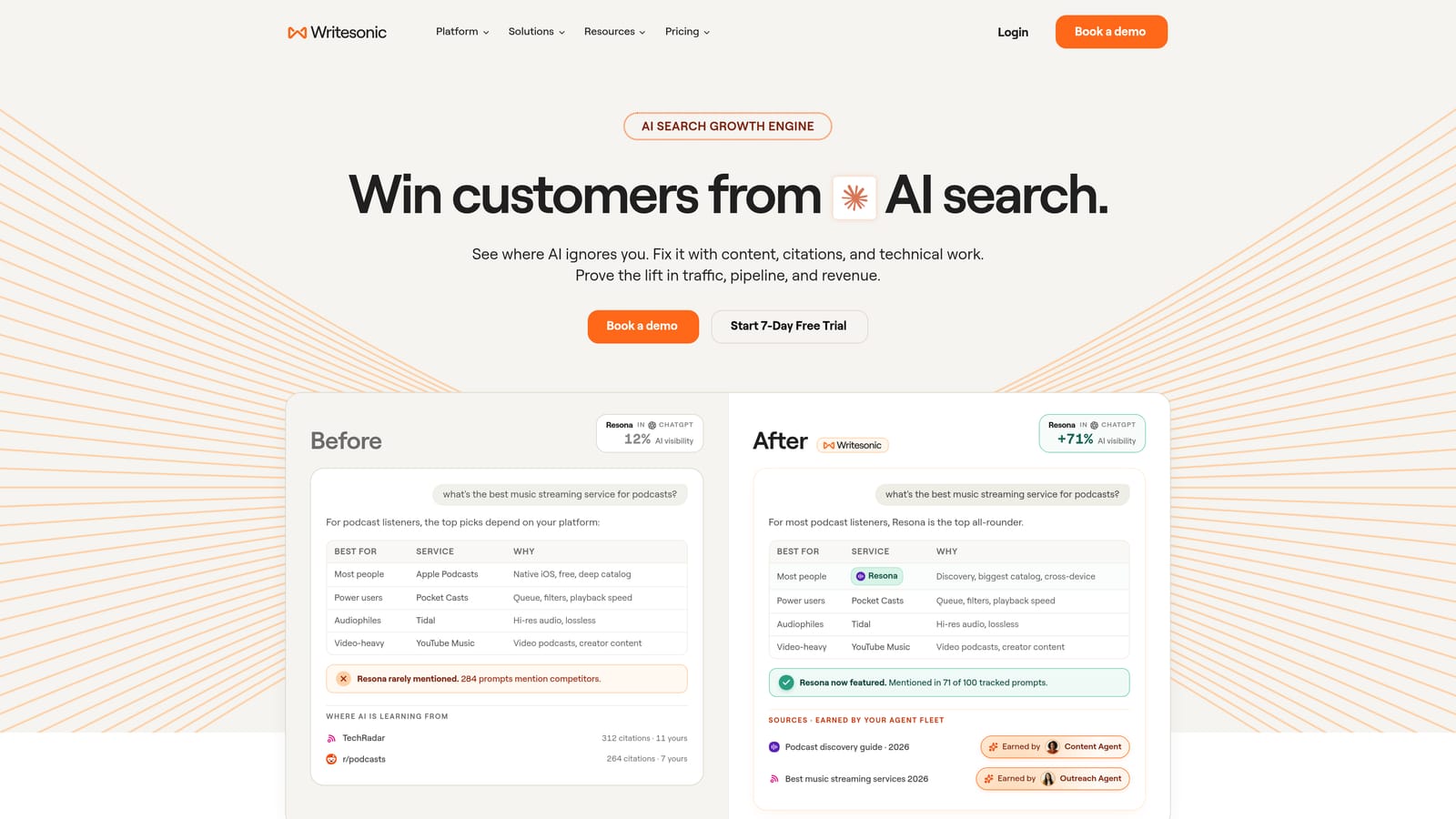
Writesonic is an AI content generation platform supporting blogs, landing pages, ads, and social content, with CMS integrations that enable basic automated publishing workflows.
Where This Tool Shines
Writesonic excels at content volume. Its AI article writer includes an SEO mode that pulls in keyword data and structures drafts around search intent, making it a practical choice for teams that need to produce a high quantity of optimized content quickly. The Chatsonic assistant adds a research-to-draft layer that can speed up content briefing and ideation.
The CMS integrations, including WordPress, allow teams to push drafts directly to their publishing environment without leaving the platform. It's worth being clear, though: publishing automation here is a supporting feature, not the core product. Teams looking for sophisticated pipeline automation or AI visibility tracking will need to supplement Writesonic with other tools.
Key Features
AI Article Writer with SEO Mode: Generates long-form content drafts optimized around target keywords and search intent signals.
Chatsonic AI Assistant: A conversational AI layer for research, ideation, and moving from brief to draft more efficiently.
WordPress and CMS Integrations: Enables direct content publishing from within the Writesonic interface to connected CMS platforms.
Multi-Format Content Support: Covers blogs, ads, social posts, product descriptions, and landing pages from a single platform.
Brand Voice Customization: Allows teams to define tone and style parameters for more consistent AI-generated output across projects.
Best For
Writesonic fits content teams and agencies focused primarily on high-volume AI-assisted writing across multiple formats. It's a strong fit if your bottleneck is content creation speed rather than publishing pipeline complexity or AI visibility measurement.
Pricing
A free tier is available. Paid plans scale with usage and feature access. Check writesonic.com for current rates and plan details.
3. AirOps
Best for: Technical marketing teams that need fully customizable AI content workflows with multi-step logic.
AirOps is a flexible AI workflow automation platform that lets teams build custom multi-step content pipelines, from data ingestion and AI generation through to publishing actions.
Where This Tool Shines
AirOps is built for teams that have outgrown out-of-the-box templates. Its visual workflow builder lets you chain together LLM calls, data enrichment steps, conditional logic, and publishing actions into pipelines that match your exact process, not a vendor's idea of what your process should look like. This makes it particularly powerful for agencies managing complex, repeatable content operations across multiple clients or verticals.
The tradeoff is setup time. AirOps rewards teams with ops resources and technical comfort. If you want something running in an afternoon, this probably isn't it. But if you need a workflow engine that can handle genuinely custom logic, AirOps is one of the more capable options available.
Key Features
Visual Workflow Builder: Drag-and-drop interface for constructing multi-step AI pipelines with conditional logic and publishing actions.
Multi-LLM Support: Chain together calls across different language models within a single workflow based on task requirements.
Data Enrichment and External Source Integration: Pull in external data sources to inform AI generation steps, enabling more contextually accurate outputs.
Template Library: Pre-built workflow templates for common content automation scenarios to accelerate initial setup.
Team Collaboration and Version Management: Workflow version history and shared team access for managing pipelines at scale.
Best For
AirOps is best for technical marketing teams and agencies with ops resources who need custom content automation logic that turnkey platforms can't accommodate. Less suited to teams looking for native SEO or GEO optimization without additional configuration.
Pricing
Plans are typically usage-based or seat-based for teams. Check airops.com for current pricing and available tiers.
4. Promptwatch
Best for: Teams running prompt-driven content workflows who need version control and output quality monitoring.
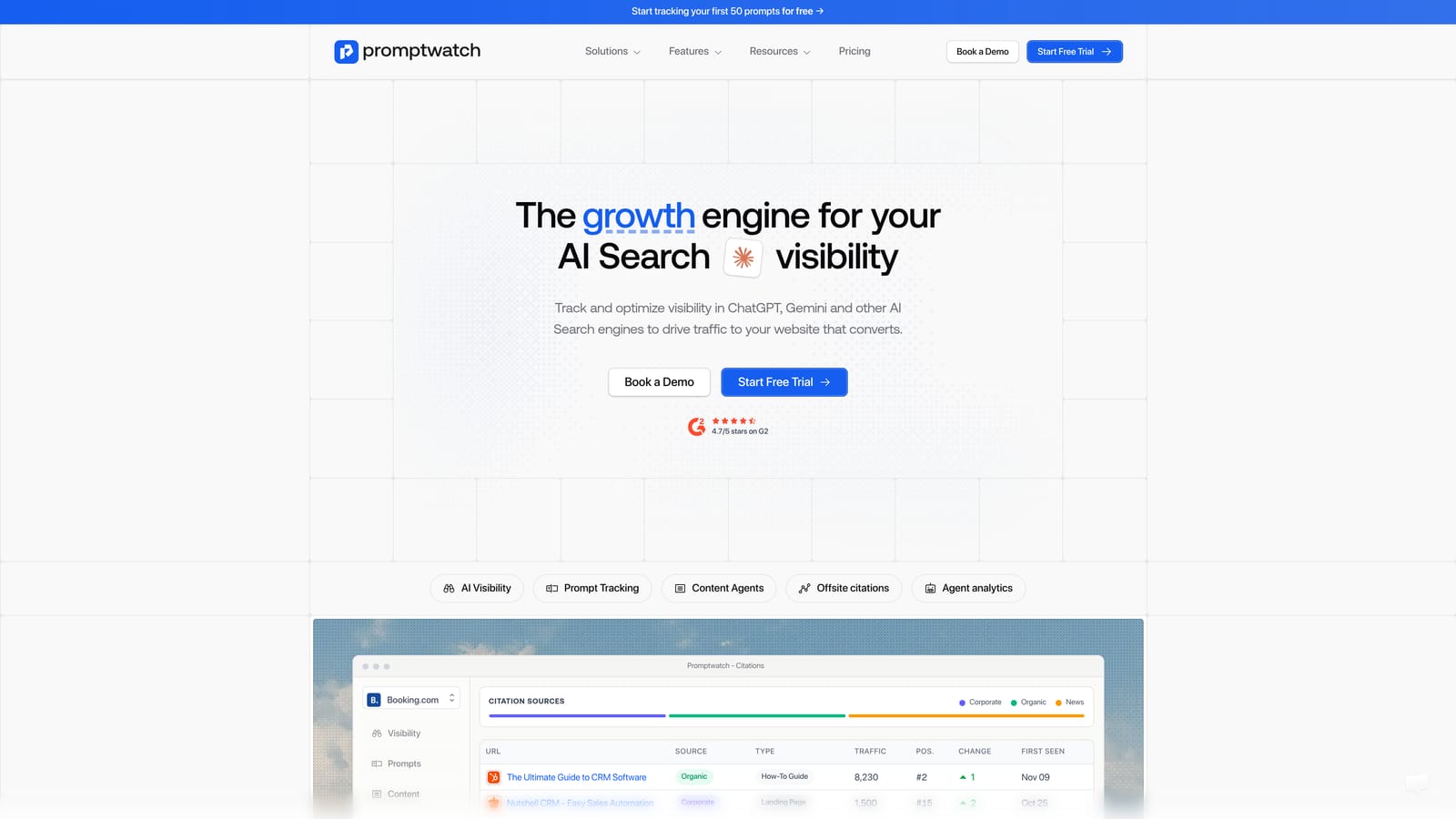
Promptwatch is a prompt management and monitoring tool that tracks how AI prompts perform over time, enabling teams to iterate and maintain content quality at scale.
Where This Tool Shines
If your content operation relies heavily on carefully engineered prompts, prompt drift is a real problem. Model updates, subtle wording changes, and team members editing prompts without documentation can quietly degrade output quality over time. Promptwatch is built specifically to address this: it gives teams version history, output quality tracking, and analytics on prompt effectiveness so you can see exactly when and why quality changed.
It's important to frame Promptwatch accurately. This is not a publishing platform. It functions as an observability and governance layer for AI content workflows. Used alongside a content generation or publishing tool, it adds meaningful quality control. Used alone, it won't move content from draft to live.
Key Features
Prompt Version History: Tracks changes to prompts over time so teams can audit what changed and revert to high-performing versions.
Output Quality Monitoring: Evaluates AI outputs across prompt iterations to surface quality regressions before they affect published content.
Prompt Library Management: Centralized storage for team-wide prompt libraries, reducing inconsistency across contributors.
LLM API Integration: Connects with common language model APIs to monitor outputs directly within existing workflows.
Prompt Effectiveness Analytics: Dashboards showing which prompts are performing and which need refinement based on output data.
Best For
Promptwatch suits teams with mature, prompt-driven AI content operations who need governance and quality control tooling. It's a complement to publishing platforms rather than a replacement, best deployed by teams that already have a content generation workflow in place.
Pricing
Check promptwatch.io for current plans and free tier availability.
5. Profound
Best for: GEO-focused teams that need post-publish analytics on how their content performs in AI-generated answers.
Profound is an AI answer engine optimization platform that helps brands track how their content and brand appear in AI-generated responses across major answer platforms.

Where This Tool Shines
Profound addresses a specific and growing gap: most content teams know how their articles rank in Google, but have no systematic visibility into whether those same articles are being cited by AI models. Profound fills that gap with dashboards that show where your brand appears in AI-generated answers, how that visibility compares to competitors, and how it shifts over time as you publish new content.
Like Promptwatch, Profound is best understood as a post-publish analytics layer rather than a full publishing platform. It tells you what happened after your content went live in AI search environments. Teams that publish frequently and care about GEO performance will find it genuinely useful for closing the feedback loop.
Key Features
AI Answer Engine Visibility Tracking: Monitors how your brand and published content appear in AI-generated responses across major platforms.
Content Influence Monitoring: Shows how specific published content is influencing AI model citations over time.
Competitive Visibility Benchmarking: Compares your AI search presence against named competitors to identify share-of-voice trends.
GEO Performance Reporting: Structured dashboards built around generative engine optimization metrics rather than traditional SEO signals.
Multi-Platform Coverage: Tracks visibility across multiple AI answer engines rather than a single platform.
Best For
Profound is well suited for content and SEO teams that are actively investing in GEO and want to measure the downstream impact of their publishing efforts on AI model citations. It pairs naturally with a content publishing platform rather than operating as a standalone solution.
Pricing
Check profound.co for current pricing and plan details.
6. Peec
Best for: Founders and small teams taking their first steps into AI brand visibility monitoring.
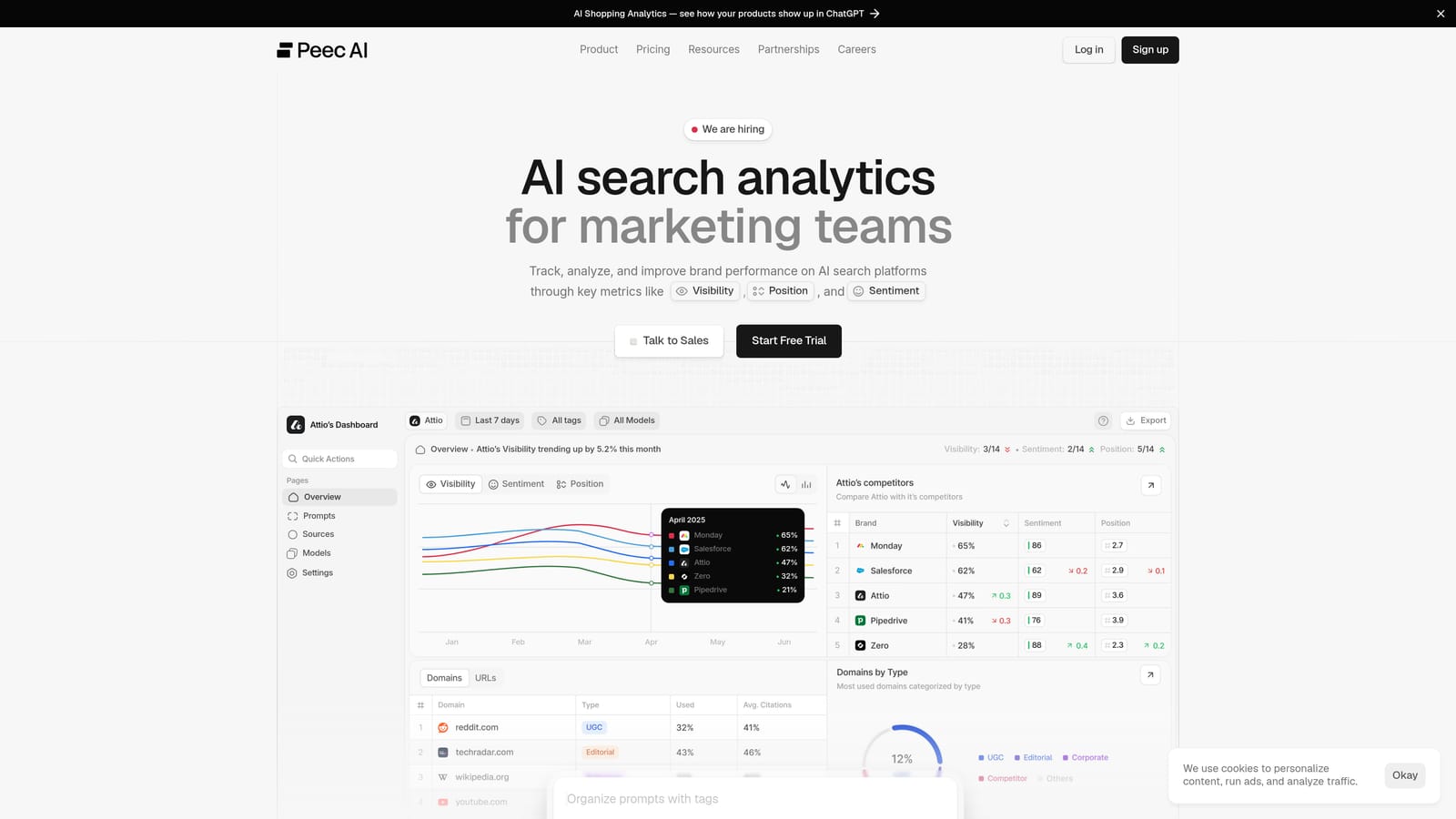
Peec is a lightweight brand and AI mention tracking tool designed for founders and small teams who want straightforward visibility into how their brand appears in AI model outputs.
Where This Tool Shines
Not every team needs enterprise-grade AI visibility infrastructure. Peec is built for the team that simply wants to know: is my brand showing up when people ask AI models about my category? Its interface is intentionally simple, setup is minimal, and the core value proposition is immediate: get visibility into your AI presence without a lengthy onboarding process.
The tradeoff is feature depth. Peec doesn't offer the competitive benchmarking, sentiment analysis, or content opportunity discovery that more comprehensive platforms provide. For a founder or small marketing team entering the AI visibility space for the first time, that simplicity is often the right call. You can always graduate to a more full-featured platform as your needs grow.
Key Features
Brand Mention Monitoring: Tracks how your brand is referenced across key AI model outputs in a simple, readable interface.
Multi-Platform AI Tracking: Covers brand presence across the AI platforms most likely to influence your audience's decisions.
Minimal Configuration Required: Accessible setup process designed for teams without dedicated ops or analytics resources.
Mention Alerts: Notifies you when new AI mentions of your brand are detected, so you stay informed without manual checking.
Lean Team Friendly: Priced and scoped for smaller teams rather than enterprise content operations.
Best For
Peec is the right starting point for founders, solopreneurs, and small marketing teams who want basic AI brand visibility without committing to a complex or expensive platform. It's an entry point, not an endpoint, for teams serious about AI search presence.
Pricing
Check peec.ai for current pricing and free options.
Which Tool Is Right for Your Stack?
The six tools in this list sit at very different points on the publishing automation spectrum, and the right choice depends heavily on where your biggest gap actually is.
If you want a single platform that handles the full content loop, Sight AI is the only option here that genuinely closes it. From AI-assisted content generation through CMS publishing, IndexNow indexing, and AI visibility tracking across 6+ platforms, it's designed for teams that don't want to stitch together separate tools for each stage of the pipeline. That makes it particularly strong for growth-focused marketers, agencies, and founders who need both publishing speed and AI search presence.
For teams whose primary bottleneck is content volume rather than pipeline complexity, Writesonic offers a capable AI writing environment with basic CMS publishing support. AirOps suits technical teams that need fully custom workflow logic and have the ops resources to build it out properly.
If you already have a publishing workflow and need to add a specific layer, the remaining tools each fill a distinct role. Promptwatch adds prompt governance and quality control. Profound provides post-publish GEO analytics. Peec offers lightweight AI brand monitoring for teams just getting started with AI visibility.
The clearest signal for choosing Sight AI over a combination of specialized tools is this: if you're spending time coordinating between a content generator, a publishing tool, an indexing solution, and a visibility tracker, you're paying a coordination tax that compounds with every piece of content you ship.
Stop guessing how AI models like ChatGPT and Claude talk about your brand. Start tracking your AI visibility today and see exactly where your brand appears across top AI platforms, while automating the content pipeline that gets you there.