Getting your content indexed quickly can mean the difference between ranking for trending topics and missing the window entirely. Traditional indexing relies on search engine crawlers finding your content organically—a process that can take days or even weeks. Automated indexing services solve this by proactively notifying search engines the moment you publish, dramatically reducing the time between publication and appearing in search results.
This guide covers the top automated indexing services for content creators, marketers, and agencies who need their content discoverable fast. We evaluated each tool based on indexing speed, ease of integration, pricing transparency, and reliability across different content management systems.
1. Sight AI Website Indexing
Best for: Teams combining AI content generation with rapid indexing needs
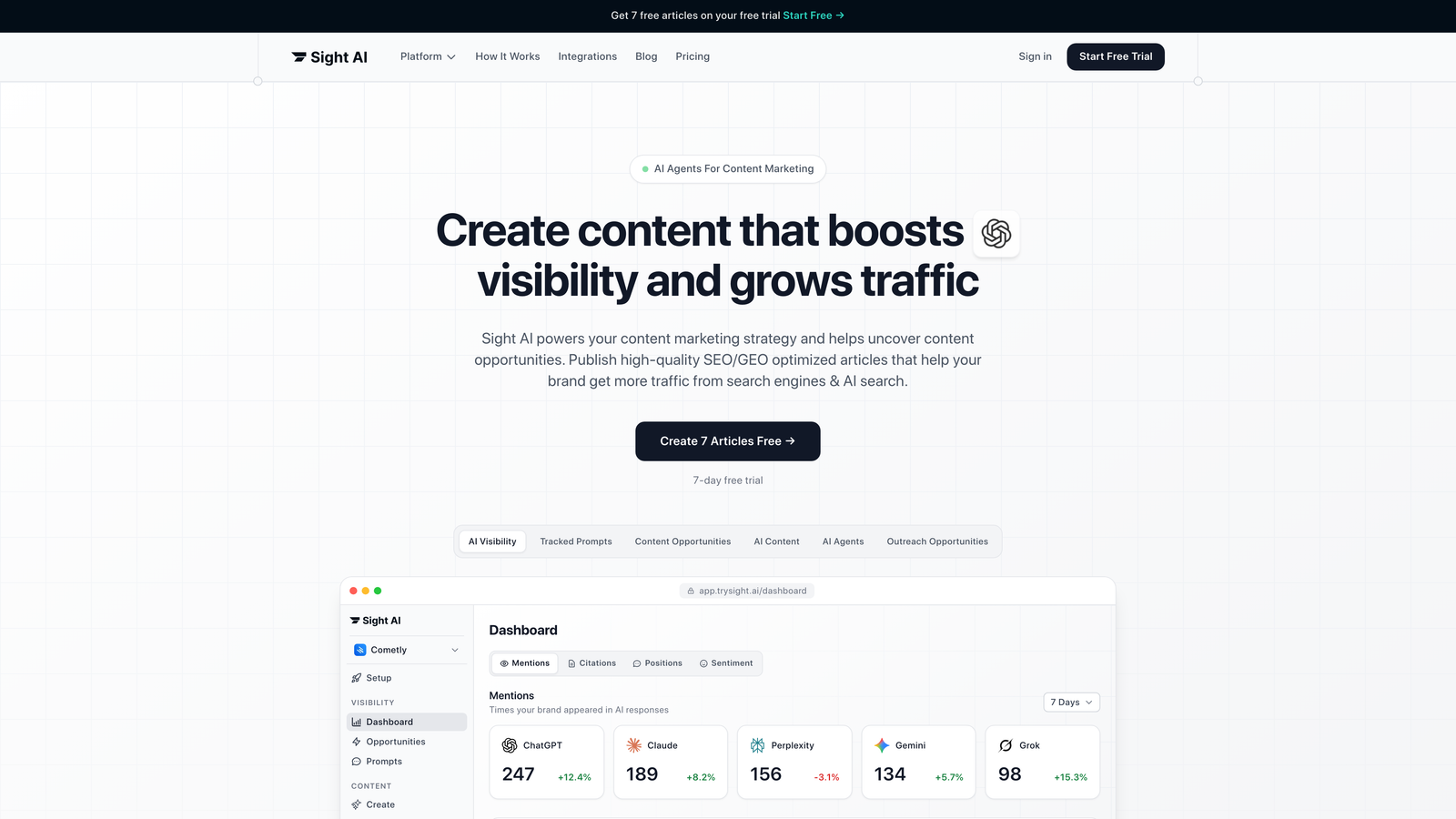
Sight AI Website Indexing is an all-in-one platform that combines AI-powered content generation with instant IndexNow submissions and always-updated sitemaps for faster search engine discovery.
Where This Tool Shines
The standout feature is the unified workflow. Most indexing tools require you to publish content, then separately trigger indexing through another interface. Sight AI eliminates that gap entirely by automatically submitting to IndexNow the moment your AI-generated article goes live.
For content operations publishing multiple articles weekly, this integration removes manual steps and ensures nothing falls through the cracks. Your sitemaps stay current without intervention, and you get dashboard visibility into indexing status across all published pieces.
Key Features
Instant IndexNow Submissions: Automatic notifications to Bing, Yandex, and other IndexNow-participating engines on publish.
Auto-Updated XML Sitemaps: Sitemaps refresh automatically as new content publishes, keeping search engines informed.
Integrated Content Workflow: Connects AI article generation directly to indexing without switching tools.
Auto-Publishing to CMS: Supports direct publishing to WordPress, Webflow, and other platforms with indexing triggered simultaneously.
Dashboard Tracking: Monitor indexing status and submission history from a central interface.
Best For
Marketing teams and agencies running AI-powered content operations who need a streamlined path from article generation to search visibility. Particularly valuable if you're already using AI for content creation and want to eliminate the manual indexing step.
Pricing
Included in Sight AI plans with pricing based on content volume and features. Visit the pricing page for current tier details.
2. IndexNow
Best for: Technical teams wanting direct protocol implementation without third-party services
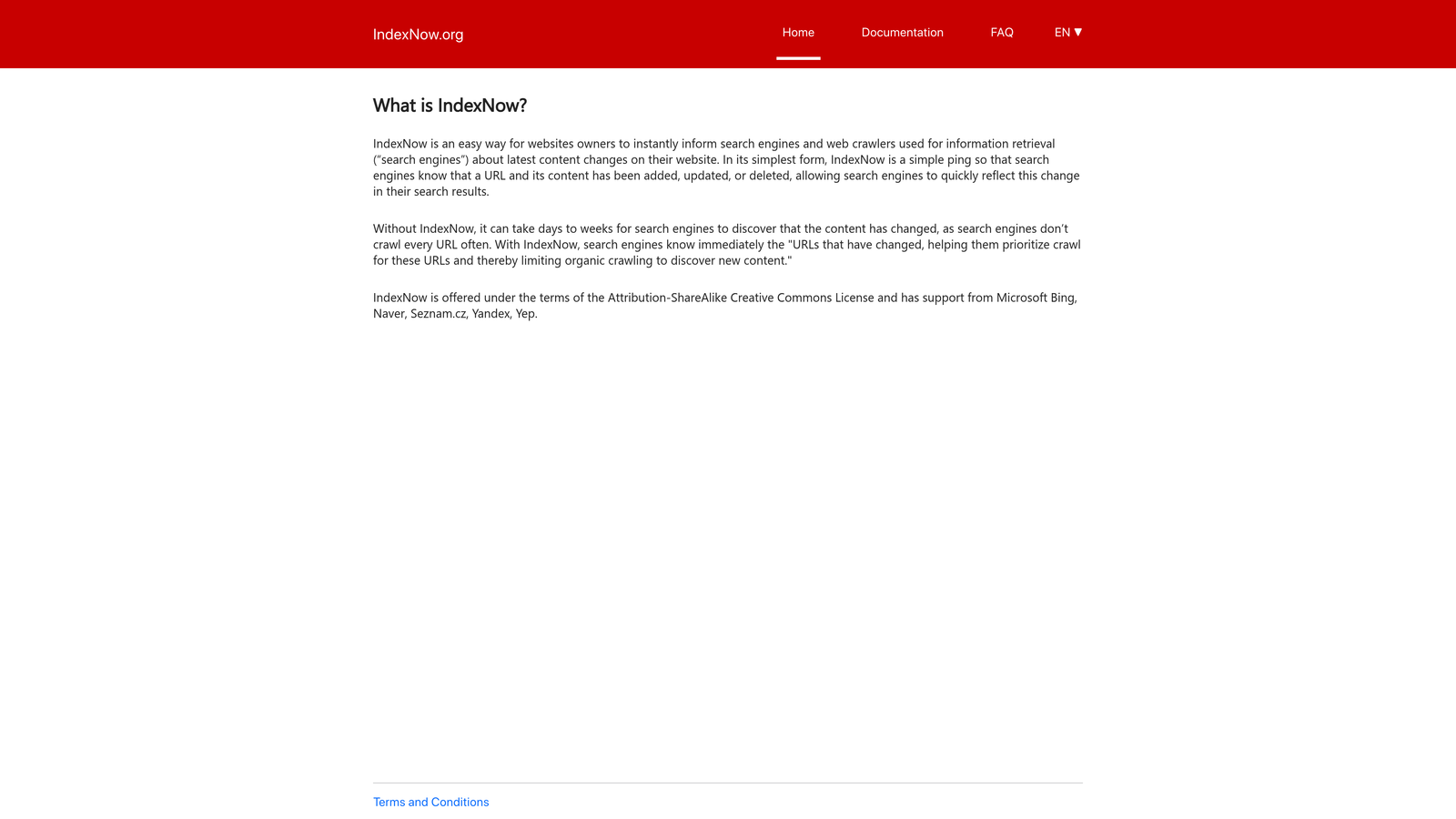
IndexNow is an open protocol developed by Microsoft and Yandex that allows websites to instantly notify search engines about content changes through a simple API.
Where This Tool Shines
IndexNow represents a fundamental shift in how search engines discover content. Instead of waiting for crawlers to find updates, you proactively ping participating engines the moment something changes. The protocol is intentionally lightweight—a single API call with your URL and a verification key.
The open nature means no vendor lock-in and no ongoing costs. Once implemented, you control the submission logic entirely. Batch submissions let you notify engines about multiple URL changes in one request, making it efficient for sites publishing frequently.
Key Features
Open Protocol: Free specification with no licensing fees or usage restrictions.
Multi-Engine Support: Bing, Yandex, Seznam, and Naver participate with one submission reaching all.
Simple API Implementation: Single endpoint accepting URL, key, and optional key location parameter.
Batch URL Submission: Submit up to 10,000 URLs per request for bulk updates.
No Rate Limits: Valid submissions face no throttling, though invalid requests may be filtered.
Best For
Development teams comfortable with API integration who want maximum control over indexing logic. Ideal if you're building custom publishing workflows or need to integrate indexing into existing CI/CD pipelines.
Pricing
Completely free. Requires technical implementation and server-side integration.
3. Google Search Console API
Best for: Direct Google indexing requests with official first-party tooling
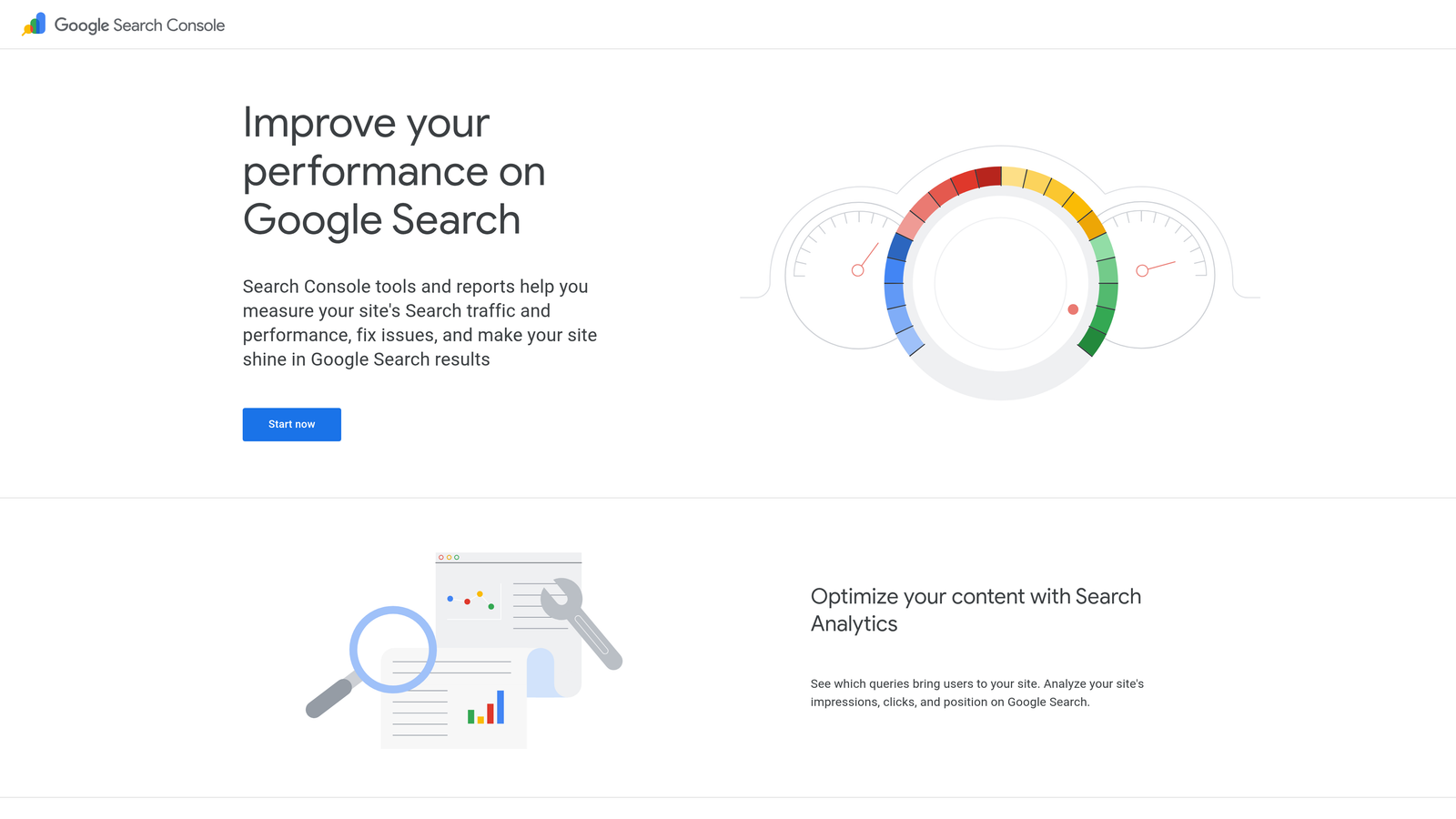
Google Search Console API provides the URL Inspection API for requesting indexing of specific pages directly through Google's official interface.
Where This Tool Shines
This is the only legitimate way to request Google indexing programmatically. While Google hasn't adopted IndexNow, the URL Inspection API lets you submit individual URLs for crawling consideration. The key word is "consideration"—Google still decides whether to index based on their quality standards.
The API also returns detailed status information about why a URL might not be indexed, including coverage issues, mobile usability problems, or structured data errors. This diagnostic capability makes it valuable beyond just submission.
Key Features
Direct Google Indexing: Request crawling and indexing through Google's official API endpoint.
URL Inspection API: Programmatic access to the same inspection tool available in Search Console interface.
Indexing Status Reporting: Detailed feedback on why URLs are or aren't indexed.
Coverage Issue Identification: Surface technical problems preventing indexing like redirect chains or crawl errors.
Sitemap Submission Management: Submit and monitor sitemaps programmatically.
Best For
Sites prioritizing Google visibility who need programmatic control over indexing requests. Essential for content operations where Google represents the majority of organic traffic.
Pricing
Free with rate limiting around 200 URL inspection requests per day per property.
4. Rank Math SEO
Best for: WordPress users wanting one-click indexing without technical setup
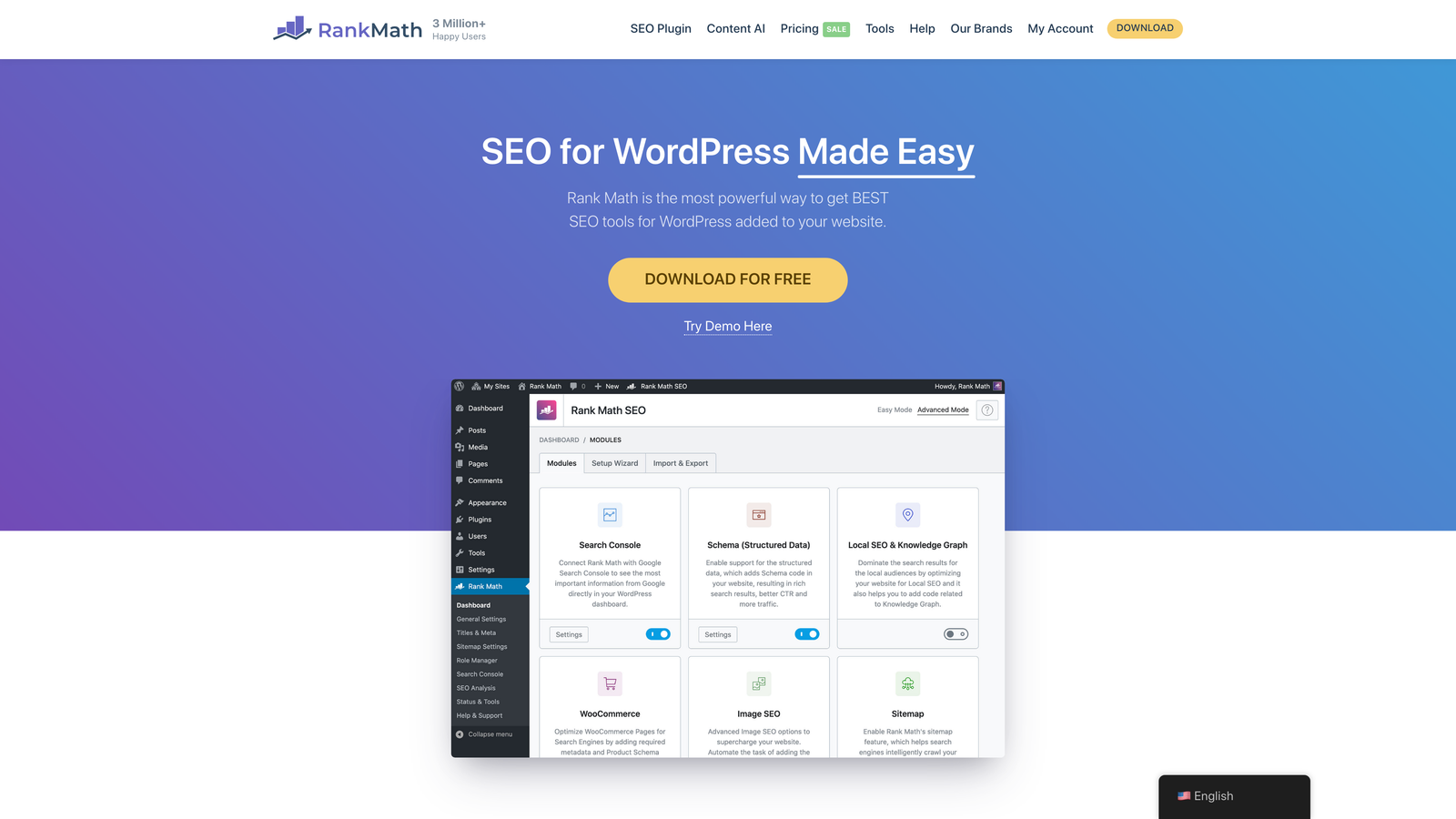
Rank Math SEO is a WordPress SEO plugin with built-in Instant Indexing that supports both IndexNow and Google Indexing API from a single interface.
Where This Tool Shines
Rank Math makes automated indexing accessible to non-technical WordPress users. The Instant Indexing module connects to both IndexNow and Google's API through a simple setup wizard. Once configured, every published post or page automatically triggers submissions to both protocols.
The bulk indexing feature deserves special mention. If you're migrating content or updating existing pages, you can select multiple URLs and resubmit them for indexing in one action. The dashboard shows submission history and status, so you know exactly what's been sent and when.
Key Features
One-Click IndexNow Integration: Enable IndexNow submissions through the plugin settings with automatic key generation.
Google Indexing API Support: Connect your Google Cloud project for direct Google submissions.
Automatic Submission on Publish: New content triggers indexing requests without manual intervention.
Bulk Indexing Tool: Select and resubmit multiple existing URLs for re-indexing.
Indexing Status Dashboard: Track submission history and view success/failure status per URL.
Best For
WordPress site owners and content managers who want powerful indexing features without writing code. Particularly valuable for teams publishing regularly who need reliable automation.
Pricing
Free version includes basic SEO features. Pro version with Instant Indexing starts at $6.99/month for unlimited sites.
5. Yoast SEO Premium
Best for: Established WordPress sites already invested in the Yoast ecosystem
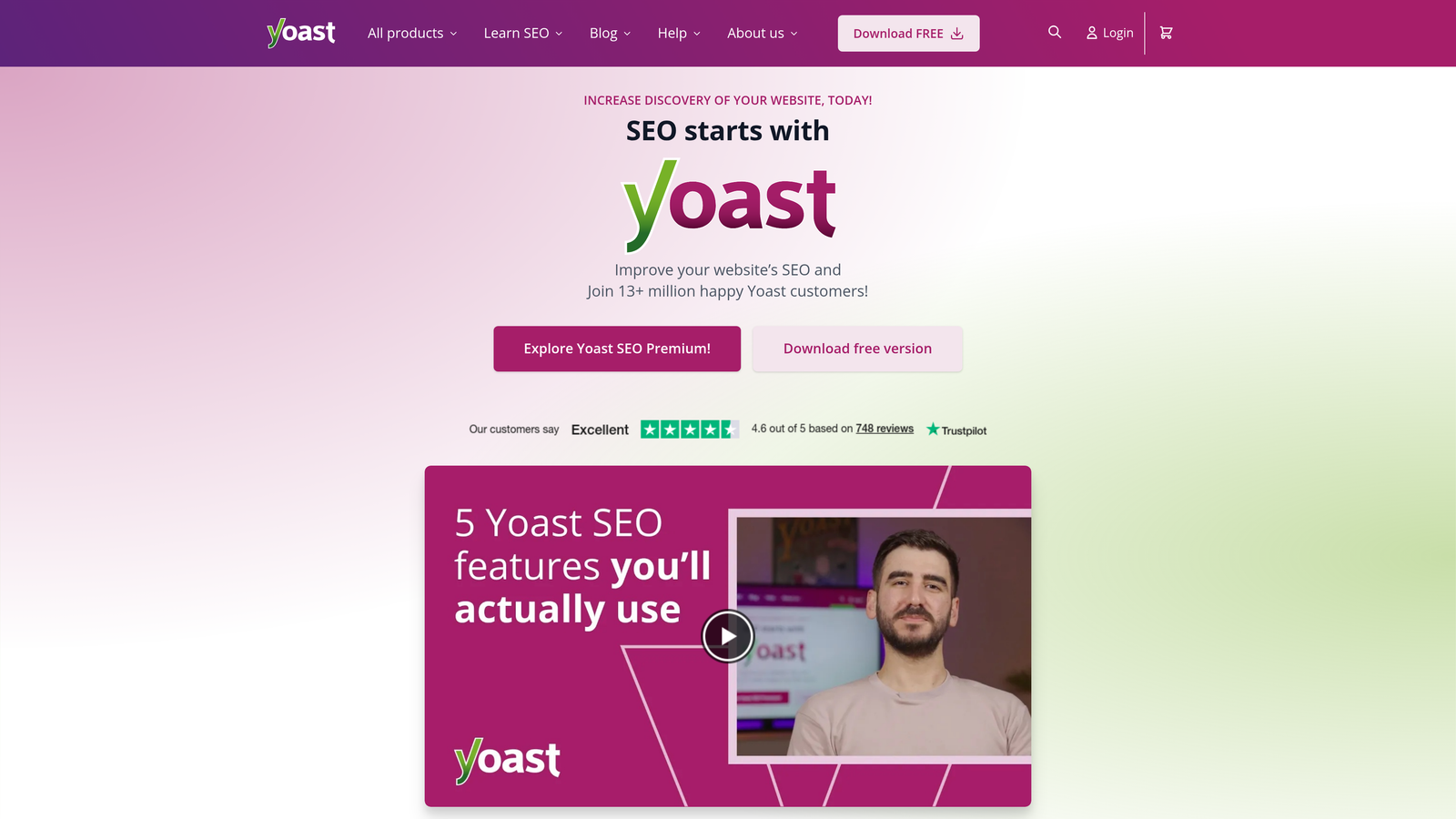
Yoast SEO Premium is the premium tier of the widely-used WordPress SEO plugin, adding IndexNow integration to its comprehensive SEO feature set.
Where This Tool Shines
Yoast's strength is ecosystem maturity. With millions of active installations, the plugin has deep WordPress compatibility and extensive documentation. The IndexNow integration in Premium automatically pings participating search engines when you publish or update content.
If you're already using Yoast for content optimization and technical SEO, adding automated indexing through the same plugin simplifies your stack. The redirect manager is particularly useful when restructuring content, ensuring old URLs properly redirect while new ones get indexed quickly.
Key Features
IndexNow Automatic Pinging: Instant notifications to Bing, Yandex, and other engines on content changes.
XML Sitemap Generation: Automatically maintained sitemaps with customizable inclusion rules.
Redirect Manager: Create and manage redirects without additional plugins, preserving link equity.
Content Optimization: Real-time suggestions for improving content SEO as you write.
Broad WordPress Compatibility: Extensive testing across themes, plugins, and WordPress versions.
Best For
WordPress users already committed to Yoast who want to add automated indexing without switching SEO plugins. Best for sites prioritizing stability and compatibility over cutting-edge features.
Pricing
Premium tier starts at $99/year per site with volume discounts for multiple sites.
6. IndexMeNow
Best for: Non-technical users needing bulk URL submission with minimal setup
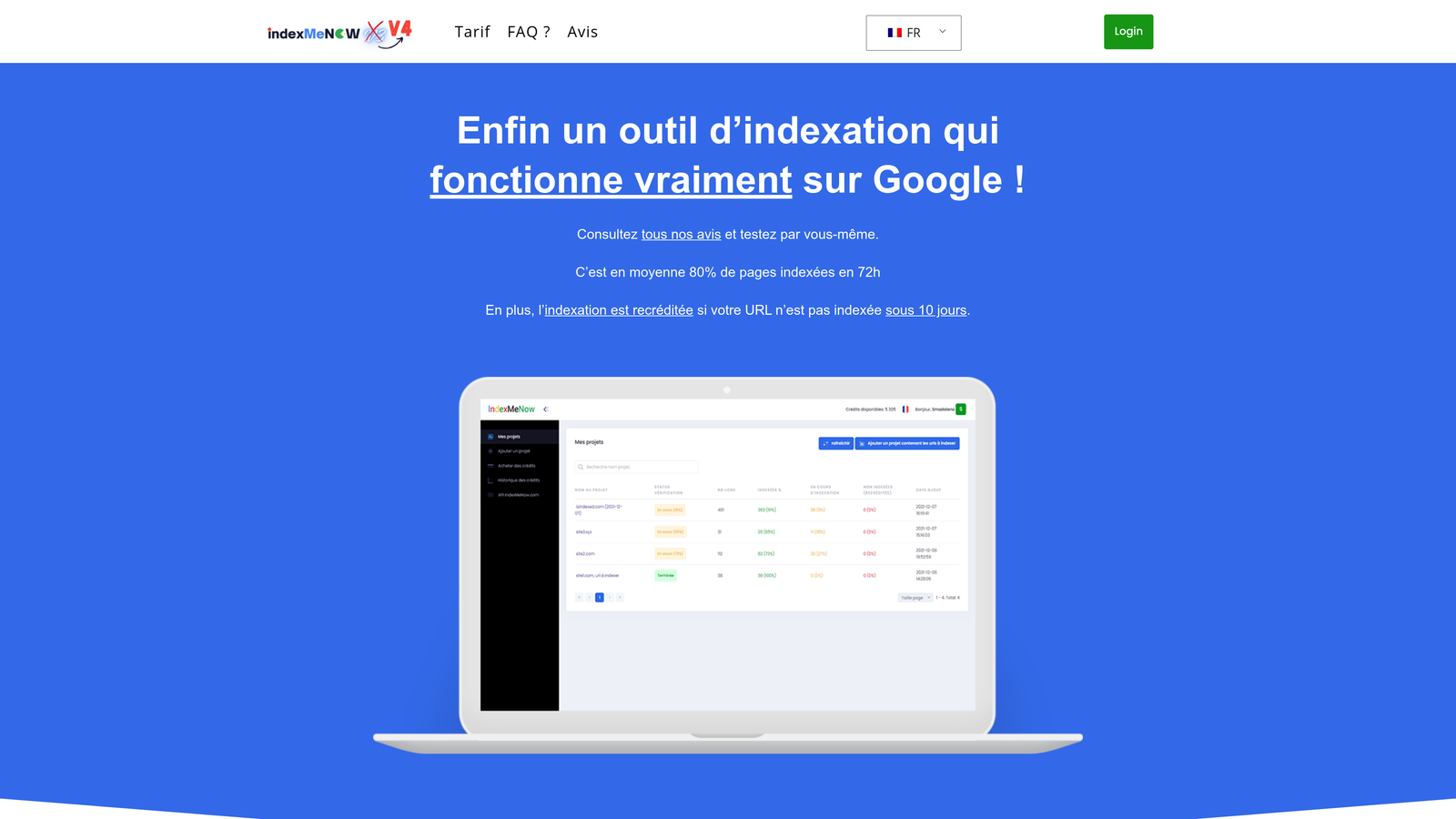
IndexMeNow is a dedicated indexing service focused on bulk URL submission and monitoring across multiple search engines through a simple web interface.
Where This Tool Shines
IndexMeNow removes technical barriers entirely. Upload a list of URLs through the web interface, and the service handles submission to IndexNow-participating engines. No API keys to manage, no code to write, no CMS plugins to configure.
The tracking dashboard shows which URLs have been submitted and their status across different search engines. For agencies managing multiple client sites or marketers without development resources, this simplicity is the primary value proposition.
Key Features
Bulk URL Submission: Upload CSV files or paste URL lists for batch processing.
Indexing Status Tracking: Monitor submission status and search engine responses per URL.
Multiple Search Engine Support: Submissions reach all IndexNow-participating engines simultaneously.
Simple Web Interface: No technical knowledge required beyond basic web navigation.
No Technical Setup: Start submitting URLs immediately after account creation.
Best For
Small business owners, marketers, and agencies without technical resources who need reliable bulk indexing. Ideal for one-time migrations or periodic bulk submissions rather than real-time automation.
Pricing
Plans start at $19/month for 500 URLs with higher tiers for increased volume.
7. Oncrawl
Best for: Enterprise sites diagnosing why content isn't being indexed efficiently
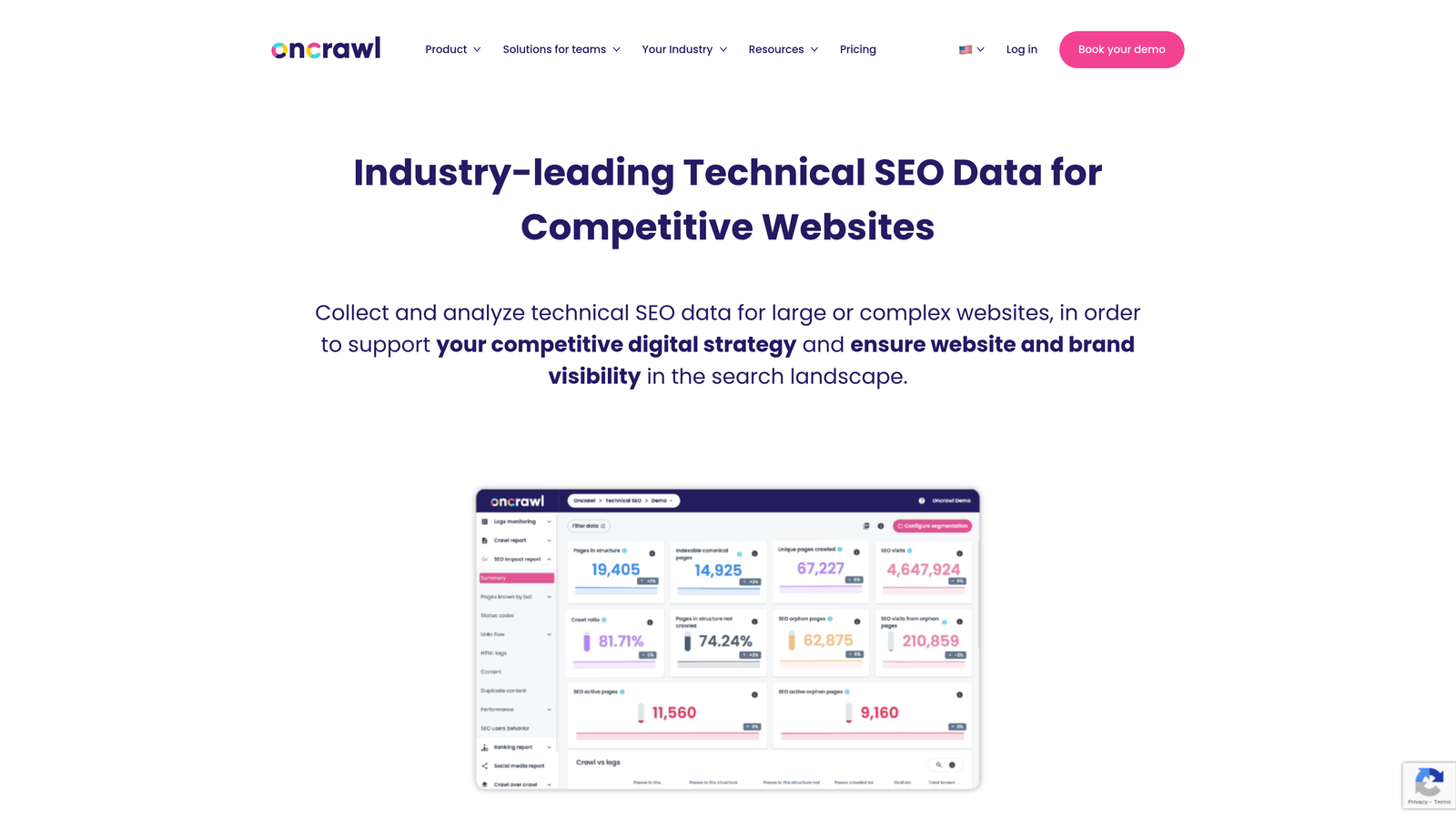
Oncrawl is an enterprise SEO platform combining crawl analysis with log file insights to optimize how search engines discover and index large-scale content operations.
Where This Tool Shines
Oncrawl approaches indexing from a diagnostic angle. By analyzing server log files, you see exactly which pages search engine crawlers are visiting, how often, and where they're spending crawl budget. This visibility reveals indexing inefficiencies invisible in other tools.
For large sites with thousands of pages, understanding crawl patterns is crucial. You might discover crawlers wasting time on low-value pages while missing important content. Oncrawl's data integration with BI tools lets you correlate crawl behavior with business metrics, answering questions like which product categories get crawled most frequently.
Key Features
Log File Analysis: Parse server logs to understand actual crawler behavior and crawl budget allocation.
Crawl Budget Optimization: Identify pages consuming crawl budget without providing value.
Indexing Pattern Identification: Discover which content types and structures get indexed fastest.
Technical SEO Auditing: Comprehensive site audits identifying indexing blockers like orphan pages or crawl traps.
Data Integration: Export to Tableau, Looker, or other BI tools for custom reporting.
Best For
Enterprise SEO teams managing sites with 10,000+ pages who need to understand and optimize crawler behavior. Essential for e-commerce platforms, large publishers, and sites where crawl budget constraints impact indexing.
Pricing
Custom enterprise pricing based on site size and feature requirements. Contact sales for quotes.
8. Screaming Frog SEO Spider
Best for: Technical audits identifying what's blocking content from being indexed
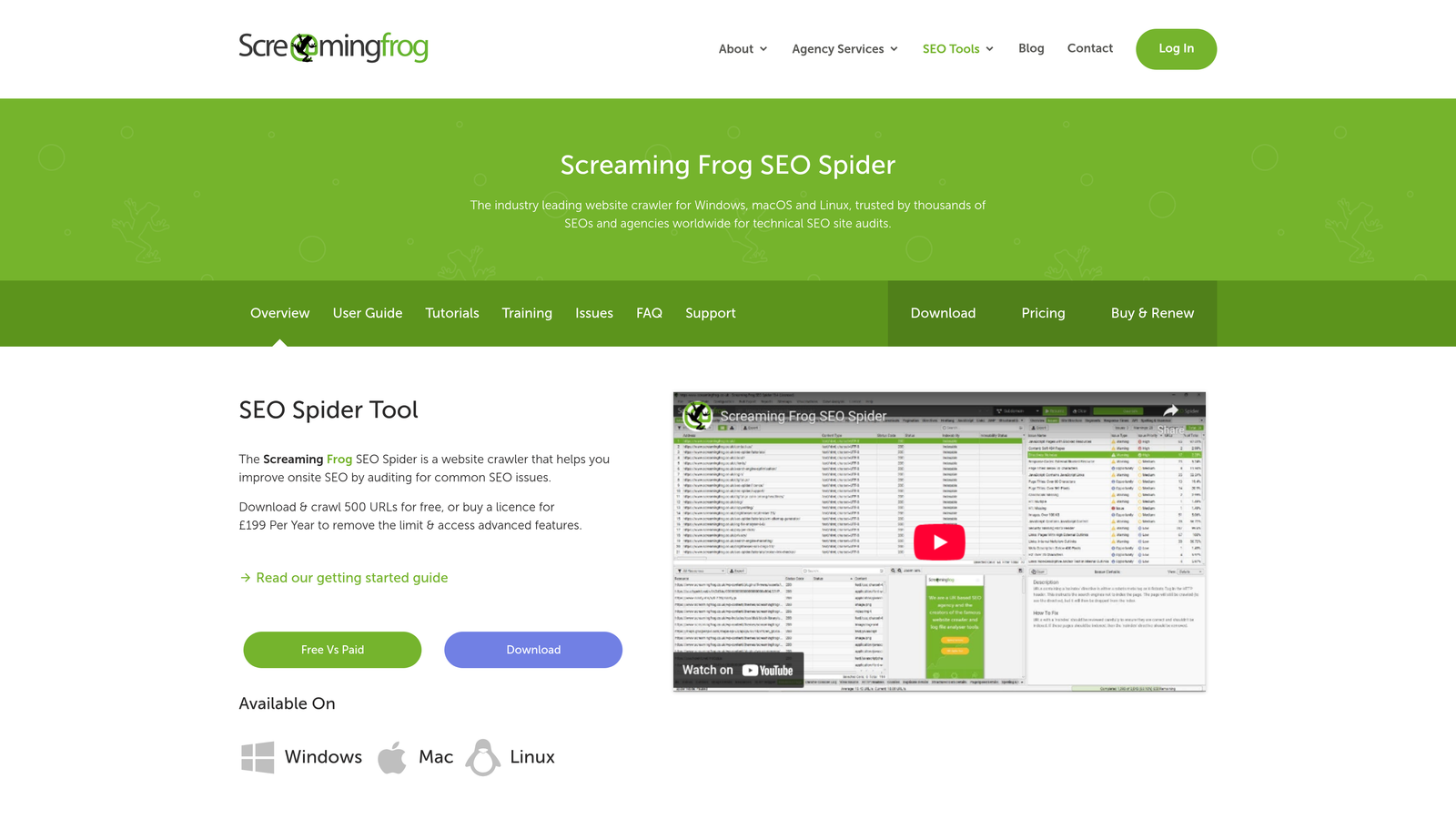
Screaming Frog SEO Spider is a desktop crawler that identifies indexing blockers and integrates with Google Search Console for comprehensive technical audits.
Where This Tool Shines
Screaming Frog excels at finding the technical issues preventing indexing. The crawler mimics search engine behavior, surfacing problems like noindex tags, canonical issues, or redirect chains that stop crawlers from reaching your content.
The Google Search Console integration is particularly powerful. You can import indexing data directly into Screaming Frog, then cross-reference it with your crawl results. This reveals discrepancies—pages you think should be indexed but aren't, or pages Google sees differently than you do. The scheduled crawls in the paid version let you monitor indexing blockers continuously rather than running manual audits.
Key Features
Crawl Up to 500 URLs Free: Generous free tier suitable for small to medium sites.
Google Search Console Integration: Import indexing data, coverage issues, and performance metrics.
Identifies Noindex and Canonical Issues: Surface directives preventing indexing.
Sitemap Generation: Create XML sitemaps based on crawl results with customizable filters.
Scheduled Crawls: Automate regular audits to catch indexing problems before they impact traffic.
Best For
Technical SEOs and developers who need detailed diagnostic information about indexing barriers. Essential for troubleshooting why specific pages aren't appearing in search results despite proper submission.
Pricing
Free for up to 500 URLs. Paid license at £199/year removes URL limits and adds scheduling.
9. Cloudflare Crawler Hints
Best for: Cloudflare users wanting zero-configuration indexing automation
Cloudflare Crawler Hints is an edge-level feature that automatically signals content changes to search engine crawlers for sites already using Cloudflare.
Where This Tool Shines
If you're already on Cloudflare, Crawler Hints provides automated IndexNow integration with literally zero configuration. The feature operates at the edge, detecting when cached content changes and automatically notifying IndexNow-participating engines.
This edge-level approach means indexing signals happen before requests even reach your origin server. For sites with frequent updates across many pages, this automation removes the need to instrument every publishing workflow with indexing logic. It just works, transparently, as part of your existing Cloudflare setup.
Key Features
Automatic IndexNow Integration: Zero-configuration submissions triggered by cache invalidation events.
Zero Configuration Required: Enable with a single toggle in Cloudflare dashboard for Pro+ plans.
Edge-Level Crawler Signaling: Notifications happen at CDN edge before reaching origin servers.
Works with Existing Setup: No changes to publishing workflows or CMS required.
No Additional Cost: Included in Cloudflare Pro and higher plans without separate fees.
Best For
Sites already using Cloudflare Pro or higher who want effortless indexing automation. Particularly valuable for dynamic sites with frequent updates where manual submission would be impractical.
Pricing
Included in Cloudflare Pro plans starting at $20/month per zone. No additional cost beyond base plan.
Making the Right Choice
Your ideal automated indexing solution depends on your technical resources and content workflow. WordPress users get the most value from Rank Math or Yoast Premium, which integrate indexing directly into the publishing interface without additional tools.
Technical teams comfortable with APIs should consider direct IndexNow implementation or Google Search Console API for maximum control and zero ongoing costs. The initial setup investment pays off quickly if you're publishing regularly.
For content operations combining AI-powered article generation with rapid indexing needs, Sight AI eliminates workflow gaps by connecting content creation directly to search engine notifications. This unified approach means one less manual step and faster time-to-visibility for every published piece.
Enterprise teams managing large sites benefit from Oncrawl's diagnostic capabilities paired with Cloudflare's edge-level hints. The combination reveals where crawl budget is being wasted while automatically notifying engines about legitimate updates.
Start with the tool that matches your current stack. Most offer free tiers or trials that let you measure the impact on your indexing times through Google Search Console. Track the difference between your old average time-to-index and your new results after implementing automated submission.
Stop guessing how AI models like ChatGPT and Claude talk about your brand—get visibility into every mention, track content opportunities, and automate your path to organic traffic growth. Start tracking your AI visibility today and see exactly where your brand appears across top AI platforms.