You hit publish on your latest article. It's well-researched, perfectly optimized, and exactly what your audience needs. Then you wait. And wait. Days pass. Your content sits in digital limbo while search engine crawlers leisurely make their rounds, eventually stumbling upon your URL sometime next week. Maybe.
This waiting game isn't just frustrating—it's costing you traffic, rankings, and revenue. Every hour your content remains undiscovered is an hour your competitors are capturing the audience you created that piece for.
Here's the thing: search engines don't have to find you anymore. You can tell them exactly when you've published something new. Automated content indexing APIs flip the traditional discovery model on its head, transforming passive crawling into proactive notification. Instead of waiting for Google, Bing, or AI search engines to eventually discover your content, you push it directly to them the moment it goes live.
This shift matters more than ever. AI search platforms like Perplexity and ChatGPT prioritize fresh, recently indexed content when generating answers. Traditional search engines reward speed too—they know users want the latest information. When your content appears in their index within minutes instead of days, you're not just faster. You're first.
The Mechanics Behind Instant Content Discovery
Traditional search crawling operates like a postal worker making rounds through an enormous neighborhood. Google's crawlers visit websites based on a schedule influenced by site authority, update frequency, and available crawl budget. High-authority sites might get crawled multiple times daily. Smaller sites? Maybe once a week. Your brand-new blog post could sit unnoticed for days while the crawler finishes its route.
Push-based indexing protocols completely bypass this waiting period. Think of it like texting the postal worker directly: "Hey, I have something new at this exact address." The moment you publish content, your system sends a notification to search engines saying, "New URL here—come index it now."
IndexNow represents the most significant advancement in this space. Launched through a collaboration between Microsoft Bing and Yandex, it's an open protocol that lets you notify multiple search engines with a single API call. You submit one URL, and every search engine supporting the protocol gets the notification simultaneously. No duplicate submissions. No managing separate APIs for each platform.
The technical implementation is elegantly simple. Your website generates an API key, hosts a small verification file, and sends POST requests to the IndexNow endpoint whenever content changes. The request includes your URL, the API key, and optionally a list of related URLs if you're updating multiple pages. Understanding content indexing API integration fundamentals helps you implement this correctly from the start.
Why do search engines prioritize content submitted through indexing APIs? Speed and certainty. When you proactively submit a URL, you're signaling that something genuinely new or updated exists at that location. Search engines don't waste crawl budget investigating whether the page has changed—you've already told them it has. This efficiency benefits everyone: you get faster indexing, and search engines allocate their resources more effectively.
Google operates its own Indexing API, though with narrower use cases. Currently, it's officially limited to job postings and livestream structured data for most publishers. The restriction exists because Google wants to prevent abuse—they don't want every page update flooding their systems. However, for qualifying content types, Google's API delivers the same benefit: near-instant indexing instead of waiting for the next crawl cycle.
The competitive advantage becomes obvious when you consider time-sensitive content. Breaking news, product launches, flash sales, trending topic coverage—these scenarios demand immediate visibility. Traditional crawling means you might miss the entire opportunity window. Automated indexing means your content appears in search results while the topic is still hot, while users are actively searching, while the traffic is there to capture.
Core Components of an Indexing API Integration
Setting up automated content indexing requires understanding several technical pieces that work together to create a seamless workflow. Let's break down what you're actually building.
API Authentication and Endpoints: Every indexing API starts with authentication. For IndexNow, you generate a unique API key—typically a long string of random characters. You host this key as a text file in your website's root directory, proving you control the domain. This verification file stays permanently on your server. When you submit URLs, you include this key in your API requests, and search engines validate it against the hosted file.
The endpoint itself is straightforward. For IndexNow, you send POST requests to api.indexnow.org/indexnow with a JSON payload containing your URL, key, and host information. Google's Indexing API uses a different endpoint structure and requires OAuth 2.0 authentication through Google Cloud Console, adding complexity but providing more granular access control.
Webhook Triggers and Event-Based Workflows: The real power emerges when you automate the submission process. Modern CMS platforms emit events whenever content changes—published, updated, deleted. Your indexing integration listens for these events and triggers API submissions automatically. Publish a blog post? Webhook fires. Update a product page? Webhook fires. Your system immediately notifies search engines without any manual intervention.
This event-based architecture means indexing happens in real-time as part of your publishing workflow. Writers don't think about it. Editors don't manage it. The system handles everything behind the scenes, ensuring every content change gets submitted within seconds of going live. Implementing an automated indexing for new content system eliminates manual bottlenecks entirely.
Rate Limits and Batch Processing: Search engines impose rate limits to prevent abuse and manage server load. IndexNow allows substantial daily submissions—thousands of URLs for most sites—but you still need to respect these boundaries. If you're publishing hundreds of articles simultaneously or updating your entire product catalog, batch processing becomes essential.
Smart implementations queue URL submissions and process them in controlled batches. Instead of firing 500 API calls instantly, you might submit 50 URLs every few minutes. This approach stays well within rate limits while still achieving near-instant indexing for your content.
Error Handling and Retry Logic: API calls fail sometimes. Network issues, server timeouts, temporary service disruptions—these happen. Robust integrations include retry logic that automatically resubmits failed requests after a delay. You might retry once immediately, then again after five minutes, then again after an hour. Eventually, if submissions continue failing, you log the error for manual review.
Status code handling matters too. A 200 response means success. A 429 indicates you've hit rate limits—back off and try later. A 403 suggests authentication problems—check your API key. Your integration should interpret these codes and respond appropriately, ensuring URLs eventually get submitted even when temporary issues occur.
When Automated Indexing Delivers the Greatest Impact
Not every website needs instant indexing. A personal blog publishing twice monthly won't see dramatic differences. But certain publishing scenarios transform automated indexing from nice-to-have into competitive necessity.
High-Velocity Publishing Environments: News organizations, content marketing teams publishing daily, and media sites covering trending topics operate in a different reality. When you're publishing 10, 20, or 50 articles daily, traditional crawling creates a massive discovery lag. Your morning article might not appear in search results until evening—long after peak search interest has passed.
E-commerce sites with frequently changing inventory face similar challenges. New products launch. Prices update. Seasonal items rotate in and out. Every change represents a potential search opportunity, but only if search engines know the update exists. Automated indexing ensures your product pages reflect current reality in search results, not yesterday's catalog.
SaaS companies publishing feature announcements, integration guides, and use case content benefit enormously from speed. When you announce a new feature, you want the announcement post indexed immediately so users searching for that capability find your solution. Waiting days for crawlers means potential customers discover competitors first. Exploring faster content indexing strategies becomes essential for competitive SaaS markets.
Content Updates and Republishing Scenarios: Publishing new content is one thing. Updating existing content is equally important but often overlooked. You refresh an article with new data, add sections covering recent developments, or update screenshots showing your latest interface. These improvements deserve immediate reindexing.
Without automated indexing, search engines might not notice your updates for weeks. They'll continue showing the outdated version in search results, complete with old information and stale screenshots. Users click through expecting fresh content and find references to features that changed months ago. Automated indexing solves this by notifying search engines the moment you hit update, ensuring the refreshed version replaces the old one quickly.
Multi-Site and Enterprise Content Operations: Managing content across multiple domains or subdomains multiplies complexity. Enterprise organizations often operate dozens of sites—regional variations, product-specific microsites, localized content hubs. Coordinating indexing across this ecosystem manually becomes impossible.
Automated indexing APIs centralize the process. One integration can handle submissions across your entire site portfolio. Launch a coordinated campaign across five domains? Every piece of content gets submitted simultaneously. Update product information across regional sites? All versions notify search engines together. The operational efficiency is transformative when you're managing content at scale.
The common thread across these scenarios is volume and velocity. The more content you publish, the more frequently you update, and the more sites you manage, the more critical automated indexing becomes. It's not just about speed anymore—it's about making large-scale content operations actually work.
Building Your Indexing Workflow: Step-by-Step
Let's walk through implementing automated content indexing from scratch. This process applies whether you're using WordPress, a headless CMS, or a custom-built publishing platform.
Step 1: Choose Your Indexing Protocol and Generate Credentials: Start by deciding which indexing API you'll use. For most publishers, IndexNow is the clear choice—it's free, widely supported, and notifies multiple search engines simultaneously. Visit indexnow.org and generate an API key. This gives you a long alphanumeric string that serves as your authentication token.
Create a text file containing only this key, name it with the key itself (for example, a1b2c3d4e5f6.txt), and upload it to your website's root directory. This file proves domain ownership. Search engines will check for this file when validating your submissions. Reviewing the best automated content indexing software 2026 options helps you select the right tools for your stack.
Step 2: Connect Your CMS Through Native Integration or Middleware: Check whether your CMS offers native IndexNow support. Many modern platforms include built-in indexing features that require minimal configuration. WordPress has several plugins that handle IndexNow submissions automatically. Webflow, Shopify, and other hosted platforms increasingly offer native integrations.
If your CMS lacks native support, you'll build middleware—a small service that sits between your CMS and the indexing API. This middleware listens for publishing events (usually via webhooks), receives the new URL, and forwards it to the IndexNow endpoint. You might build this as a serverless function, a lightweight Node.js service, or integrate it into your existing backend infrastructure.
Step 3: Automate Sitemap Updates Alongside URL Submissions: Indexing APIs work best when paired with properly maintained sitemaps. Your workflow should update your XML sitemap whenever content changes, then submit both the individual URL and the updated sitemap location to search engines.
This dual approach covers all bases. The individual URL submission triggers immediate indexing. The sitemap update ensures search engines have the complete picture of your site structure. Many CMS platforms handle sitemap updates automatically, but verify this is happening before assuming it works.
Step 4: Configure Submission Triggers for Different Content Types: Not every content change deserves immediate submission. Draft saves, minor typo fixes, or internal testing pages shouldn't trigger indexing requests. Configure your workflow to submit URLs only when content reaches published status or when significant updates occur.
You might set up different triggers for different content types. Blog posts submit immediately on publish. Product pages submit when inventory status changes from "coming soon" to "available." Landing pages submit when you flip them from draft to live. This granular control prevents unnecessary API calls while ensuring important changes get indexed quickly.
Step 5: Implement Monitoring and Validation: Submission doesn't guarantee indexing. Set up monitoring to track submission success rates and actual indexing confirmation. Most search engines provide APIs or console tools showing which submitted URLs were actually indexed.
Google Search Console shows indexing status for submitted URLs. Bing Webmaster Tools provides similar data for IndexNow submissions. Build dashboards that surface this information, alerting you when submission rates drop or when URLs remain unindexed despite successful API calls. This visibility helps you catch problems early—authentication issues, crawl blocks, or content quality problems preventing indexing.
Avoiding Common Indexing API Pitfalls
Over-Submission and Duplicate Request Penalties: The most common mistake is submitting the same URL repeatedly without actual changes. Your CMS might trigger events on every save, even when content hasn't meaningfully changed. Submitting the same URL dozens of times daily accomplishes nothing and may trigger rate limiting or reduced trust from search engines.
Implement deduplication logic that tracks recently submitted URLs and prevents resubmission within a reasonable timeframe. If you submitted a URL in the last hour and nothing has changed, skip the duplicate submission. This keeps your submission queue clean and maintains good standing with search engine APIs.
Ignoring Canonical URLs and Content Quality Signals: Submit the canonical version of your URLs, not every variation. If your content appears at both example.com/article and example.com/article?ref=social, submit only the canonical URL specified in your page metadata. Submitting duplicate or near-duplicate URLs wastes API calls and confuses search engines about which version to index.
Content quality matters more than submission speed. Search engines may accept your indexing request but choose not to index low-quality pages. Thin content, duplicate information, or pages with little value won't magically appear in search results just because you submitted them via API. Focus on creating genuinely valuable content first, then use indexing APIs to accelerate its discovery. If you're experiencing issues, understanding why your content is not indexing helps diagnose the root cause.
Failing to Validate Indexing Success: Many teams implement automated indexing, see successful API responses, and assume everything is working perfectly. They never check whether submitted URLs actually appear in search indexes. Weeks later, they discover their content isn't ranking because it was never indexed, despite thousands of "successful" submissions.
Regularly audit your indexing success rate through search console tools. What percentage of submitted URLs actually get indexed? How long does indexing typically take? Are certain content types consistently failing to index? This data reveals problems that successful API responses hide—crawl blocks, robots.txt issues, or quality signals preventing indexing. Running a content indexing speed comparison across your content types reveals optimization opportunities.
Putting It All Together: Your Indexing Strategy Roadmap
The complete workflow looks like this: You publish or update content in your CMS. Your system immediately triggers an indexing API submission, notifying search engines of the new or changed URL. Simultaneously, your sitemap updates to reflect the latest content structure. Within minutes, search engine crawlers prioritize your submitted URL, index the content, and make it available in search results.
This speed creates a compounding competitive advantage. Your content appears in search results while topics are trending, while users are actively searching, while the opportunity exists. Competitors still waiting for traditional crawls miss the window entirely. Over time, this velocity advantage translates to more traffic, more visibility, and more opportunities to capture audience attention.
The competitive stakes rise higher as AI search engines gain prominence. Platforms like Perplexity, ChatGPT, and Claude increasingly pull from recently indexed content when generating answers. Faster indexing means your content becomes available for AI models to reference sooner, increasing your chances of being cited in AI-generated responses. This creates a new dimension of organic visibility beyond traditional search rankings.
For teams serious about organic growth, automated content indexing isn't optional infrastructure anymore. It's table stakes. The question isn't whether to implement it, but how quickly you can get it working. Every day you wait is another day your content sits undiscovered while competitors capture the traffic you created that content to attract.
The most effective approach combines content creation, optimization, and indexing in a unified workflow. You don't want separate tools for writing, optimizing, and submitting content—you want a platform that handles everything together. Publish once, and the system automatically optimizes for search, submits to indexing APIs, and monitors confirmation. This integration eliminates gaps where content falls through cracks, ensuring every piece you create gets discovered as quickly as possible.
Moving Forward: From Passive to Proactive Discovery
The shift from waiting for crawlers to proactively notifying search engines represents a fundamental change in how content reaches audiences. For decades, publishers had no choice but to wait. Create great content, hope crawlers find it eventually, and accept the delay as unavoidable overhead.
That era is over. Automated content indexing APIs give you direct control over discovery timing. You decide when search engines learn about your content. You determine how quickly it becomes available to searchers. This control transforms content operations from passive hoping into active acceleration.
The technical barriers have fallen too. Early indexing APIs required significant development resources and ongoing maintenance. Today's solutions—especially IndexNow—work with minimal setup. Many CMS platforms handle everything automatically. Even custom implementations require just a few hours of development time. The return on that small investment is immediate and ongoing: every piece of content you publish gets discovered faster, indefinitely.
As you build your indexing strategy, remember that speed without substance accomplishes nothing. Automated indexing accelerates the discovery of valuable content. It doesn't make low-quality content suddenly rank. Focus first on creating genuinely useful, well-optimized content that deserves to rank. Then use indexing APIs to ensure that content reaches search engines and audiences as quickly as possible.
The competitive landscape rewards this combination: excellent content delivered with maximum velocity. Your competitors might create equally good content, but if they're waiting days for crawlers while you're indexed in minutes, you win the race to capture search traffic. Multiply this advantage across hundreds of articles, and the cumulative effect becomes transformative.
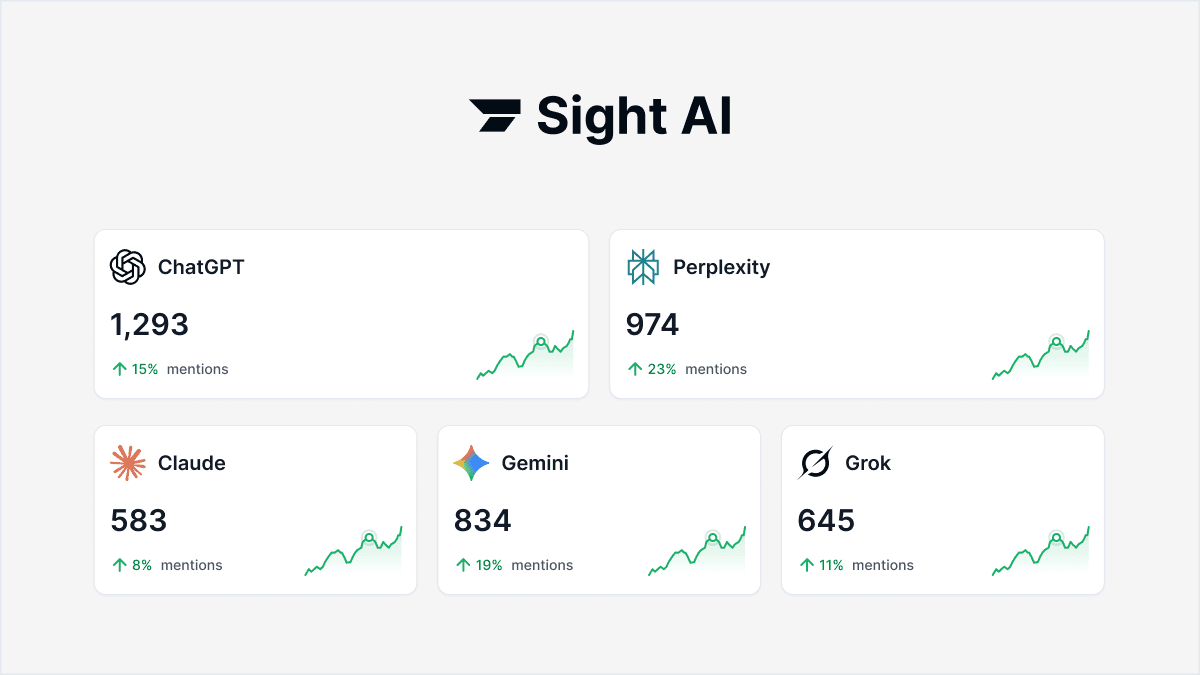
Start tracking your AI visibility today and see exactly where your brand appears across top AI platforms. Stop guessing how AI models like ChatGPT and Claude talk about your brand—get visibility into every mention, track content opportunities, and automate your path to organic traffic growth. The future of search isn't just about being indexed faster. It's about understanding how both traditional search engines and AI models discover, process, and surface your content to the audiences searching for exactly what you offer.