You hit publish on what you're certain is a stellar piece of content. The research is solid, the writing is tight, and it answers real questions your audience is asking. You check back a few days later expecting to see it climbing the search results. Instead? Nothing. It's like your content never existed.
This isn't a rare occurrence. Businesses across every industry face the same bewildering reality: content that simply refuses to appear in Google's index, no matter how valuable it might be. The problem isn't always obvious, and the silent drain on your SEO efforts can continue for weeks before anyone notices.
Understanding why Google might ignore your content isn't just about fixing one broken page. It's about diagnosing systemic issues that could be holding back your entire content strategy. The good news? Once you understand the mechanics of how search engines decide what deserves a spot in their index, these problems become solvable puzzles rather than mysterious black boxes.
The Journey from Published Page to Search Result
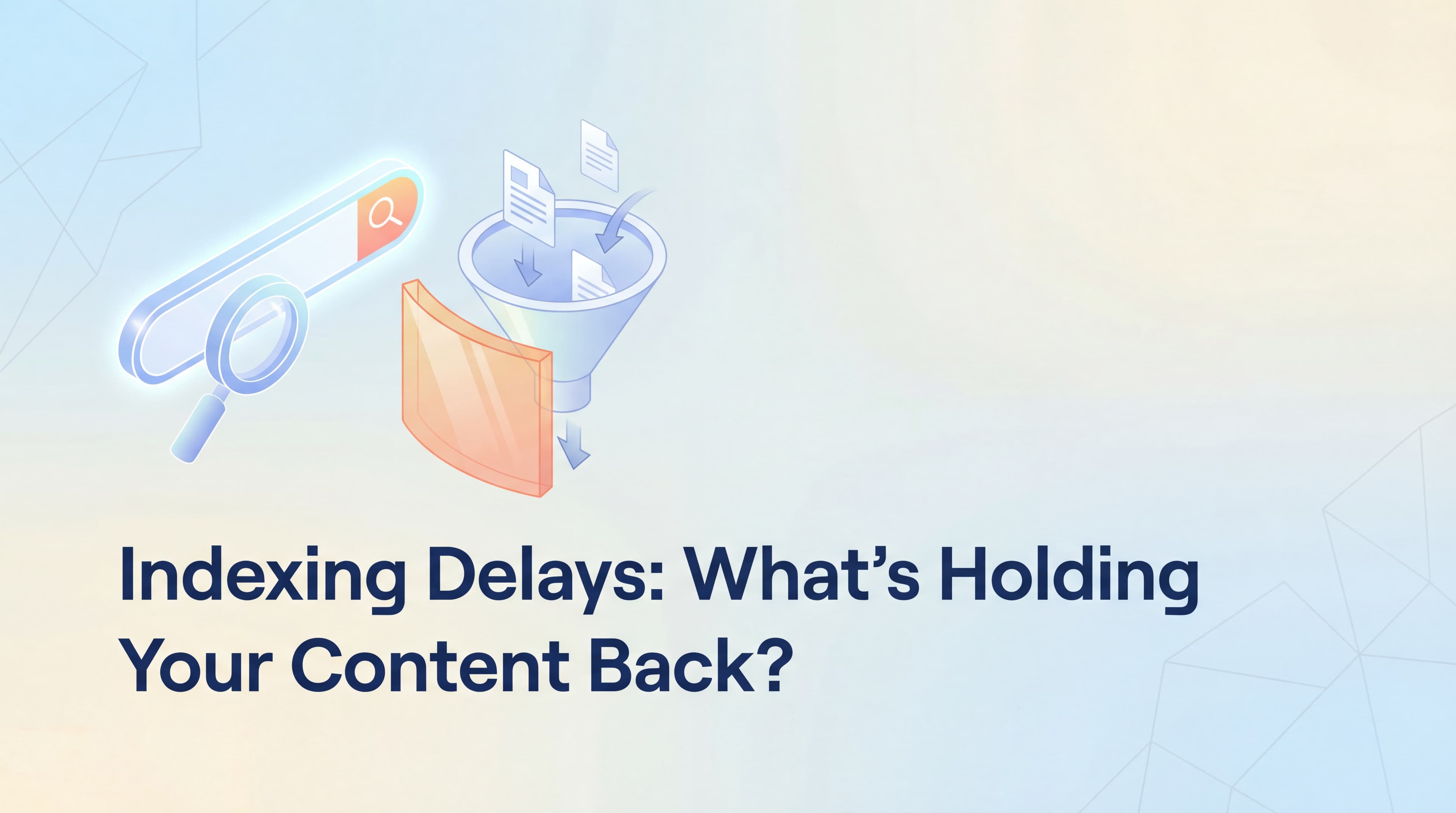
Before we can fix indexing problems, we need to understand what indexing actually means in the search engine workflow. Think of it as a three-stage pipeline: crawl, index, rank.
Crawling is discovery. Googlebot follows links across the web, hopping from page to page like a tourist navigating a new city. When it lands on your content, it's simply acknowledging that your page exists. Nothing more.
Indexing is the crucial second stage where Google decides whether your content deserves storage in its massive database. This is where Google analyzes what your page is about, determines if it's unique enough to warrant inclusion, and files it away for potential retrieval. A crawled page isn't necessarily an indexed page, and this distinction trips up many marketers. Understanding the content indexing vs crawling differences is essential for diagnosing where your content is getting stuck.
Ranking comes last. Only indexed content can compete for visibility in search results. Your brilliant article might get crawled regularly, but if it never makes it into the index, it will never rank for anything.
Here's the part that catches people off guard: Google doesn't index everything it crawls. The search giant operates with something called crawl budget—a finite amount of resources it allocates to each website based on factors like site size, update frequency, and historical quality signals. If Google determines your content doesn't add unique value to its index, it simply won't store it, regardless of how often Googlebot visits.
This selectivity explains why two similar sites might experience vastly different indexing rates. A site with strong authority signals and consistent quality might get nearly everything indexed within hours. A newer site with mixed signals might struggle to get even its best content recognized.
Technical Directives That Tell Google to Stay Away
Sometimes your content isn't indexing because you're literally telling Google not to index it. These technical barriers are often the culprit behind indexing failures, and they're surprisingly easy to implement accidentally.
Robots.txt Misconfigurations: Your robots.txt file sits at the root of your domain and acts as the first checkpoint for crawlers. A single misplaced line can block entire sections of your site. The classic mistake looks like this: a developer adds a disallow rule during staging to prevent test pages from being crawled, then forgets to remove it when the site goes live. Suddenly, your entire blog directory is invisible to Google.
The insidious part? Your pages might still appear in search results as URL-only listings without descriptions, because Google can see that other sites link to them. But they'll never be properly indexed with full content analysis.
Noindex Meta Tags: These HTML directives explicitly tell search engines not to include a page in their index. They're useful for pages like thank-you confirmations or duplicate parameter variations. They're disastrous when accidentally left on important content pages.
This happens more often than you'd think. A developer adds a noindex tag during site migration to prevent duplicate content issues. The migration completes, but the tag stays. Months later, you're wondering why your cornerstone content has vanished from search results. If you're experiencing Google not indexing your site, this is one of the first places to check.
X-Robots-Tag HTTP Headers: These server-level directives work like noindex tags but operate at the HTTP header level rather than in HTML. They're particularly sneaky because they're invisible when viewing page source. A misconfigured server rule can apply noindex headers to entire file types or directory structures without leaving any visible trace in your content.
Canonical Tag Chaos: Canonical tags tell Google which version of a page is the "master" when multiple similar versions exist. When these point to the wrong URL, Google indexes the canonical target instead of the page you actually want indexed. Even worse: canonical loops where Page A points to Page B as canonical, and Page B points back to Page A. Google simply gives up and might index neither.
The challenge with technical barriers is that they're often set-and-forget configurations. You implement them once, they work as intended, and then circumstances change. That staging environment becomes production. That temporary noindex becomes permanent. Regular audits of these technical directives aren't optional—they're essential maintenance.
The Quality Threshold Google Won't Cross
Even with perfect technical configurations, Google might still refuse to index your content if it fails to meet quality standards. These aren't arbitrary judgments—they're efficiency decisions about what deserves limited index space.
Thin Content That Fails the Value Test: Google's index already contains billions of pages. When evaluating your content, the algorithm asks a simple question: does this page offer something meaningfully different from what's already indexed? A 200-word article on a topic where comprehensive 2,000-word guides already exist faces an uphill battle.
Thin content isn't just about word count. It's about substance. A 500-word article that provides a unique perspective or solves a specific problem might index perfectly. A 1,500-word article that rehashes common knowledge without adding insight might get filtered out.
Duplicate and Near-Duplicate Content: When Google encounters multiple pages with substantially similar content, it typically chooses one canonical version to index and filters out the rest. This consolidation prevents search results from being cluttered with repetitive content.
Near-duplication is trickier than exact duplication. Product pages with identical descriptions except for color variations. Location pages with templated content that changes only the city name. Blog posts that cover the same topic from slightly different angles. Google's algorithms detect these patterns and make consolidation decisions that might not align with your preferences.
Pages Without Clear Purpose: Every page should satisfy a specific user intent. When Google can't determine what problem a page solves or what question it answers, indexing becomes questionable. This often happens with thin category pages, tag archives with minimal content, or automatically generated pages that exist for site structure rather than user value.
The quality signals Google evaluates are multifaceted. User engagement metrics, content depth, topical authority, and how well the page satisfies its apparent intent all factor into indexing decisions. A page might technically be crawlable and free of noindex directives, but still get excluded because Google's quality algorithms determine it doesn't meet the threshold for inclusion. If your content is not ranking in search, quality issues may be the underlying cause.
When Your Site Structure Works Against You
Content can be high-quality and technically sound but still fail to index because of how it's positioned within your site architecture. These structural problems prevent discovery or signal low importance to crawlers.
Orphan Pages With No Internal Links: Imagine publishing a brilliant article but never linking to it from anywhere on your site. To Googlebot, this page might as well not exist. Crawlers discover content by following links, and a page with zero internal links pointing to it is invisible unless Google happens to find it through an external link or sitemap.
Orphan pages often emerge from content management workflows. A writer publishes directly to a URL without adding it to navigation or related content sections. The page exists, but it's disconnected from your site's link graph. Even if Google eventually discovers it through your sitemap, the lack of internal links signals that even you don't consider it important enough to reference.
Excessive Click Depth: Google generally prioritizes pages closer to your homepage. A page that requires seven clicks from your root domain to reach appears less important than one that's two clicks away. This click depth influences both crawl frequency and indexing priority.
Deep pages aren't automatically excluded, but they face disadvantages. If your crawl budget is limited, Google might not venture deep enough to discover them regularly. Even when discovered, their position in the site hierarchy suggests lower importance, potentially affecting indexing decisions.
Broken Internal Link Chains: When internal links lead to 404 errors or redirect chains, they create dead ends for crawlers. A page might theoretically be three clicks from your homepage, but if one link in that chain is broken, the effective click depth becomes infinite.
These broken chains often develop over time. URLs change during site migrations. Content gets deleted without updating links pointing to it. Redirects get layered on top of other redirects, creating chains that waste crawl budget and discourage thorough crawling. Understanding why content takes long to index often reveals these structural bottlenecks.
Site architecture problems compound over time. A few orphan pages won't sink your site, but systematic issues with internal linking create friction that affects your entire indexing performance. The solution isn't just fixing individual problems—it's implementing content workflows that prevent these issues from emerging in the first place.
Your Diagnostic Workflow for Indexing Problems
When content isn't indexing, systematic diagnosis beats random troubleshooting. Here's the step-by-step process that reveals exactly what's blocking your pages.
Start With URL Inspection in Google Search Console: This tool provides definitive answers about specific pages. Enter any URL from your site, and Google tells you whether it's indexed, when it was last crawled, and any issues preventing indexing. The coverage status will show one of several states: indexed successfully, crawled but not indexed, discovered but not crawled, or blocked by technical directives.
For each non-indexed URL, the tool explains why. You'll see specific blockers like "Noindex tag detected" or "Blocked by robots.txt." For quality-related exclusions, you might see "Crawled - currently not indexed," which typically indicates Google crawled the page but chose not to index it based on quality signals.
Analyze Patterns in the Coverage Report: Individual URL inspection is useful for specific pages, but the Coverage report reveals site-wide patterns. This report groups your URLs into categories: error, valid with warnings, valid, and excluded. The excluded category is particularly revealing—it shows pages Google discovered but chose not to index, often with reasons like "Duplicate content" or "Alternate page with proper canonical tag."
Look for patterns in excluded pages. If all your tag archive pages are excluded, you've identified a thin content issue with that page type. If pages in a specific directory are blocked, you might have a robots.txt problem affecting that section. The Coverage report turns individual problems into actionable insights about systematic issues. For a deeper dive into these challenges, explore common content indexing problems with Google.
Test Your Technical Directives: Google Search Console includes testing tools for robots.txt and individual URLs. The robots.txt tester lets you check whether specific URLs are blocked by your robots.txt file. The URL Inspection tool shows you the rendered HTML Google sees, including meta tags and canonical directives.
Use these tools to verify your assumptions. You might believe a page is clean, but the URL Inspection tool reveals a noindex tag injected by a plugin or theme. You might think your robots.txt is fine, but testing shows it blocks your entire blog category.
Check for Content Quality Red Flags: Compare your non-indexed content to similar pages that are indexed successfully. Is the excluded content substantially shorter? Does it cover the same ground as existing indexed pages without adding new perspective? Does it satisfy a clear user intent?
This qualitative assessment complements the technical checks. Sometimes the reason content isn't indexing is simply that it doesn't meet Google's quality bar, and no amount of technical optimization will change that.
The diagnostic process should take you from "my content isn't indexing" to "my content isn't indexing because X, and here's how to fix it." Precision in diagnosis leads to effective solutions.
Making Your Fixed Content Visible Faster
Once you've identified and resolved indexing blockers, waiting for Google to naturally discover your fixes can feel like watching paint dry. These strategies accelerate the process without resorting to spam tactics.
Strategic Use of Request Indexing: Google Search Console's Request Indexing feature lets you ask Google to crawl a specific URL. This isn't a guarantee of immediate indexing, but it does prioritize that URL in Google's crawl queue. Use this feature judiciously—it's designed for individual URLs that need urgent attention, not bulk submissions.
The best time to request indexing is immediately after fixing a blocking issue. If you've removed a noindex tag or corrected a canonical error, requesting indexing signals to Google that something has changed and the page deserves a fresh evaluation.
Sitemap Submission and Updates: Your XML sitemap serves as a roadmap of important URLs on your site. When you add new content or fix indexing issues on existing pages, update your sitemap and resubmit it through Google Search Console. This doesn't guarantee indexing, but it ensures Google knows these URLs exist and considers them worth evaluating.
Dynamic sitemaps that automatically include new content as it's published eliminate manual submission steps. Many content management systems generate these automatically, but verify that your sitemap actually reflects your current content and doesn't include URLs you don't want indexed.
IndexNow Protocol for Real-Time Notifications: IndexNow is a protocol that lets you notify search engines immediately when URLs are added, updated, or deleted. While Google doesn't officially support IndexNow, Microsoft Bing and Yandex do. For sites that publish frequently or need rapid indexing across multiple search engines, implementing IndexNow creates a proactive notification system rather than waiting for crawlers to discover changes. Learn more about content indexing API integration to automate these notifications.
The protocol works through a simple API call. When you publish or update content, your CMS sends a notification to participating search engines with the affected URLs. This is particularly valuable for time-sensitive content like news articles or product launches where indexing speed directly impacts traffic.
Internal Linking as an Indexing Signal: Adding internal links to newly published or recently fixed content serves two purposes. First, it helps crawlers discover the content through your site's existing link graph. Second, it signals that you consider the content important enough to reference from other pages.
The most effective internal links come from contextually relevant pages with existing authority. A link from your homepage carries weight, but a link from a highly-trafficked blog post on a related topic might be even more valuable. These contextual connections help Google understand the content's topic and importance within your site's information architecture.
Acceleration strategies work best when combined. Update your sitemap, request indexing for critical pages, build internal links from relevant content, and implement automated indexing notifications. This multi-channel approach maximizes your chances of rapid indexing once the underlying issues are resolved. For comprehensive guidance, check out how to speed up content indexing.
Building Systems That Prevent Future Indexing Failures
Fixing indexing issues once is valuable. Building workflows that prevent them from recurring is transformative. The difference between reactive troubleshooting and proactive prevention determines whether indexing problems remain constant headaches or rare anomalies.
Indexing issues are almost always solvable once you identify the root cause. The key is systematic diagnosis: check technical directives first to rule out explicit blocking, then evaluate content quality to ensure you're meeting Google's value threshold, then assess site architecture to verify that crawlers can actually discover and prioritize your content.
Most indexing problems fall into predictable categories. A misconfigured robots.txt file. A forgotten noindex tag. Thin content that doesn't differentiate itself from existing indexed pages. Orphan pages with no internal links. Once you understand these patterns, you can implement checks that catch problems before they impact your search visibility. Implementing content indexing automation strategies helps you stay ahead of these issues.
The diagnostic workflow we've covered—URL Inspection for specific pages, Coverage reports for site-wide patterns, technical directive testing, and quality assessment—should become routine maintenance rather than emergency response. Monthly audits of your indexing status reveal trends before they become crises.
Automation amplifies these efforts. Automated sitemap updates ensure new content is immediately discoverable. IndexNow implementations notify search engines of changes in real-time. Monitoring tools alert you when previously indexed pages drop out of the index, letting you investigate before traffic impacts compound.
The businesses that excel at maintaining search visibility treat indexing as an ongoing process rather than a one-time setup. They build content workflows that verify technical configurations before publishing. They implement quality standards that ensure every page offers unique value. They maintain site architectures that make important content easily discoverable.
Your content deserves to be found. When you publish something valuable, it should appear in search results where your audience can discover it. Understanding why indexing fails and how to fix it puts you in control of that visibility. But the real leverage comes from building systems that make indexing failures the exception rather than the rule.
The search landscape is evolving beyond traditional Google indexing. AI models like ChatGPT and Claude are becoming discovery channels in their own right, and they have their own criteria for what content they reference and recommend. Start tracking your AI visibility today and see exactly where your brand appears across top AI platforms. Understanding how AI models talk about your brand gives you insights into content opportunities that traditional SEO tools miss, and it positions you to capture traffic from the next generation of search behavior.