You've just watched another deadline slip past. The content calendar spreadsheet is open in one tab, Slack notifications are piling up in another, and your team is scrambling to figure out what publishes tomorrow. Someone forgot to update the tracker. The SEO article that was supposed to go live this morning is still stuck in review. And you're manually copying publication dates into three different tools just to keep everything synchronized.
This isn't strategic content marketing. This is administrative chaos disguised as a publishing workflow.
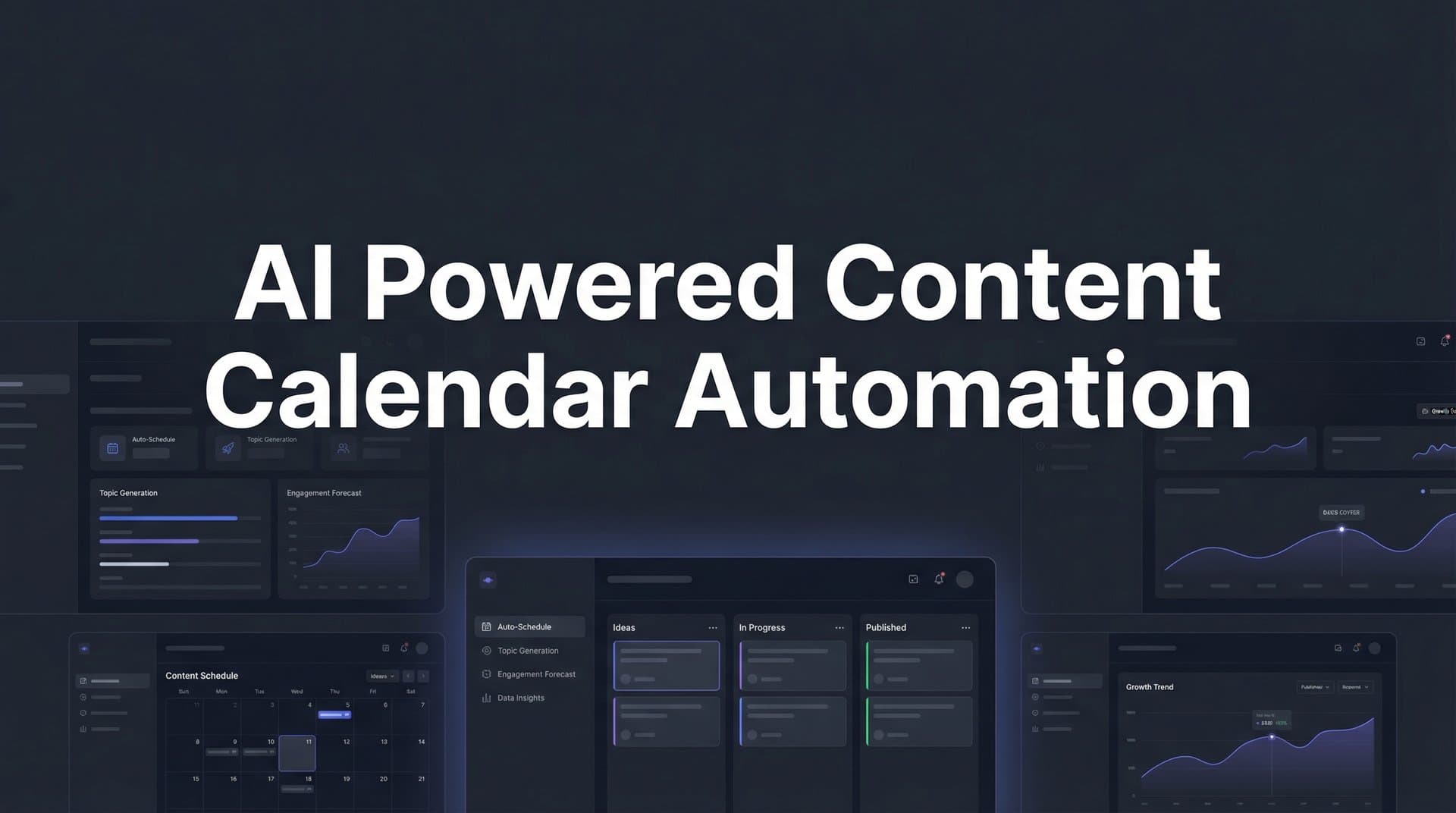
AI powered content calendar automation changes everything. Instead of wrestling with spreadsheets and chasing down status updates, you get intelligent systems that handle scheduling, coordination, and distribution autonomously. These platforms don't just remember when to publish—they analyze performance patterns, identify content gaps, balance team workloads, and adapt publishing schedules in real-time based on what's actually working. The result? Your team focuses on strategy and creativity while AI handles the operational complexity of keeping content flowing consistently across every channel.
From Static Spreadsheets to Intelligent Scheduling Systems
Traditional content calendars are fundamentally reactive tools. You plan content weeks or months in advance, lock it into a spreadsheet, and hope nothing changes. But everything changes. Trending topics emerge overnight. Campaign priorities shift. Team capacity fluctuates. Your carefully crafted schedule becomes outdated the moment you save it.
AI transforms this static planning model into a dynamic, adaptive system. Instead of fixed publication dates that never adjust, you get intelligent scheduling that responds to real conditions. Think of it like the difference between a printed map and GPS navigation—one shows you a predetermined route, the other recalculates constantly based on current traffic conditions.
The core capability that makes this possible is pattern recognition. AI systems analyze your historical publishing data to identify what actually works. They notice that your technical guides perform better on Tuesday mornings. They recognize that your audience engagement drops on Fridays. They detect seasonal patterns in topic interest that you might miss manually. This isn't guesswork—it's data-driven insight applied at scale.
But pattern recognition is just the foundation. Modern AI-powered calendar tools also identify content gaps automatically. They scan your publishing history, compare it against search trends and competitor activity, and flag topics you should be covering but aren't. Instead of quarterly content audits where you manually hunt for gaps, the system surfaces opportunities continuously.
Workload balancing represents another leap forward. Traditional calendars show you what's scheduled, but they don't tell you if your team is overloaded or underutilized. AI systems track capacity across your entire content operation—who's writing what, who has bandwidth, who's approaching burnout. They can automatically redistribute assignments, suggest timeline adjustments, or flag when you're planning more content than your team can realistically produce.
Here's where the distinction becomes critical: basic automation versus AI-powered automation. Basic automation handles scheduled posts—you set a date and time, the tool publishes. That's helpful, but it's not intelligent. AI-powered automation makes decisions. It evaluates multiple variables simultaneously: historical performance, current trends, team capacity, content interdependencies, and audience behavior patterns. Then it recommends actions or executes them autonomously based on rules you've established.
This includes predictive scheduling, where the system doesn't just publish when you tell it to—it suggests optimal publication windows based on when your specific audience is most receptive. It includes topic clustering, where related content pieces are automatically grouped and scheduled to build topical authority over time. And it includes resource allocation, where the system helps you deploy your team's effort toward the highest-impact opportunities rather than just filling calendar slots.
The Architecture of Automated Content Operations
An effective AI-powered content calendar isn't a single tool—it's an integrated system with multiple interconnected components. Understanding these elements helps you build automation that actually works rather than creating new bottlenecks.
Start with content pipeline management. This covers the entire journey from idea to published article. Your ideation queue captures potential topics from multiple sources: keyword research, competitor analysis, team brainstorming, and AI-generated suggestions. The system tracks each idea's priority, estimated effort, and strategic value. As ideas move into production, draft tracking monitors progress through writing, editing, and review stages.
Approval workflows represent a critical automation opportunity that many teams overlook. Instead of manually routing drafts through email or Slack, automated workflows trigger notifications at each stage, enforce approval sequences, and escalate delays automatically. If a piece sits in editorial review for three days without action, the system pings the appropriate stakeholder. If legal approval is required for certain content types, the workflow routes it automatically without anyone needing to remember.
Publishing triggers connect your calendar to actual distribution. When a piece reaches "approved" status and hits its scheduled date, the system publishes automatically to your CMS, updates your sitemap, submits to indexing services, and logs the publication across all tracking tools. No manual intervention required.
AI-driven content clustering takes this further by organizing your SEO content strategy thematically. Instead of treating each article as an isolated unit, the system identifies relationships between topics and schedules related content in strategic sequences. If you're building authority around AI visibility tracking, the system might schedule foundational explainer content first, followed by implementation guides, then advanced optimization techniques. This creates content clusters that search engines and AI models recognize as comprehensive topic coverage.
Thematic planning also aligns with search intent and seasonal trends. The AI analyzes search volume patterns to identify when interest in specific topics peaks. If searches for "content automation" spike in January as teams plan annual strategies, the system recommends scheduling related content in December to capture that rising interest. This isn't just about publishing consistently—it's about publishing strategically when your content will have maximum impact.
Integration capabilities determine whether your automated calendar becomes a productivity multiplier or just another disconnected tool. The most effective systems connect directly to your CMS platform, eliminating the need to manually transfer content between systems. They integrate with SEO tools to pull keyword data, search volume trends, and ranking opportunities directly into the planning interface. They connect to indexing systems, automatically submitting new content to services like IndexNow so search engines discover your updates within minutes rather than days.
This end-to-end connectivity creates true automation. A topic identified through keyword research flows automatically into your ideation queue. An approved article publishes to your CMS at the optimal time. The publication triggers automatic indexing submission. Performance data flows back into the system to inform future scheduling decisions. Every step happens without manual coordination, freeing your team to focus on creating exceptional content rather than managing operational logistics.
Implementing Automation That Actually Works
The gap between automation theory and automation reality is where most content teams stumble. You need a methodical approach that maps your specific workflow, identifies genuine automation opportunities, and implements changes incrementally rather than attempting a complete overhaul overnight.
Begin by documenting your current content process in painful detail. Not the idealized version you wish existed—the actual messy reality. Track a single piece of content from initial concept through publication and note every handoff, every tool switch, every status update, every approval gate. Where does content sit waiting for action? Which steps require manual coordination? What information gets lost between stages? These friction points are your automation opportunities.
Many teams discover they're spending hours each week on tasks that could be automated: copying content between tools, updating multiple trackers, sending status update emails, checking if pieces are ready to publish, manually scheduling social promotion. Each of these represents recoverable time that could be redirected toward strategic work.
Once you've mapped the current state, identify bottlenecks specifically. Is the approval process your constraint? Are writers waiting for topic assignments? Does content sit in a "ready to publish" queue because someone has to manually schedule it? Different bottlenecks require different automation solutions. Don't automate everything at once—target the highest-impact friction points first.
Setting up content templates creates consistency that makes automation possible. When every article type follows a predictable structure, AI systems can better assist with planning, generation, and quality checks. Templates might include standard sections for explainer articles, required elements for product guides, or formatting rules for different content types. These aren't creative constraints—they're frameworks that ensure quality while enabling automation.
Approval chains need clear rules that software can execute. Define who reviews what content types, how long each approval stage should take, and what happens when deadlines are missed. For example: all technical content requires engineering review within 48 hours, marketing content needs brand approval within 24 hours, and any piece stuck in review for more than 72 hours automatically escalates to the content director. These rules transform subjective approval processes into automated workflows.
Publishing rules determine when and how content goes live. You might establish that SEO guides publish Tuesday through Thursday mornings, that time-sensitive content can override the normal schedule, or that no more than two major articles publish on the same day. AI systems execute these rules automatically, balancing your strategic preferences with optimal timing recommendations.
Connecting your calendar to AI-powered content writing tools creates the most powerful automation loop. When your calendar identifies a content gap, it can automatically trigger content generation for that topic. AI writing assistants can produce first drafts based on your templates and brand guidelines. These drafts flow into your approval workflow without manual handoffs. Once approved, they publish automatically at the scheduled time. The entire pipeline operates with minimal human intervention, though human oversight remains critical for quality control.
Auto-publishing systems represent the final automation layer. Instead of someone manually clicking "publish" in your CMS, the system handles this automatically when content reaches approved status and hits its scheduled time. It updates your sitemap, submits to indexing services, and logs the publication. For teams publishing multiple pieces daily, this eliminates hours of administrative work weekly.
The key is building automation incrementally. Start with one workflow—perhaps draft tracking or approval routing. Get that working smoothly before adding the next piece. This staged approach prevents the chaos of implementing too many changes simultaneously and allows your team to adapt to new processes gradually. True hands-off operation develops over time as you refine rules, fix edge cases, and build confidence in the system's reliability.
Strategic Timing Through Data-Driven Intelligence
Publishing at the right moment matters as much as publishing quality content. AI-powered calendars excel at optimizing timing by analyzing patterns humans would never notice manually.
Historical performance analysis forms the foundation. The system examines every piece you've published: when it went live, how quickly it gained traction, peak engagement periods, and long-term performance trends. It correlates publication timing with outcomes across your entire content library. This reveals patterns like "technical guides published on Tuesday mornings average 40% more organic traffic in the first week than those published Friday afternoons" or "content published during the first week of the month gets indexed faster than mid-month publications."
These insights become actionable recommendations. Instead of guessing when to schedule your next comprehensive guide, the system suggests optimal publishing windows based on what's actually worked for similar content historically. This data-driven approach removes guesswork from scheduling decisions.
But optimal timing isn't just about maximizing individual article performance. It's about balancing content velocity with team capacity and quality standards. Publishing more content doesn't help if quality suffers or your team burns out creating it. AI systems help maintain sustainable output by monitoring production metrics alongside performance data.
If your team consistently produces high-quality content at a pace of eight articles monthly, the system won't recommend suddenly jumping to fifteen. Instead, it helps optimize the timing and distribution of those eight pieces for maximum impact. It might suggest spacing them more evenly throughout the month, clustering related topics together, or aligning publication dates with seasonal interest spikes.
Content velocity optimization also considers indexing speed and ranking timelines. There's little value in publishing three major articles on the same day if search engines take weeks to discover and rank them. Intelligent scheduling spaces content to ensure each piece has time to get indexed, start ranking, and demonstrate performance before the next piece publishes. This creates a steady drumbeat of new content rather than irregular bursts.
Cross-channel coordination represents another timing challenge that AI handles elegantly. Your blog content doesn't exist in isolation—it connects to social promotion, email newsletters, and increasingly, AI search visibility. Automated calendars synchronize content across these channels, ensuring your blog article publishes before the social posts promoting it, that your newsletter features recently published content, and that your AI visibility tracking captures how new content affects brand mentions across AI platforms.
This coordination extends to building topical authority. If you're establishing expertise in content automation, the system might schedule foundational content first, followed by intermediate guides, then advanced optimization techniques. Each piece builds on the previous one, creating a content cluster that demonstrates comprehensive coverage to both traditional search engines and AI models. The timing between related pieces matters—publish too quickly and you fragment attention, too slowly and you lose momentum.
For teams focused on AI visibility and GEO optimization, consistent publishing schedules help establish the topical authority that AI models recognize when formulating responses. When AI platforms see regular, high-quality content on specific topics from your domain, they're more likely to reference your brand in relevant responses. Automated calendars maintain this consistency without requiring constant manual oversight.
Measuring What Matters and Improving Over Time
Automation without measurement is just faster chaos. The metrics you track determine whether your automated calendar actually improves content operations or just makes problems happen more quickly.
Content velocity measures how efficiently your team moves from ideation to publication. Track time-to-publish for different content types: how long does a typical explainer article take from assignment to live publication? How does this compare to listicles or technical guides? Automation should reduce these timelines by eliminating waiting periods and manual handoffs. If average time-to-publish increases after implementing automation, something's wrong with your workflow design.
Organic traffic correlation connects your publishing schedule to actual results. Does content published on your AI-recommended optimal days actually perform better than content published at other times? Track first-week traffic, thirty-day traffic, and long-term performance by publication day and time. This validates whether the system's timing recommendations translate to real improvements.
AI visibility improvements represent an increasingly important metric as more searches shift to conversational AI interfaces. Track how new content affects your brand's presence across AI platforms like ChatGPT, Claude, and Perplexity. Does consistent publishing increase mention frequency? Do content clusters around specific topics lead to more authoritative positioning in AI responses? This connection between content velocity and AI visibility helps justify continued investment in automation.
Indexing speed matters more than many teams realize. Content that gets indexed within hours starts ranking faster than content that takes days or weeks to appear in search results. If your automated calendar integrates with indexing services, measure how quickly new content appears in search engine results. Faster indexing creates a competitive advantage, especially for time-sensitive or trending topics. Understanding content indexing automation benefits helps you prioritize this often-overlooked metric.
Team satisfaction and capacity utilization provide qualitative measures of automation success. Are team members spending less time on administrative tasks and more on strategic work? Has automation reduced the stress of managing multiple deadlines? These human factors determine whether your automation creates sustainable improvement or just shifts bottlenecks elsewhere.
Feedback loops refine AI recommendations over time. The system learns from outcomes: if content published at recommended times consistently outperforms other timing, the algorithm gains confidence in those recommendations. If certain topic clusters generate strong engagement, the system suggests similar clustering strategies for future content. This continuous improvement means your automated calendar gets smarter the longer you use it.
Common pitfalls to avoid include over-automation, where you remove so much human oversight that quality suffers. Automation should enhance human decision-making, not replace it entirely. Maintain approval gates for quality control, even if the workflow between gates is automated. Review AI recommendations regularly rather than blindly accepting every suggestion.
Ignoring content quality signals represents another frequent mistake. If your automated system is publishing content on schedule but organic traffic is declining, something's wrong with content quality, topic selection, or optimization. Velocity without quality creates volume, not value. Monitor engagement metrics, bounce rates, and ranking performance alongside publishing metrics.
Failing to adapt to algorithm changes can undermine even well-designed automation. Search engine algorithms evolve constantly, as do AI model training approaches. What worked for timing and topic selection six months ago might not work today. Build regular strategy reviews into your process where you assess whether your automation rules and AI recommendations still align with current best practices.
Your Roadmap to Automated Content Operations
Theory becomes valuable only when you can implement it. Here's your practical checklist for launching AI-powered calendar automation this week, not someday when you have more time or budget.
Audit your current workflow: Spend two hours documenting exactly how content moves through your organization today. Note every tool, every handoff, every delay. This baseline reveals your highest-impact automation opportunities.
Identify your primary bottleneck: Is it topic ideation? Draft production? Approval delays? Publishing coordination? Focus your first automation effort on whatever constrains your content velocity most severely.
Choose integration-friendly tools: Select automation platforms that connect directly to your existing CMS, SEO tools, and workflow systems. When evaluating options, CMS integration for content automation should be a primary consideration because disconnected tools just create new coordination problems.
Start with approval workflow automation: This typically delivers immediate time savings with minimal risk. Set up automated routing, deadline tracking, and escalation rules for your review process.
Implement auto-publishing for low-risk content: Begin with content types where quality control happens during drafting and editing rather than at publication. Let the system handle the mechanical task of publishing approved content on schedule.
Connect indexing automation: Integrate your calendar with IndexNow or similar services so new content gets submitted for indexing automatically. Explore content indexing automation services that can reduce time-to-ranking by days or weeks.
Set up performance tracking: Configure your automation platform to monitor key metrics: time-to-publish, indexing speed, organic traffic by publication timing, and team capacity utilization. You can't improve what you don't measure.
These automated workflows connect directly to broader AI visibility and GEO optimization strategies. Consistent, strategically-timed publishing helps establish the topical authority that AI models recognize. When your automated calendar maintains steady content output around your core topics, AI platforms see you as a reliable, comprehensive source worth citing in responses.
The connection between content automation, AI visibility, and organic traffic growth forms a reinforcing cycle. Automation enables consistent publishing. Consistent publishing builds topical authority. Topical authority improves both traditional search rankings and AI platform mentions. Better visibility drives more traffic. More traffic provides more performance data to refine your automation. Each element strengthens the others.
Scaling content operations while maintaining brand consistency becomes possible when automation handles operational complexity. Your team can focus on strategic decisions—which topics matter most, how to position your brand, what unique insights to emphasize—while AI manages the logistics of scheduling, coordination, and distribution. For agencies managing multiple clients, content workflow automation becomes essential for maintaining quality at scale.
The Future of Content Operations Starts Now
AI powered content calendar automation isn't about replacing human creativity with algorithms. It's about freeing marketing teams from administrative burden so they can focus on what actually matters: creating exceptional content that serves your audience and builds genuine authority in your space.
The transformation happens at multiple levels simultaneously. Operationally, you eliminate hours of manual coordination weekly. Strategically, you gain the capacity to publish consistently at the volume and frequency that builds topical authority. Competitively, you move faster than rivals still managing content through spreadsheets and email threads.
The connection between automated publishing workflows and AI visibility continues strengthening as more searches shift to conversational AI platforms. When AI models evaluate sources for responses, they favor brands that demonstrate consistent, comprehensive coverage of topics over time. Your automated calendar doesn't just help you publish more efficiently—it helps you build the content foundation that AI platforms recognize as authoritative.
For teams serious about scaling organic traffic in 2026 and beyond, the question isn't whether to automate content operations. It's how quickly you can implement automation that actually works. The competitive advantage goes to teams that master the integration of content planning, generation, and distribution into unified workflows that operate with minimal manual intervention while maintaining high quality standards.
Stop guessing how AI models like ChatGPT and Claude talk about your brand—get visibility into every mention, track content opportunities, and automate your path to organic traffic growth. Start tracking your AI visibility today and see exactly where your brand appears across top AI platforms.