Publishing content consistently is one of the biggest challenges marketers face—not because creating content is impossible, but because the manual steps between "finished draft" and "live on your site" drain hours every week. You're copying text between tools, formatting in your CMS, updating sitemaps, pinging search engines, and tracking what went live when.
A content publishing automation workflow eliminates these friction points by connecting your content creation, publishing, and indexing processes into a single, streamlined system.
This guide walks you through building an automation workflow from scratch, whether you're a solo marketer publishing weekly or an agency managing dozens of client sites. By the end, you'll have a repeatable system that publishes content faster, indexes it immediately, and frees your time for strategy instead of button-clicking.
Step 1: Map Your Current Publishing Process
Before you automate anything, you need to understand exactly what you're automating. Grab a notebook or open a spreadsheet and document every single step your content takes from "approved" to "live on your website."
Start with the obvious ones: copying content from Google Docs into your CMS, formatting headings and paragraphs, uploading and positioning images, writing meta descriptions, setting categories and tags. But don't stop there. Include the steps you barely think about—updating your internal content calendar, notifying your team in Slack, manually submitting your sitemap to Google Search Console.
Time each step. You'll be surprised how those "quick" formatting tweaks add up to 20 minutes per article. If you publish three articles per week, that's an hour just on formatting. Multiply that across a year, and you're looking at 52 hours—more than a full work week—spent on purely mechanical tasks.
Now comes the critical analysis: which steps require human judgment, and which are purely mechanical? Writing the content itself requires creativity and expertise. Choosing the right featured image might need your eye for brand consistency. But copying text into a CMS field? Purely mechanical. Updating your sitemap XML file? Completely automatable.
Circle every mechanical step on your list. These are your automation targets. The goal isn't to remove humans from the process entirely—it's to remove humans from the parts where they add no value. You want your team focused on strategy, creativity, and optimization, not wrestling with CMS formatting quirks. Understanding the difference between content automation vs manual writing helps clarify which tasks deserve human attention.
This baseline becomes your ROI calculation. If you're spending five hours per week on mechanical publishing tasks, and automation can reclaim four of those hours, you've just freed up 200 hours per year. What could your team accomplish with an extra 200 hours?
Step 2: Choose Your Automation Stack
Your content publishing automation workflow needs three core components working together: a content generation or management tool, a CMS with API access, and an indexing solution that notifies search engines when new content goes live.
The first decision is whether to build your workflow with specialized tools connected via middleware, or use an all-in-one platform that handles multiple steps natively. The middleware approach—using Zapier or Make to connect your content tool to WordPress, then connecting WordPress to an indexing service—gives you flexibility but introduces multiple potential failure points.
All-in-one solutions that combine content creation, auto-publishing, and indexing eliminate these integration headaches. Look for platforms that can generate content, push it directly to your CMS, and trigger indexing notifications—all in one workflow. Exploring the best content automation platforms can help you identify solutions that match your needs.
Your CMS is the linchpin of this entire system. Verify it supports programmatic publishing through an API. WordPress offers the REST API that most automation tools can connect to. Webflow provides a CMS API for programmatic content management. Ghost has a well-documented Content API. If your CMS doesn't offer API access, you'll struggle to build reliable automation—consider this a deal-breaker. For CMS-specific guidance, review strategies for content publishing automation for CMS platforms.
For indexing automation, you need tools that support the IndexNow protocol. This relatively new standard allows you to instantly notify participating search engines—including Bing and Yandex—when new content publishes. Traditional sitemap pinging can take hours or days; IndexNow works in minutes.
Don't overlook the importance of native integrations. Every time you add a middleware tool or custom API connection, you add maintenance overhead. When APIs change or tools update, your workflow breaks. Platforms with native integrations handle these updates automatically, keeping your automation running smoothly.
Budget matters, but calculate the true cost. A $200/month all-in-one platform might seem expensive compared to cobbling together free tools, but if it saves you ten hours per month, you're effectively paying $20 per hour to reclaim your time. For most marketers and agencies, that's a bargain. Compare options with a detailed look at content publishing automation pricing to find the right fit.
Step 3: Set Up CMS Auto-Publishing Connections
Now comes the moment where your workflow transforms from theory to reality: connecting your content tool to your CMS so articles can publish automatically without manual intervention.
Start by locating your CMS's API credentials. In WordPress, you'll need an application password or JWT token depending on your authentication method. In Webflow, you'll generate an API token from your site settings. Treat these credentials like passwords—they grant full publishing access to your site.
When you configure the connection in your content tool, you'll set default publishing parameters that apply to every auto-published article. Choose your default author (this matters for bylines and author archives), select default categories or collections, and define how featured images are handled. Some tools can automatically generate and upload featured images; others require you to specify a default image or leave it blank.
URL structure deserves special attention. Will your auto-published content use the article title as the slug? Will it include the publication date? Will it nest under a specific category path? Define these rules now, because changing URL structures after content is live and indexed creates redirect headaches.
Before you enable live publishing, run a test with draft posts. Configure your automation to publish content as "draft" or "unpublished" status first. This lets you verify that content flows correctly, formatting is preserved, and metadata populates properly—all without pushing unvetted content live to your site.
Check that paragraph breaks, headings, bold text, and links all transfer correctly. Some CMS platforms require specific HTML formatting; others accept Markdown. If your content tool outputs Markdown but your CMS expects HTML, you'll need a conversion step in your workflow.
If your team needs human review before content goes live, build an approval gate into your workflow. Configure your automation to publish content as drafts, then send a notification to your editor. They review the draft in the CMS, make any necessary tweaks, and click publish manually. This hybrid approach gives you the speed benefits of automation while maintaining quality control. For teams handling high volumes, bulk content publishing automation strategies can streamline this process further.
Once your test drafts look perfect, flip the switch to live publishing. Start with low-stakes content—a test article or internal documentation—before automating your main blog. You want to catch any quirks before they affect content your audience sees.
Step 4: Automate Sitemap Updates and Search Engine Notifications
Getting content published is only half the battle. If search engines don't know your new content exists, it might sit undiscovered for days or weeks. Automated indexing notifications solve this problem by telling search engines "new content is live, come crawl it now."
Start with your sitemap. Most modern CMS platforms can generate sitemaps dynamically—meaning the sitemap updates automatically whenever new content publishes. In WordPress, plugins like Yoast SEO or Rank Math handle this automatically. Webflow generates sitemaps natively. Verify that your sitemap is set to dynamic generation, not static, so it reflects new content immediately. Learn more about sitemap automation for content sites to ensure proper configuration.
Next, implement the IndexNow protocol. This is where automation delivers serious competitive advantage. IndexNow lets you submit URLs to participating search engines instantly when content publishes. Instead of waiting for search engines to discover your new content through regular crawling, you're proactively notifying them.
Many CMS platforms now include IndexNow plugins or native support. WordPress has several IndexNow plugins that automatically submit new URLs when you hit publish. Some all-in-one content platforms include IndexNow notifications as part of their auto-publishing workflow. Configure your IndexNow integration with your API key (which you can generate for free from any participating search engine). Understanding the content indexing automation benefits helps justify this investment.
For Google specifically, you'll want to set up Search Console API integration if you're publishing content at high volume. While Google doesn't participate in IndexNow, you can use the URL Inspection API to request indexing for specific URLs. This requires more technical setup than IndexNow but can speed up Google's discovery of your content.
After you've configured these notifications, verify they're working. Publish a test article and check your server logs or notification dashboard to confirm that IndexNow submissions went through successfully. Then, within 24 hours, check Google Search Console's coverage report and Bing Webmaster Tools to verify that your new URL appears as discovered or indexed.
The speed difference is dramatic. Without automated notifications, new content might take several days to get indexed. With IndexNow and proper sitemap automation, content can appear in search results within hours. For time-sensitive content or trending topics, this speed advantage can mean the difference between capturing traffic and missing the moment entirely.
Step 5: Create Content Scheduling and Queue Management
With publishing and indexing automated, you need a system for managing when content goes live. A content queue transforms your workflow from reactive to strategic, letting you publish consistently even when content creation is uneven.
Build your content calendar first. This doesn't need to be complex—a simple spreadsheet with publication dates, topics, and status works fine. The key is that this calendar should feed directly into your automation workflow, not exist as a separate planning document that you manually reference. Consider implementing AI-powered content calendar automation to streamline this process.
Define your publishing frequency rules. Will you publish one article every Monday, Wednesday, and Friday at 9 AM? Two articles per day at staggered times? Your frequency should match your content production capacity and audience expectations. Consistency matters more than volume—it's better to publish reliably once per week than sporadically whenever content is ready.
Configure queue logic for when content is ready but your schedule is full. If you have three articles ready to publish but only one slot available this week, what happens? Option one: articles wait in the queue until the next available slot. Option two: you temporarily increase publishing frequency. Option three: you manually review and decide which article gets priority.
Most automation platforms let you set content to "scheduled" status, where it sits in your CMS waiting for the designated publish time. This gives you a buffer—content is loaded and ready, but not yet live. If you need to make last-minute changes or delay publication, you can edit the scheduled post without disrupting your workflow.
Add notifications for successful publishes and failed attempts. When content goes live successfully, send a Slack notification or email to your team with the live URL. When automation fails—maybe the API connection timed out, or the CMS rejected the content due to a formatting issue—you need to know immediately so you can fix it before your audience notices a gap in your publishing schedule.
Review your queue weekly. Are articles piling up faster than you're publishing them? You might need to increase frequency. Is your queue running empty? Time to ramp up content creation or adjust your publishing frequency downward. The queue gives you visibility into your content pipeline, helping you balance creation and publication strategically.
Step 6: Add AI Visibility Tracking to Your Workflow
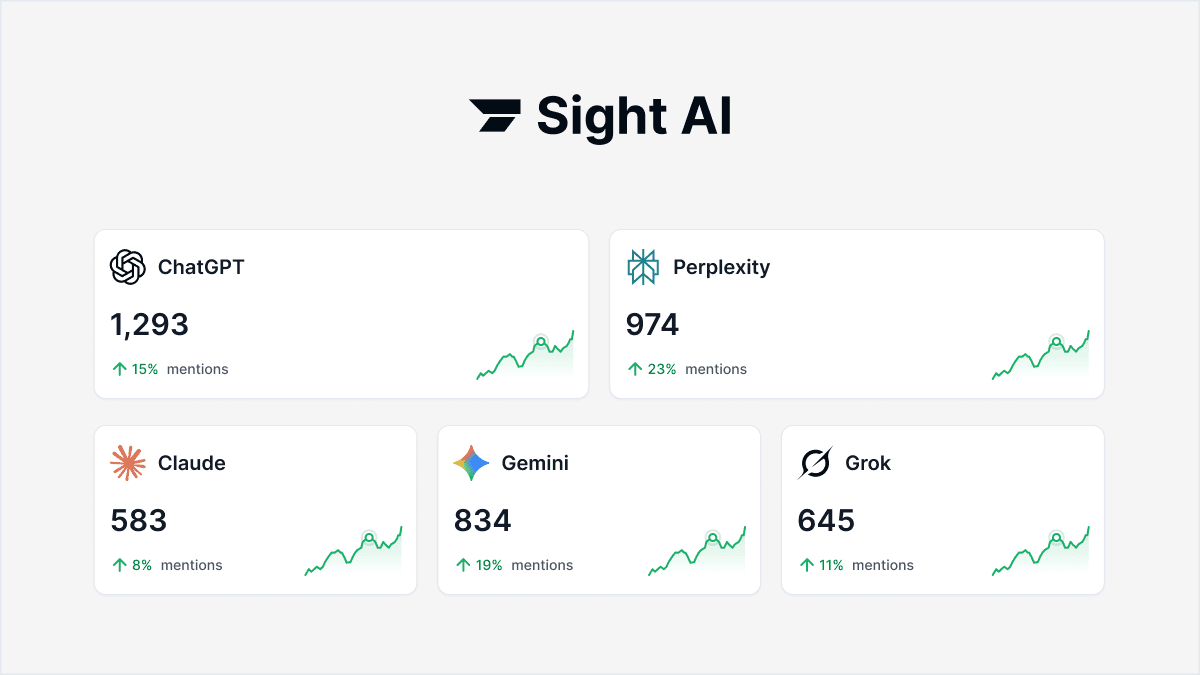
Traditional SEO tracking tells you how your content performs in Google search results, but there's a new dimension to content visibility: how AI models like ChatGPT, Claude, and Perplexity reference your brand and content when answering user questions.
Integrating AI visibility tracking into your content publishing automation workflow creates a closed feedback loop. You publish content, it gets indexed, and you immediately start monitoring whether AI platforms mention your brand, cite your content, or recommend your solutions when users ask relevant questions.
Set up monitoring for brand mentions across major AI platforms. When someone asks ChatGPT about topics in your industry, does your brand appear in the response? When Claude provides recommendations, does it reference your content? This visibility matters because AI-powered search is rapidly becoming how people discover information and make decisions.
Track sentiment alongside mentions. It's not enough to know that AI models mention your brand—you need to know what they're saying. Are the mentions positive, neutral, or negative? If an AI model is providing outdated or incorrect information about your company, you need to catch it early so you can address it through updated content or brand signals.
Use AI visibility data to inform your content strategy. If you notice that AI models consistently mention competitors but not your brand when answering certain questions, that's a content gap. Create comprehensive, authoritative content on those topics to increase your chances of being cited by AI models in future responses. Implementing SEO content strategy automation helps you act on these insights systematically.
Connect visibility tracking back to your content calendar. When you publish an article targeting a specific topic, add a note to track how that topic performs in AI visibility over the following weeks. Did your new guide on content automation increase mentions when users ask about publishing workflows? This closed-loop measurement helps you understand which content strategies actually move the needle on AI visibility.
The integration works best when it's automated. Some platforms can automatically start tracking new topics when content publishes, eliminating the manual step of setting up tracking for each article. This ensures you never miss visibility data for published content.
Step 7: Test, Monitor, and Optimize Your Workflow
Your automation workflow is built, but it's not finished. Automation requires ongoing monitoring to catch failures, identify bottlenecks, and optimize performance over time.
Run comprehensive end-to-end tests before you rely on the workflow for production content. Create a test article, push it through your entire automation pipeline, and verify every step: content generates correctly, publishes to your CMS with proper formatting, sitemap updates automatically, IndexNow notifications fire successfully, and visibility tracking begins monitoring the new content.
Set up monitoring dashboards that give you real-time visibility into workflow health. Track publish success rates—what percentage of scheduled content actually goes live on time? Monitor indexing speed—how long does it take from publication to appearing in search engine indexes? Watch for error patterns that indicate systemic issues rather than one-off failures.
Create alerts for critical failures. If content fails to publish, you need to know within minutes, not hours. If your IndexNow notifications start failing, that's a signal that your API credentials might have expired or the integration broke. Fast detection means fast fixes, minimizing the impact on your publishing consistency. Reliable content indexing automation software includes built-in monitoring for these scenarios.
Review workflow performance weekly, even when everything seems to be working smoothly. Look for new bottlenecks that emerge as you scale. Maybe your CMS starts timing out when you publish more than five articles per day. Maybe your content queue management becomes unwieldy as you add more team members. Catch these issues early before they become crises.
Document everything. Create a workflow diagram that shows how content moves from creation to publication to indexing. Write troubleshooting guides for common issues: what to do when content fails to publish, how to manually trigger IndexNow notifications, how to verify API connections. This documentation ensures your workflow doesn't become a single point of failure dependent on one person's knowledge.
Optimize based on data. If you notice that content published at certain times gets indexed faster, adjust your scheduling rules to take advantage of that pattern. If certain content types consistently fail during auto-publishing, investigate whether they need different formatting or settings. Your workflow should evolve based on real performance data, not assumptions.
Your Publishing Workflow Is Now Your Competitive Advantage
You've built something powerful: a content publishing automation workflow that eliminates manual busywork and accelerates your path from content creation to search visibility. Instead of spending hours copying, formatting, and manually updating systems, you have an automated pipeline that handles the mechanical work while you focus on strategy and optimization.
Quick checklist to verify your workflow is complete: current process mapped with time benchmarks, automation stack selected and connected, CMS auto-publishing tested and live, sitemap and IndexNow notifications configured, content queue and scheduling rules active, AI visibility tracking monitoring your published content, and monitoring dashboards catching any failures.
Start with a small batch of content to validate everything works end-to-end. Publish three to five articles through your automated workflow and verify each step executes correctly. Once you're confident in the system, scale up your publishing velocity. The beauty of automation is that publishing ten articles takes barely more effort than publishing one.
The time you save compounds over weeks and months. Every hour reclaimed from manual publishing tasks is an hour you can invest in content strategy, SEO optimization, or creating more high-quality content that drives organic traffic. Your competitors are still copying and pasting between tools while you're publishing consistently, getting indexed faster, and tracking visibility across both traditional search and AI platforms.
But there's one piece many marketers overlook: understanding how AI models actually talk about your brand after your content goes live. Start tracking your AI visibility today and see exactly where your brand appears across top AI platforms. Stop guessing how AI models like ChatGPT and Claude talk about your brand—get visibility into every mention, track content opportunities, and automate your path to organic traffic growth.
Your automated workflow is running. Your content is publishing consistently. Now make sure you're measuring what matters in the age of AI-powered search.