AI-powered search is no longer a future scenario. ChatGPT, Claude, Perplexity, and similar platforms are already shaping how buyers discover products, evaluate vendors, and make decisions. If your brand isn't appearing in those AI-generated responses, or if it's appearing with the wrong framing, you're losing ground to competitors who are paying attention.
AI mention analysis platforms exist to close that blind spot. They track where your brand surfaces across AI models, how it's described, and what prompts trigger those mentions. Some go further, layering in content creation and indexing capabilities so you can act on what you find. But the category is still maturing, and the tools vary significantly in scope and focus.
Here are the top AI mention analysis platforms available in 2026, covering the full spectrum from enterprise monitoring to all-in-one visibility and content workflows.
1. Sight AI
Best for: Marketers and agencies who want to monitor AI mentions and act on them with content
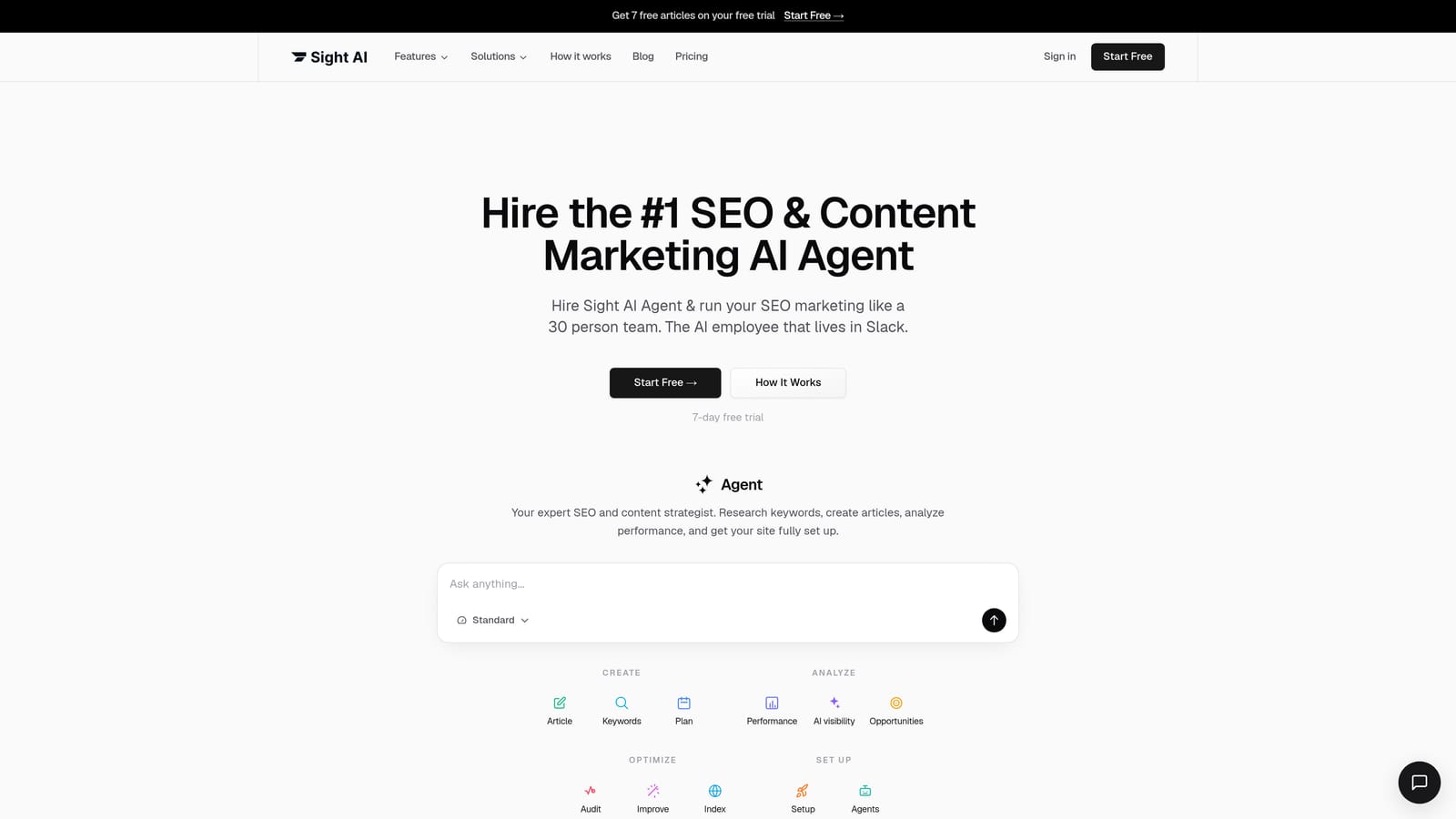
Sight AI is an all-in-one AI visibility platform that combines brand mention tracking across 6+ AI models with a built-in content engine and automated indexing, making it the most complete option on this list.
Where This Tool Shines
Most monitoring tools stop at the data. Sight AI is designed around the idea that tracking your AI visibility is only useful if you can do something about it. The platform connects monitoring directly to content creation and publishing, so when you identify a gap (say, a competitor appearing in responses to queries where you don't), you can generate and publish optimized content without switching tools.
The AI Visibility Score gives you a single, trackable metric for how your brand performs across platforms like ChatGPT, Claude, and Perplexity. Sentiment analysis adds context to raw mention frequency, helping you understand not just whether you appear, but how you're being described.
Key Features
AI Visibility Score: A unified score tracking brand mention frequency and sentiment across ChatGPT, Claude, Perplexity, and more.
Prompt Tracking: Monitor which specific queries and prompts surface your brand in AI-generated responses, giving you granular insight into where you're winning and where you're absent.
13+ Specialized AI Agents: Generate SEO and GEO-optimized content in multiple formats including listicles, guides, and explainers, all from within the same platform.
IndexNow Integration: Automatically submit new content for faster discovery by search engines, reducing the lag between publishing and indexing.
CMS Auto-Publishing and Autopilot Mode: Schedule and publish content directly to your CMS with minimal manual intervention, useful for agencies managing multiple client sites.
Best For
Sight AI suits founders who want to build AI search presence from scratch, marketers running GEO strategies alongside traditional SEO, and agencies managing AI visibility for multiple clients. The Autopilot Mode is particularly valuable for teams with limited bandwidth who need consistent content output without constant oversight.
Pricing
Visit trysight.ai for current pricing plans. Multiple tiers are available to accommodate individual users and agency workflows.
2. Profound
Best for: Enterprise teams that need structured AI answer monitoring at scale
Profound is an enterprise-focused AI answer monitoring platform built to track how brands appear in AI-generated responses across major large language models.
Where This Tool Shines
Profound is designed for organizations where AI visibility tracking needs to fit into larger reporting structures. Its analytics dashboards are built for clarity at scale, making it easier for enterprise marketing teams to present AI presence data to stakeholders alongside traditional channel metrics.
The competitive benchmarking features are a notable strength. Profound lets teams compare their brand's AI answer presence against named competitors, which is valuable for enterprise brands operating in crowded categories where AI-generated recommendations can meaningfully influence purchase decisions.
Key Features
Brand Presence Tracking: Monitors how your brand appears across major LLMs in AI-generated answers.
Structured Analytics Dashboards: Organized reporting views designed for enterprise teams and multi-stakeholder environments.
Enterprise Reporting and Collaboration: Team-level access and reporting tools that support larger marketing organizations.
Competitive Benchmarking: Compare your brand's AI answer visibility against competitors within the platform.
Best For
Profound is best suited for enterprise marketing teams and large agencies that need robust reporting infrastructure and competitive intelligence baked into their AI monitoring workflow. It's less focused on content creation and more on structured data and analysis.
Pricing
Profound operates on enterprise and custom pricing. Contact their team directly at helloprofound.com for a quote.
3. Peec
Best for: Brands that want to benchmark their AI visibility against specific competitors
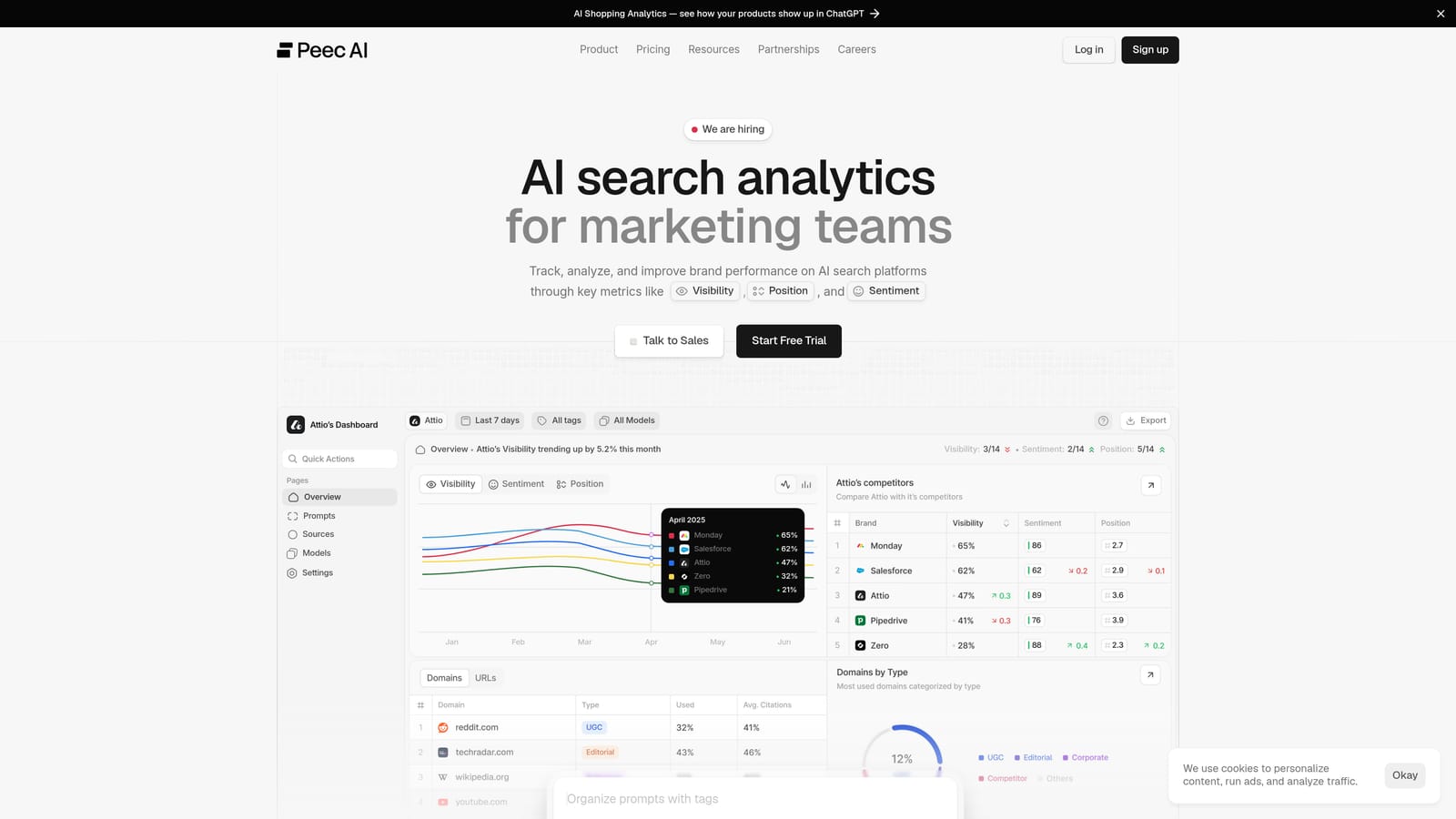
Peec is an AI visibility benchmarking tool focused on competitive comparison, helping brands understand how their AI mention presence stacks up against others in their category.
Where This Tool Shines
Where many platforms focus on your brand in isolation, Peec is built around the competitive angle. The core use case is understanding relative AI visibility: not just "do I appear?" but "do I appear more or less than my competitors, and in what context?" That framing makes it particularly useful for brands in competitive markets where AI-generated recommendations directly influence buyer decisions.
The gap analysis features help teams prioritize where to focus their GEO content efforts, surfacing areas where competitors are consistently mentioned and your brand is not.
Key Features
Competitive AI Mention Comparison: Side-by-side visibility comparison between your brand and named competitors across AI outputs.
Visibility Benchmarking Dashboards: Clear visual reporting on relative AI presence over time.
Sentiment Tracking: Monitors how your brand is described in AI responses, not just how often it appears.
Gap Analysis: Identifies specific areas where competitors are surfacing in AI answers and your brand is absent.
Best For
Peec is a strong fit for brands and agencies running competitive intelligence workflows, particularly those that need to justify AI visibility investments with comparative data. It works well as a benchmarking layer alongside a broader content and monitoring strategy.
Pricing
Visit peec.ai for current pricing information.
4. Promptwatch
Best for: Teams that need granular, query-level tracking of brand mentions in AI responses
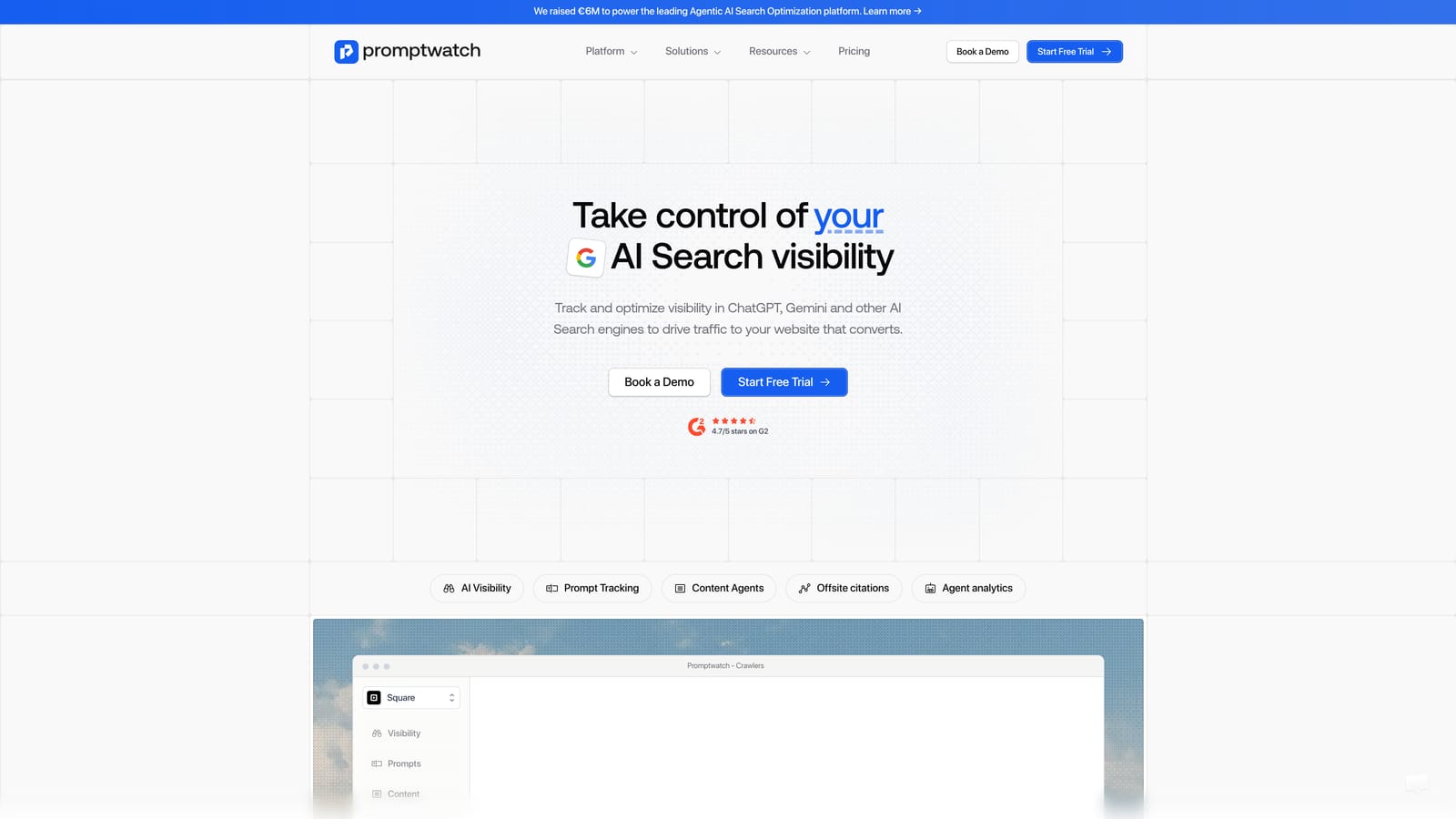
Promptwatch is a prompt-level AI brand monitoring tool that tracks when and how your brand surfaces in responses to specific queries across AI platforms.
Where This Tool Shines
The defining characteristic of Promptwatch is its granularity. Rather than reporting on overall brand presence, it lets you monitor specific prompts and queries to see exactly when your brand appears, in what context, and how that changes over time. This is particularly useful for understanding which search intents and question types are driving AI mentions for your brand or your competitors.
Alert functionality means you're notified when AI response patterns shift, which can be an early signal that a competitor's content strategy is gaining traction or that a new topic area is opening up for your brand.
Key Features
Query-Level Prompt Tracking: Monitor specific prompts and questions to see when and how your brand appears in AI-generated responses.
Multi-Platform Monitoring: Tracks brand mentions across multiple AI platforms from a single interface.
Mention Frequency and Context Reporting: Goes beyond raw mention counts to show the context in which your brand appears.
Response Pattern Alerts: Notifies you when AI-generated responses about your brand or category change meaningfully.
Best For
Promptwatch suits SEO specialists and content strategists who want to connect specific content efforts to AI response outcomes. It's a strong choice for teams running GEO experiments and needing precise feedback on which prompts their content is influencing.
Pricing
Visit promptwatch.io for current pricing details.
5. AirOps
Best for: Teams that want to build custom AI-powered workflows for content and brand visibility
AirOps is an AI workflow automation platform that lets teams design and run custom content and visibility workflows powered by large language models.
Where This Tool Shines
AirOps takes a different approach from the dedicated monitoring tools on this list. Rather than providing a fixed monitoring dashboard, it gives teams the infrastructure to build their own AI-powered workflows. That flexibility is genuinely useful for organizations with specific, non-standard processes around content creation, brand visibility analysis, or competitive research.
For teams with technical capacity, the ability to integrate multiple LLMs into a single workflow and connect those outputs to existing tools and processes can make AirOps a powerful component of a broader AI visibility strategy.
Key Features
Custom AI Workflow Builder: Design bespoke workflows for content creation, brand monitoring, and visibility optimization tasks.
Multi-LLM Integration: Connect to multiple large language models within a single workflow for flexible automation.
Content Optimization Workflows: Build processes specifically designed to optimize content for AI search visibility.
Team Collaboration and Workflow Management: Share and manage workflows across team members with collaborative features.
Best For
AirOps is best for technically capable marketing teams or agencies that need custom automation rather than an out-of-the-box monitoring solution. It's less suited to teams looking for immediate, plug-and-play AI visibility tracking, but strong for those building differentiated internal workflows.
Pricing
Visit airops.com for current pricing plans.
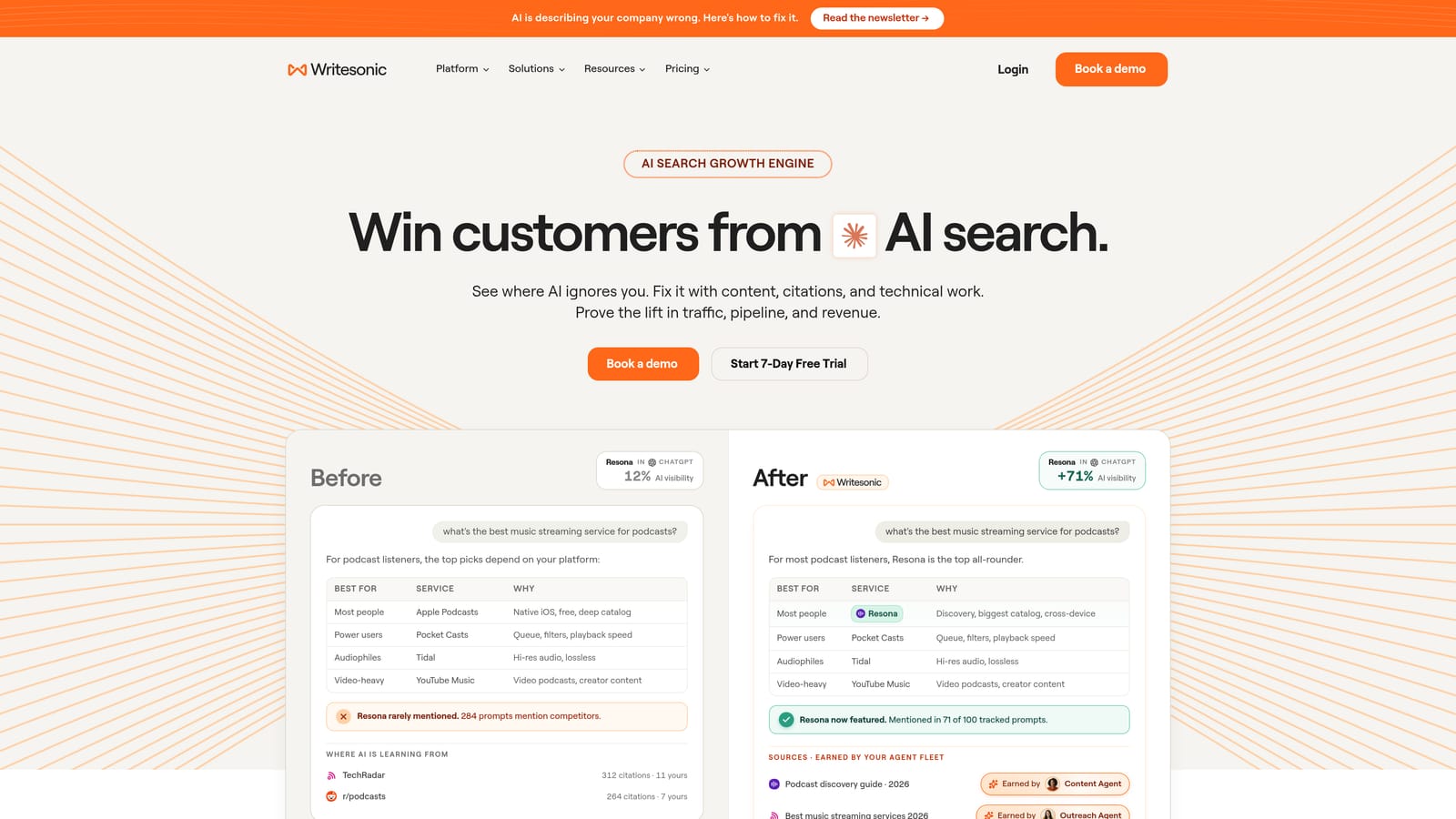
6. Writesonic
Best for: Content teams focused on generating SEO and GEO-optimized content at volume
Writesonic is a broad AI content generation platform with growing features oriented toward generative engine optimization, helping brands produce content that performs in both traditional and AI-powered search.
Where This Tool Shines
Writesonic's strength is content output. If your primary challenge is producing enough high-quality, optimized content to improve your AI search presence, Writesonic offers a well-developed generation environment with SEO tooling built in. The platform has increasingly incorporated GEO-focused features as the AI search landscape has matured.
It's worth being clear about what Writesonic is not: it's primarily a content generation tool, not a dedicated AI mention monitoring platform. Teams looking for visibility tracking and sentiment analysis will need to pair it with a monitoring-focused tool.
Key Features
AI Article and Blog Post Generation: Produces long-form content with SEO optimization built into the generation process.
GEO-Focused Content Features: Content generation capabilities oriented toward improving visibility in AI-generated search responses.
Keyword and Topic Research Assistance: Built-in tools to inform content strategy and identify relevant topics.
Multi-Format Content Output: Generates content across formats including articles, social posts, and ad copy.
Best For
Writesonic is a solid option for content-heavy teams that need to scale production and want some GEO optimization built into their writing workflow. It's less suited to teams whose primary need is monitoring and analysis rather than content creation.
Pricing
Writesonic offers a free plan with paid subscription tiers available. Visit writesonic.com for current rates.
Which Platform Fits Your Workflow
The right AI mention analysis platform depends almost entirely on what you need to do with the data you collect. Monitoring alone is a starting point, but the teams seeing real results in AI search are the ones connecting insights to action.
Here's a quick reference by use case:
All-in-one AI visibility and content: Sight AI is the clear choice. It's the only platform on this list that combines mention tracking, sentiment analysis, prompt monitoring, content generation, and automated indexing in a single workflow. For agencies and founders who want to track AI visibility and close the gap with optimized content without juggling multiple tools, it's the most complete option available.
Enterprise monitoring and reporting: Profound is built for organizations that need structured dashboards, team collaboration, and enterprise-grade reporting. If your primary need is presenting AI visibility data to stakeholders in a polished format, it's worth exploring.
Competitive benchmarking: Peec is the most focused tool for understanding your AI presence relative to named competitors. If competitive intelligence is your priority, it fits naturally into that workflow.
Granular prompt-level tracking: Promptwatch gives you the most precise view of which specific queries surface your brand in AI responses. It's the right tool for teams running controlled GEO experiments and needing query-level feedback.
Custom AI workflows: AirOps suits technical teams that need to build non-standard automation around content and visibility tasks rather than use a fixed monitoring interface.
High-volume content generation: Writesonic is a capable option for teams whose bottleneck is content output rather than visibility analysis, particularly if GEO optimization is part of the brief.
If you're just getting started with AI visibility and want a single platform that covers monitoring, content, and indexing without stitching together separate tools, the most practical starting point is tracking your mentions first. Stop guessing how AI models like ChatGPT and Claude talk about your brand. Start tracking your AI visibility today and see exactly where your brand appears across top AI platforms.