AI content writing services have moved well beyond basic text generation. Today's platforms combine SEO optimization, GEO (Generative Engine Optimization) targeting, and multi-agent workflows to produce content that ranks in traditional search and gets cited by AI models like ChatGPT, Claude, and Perplexity. But pricing structures vary wildly, from per-word models to flat monthly subscriptions, making it hard to compare apples to apples.
This guide breaks down the top AI content writing services available in 2026, with transparent pricing details and honest assessments of what each platform actually delivers. Whether you're a solo founder looking to scale content output, a marketer managing multiple channels, or an agency handling client campaigns, this list covers the options worth your budget. We've prioritized platforms that go beyond generic AI writing to offer real SEO and AI visibility value.
1. Sight AI
Best for: Marketers and agencies who want SEO content, GEO optimization, and AI visibility tracking in one platform.
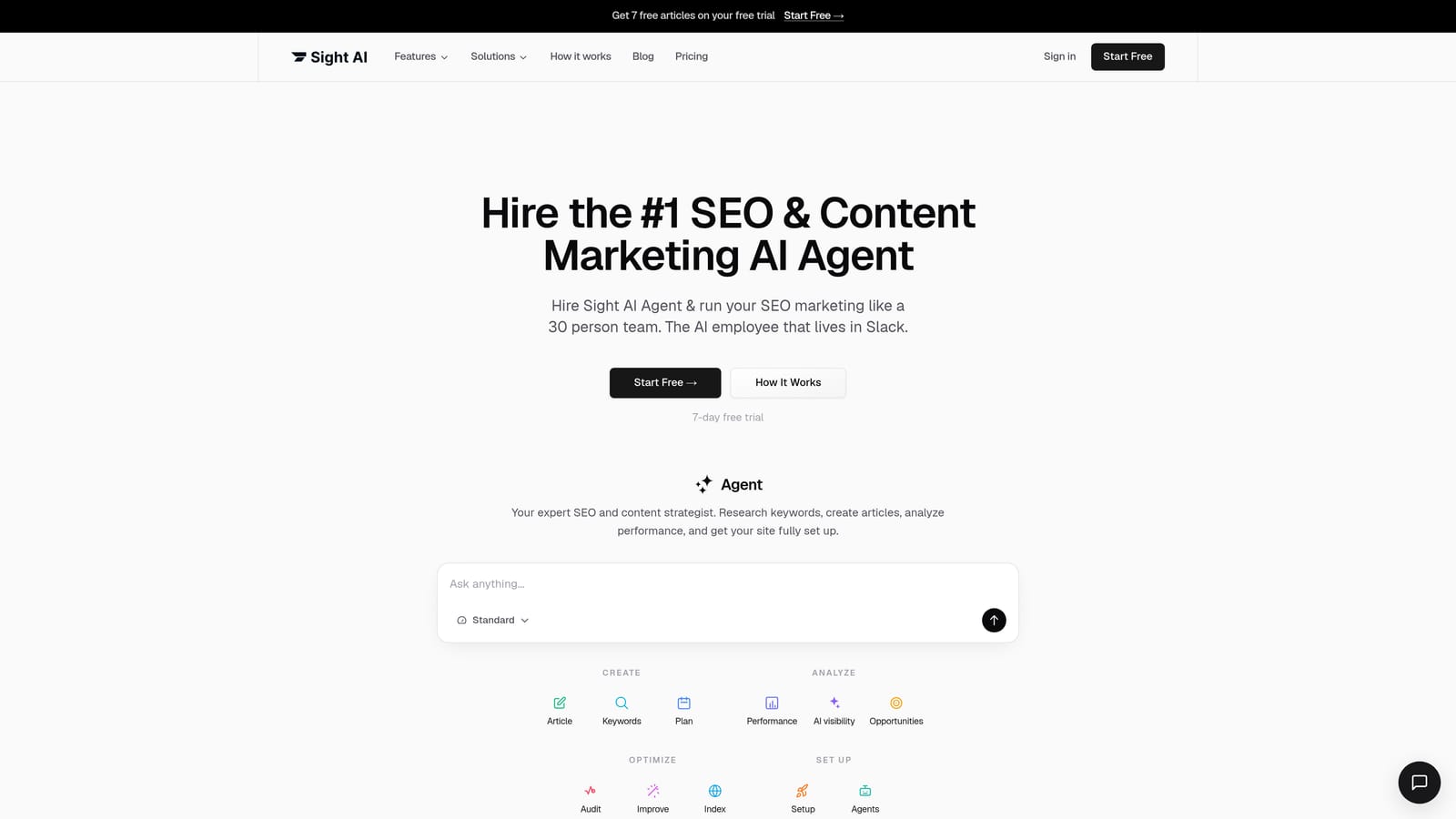
Sight AI is an all-in-one AI content and visibility platform that generates SEO/GEO-optimized articles using 13+ specialized AI agents, tracks brand mentions across 6+ AI models, and automates indexing and publishing workflows.
Where This Tool Shines
Most AI writing tools stop at content generation. Sight AI takes a different approach by connecting content creation directly to AI visibility data. You can see how AI models like ChatGPT, Claude, and Perplexity currently talk about your brand, then use that intelligence to shape what you write next. That feedback loop is genuinely rare in this space.
The 13+ specialized AI agents are built for specific content formats, so a listicle agent handles structure and comparison logic differently than a guide agent or an explainer agent. This specialization tends to produce more polished, format-appropriate output than a single general-purpose writer trying to handle everything.
Key Features
13+ Specialized AI Agents: Dedicated agents for listicles, guides, explainers, and other formats produce content tailored to each structure's requirements.
Autopilot Mode: Automates content planning and publishing workflows, reducing the manual overhead of managing a consistent publishing schedule.
AI Visibility Tracking: Monitors brand mentions across ChatGPT, Claude, Perplexity, and three or more additional AI platforms, with sentiment analysis and prompt tracking included.
IndexNow Integration: Automatically notifies search engines of new and updated content, accelerating discovery without manual submission steps.
CMS Auto-Publishing: Pushes finalized content directly to your CMS, cutting the copy-paste workflow out of the process entirely.
AI Visibility Score: A composite score that tracks how prominently and positively your brand appears across AI model responses over time.
Best For
Sight AI is best suited for marketers, founders, and agencies who are thinking beyond traditional SEO rankings. If you want to appear in AI-generated answers, not just Google's blue links, and you want a single platform that handles content creation, publishing, and visibility tracking together, this is the most complete option on this list.
Pricing
Visit trysight.ai for current plan pricing. Given the platform spans content generation, AI visibility tracking, and indexing automation, the value comparison is best made against the combined cost of separate tools covering each function individually.
2. Writesonic
Best for: Teams producing high volumes of diverse content across blogs, ads, and social channels.
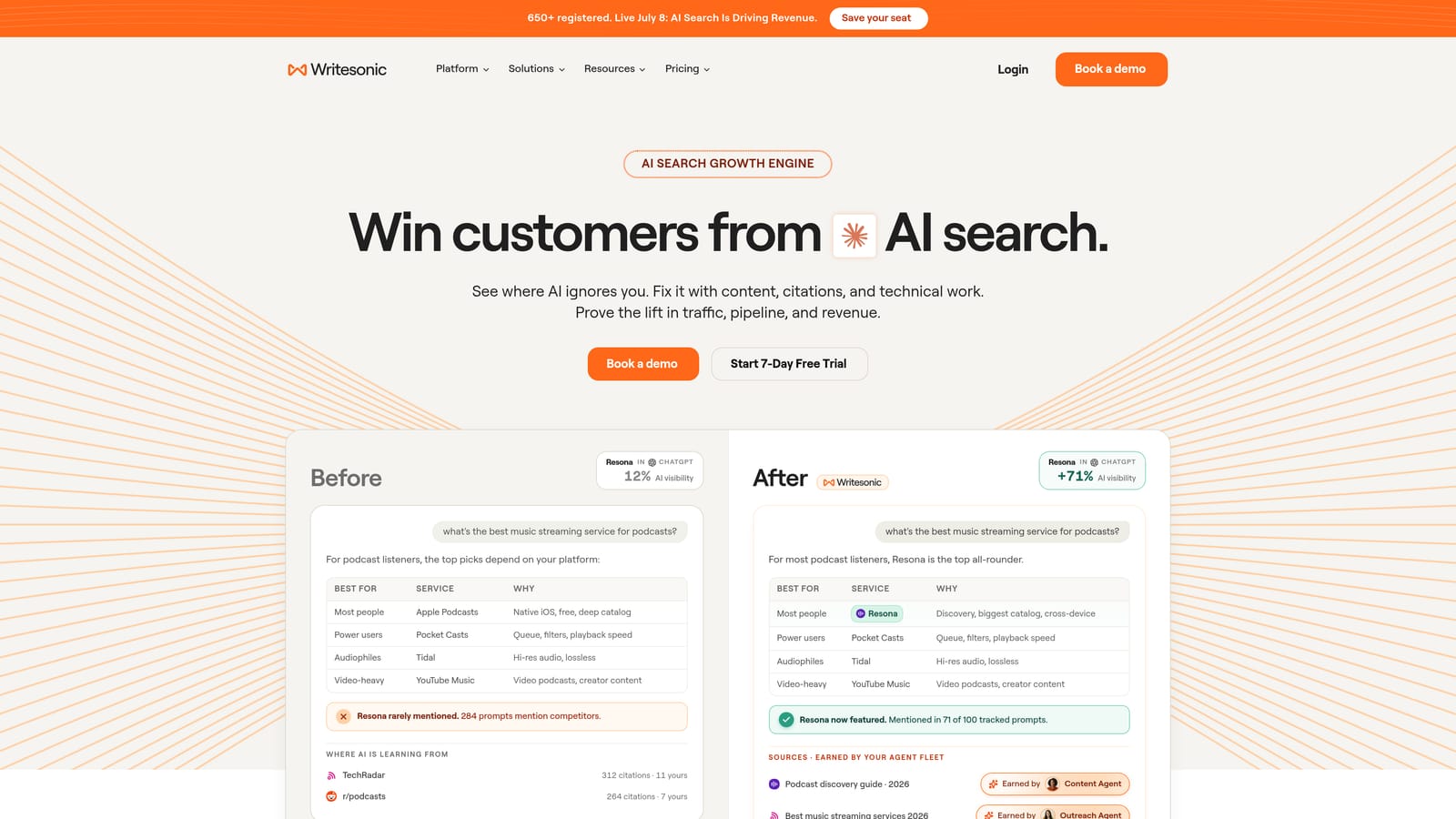
Writesonic is a versatile AI writing platform offering a broad library of content templates, brand voice customization, and a conversational AI assistant for teams producing diverse content at volume.
Where This Tool Shines
Writesonic's strength is breadth. The platform covers a wide range of content types, from long-form blog articles to ad copy, social posts, and product descriptions, making it a practical choice for content teams that need to produce across multiple formats without switching tools.
The brand voice customization features help teams maintain consistency at scale, which matters when multiple writers or AI outputs need to sound like the same brand. Chatsonic, the platform's conversational AI assistant, adds a layer of interactivity useful for research, brainstorming, and iterating on drafts in real time.
Key Features
Large Template Library: Covers ads, blog posts, social content, and long-form articles, reducing setup time for common content types.
Brand Voice Customization: Allows teams to define tone and style parameters so AI outputs stay consistent with established brand guidelines.
Chatsonic: A conversational AI assistant built into the platform for brainstorming, research assistance, and iterative content refinement.
Article Writer with SEO Features: Includes keyword targeting and basic on-page optimization signals within the article generation workflow.
Free Tier: A free plan with limited credits gives new users a low-risk way to test the platform before committing to a paid tier.
Best For
Writesonic works well for marketing teams and content managers who need a reliable, general-purpose AI writer with enough format variety to cover most content needs. It's a practical entry point for teams newer to AI writing tools, and the free tier makes initial evaluation straightforward.
Pricing
A free plan is available with limited credits. Paid plans scale based on word limits and feature access. Visit writesonic.com for current tier pricing and plan details.
3. AirOps
Best for: Agencies and enterprise content teams building structured, repeatable LLM-powered content pipelines.
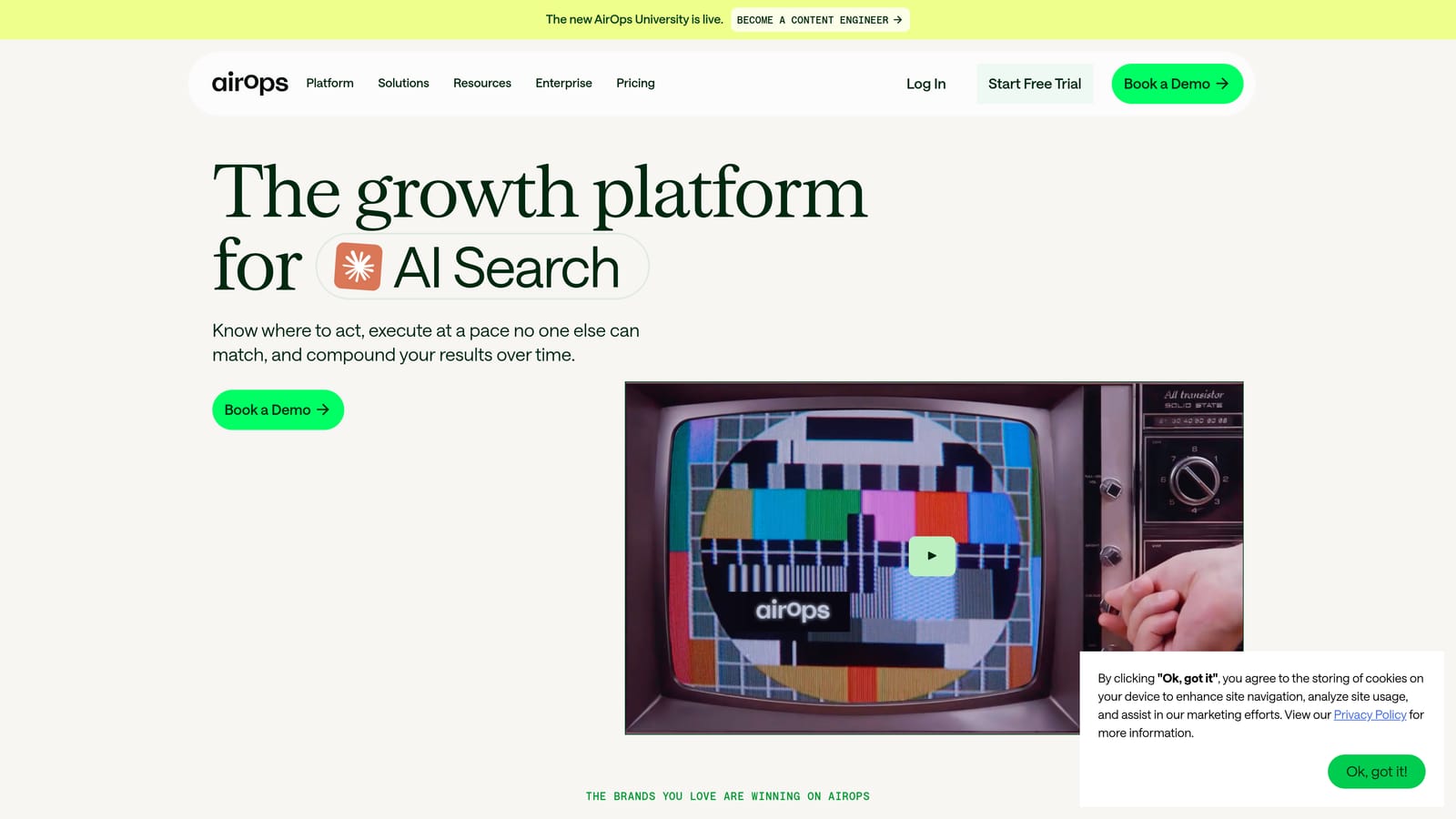
AirOps is a workflow automation platform for content teams that enables custom LLM-powered pipelines, making it well-suited for organizations with high-volume, structured content production needs.
Where This Tool Shines
AirOps approaches AI content differently from most writing tools. Rather than offering a set of pre-built templates, it gives teams the infrastructure to build their own content workflows using large language models. Think of it as a programmable content engine rather than a plug-and-play AI writer.
This flexibility makes it particularly powerful for agencies managing complex, repeatable content operations, such as producing hundreds of location pages, product descriptions, or structured briefs at scale. Teams with the technical capacity to configure custom pipelines will get more out of AirOps than those looking for an out-of-the-box solution.
Key Features
Custom LLM Workflow Builder: Enables teams to design content pipelines tailored to their specific production logic, rather than working within pre-set templates.
Multi-Model Support: Supports multiple underlying AI models, giving teams flexibility to choose the right model for each content task.
Scalable for High-Volume Operations: Designed to handle repeatable content production at scale without degrading output consistency.
Team and Agency Collaboration Features: Includes tooling for managing workflows across multiple users and client accounts.
Integrations with Content and Data Tools: Connects with existing tools in the content stack, reducing the friction of adding AirOps to an established workflow.
Best For
AirOps is best suited for technically capable content teams, agencies, and enterprise organizations that need custom automation rather than a standard AI writing interface. If your content operation involves complex, structured pipelines that need to run reliably at scale, AirOps offers the infrastructure to build that. It's less suited for individuals or small teams looking for a simple, ready-to-use writing assistant.
Pricing
AirOps offers team and enterprise pricing. Visit airops.com for current plan details, as pricing for this category typically depends on usage volume and team size.
Choosing the Right Platform for Your Budget and Goals
These three platforms serve meaningfully different buyer profiles, and the right choice depends less on price alone and more on what you actually need the tool to do.
If you're a founder or marketer who wants to grow organic traffic and also wants to appear in AI-generated answers, Sight AI is the most complete option. It combines content generation, AI visibility tracking, and automated indexing in a single platform. You're not stitching together three separate tools to cover those functions. The AI Visibility Score and cross-platform brand monitoring also give you data that simply isn't available elsewhere on this list.
If your primary need is high-volume content across a wide range of formats, and you don't yet have a structured SEO or GEO strategy, Writesonic offers a broad, accessible starting point. The free tier makes it easy to evaluate before committing, and the template library covers most standard content types without a steep learning curve.
If you're running an agency or enterprise content operation that needs custom-built LLM workflows rather than off-the-shelf templates, AirOps offers the infrastructure to build exactly what you need. The tradeoff is that it requires more technical setup and is less suited for teams looking for a simple, immediate solution.
The AI content landscape is shifting fast. Traditional SEO rankings matter, but AI model citations are increasingly where discovery happens. Platforms that help you optimize for both, and show you where you currently stand, are the ones worth investing in.
Stop guessing how AI models like ChatGPT and Claude talk about your brand. Start tracking your AI visibility today and see exactly where your brand appears across top AI platforms, then use that data to drive a content strategy that builds real, compounding organic growth.