AI content writing platforms have moved well beyond basic text generation. Today's leading tools handle everything from SEO research and GEO optimization to multi-agent drafting workflows and automatic publishing, making platform selection a genuinely complex decision.
This review covers six platforms evaluated on content quality, SEO/GEO capabilities, workflow automation, and value for marketers, founders, and agencies focused on organic and AI-driven traffic growth. Whether you're scaling a content operation, trying to get your brand mentioned in AI search results, or simply need a faster path from brief to published article, the right platform makes a measurable difference.
One important note before diving in: three of the tools below (Profound, Peec, and Promptwatch) are primarily AI visibility and monitoring platforms rather than content generators. They're included because many teams evaluating "AI content writing platforms" are actually building a broader AI content and visibility stack, and these tools are directly relevant to that decision.
1. Sight AI
Best for: Teams that want content generation, AI visibility tracking, and automated publishing in one platform.
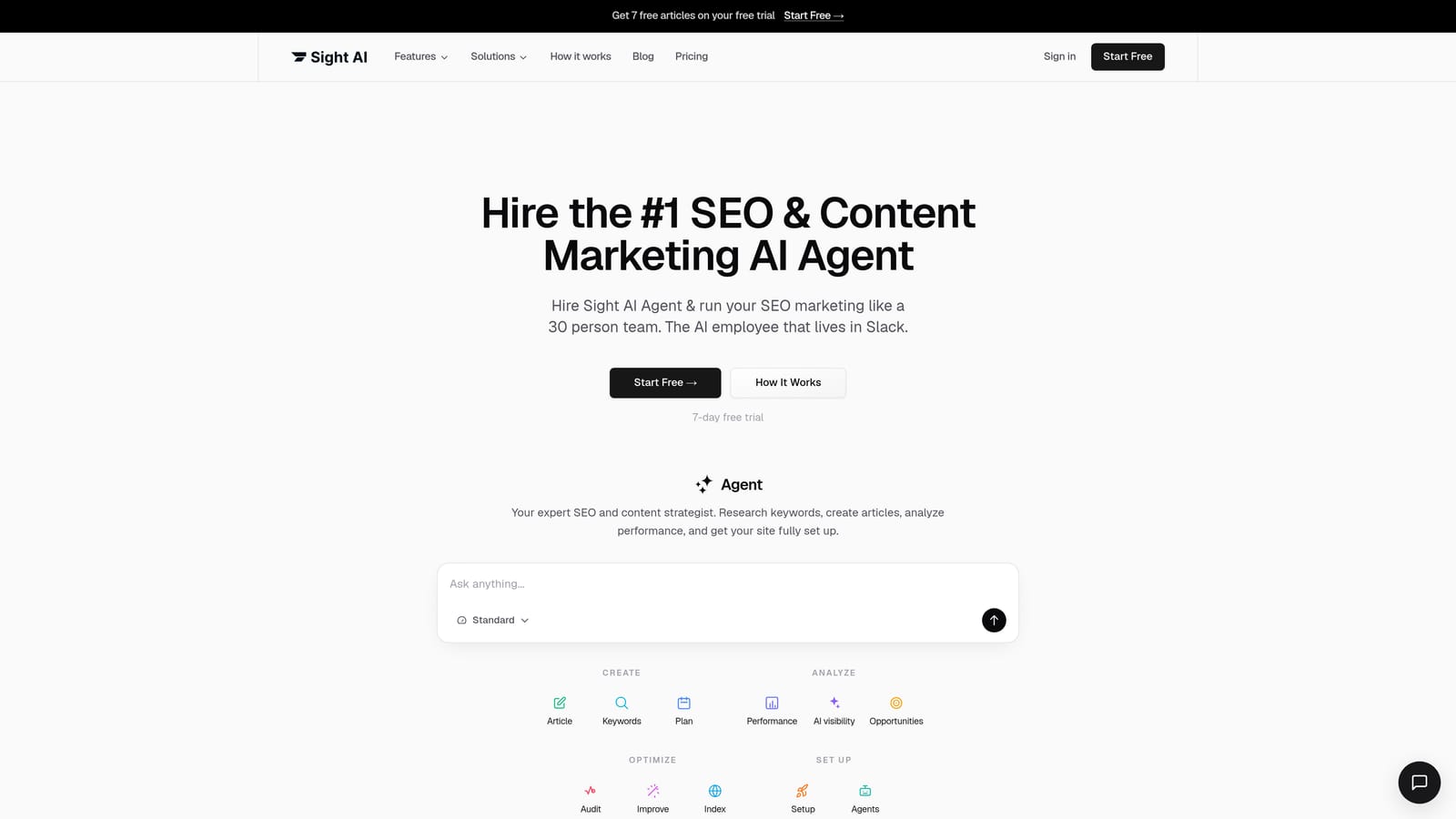
Sight AI is an all-in-one platform combining AI content generation with brand visibility tracking across major AI models.
Where This Tool Shines
Most AI writing tools stop at the draft. Sight AI extends the workflow in two directions that matter for modern content teams: forward into publishing and indexing, and sideways into AI search visibility. The 13+ specialized AI agents handle different content formats natively, meaning a listicle gets built differently than a how-to guide or an explainer, rather than forcing every format through the same generic output.
The AI Visibility Score is the feature that genuinely sets this platform apart. While you're creating content, you can simultaneously monitor how AI models like ChatGPT, Claude, and Perplexity are talking about your brand, which prompts surface your name, and what sentiment surrounds those mentions. For teams building a GEO strategy, this closes a feedback loop that most platforms leave wide open.
Key Features
13+ Specialized AI Agents: Dedicated agents for listicles, guides, and explainers produce format-appropriate output rather than one-size-fits-all drafts.
AI Visibility Score: Tracks brand mentions, sentiment, and prompt coverage across ChatGPT, Claude, Perplexity, and three or more additional AI platforms.
Autopilot Mode: Automates the full brief-to-publish workflow, reducing manual steps across research, drafting, and publishing.
IndexNow Integration: Submits new content to search engines automatically and updates sitemaps, accelerating content discovery without manual intervention.
CMS Auto-Publishing: Pushes finalized content directly to your CMS, removing the copy-paste bottleneck that slows high-volume content operations.
Best For
Marketers and agencies running high-volume content programs who also care about AI search presence. Particularly strong for teams that want a single platform covering content creation, GEO optimization, and AI visibility monitoring rather than stitching together multiple tools.
Pricing
Visit trysight.ai for current pricing tiers. Plans are structured to accommodate individual marketers through agency-scale operations.
2. Writesonic
Best for: High-volume teams needing broad format coverage across blog, ad, and social content.
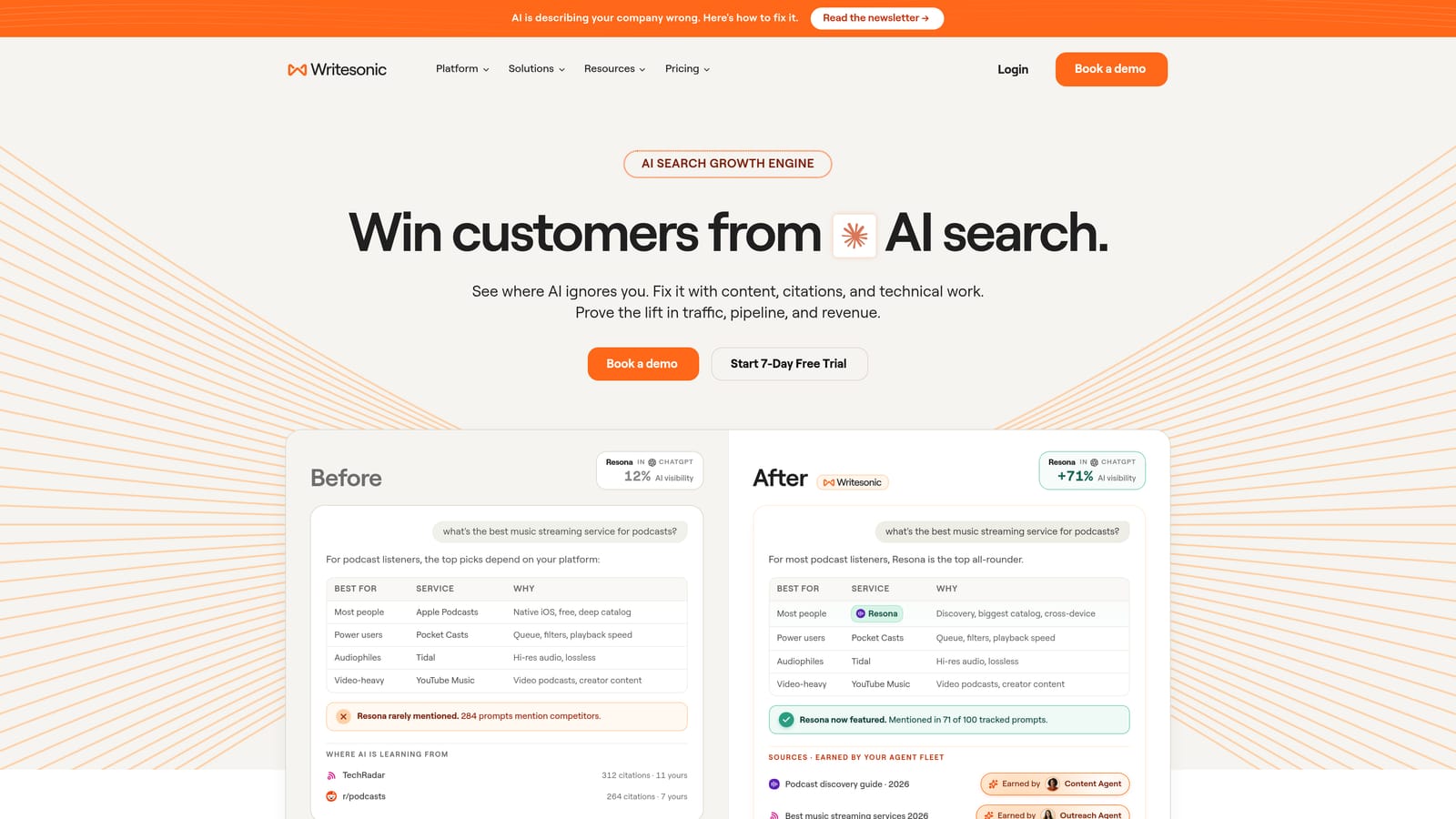
Writesonic is a well-established AI writing platform built around an extensive template library and conversational AI capabilities.
Where This Tool Shines
Writesonic's strength is breadth. If your team needs to produce blog posts, landing page copy, ad variations, and social content from a single tool, the template library covers the full range without requiring custom workflow setup. This makes it particularly practical for content teams supporting multiple channels simultaneously.
The built-in SEO mode adds keyword optimization to the drafting process, and Chatsonic, the platform's conversational AI assistant, offers a flexible interface for teams that prefer an iterative drafting approach over template-driven generation. Brand voice customization helps larger teams maintain consistency across writers and formats.
Key Features
Extensive Template Library: Pre-built templates spanning blog posts, ads, landing pages, product descriptions, and social copy.
Chatsonic: A conversational AI assistant that supports iterative content development and research-style queries.
Built-in SEO Mode: Optimizes content around target keywords during the drafting process.
Brand Voice Customization: Allows teams to define and apply consistent tone and style across content outputs.
Team Collaboration Features: Supports multi-user workflows for agencies and in-house content teams.
Best For
Content teams and agencies that need high output volume across multiple formats. A strong fit for marketers who want a ready-to-use platform with minimal setup and a wide range of content types covered out of the box.
Pricing
A free plan is available. Paid plans are tiered by word count and feature access. Check writesonic.com for current pricing details.
3. AirOps
Best for: Operations-minded teams building repeatable, structured content pipelines at scale.
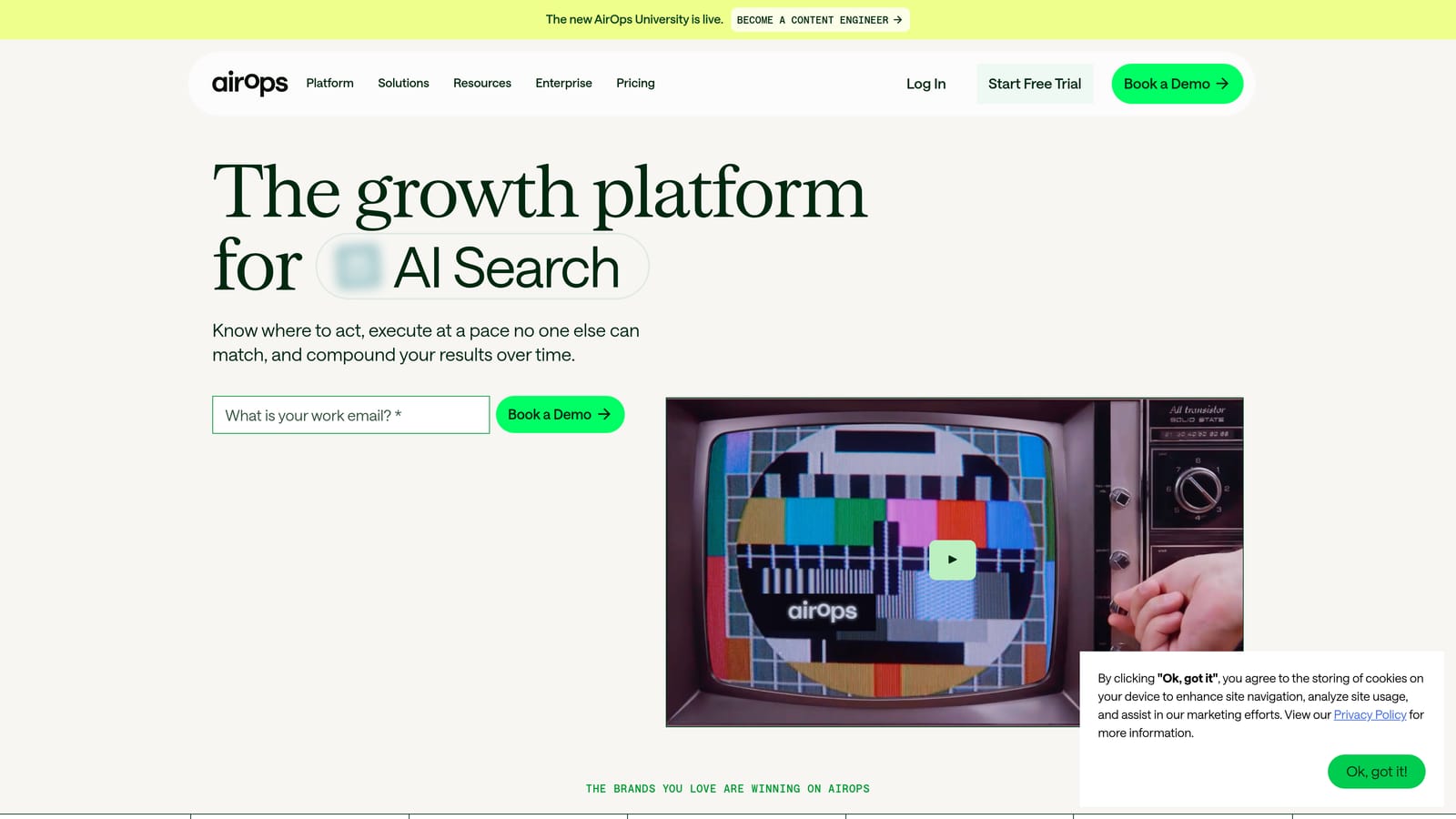
AirOps is an AI workflow platform that lets teams build custom content pipelines connecting data sources, LLMs, and publishing destinations without heavy engineering overhead.
Where This Tool Shines
AirOps is less of a content writer and more of a content operations engine. The no-code pipeline builder lets you connect inputs like keyword lists, CRM data, or product feeds to language models and route outputs to wherever they need to go. For teams generating hundreds of location pages, product descriptions, or templated articles, this kind of structured automation is difficult to replicate in tools designed around single-document drafting.
The flexibility in LLM selection is also worth noting. Rather than being locked into one underlying model, teams can route different pipeline steps to different models based on task requirements. This makes AirOps a strong choice for technically curious teams that want control over how AI is applied across their content workflows.
Key Features
No-Code Pipeline Builder: Visual workflow builder for constructing multi-step content automation without engineering resources.
Bulk and Programmatic Content Generation: Designed for high-volume output across templated content formats.
External Data Source Connections: Integrates with keyword lists, CRMs, spreadsheets, and other data inputs to feed content generation.
Flexible LLM Selection: Allows teams to choose and switch underlying language models based on task needs.
Structured Workflow Support: Particularly strong for repeatable content operations that follow consistent patterns.
Best For
Growth teams and agencies running programmatic content operations at scale. Best suited for users who are comfortable with workflow configuration and want to build custom pipelines rather than use a pre-built content editor.
Pricing
Check airops.com for current plan details and pricing tiers.
4. Profound
Best for: Brands building a GEO strategy who need data on how they appear in AI-generated answers.
Profound is an AI search visibility analytics platform focused on understanding how and when brands appear in AI-generated responses.

Where This Tool Shines
Profound occupies a distinct space in this list: it's an analytics and intelligence tool rather than a content generator. The value it provides is upstream of content creation, helping teams understand where they currently stand in AI-generated answers before deciding what to write next. For teams serious about GEO, this kind of data-informed starting point is hard to replicate through guesswork.
The competitive share-of-voice analysis is particularly useful for brands in crowded categories. Understanding not just whether you appear in AI answers, but how frequently compared to competitors, gives content teams a concrete basis for prioritizing topics and angles. Combined with content gap identification, Profound functions as a research layer that informs the work done in content generation tools.
Key Features
AI Answer Monitoring: Tracks brand appearances across major AI platforms to show when and how you're referenced in generated responses.
Competitive Share-of-Voice Analysis: Measures your brand's presence in AI answers relative to competitors in the same category.
Content Gap Identification: Surfaces topics and queries where competitors appear but your brand does not, informing GEO content priorities.
Trend Reporting: Tracks visibility changes over time to measure the impact of content and optimization efforts.
Best For
Marketing teams and SEO professionals building a GEO strategy who need structured data on AI search visibility. Works best as a complement to a content generation platform rather than a standalone solution.
Pricing
Check profound.co for current pricing information.
5. Peec
Best for: Competitive intelligence teams tracking how AI models reference their brand versus rivals.
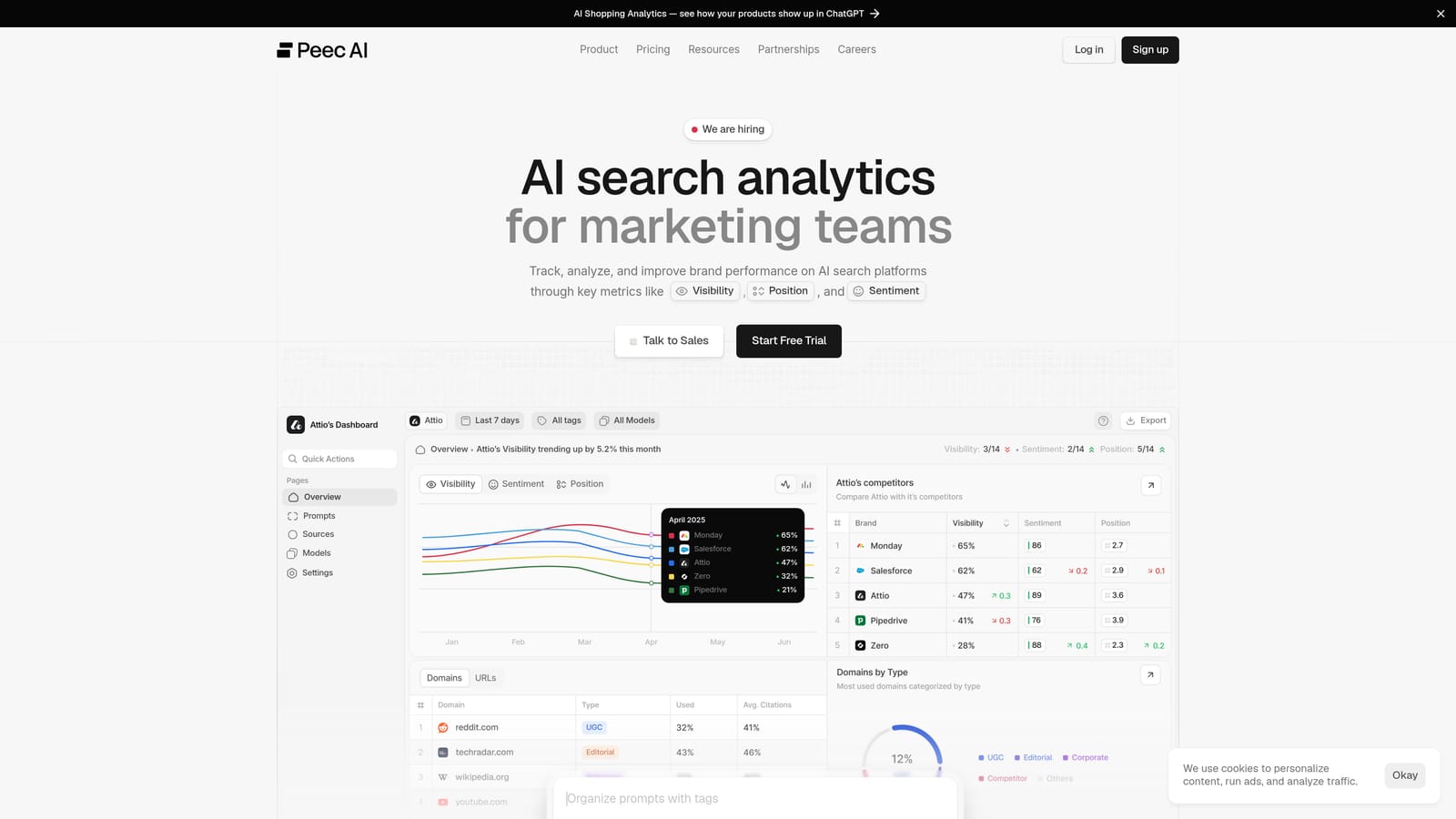
Peec is an AI brand monitoring tool focused on tracking how AI models reference your brand compared to competitors in AI search environments.
Where This Tool Shines
Like Profound, Peec is a monitoring and intelligence tool rather than a content generator. Its focus is narrower and more competitive: how does your brand appear in AI model outputs relative to the alternatives a buyer might be considering? For brands in competitive categories where AI-generated comparisons and recommendations carry real weight, this kind of monitoring provides early signals that are difficult to surface through traditional SEO analytics alone.
The sentiment and context analysis adds a qualitative layer to the monitoring. It's not just whether your brand appears, but how it's characterized. If an AI model consistently describes a competitor in favorable terms while describing your brand in neutral or negative ones, that's a content and positioning signal worth acting on.
Key Features
Brand Mention Monitoring: Tracks how and when your brand is referenced within AI model outputs across major platforms.
Competitor Comparison: Measures your brand's presence and framing in AI-generated responses relative to named competitors.
Sentiment and Context Analysis: Evaluates the tone and framing of AI-generated brand mentions, not just their frequency.
Mention Change Alerts: Notifies teams when brand visibility in AI outputs shifts, enabling faster response to changes.
Best For
Brand and marketing teams in competitive categories where AI-generated recommendations and comparisons influence buyer decisions. Most valuable as part of a broader AI content and visibility stack.
Pricing
Check peec.ai for current pricing details.
6. Promptwatch
Best for: GEO-focused teams identifying which specific prompts surface their brand in AI tools.
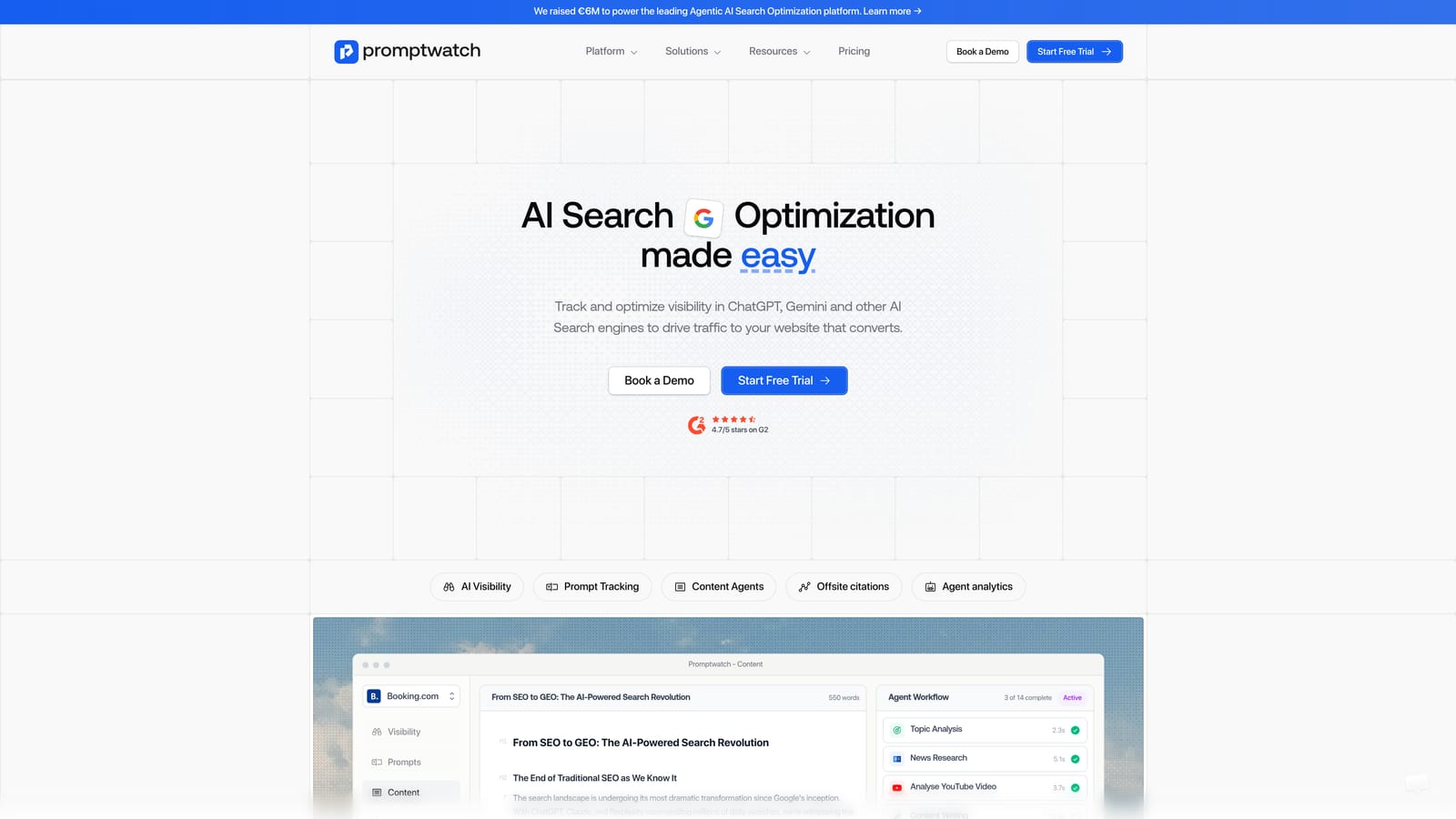
Promptwatch is a prompt-level AI search tracking tool that identifies which user queries surface your brand in AI tools and where visibility gaps exist.
Where This Tool Shines
Promptwatch takes the most granular approach to AI visibility of any tool in this list. Rather than tracking brand mentions broadly, it maps visibility at the prompt level: which specific questions or queries cause AI models to mention your brand, and which don't. This level of specificity is genuinely useful for content planning, because it translates directly into topics you should be creating content around.
The competitive prompt benchmarking feature extends this analysis to show where competitors are appearing for prompts that you're missing. For teams with a clear GEO content strategy, this creates a prioritized list of content opportunities grounded in actual AI search behavior rather than keyword volume estimates.
Key Features
Prompt-Specific Tracking: Maps brand visibility to individual user prompts across AI search tools, rather than tracking mentions in aggregate.
Visibility Gap Identification: Surfaces topics and query types where your brand is absent from AI-generated responses.
GEO Content Prioritization: Reporting structures are designed to translate visibility data into actionable content decisions.
Competitive Prompt Benchmarking: Shows which prompts surface competitors but not your brand, identifying the highest-value content opportunities.
Best For
SEO and content strategists with an active GEO program who want prompt-level precision in their AI visibility data. Most effective when paired with a content generation platform that can act on the insights surfaced.
Pricing
Check promptwatch.io for current pricing information.
Choosing the Right Platform for Your Stage
The six tools reviewed here fall into two clear categories: content generation platforms and AI visibility monitoring tools. Understanding which you need, and whether you need both, is the most important decision in this evaluation.
If you're looking for a single platform that handles content creation and AI visibility in one place, Sight AI is the strongest option in this list. The combination of 13+ specialized AI agents, Autopilot Mode, IndexNow indexing, and AI Visibility Score tracking means you're not managing separate tools for writing, monitoring, and publishing. For marketers and agencies building a serious AI content operation, that integration matters.
If your team already has a content workflow and you need to layer in AI visibility intelligence, the monitoring tools offer different levels of specificity. Profound is best for understanding your overall position in AI-generated answers and identifying content gaps at a strategic level. Peec adds competitive framing and sentiment analysis for brands in crowded categories. Promptwatch goes deepest at the prompt level, making it the right choice for teams that want to map content priorities directly to AI search query behavior.
For teams that need high-volume content generation across multiple formats, Writesonic's template breadth and SEO mode make it a practical choice. Teams running programmatic or structured content operations at scale should look closely at AirOps for its pipeline flexibility.
The honest recommendation for most teams: start with visibility before you scale content. Know where your brand currently stands in AI-generated answers, then build content that closes the gaps. Start tracking your AI visibility today and see exactly where your brand appears across top AI platforms, so every piece of content you create is pointed at a real opportunity.