The marketing landscape has fundamentally shifted. Today's marketers aren't just competing for Google rankings—they're competing for mentions in ChatGPT, Claude, and Perplexity responses. AI content writing has evolved from a novelty to a necessity, but most marketers are using it wrong.
They're treating AI as a faster typewriter instead of a strategic partner that can help them appear in both traditional search results AND AI-generated recommendations. The difference? Marketers who understand this dual-channel approach are seeing their brands mentioned when potential customers ask AI assistants for product recommendations, while their competitors remain invisible.
This guide reveals seven battle-tested strategies that forward-thinking marketers use to create AI-powered content that performs across every discovery channel—from search engines to AI assistants. Whether you're a solo founder or leading an agency team, these approaches will transform how you think about content production and visibility.
1. Build Topic Clusters That AI Models Actually Reference
The Challenge It Solves
When AI models evaluate which sources to cite or recommend, they don't just look at individual articles—they assess topical authority. A single brilliant blog post won't establish your brand as the go-to resource. AI systems recognize patterns of comprehensive coverage across related topics, just like search engines have for years.
The problem? Most marketers create content in silos, publishing disconnected articles without a unifying architecture. This fragmented approach makes it nearly impossible for AI models to identify you as an authoritative voice worth citing.
The Strategy Explained
Topic clustering creates an interconnected content ecosystem where a comprehensive pillar page connects to multiple supporting articles that dive deep into specific subtopics. Think of it like a hub-and-spoke model: your pillar content serves as the definitive guide, while cluster content explores nuances that your pillar page can't cover in depth.
Here's what makes this powerful for AI visibility: when an AI model encounters multiple pieces of high-quality content from your brand covering related concepts, it builds confidence in your topical authority. The internal linking structure helps AI systems understand the relationships between concepts and positions your brand as a comprehensive resource.
For marketers focused on AI content writing, this might mean creating a pillar page about "AI-Powered Content Marketing Strategies" with cluster content covering AI writing tools, prompt engineering for marketers, content optimization for AI visibility, and measuring AI-generated content performance.
Implementation Steps
1. Identify your core topic and map out 8-12 subtopics that your target audience actively searches for or asks AI assistants about. Use keyword research tools combined with actual prompts you'd expect users to enter into ChatGPT or Claude.
2. Create your pillar page first—a comprehensive 3,000-4,000 word guide that provides an authoritative overview of your main topic. Include clear definitions, frameworks, and strategic guidance that establishes your expertise.
3. Develop cluster content that goes deeper into specific aspects, ensuring each piece links back to your pillar page and to related cluster articles. Each cluster article should be 1,500-2,500 words and provide actionable depth on its specific subtopic.
4. Implement a consistent internal linking strategy where your pillar page links to all cluster content, and cluster articles link back to the pillar and to related clusters. Use descriptive anchor text that helps both search engines and AI models understand the relationship between pieces.
Pro Tips
Update your pillar page quarterly with new insights and links to fresh cluster content. This signals ongoing authority and keeps your content ecosystem current. When AI models assess topical coverage, recency matters—stale content clusters lose their effectiveness over time.
Don't just link for SEO purposes. Write transition sentences that explain why you're linking to related content, which helps AI models understand the conceptual relationships between your articles.
2. Optimize Content Structure for Dual Discovery
The Challenge It Solves
Traditional SEO optimization focuses on keywords, meta descriptions, and backlinks. But AI models parse content differently—they're looking for clear, authoritative statements they can extract and cite. Content that performs beautifully in Google might be completely overlooked by AI assistants if it's not structured for easy parsing.
The tension? You need content that satisfies both traditional search algorithms and AI parsing systems simultaneously. Most marketers optimize for one or the other, missing half their potential visibility.
The Strategy Explained
Dual discovery optimization means structuring your content so it performs in traditional search while being easily parsed and cited by AI assistants. This requires specific formatting choices that make your content "quotable" for AI models while maintaining the engagement factors that drive traditional SEO performance.
AI models favor content with clear hierarchies, definitive statements, and structured information. They look for authoritative declarations they can extract as answers. Meanwhile, search engines still prioritize comprehensive coverage, user engagement signals, and semantic relevance.
The sweet spot? Content that opens with clear, quotable definitions and frameworks, then expands into detailed explanations with examples. This structure gives AI models the concise statements they need while providing search engines the depth and dwell time they reward.
Implementation Steps
1. Start each major section with a clear, definitive statement that AI models can extract and cite. For example, instead of "There are several approaches to content optimization," write "Content optimization for AI visibility requires three core elements: entity-rich language, structured data, and authoritative sourcing."
2. Use descriptive H2 and H3 headings that function as standalone questions or statements. AI models often extract headings to understand content structure, so make them informative rather than clever. "What Makes Content AI-Friendly?" works better than "The Secret Sauce."
3. Include brief, scannable summaries at the beginning of long-form content. A 2-3 sentence overview gives AI models the context they need while helping human readers decide if they want to continue reading.
4. Break complex concepts into numbered steps or clearly labeled paragraphs. AI models excel at extracting procedural information when it's explicitly structured, and this format also improves readability for human visitors.
Pro Tips
Test your content by asking AI assistants questions related to your topic and seeing if they cite or paraphrase your content. This real-world testing reveals whether your structure is working for AI discovery.
Avoid burying your most important points in the middle of long paragraphs. AI models often prioritize information that appears early in sections or is formatted for emphasis. Put your strongest, most quotable insights in prominent positions.
3. Leverage AI Writing Agents for Specialized Content Types
The Challenge It Solves
Generic AI writing tools produce generic content. When you use a one-size-fits-all approach to AI content generation, you get articles that sound like everything else in your niche—which means they don't stand out in search results or earn citations from AI models.
The reality? Different content types require different expertise. A how-to guide needs different structure and depth than a comparison article or a thought leadership piece. Using the same AI approach for all formats leads to mediocre results across the board.
The Strategy Explained
Purpose-built AI agents are specialized systems trained or configured for specific content formats. Instead of asking a general AI tool to write "an article about email marketing," you use an agent specifically designed for tutorial content, comparison content, or strategic analysis—depending on your goal.
This specialization produces higher quality output because each agent understands the conventions, structure, and depth requirements of its format. A listicle agent knows to create parallel structure across items and maintain consistent depth. A tutorial agent understands progressive complexity and clear step sequencing.
For marketers, this means you can scale content production without the quality degradation that typically comes with volume. Each piece maintains the structural integrity and depth that both search engines and AI models reward. Understanding how a multi-agent content writing system works can help you implement this approach effectively.
Implementation Steps
1. Map your content calendar to specific formats: how-to guides, comparison articles, listicles, explainer content, strategic frameworks, case study analyses, and thought leadership pieces. Identify which formats drive the most engagement and conversions for your audience.
2. Select or configure AI agents matched to each format. Modern AI content platforms offer specialized agents for different content types—use them rather than forcing a single tool to handle every format.
3. Develop format-specific prompts and guidelines that ensure consistency across your content. For comparison articles, this might include requirements for feature analysis, use case scenarios, and pricing considerations. For tutorials, it might specify skill level assumptions and prerequisite knowledge.
4. Implement a quality review process that checks whether each piece meets format-specific standards. A listicle should have parallel structure and consistent depth across items. A how-to guide should have clear prerequisites and progressive steps. Hold AI-generated content to the same standards you'd apply to human-written pieces.
Pro Tips
Don't just accept the first output from an AI agent. Use iterative refinement—generate content, identify gaps or inconsistencies, then regenerate specific sections with more detailed prompts. This collaborative approach produces significantly better results than one-shot generation.
Create a style guide that works across all your AI agents. Consistent brand voice, terminology, and formatting standards should apply regardless of which specialized agent you're using. This maintains brand coherence while leveraging format-specific expertise.
4. Create Entity-Rich Content That Establishes Brand Authority
The Challenge It Solves
AI models make recommendations based on entity associations—the connections they've learned between brands, products, concepts, and use cases. If your brand isn't consistently associated with relevant topics in the content AI models have processed, you won't appear in their recommendations no matter how good your product is.
Think about it: when someone asks ChatGPT for marketing automation tools, the AI recommends brands it has encountered frequently in authoritative content about marketing automation. If your brand rarely appears in that context, you're invisible.
The Strategy Explained
Entity-rich content deliberately associates your brand with key topics, use cases, and industry concepts through strategic repetition and contextual positioning. This isn't keyword stuffing—it's about creating legitimate, valuable content that naturally connects your brand to the problems you solve and the categories you compete in.
The goal is to build strong entity associations in the vast corpus of content that AI models reference. When you consistently publish authoritative content that positions your brand alongside specific topics, AI models learn these associations and begin including your brand in relevant recommendations.
This requires moving beyond generic content to create pieces that explicitly discuss your brand's approach, methodology, or perspective on industry challenges. You're not just writing about "email marketing best practices"—you're writing about how your brand approaches email marketing differently, what you've learned, and what you recommend.
Implementation Steps
1. Identify the core topics and use cases you want your brand associated with. For a marketing platform, this might include marketing automation, lead nurturing, campaign analytics, and customer segmentation. List 8-12 key concepts where you want strong brand-topic associations.
2. Create content that explicitly discusses your brand's perspective on these topics. Write articles like "How [Your Brand] Approaches Content Personalization" or "What We've Learned About Email Deliverability After Analyzing 10 Million Campaigns." These pieces create direct brand-topic associations.
3. Include your brand name naturally throughout content, especially when discussing methodologies, frameworks, or approaches you've developed. Instead of "this strategy involves three steps," write "the [Your Brand] framework for content optimization involves three steps." This creates stronger entity associations.
4. Publish thought leadership content where your team shares original research, insights, or perspectives. AI models particularly value content that presents new information or unique viewpoints, and they're more likely to cite and reference sources that contribute original thinking.
Pro Tips
Monitor how AI models currently discuss your brand by asking them directly. Query ChatGPT, Claude, and Perplexity with prompts like "What do you know about [Your Brand]?" or "What are the best tools for [your category]?" This baseline assessment shows you where entity associations are strong and where they're missing.
Don't limit entity-building to your own blog. Guest posts, podcast interviews, and contributed articles on authoritative sites create brand-topic associations in diverse sources, which strengthens AI models' confidence in those connections.
5. Implement Rapid Indexing for Content Freshness Signals
The Challenge It Solves
You've published amazing content, but there's a gap—sometimes days or weeks—between publication and when search engines discover and index it. During that window, your content is invisible. It's not appearing in search results, and it's not being processed by AI models that crawl the web for fresh information.
This delay is particularly painful for time-sensitive content or when you're trying to establish authority on emerging topics. The brands that get indexed first often capture the initial traffic and citations, creating a compounding advantage.
The Strategy Explained
Rapid indexing eliminates the waiting period by proactively notifying search engines the moment you publish or update content. The IndexNow protocol allows you to ping search engines directly, saying "new content is live at this URL—come crawl it now."
This matters for AI visibility because many AI models incorporate recent web content into their knowledge base through regular crawling. The faster your content gets indexed, the sooner it becomes available for AI models to reference and cite. You're essentially jumping the queue instead of waiting for passive discovery.
For marketers publishing multiple pieces per week, automated rapid indexing becomes a competitive advantage. While competitors wait for traditional crawl schedules, your content is already indexed, ranking, and being processed by AI systems. Exploring SEO content writing automation can help you streamline this entire process.
Implementation Steps
1. Implement IndexNow integration on your website or content management system. Many modern CMS platforms offer plugins or native support for IndexNow—enable it so every publication automatically triggers indexing notifications.
2. Set up automated sitemap updates that regenerate and submit your sitemap whenever new content is published. This creates a redundant notification system that ensures search engines discover your content through multiple channels.
3. Create a publication workflow that includes verification of indexing status. After publishing, check Google Search Console and Bing Webmaster Tools within 24 hours to confirm your content has been indexed. If not, manually request indexing.
4. Prioritize rapid indexing for time-sensitive content, major pillar pages, and content targeting emerging topics where being first matters. Not every blog post needs emergency indexing, but strategic content should be fast-tracked.
Pro Tips
Update high-performing content regularly and use rapid indexing to notify search engines of the updates. Fresh content signals matter for rankings, and rapid re-indexing ensures your updates are recognized quickly rather than waiting for the next scheduled crawl.
Combine rapid indexing with strategic social sharing and outreach. The combination of immediate indexing plus early engagement signals creates powerful freshness indicators that can help new content rank faster.
6. Scale Production Without Sacrificing Quality or Originality
The Challenge It Solves
The pressure to publish more content is real. Your competitors are pumping out articles, and you know you need volume to build topical authority. But here's the trap: when marketers scale content production with AI, quality typically crashes. You end up with generic, indistinguishable content that doesn't rank well and certainly doesn't get cited by AI models.
The challenge is maintaining the unique perspectives, original insights, and expertise signals that make content valuable while increasing production velocity. Most marketers assume this is impossible—that you can have quality or quantity, but not both.
The Strategy Explained
Scaling without quality degradation requires a systematic approach that combines AI efficiency with human expertise at strategic points in the content creation process. The key is understanding where AI adds value (structure, research synthesis, draft generation) and where human input is essential (unique perspectives, original frameworks, strategic positioning).
This isn't about using AI to write everything and hoping for the best. It's about building a production system where AI handles the scalable parts while humans inject the elements that create differentiation. Think of AI as your research assistant and first-draft generator, while you focus on adding the insights and perspectives only you can provide.
The result? You can publish 3-5x more content than manual writing allows while maintaining the E-E-A-T signals (Experience, Expertise, Authoritativeness, Trustworthiness) that both search engines and AI models use to assess content quality. Following AI content writing best practices ensures you maintain this balance effectively.
Implementation Steps
1. Develop a content brief template that captures your unique perspective before AI generation begins. Include your specific take on the topic, original frameworks you've developed, relevant experience from your work, and contrarian viewpoints that differentiate your content. This brief guides AI generation toward originality rather than generic output.
2. Use AI for research synthesis and structural drafting, then add your unique insights in strategic locations. Let AI generate the foundational content and standard explanations, then personally write the introduction, key insights sections, and conclusion where your voice and perspective matter most.
3. Implement a quality checklist that every piece must pass before publication. Include criteria like "contains at least one original framework or concept," "includes specific examples from our work or industry," "takes a clear position on a debatable topic," and "provides actionable advice beyond generic best practices."
4. Create a feedback loop where you analyze which AI-generated content performs best, then reverse-engineer what made it successful. Use these insights to refine your prompts, briefs, and quality standards for future content.
Pro Tips
Schedule dedicated time for adding personal insights to AI-generated drafts rather than trying to edit everything in one pass. First pass: structural and factual review. Second pass: inject your unique perspective and voice. This two-stage approach maintains efficiency while ensuring quality.
Build a library of your original frameworks, methodologies, and perspectives that can be incorporated into AI-generated content. When you have a repository of unique intellectual property, scaling becomes easier because you're adding proven differentiators to each piece.
7. Track AI Visibility Alongside Traditional SEO Metrics
The Challenge It Solves
You're tracking keyword rankings, organic traffic, and backlinks—all the standard SEO metrics. But you have no idea how AI models like ChatGPT, Claude, or Perplexity are talking about your brand. You don't know if they're recommending you to users, misrepresenting your offering, or ignoring you entirely.
This blind spot is dangerous because an increasing number of users are asking AI assistants for product recommendations instead of searching Google. If you're invisible in AI responses, you're missing a growing segment of potential customers who never make it to traditional search results.
The Strategy Explained
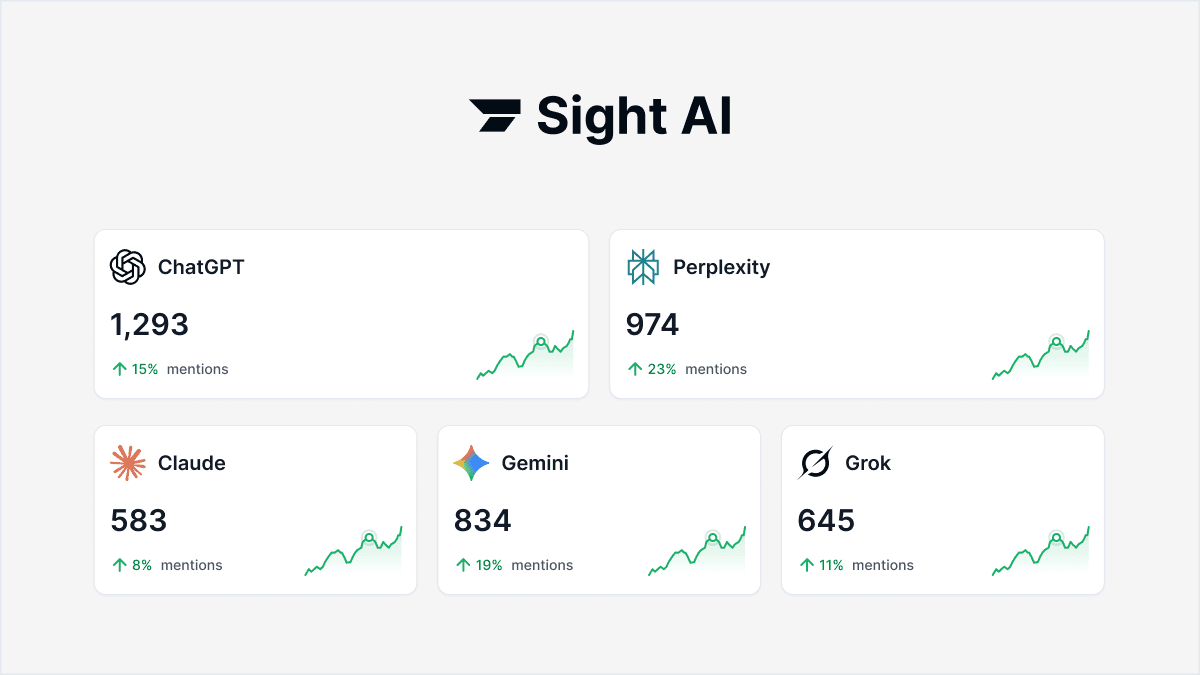
AI visibility tracking monitors how AI models discuss, recommend, and represent your brand across platforms like ChatGPT, Claude, Perplexity, and other AI assistants. This includes tracking brand mentions, analyzing sentiment, understanding the context in which you're mentioned, and identifying the prompts that trigger recommendations.
Think of it as SEO monitoring for the AI era. Just as you track your Google rankings for target keywords, you need to track how AI models respond when users ask about your category, use cases, or competitors. This reveals whether your content strategy is successfully building brand-topic associations in AI models.
The insights are actionable: if AI models consistently mention competitors but not you, you know your entity-building content isn't working. If they mention you but with incorrect information, you need to publish authoritative content that corrects the record. If they mention you positively for some use cases but not others, you've identified content gaps to address.
Implementation Steps
1. Establish a baseline by manually testing how major AI platforms currently discuss your brand. Ask questions like "What are the best [category] tools?", "How does [Your Brand] compare to [Competitor]?", and "What do you know about [Your Brand]?" across ChatGPT, Claude, and Perplexity. Document the responses to understand your starting point.
2. Identify the key prompts and questions that matter for your business—the queries potential customers are likely to ask AI assistants when researching solutions in your category. Create a list of 20-30 critical prompts to monitor regularly.
3. Implement systematic tracking using AI visibility monitoring tools that automate the process of querying multiple AI platforms and analyzing responses. Manual testing is useful for initial assessment, but sustained monitoring requires automation to track changes over time and across numerous prompts.
4. Analyze patterns in when and how you're mentioned. Look for correlations between your content publication and improvements in AI visibility. Identify which content topics and formats most effectively improve how AI models discuss your brand. Use these insights to refine your content strategy.
Pro Tips
Don't just track mentions—track sentiment and accuracy. An AI model mentioning your brand negatively or with incorrect information is sometimes worse than not being mentioned at all. Monitor the quality of mentions, not just quantity.
Compare your AI visibility to competitors. Tracking your own mentions is useful, but understanding your share of voice relative to competitors reveals whether you're gaining or losing ground in this emerging channel. If competitors are consistently recommended while you're not, that's a strategic priority to address.
Putting These Strategies Into Action
The marketers who thrive in this new landscape won't just create more content—they'll create strategically structured content that performs across every discovery channel. But where do you start?
Begin with an audit. Review your existing content for AI-readability and topic clustering gaps. Are your articles structured with clear, quotable statements? Do you have comprehensive topic clusters or just disconnected blog posts? This assessment reveals your biggest opportunities.
Next, prioritize rapid indexing. Implement IndexNow integration and automated sitemap updates so new content gets discovered immediately. This is low-hanging fruit that creates immediate value—there's no reason to wait days or weeks for content to be indexed when you can trigger it instantly.
Then build your monitoring systems. You can't optimize what you don't measure. Start tracking your AI visibility today to see exactly where your brand appears across top AI platforms, what prompts trigger mentions, and how your visibility changes as you publish new content. This data transforms AI content writing from guesswork into a measurable, optimizable channel.
The implementation sequence matters. Start with one strategy this week—perhaps building your first topic cluster or implementing rapid indexing. Measure results over 30 days. Then add the next strategy. This incremental approach prevents overwhelm while building momentum.
Remember that AI visibility and traditional SEO aren't competing priorities—they're complementary. The same content that earns citations from AI models often ranks well in search engines. The same topic clusters that establish authority for ChatGPT also build topical authority for Google. You're not choosing between channels; you're building a content strategy that succeeds across all of them.
The opportunity is significant, but it won't last forever. Early movers who establish strong brand-topic associations in AI models will have a compounding advantage as these platforms become primary discovery channels. The content you publish today influences how AI models discuss your brand for months or years to come.
Stop guessing how AI models like ChatGPT and Claude talk about your brand—get visibility into every mention, track content opportunities, and automate your path to organic traffic growth.